|
The history of Noorus goes back a long way, to ancient Iran – where it is still considered the Iranian New Year festival. As well as being celebrated in Iran, the festival is marked over Central Asia.
Noorus is, perhaps, the most lasting contribution made by Zoroasterism – although it could also be based on an earlier Persian ten-day festival which took place at the end of the solar year. It is refered to in writings of the Greek historian and geographer, Strabonus, (who apparently referred to it as having been celebrated “from ancient times” … even in his day), and in the seventh century Chinese “Chronicles of the Tan Dynasty”.
It is sometimes said that Noorus is the Muslim equivalent of New Year. This is a mistake.
The Muslim calendar is based on a purely lunar calendar rather than a solar calendar on which the Gregorian calendar is based – and therefore the “New Year” is a moveable feast which takes place about 11 days earlier each year (by the traditional reckoning accordfing to the Gregorian Calendar). The festival of Noorus, however, is held on the same date every year – March 21st – the day of the vernal equinox –, when the sun passes over the equator dividing day and night into two equal, 12 hour, parts. In ancient times this marked the New Year (the beginning of the solar year) in many cultures – hence the association with New Year.
The association with Islam may seem strange because the original festival was basically a ‘pagan’ one, and the Arabian conquerors of Central Asia attempted to ban the holiday – considering that it was not consistent with orthodox Islam.
Although traditionally Noorus ceremonies are symbolic representations associated with “New Beginnings” – in keeping with the idea of New Year – there are also associations with the battle between Good and Evil as told in many special myths and legends.
Both the Kyrgyz and Kazakhs will fumigate their homes with smoke from burning archa (juniper) twigs – the smoke is said to drive away evil malicious spirits.
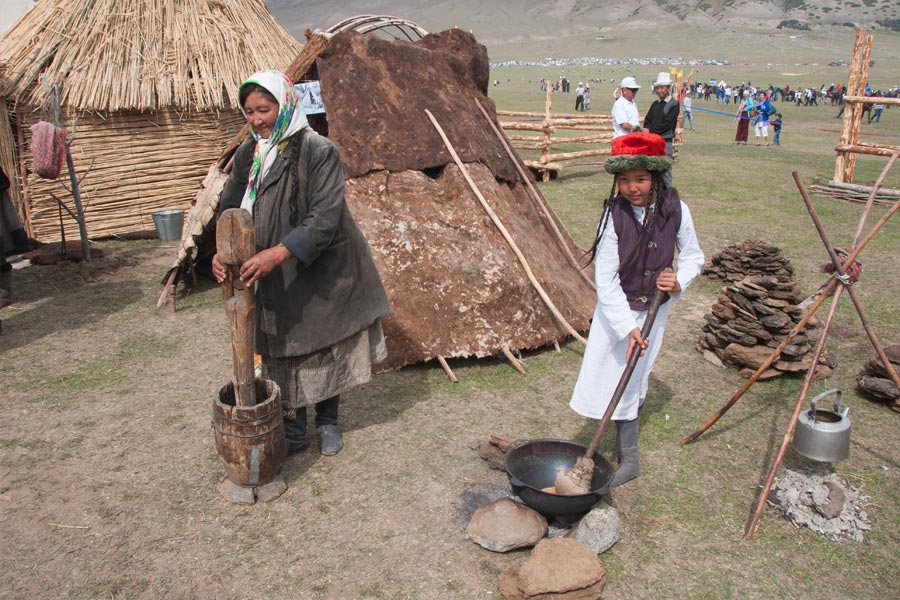
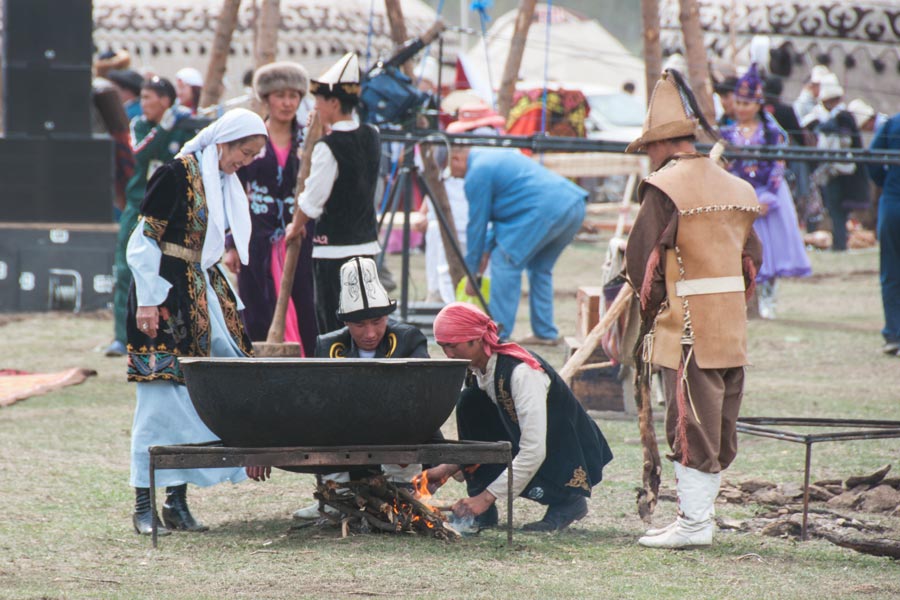
One feature of the celebrations is the “sumalaq” – a special ritual meal, which is prepared only at this time of year. It takes a whole day to prepare and cook, and the process has a series of traditions, songs, dances and general merry-making. The main dish is made from flour and sprouts of newly grown wheat. It is cooked in large pots – with stones in the bottom to help prevent the mix from being burnt. There is a local tradition, that if you find one of these small stones in your dish – it is a sign of good fortune for the year to come.
Noorus is a time to visit relatives, friends and pay respect to the older members of the family; a thorough cleaning of the house; s special table is set with the seven “S”s (In ancient times each of the items corresponded to one of the seven creations and the seven holy immortals protecting them. Today they are changed and modified but some have kept their symbolism.); and all kinds of foods and delicacies are prepared.
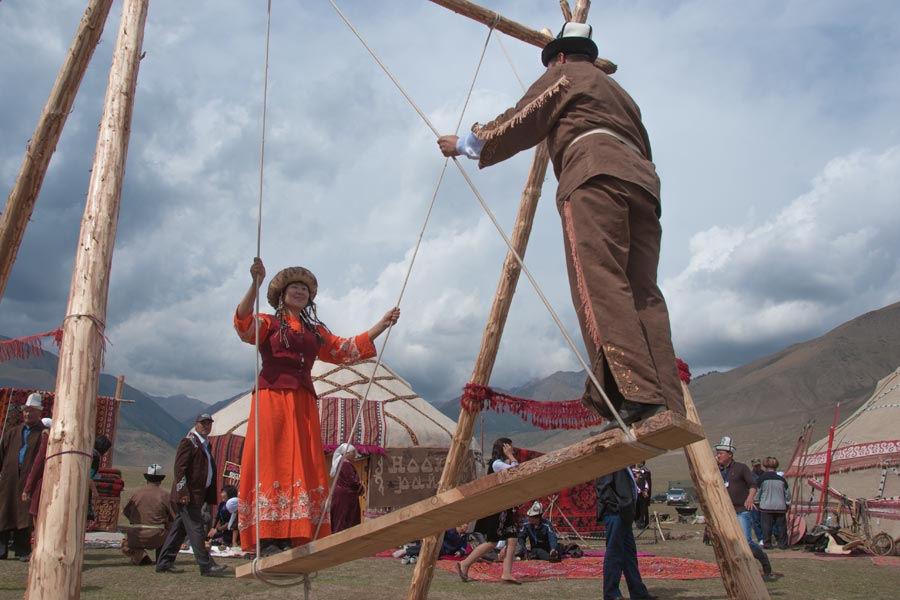
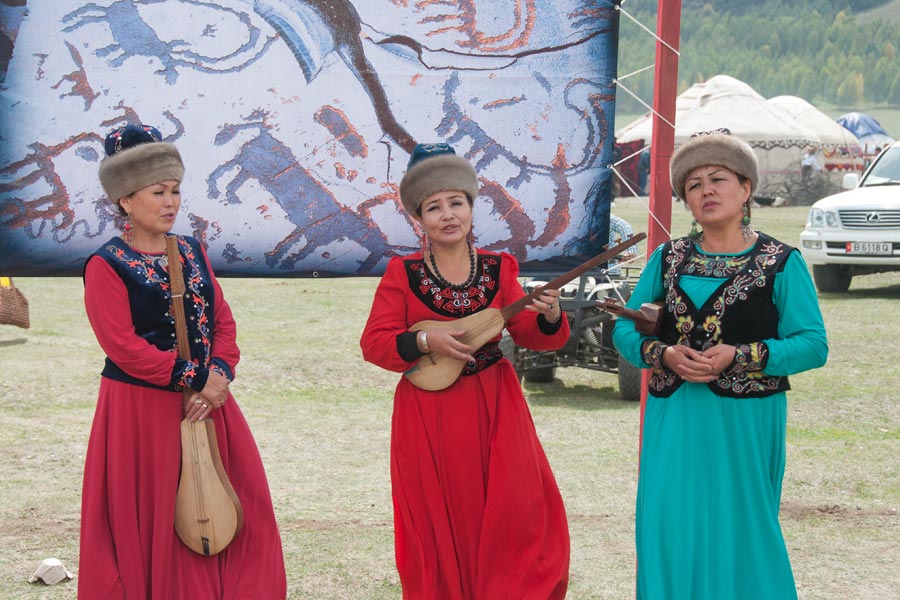
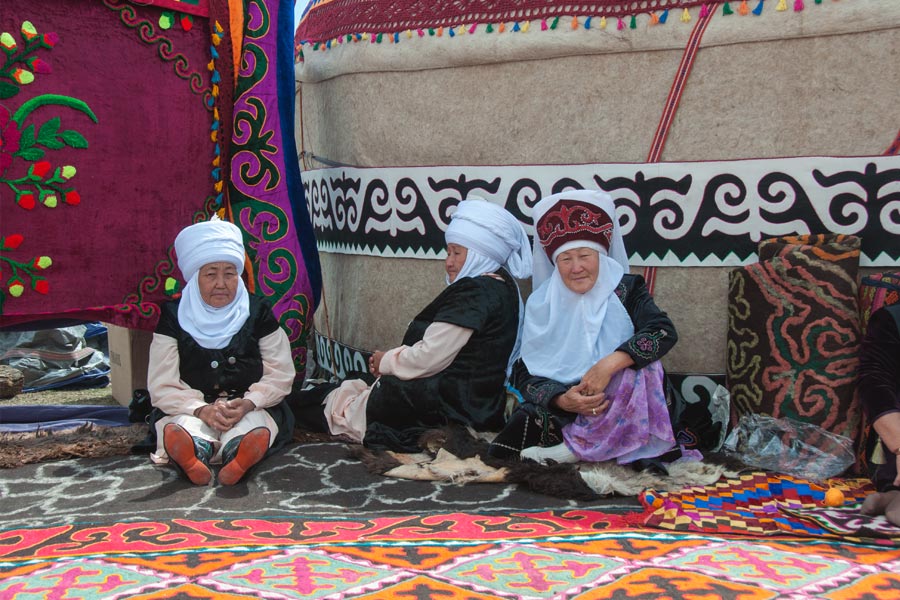
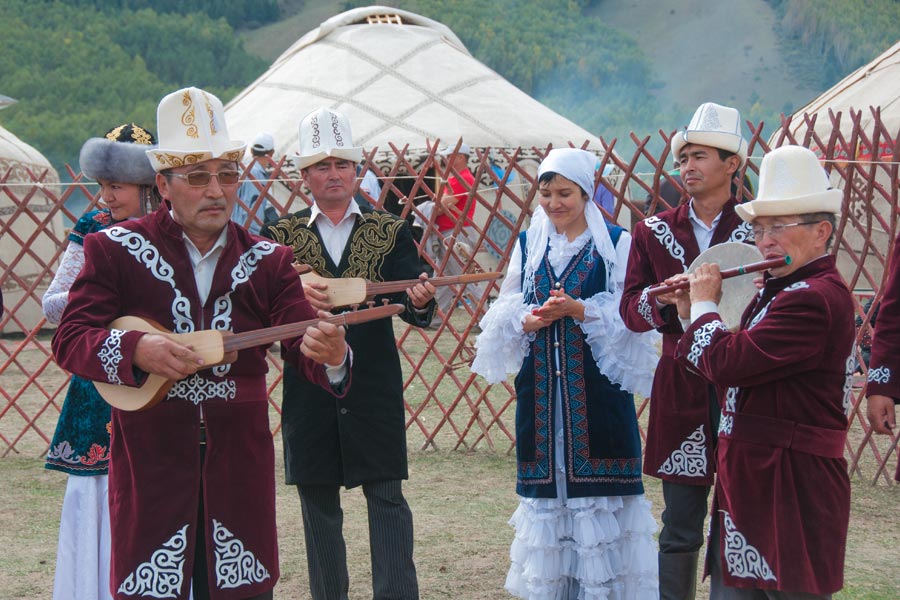
However, Norus is usually marked as a public holiday, without the symbolic rituals and practices which are common in Iran. Sometimes, however, it is possible to come across specially organized festivals – giving a taste of the special flavour of Central Asia. For example, in the main All Too square, in Bishkek, there are parades, performances, and many of the population simply "goolayet" - stroll around the city center, "soaking up the atmosphere". Sporting competitions are arranged in a number of places - such a festival of traditional horse games in the Hippodrome in Bishkek. Also, in some parts of the country, "street parties" are organized.
Kyrgyzstan Public Holidays
|