Advantour Uzbekistan Tours
 
Kyrgyzstan
Hotels
Tours
Visa
Airport Service
Rent a car
Home > Silk Road > Central Asia > Kyrgyzstan
 

Kochkor, Kyrgyzstan


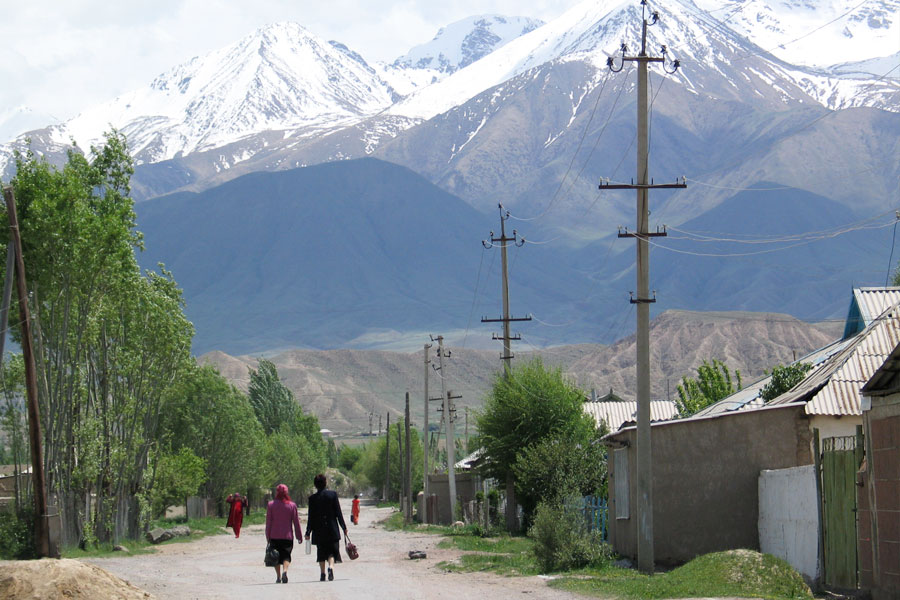
Most people used to simply pass through Kochkor (or Kochkorka, as it used to be known in Russian), on their way to, or from, Torugart and the Chinese border. Nowadays, more people are stopping and spending some time in the region. 

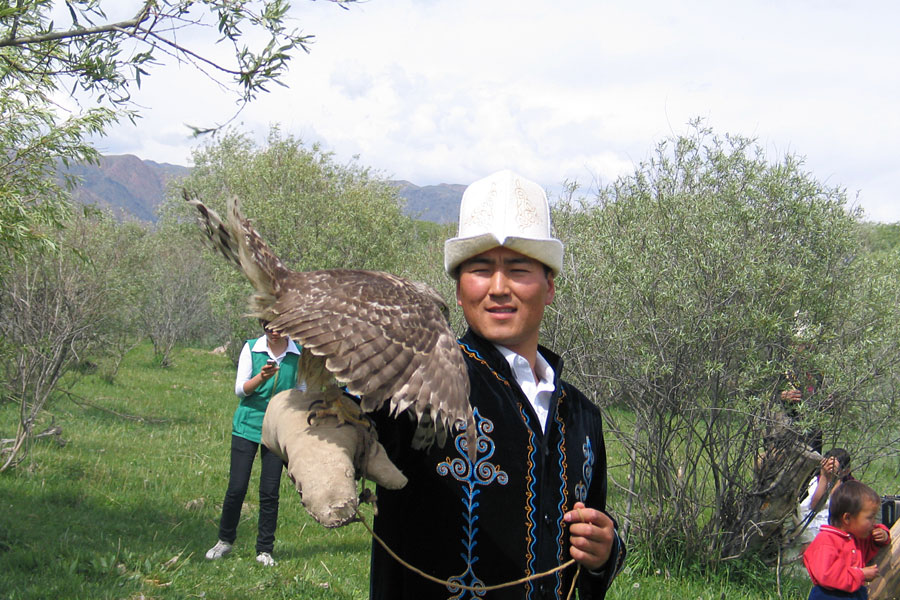
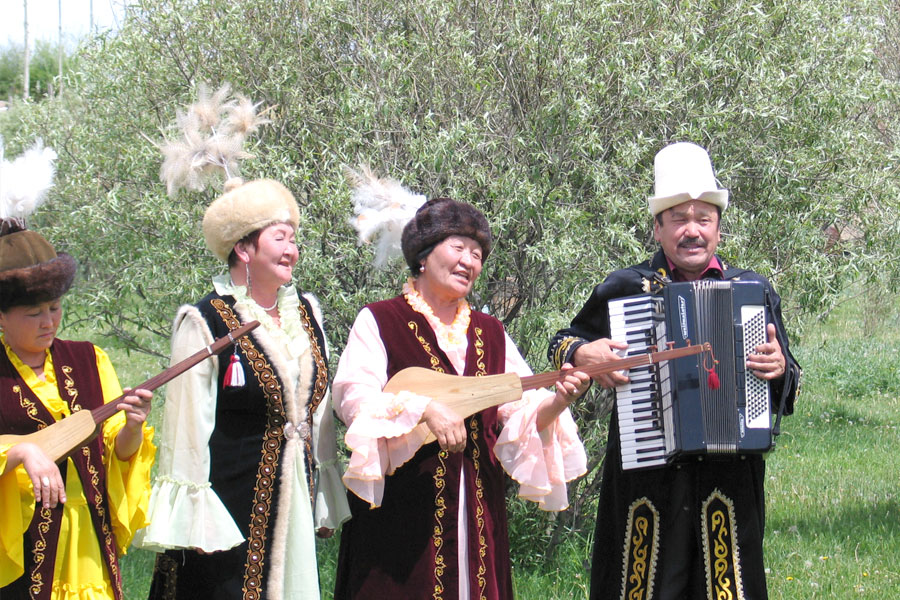
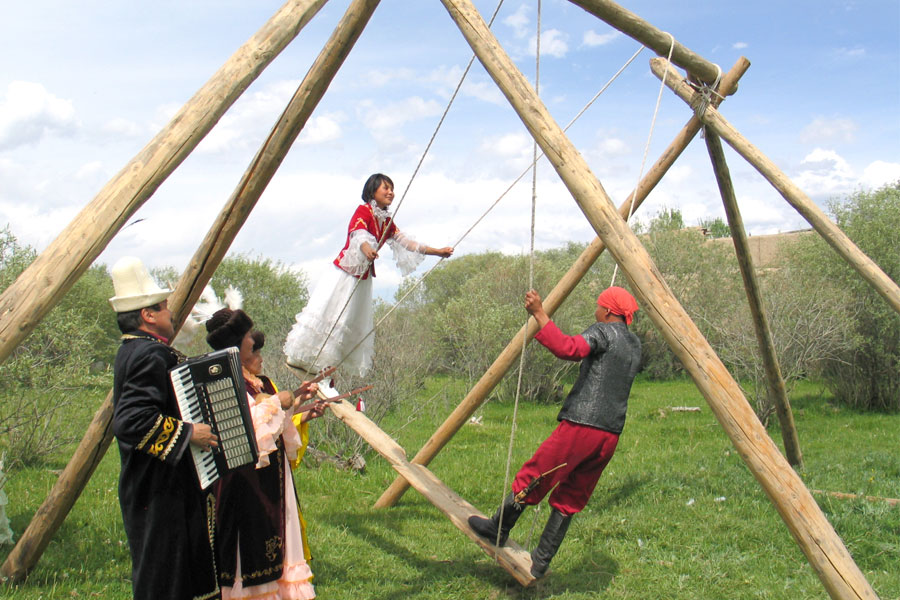
One reason for this is probably the development of the “Shepherd’s Life” project – a local initiative inspired by the Swiss development program “Helvetas”. A network of shepherd’s families offers home-stays and can organize transport, and other services (horse riding, trekking, guides, talks and demonstrations of local crafts, concerts of traditional Kyrgyz music …) in the region.  Home-stays and Farm-stays are popular all over the world – and for those who are willing to spend the time getting acquainted with the host families and their way of life – it can be a most rewarding experience (as well as offering the shepherds and farmers a way to supplement their income). The program has been very successful – it has been featured in travel books; it has it’s own web site; it has extended, not only to other parts of the Naryn region – but has been copied in other parts of Kyrgyzstan as well.

Kochkor is supposed to be the site of the first settlement in the valley. There are some ancient barrows to the to South – between Kara Suu and Bolshevik. Situated on the main road from Balykchi to Naryn, at a point where the road to Suusamyr (and on to Osh forks off from the main road to China from Issyk-Kul and the Chui valley) it marked a natural stopping point for a camp for nomads and travelers. A mosque and an inn (Chayhana) were established.  As such it has always attracted a wide variety of nationalities. As well as the Kyrgyz - Uzbeks, Uighurs, Dungans and later Russian and German settlers were attracted to the plain. (Since independence – many of the other nationalities have, in fact, moved out.)

In 1909 it was named Stolypin, after the Russian Prime Minister who was a major advocate and proponent of Russian expansion into, and the settlement (colonization?) of Central Asia. Stolypin and the Bolsheviks, under Lenin, were violently opposed to each other’s ideas and after the revolution, in 1917, the town was renamed Kochkorka – and as with many towns which have been renamed since independence - the Kyrgyz version of the name Kochkor was adopted. 

As is often the case, there are a number of legends associated with how the village of Kochkor got its name.  Perhaps the most romantic tells of a poor, well educated, young man - a traveler.  On one of his journeys he stopped at the camp of the local Khan. The Khan had a daughter who was very beautiful – and many of the local princes had already tried to woo her – all of them unsuccessfully. In short, the traveler met her and fell in love – asking the father to allow her to marry him. Although the Khan laughed at the poor traveler, he was not amused and decided to teach him a lesson. He decided to set the would be son-in-law an impossible task. He offered the young man a chance to breed camels for 10 years (!) and if in that time his stock increased by a hundredfold, then he could marry the princess. The young man was so in love with the girl that he set about his task. The first winter was unusually harsh. One day there was an eclipse of the sun and a chill fell across the face of the earth and a storm blew in. The wind was so strong that the man could not even open his eyes. Exhausted, using the last of his strength, the young man cried allowed “Kach kar, Kach kar!” (which roughly translates as “Go away snow, Go away snow!”) Nature heard his cry and took pity on him – the storm abated, the wind died down and the snow stopped falling. From that day, so the legend has it – it rarely ever snows in Kochkor.

Incidentally, the young man was successful: he prospered and his herd of camels increased by the required amount and so he eventually married his princess. They had a son who became a great warrior.
Traveling from Bishkek/Issyk Kul you pass the Orto Tokoi reservoir. It was the first reservoir built in Kyrgyzstan, in 1956.

The water level fluctuates considerably throughout the year, but the turquoise color can be quite striking – and in winter, when it is frozen over it has a mystical, desolateness. Incidentally, the reservoir is on the same River Chu that flows down to Bishkek via Boom Gorge … although you might get the impression that it must flow via Issyk Kul – it doesn’t … it swings around the end of the Kyrgyz Ala-Too range. 
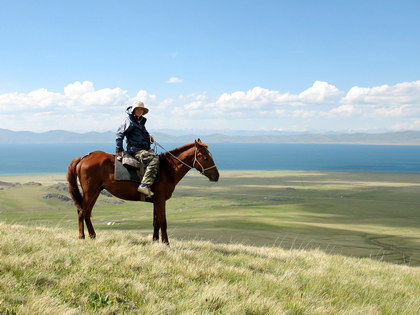
From Kochkor it is possible to visit Son Kul, either by driving up towards Naryn as far as Sary Bulak and then turning off … or by taking the Osh Road and turning off to Kara Keche before Chaek.  
 
There are several mountain pastures (Jailoo) in the region and it possible to trek, ride horses, or drive to several of them and overnight in a yurt with the shepherd’s family. 


Copyright © 2001-2012 Advantour. All rights reserved.