

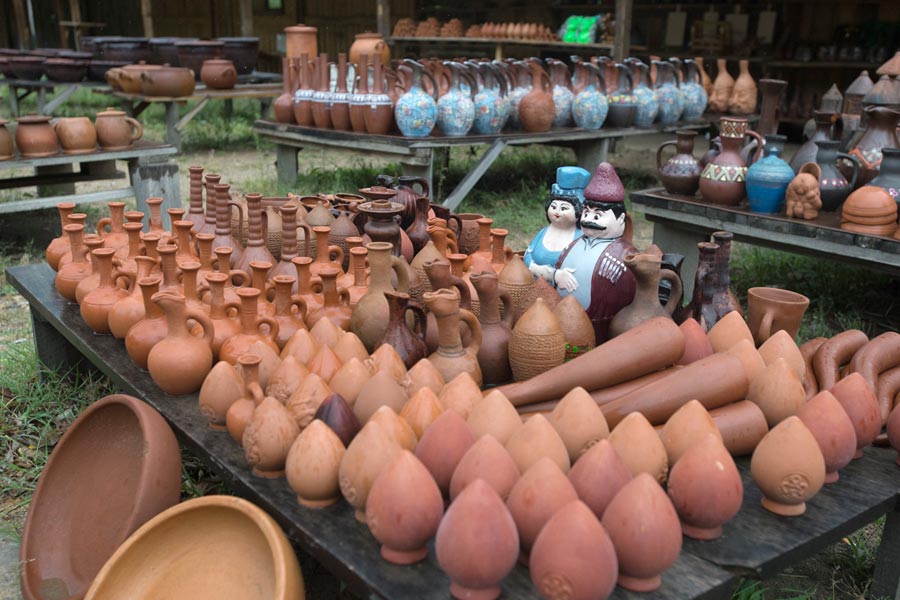
Traditional Georgian applied art is mainly represented by high art items fabricated from ceramics, metal, wood, and bones. Georgia is famous for its fine jewelry, metal engraving, and armory.
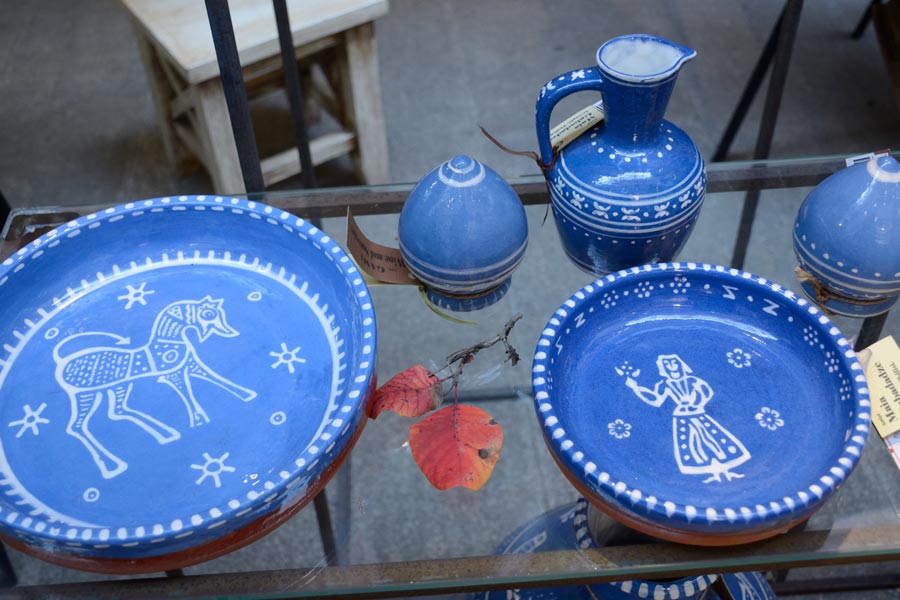
The first examples of ceramic ware appeared in the territory of Georgia in the seventh millennium BCE. Later, in the fourth and third millennia BCE, the first metal items emerged. The earliest silver objects found in the territory of Georgia date back the third millennium BCE. Jewelry production reached its apex in the second millennium BCE. Jewelers mastered the art of filigree, stamping, and molding.
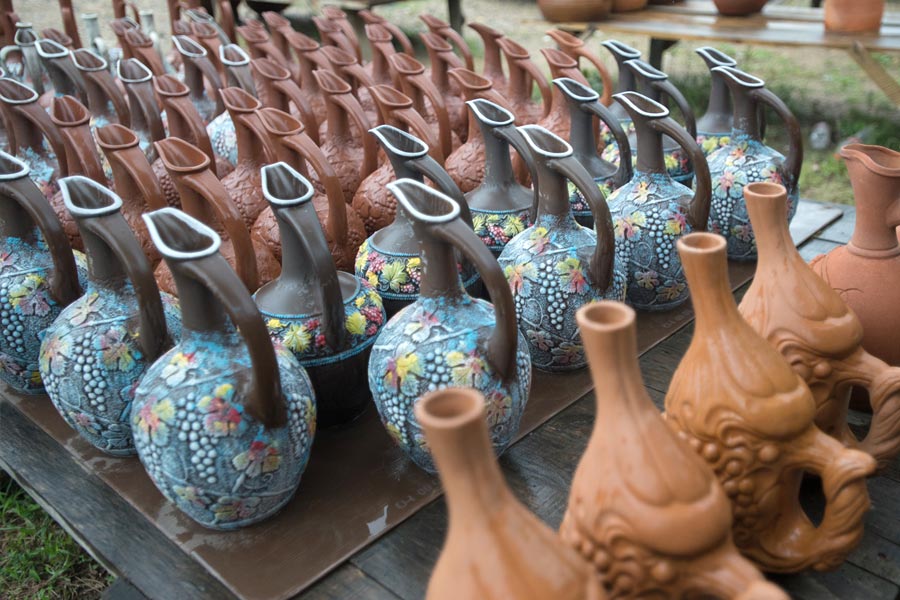
But the art's apogee occurred during the eleventh through thirteenth centuries. This period of numerous conquests affected Georgian applied art as It was under the influence of European, Persian, and Asian presence. Regardless, Georgians managed to preserve their traditional artisan techniques.
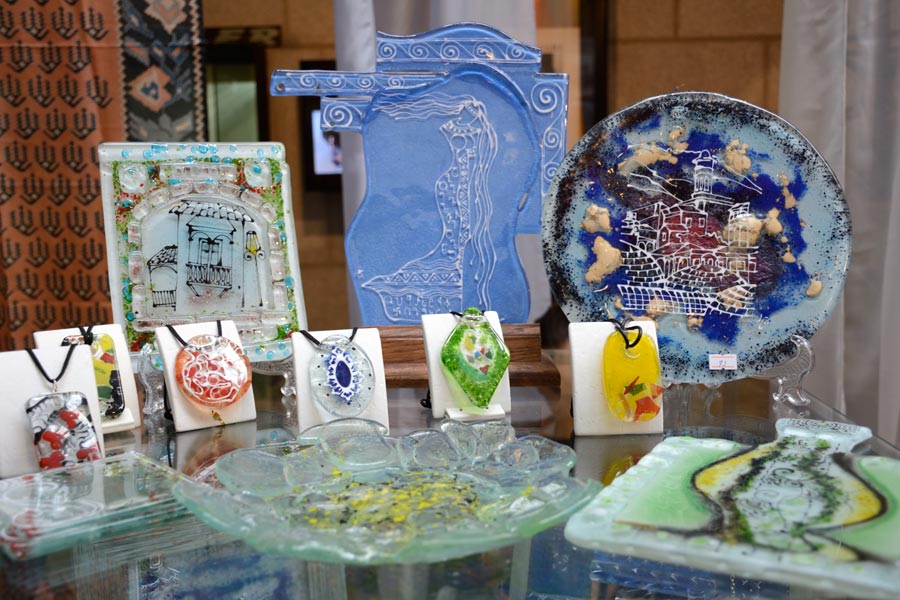
In the nineteenth century, the art of Georgian goldsmiths reached its highest stage of development. The best samples of golden tableware (cups, bowls, jugs, and kantsi-horns) and ornaments were created in Tbilisi, Akhaltsikhi, Gori, Kutaisi, Zugdidi and Telavi. They were ornately decorated by stamping, filigree, and niello.
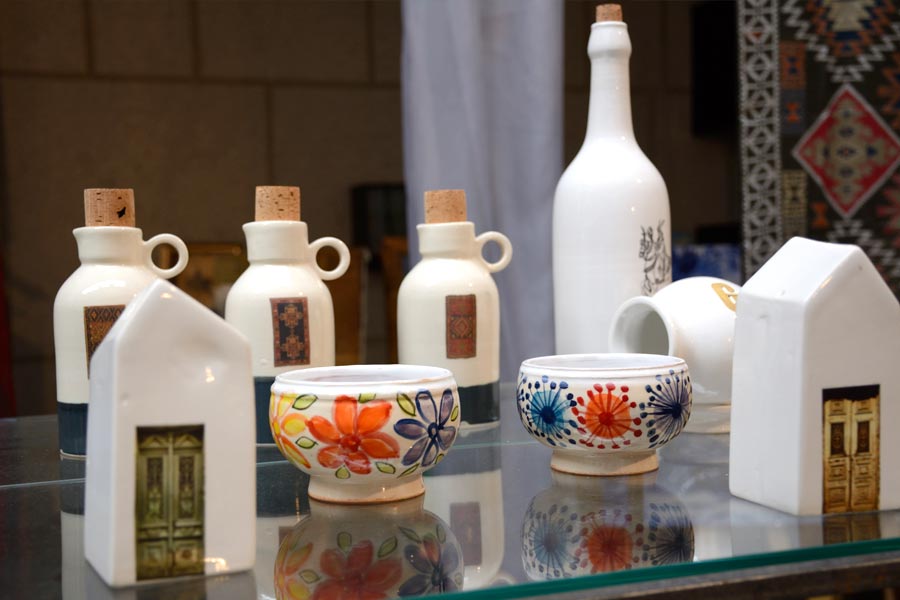
From ancient times, Georgian craftsmen used enamels when processing precious metals. This art was greatly developed during the ninth through twelfth centuries. Enamel, especially of plaque-a-jour type, was used for decoration for both religious and secular purposes: church utensils, tableware, belts, rings, and necklaces, etc. Even now, this art has not lost its prominence, Georgian masters continue applying these enameling techniques.
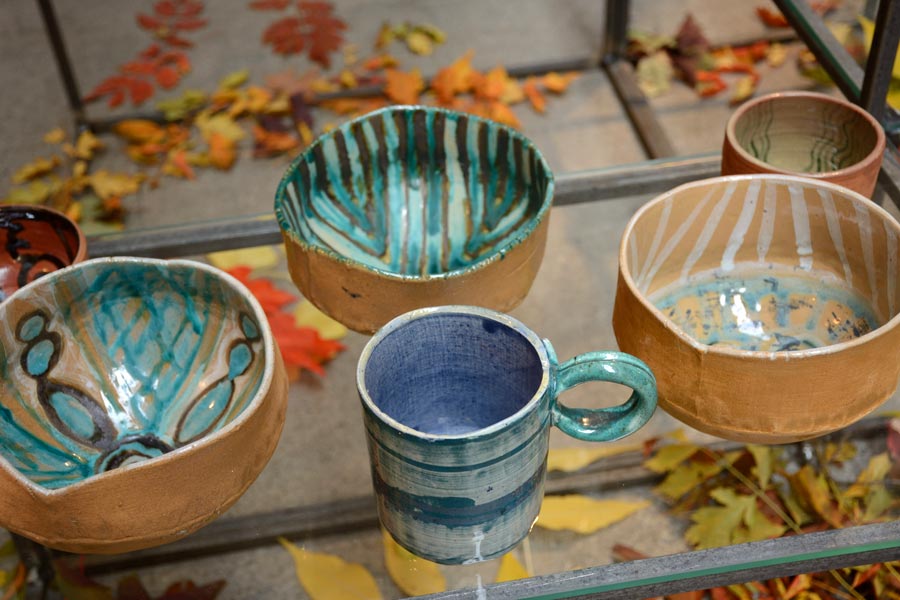
Glazed ceramics have marked significance. Craftsmen adorned their products with beautiful and refined shapes.
The Georgian national art of beadwork is centuries old. It is still manufactured by Georgian highlanders. Georgian national arts and crafts are attractive in their simplicity, plasticity and unique traditional forms.