

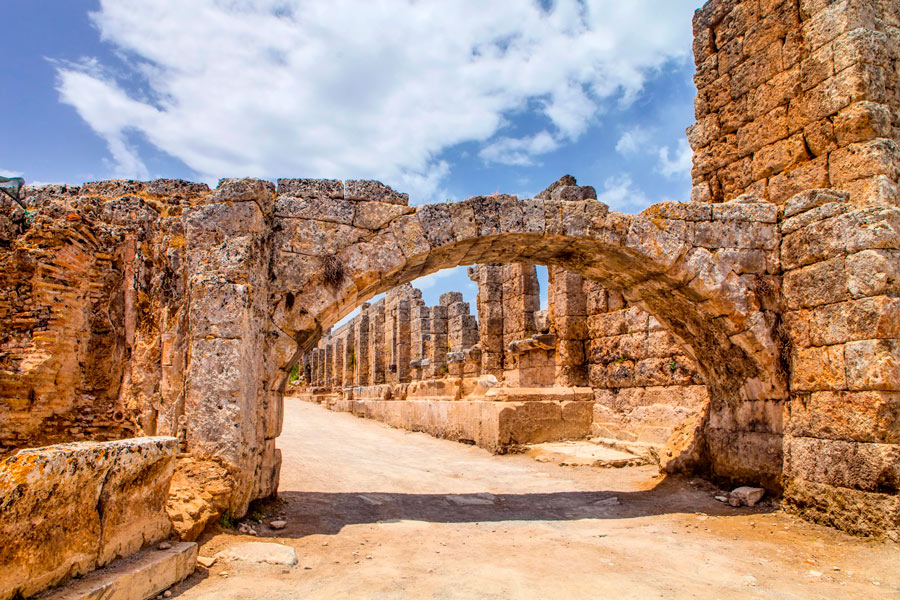
Why Perge Ancient City is One of Antalya’s Most Important Archaeological Sites
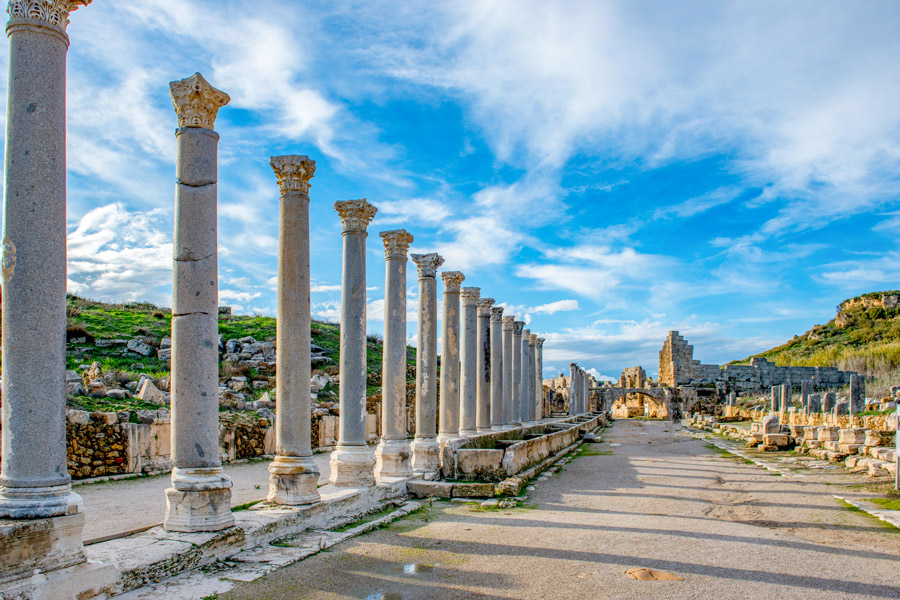
Perge Ancient City (Perge Antik Kenti), or Perge Archaeological Site (Perge Örenyeri), near Antalya city centre, is one of the most important ancient ruins in Turkey. It suits travellers interested in urban planning, sculpture, and the Roman world.
The settlement is located east of central Antalya, near the Aksu district. It combines Hellenistic fortifications, broad Roman streets, baths, fountains, a major stadium, and an exceptionally strong archaeological record. Perge was also associated with the Hittite name Parha, a town which later developed into a major city in Pamphylia. The site remains on Türkiye’s UNESCO World Heritage Tentative List.
What makes Perge, Turkey, stand out is its structure that still reads as a city. The monumental gate leads into a long colonnaded street lined with the remnants of baths, an agora, a theatre, fountains, and a stadium.
Additionally, Apollonius of Perga, the mathematician known for his work on conics, was born here.
Where Is Perge Archaeological Site?
The official museum listing places the Perge archaeological site at Barbaros Mahallesi, Perge Caddesi, Aksu, Antalya, and states that it is about 17 kilometres from the city centre; UNESCO’s listing indicates the distance as 18 kilometres east of Antalya and 2 kilometres north of Aksu. In practical terms, this information makes how to get to Perge from Antalya relatively simple.
Its location in the Pamphylian plain also helps explain the historical importance of the site. Perge was not an isolated settlement; it was connected to inland routes and the wider Mediterranean world.
Perge ruins (Perge Harabeleri) work best as part of a cultural day that may also include other ancient ruins near Antalya. For instance, Aspendos and Perge are popular combinations.
Perge Antalya Entrance Fee and Opening Hours
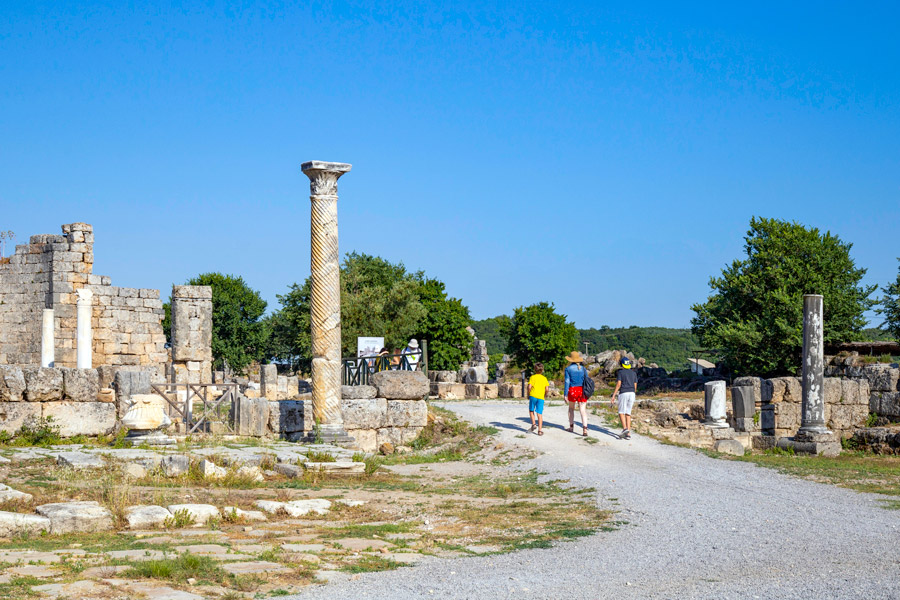
The Perge Antalya entrance fee policy includes several ticket and museum pass options. The Antalya Perge Archaeological Site accepts Müzekart for eligible Turkish citizens. At the same time, foreign visitors can either purchase a single-entry e-ticket for 11 euros or use museum passes such as the MuseumPass Türkiye E-Card and the MuseumPass The Mediterranean, which include many ministry-affiliated museums and archaeological sites.
Perge opens daily at 08:00. Closing times may vary by season, so it is advised to check the official museum page before visiting. The box office typically closes half an hour earlier than the given closing time.
Turkish citizens under 18 and over 65 are admitted free of charge through the ministry's QR-based entry system, while university students majoring in archaeology, art history, or museum studies may also enter free on presentation of a valid student ID. Foreign children under the age of 8 can also enter free of charge.
The History of Perge City
From Pamphylia to the Roman Empire
The history of Perge Ancient City runs deep, with evidence that it developed through multiple political and cultural phases. Official and UNESCO material indicate settlement traces reaching back to the Chalcolithic and Early Bronze Ages. The name Parha also appears in Hittite texts.
In antiquity, Perge belonged to Pamphylia, the fertile region that linked Anatolia with the Mediterranean trade and exchange. The area came under Roman control from the 2nd century BC onward and flourished under the Roman Empire. In the 2nd and 3rd centuries AD, public buildings expanded dramatically during the Pax Romana – the age of imperial stability in the Roman Empire. Perge played a prominent role in the Byzantine period as well.
The settlement carries close associations with St Paul. It was a starting point of his route toward Pisidian Antioch.
The Layout of the Perge Archaeological Site Antalya
UNESCO highlights Perge's significance in urban planning during the Late Classical, Hellenistic, and Roman times. This significance includes its grid layout, defence system, and the key north-south colonnaded street. With its water channel running through the centre, the street gives Perge one of the clearest urban outlines of any open-air archaeological site in Antalya.
The Hellenistic gate is especially memorable. The twin towers are the remnants of the earlier city wall system. The inner courtyard takes on a horseshoe shape, with marble revetment, statuary niches, and a more theatrical civic presentation. This layered gate complex captures Perge’s character very well and provides a strong sense of ceremonial arrival.
After the gate, the space opens into a sequence of public areas. The main street, fountains, agora, and baths all sit within a coherent plan. Water management was central to the identity of Roman Perge, and the visible channels still shape the visitor’s experience today.
What to See at Perge, Turkey
The Stadium
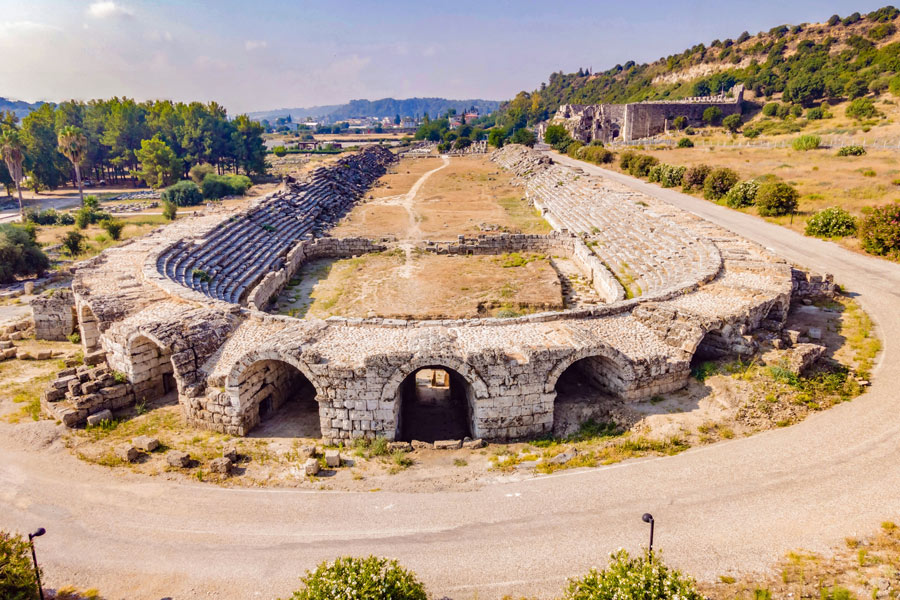
Perge’s stadium has long been regarded as one of the site’s defining monuments. It is one of the best-preserved ancient stadiums in Anatolia, and the recent rehabilitation has brought renewed attention to the arena. Its elongated form and curving end create the familiar horseshoe profile seen in numerous Roman entertainment venues.
The Roman Baths
Perge’s southern bath complex functioned as a social centre as well as a practical one. Excavations there uncovered remarkable sculptures. They include a documented group of marble statues from the South Baths, testifying to the artistic richness of Roman Perge.
The Theatre
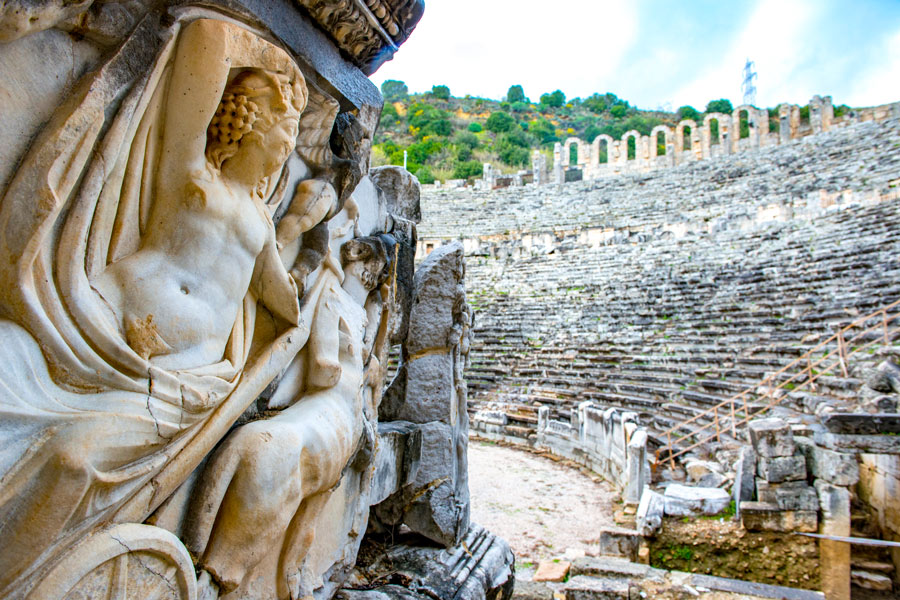
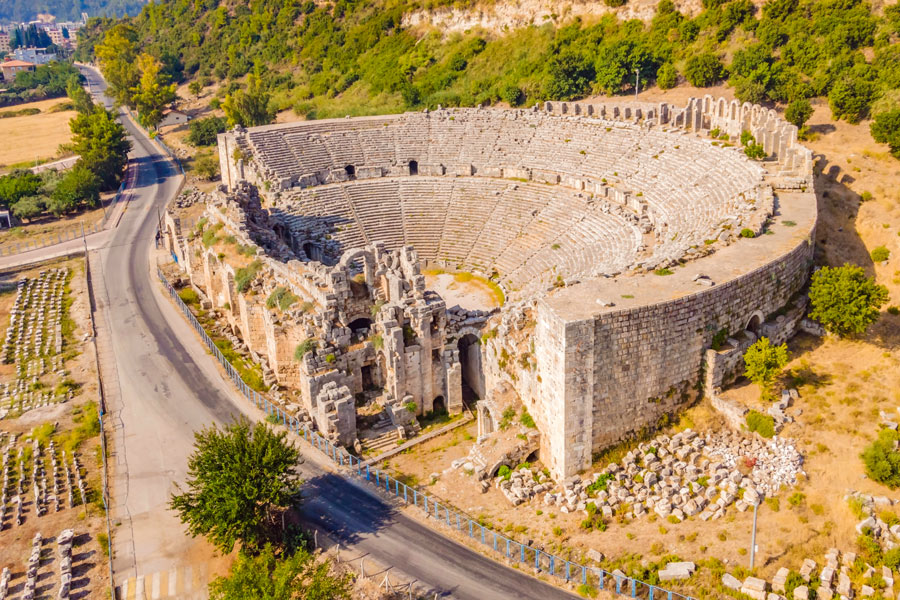
The Perge theatre was a notable expression of the settlement's wealth and cultural identity. It was one of the city’s principal public monuments. The theatre is known for its large seating area, monumental stage building, and mythological reliefs, including scenes associated with Dionysus – the god of wine, fertility and theatre.
Note: The ancient theatre is temporarily closed to the public for restoration purposes. Check the official museum page for the latest updates.
Fountains
Perge’s fountains, especially the Kestros and Caracalla fountains, show how water architecture served both practical and visual purposes. Beyond supplying water, they displayed the local wealth through their scale and decoration.
They also expressed civic generosity and Roman power, as such monuments were often funded by elites or imperial patrons and used to project status in public space. These monumental fountains are associated with the age of Septimius Severus and the patronage of the local noblewoman, Aurelia Paulina.
Discovered Artefacts and Where to See Them in Person
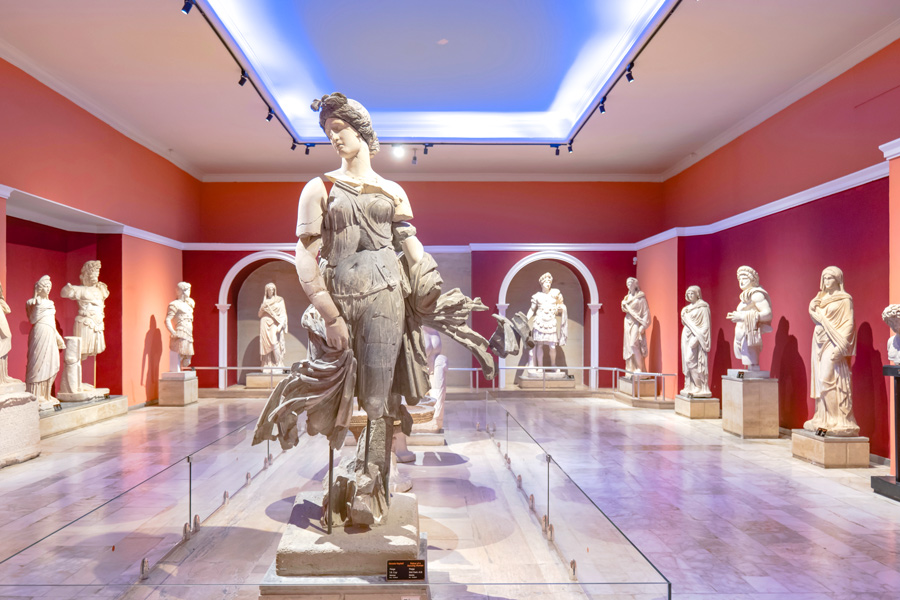
Perge ancient ruins in Turkey are one of southern Anatolia’s most important sculpture sites. The official Antalya Museum (Antalya Müzesi), also known as Antalya Archaeological Museum (Antalya Arkeoloji Müzesi), notes that statues excavated from Perge are among the highlights of its ancient collections.
Some of the famed finds include the Dancing Woman and the statue of Marsyas, the Phrygian satyr of Greco-Roman mythology. Other discoveries include Roman-period sculptures of gods, emperors, and civic benefactors.
The site is also known for its mosaics and mythological imagery. Reported finds include mosaics depicting Medusa, the snake-haired mythic figure, and Oceanus, the primordial sea god, as well as a scene from the Trojan cycle illustrating Iphigenia, the sacrificed daughter of Agamemnon, the king who led the Greek forces in the Trojan War. Together, these discoveries show that Perge was a richly decorated Roman city.
Note: The official Antalya Museum page currently lists the museum as closed to visitors. Therefore, visitors must confirm the current status before planning a trip around it.
Best Time to Visit Perge
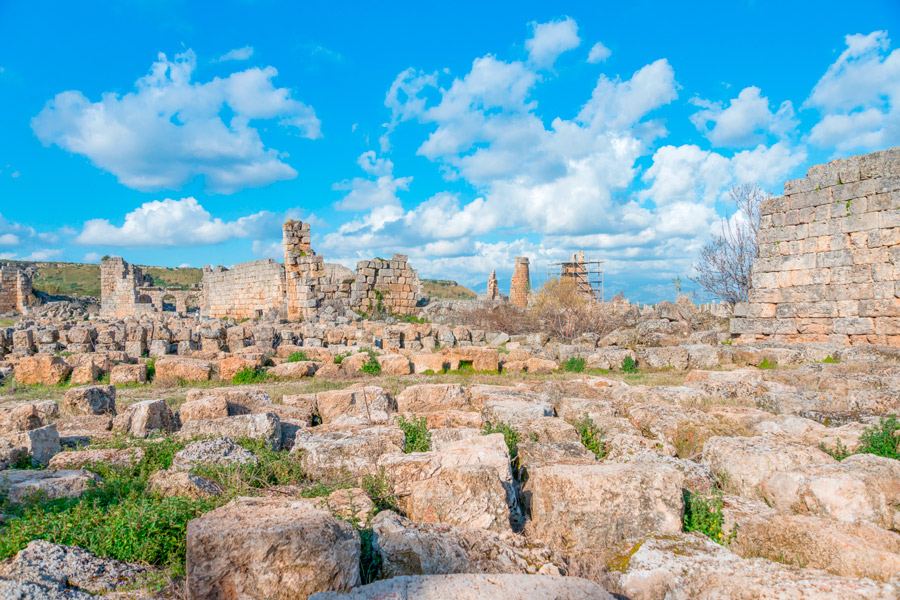
Perge Antalya is among the many exposed archaeological sites in Turkey, so the seasons and the times of day matter. Spring and autumn usually offer the ideal conditions, while summer visits are often easiest in the morning or later in the afternoon when the light softens. This way, the details appear more clearly. The official seasonal opening hours support that rhythm, with longer summer access and earlier winter closure.
How to Get to Perge from Antalya
For travellers looking up how to get to Perge from Antalya, the site can be reached by private car, taxi, organised tour, or a combination of tram, bus, and short onward transfer. Antalya’s transport network makes Perge one of the more accessible archaeological sites near the city. This adds to its appeal for those who want a substantial historical visit without a long journey.
For independent visitors using public transport, the practical route is generally to travel towards Aksu on Antalya’s light-rail system. The official ANTRAY network includes the Fatih–Havalimanı–Aksu–Expo line. From there, the final stretch to the archaeological site is frequently completed by taxi. Local bus or minibus connections may also be useful depending on the starting point and time of day.
A rental car can be a convenient option for those planning to combine Perge with Aspendos or other nearby heritage sites, while taxis provide a simpler, direct transfer. For a travel-agency itinerary, Perge is often comfortable as part of a private transfer or guided cultural tour, particularly when included within a broader archaeological route.
Practical Recommendations for Visitors
Perge is an outdoor archaeological site with open areas, stone surfaces, and some uneven ground. So, comfortable walking shoes, water, sun protection, and a slower pace during the hotter hours make sense. The official listing also notes on-site basics, such as a café, shop, and restrooms.
Most visitors typically spend about 2 hours exploring Perge. Those with a stronger interest in archaeology, urban planning, or sculpture may prefer to extend their visit to around half a day.
Why Perge Is Worth Including in an Antalya Itinerary
Perge Ancient City's long history, from Perga in Pamphylia to the Byzantine period, is still easy to trace on site. The Hellenistic gate, the ordered streets, the Roman baths, the fountains, the stadium, and the sculptural legacy remain remarkably clear.
Perge is also one of the best places in the region to see how local identity, Roman imperial culture, and classical myth existed within the same urban fabric.
For travellers interested in open-air museums in Antalya, classical urbanism, or the wider landscape of archaeological sites in Turkey, Perge stands out for its clarity, scale, and substance.
The sculptures and decorative finds linked to the Antalya Museum help place the ruins within the wider story of Roman Pamphylia. Even the name Apollonius of Perga adds another layer, connecting the city to the intellectual history of the ancient world.
Additionally, Perge is easily included in a well-curated cultural programme. It is accessible, historically layered, and visually rewarding. It also combines naturally with major sites such as Aspendos. Perge is not simply a stop near Antalya. It is one of the clearest ways to understand the region’s ancient heritage.