

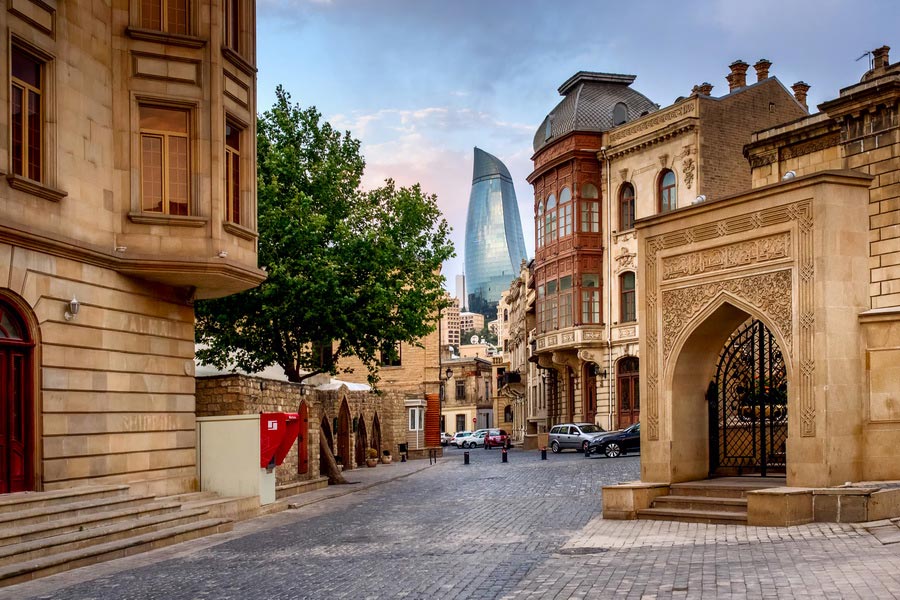
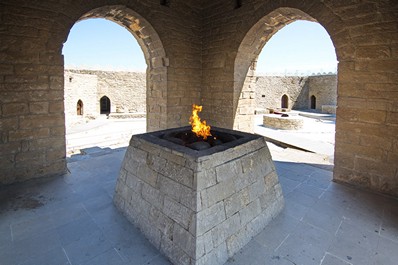
Visit Azerbaijan (Azərbaycan Respublikası), and you will trace the Caucasian leg of the Silk Road, where skyscrapers of Baku stand a short drive from semi-desert landscapes.
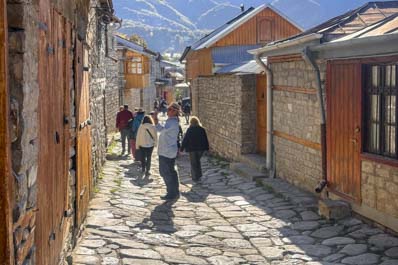
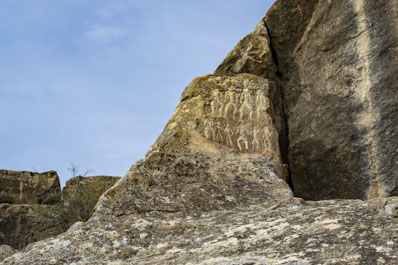
Retrace the path of ancient Zoroastrian pilgrims, walk the cobbled alleys of an artisan haven in the highland village of Lahij, and examine prehistoric petroglyphs in Gobustan.
Mediaeval caravanserais in Sheki, boiling craters of mud volcanoes, mountain villages and the Caspian coast can all fit into the same journey. No two regions of Azerbaijan look alike.
Your Guide to Visiting Azerbaijan by a Local Travel Expert
Planning a first trip to Azerbaijan? This guide contains the necessary information: why to go, visas and safety, the best time to visit, transport, hotels, ready-made itineraries, food, festivals, and practical local advice.
Contents
Why Visit Azerbaijan?
There are plenty of reasons to visit Azerbaijan. For one thing, the country sits on vast reserves of oil and gas, and the landscapes reflect it. NASA researchers even studied Azerbaijan's mud volcanoes as Earth analogues for similar formations on Mars. What else can the Land of Fire surprise you with?
Capital Baku
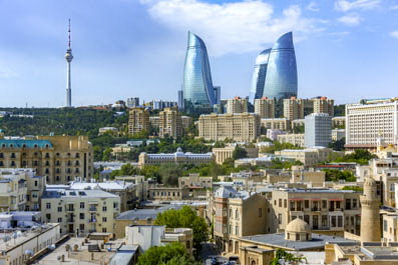
Baku was once an important Silk Road city, linking West and East across the Caspian Sea. It still partially plays that role today through modern projects like the Baku-Tbilisi-Kars railway. Anyone who visits Azerbaijan is struck by the contrast between the fascinating, modern glass towers on one side and the old cobblestone streets on the other. Baku has also made international headlines by hosting the 2016 World Chess Olympiad, the 2012 Eurovision Song Contest at the Baku Crystal Hall, the 2015 European Games, and even Formula 1 with the Azerbaijan Grand Prix since 2017.
UNESCO Sites
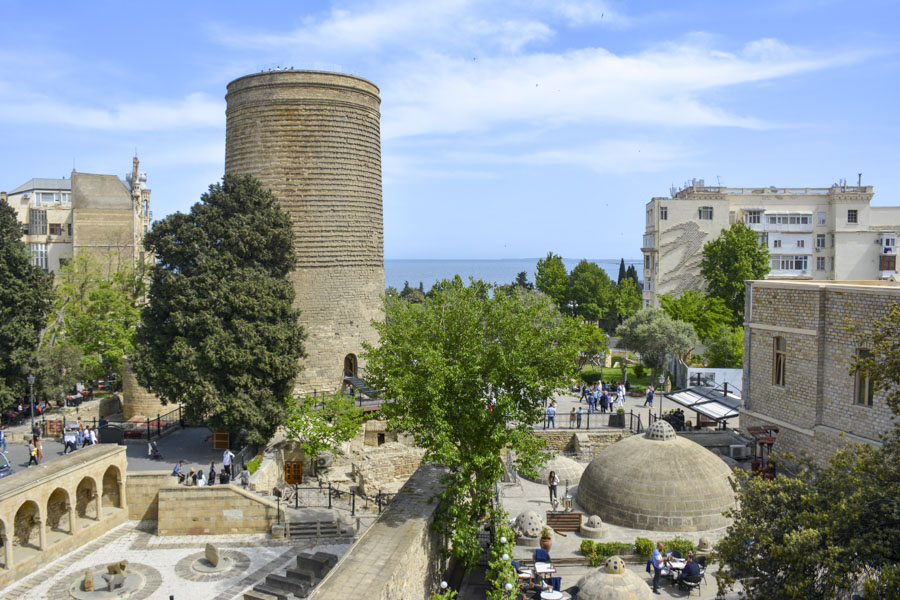
It is no surprise that the first UNESCO World Heritage Site most visitors encounter is in the capital. Baku’s Old City, better known as Icheri Sheher (İçərişəhər), is home to the Maiden Tower (Qız qalası) and the Palace of the Shirvanshahs (Şirvanşahlar Sarayı). Beyond the City of Winds, four more UNESCO monuments await travellers, adding even more highlights to the list of things to do in Azerbaijan.
Delicious Food
Azerbaijani food pleases meat lovers, vegetarians and anyone with a sweet tooth. And there are gastronomic cities that cook their own specialities worth planning a stop for. Wake up in Lankaran, and breakfast may mean a garlic omelette, and lunch could bring plov baked inside a pumpkin. Dolma, kebab, fresh herbs and endless glasses of tea make hospitality easy to understand once you sit down at the table.
Azerbaijan Wine
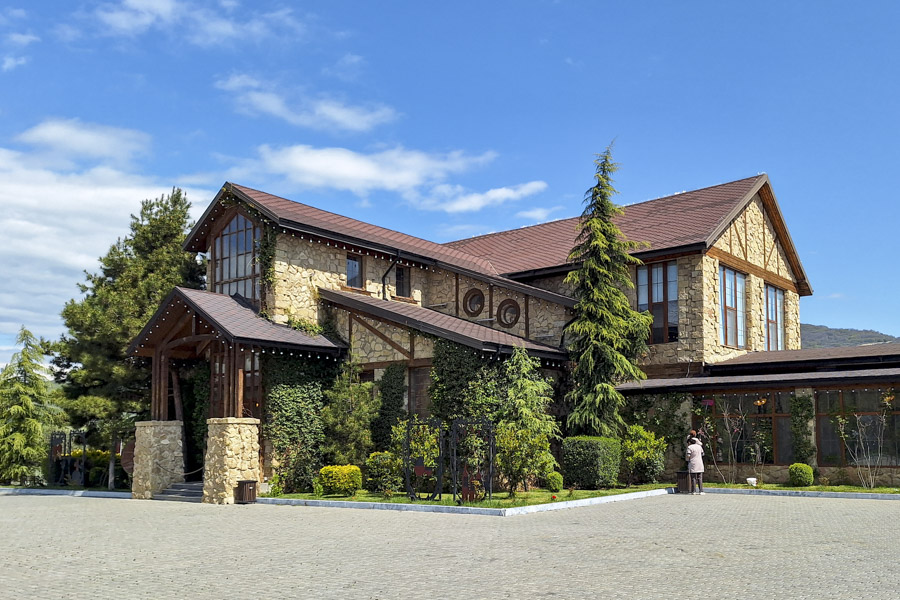
Wine may sound like an unexpected subject in a Muslim-majority country, yet it has a real place in Azerbaijan’s history. Its modern story traces back to immigrants from the Kingdom of Württemberg, a state of the German Empire, who arrived in Goygol (Göygöl) in the early 19th century. Their wineries helped shape the local industry. After a period of slowdown during the Soviet regime, wine production is becoming much more modern today, using cutting-edge techniques and organic wines with European Union certifications. New vineyards, tasting rooms, and local indigenous grape varieties give an attractive aspect to the Azerbaijani wine scene.
Red Village – Little Jerusalem
Walk through Goygol, and the architecture shows a strong German influence. The Red Village (Qırmızı Qəsəbə), however, tells a different story: a Jewish settlement historically associated with the Mountain Jewish community. Red-tiled roofs, two synagogues and the Simonov House still mark its streets. Wander slowly, and for a moment the lanes can feel like an old quarter of Jerusalem.
Lankaran – The Sri Lanka of Azerbaijan
Locals call Lankaran (Lənkəran) the Sri Lanka of Azerbaijan for its tea plantations and citrus groves. Azerbaijan produces 90% of its tea here. The town sits on the Caspian coast in a humid subtropical climate, ideal ground for farming. Visiting Azerbaijan without drinking tea the local way, poured into an armudu stəkan, the traditional pear-shaped glass, would be a missed opportunity.
Craft Culture
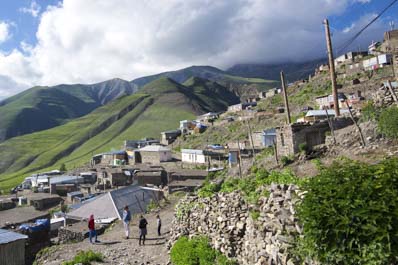
Leave Baku for a week and uncover the authentic craft culture of Azerbaijan, recognised as UNESCO Intangible Cultural Heritage. In Lagich (Lahij, Lahıc), artisans still work copper by hand. Basgal is known for silk Kelaghayi (Kəlağayı) scarves, while Sheki (Şəki) preserves the craft of making traditional musical instruments. In the remote village of Khinalug (Xınalıq), also spelt Khinalig, you can buy hand-knitted woollen goods. In 2023, the village was inscribed as the Cultural Landscape of Khinalug People and the "Köç Yolu" Transhumance Route UNESCO World Heritage Site.
Azerbaijan Countryside
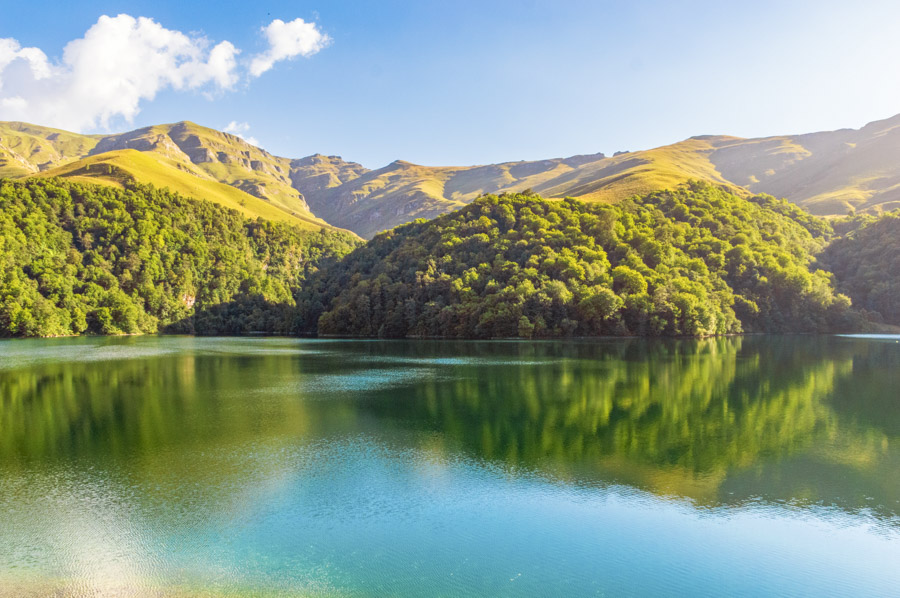
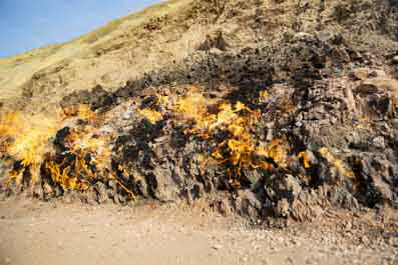
Stunning natural wonders await travellers during their visit to Azerbaijan. Outside the cities, they will find countryside bliss, where authentic rural life flourishes among diverse landscapes. Extraordinary phenomena, bubbling mud volcanoes, the blazing water-fed spring of Yanar Bulag in Astara, and the turquoise mirror of Lake Goygol continue to amaze newcomers embarking on scenic Azerbaijan nature tours.
Caspian Sea Coast
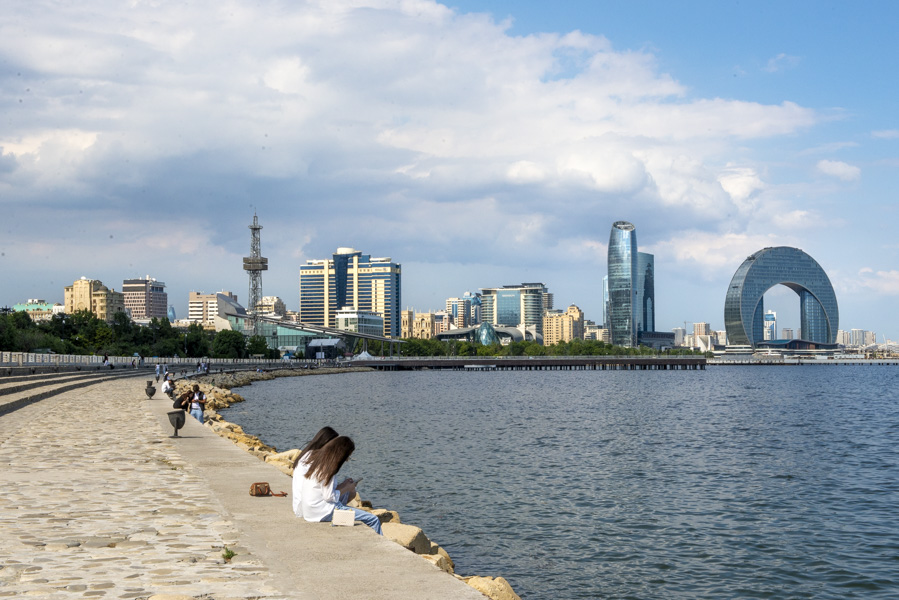
If you have never seen the Caspian Sea before, Azerbaijan is an easy introduction. Within minutes of the Old City, the Baku Boulevard reveals the waterfront. For a different perspective, rent a yacht and cruise towards the Absheron Peninsula, a popular stop on Caspian Sea tours.
Azerbaijan Wellness Resort
Locals and visitors from neighbouring countries come to Naftalan, a small spa town in Azerbaijan, to take in its unique crude oil baths. This is not the kind of oil used in industry: it is too thick for commercial extraction and does not burn well. Instead, people have long valued it for therapeutic purposes. Guests undergo these treatments under medical supervision. Even if a crude oil bath is not something you fancy, Naftalan is still a fascinating place to visit in Azerbaijan.
Combined Tours
Sharing a border with Georgia and Armenia, Azerbaijan is easy to combine with a journey across the Caucasus. As a result, travellers can experience three distinct cultures in one trip. An Uzbekistan–Azerbaijan itinerary, on the other hand, offers an even broader context, linking Central Asia with the Caucasus and tracing the history of the Silk Road through the great trading cities that once connected these regions.
Your Dream Vacation
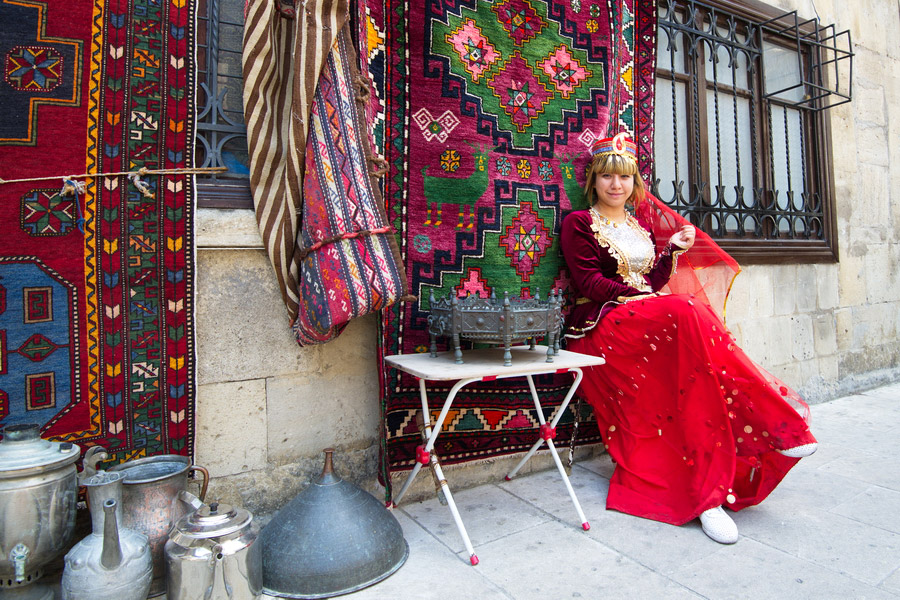
Everyone has their own idea of a dream vacation. For some, it is visiting historic landmarks. Others would prefer a gentle hike through a spectacular national park. And for others, it is all about discovering local food.
But how do you decide where to go if you know almost nothing about Azerbaijan? That is where our travel consultants come in. Tell us what you enjoy, how long you plan to stay, and which season suits you best.
Based on your interests, we will design a tour that truly feels like your dream vacation. And don't worry. Azerbaijan has more than enough remarkable places to match every travel style.

Do You Need a Visa to Go to Azerbaijan?
Most travellers need a visa, but citizens of the US, UK, Canada, and EU countries can use Azerbaijan's official ASAN e-visa system. The application is completed online, without a visit to an embassy.
Standard processing takes up to 3 business days, and urgent applications are processed in as little as 3 hours. The e-visa is valid for 90 days from issue and permits a single entry with a stay of up to 30 days.
Is Azerbaijan Safe for Travel?
Azerbaijan is generally a comfortable destination for visitors. Baku and Azerbaijan's main tourist circuit – Sheki, Gabala, and the Absheron Peninsula – are calm, walkable, and welcoming, with a very low crime rate.
Travellers should also be aware that certain border and former conflict areas are subject to access restrictions or official travel warnings, including the border with Armenia, the region of Nagorno-Karabakh, and areas near the southern border with Iran.
What to Avoid in Baku?
Keep valuables zipped up around Fountain Square and the metro during rush hour, the way you would in any capital city. Photographing military or government buildings is not allowed, and jaywalking fines are enforced. Public affection beyond hand-holding tends to draw looks in this socially conservative capital.
Getting Around Safely
Baku's metro and buses are reliable, clean, and inexpensive. For taxis, Bolt or a hotel-arranged car is an easy, safe default over hailing one on the street.
Before You Go
A quick check of your government's Azerbaijan travel advisory shortly before departure is good practice anywhere, and it is the best way to get updated news. Comprehensive travel insurance with medical coverage is worth having wherever you go.
Best Time to Visit Azerbaijan
The best time to visit Azerbaijan is during the shoulder seasons of spring (April to May) and autumn (September to October). During these months, comfortable temperatures and clear skies create perfect conditions for sightseeing in Baku, trekking in the Greater Caucasus, and historical Silk Road sites without extreme heat or cold.
Our travel consultants can suggest the ideal itinerary no matter the season, as each time of year opens doors to unique activities across the country's diverse climate zones:
Winter (December to February): Questions frequently arise about whether December is a good time to visit Azerbaijan. Winter shifts the focus from countryside touring to Baku and ski resorts. The capital stays lively with holiday lights and mild coastal temperatures. At the same time, snow enthusiasts head to world-class mountain resorts like Shahdagh and Tufandagh for skiing and snowboarding.
Spring (March to May): Travellers often ask if March is a good time to visit Azerbaijan – and it certainly is. Mountains and valleys burst into bloom in spring. In addition, March brings Nowruz, the nation's vibrant Persian New Year. As April and May unfold, outdoor excursions, photography, and cultural touring become increasingly pleasant.
Autumn (September to November): September and October bring a golden light and comfortable post-summer weather, ideal for countryside road trips. It is also a time of agriculture and music festivals. Early snow in Azerbaijan begins dusting the higher peaks of the Caucasus range by late November.
Summer (June to August): The temperature in Azerbaijan in June averages a warm 27°C (80°F) to 30°C (86°F) along the Caspian coast before rising higher in July and August. Cities like Baku, Ganja, and the Kura-Aras lowlands often reach 38°C (100°F). That is why summer is a great time for high-altitude trekking in Khinalug and mountain escapes in Gabala and Sheki.
How to Get to Azerbaijan
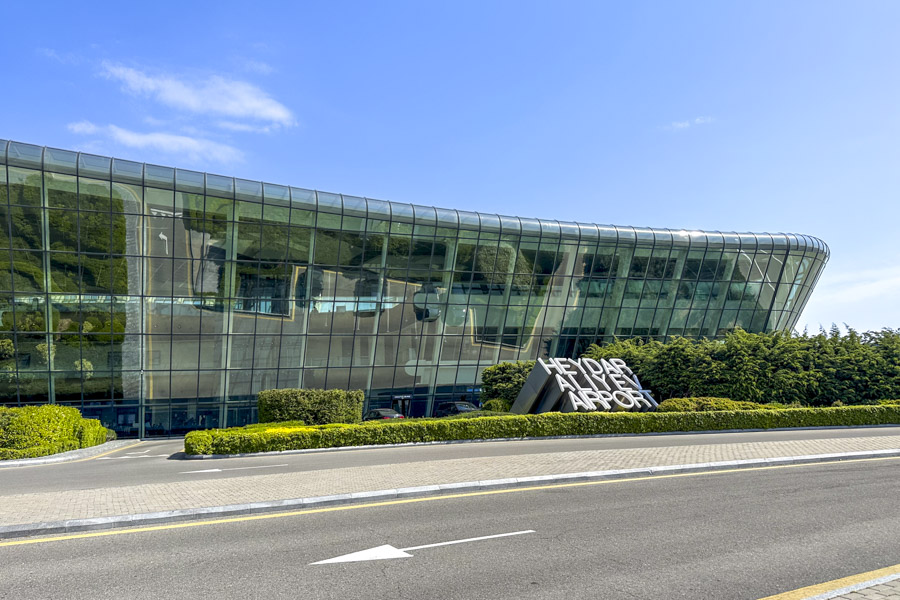
Located on the western shore of the Caspian Sea, Azerbaijan is easy to reach. For most international visitors, the main gateway is Heydar Aliyev International Airport (GYD) in Baku. Azerbaijan Airlines (AZAL) flies non-stop to Baku from European hubs such as Vienna, Berlin, Milan, Paris, Barcelona, and London (Heathrow and Gatwick), as well as Warsaw and Istanbul. A direct flight from London takes around 5 to 6 hours. Lufthansa also operates a direct Frankfurt–Baku route.
There are currently no direct flights from the US or Canada. American and Canadian travellers typically connect via Istanbul, Doha, Frankfurt, Paris, or Vienna, with total journey times commonly running 11 to 17 hours depending on the layover. Turkish Airlines via Istanbul and Qatar Airways via Doha are the most frequently booked routings.
Daily overnight trains on the Baku–Tbilisi passenger railway connect the capitals of Azerbaijan and Georgia. The route stops in Ganja and several other cities along the way. Travellers entering Azerbaijan by train should note that only foreign nationals qualifying for visa-free entry may use rail transport to cross the border.
Getting Around Azerbaijan
Navigating Baku is fast, efficient, and modern. The city has a clean underground metro system and a network of modern air-conditioned buses, both operating on the rechargeable BakıKART system.
Although public buses and regional minivans run between larger towns, renting a private vehicle or arranging private transport offers far greater comfort, safety, and flexibility when exploring the countryside. Highways connecting Baku to primary regions like Gabala, Sheki, and Shahdag are modern and well maintained.
Here are typical driving times from Baku to plan scenic day trips and multi-day countryside routes:
- Gobustan National Park & Mud Volcanoes: approximately 1 hour
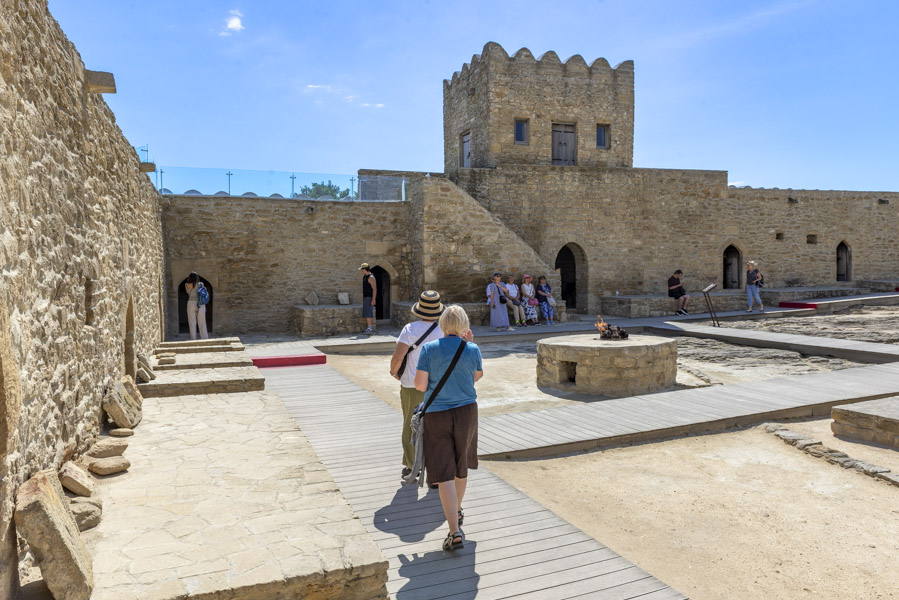
- Ateshgah Fire Temple & Yanar Dag: around 30 to 45 minutes
- Shamakhi: about 2 hours
- Gabala: around 3 to 3.5 hours
- Sheki: approximately 4.5 to 5 hours
- Shahdag Mountain Resort: around 3 hours
Taxis are widely available and very affordable in major cities. Using popular ride-hailing apps like Bolt or Yandex Go is recommended over hailing street cabs, as apps show the fare in advance and you don’t need to negotiate fares.
Azerbaijan Railways (ADY) operates comfortable passenger train routes connecting Baku with key regional hubs, including Ganja and Gabala. You can access digital tickets and real-time train schedules through the official ADY Mobile app.
When you book a guided tour to Azerbaijan with us, every Advantour trip includes a private vehicle and a professional driver. Travel comfortably between Baku, the regions, and historic Silk Road landmarks. Your dedicated guide plans the timing and routing so you can relax and enjoy the journey.
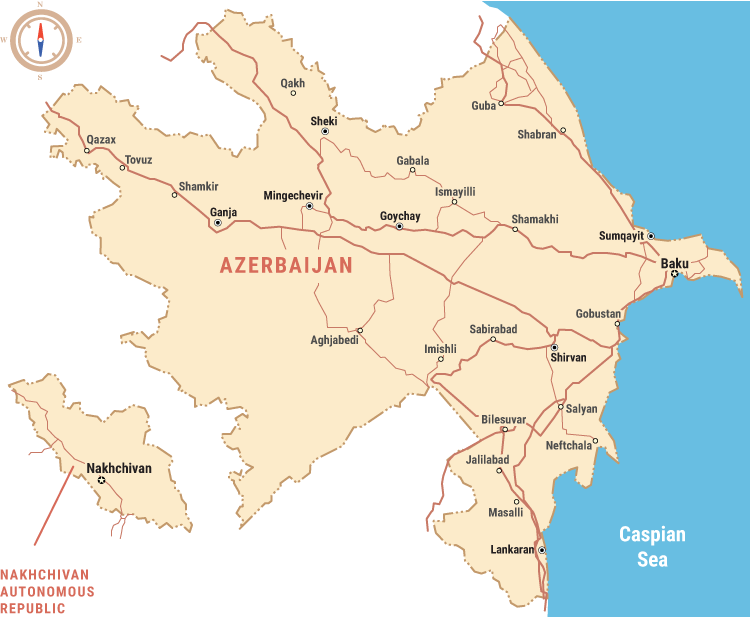
Azerbaijan Travel Map
Use the Azerbaijan map to navigate the country’s main cities.
Where to Stay in Azerbaijan?
Comfort, beautiful window views, and proximity to Azerbaijan's main sights define our hotel selection. We offer our guests accommodation in six cities – Baku, Nakhchivan, Gabala, Quba, Ganja, and Sheki. And as you travel through them, you will see the very best of Azerbaijan.
Luxury & 5-Star Hotels: Four Seasons Hotel Baku, Hyatt Regency Baku, InterContinental Baku by IHG, JW Marriott Absheron Baku, The Merchant Baku, and Fairmont Baku Flame Towers anchor Baku's luxury tier. Most of them are close enough to the Old City and Fountains Square to walk to dinner. If the trip extends beyond Baku, Quba Palace Hotel in the forested foothills near Quba feels more like a resort than a city hotel. Sheki has its own version – Marxal Resort & Spa – in the mountain valley of Kiş just outside town, with a spa complex, multiple pools, and views over the surrounding peaks.
Comfort & Boutique Hotels: Boutique 19 Hotel, Sapphire Inn Hotel, Molokan Inn Hotel, and Midway Baku Boutique Hotel are the reliable picks in this Baku mid-range, a short walk from Fountains Square. Sultan Inn Boutique Hotel behind Maiden Tower occupies an older building. Outside Baku, this tier gets thinner: Ganja has Vego Hotel and Ganja Hotel near Khan Garden, and Karvansaray Hotel in Gabala is a 4-star in the town centre.
How Many Days Do You Need in Azerbaijan?
Two to Three Days in Baku
If you have two or three days in Azerbaijan, focus on Baku: Old Town and New Baku (Nizami Street (Nizami küçəsi), Fountain Square (Fəvvarələr Meydanı), Nizami Ganjavi Monument, Razul-Zade Street, Martyrs’ Lane (Şəhidlər Xiyabanı). Also, walk along Baku’s Caspian coastline and visit the Baku White City (Bakı Ağ Şəhər).
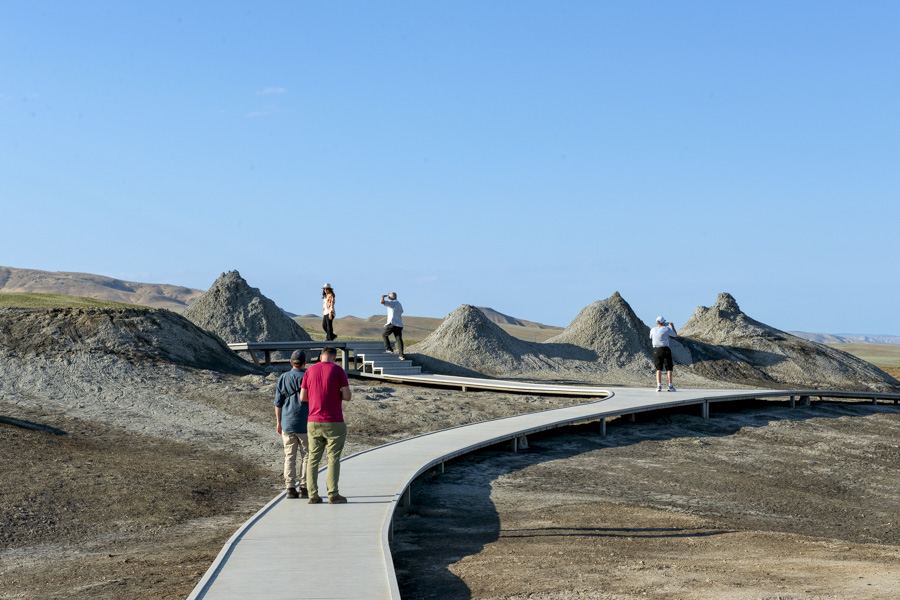
Then explore the Gobustan State Historical and Cultural Reserve (Qobustan dövlət tarixi-bədii qoruğu), with its Petroglyphs Museum and mud volcanoes. Also, include the eternal flames of natural gas of Yanar Dagh (Yanar Dağ) and the Ateshgah Fire Temple (Atəşgah) on the Absheron Peninsula.
Five to Six Days in Azerbaijan
With five to six days to spare, you can follow the itinerary above.
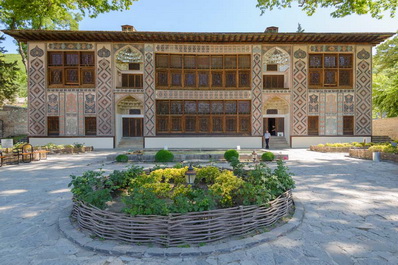
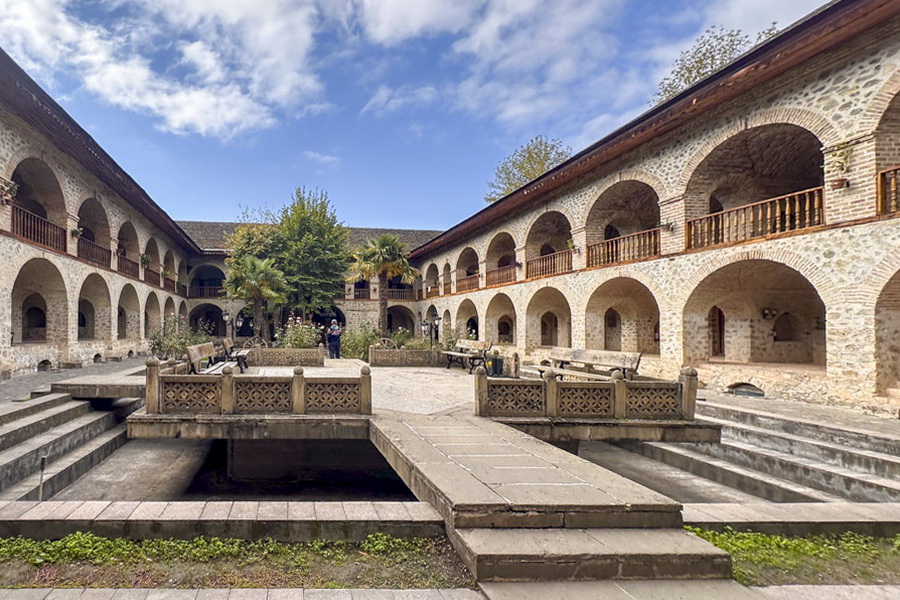
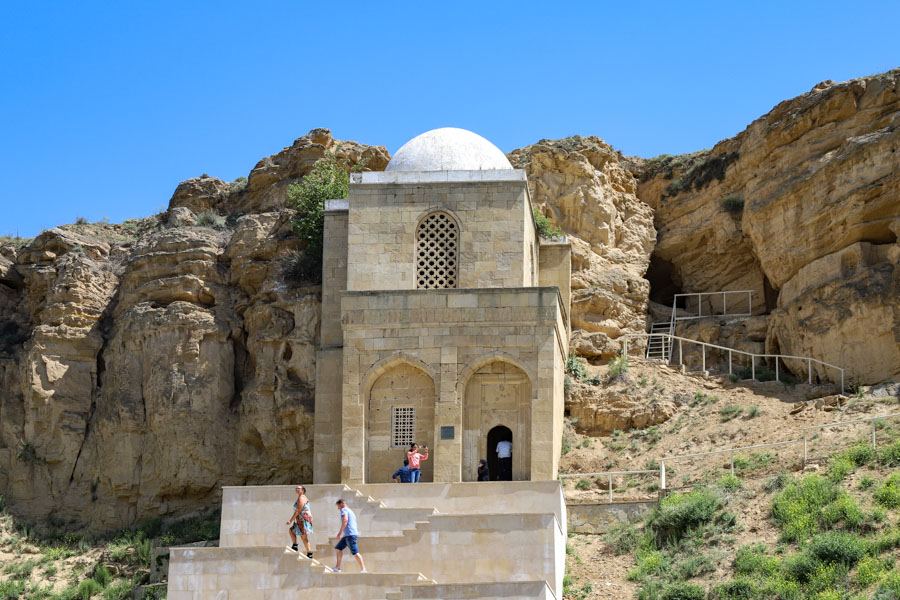
Then you can go to Shamakhi (Şamaxı) to visit the Diri Baba Mausoleum (Diri Baba məqbərəsi), Juma Mosque (Cümə Məscidi), and the Yeddi Gumbaz Mausoleum before continuing on to Lahıc and onwards to Sheki. Wander through the colourful bazaar of Sheki, sample a few local treats, and finish at the UNESCO-listed Palace of the Sheki Khans (Şəki xan Sarayı).
Ten to Twelve Days in Azerbaijan
If you have 10 days in Azerbaijan, repeat the above-mentioned route. Then you may consider a full day in Quba with an overnight stay. This city amazes visitors with beautiful nature, interesting architecture, and excellent food. The next day, travel to Khinalug, the mountain village in the Greater Caucasus, sitting more than 2,000 metres above sea level and preserving its own distinctive way of life. Next, continue to the Red Village. These landmarks are all part of Quba District.
Twelve days in Azerbaijan can cover a trip to Ganja and Nakhchivan.
A flight is the only option in this case because Nakhchivan is a landlocked exclave of Azerbaijan, separated from the rest of Azerbaijan by Armenia to the east and north. This means you will have to drive back to Baku’s Heydar Aliyev International Airport. On the way, you can stop for wine tasting near Savalan and Goychay (Göyçay), Azerbaijan's pomegranate-growing hub.
Another option is to continue from Sheki to Ganja, spend a day or two there and in the surrounding area. For instance, see the beautiful Goygol Lake. Afterwards, fly from Ganja International Airport to Nakhchivan.
Azerbaijan + Georgia Combo
Combining an itinerary between Azerbaijan and Georgia is straightforward thanks to their shared land border. Among the regional travel hubs, Sheki and Ganja usually serve as the primary jumping-off points for heading into Georgia. There are two land border crossings.
The first option runs from Sheki to Balakan, crossing into Georgia at Lagodekhi (Kakheti); the drive from Sheki to the border takes about 2 hours.
The second land border crossing runs from Ganja to Red Bridge (Qırmızı Körpü). It takes about 2 hours to reach the border crossing.
Important Border Note: foreign citizens can exit Azerbaijan via land borders into neighbouring countries; however, land entry into the country is still not permitted, so travellers must enter by air.
Holidays, Festivals, and Local Culture
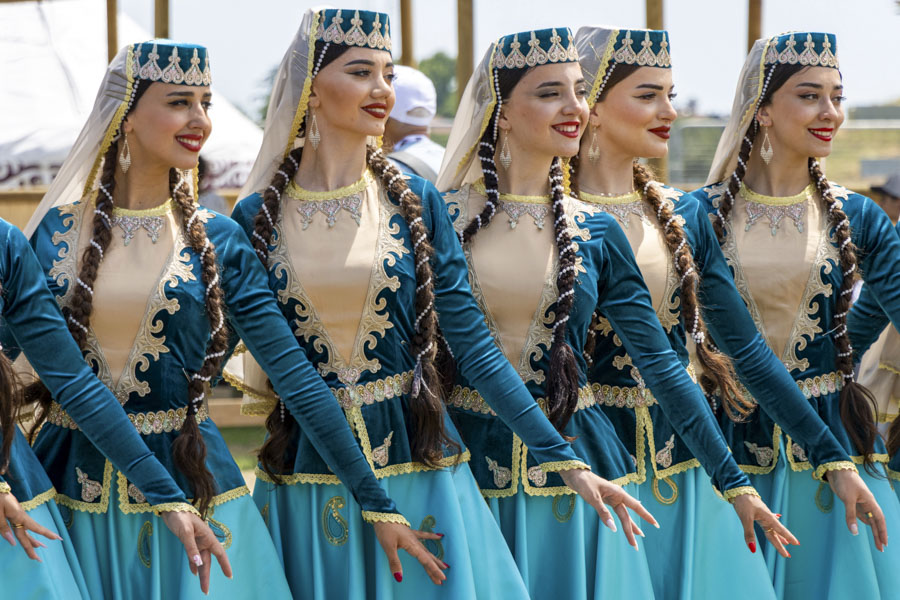
Azerbaijan is a secular state in the South Caucasus with a Muslim-majority population, and its national holidays and cultural calendar include major religious holidays. Among them, Azerbaijanis observe Ramadan Bayrami (Ramazan Bayramı) or Eid al-Fitr and Gurban Bayrami (Qurban Bayramı/Eid al-Adha). The country also widely celebrates Persian New Year, or Nowruz (Novruz).
Most festivals in Azerbaijan are loud, colourful, and full of laughter. For example, the Gabala International Festival fills the mountain town of Gabala with a week of piano, jazz and mugham – Azerbaijan's improvisational musical tradition, built around a singer and a trio of Tar, Kamancha and Daf.
Nowruz in March transforms towns and cities into joyful hubs with bonfire jumping, folk dances, and festive tables laden with pakhlava and shekerbura. Arrive in November, and the Goychay Pomegranate Festival turns the country's fruit-growing capital into a carnival of tastings, folklore performances and competitions built around the harvest.
To connect more closely with local culture:
Attend a live mugham performance, where the music is built entirely through improvisation.
Browse through carpets at the Azerbaijan Carpet Museum in Baku, home to more than 140 documented carpet patterns.
Join a hands-on cooking class in Baku to learn dolma, plov and qutab from a local chef.
Azerbaijani Cuisine: What to Eat and Drink
Azerbaijani cooking sits at the crossroads of Persian, Turkic and Caucasian food traditions, and it shows on the plate: saffron rice, grilled meat, fresh herbs and walnuts. Here is the list of nine must-try dishes:
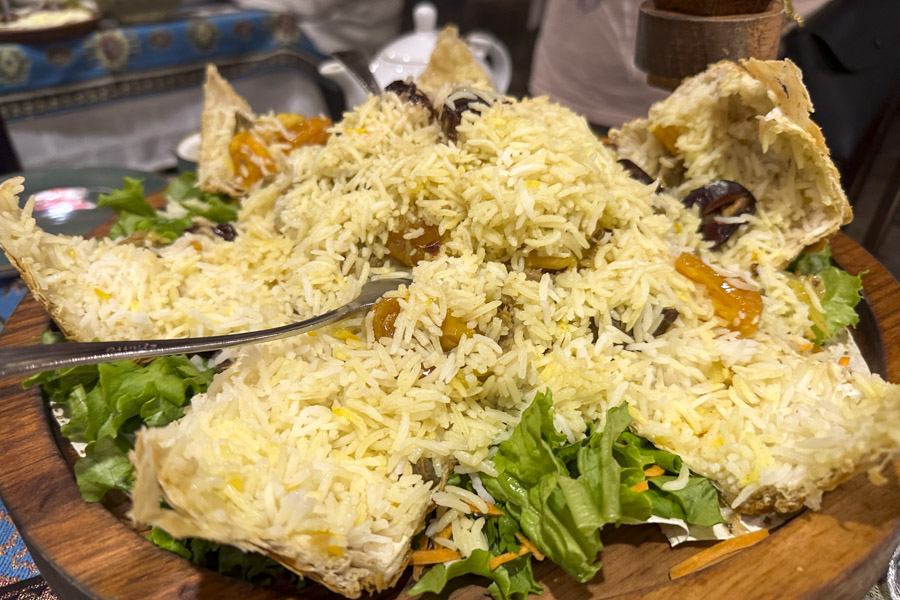
Saffron rice with meat and sweet fruit.
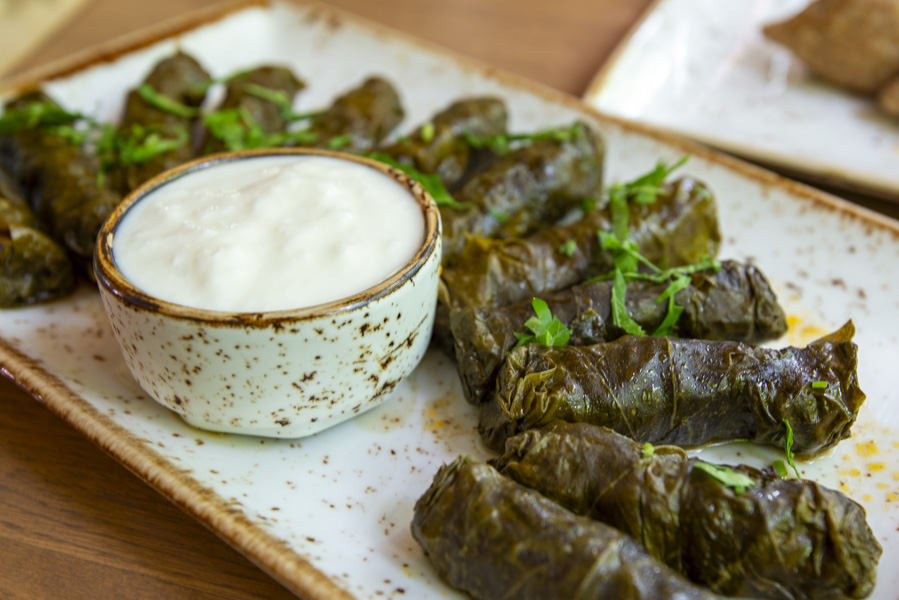
Vine leaves stuffed with meat and rice.
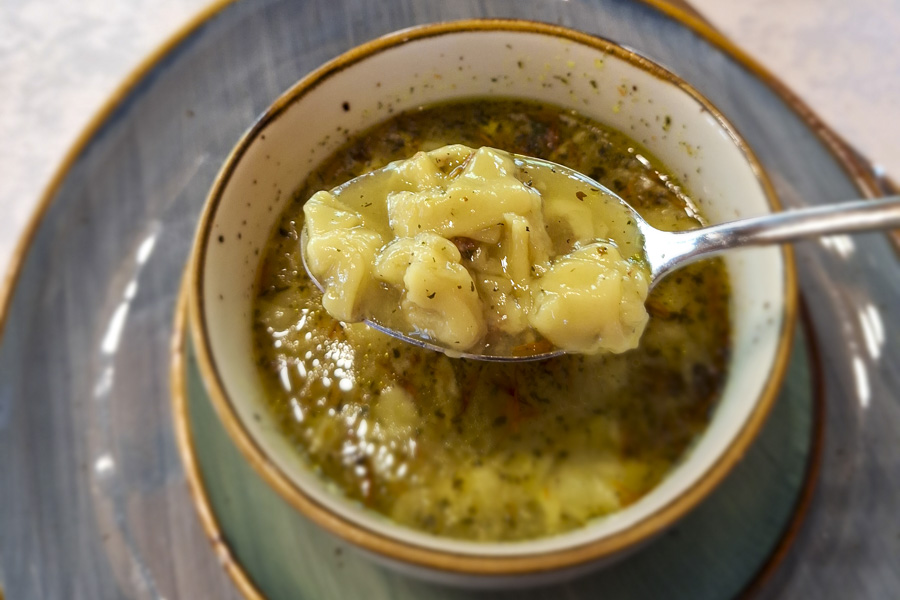
Tiny dumplings in a garlic broth.
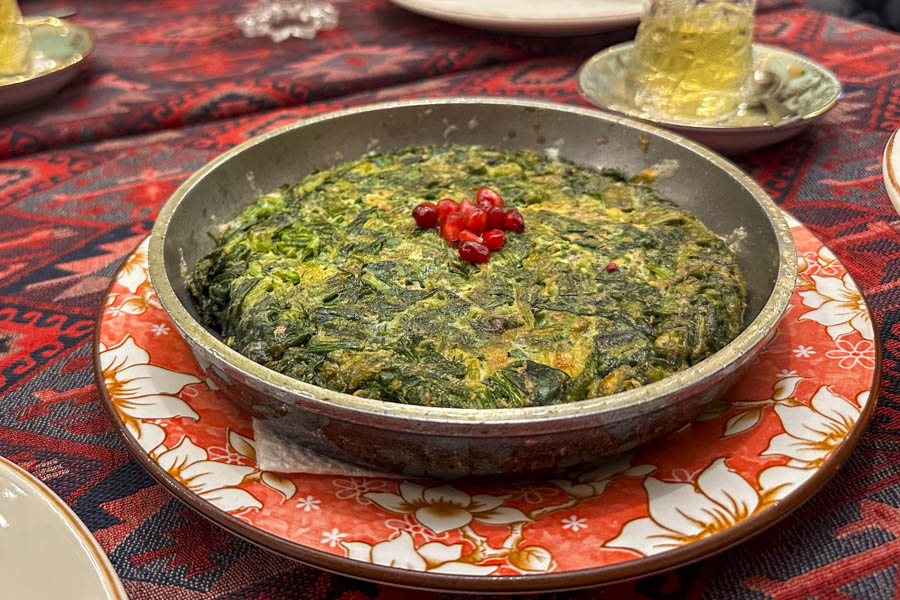
Herb omelette, fried until golden.
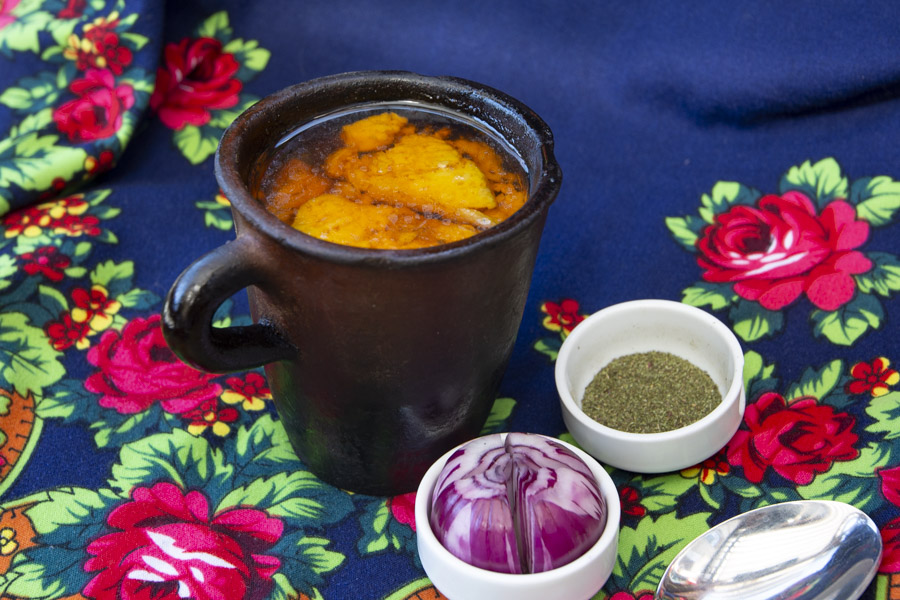
Mutton and chickpea stew.
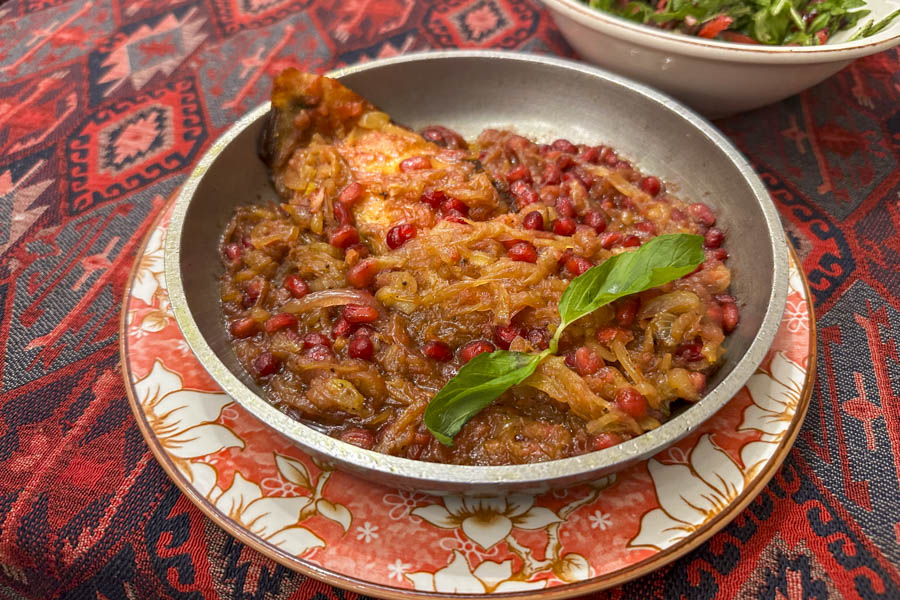
Fish stewed in saffron.
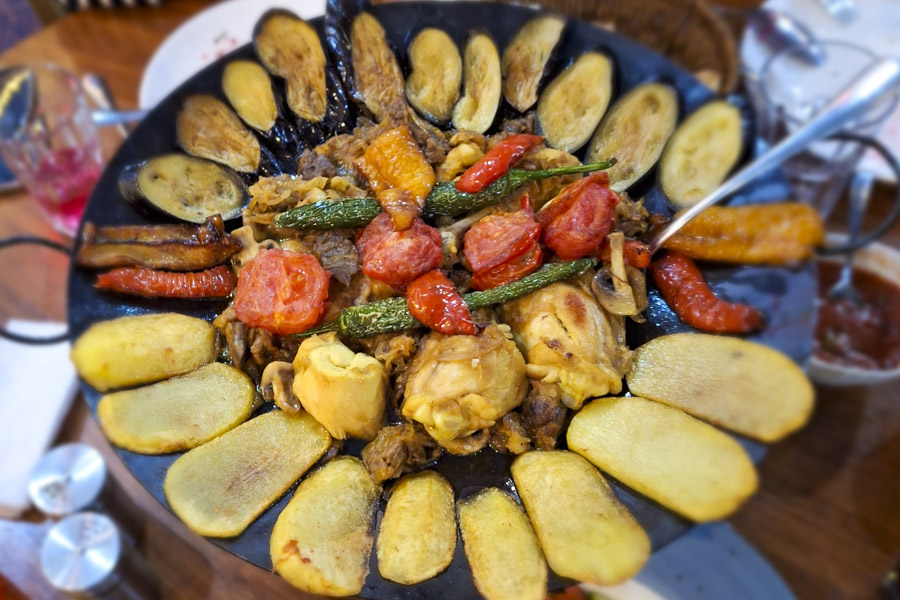
Lamb grilled on a griddle.
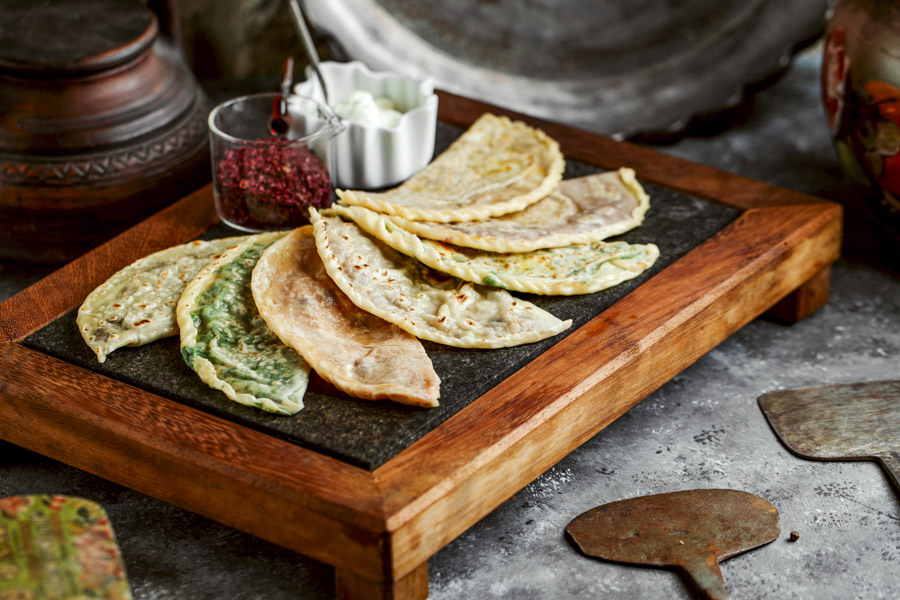
Griddled herbs and meat bread.
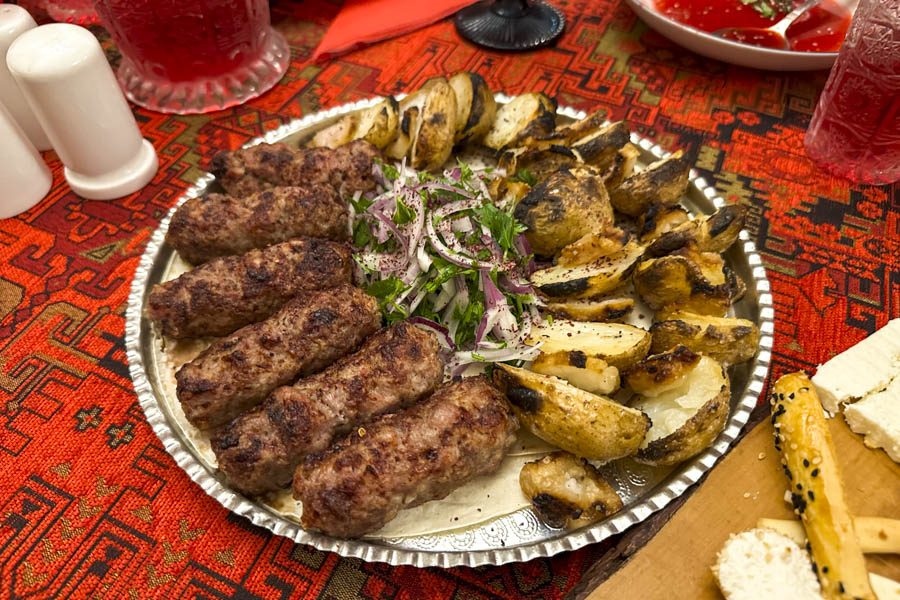
Skewered meat with a lavash.
Speak the Language
Knowing a few basic phrases may simplify everyday encounters with locals during your Azerbaijan travels. Azerbaijani uses the Latin alphabet, but several letters may be unfamiliar to English speakers. The letter ç sounds like ch in “church”, ş like sh in “shoe”, and x is a throaty sound similar to the ch in Scottish “loch”. The vowel ə is pronounced roughly like the a in “about”. The letter ğ is usually very soft and often lengthens or connects the surrounding vowel rather than producing a strong consonant sound.
Here are some phrases that may come in handy:
| English | Azerbaijani | Pronunciation |
| Hello | Salam (Sah-lahm) | Sah-lahm |
| How are you? / I am fine, thank you. | Necəsən? Sağolun, yaxşıyam. | Ne-je-san / Sah-o-lun yak-shi-yam |
| Goodbye. | Hələlik | Ha-la-lich |
| Thank you! | Sağol | Sah-ol |
| You are welcome. | Dəyməz | Dai-maz |
| Yes / No. | Bəli / Xeyr | Ba-li / Keyr |
| Where is the... (airport)? | (Hava limanı)... haradadır? | Ha-va li-ma-no... ha-ra-da-dor |
| How much is it? | Bu neçəyədir? | Bu na-cha-ya-dir |
| My name is… | Mənim adım... | Ma-nim a-dom |
| I don't understand. | Başa düşmədim | Ba-sha dyu-shma-dim |
| Excuse me. | Bağışlayın | Bah-o-shla-yon |
| Nice to meet you. | Məmnun oldum | Ma-mnun ol-dum |
| Cheers! | Sizin sağlığınıza! | Si-zin sah-loh-no-za |
Dos and Don’ts in Azerbaijan
Azerbaijanis are quick to forgive mistakes made by visitors unfamiliar with local customs, but knowing a bit about the host culture turns a polite exchange into an actual invitation home.
- Take off your shoes before walking into a mosque or home.
- Give elderly travellers the best seats on buses and at dinner tables.
- Bring a gift if you're joining a local family for a meal or an overnight stay.
- Confirm the price with taxi drivers before getting in, to avoid being overcharged.
- Expect personal questions. Azerbaijanis will ask about your age, marital status and children within the first few minutes of conversation. It is how people show interest, not an intrusion.
- Throw bread in the rubbish bin or leave it on the ground because bread is treated with particular respect in Azerbaijan.
- Launch into sensitive political topics unless your host brings them up and you know the context well.
- Accept a gift the first time it is offered. The polite rhythm is to refuse twice before accepting the third offer.
- Make the OK sign (touching the forefinger against the thumb to make a circle); it is an offensive gesture in Azerbaijani culture.
- Blow your nose in public – considered rude.
Did You Know That...
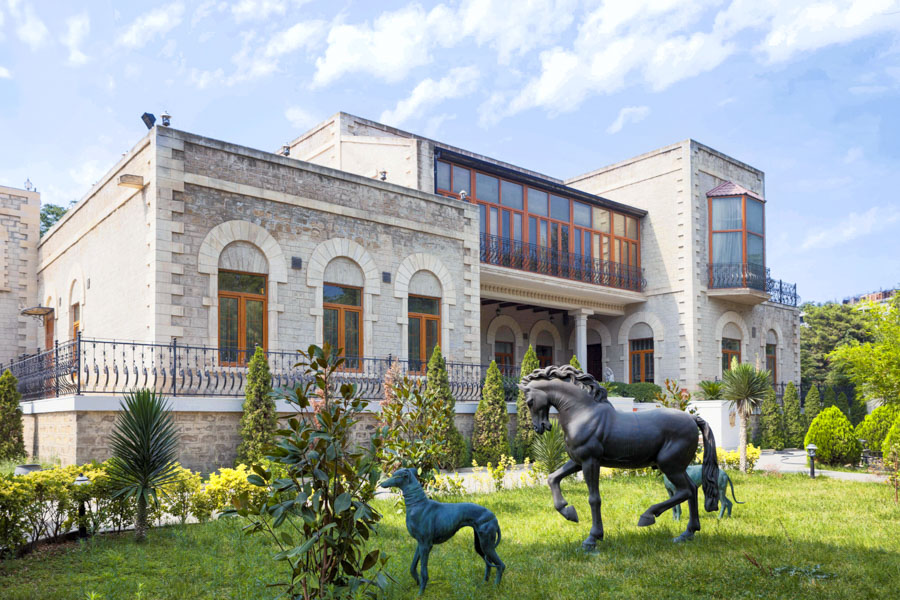
- The Nobel family made its early fortune in Baku, discovering and exporting oil to Europe decades before the Nobel Prize existed. Their house in the city is now a museum (Villa Petrolea) open to visitors.
- The first mechanically drilled oil well in Azerbaijan occurred in 1846 – thirteen years before drilling began in the United States.
- The world's longest kerosene pipeline ran from Baku to the port of Batumi (Baku-Batumi Pipeline), an 885-kilometre (550-mile) stretch built in 1906.
- Azerbaijan holds 30% to 50% of the world's mud volcanoes.
- Neft Daşları (Oily Rocks), a settlement in the Caspian Sea, started as a single oil rig and grew into a town built entirely on stilts and elevated walkways.
- Baku is the birthplace of Garry Kasparov, the former World Chess Champion (1985-2000).
Frequently Asked Questions
Where is Azerbaijan located?
Azerbaijan is situated at the crossroads of Eastern Europe and Western Asia in the South Caucasus region, bounded by the Caspian Sea to the east. Azerbaijan borders Russia to the north, Georgia to the northwest, Armenia to the west, and Iran to the south, with its Nakhchivan exclave also sharing a short border with Turkey.
Is Azerbaijan a European country?
Most sources classify Azerbaijan as part of Western Asia. However, a sliver of land north of the Greater Caucasus watershed falls on the European side, which is why it is sometimes labelled transcontinental rather than purely Asian or European.
What language is spoken in Azerbaijan?
The official language is Azerbaijani (Azeri), a Turkic language closely related to Turkish. It is the mother tongue of roughly 92% of the population. Due to the legacy of the Soviet Era, Russian is also widely spoken and understood, particularly in urban areas and among older generations. English is increasingly common among younger Azerbaijanis and widely used within the hospitality and tourism sectors.
Is Azerbaijan a Muslim country? What is the main religion?
Around 96–97% of Azerbaijanis identify as Muslim, most of them Shia, with a substantial Sunni minority. This cultural heritage is reflected in the national flag, where the green stripe and crescent moon symbolise the nation’s Islamic identity. That said, Azerbaijan is constitutionally secular and is often cited as one of the most secular societies in the Muslim world.
Is it legal to drink alcohol in Azerbaijan?
Yes, consumption of alcohol is legal and widely available in Azerbaijan, especially in urban areas. Local pomegranate wines, craft beers, and Azerbaijani spirits are served openly in restaurants, cafés, and bars throughout Baku and major tourist regions.
What are the must-visit places in Baku?
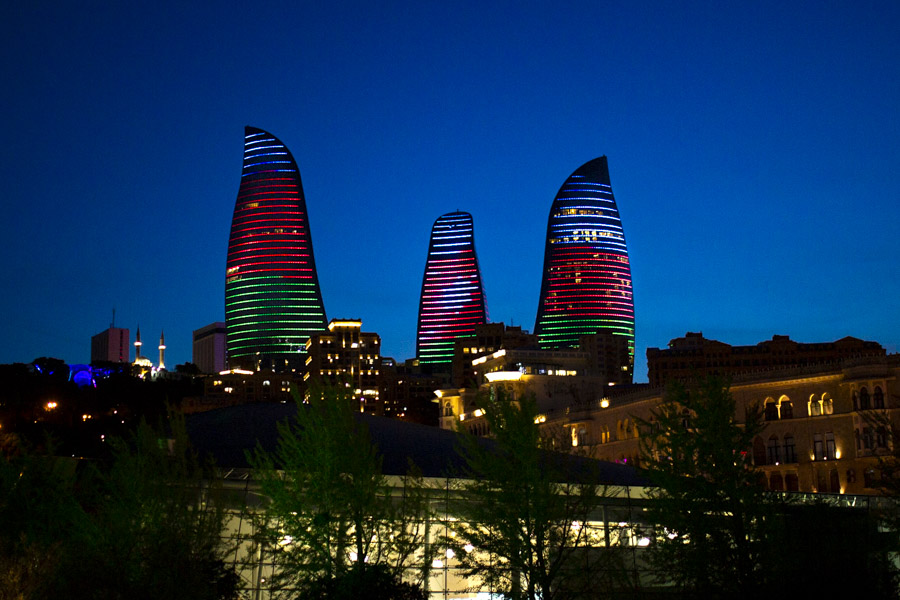
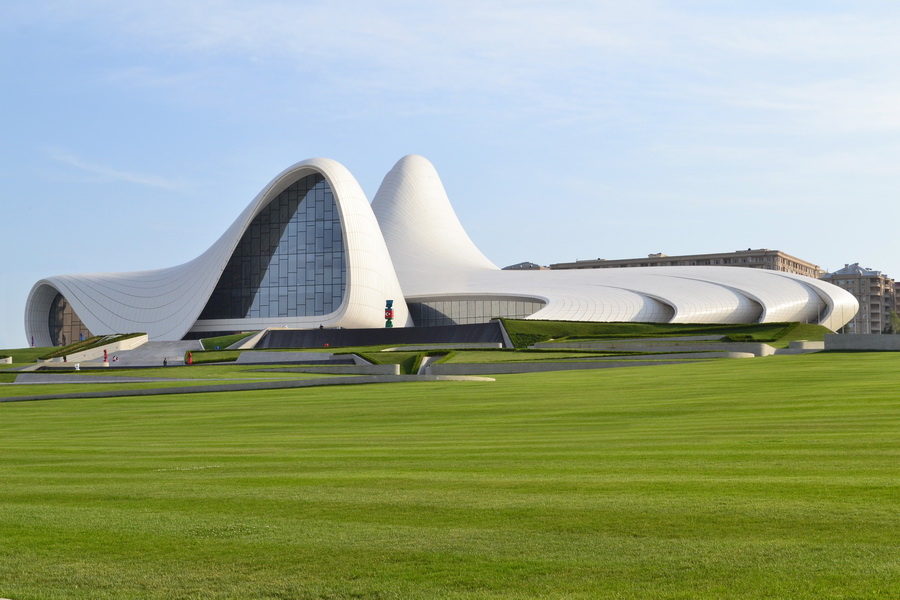
Must-visit places in Baku are the UNESCO-listed Old Town (Icheri Sheher) with the Maiden Tower and Palace of the Shirvanshahs, the iconic Flame Towers, and Zaha Hadid’s architectural masterpiece, the Heydar Aliyev Centre. A stroll along the seaside Baku Boulevard and through Fountains Square completes the essential capital experience.
Can I visit Armenia after visiting Azerbaijan?
Yes. Having previously visited Azerbaijan does not in itself prevent you from travelling to Armenia. However, Azerbaijan and Armenia do not have an open land border for tourist travel. Visiting both countries requires travelling via a third country, most commonly Georgia.
From Azerbaijan, foreign travellers can exit to Georgia by land, at crossings such as Balakan–Lagodekhi or Red Bridge (Tsiteli Khidi), and may also by train. Yet land entry into Azerbaijan is currently not permitted, so entry is by air or by train from Georgia. In practice, this means you can enter Azerbaijan by air or by train, then exit by land via Georgia, then continue to Armenia. Since the entry restriction gets renewed every few months, check the latest rules before booking the itinerary.