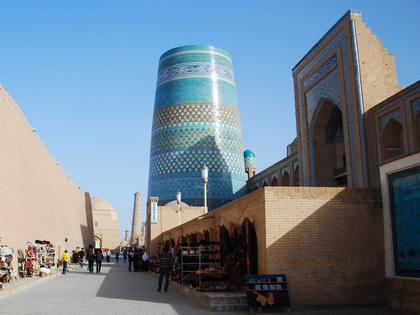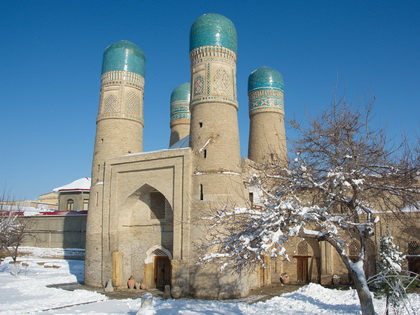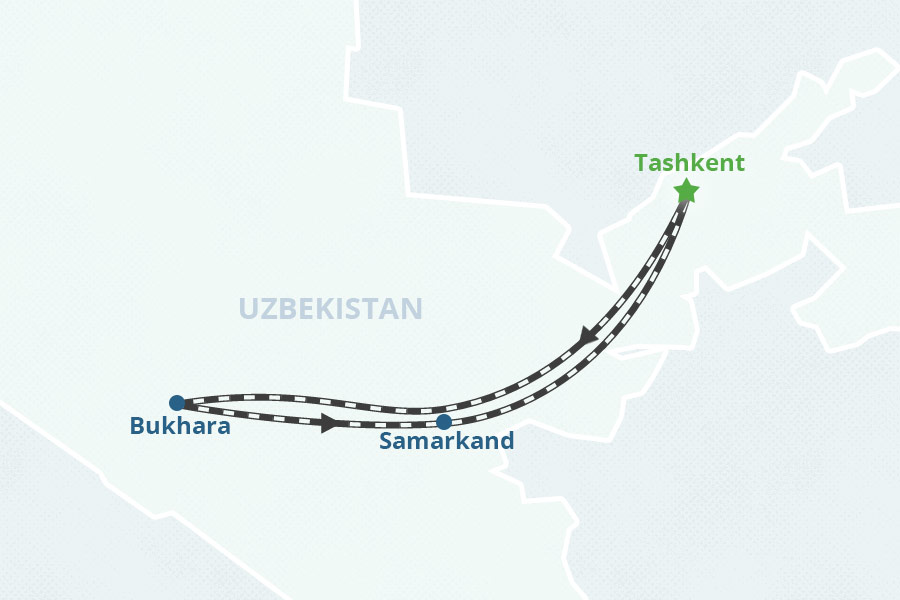




The amazing 4-day cultural tour to Samarkand and Bukhara from Tashkent is a unique possibility to plunge into the atmosphere of ancient cities, that managed to preserve architectural monuments of ruling epochs of powerful dynasties of the Middle Ages. The Samarkand tour program includes a visit of world-famous Registan Square – the center of the capital of the old-time powerful empire founded by Tamerlane, Shakhi-Zinda Complex – one of the sanctuaries of the Islamic world with the shrine of Kusam ibn Abbas, a Prophet Muhammad’s cousin brother, Gur-Emir Mausoleum of the Temurid dynasty and other unique monuments. You will also visit Holy Bukhara. Over two thousand years this city, as a mainstay of Islam, has been acquiring its inimitable look. Part of our Uzbekistan cultural tours, this journey allows you to explore these historical treasures with insight and context. The Samanid Mausoleum, Kalyan Minaret, Ark Citadel and Lyabi-Khauz pond are still cultic structures and symbols of Holy Bukhara up to date.
Tour itinerary:
 , leaves from Tashkent at 07:30 and arrives in Bukhara at 11:17. Upon arrival you will be met by Advantour driver and transferred to the hotel. Leave your luggage at the hotel. Check in at noon. Take a walking sightseeing tour with a guide in historic center of Bukhara which has been listed by UNESCO as a World Heritage Site. Visit Lyabi-Khauz Ensemble, Magoki-Attori Mosque, Chor-Minor Madrasah, trade domes, Ulugbek and Abdulazizkhan madrasahs, Kalyan Minaret, Kalyan Mosque and Miri-Arab Madrasah, legendary Ark Fortress and Bolo-Khauz Mosque. Overnight at the hotel.
Duration of sightseeing tour: 6-7 hours
Duration of sightseeing tour: 4-5 hours
Duration of sightseeing tour: 6-7 hours
Duration of sightseeing tour: 3-4 hours
Price includes:
- All transfers 1-2 pax by sedan standard type car; 3-7 pax by van type car; 8-13 pax by 30 seat bus, 14 pax and more by 40-50 seat bus;
- Accommodation with breakfast: standard double/twin room for Standard, Comfort and Premium options;
- Sightseeing tour program in each city with local guides;
- Entrance fees to sights as per itinerary;
- One dinner in a local family along the tour;
- Departure CIP lounge access at Tashkent International Airport and train stations (available with the Premium option);
- Tickets for trains Tashkent-Bukhara-Samarkand-Tashkent (on rare occasions when the high-speed train is unavailable, we will replace it with the most-comfortable class of regular train).
Price doesn't include:
- Tour leader to accompany travellers for the whole period of the tour;
- Full board (lunches and dinners);
- Hotel charges for additional services;
- Supplement for sedan comfort type car – 300 US$ total;
- Tips are not included, but would be appreciated;
- Travel insurance.
Prices, per person
Accommodation
Minzifa / Misgaron / Marhaba Boutique / Lyabi House / Bibi-Khanym / Makon Art Hotel / Komil Boutique / Istat Boutique / Labi Rud Boutique
Comfort:
Paradise Plaza Luxury / Minorai-Kalon / Malika Bukhara / Asia Bukhara / Omar Khayyam / Emerald
Premium:
Wyndham Bukhara / Mercure Old Town Bukhara / Shahriston
Wellfort / Astoria Plaza / Aliz Boulevard / Emily Grand Palace / Shohjahon Palace Hotel & Spa / Golden Samarkand / Nizamov / Bibikhanum / Silk Road Empire
Comfort:
Ametist Hotel Complex / Royal / Astoria Plaza / DiliMah Premium Luxury / Golden Samarkand / Emirhan
Premium:
Hilton Samarkand Regency / Mövenpick / Zarafshon Parkside / Kohinur Plaza / Kosh Havuz Boutique / Hilton Garden Inn
Tour Enquiry
Bukhara and Samarkand Reviews
Zahid, Suzanne and Mahfuzah are excellent guides. We had a nice local lunch with Mahfuzah.
All guides, namely Zahid, Suzanne, Maksuma are friendly, knowledgeable of tour sites and helpful.
Friendly service and value for money. Strongly recommend to my friends.
As for guides, Anait in Samarkand did a great job. She added a lot about culture to the historical facts.
Mahsuma did a very good job. We gained much more than if we had been viewing the sights alone.