

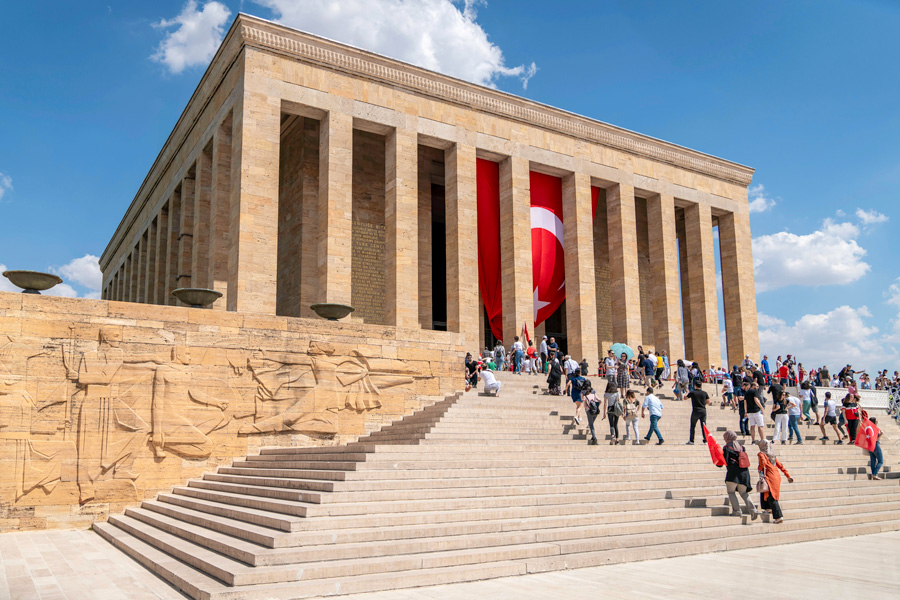
From ceremonial guards to vast plazas lined with stone reliefs, Anıtkabir offers a deeply moving experience that blends architecture, history, and national identity. It is the final resting place of the founder of the Republic of Turkey, Mustafa Kemal Atatürk, and is located on Anıttepe Hill in Ankara. The mausoleum rises above the capital city of Türkiye and stands as one of the most powerful national symbols.
Anıtkabir impresses its visitors through scale, symmetry, and simplicity. Millions of Turks and international travellers visit this memorial and a civic space every year to learn more about the legacy of Marshall Atatürk.
The Origins and Purpose of Anıtkabir
Why Anıtkabir Was Built
After Atatürk’s death on 10 November 1938, the Turkish government decided to build a monument worthy of his role as a reformer, military leader, and statesman. His body was temporarily placed at the Ethnography Museum of Ankara (Ankara Etnografya Müzesi). At the same time, plans for a permanent mausoleum were prepared.
An international architectural competition launched in 1941 attracted designs from around the world. The winning proposal came from Turkish architects Emin Onat and Orhan Arda. Their vision combined ancient Anatolian traditions and modern monumental design.
Construction began in 1944 and lasted nearly nine years, resulting in a powerful symbolism and craftsmanship.
From Vision to National Monument
Anıtkabir was officially completed in 1953, when Atatürk’s remains were transferred in a solemn state ceremony. Since then, the site has become the focal point of national commemorations, especially on Republic Day (29 October) and Atatürk Memorial Day (10 November).
Today, it also stands as a living civic monument, hosting ceremonies, educational visits, and moments of quiet reflection.
Architecture and Symbolism of Anıtkabir
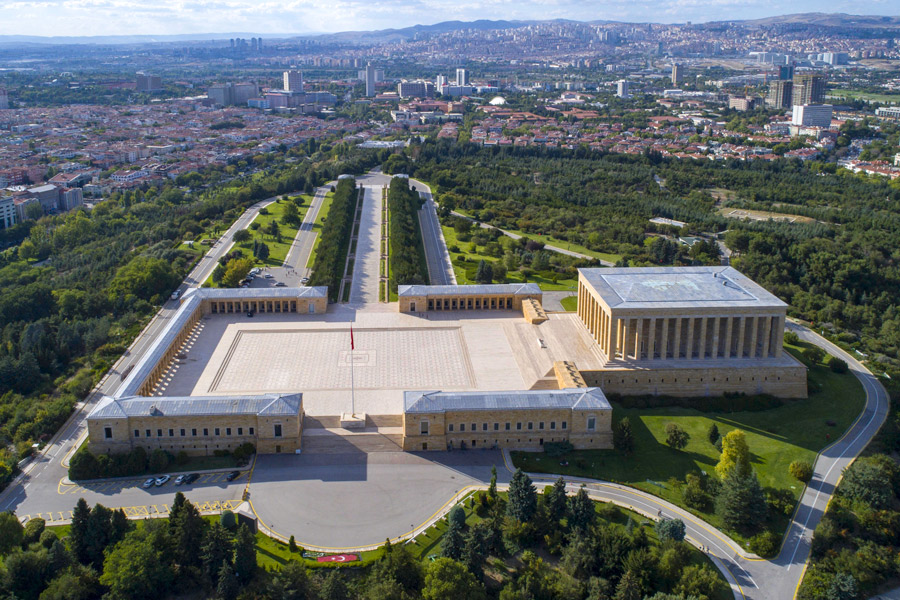
Anıtkabir reflects Turkey’s Second National Architecture Movement. This style favours monumentality, symmetry, and restraint. The complex avoids ornamentation and relies on scale, proportion, and symbolism to convey meaning.
Materials sourced from across Turkey strengthen the monument’s national character. Craftsmen brought white travertine for the lion statues and mausoleum columns from Kayseri. Workers transported the 40-tonne sarcophagus stone from Adana. These decisions made Anıtkabir a physical symbol of unity carved out of Anatolia itself.
The design divides the site into four main parts. Each represents a core idea of Atatürk’s legacy and the Republic.
The Road of Lions
The journey begins along the Road of Lions. This is a 262-metre ceremonial walkway lined with 12 pairs of seated lion statues. They symbolise strength and represent the ancient 24 Oghuz Turkic tribes.
The Ceremonial Plaza
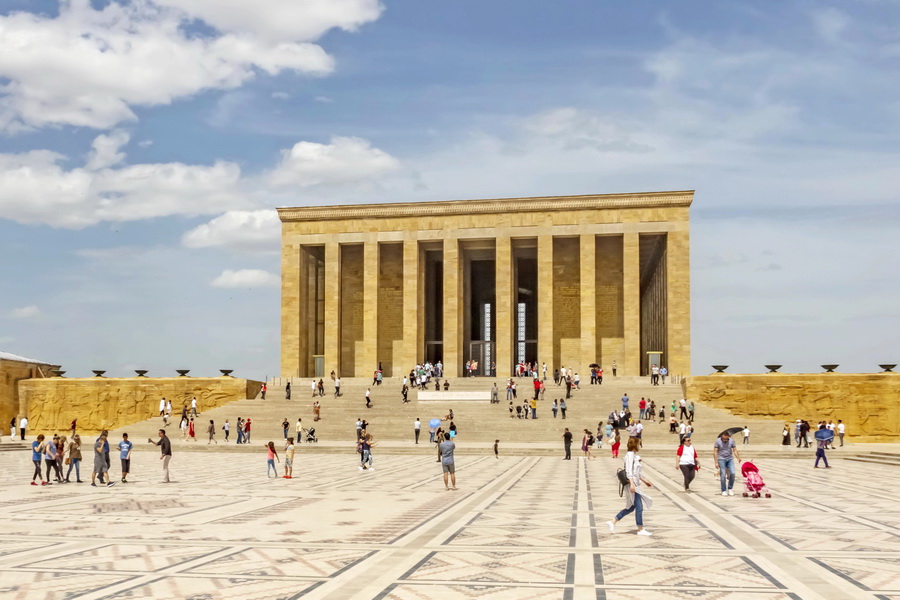
The Ceremonial Plaza is a continuation of the Road of Lions. Its vast, open space represents national unity and collective memory. During state ceremonies, thousands gather here to honour Atatürk and the Republic.
The Hall of Honour
The Hall of Honour forms the symbolic heart of Anıtkabir. It contains Atatürk’s monumental sarcophagus, while his actual grave rests below. Soil from every region of Turkey surrounds it, reinforcing national unity once again. Tall columns and filtered light create a calm and dignified atmosphere.
Peace Park
Peace Park is the recreational area surrounding the monument and reflects Atatürk’s principle: “Peace at home, peace in the world.” Trees and plants brought from 25 countries symbolise international harmony and coexistence.
The Anıtkabir Museum Experience
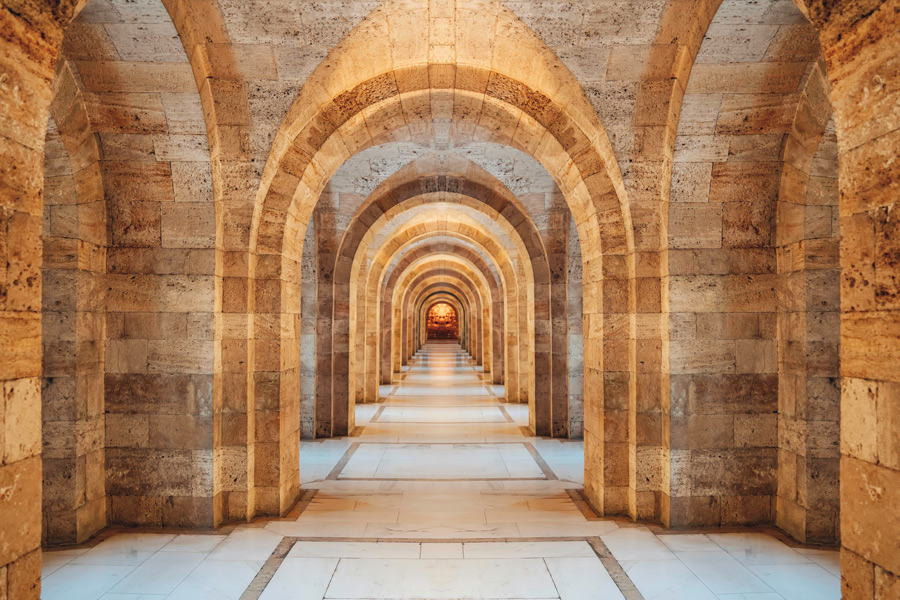
The Atatürk and War of Independence Museum, located within the complex, provides a rich historical context.
What You will See Inside:
- Atatürk’s personal belongings, uniforms, and books
- Panoramic battle scenes from the War of Independence
- Original documents, letters, and handwritten notes
- Interactive maps and multimedia exhibits
This museum transforms Anıtkabir from a static monument into an engaging educational experience.
What to Know Before Visiting Anıtkabir
Opening Hours
Anıtkabir welcomes visitors every day of the year, but its hours vary slightly by season:
- Feb 1 – May 14: 09:00 – 16:30
- May 15 – Oct 31: 09:00 – 17:00
- Nov 1 – Jan 31: 09:00 – 16:00
Because times can change based on events or official scheduling, it is beneficial to consult the official Anıtkabir website before your visit.
Cut-Off Time for Visitors
The last entry is usually 30–45 minutes before closing time, and security checks at the gate can take more time during peak hours and holidays.
Entrance Fee
Entry to the Anıtkabir complex is free of charge for all visitors – both Turkish citizens and foreign tourists. This covers access to the outdoor spaces, ceremonial areas, and the main mausoleum.
Some visitor services – such as audio guides, special exhibitions, or guided tours – may incur a small additional fee, but general access remains free.
Making the Most of Your Visit
- 1.5–3 hours should be enough to explore the entire site, including the Hall of Honour, museum areas, ceremonial plaza, and Peace Park.
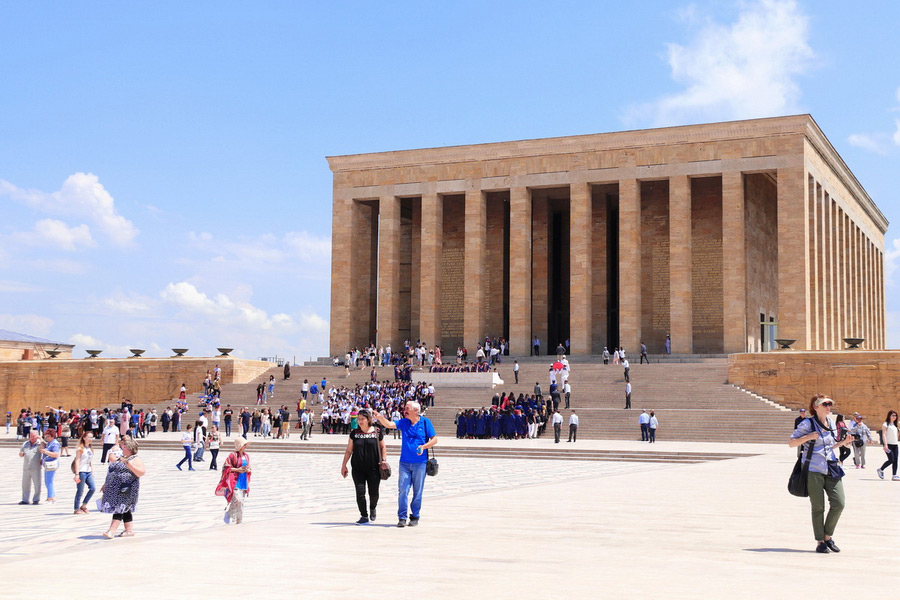
- Visitors should expect cooler temperatures and fewer crowds at early morning or late afternoon visits, especially in the summer.
- Allow extra time during national holidays (e.g., Republic Day on Oct 29 or Atatürk Memorial Day on Nov 10) when official ceremonies and larger crowds occur.
Dress Code and Visitor Etiquette
Anıtkabir is a site of national importance and respect. While there is no strict dress code, visitors are advised to dress modestly and behave respectfully, especially near the tomb and the Hall of Honour. Comfortable walking shoes will be helpful, as the site covers a large area and there is a lot of walking.
How to Get to Anıtkabir
Anıtkabir is centrally located in Ankara, making it simple to reach from most areas.
By Metro
Take the Ankaray Line and get off at Tandoğan Station. From the station, Anıtkabir is about a 15-minute uphill walk. The route is clearly marked and passes through open plazas and landscaped areas, making it easy to follow even for first-time visitors.
By Bus
Several EGO city bus lines stop close to Anıtkabir, especially along Gazi Mustafa Kemal Boulevard and in the Tandoğan area. Commonly used lines include 220-7, 309, 339-7, and 608, depending on your starting point. Buses are a viable option for visitors staying in neighbourhoods not directly connected to the metro system.
We recommend checking the EGO Ankara bus or the Moovit app on the day of travel because routes can change.
By Taxi and Ride-Hailing Apps
Taxis are widely available across Ankara and provide a comfortable option, particularly for families, elderly visitors, or those with limited mobility. People also commonly use ride-hailing apps like BiTaksi. Travel times remain short from most central districts, and fares are typically affordable.
By Private Car
Visitors arriving by car can use designated parking areas around the Anıtkabir complex. Parking availability may be limited during national holidays and official ceremonies, so arriving early is advisable on busy days.
Once you arrive, security checks are straightforward, and the spacious surroundings allow time for orientation and relaxed walking before entering the complex.
Nearby Attractions to Combine with Your Visit
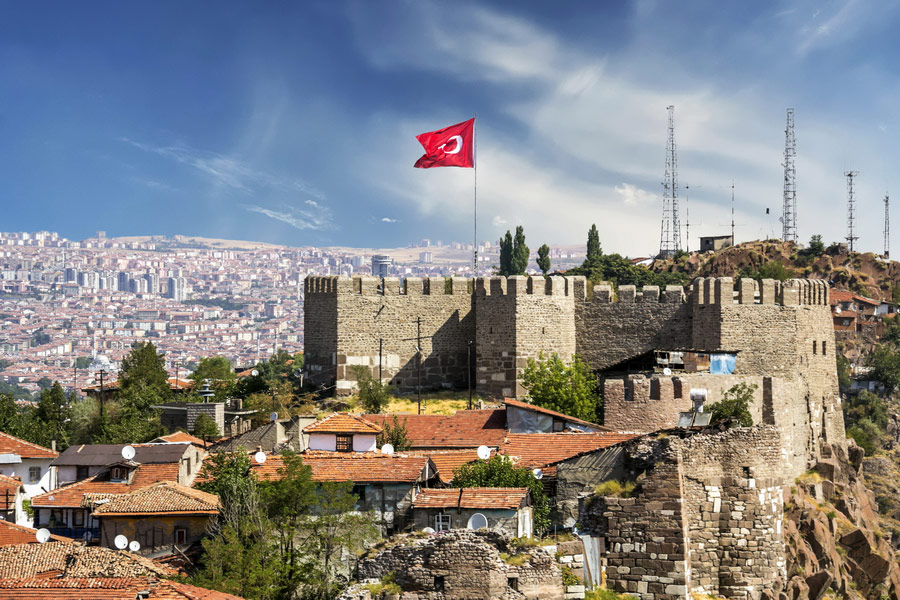
Combining Anıtkabir with nearby landmarks creates a well-balanced itinerary that blends national spirit with archaeology, city views, and leisure. If you are keen to explore Ankara’s history, culture, and urban life, consider visiting the following landmarks, as well as reading our extensive Things to do in Ankara travel guide to help you plan your visit.
- The Museum of Anatolian Civilisations (Anadolu Medeniyetleri Müzesi) – one of Turkey’s most important museums of prehistoric Anatolia to the classical era artefacts.
- Ankara Castle (Ankara Kalesi) – a historic hilltop fortress with panoramic views of the city and a glimpse into Ankara’s ancient past.
- Ankara Painting and Sculpture Museum (Resim ve Heykel Müzesi) – a museum highlighting local artists.
- Gençlik Park (Gençlik Parkı) – a large urban park with green spaces, walking paths, and cafés – is ideal for a relaxing break after visiting Anıtkabir.
Frequently Asked Questions About Anıtkabir
Is photography allowed inside Anıtkabir?
Yes, photography is generally allowed, except in certain indoor museum areas. Pay attention to the signage to avoid trouble with the Anıtkabir guards.
How much time should I plan for a visit?
Allow 2–3 hours to comfortably explore the mausoleum and the surrounding area.
Is Anıtkabir suitable for children?
Yes. Educational displays make it meaningful for all ages.
Are guided tours available?
Yes, both official guides and audio guides are available on-site.
Can foreigners visit Anıtkabir?
Absolutely. It is open and welcoming to visitors from all countries.
Is Anıtkabir crowded?
It can be busy on national holidays and weekends. Early mornings are usually quieter.