

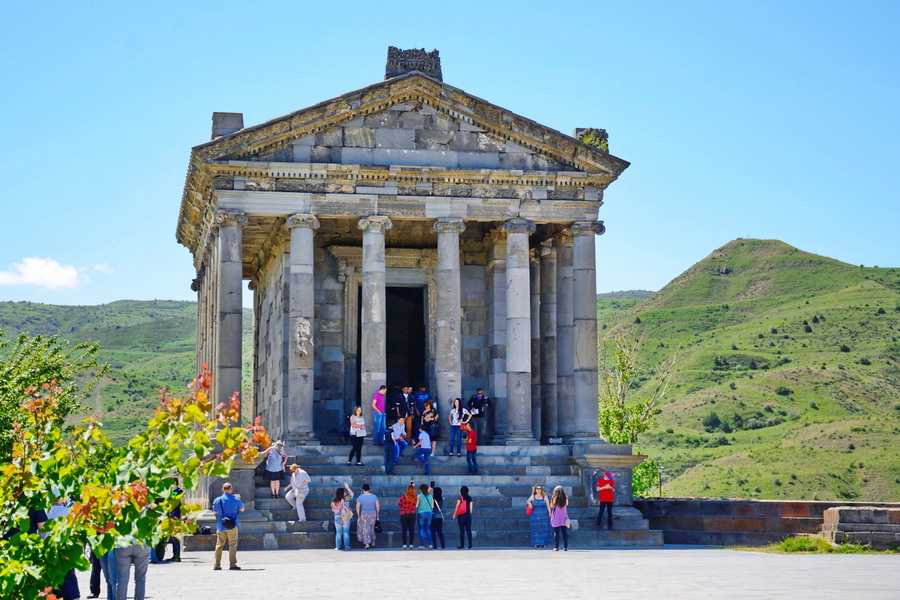
Planning a trip to Armenia is fairly straightforward, but a few practical details are worth checking before departure. Our Armenia trip planner covers entry rules, border crossings, and most of the essential steps before and after arrival. Our Armenia travel planner will prepare your essentials in advance and make things easier once your journey begins.
What Do You Need to Know Before Your Trip to Armenia?
Before visiting Armenia, check your entry status first and review anything unusual you plan to carry. Much of the important information for tourists can change, so confirm current rules shortly before your trip to Armenia.
For the most authoritative and up-to-date information, you should check through official government and visa/entry channels, including:
- The Government of Armenia, Armenia’s Ministry of Foreign Affairs, the Armenian Embassy, or consular offices in your country of residency (for visa and entry requirements):
- The official Armenian e-visa or visa-application platform (if applicable);
- The relevant Armenian border authorities and immigration services (for entry procedures);
- The State Revenue Committee of the Republic of Armenia (SRC) (for questions related to customs);
- Your airline company (for document and baggage compliance requirements).
Entry Requirements and Visas
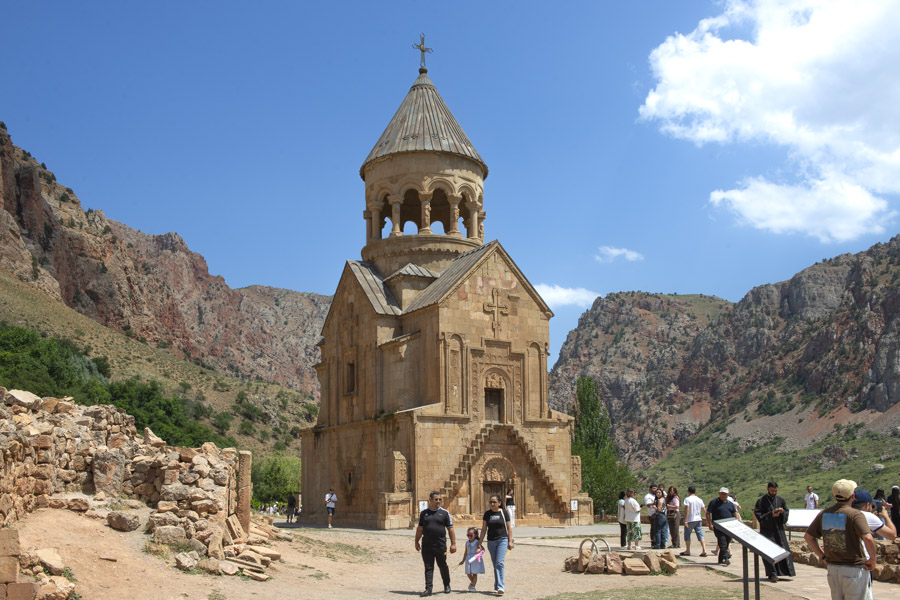
Disclaimer: Advantour does not issue visa invitations or provide visa application services.
Armenia’s visa rules depend on your nationality and travel document type. The Foreign Ministry provides an official checker for both.
Visa-free stays:
Eligible travellers may stay in Armenia for up to 180 days in one year in any one-year period, unless an applicable international agreement sets another limit.
Visa requirements and e-visa:
Travellers who are not eligible for visa-free entry should apply through Armenia’s official e-visa system, where their nationality qualifies. For some nationalities, a visitor visa is issued only with an invitation. Standard visitor visas are granted for up to 120 days and may be extended by another 60 days.
Temporary exemption:
From 1 July 2026 to 1 July 2027, a separate visa-free rule applies to nationals of 111 listed countries. Such travellers must hold an eligible residence permit valid for at least six months from the date of entry.
Accepted residence permits are those issued by the United States of America, European Union member states or Schengen area states, the United Arab Emirates, the Kingdom of Bahrain, the State of Qatar, the Kingdom of Saudi Arabia, the State of Kuwait, or the Sultanate of Oman. The permit must be presented as a physical card or a sticker placed in the passport.
Border requirements:
At the border, travellers need a valid passport plus any visa or residence document required for their status. As entry requirements vary by nationality and type of travel document, you should check the rules that apply to you before booking.
Customs and Medication
Rules for customs in Armenia are straightforward for ordinary luggage, and restricted, taxable or uncertain items should be declared. Use the red lane if you are unsure whether an item requires declaration; otherwise, take the green lane.
Cash:
Cash and traveller’s cheques up to US$10,000 do not require declaration. Bank-card balances are not declared. Amounts above US$10,000 must be declared.
Alcohol and tobacco:
More than three litres of alcohol require declaration and duty. Importing more than five litres is prohibited. Tobacco limits include 200 cigarettes or 50 cigars; no more than 250 g of tobacco products in total are permitted, and travellers under 18 cannot import these products.
Medication:
Travellers may bring up to 10 types of medicine, with three consumer packs of each, for personal treatment. A prescription or medical record can justify a larger quantity needed for the treatment course.
Medicines containing narcotic or psychotropic substances require medical documentation and a customs declaration. Such documents may require a certified Armenian translation and notarisation.
How to Get to Armenia
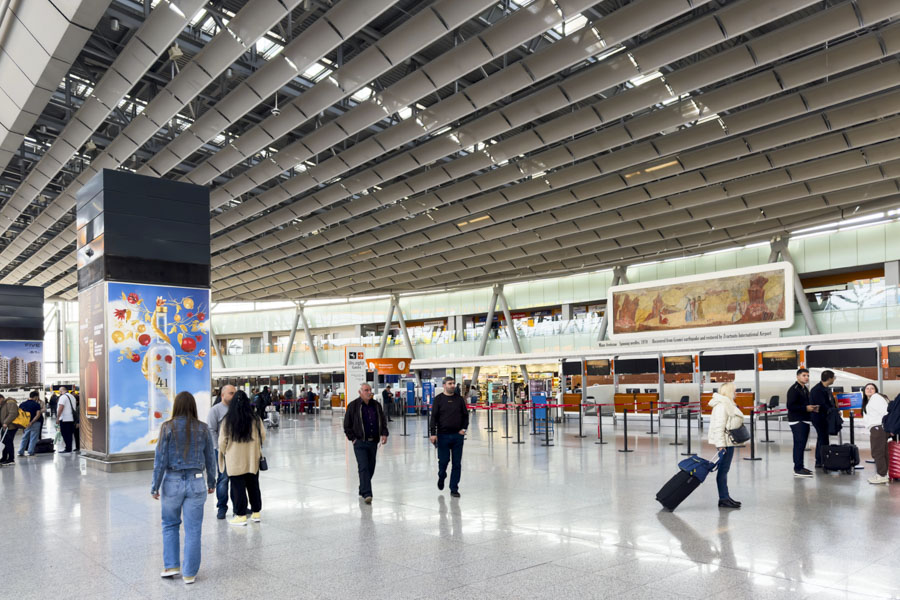
When you plan your visit to Armenia, flying into Yerevan is the simplest option for most international travellers. Armenia sits in the South Caucasus, with Georgia providing the main overland route for most international travellers. Additionally, direct minibuses and international trains connect Tbilisi to Armenia. Transport schedules change, particularly on the railway, so check current departure times shortly before travelling.
Flights to Armenia
Most international passengers arrive at Zvartnots International Airport (EVN), around 20 minutes by road from central Yerevan. Armenia’s second international airport, Shirak (LWN), serves Gyumri with a much smaller network.
Zvartnots has direct connections across Europe and the Gulf, alongside frequent regional services. Air France, Austrian and Lufthansa currently serve the airport from European markets. Qatar Airways and flydubai provide Gulf connections, while Wizz Air has expanded its European network.
Two useful additions arrived in 2026. Direct London flights began in June, while Turkish Airlines launched Istanbul–Yerevan services in March.
To travel to Armenia from the USA, most journeys require a connection, as there are no scheduled nonstop flights. Flight networks change seasonally. Check the live Zvartnots timetable or your airline before booking, particularly for less frequent European routes.
Travel from Georgia by Road and International Train
By Road
Georgia is the most practical overland gateway for many international travellers. Direct minibuses operate between Tbilisi and Yerevan throughout the week.
Current timetables show departures from Avlabari and Ortachala in Tbilisi, with services reaching Yerevan’s Kilikia Central Bus Station. The journey usually takes around five and a half to six hours, although border queues can add time.
Most Tbilisi–Yerevan road services cross at Sadakhlo (Georgia)–Bagratashen (Armenia). Drivers approaching from other parts of Georgia may instead use Bavra (Armenia)-Ninotsminda (Georgia) or Gogavan (Georgia)–Guguti (Armenia).
By Night Train
The international sleeper train is slower but more comfortable. During summer 2026, the service extends through Tbilisi to Batumi every other day from 14 June to 1 October. Outside summer, the Yerevan–Tbilisi service follows a separate every-other-day timetable.
All places are sleeping berths, with several carriage classes available. Border formalities take place during the journey, so passport checks may interrupt the night.
Please note that passport control is usually carried out outside the train, so you will have to leave your cabin.
Armenia’s borders with Azerbaijan and Turkey remain closed to ordinary passenger travel.
Money and Staying Connected
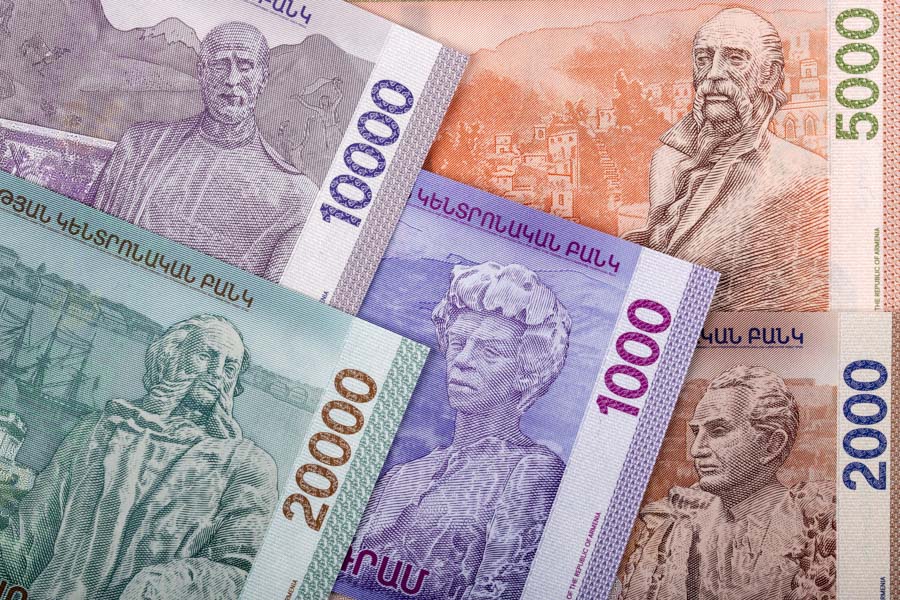
Money and mobile access are simple to arrange, but both deserve a little attention during Armenia trip planning. Carry some Drams and decide how you want to get online before travelling beyond the main cities.
Money, Cards and Currency Exchange
Armenia uses the Armenian dram (AMD, ֏), and prices for goods and services are quoted in dram.
Cards are widely accepted in Yerevan, particularly at hotels, restaurants, supermarkets and larger shops. However, cash remains important for markets, smaller businesses and many services outside the capital. Armenia’s Central Bank also notes that cash remains a major everyday payment method nationally.
ATMs and licensed currency-exchange offices are easy to find in Yerevan as well as at border crossings. Some large supermarkets also have exchange counters.
If you need cash immediately after landing, exchange or withdraw only enough for your first expenses. You can then compare rates in the city before changing a larger amount.
Keep some Drams available when travelling into smaller towns and rural areas. Carrying more than one payment method is also sensible in case a card is rejected or lost.
Tipping is appreciated but not compulsory. Check the bill first, as some restaurants already include a service charge.
SIM Cards, eSIMs and Internet
Armenia has three main mobile operators: Viva, Ucom and Team Telecom Armenia. Local mobile service is generally affordable, and SIM cards are available at Zvartnots Airport, near the Bagratashen border, and operator shops. A passport is required when purchasing a local SIM.
Tourist plans are easy to arrange after arrival. Viva and Ucom currently offer dedicated 15-day tourist packages, while Team also sells a special airport plan.
Is a physical Armenian SIM or an eSIM better?
A physical Armenian SIM is practical if you want a local number, calls and mobile data in one package. It is also easy to get help with installation at an operator shop.
An eSIM is more convenient when your phone supports it and you do not want to replace your existing SIM. Viva, Ucom and Team all support eSIM technology, although activation procedures differ between operators.
For a short stay, either option works well. A local SIM may offer better value for calls and longer use, while an eSIM makes arrival simpler.
Mobile coverage reaches the most populated parts of Armenia, but reception can weaken on remote mountain roads and hiking routes.
Practical Information on Arrival
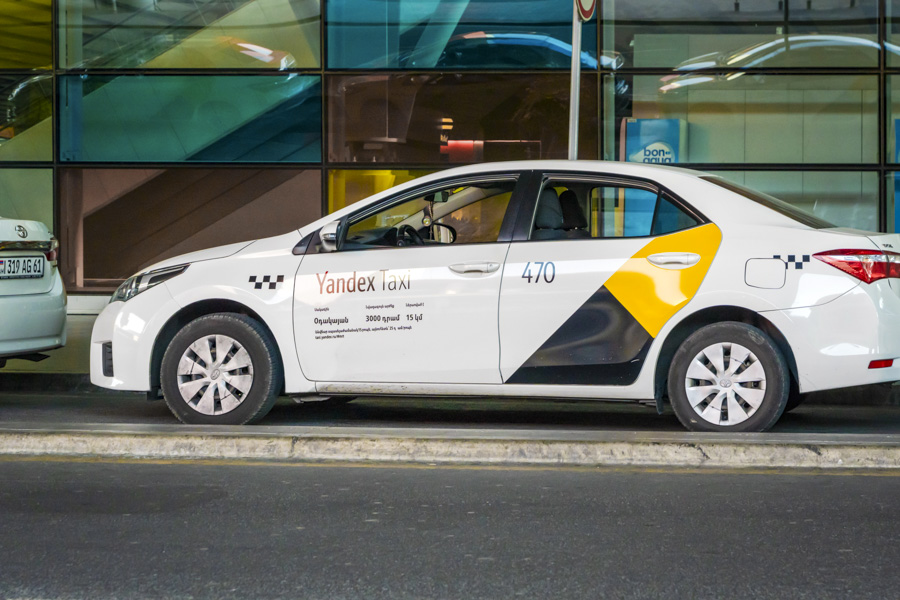
The Armenia travel tips below cover the first practical steps on arrival, including airport transport and a few everyday essentials. Most services are easy to arrange in Yerevan. A little preparation is more important when you plan to drive or travel beyond the capital.
Getting from the Airport
Zvartnots International Airport is about 20 to 30 minutes away by car from central Yerevan in normal traffic (12 kilometres / 7.5 miles). Taxis, ride-hailing services, buses and rental cars are available directly from the airport.
For taxis, GG and Yandex Go are widely popular and allow you to see the estimated fare before confirming. An airport-to-centre taxi typically costs around 4,000 to 6,000 AMD, although traffic and demand can affect the price.
Public transport is inexpensive. Bus N100 runs every 30 minutes from 06:50 to 22:00, then hourly overnight from 22:00 to 06:50. A one-way ticket costs 500 AMD and you can pay by bank card or QR ticket.
Airport Express N201 (Elitebus company) operates every 30 minutes between 07:00 and 22:00. The fare is 300 AMD, paid in Armenian dram.
Several rental companies also have 24-hour desks in the arrivals hall, including Enterprise, Hertz, SIXT and Carwiz.
Driving and Car Rental
Renting a car is most useful when your route includes places that are difficult to reach by regular public transport. Car rental particularly makes sense towards Lake Sevan or less accessible parts of Armenia. Driving also gives more flexibility for exploring historic routes and landscapes once crossed by Silk Road travellers.
Armenia recognises driving licences from countries covered by the Vienna Convention on Road Traffic. Travellers from other countries should carry an International Driving Permit (IDP).
Rental companies may apply additional requirements. A valid passport and driving licence are standard, while many companies also require a credit card deposit.
Minimum driver ages vary between rental companies and vehicle categories. Check the conditions before booking rather than assuming the same rule applies everywhere.
Drivers should carry their licence and the vehicle documents while travelling. Rental cars should also have the required insurance documents.
If you plan to take a rental car outside Armenia, ask the company first. Cross-border travel may require advance approval, as well as additional documents and insurance.
Short Essentials
A few final traveller tips can make your first days in Armenia easier. Check current Armenia travel advisories before visiting remote border areas or travelling during periods of regional disruption.
Electricity:
Armenia mainly uses Type C sockets and a 220–240V supply. Most modern dual-voltage devices only require the correct plug adapter.
Emergency numbers:
Call 911 for the Emergency Situations Crisis Management Centre.
112 the emergency number, for a simultaneous response of police officers and rescue services.
You can also reach the police by calling on 102, while 103 connects to ambulance services.
US citizens may also register their trip through the Smart Traveler Enrollment Program (STEP) to receive security updates.
Drinking water:
Public drinking fountains called pulpulaks are common in Yerevan and elsewhere in Armenia. They provide freely accessible drinking water and are particularly useful during summer.
Airport assistance:
Zvartnots International Airport operates the 187 information line around the clock.
Download your taxi app before landing and save your accommodation address offline. These small preparations make the first hours after arrival considerably simpler.
Departure from Armenia
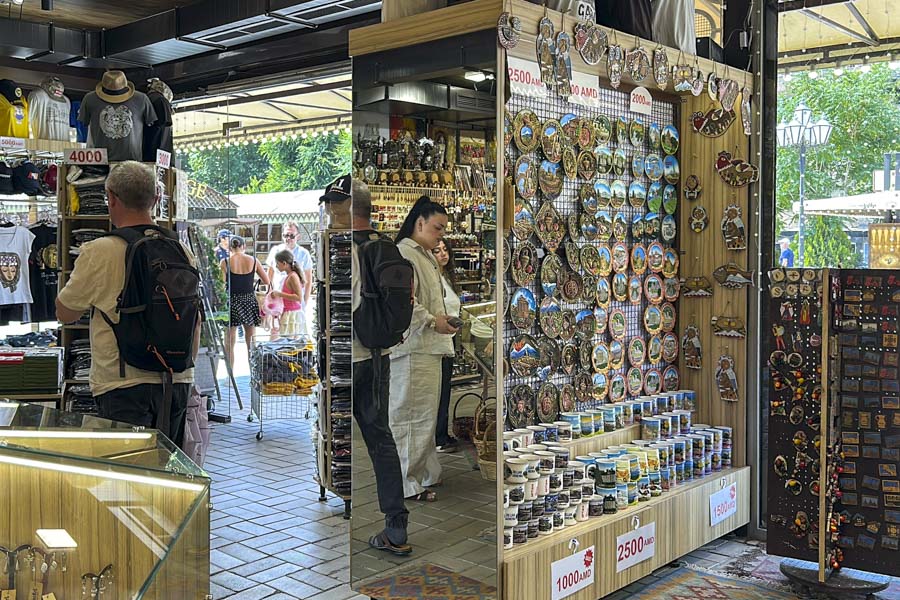
While leaving Armenia, some goods must be declared or require permission before export. Check any unusual purchases before reaching the airport, particularly antiques, artworks and other potentially valuable objects.
Customs When Leaving Armenia
Personal goods can generally leave Armenia without customs duties or taxes, regardless of their value or weight.
However, some items require declaration. These include cash above US$10,000, cultural valuables and medicines containing narcotic or psychotropic substances.
If you are travelling with controlled medication, keep the medical documents confirming the medicine, prescribed quantity and medical need.
Souvenirs, Art and Cultural Objects
Most travellers can take ordinary personal purchases home without customs duties. Extra care is needed with objects that may have cultural value.
The export of cultural valuables requires permission from Armenia’s Ministry of Education, Science, Culture and Sport.
This can be relevant when buying older artworks, antiques or other unusual collectible objects. Keep receipts and any certificates provided by the seller. If an item appears old or valuable, check its export requirements before buying it.