


Shamakhi (Şamaxı), known as the “city of poets” and where the dry plains of central Azerbaijan begin to fold into the foothills of the Greater Caucasus, sits about 120 km west of Baku. The landscape changes noticeably here. Open country gives way to green slopes, vineyards and winding roads. For centuries, Shamakhi was an important political, commercial and cultural centre of Shirvan. Former capital of the Shirvanshah dynasty, it was an important centre of the Silk Road. Earthquakes, invasions and repeated rebuilding have erased much of its old urban fabric, but the city’s past still surfaces in mosques, mausoleums, ruined fortifications and the hills around it.
Shamakhi today feels less busy and more spread out than Azerbaijan’s larger cities. The 8th-century Juma Mosque and Yeddi Gumbaz mausoleums are among the main places to visit in Shamakhi, while vineyards and the Shamakhi Astrophysical Observatory at Pirgulu draw visitors beyond the centre. Its position between Baku and the mountain regions farther west also makes Shamakhi a natural stop on journeys towards Lagich, Gabala and Sheki.
Shamakhi Tours
A Shamakhi tour works well as a day trip from Baku, but the city also appears on longer itineraries through north-western Azerbaijan.
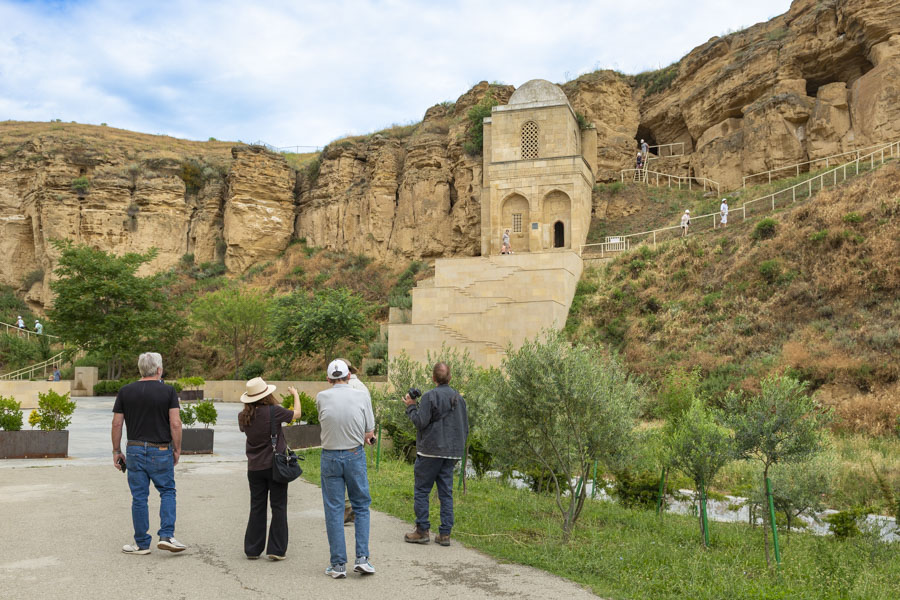
Advantour’s One-Day Shamakhi and Lagich Tour combines Shamakhi with the Diri Baba Mausoleum and Lagich. In the city, the programme includes Juma Mosque and Yeddi Gumbaz before continuing towards Lagich.
For a longer journey, the Azerbaijan Group Tour includes Shamakhi as part of a wider route across the country. Other popular itineraries also pass through the city on their way between Baku and destinations in north-western Azerbaijan.
Most of Shamakhi’s principal monuments can be covered in a day. An overnight stay suits those who want a slower pace and more time for secondary sights. Accommodation ranges from smaller hotels in Shamakhi to countryside resorts, including Shamakhi Palace Sharadil.
Best Time to Visit Shamakhi
The weather in Shamakhi changes noticeably with elevation, so conditions in the city can differ from those in the surrounding uplands:
Spring is one of the easiest seasons for general sightseeing. Temperatures become milder, vegetation returns to a vivid green, and longer days make road trips more comfortable.
Summer is warmer and drier in Shamakhi itself, but higher ground provides some relief from the heat, making it a good time for excursions beyond the city.
By autumn, daytime temperatures become more comfortable again. September and October also coincide with the grape harvest in the wider wine-producing district.
Winter brings colder weather and a greater chance of snow outside the city. Central sights remain accessible, but conditions at higher elevations can be less predictable.
History of Shamakhi
Shamakhi is often identified with Kamachia, a settlement recorded by the Greco-Roman geographer Claudius Ptolemy in the 1st to 2nd centuries AD. However, archaeological evidence points to earlier settlement in the area.
The Shirvan region, in which Shamakhi is located, fell under Achaemenid Persian rule from the 6th century BCE and later became part of the Sasanian Empire. After the Arab conquest in the 7th century CE, it was incorporated into the Islamic Caliphate and later came under Abbasid suzerainty, although local rulers retained considerable autonomy.
In 861 AD, the Shirvanshah state was established, and the Saji dynasty declared its independence. The city grew into one of Shirvan’s main political and commercial centres and served as the capital of the Shirvanshah dynasty from the 8th to the 15th centuries. Its position on the Silk Road crossing the region supported this growth, while fortresses such as Gulistan, Narin Qala and Bughurt protected the city and surrounding territory. This section of the Silk Road, which passed through Shamakhi, connected the Caucasus to Central Asia, Persia, India and China.
Shamakhi suffered repeated upheavals in the following centuries because of wars and an earthquake in 1191. This event weakened the city and prompted the Shirvanshahs to move their court to Baku.
In the 17th century, the city’s main inhabitants were Persians, Armenians and Georgians.
Further earthquakes in the 19th century caused extensive damage, helping explain why relatively little of the mediaeval city survives today as a continuous historic district.
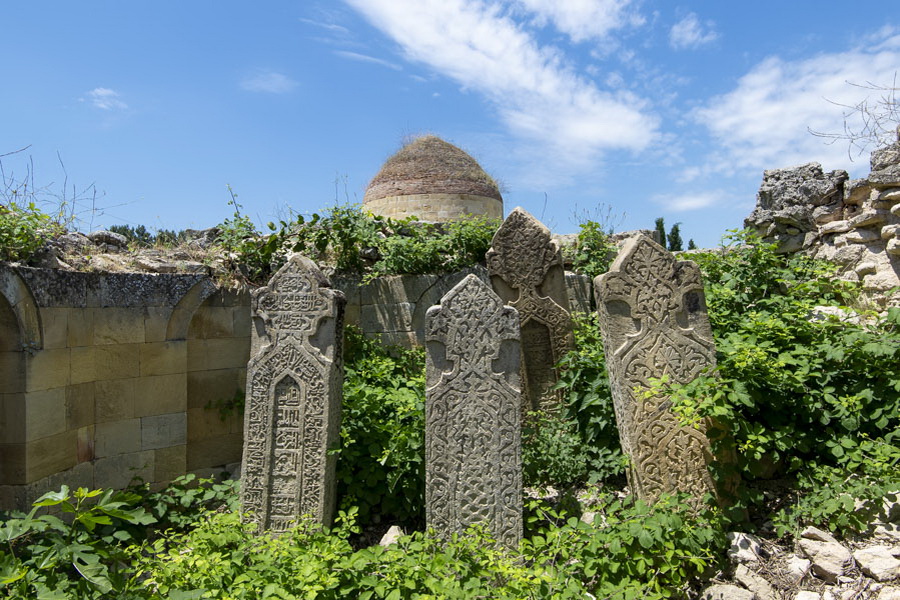
Despite these disruptions, Shamakhi remained an important regional centre. From the mid-18th century until 1820, it formed part of the Shirvan Khanate. The ruling family was buried at Yeddi Gumbaz, including the tomb of Mustafa Khan, the khanate’s last ruler. The Russian Empire established control in 1805 and formalised it in 1820. Nevertheless, the city retained its cultural significance and became closely associated with Azerbaijani literary and intellectual life.
Shamakhi’s literary heritage
Shamakhi is named the “city of poets” because it has a rich literary heritage and has been closely associated with several influential poets, writers and intellectuals from the classical Persian and Azerbaijani literary traditions, including:
Khaqani Shirvani (1126-1199) — a major classical Persian poet associated with Shamakhi and the Shirvan literary tradition.
Imadaddin Nasimi (c. 1369-1417) — a famous Azerbaijani poet and Hurufi thinker traditionally associated with the Shirvan region and believed to have been born in Shamakhi.
Seyid Azim Shirvani (1835-1888) — an eminent poet, teacher and intellectual born in Shamakhi and who founded a progressive school there.
Mirza Alakbar Sabir (1862-1911) — a major Azerbaijani satirical poet and one of the founders of modern Azerbaijani satirical poetry.
Abbas Sahhat (1874-1918) — poet, writer and translator born in Shamakhi who made an important contribution to modern Azerbaijani literature.
Things to Do in Shamakhi
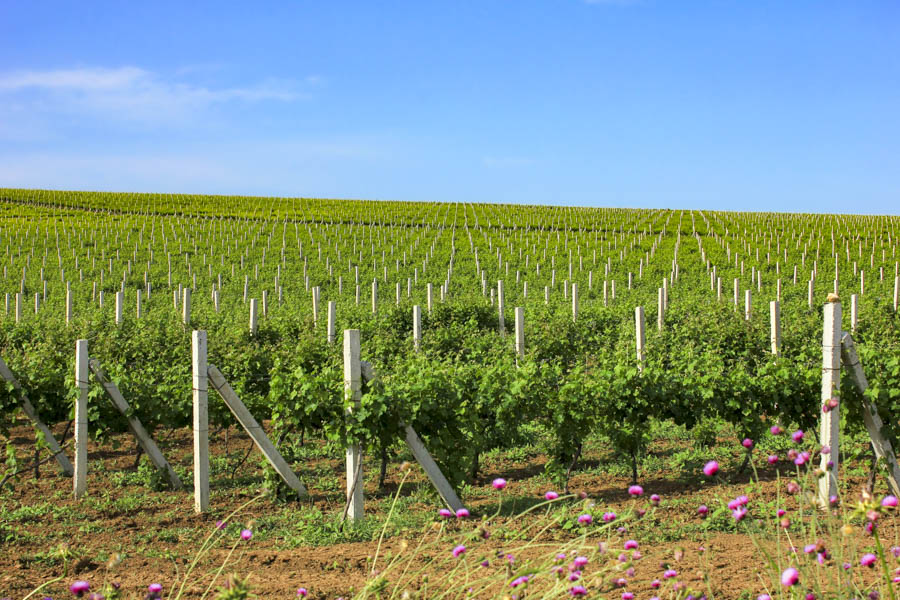
Shamakhi’s attractions reflect several sides of the city and its surroundings, from early Islamic architecture and Shirvan-era fortifications to astronomy, winemaking and quieter cultural sites.
Places to Visit in Shamakhi City
Step Inside the Historic Juma Mosque
Juma Mosque (Cümə Məscidi) is Shamakhi’s principal architectural landmark. Its origins are traditionally dated to the 8th century, placing it among the earliest mosques in the Caucasus.
Earthquakes and conflict led to several major reconstructions, notably after the 1859 earthquake and again after the destruction in the early 20th century. The present building retains the distinctive three-section internal area roofed by a large central dome and two smaller side domes. The Shamakhi Juma Mosque is absolutely gorgeous and a true masterpiece.
Through these changes, the mosque remained an important religious centre.
Walk Through Shamakhi’s Historic Centre

Shamakhi’s historic centre is more fragmented than compact, shaped by centuries of earthquakes and rebuilding. Exploring it means moving between individual landmarks and older traces woven into the modern city rather than following a single preserved mediaeval quarter.
Around Juma Mosque, archaeological work uncovered the remains of a madrasa, religious cells and old burials. Nearby are Seyid Azim Shirvani Park beside the mosque and Nasimi Memorial Park in central Shamakhi, two of several public spaces reflecting the city’s strong literary tradition.
From here, continue through the central streets towards the market, passing a mix of residential, commercial and civic buildings. Shamakhi was extensively rebuilt during the 19th century, a period that also saw the opening of Azerbaijan’s first purpose-built theatre in the city in 1858. Little of that period forms a complete architectural ensemble today, but these scattered details help explain why modern Shamakhi looks so different from a conventional historic town.
Visit Shamakhi’s Local Market
A visit to Shamakhi’s local market offers a glimpse of everyday life beyond the city’s historic monuments. Stalls and small food shops serve residents, selling seasonal fruit and vegetables, fresh herbs, nuts, dried fruit, pickles, dairy products, bread and other Azerbaijani staples. In autumn, visitors may also find grapes, pomegranates, apples and locally made preserves.
The market is a convenient place to buy provisions for a picnic or a trip into the surrounding countryside. Depending on the season and vendor, shoppers may also find regional sweets, honey, dried fruit, and other edible souvenirs. Ask permission before photographing traders or their stalls, and carry small-denomination Azerbaijani manat notes for everyday purchases.
Explore the Remains of Narin Qala
Narin Qala, or the Inner Fortress, refers to the fortified core of mediaeval Shamakhi. Unlike Gulistan Fortress, which stands on a prominent hill outside the city, Narin Qala was part of the urban defensive system and protected the city’s palace and administrative centre.
Today, Narin Qala is an archaeological site rather than a complete standing fortress. Its remains are scattered among the modern city, so it’s best visited with Shamakhi’s other historical sights.
Visit Shahkhandan Tomb
Shahkhandan Tomb, in the southwestern part of Shamakhi, stands within one of the city’s old cemeteries and reflects its literary and religious heritage. The monument is traditionally linked with Shahkhandan, believed to have been the brother of poet Imadaddin Nasimi.
Historic gravestones remain throughout the cemetery, which also contains the grave of 19th-century poet Seyid Azim Shirvani. Together, they add another layer to Shamakhi’s strong literary associations.
Places to Visit in Shamakhi’s Surroundings
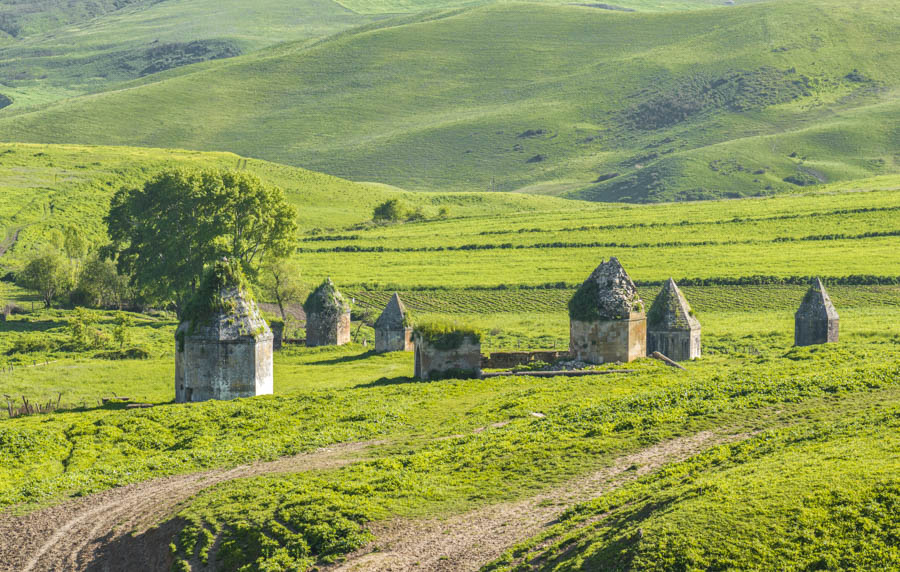
Explore the Mausoleums of Yeddi Gumbaz
South of central Shamakhi, Yeddi Gumbaz means “Seven Domes”. The name refers to a group of mausoleums connected with the ruling family of the Shirvan Khanate.
Only part of the original complex remains, but the surviving structures still illustrate the period’s funerary architecture. Azerbaijani poet Mirza Alakbar Sabir is buried in the surrounding cemetery, adding the site to the city’s cultural history.
Explore the Kelekhana Tombs
The Kelekhana Tombs, in Kelekhana village north of Shamakhi, form a 17th-century funerary complex rooted in Shirvan’s architectural traditions. Of the original nine mausoleums, eight have survived, although one is badly damaged.
The tombs are grouped closely together and built from local stone, creating one of the more distinctive historic ensembles in the Shamakhi district. Restoration and conservation work completed in 2026 focused on seven of the mausoleums, helping stabilise the complex while preserving its original character.
Kelekhana is quieter than Yeddi Gumbaz and receives fewer visitors, making it a worthwhile stop for those interested in funerary architecture and lesser-known heritage sites around Shamakhi.
Hike to the Ruins of Gulistan Fortress
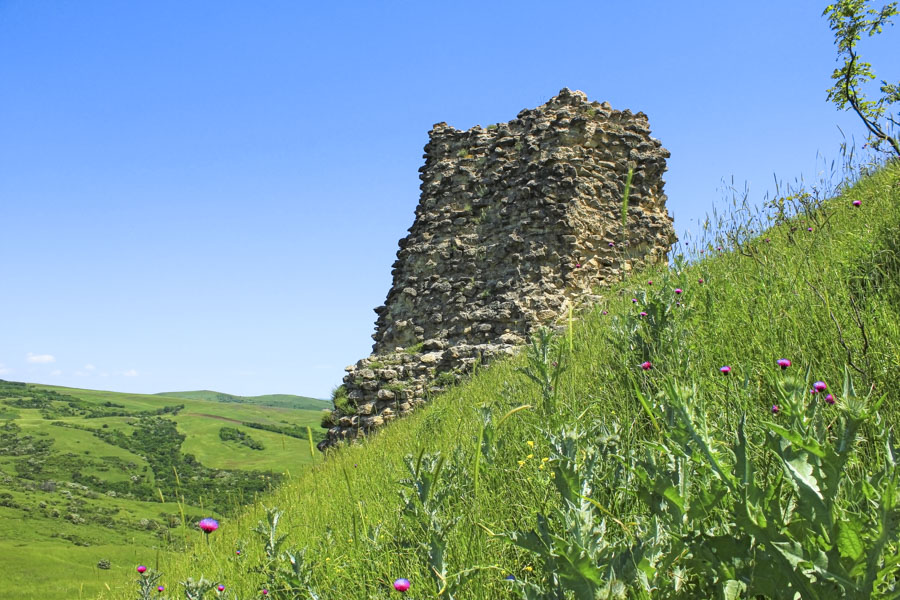
The ruins of Gulistan Fortress stand on a steep, rocky hill northwest of Shamakhi, near the village of Angakharan. Together with Narin Qala and Bughurt, the fortress belonged to the defensive network that once protected Shamakhi and the wider Shirvanshah territories.
It became one of the main strongholds and residences of the Shirvanshahs. Its elevated position provided natural protection, with cliffs and steep slopes guarding several sides of the site.
What survives today is fragmentary, with sections of stonework scattered across the hillside. Reaching the remains involves uneven ground, so the visit suits those interested in archaeology, landscapes and walking rather than a quick urban sightseeing circuit.
Trek to the Ruins of Bughurt Fortress
Bughurt Fortress, also known as Galeyi Beygurt or Qaleyi Bəyqurt, is a remote mountain stronghold in the wider Shamakhi region. Built from local stone and perched on a high limestone ridge, it formed part of the defensive network protecting Shirvan, alongside Gulistan Fortress and Shamakhi’s inner fortifications.
The site survives mainly as scattered walls, towers and foundations integrated into the rocky landscape. Its position was chosen for defence: the height provided broad views across the surrounding valleys, while the steep terrain made the fortress difficult to approach.
Visiting Bughurt is more demanding than visiting the ruins near Shamakhi. Access involves a rural approach followed by a walk over rough, uneven ground, and the final route may be difficult to follow without local guidance. The fortress suits experienced walkers, landscape photographers, and visitors seeking a remote archaeological site rather than a conventional sightseeing stop. Bring water, sturdy footwear and offline directions, and avoid climbing unstable walls.
Taste Local Wines at Meysari Winery

Viticulture has become an important part of contemporary tourism around Shamakhi, and Meysari Winery, west of the city, is one of the best-known wine destinations.
Operated by Shirvan Wines, Meysari became Azerbaijan’s first winery to receive EU organic certification. Its vineyards use organic farming methods, and the winery produces wines from both international and local grape varieties. Tours typically include an introduction to the vineyards and production facilities, followed by a tasting of Meysari wines. The complex also includes a wine museum, the Abgora restaurant and guest accommodation.
Stop at Diri Baba Mausoleum on the Road from Baku
Diri Baba Mausoleum is frequently included on Shamakhi tours, although it stands near Maraza rather than in the city itself.
The 15th-century mausoleum is set directly into a limestone cliff opposite an ancient cemetery. Part of the structure seems to emerge from the rock, giving the building its distinctive appearance. Its position on the Baku–Shamakhi road makes it an easy stop.
Museums in Shamakhi
The House-Museum of Mirza Alakbar Sabir is dedicated to one of Azerbaijan’s best-known poets and satirists. Born in Shamakhi in 1862, Sabir became particularly famous for his socially critical poetry and his contribution to the satirical magazine Molla Nasraddin. Established in 1962, the museum presents Sabir’s life, education, travels and literary career. Its displays include photographs, personal and household objects, examples of Molla Nasraddin, material on Sabir’s contemporaries, and publications about his work. The museum occupies a reconstructed two-storey building with six exhibition halls.
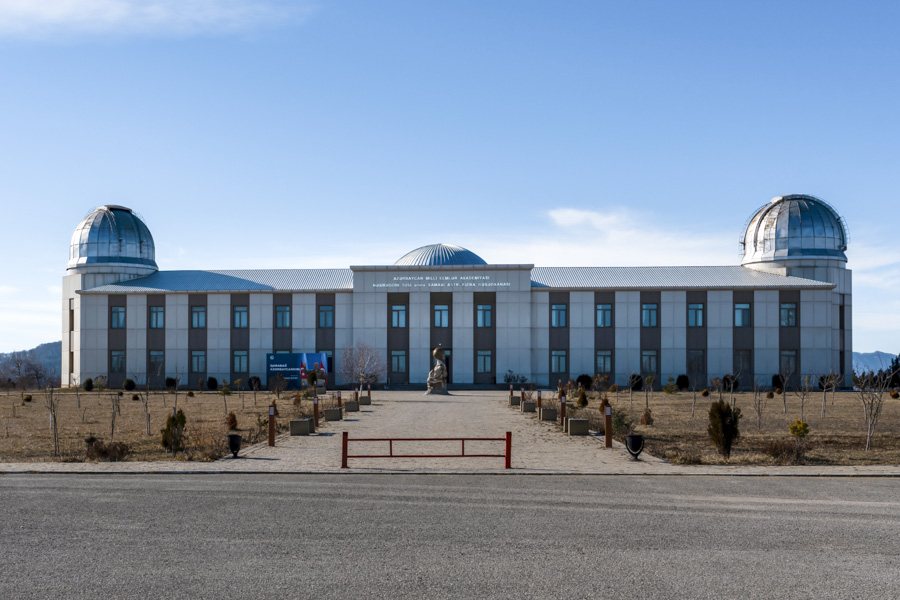
About 22 kilometres (14 miles) north of Shamakhi city, Pirgulu is home to the Shamakhi Astrophysical Observatory. Established in 1959 during the Soviet period, the observatory was named after mediaeval scholar Nasiraddin Tusi in 1981 and remains an active centre for astronomical research. The Shamakhi Observatory has a small museum and several telescopes. Evening visits may include stargazing when schedules, visibility and operating conditions allow. The road to Pirgulu also climbs through increasingly wooded uplands, offering a noticeable change of scenery from central Shamakhi.
Shamakhi Theatres
Theatrical events are less frequent than concerts and dance shows, but occasional productions take place in Shamakhi. Usually performed in Azerbaijani, they introduce audiences to the country’s literary and dramatic heritage.
Shamakhi’s cultural events may feature Azerbaijani folk music performed on instruments such as the tar, kamancha and dhol, accompanied by traditional dance ensembles. These performances combine lively rhythms with carefully choreographed movements rooted in the country’s cultural heritage.
The city’s musical heritage centres on “mugham”, a form of vocal and instrumental improvisation recognised by UNESCO. Alim Qasimov, born in the city, is one of the most famous mugham singers known internationally.
Entertainment, Parks and Shopping in Shamakhi
Entertainment in Shamakhi
Shamakhi offers a relaxed, family-friendly leisure experience, with outdoor activities, including countryside excursions and local attractions, taking centre stage.
Shamakhi Alpaca Farm, in Meysari village, is a popular choice for families, where visitors can meet and feed the animals. It also has a children’s play area, picnic space, and a small shop selling local crafts made from alpaca wool.
In the evening, most activity shifts to restaurants, cafés and hotel facilities.
Relax with a hammam session at Shamakhi Palace Sharadil, a spa hotel offering a Turkish bath, sauna and wellness facilities. The warm, steamy atmosphere provides a restorative way to unwind after exploring Shamakhi’s historic sites or hiking in the surrounding countryside. Treatments and access may require booking, so check availability with the hotel before visiting.
Festivals
The International Barbecue Festival returns to Shamakhi each June, bringing together culinary traditions from around the world and appealing especially to gourmets.
Take a hot-air balloon ride over Pirgulu Reserve Park and Shamakhi during the Shamakhi Hot-Air Balloon Festival. Usually held in June, the festival also features concerts and traditional cultural performances.
Held each September, the annual Shamakhi Grape and Wine Festival celebrates viticulture with live music, dancing, theatrical performances, and competitions set among the vineyards.
Parks and Nature in Shamakhi
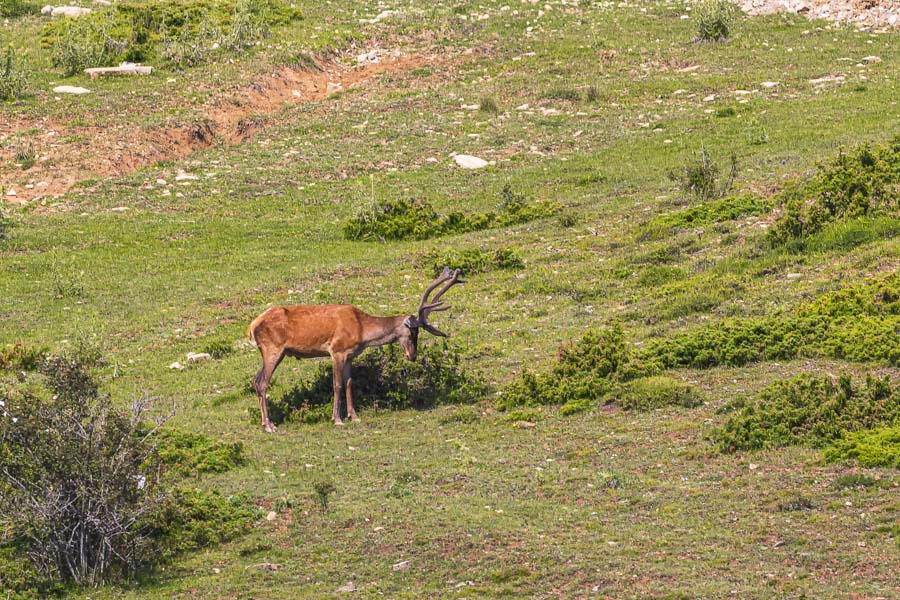
Hike through Pirgulu State Reserve. Nature lovers can escape Shamakhi’s urban surroundings with a hike in Pirgulu State Nature Reserve, on the eastern edge of the Greater Caucasus. Established in 1968, the reserve protects mountain forests, fertile soils and habitats for native wildlife. Its wooded slopes are covered mainly by beech, oak and hornbeam, with ash, birch, walnut, wild fruit trees and dense undergrowth also present. The reserve is home to a variety of birds and mammals, including roe deer, wild boar, foxes, wolves, brown bears and lynx. Golden eagles, partridges, woodpeckers and other forest birds can also be seen, although wildlife encounters are never guaranteed. The forest scenery, cooler mountain air and changing elevations make Pirgulu a refreshing contrast to the drier landscapes around Shamakhi.
Shamakhi Safari Park brings a different kind of excursion into the itinerary. Spread across 620 hectares, it is home to red deer, mouflon, bison and other species, with wildlife viewed on organised group or off-road safari tours.
Shopping in Shamakhi
Shopping in Shamakhi offers visitors a chance to explore local markets, small shops, and stalls near popular attractions. Locally produced wine is among the more distinctive purchases, along with food products and gifts.
Traditional crafts are better sought in nearby Lagich where copper workshops and handmade metalwork remain part of the village’s identity.
Shamakhi was historically renowned for producing fine raw silk used in luxurious brocades and kelaghayi, a traditional silk scarf, as recorded by Silk Road travellers, including the Venetian merchant Marco Polo. The kelaghayi was added to the UNESCO Representative List of the Intangible Cultural Heritage of Humanity in 2014.
The wider Shirvan region also has a long tradition of embroidery and textile work, although the best-known contemporary centres of the kelaghayi production are Sheki and Basgal. A beautifully patterned silk scarf makes an elegant and meaningful gift of a visit to the region.
Food in Shamakhi
Traditional Azerbaijani Cuisine
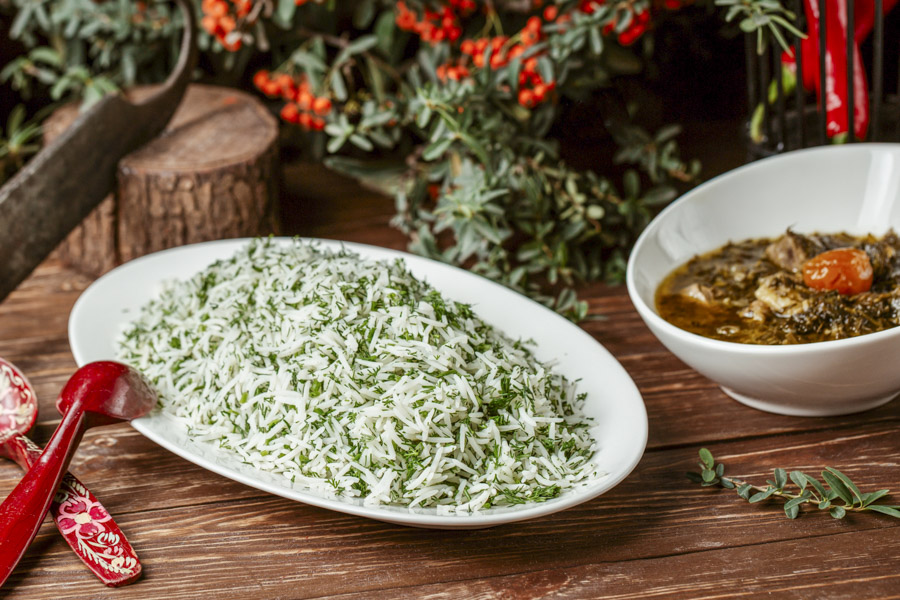
Shamakhi has a notably varied local cooking tradition. Among its best-documented specialities is shüyüdlü plov, a dill pilaf prepared with rice, beans and lamb; parcha bozbash, a meat-and-broth soup; sabzi, in which meat is cooked with generous amounts of fresh herbs; and yarpaq dolması, traditionally made notably small in this region. Kebabs are another staple, especially with lamb grilled over charcoal.
Məlhəm Restaurant, in the village of Malham on the road to Pirgulu, is a good place to explore local pilaf styles; its menu includes shüyüdlü plov with lamb or chicken, səbzili plov, and turşu qovurma plov. Çənlibel, in Əngixaran village (also rendered Angekharan), is another option for Azerbaijani food and is known for its lamb kebab.
Vegetarian and Vegan Food
Dedicated vegetarian and vegan restaurants are limited, but meat-free meals are still manageable. Shamakhi Palace Sharadil Hotel currently lists several vegan dishes, although it serves Turkish and European cuisine. Elsewhere, salads, aubergine preparations, rice, bread and vegetable sides are the most dependable choices.
Ingredients are worth checking before ordering. Butter, yoghurt, cheese, eggs or meat stock may be used even when they are not obvious from the menu. Larger hotels and restaurants accustomed to international guests may also be better equipped to handle specific dietary requests.
Bakeries, Patisseries and Cafés
Shamakhi’s bakery scene is more traditional than elaborate. Fresh bread and simple pastries are widely familiar, while local confectionery includes Shamakhi sujuk, made with wheat starch, sugar, walnuts and hazelnuts.
For a more contemporary café setting, stop at COFFEE KARMA, near Juma Mosque.
City Transport in Shamakhi
Walking is convenient for exploring Shamakhi, but many attractions outside the city centre are too far apart to visit comfortably on foot.
Taxis are the most straightforward option for short journeys, and Bolt also operates in the city. Online information on public transport routes is limited, so it’s best to check bus and minibus details locally.
A car or private driver is particularly useful when your itinerary extends to rural sites. Those driving independently will have more flexibility to combine several outlying stops in one day, while hiring a private driver offers similar convenience without the need to navigate rural roads.
How to Get to Shamakhi
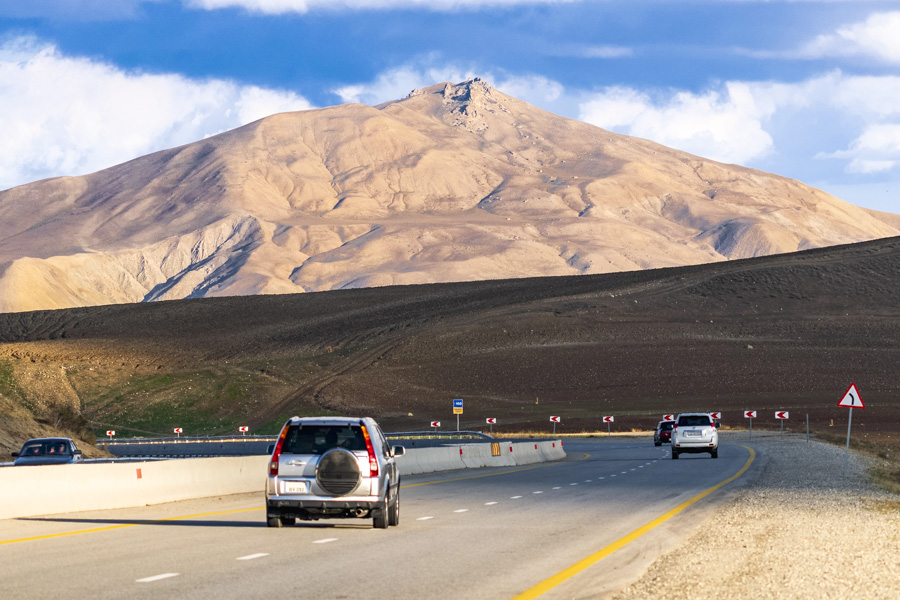
Shamakhi is reached by road, with most independent journeys beginning in Baku. Intercity buses depart from Baku International Bus Terminal, where tickets can be purchased for domestic routes; checking the latest departure time before travel is recommended.
For greater flexibility, especially with luggage or an early start, a private transfer can be arranged from Baku. Drivers normally use the main highway west from the capital, making the journey straightforward without needing to change transport en route.
Languages Spoken in Shamakhi
Most everyday communication in Shamakhi takes place in Azerbaijani. Russian is understood in some settings, generally among older residents, while English is more likely in hotels and businesses accustomed to international guests.
Away from these places, a few basic Azerbaijani phrases or a translation app can help when arranging taxis, using local transport, or ordering in smaller establishments.
Security in Shamakhi
Visitors to central Shamakhi should follow the usual precautions recommended throughout Azerbaijan, including taking care of personal belongings and using reputable transport.
Visits to remote historical sites require a little more planning, particularly for independent travellers. Check the access arrangements locally where necessary, allow plenty of time for the return journey and avoid scheduling isolated sites too tightly.