

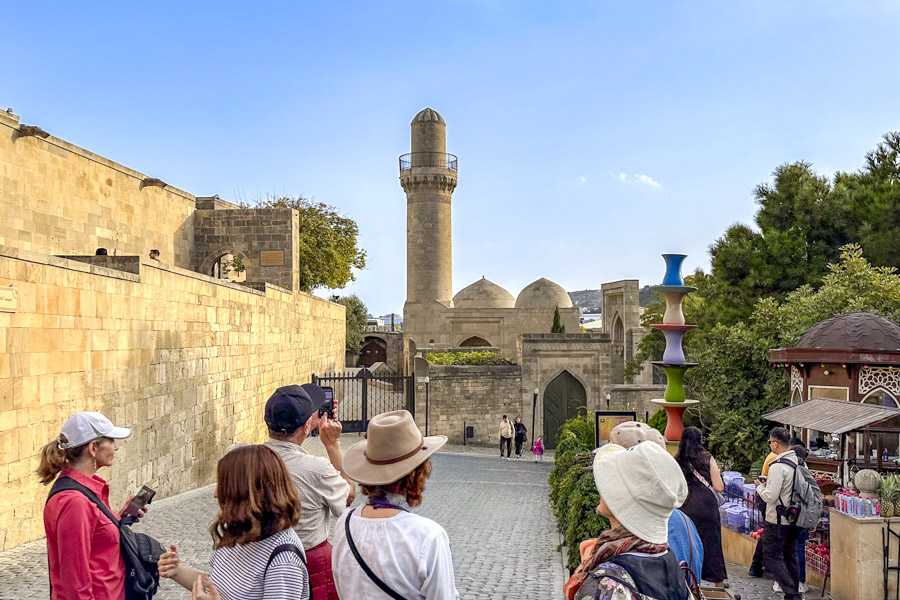
Our Azerbaijan trip planner brings together the most important information for tourists and traveller tips for Azerbaijan. Entry rules depend on nationality, while registration, customs and medication regulations are useful information for tourists. Always check Azerbaijan’s official visa and Azerbaijan entry requirements shortly before travelling.
What Do You Need to Know Before Your Trip to Azerbaijan
What a visitor should do before travelling to Azerbaijan is check visa status, passport validity and items under restriction. Travellers staying longer than 15 days also need to understand the Azerbaijan registration for tourist information.
Entry and Visa Requirements
Some visitors can enter visa-free or get it on arrival, while many can apply online through ASAN (Azerbaijan Service and Assessment Network) eVisa. Other travellers need to apply through an Azerbaijani embassy or consulate.
The standard ASAN eVisa is issued within three working days and permits a single-entry stay of up to 30 days. An urgent service is also available, with the visa issued within three hours, including holidays and non-business days. Passport and Azerbaijan visa requirements vary according to nationality and type of entry. For detailed nationality-specific requirements, please refer to the Ministry of Foreign Affairs or ASAN visa information published on the official websites.
Registration in Azerbaijan
Foreign visitors staying in Azerbaijan for more than 15 days must register their place of stay. Citizens of Kazakhstan have a longer threshold of 30 days.
Hotels usually register their guests. If you stay in private accommodation, you can register through the State Migration Service or an ASAN centre. If you change your registered address, you must usually register the new address within five working days from the day of arrival at the new address. Missing the deadline can lead to a fine of 300 to 400 manats, which may or may not be accompanied by an administrative order for expulsion from the territory of the Republic of Azerbaijan.
Customs Regulations
Azerbaijan’s customs regulations and bringing goods into Azerbaijan do not vary on nationality and are straightforward for ordinary personal luggage. Restricted goods and larger quantities must be declared at the customs in Azerbaijan.
Travellers aged 18 or over can bring in up to 1.5 litres of alcohol, 200 cigarettes and 20 grams of gold jewellery. They can also bring 0.5 carats of diamonds and up to 30 kilograms of food under simplified customs rules.
Foreign currency in cash can be brought into Azerbaijan without a fixed monetary limit, provided customs procedures are followed. Separate rules apply when taking cash out of the country.
Mobile phones and other wireless devices brought from abroad must also be declared to customs. Travellers carrying goods that require declaration should use the Red Channel; otherwise, they can pass through the Green Channel.
Please refer to the State Customs Committee of the Republic of Azerbaijan’s website for further details.
Personal Medication
Travellers bringing medication to Azerbaijan can generally carry quantities needed for personal use without customs duties. Narcotic drugs, psychotropic substances and their precursors are subject to much stricter controls.
If you take prescription medicine, particularly strong painkillers, sedatives or other controlled medication, check before travelling whether any of its ingredients are prohibited by Azerbaijani law.
Keep medicines in their original packaging and carry the prescription and supporting medical documents and declare them if needed.
How to Get to Azerbaijan

For most international visitors, flying is the simplest answer to how to travel to Azerbaijan. Baku is the main entry point, while travellers who can enter visa-free may also arrive by train from Georgia. Road and sea borders remain restricted, so check the latest rules before planning an overland trip to Azerbaijan.
Travel to Azerbaijan by Plane
Heydar Aliyev International Airport (GYD), around 20 kilometres from central Baku, handles most international flights to Azerbaijan.
Nearly 40 airlines currently fly between Baku and cities across Europe, the Middle East and Asia. These include Istanbul, Dubai, Doha, London, Paris, Frankfurt, Vienna, Tbilisi, Almaty and Tashkent.
Ganja and Nakhchivan also have international airports and may be practical for some regional routes. Flight networks change seasonally, so check current connections before flying to Azerbaijan.
Get to Azerbaijan by Train
International passenger rail between Georgia and Azerbaijan resumed in May 2026 after a six-year suspension. The Baku to Tbilisi service currently operates daily, with the overnight journey taking about nine and a half hours.
Travellers going from Georgia to Azerbaijan by train should check the entry rules carefully. Travel to Azerbaijan by train is currently possible for Azerbaijani citizens and citizens of visa-free countries.
Travellers who need an eVisa or another visa cannot currently take a train to Azerbaijan. They should arrive by air instead.
Getting to Azerbaijan by Land
Azerbaijan’s land borders connect the country with Georgia, Russia, Iran and Armenia. Nakhchivan also has a short border with Türkiye.
Tourists cannot normally enter Azerbaijan by road at the moment. In most cases, you need special permission while entering Azerbaijan by land. The border with Armenia is also closed to regular travellers.
Travellers planning to enter or leave Azerbaijan by land should check the latest official border rules before their trip.
Travel to Azerbaijan by Ferry
Ferries cross the Caspian Sea between Azerbaijan and ports in Kazakhstan and Turkmenistan, including Kuryk and Turkmenbashi. These ferries mainly carry cargo and vehicles. Their departure times depend on weather, port conditions and cargo schedules.
Tourists usually need special permission to enter Azerbaijan by sea, so ferries are not a regular arrival option. Travellers considering this option should confirm both border-entry rules and the latest sailing arrangements and carrier policies before making plans.
Money and Staying Connected

Money and mobile access are readily available in Azerbaijan, particularly in Baku and larger cities. For smaller towns or faraway villages in Azerbaijan, carry cash and arrange mobile data before leaving the main cities.
Money, Cards and Currency Exchange
The Azerbaijan currency is the Azerbaijani manat (AZN, ₼), with one manat equalling 100 qəpik. Banknotes come in 1, 5, 10, 20, 50, 100 and 200 manat, while metal coins come in 1, 3, 5, 10, 20 and 50 qəpik.
Cards and contactless payments are common in Baku and also in many other cities. You can use contactless bank cards and mobile payments on the Baku Metro and on buses that support cashless payment. Cash is still useful in markets, small shops, local taxis and rural areas.
ATMs are easy to find in Baku and larger regional cities. When you withdraw money in Azerbaijan with a credit card, check your bank’s fees and choose manat.
You can exchange foreign currency at banks and licensed exchange offices. US dollars and euros are usually the easiest currencies to exchange. The Central Bank publishes the official daily rate, but banks and exchange offices may use slightly different customer rates.
SIM Cards, eSIMs and Internet
Azerbaijan has three main mobile operators: Azercell, Bakcell and Nar. All provide prepaid services for visitors, while physical SIM cards and eSIM options are available. Tourist packages usually combine mobile data with domestic and international calls and are commonly valid for 30 days.
A passport is required when purchasing and registering a local tourist SIM. An Azerbaijan eSIM is convenient for compatible phones, particularly if you want mobile internet without changing your physical SIM. Azercell and Nar currently support eSIM services, while Bakcell also provides eSIM technology.
Mobile coverage is best in Baku and other populated areas and can be less reliable in remote mountain regions. Travellers using an Azerbaijani SIM for a longer stay should check the IMEI rules. In most cases, they must register their phone within 30 days. Phones used only with a foreign SIM through roaming are exempt from this requirement.
Practical Information on Arrival
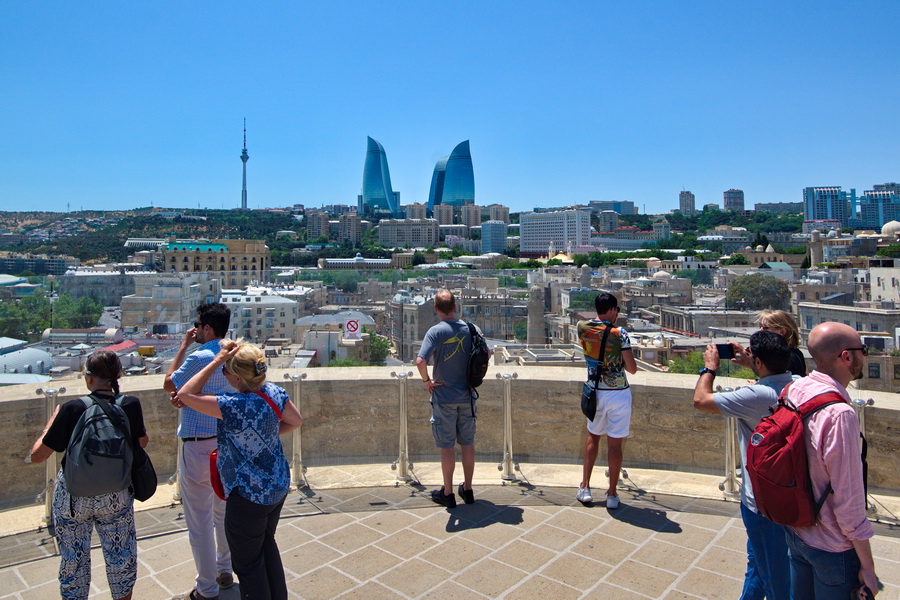
After passport control and customs, the next steps are reaching your accommodation and arranging any onwards transport. Heydar Aliyev International Airport, the main Azerbaijan airport for international arrivals, is about 20 kilometres east of central Baku.
Getting from Heydar Aliyev International Airport
The AeroExpress bus runs 24 hours a day between Terminals 1 and 2 and 28 May Metro Station. It also stops at Koroğlu Metro Station and Surakhani Bridge. The journey to 28 May station usually takes around 30 minutes.
Buses run every 20 minutes from 06:00 to 23:15 and every 45 minutes at night.
A single AeroExpress trip costs AZN 1.30 with a rechargeable BakıKart. The card costs AZN 2 and also works on Baku buses and the metro. You can buy and top up the card at machines near the airport bus stops.
Travellers can also use Baku Taxi, Bolt, Uber or Yango. All services have marked pick-up areas outside the terminals. You can book a Baku Taxi at the airport desk or use a ride-hailing app.
For a pre-arranged journey, Advantour also provides Baku Airport Transfers with private cars, vans and minibuses with professional chauffeurs.
Driving and Car Rental
Car rental is available at Heydar Aliyev International Airport and across Baku. Travellers usually need a passport, valid driving licence and payment card. Minimum age, driving experience, deposits and insurance rules depend on the rental company.
Foreign driving licences usually work for up to 90 days after arrival. Some rental companies may also require an International Driving Permit (IDP), especially for licences without Roman letters. Carry both documents when driving.
Driving in Azerbaijan requires staying on the right side of the road, maintaining a zero-tolerance limit for drinking alcohol. Check your rental agreement for insurance, mileage, fuel rules and roadside assistance. Mountain roads can become difficult in bad weather, and some roads outside the main cities have limited lighting. For longer routes, Advantour also provides private transfers between cities in Azerbaijan.
Departure from Azerbaijan
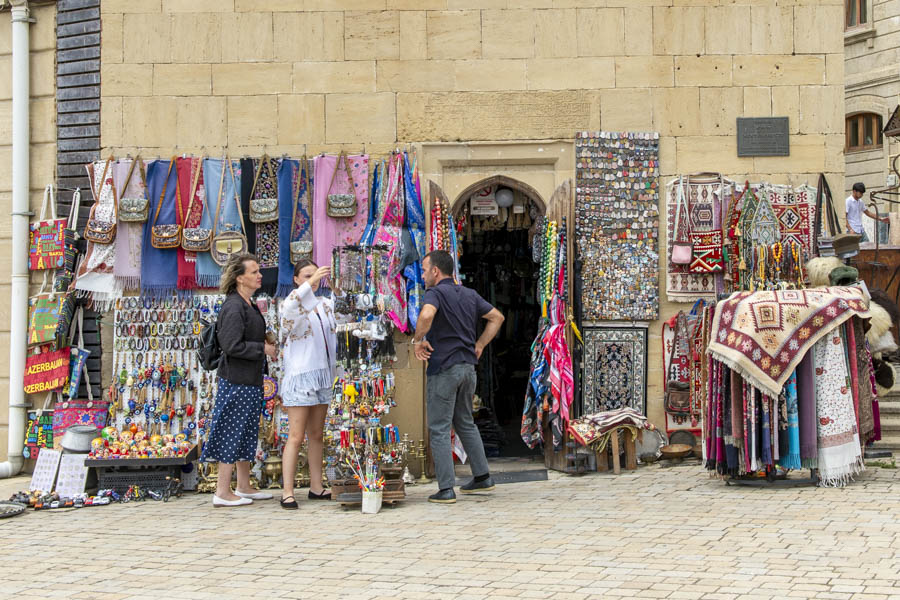
Most personal belongings and modern gifts from Azerbaijan can leave the country without special documents. However, different rules apply to large amounts of cash, sturgeon products, antiques and valuable cultural objects. Keep receipts and certificates with you until you pass customs.
Customs When Leaving Azerbaijan
Rules for taking cash out of Azerbaijan depend on the amount and type of currency. You can take out foreign currency worth up to USD 10,000 with an oral declaration.
For amounts between USD 10,000 and USD 50,000, you need a written declaration and proof that you brought the money into Azerbaijan. Larger amounts must normally leave through an authorised bank or national postal service.
You can also take out less than AZN 20,000 with an oral declaration. An Azerbaijan customs declaration is required for AZN 20,000 or more and for commemorative or jubilee coins.
Travellers can take out up to 5 kilograms of sturgeon and 125 grams of sturgeon caviar under new customs rules. Use the Red Channel if you carry anything that needs a declaration.
Gifts, Art and Cultural Objects
Most modern souvenirs do not need special export documents. However, older or original carpets, paintings, sculptures, manuscripts, rare books, coins, ceramics and other cultural objects may need approval. Items from before 1960 may also fall under cultural-property rules.
When taking antiques out of Azerbaijan, ask the seller about the required documents before buying. Keep the receipt and any certificate that gives the object’s age, origin or maker.
Azerbaijan gives special protection to carpets and other traditional crafts. Advantour has separate dedicated guides to Azerbaijani handicrafts and Azerbaijani carpets.
Objects listed as national cultural property cannot normally leave Azerbaijan permanently. The law mainly allows temporary export for exhibitions, restoration and similar cultural purposes.