

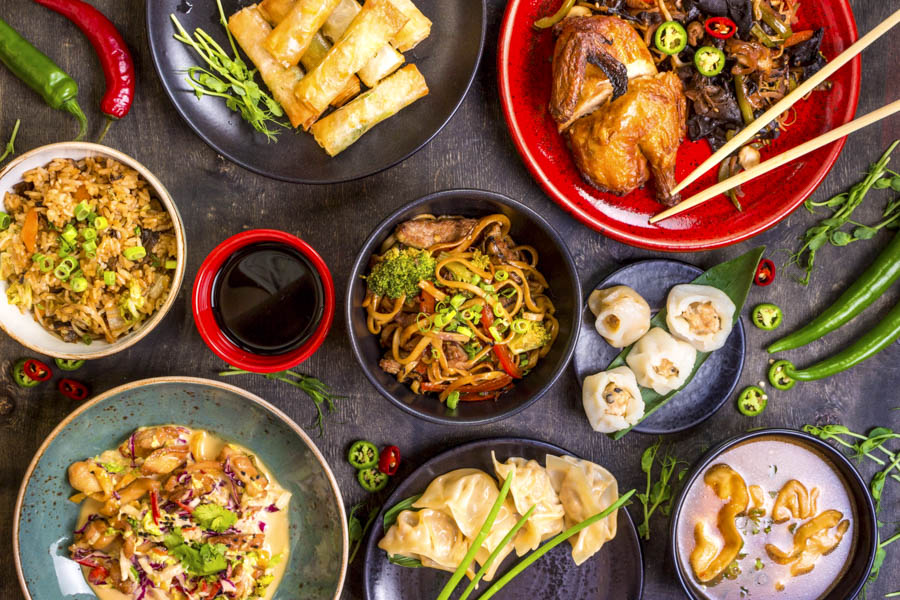
Food is heaven (民以食為天 – mín yǐ shí wéi tiān). This proverb neatly captures the passion Chinese people have for food, and it is probably one of the reasons why they are eager to share it with visitors.
Chinese cuisine rests on the principle of subtle balance: textures, flavours and ingredients are combined with considerable care. Over centuries it has been shaped by the philosophical beliefs and the social customs of China’s many peoples, as well as by geography, climate and history. Caravans along Silk Road trade routes carried and exchanged ingredients and techniques across Central Asia, seeding the variety of Chinese food you can taste today.
From these influences arose distinct regional culinary schools, each with its own methods, signature flavour pairings and time-honoured recipes.
A single idea ties it all together: taste – expressed through five key flavours: salty, spicy, sour, sweet and bitter – a concept linked to traditional Chinese medicine. Herbs and spices are chosen for flavour and for their restorative effects on the body and mind. Eating in China is both a mindful ritual and a pleasure.
What follows is a guide to Chinese gastronomy, from gourmet restaurants and neighbourhood kitchens to bustling street stalls and the rituals of traditional teahouses – and to what to eat in China along the way.
China Food Tours
China is one of the few countries where a culinary itinerary becomes a genuine education for the palate. Advantour's 13-day China Food Tour is built around this idea, pairing visits to some of the country's most celebrated cities with the regional cuisines that define each one.
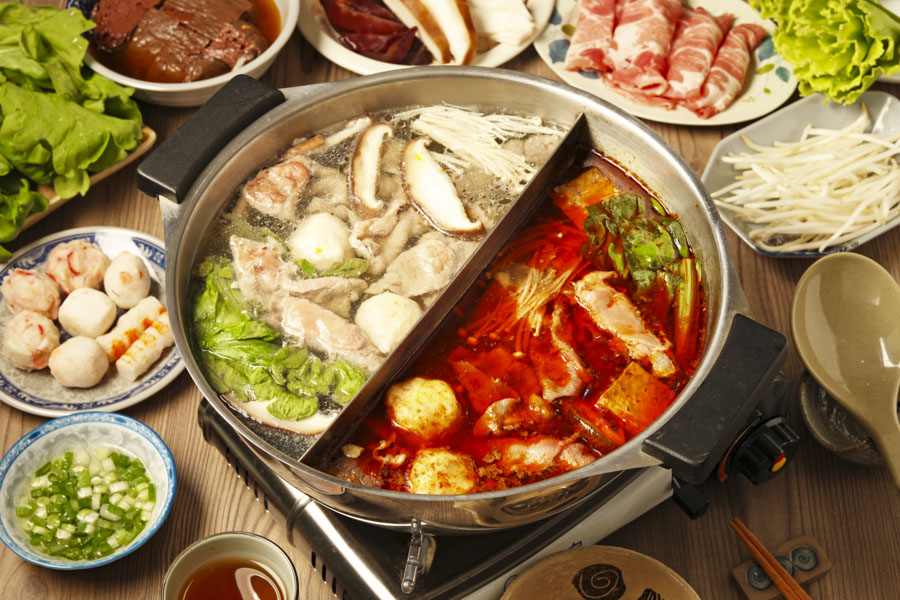
In Beijing, the focus is on Peking duck and the snack culture of the hutong lanes. In Xi'an, the Muslim Quarter serves biang-biang mian noodles amid the energy of one of China's oldest street markets. Chengdu arrives with hot pot and the full force of Sichuan heat, while Guilin cuisine features rice noodles such as Guilin mifen. In Yangshuo, have beer fish (啤酒鱼), a savoury, aromatic speciality. Hong Kong closes the journey with dim sum in bamboo steamers: silky, translucent parcels with delicate, lightly seasoned fillings that speak to one of the world's most refined culinary traditions.
Between the major cities, the route threads through night markets and mountain villages. Every day brings fragrant spices and lively kitchen rhythms. By the end, you will carry more than an appetite for Chinese food – you will have a sense of each province on your tongue, distinct and unmistakable.
Top Chinese Dishes You Must Try
The cuisines of China are as varied as its landscapes, shaped by centuries of regional tradition and local ingredient. At the heart of this variety lies a formal culinary framework: the Eight Great Cuisines of China, each distinct in method, flavour and character.
Anhui Cuisine
In the mountain forests of Anhui, chefs gather wild herbs, fragrant mushrooms, and bamboo shoots, and catch freshwater fish from cold, clear streams. Anhui cuisine celebrates the land. The cooking is unhurried: long simmering and braising draw out deep umami flavours and produce the kind of tenderness that only time achieves. The result is an unpretentious cuisine, shaped by respect for the seasons and a rural tradition of letting good ingredients speak plainly for themselves.
Stinky Mandarin Fish – A whole fish marinated in fermented bean paste, then slow-smoked until the paste deepens and the flesh grows tender. The aroma is pungent and earthy – an acquired pleasure, and one that rewards the curious. This is Huizhou cooking at its most distinctive.
Li Hongzhang Stew – Legend has it that this banquet stew was improvised from leftovers for the 19th-century statesman Li Hongzhang – which makes it either a happy accident or a very good story. Tender pork, seafood, wild mushrooms, and bamboo shoots come together in a rich, silky broth that asks to be mopped up with bowls of steaming rice. The kind of dish that makes a meal feel like an occasion.
Cantonese Cuisine
Cantonese cooking is built on restraint and precision. Fresh seafood, seasonal produce, and quality meats are prepared using techniques – wok hei, steaming, careful roasting – chosen to bring out what is already there rather than transform it. Soy sauce, oyster sauce, and sesame oil season with a light hand. Spices appear sparingly. The flavours are clean, the textures considered, and the result is a cuisine that rewards attention.
Dim sum, char siu, roast goose, and clear meat broths are among its most recognisable expressions. But Cantonese food is also, above all, a social act – dishes ordered generously, passed around the table, and eaten in good company.
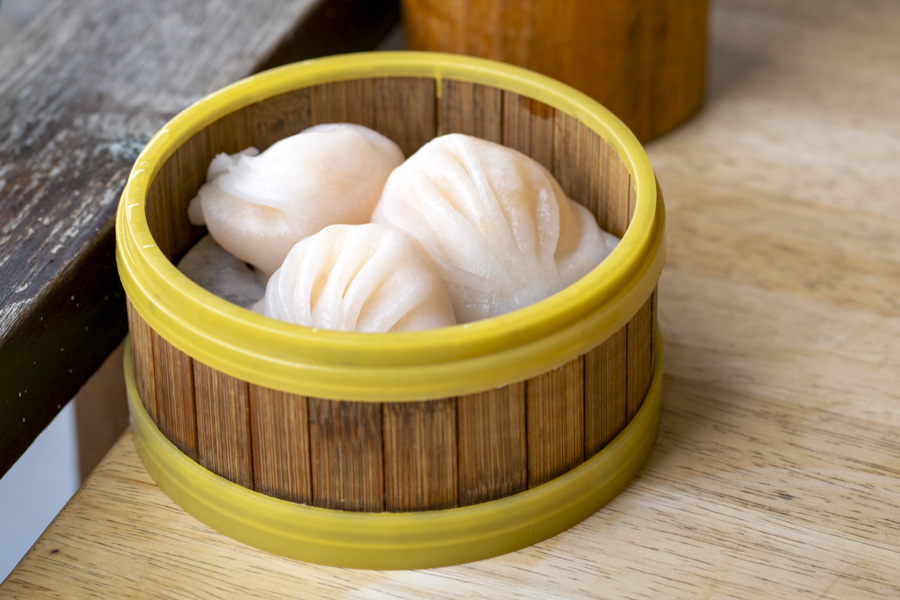
Har Gao dim sum – Translucent wrappers, thin as paper, enclose plump prawns with a clean, sweet flavour fresh from the sea. Served in bamboo steamers, they arrive at the table still trembling with heat. One of the quiet pleasures of a Cantonese dim sum spread.
Steamed grouper – A whole fish gently cooked with ginger and spring onions, finished with a light soy dressing that accentuates its delicate flavour.
Fujian Cuisine
Fujian sits where the mountains meet the sea, and its cooking draws from both. Aromatic broths are the hallmark – long-simmered, fragrant, and built on the depth that only careful stock-making achieves. Seafood dominates, joined by wild mountain produce: bamboo shoots, mushrooms, and turtle, a traditional ingredient in slow-cooked preparations. The flavours are light in body but pronounced in umami – a combination that tends to catch first-time visitors off guard.
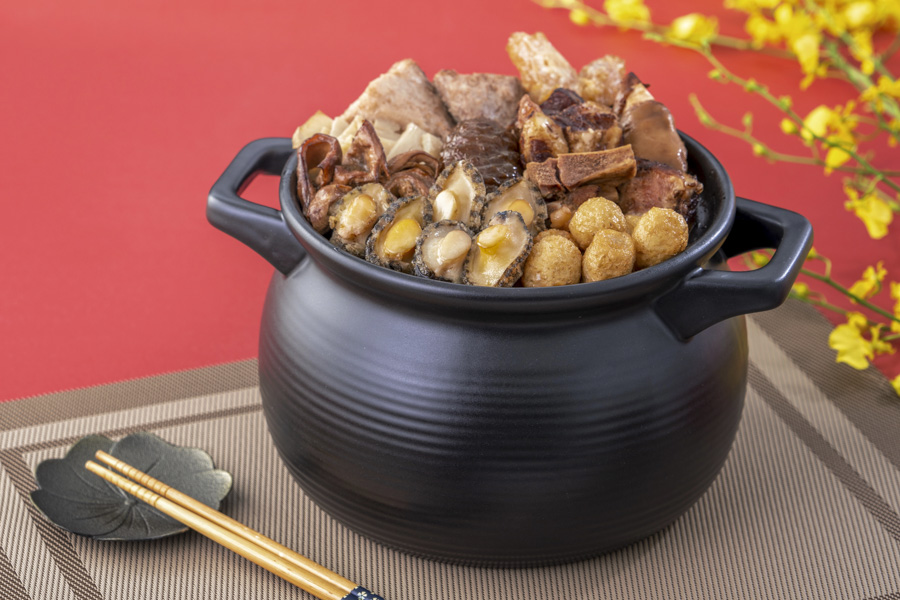
Buddha jumps over the wall – A legendary delicacy with a name to match. Traditionally prepared with shark fin, the contemporary version brings together premium seafood and meats in a slow-cooked broth of considerable depth – each ingredient contributing its own character to a soup that takes the better part of a day to make.
Oyster omelette – A beloved street-food classic, traditionally made with fresh oysters, pan-fried until the edges turn crisp while the centre stays soft and slightly yielding.
Hunan Cuisine
Hunan and Sichuan cuisines share a love of chillies, but the sensation they produce is quite different. Sichuan numbs the palate with its characteristic tingle; Hunan scorches it cleanly and directly. Fresh chillies rather than dried ones carry the heat here, sharpened with garlic and shallots. The result is bold, bright, and unambiguous – a cuisine that makes its intentions clear from the first bite.
Chairman Mao's red-braised pork – Born in Mao's home province, this is one of Hunan's most celebrated dishes. Pork belly is braised in soy sauce, spices, and rock sugar until the meat yields completely and the sauce reduces to a glossy, deeply savoury finish. Rich, unhurried, and quietly addictive.
Steamed fish head with chopped chilli – A bold, fragrant speciality: a tender fish head topped with finely chopped duòjiāo chillies and fermented black beans, steamed until the flesh pulls easily from the bone. Bright, salty, and umami-rich, with subtle tofu-like notes underneath.
Jiangsu Cuisine
Jiangsu cuisine draws from the fertile Yangtze Delta – its freshwater fish, river prawns, seasonal vegetables, and delicate broths finished with a touch of sweetness and a clean, umami-rich glaze. Colour, aroma, and harmony are guiding principles; so are tenderness and precision of technique. The cooking is quietly accomplished, the presentation considered, and the flavours speak in a register that rewards a attentive palate.
Lion's head meatballs – Large pork meatballs slowly cooked with cabbage in a light broth. The pork is coarsely chopped rather than finely minced, giving each meatball a rustic, slightly shaggy texture that soaks up the cooking broth.
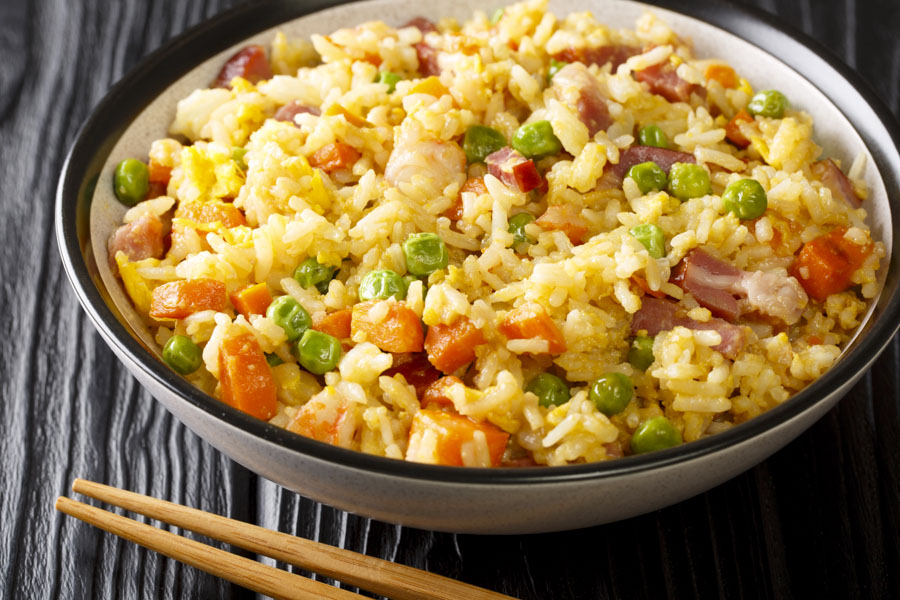
Yangzhou fried rice – Wok-fried rice with egg, plump prawns, sliced ham and crisp vegetables. This classic ensemble inspired fried rice traditions across East Asia.
Shandong Cuisine
The province of Confucius has its own culinary inheritance – and Shandong cuisine reflects it directly: assured, deeply rooted in coastal and northern tradition, and shaped over centuries into something with real authority. The ingredients follow the geography: seafood from the coast, wheat and millet from the grain-growing plains inland. Seasonings are bold, textures deliberately crisp, and the cooking has little interest in subtlety for its own sake.
Dezhou braised chicken – Once prized as provisions for long journeys, this slow-braised chicken has earned a more distinguished reputation since. Braised in soy, spices, and Shaoxing wine until the meat yields to the bone, it emerges richly glazed and deeply flavoured – equally good served warm or cold.
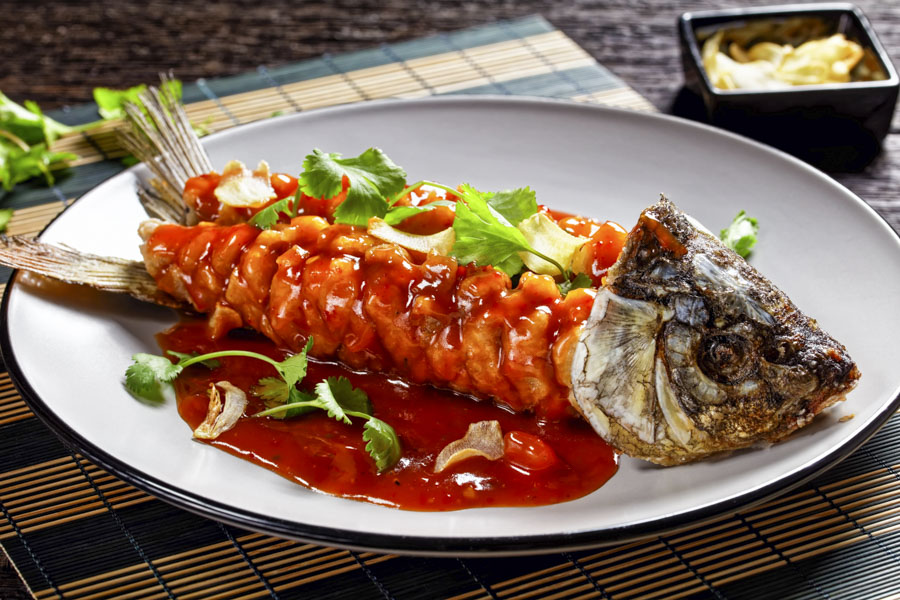
Sweet and sour carp – A whole fish fried to a crisp, lacquered skin, then glazed in a glossy sauce that balances bright vinegar against mellow sugar. Clean, sharp, and satisfying.
Sichuan Cuisine
Sichuan cuisine arrives in waves. The first is aroma – deep, complex, already a little warning. Then a savoury richness settles on the palate, with a faint thread of acidity beneath it. Next comes the citrussy tingle of huajiao (花椒) pepper, followed by the building heat of red chillies. And then the málà takes hold: a sharp, numbing burn that spreads across the lips and lingers for a minute or two. A subtle bitterness closes the sequence. Occasionally, there is a shiver. Sichuan cuisine does not ask for your attention – it commands it.
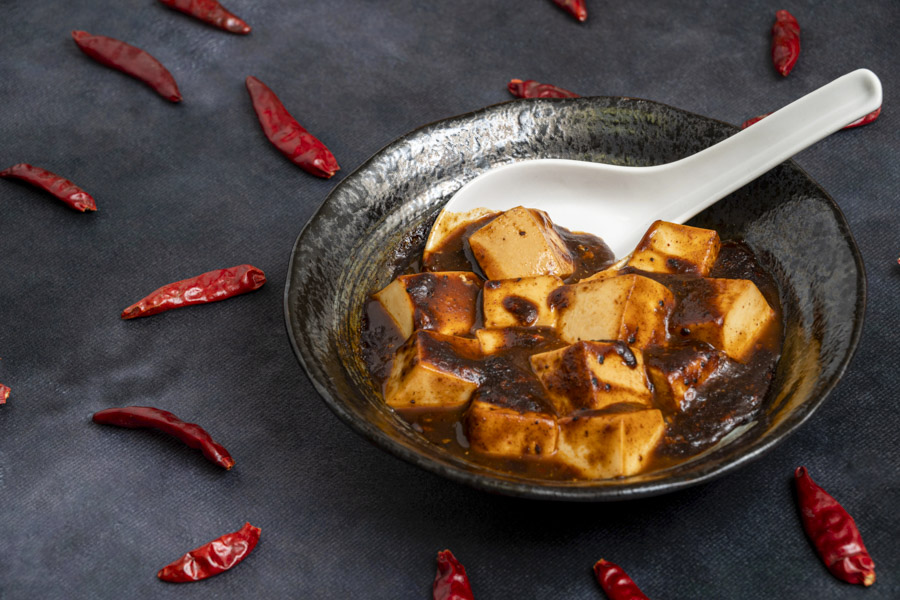
Mapo tofu – Silky soft tofu braised with minced pork or beef in a fiery, umami-rich sauce of doubanjiang, garlic, and ginger. Sichuan peppercorns add their signature tingle, while a glossy chilli-oil lacquer balances the heat with savoury depth.
Kung Pao chicken – Wok-tossed chicken pieces seared until caramelised, then tossed with crunchy peanuts, crisp spring onions, and dried red chillies – a combination that plays texture against texture with every bite. A sauce of soy, black vinegar, and a hint of sugar delivers sweet-savoury depth, with a bright, tingling finish from Sichuan peppercorns.
Zhejiang Cuisine
Along China's eastern coast, where the culinary centres of Hangzhou and Ningbo have long set the standard, Zhejiang cuisine is defined by fresh, tender ingredients and subtle seasoning that lets natural flavour come through clearly. Menus shift with the seasons – spring bamboo shoots, summer fish, autumn shellfish, winter red braised pork – and the region rewards those who eat according to what is actually growing and swimming nearby.
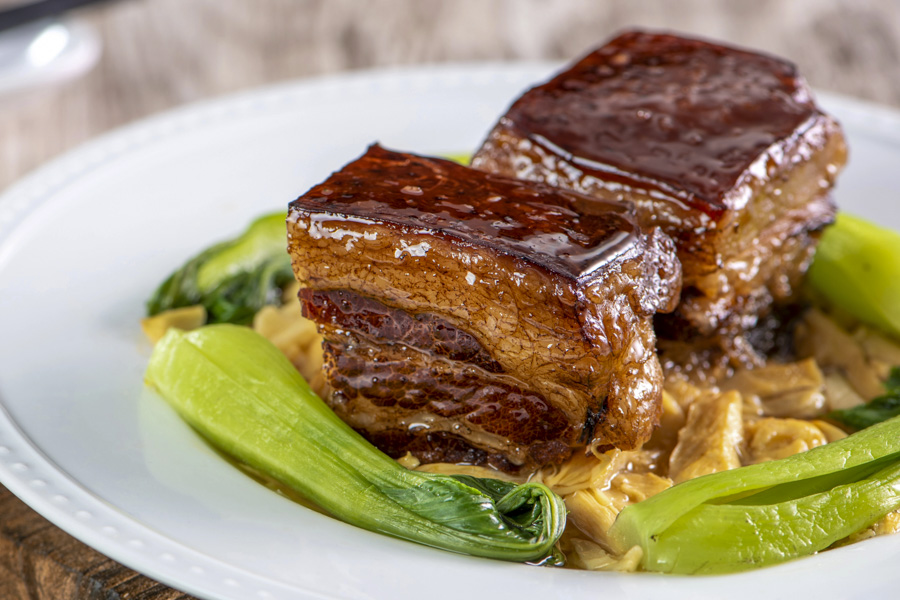
Dongpo pork – Pork belly slowly braised in soy sauce and Shaoxing rice wine until it keeps its shape yet falls apart at the touch of chopsticks. Named after the Song Dynasty poet Su Dongpo, who is credited with refining the dish during his exile.
West Lake fish in vinegar gravy – Tender fillets quickly poached and finished in a glossy sweet and sour sauce mellowed with vinegar. The acidity is clean and rounded rather than sharp – lifting the delicate fish without tipping into sourness.
Exotic Chinese Delicacies
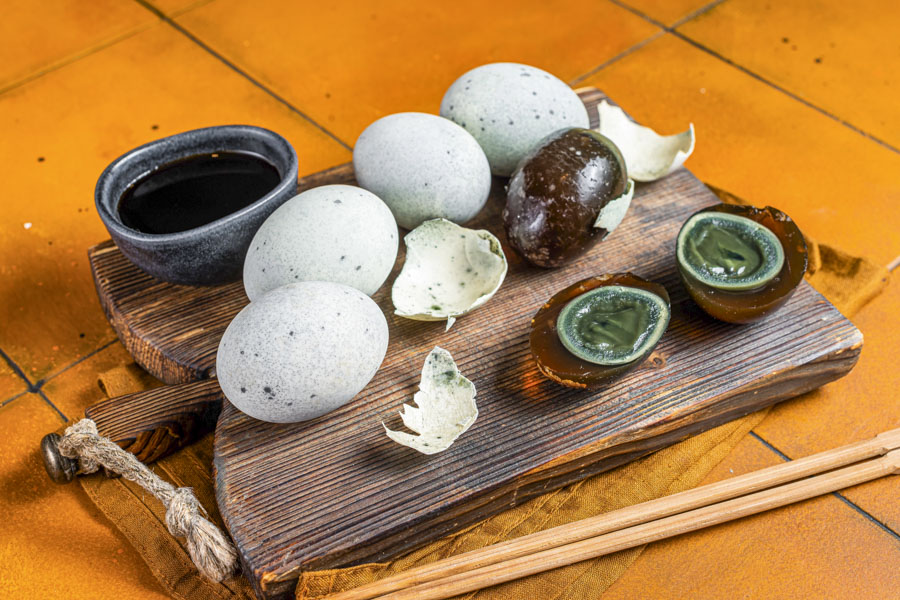
Some dishes ask more of the visitor than others – a willingness to set aside the familiar and follow the food somewhere less obvious. The specialities below have been part of Chinese culinary life for centuries. For most Western travellers, they will be entirely new.
Chicken Feet (凤爪)
Lacquered and soy-marinated, these are a fixture of dim sum trolleys and street stalls across China. The texture is elastic and gelatinous – each piece soaks up the braising liquor and spices thoroughly, releasing a deep umami with every bite. The appearance takes some getting used to. The flavour does not.
Drunken Shrimp (醉虾)
Served almost raw, steeped in rice wine and the brine of the sea. The ritual is part of the experience: sip the liquor, taste the ocean, and register the kind of immediate freshness that defines coastal Zhejiang cuisine. One of the more bracing things you can order.
Century Egg (皮蛋)
A duck egg preserved until the white turns translucent black and the yolk deepens to a dark, creamy centre. Intensely savoury and tangy rather than simply eggy – a balance of creamy, salty, and mineral notes with pronounced sulphurous accents and a long, slightly chalky finish. Strangely addictive once the first hesitation passes.
Fried Silkworm Pupae (油炸蚕蛹)
Golden, crisp, and nutty, with an earthy warmth underneath. Night market vendors offer them in paper cones; the crispy shell gives way to a protein-rich centre that is considerably more comforting than the presentation suggests.
Deep Fried Scorpions on a Stick (炸蝎子)
The appearance is dramatic; the flavour is not. These skewers are crisp and delicately smoky, the venom neutralised entirely by the heat. What remains is a spicy, savoury taste that most people find considerably less alarming than anticipated.
China's culinary curiosities run far deeper than any list. The best discoveries tend to happen by accident – at a night market stall, a table shared with strangers, or a bowl ordered without quite knowing what it contains.
Chinese Dining Tips for Visitors
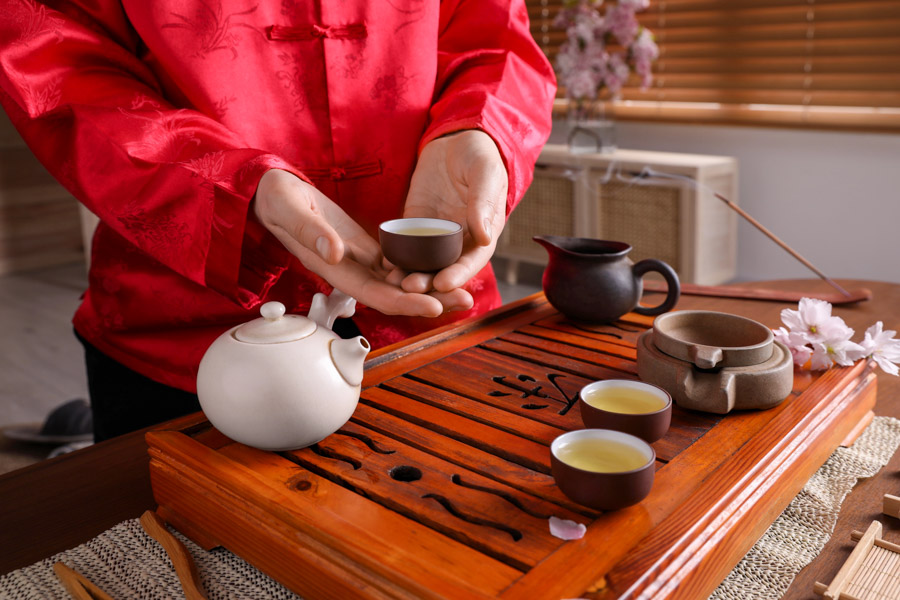
Eating in China is a social ritual deeply rooted in Chinese food culture, with subtle rules – easy to pick up once you know what to look for. A few tips are worth knowing before you sit down.
- Group meals are typically served communally. Hotpots, shared plates and starters are placed in the middle of the table, and guests help themselves with the communal serving utensils, not their own chopsticks.
- Seating follows a hierarchy. The place of honour – normally facing the door – is reserved for the host or the eldest guest, who will usually serve themselves first.
- If there is no English menu, a translation app with a photo function will usually do the trick. In larger cities, many restaurants show pictures on their menus or provide a QR code for online ordering.
- Kitchen hours in smaller restaurants often follow a strict schedule. After 14:00, the kitchen may close until evening, especially outside tourist areas, so it is worth bearing this in mind when planning.
- In China, the presentation of food is treated as a craft in its own right – the way ingredients are cut and arranged matters as much as the recipe itself.
- "Ganbei!" (干杯) is a common toast – an invitation to finish your drink. A small sip is perfectly acceptable.
- When tea is poured for you, tap the table with your right hand index and middle fingers held together and slightly bent as a quiet gesture of thanks.
- Leaving a small amount of food on your plate at the end of a meal is customary. It signals that you are satisfied and that the host has been generous.
- Expect others at your table to insist on paying the bill. In Chinese culture, this is an expression of generosity and respect.
- To stay healthy, choose busy stalls, watch how food is handled, and drink bottled water.
Historic Restaurants, Tea Houses, and Classic Shops in China
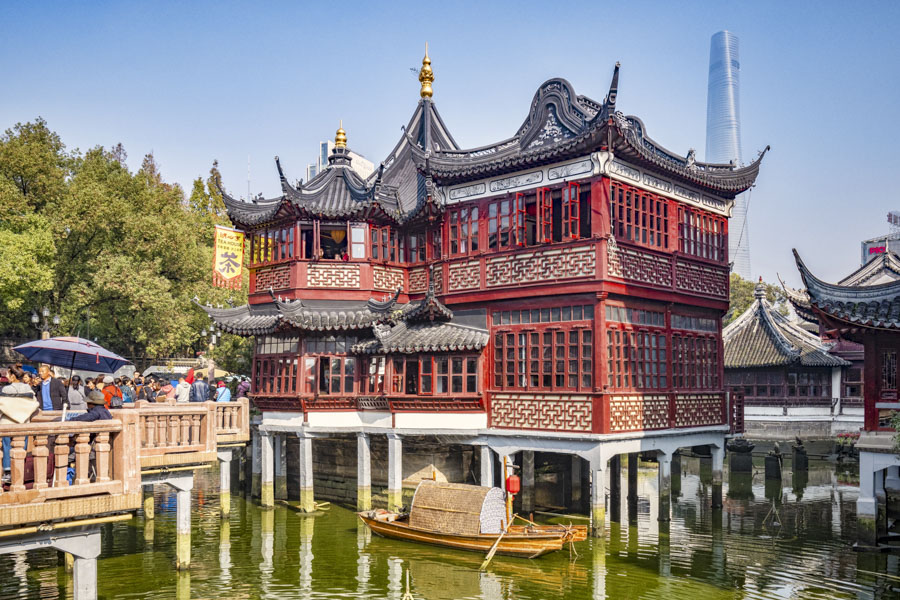
In China, history is savoured. Peking duck is carved as it was in the imperial kitchens, steaming baozi are prepared according to family recipes, and amber tea is served in rooms where deals were struck and poems were written. Push open the right door and the centuries compress – a restaurant that has been feeding the same neighbourhood for generations, a teahouse where the ritual of brewing has not changed in living memory. Settle in and order. The rest follows naturally.
In Beijing, one of the city's most storied dining establishments is Bianyifang (便宜坊), founded in 1416. It is among the oldest Peking duck restaurants still operating. Its 焖炉 (mènlú) method – roasting in a closed oven rather than over an open flame – predates the more familiar hanging-roast style.
In Hong Kong, Lin Heung Tea House (蓮香樓), established in 1926, occupies a particular place in Cantonese tea culture. Oolongs, pu-erhs and jasmine tea are served alongside dim sum in bamboo baskets, with a morning crowd that arrives early and stays long.
In Kashgar, the Century-old Teahouse (喀什百年老茶馆) recalls the Silk Road: They offer strong, aromatic tea in an atmosphere shaped by local rhythms and warm hospitality.
Huxinting Teahouse (湖心亭茶楼) in Shanghai, tucked beside Yu Garden, perches over the water amid classical pavilions and carved stone bridge architecture since 1784. Enjoy a pot of fragrant green or jasmine tea served with delicate pastries while watching reflections ripple beneath the terrace – a quietly ritualised experience that feels delightfully removed from the city outside.
In Xi'an, De Fa Chang Restaurant (德发长) is the ideal place to enjoy traditional dumplings: the menu offers dozens of varieties, illustrating the range of flavours of stuffed pasta from northern China.
In Yangzhou, Fuchun Teahouse (富春茶社) has been operating since the late 19th century. It is celebrated for its Fuchun baozi and the traditional Kuilongzhu tea – a combination that has drawn visitors for well over a hundred years.
In the romantic Zhujiajiao Water Town, Handalong Sauce Shop (涵大隆酱园) has been keeping the secret of its traditional sauce-fermentation recipe for over 150 years. Premium ingredients compose their Double-Sun Soy Sauce and Rose Dew Wine, which gourmets can buy in the shop’s well-preserved historic premises.
Chinese cuisine tells you something about a place that no monument can. Order Chinese dishes whose names you can't pronounce, watch the chefs at work, follow a smell down an unfamiliar street. Every discovery made this way belongs to you alone – a flavour, a moment, a story specific to the day you were there. When you're ready to go, our China tours will take you to the table.