

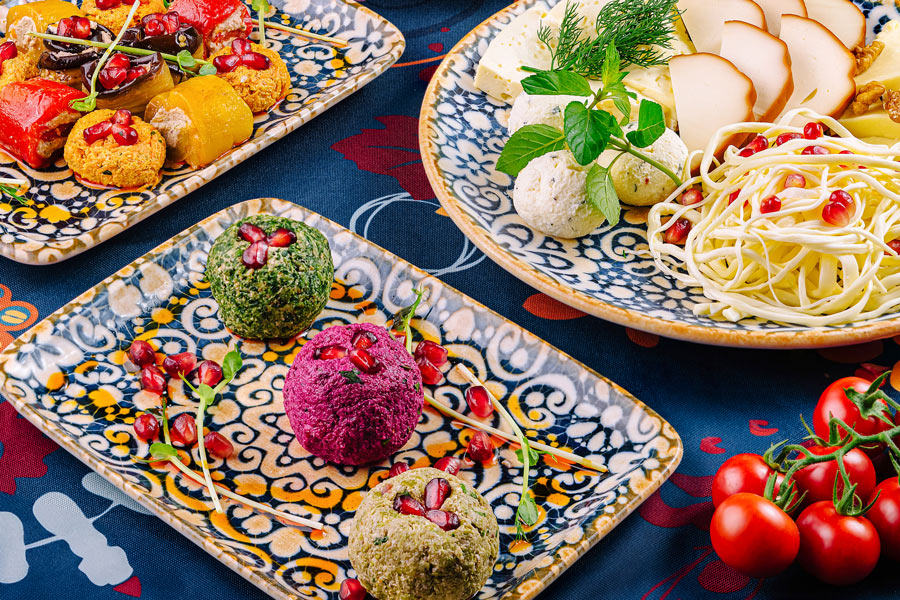
Georgian vegetarian food, often best known for dishes like “khinkali” and “mtsvadi”, offers far greater variety than is generally assumed, thanks to its regional diversity. Indeed, there are numerous meat-free options enjoyed during everyday meals, fasting periods, and feasts such as the “supra”. These dishes are easily found in bakeries and traditional restaurants. Consequently, Georgia proves to be more welcoming to those following a plant-based diet than its typical image as a meat-heavy cuisine would suggest.
This guide outlines vegetarian Georgian dishes to consider, identifies options that can be ordered as vegan, and provides recommendations for dining well in Tbilisi and beyond.
Is Georgian Food Vegetarian-Friendly?
Vegetarians can find suitable options in Georgia, especially by understanding how local meals are usually structured. Menus may not clearly distinguish between vegetarian and non-vegetarian dishes, which can differ from what international visitors anticipate. However, many traditional Georgian foods are meat-free.
Items such as cheese breads, cheese-filled pies, dairy-based side dishes and egg-topped Adjarian khachapuri can be part of a vegetarian diet. For those following a vegan diet, it is important to be cautious, as ingredients like butter, cheese, egg wash, matsoni, meat broth or animal fat may be included where one might not expect them. Vegan food in Georgia is deliciously flavourful, but it is best to ask about the ingredients before ordering.
Tbilisi serves as a convenient base for individuals following a plant-based diet, featuring numerous vegetarian-friendly restaurants, vegan cafés, modern Georgian cuisine, and English menus throughout in many central locations. Outside the capital, the choice becomes more limited, but restaurants and guesthouses alike can still accommodate requests for simple meat-free meals if communicated clearly.
Why Georgia Has So Many Meat-Free Dishes?
Georgia’s meat-free cuisine is not a recent response to tourism. It has deep roots in local food culture, which encompasses seasonal agriculture, home cooking, regional produce and the fasting traditions of the Georgian Orthodox Christian Church. During fasting periods, many restaurants and bakeries offer fasting food. It is important to note that not every dish will meet all vegan standards, as recipes vary and some establishments may have a more flexible interpretation of dietary guidelines. Even with that caution in mind, this concept can be beneficial for travellers.
Georgia’s position on the ancient Silk Road in the Caucasus, at a crossroads, bordered by the Black Sea, Turkey, Armenia, Azerbaijan, and Russia, has also shaped how vegetable dishes are prepared. Some dishes feel distinctly local, while others reflect food traditions shared across the South Caucasus, Anatolia and the Middle East. Vegetable tolma (often spelt dolma), for example, may be made with peppers, aubergines, tomatoes or vine leaves stuffed with rice, herbs and spices instead of meat.
Walnuts are important, but they are only part of the picture. Georgian cuisine uses ground walnuts combined with garlic, herbs, vinegar and spices to enrich vegetables, providing flavour and substance without meat. Additionally, everyday meat-free dishes incorporate a variety of ingredients, including potatoes, mushrooms, red lentils, rice, carrots, cabbage, tomatoes, peppers, aubergines, pickles, sour plum sauce, and fresh herbs. This diversity makes vegetarian food in Georgia feel integrated with the overall culinary landscape rather than a distinct alternative.
Popular Vegetarian and Vegan Georgian Food
The following dishes show how varied vegetarian Georgian food can be once you look beyond the most familiar restaurant staples. Some are regional, some are seasonal, and others are everyday foods that may be overlooked because menus do not always mark them as vegetarian.
Elarji
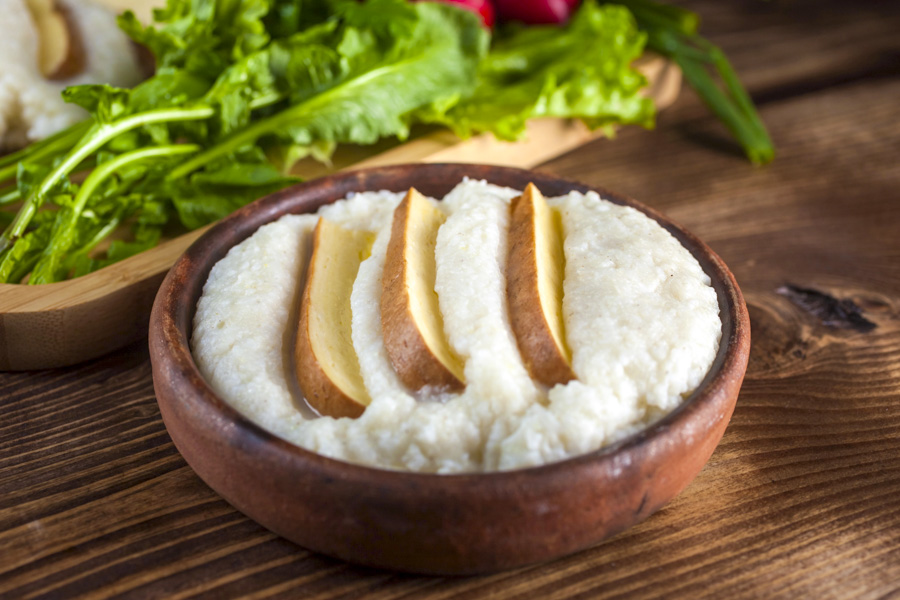
Elarji is a western Georgian dish from Samegrelo, made with coarse cornmeal, slowly cooked with fresh sulguni, a mildly salty, brined, stretchy cheese, until it becomes thick, elastic, and almost string-like in texture. It is rich, filling and eaten hot.
Elarji is one of the most distinctive maize-based dishes in Georgia. It offers a contrast to plainer maize options such as “mchadi” or “ghomi” (corn porridge). Its elastic mass-like texture can be surprising at first, but it is a good example of how Georgian cooking turns simple ingredients into a substantial regional cuisine.
Gebzhalia
Gebzhalia is another Samegrelo speciality, usually made with a flattened layer of sulguni cheese previously softened in warm water, rolled with “nadughi” (soft curd cheese similar to cottage cheese) if desired, mint and sometimes green adjika (spicy chilli-based paste), then served in a light milk or creamy, tangy matsoni-based sauce. It is definitely vegetarian rather than vegan, and its mint and milk-based sauce makes it feel light.
The mint gives Gebzhalia its distinctive character and sets it apart. This Megrelian appetiser is usually served cold or at room temperature.
Chvishtari
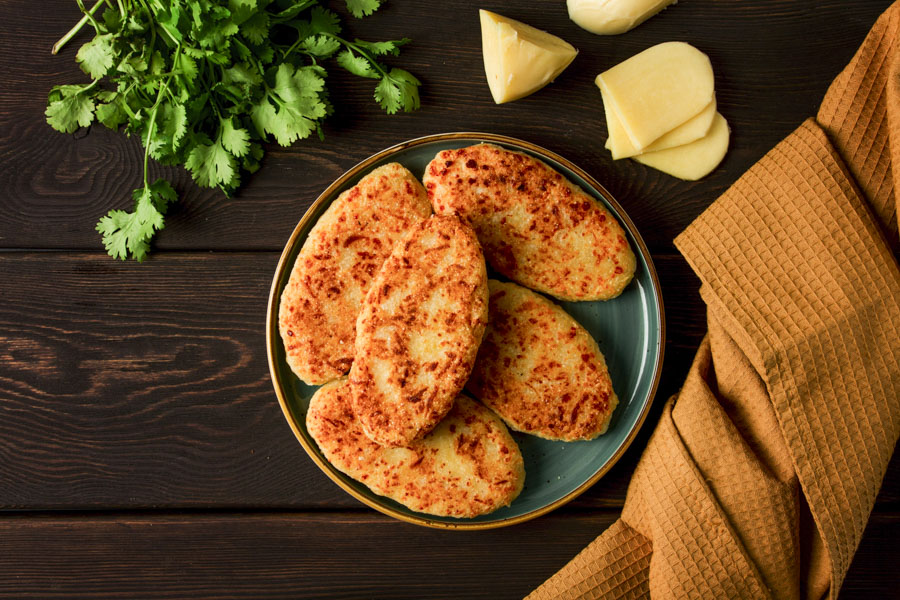
Chvishtari is a variation of “mchadi”, a type of Georgian cornbread that incorporates cheese directly into the batter. It is primarily found in western Georgia and is typically baked in small, round shapes with a crisp outside and a soft, slightly stretchy inside.
It is important to acknowledge regions where maize and dairy are central to the local cuisine. Vegans can choose plain “mchadi” instead, which is equally delightful.
Ekala with Walnuts
Ekala is a lesser-known wild plant used in Georgian cuisine. When prepared with walnuts, garlic and herbs, it becomes a dish reminiscent of pkhali, albeit with a more fibrous consistency and a subtly earthy flavour.
Typically vegan, it emerges in spring, when wild greens are abundant. Travellers are more likely to encounter it in traditional restaurants or guesthouses rather than on standard city menus. This dish is particularly significant for those interested in Georgia’s use of foraged ingredients and seasonal greens.
Soko Ketsze
Mushrooms in ketsi (Soko Ketsze) are among the easiest dishes to find in Georgian restaurants. The mushrooms are baked and served in a small clay pan, known as a ketsi, which keeps them hot at the table and gives them a deeper roasted flavour.
The simplest versions are usually made with mushrooms, oil, seasoning and herbs, while richer versions may come topped with melted sulguni cheese. This makes the meal suitable for vegetarians and, in its simplest form, vegans as well.
Badrijani Nigzvit
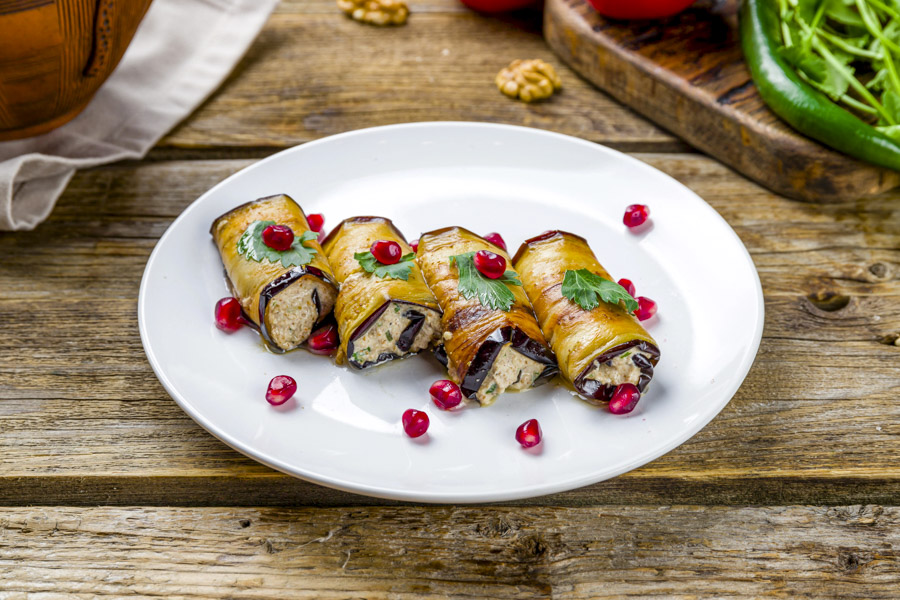
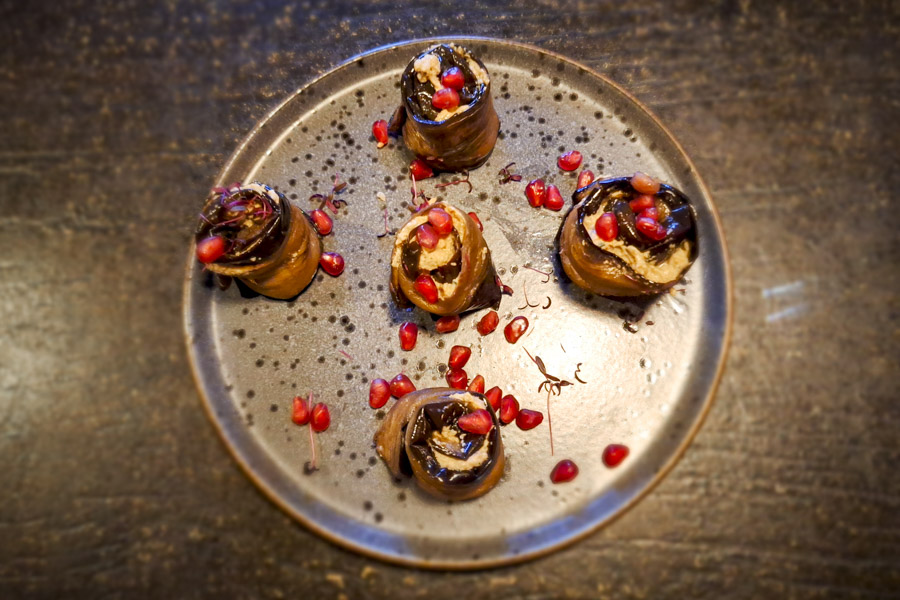
Aubergine rolls with walnut paste, commonly referred to as badrijani nigvzit, are among the best-known vegetarian Georgian dishes. Some culinary establishments serve aubergine with walnuts in alternative styles, such as stewed, layered, or shredded, all dressed with walnut sauce rather than being rolled.
These variations are predominantly vegan and tend to have a softer, more home-style texture than classic fried rolls. They are worth exploring when aubergine and walnuts are paired in less conventional ways, particularly in traditional or family-style dining environments.
Tkemali-Based Vegetable Dishes
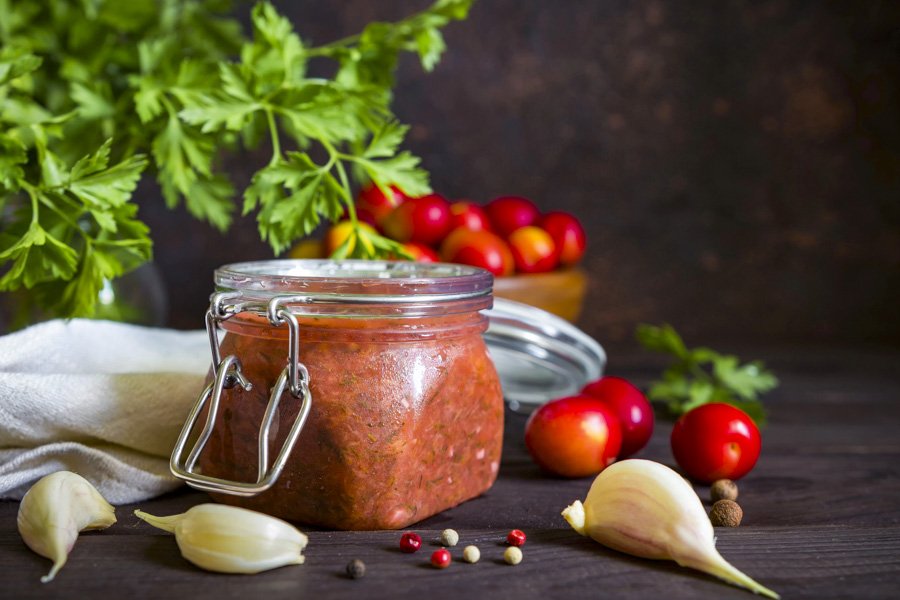
Tkemali, the sour plum sauce usually served as a condiment, can appear in cooked vegetable dishes. Potatoes, beans or seasonal vegetables may be simmered or dressed with tkemali, giving them a sharp, slightly fruity acidity that sets them apart from walnut-based starters.
They are more common in home cooking or smaller local restaurants, so they may not always be clearly labelled. If vegetables are described as tkemali, they are usually suited to travellers who want something lighter and sharper than walnut-based dishes.
Ghomi
Ghomi is a maize-based culinary staple from western Georgia, similar in appearance to polenta but typically with a smoother, more elastic texture. It is linked to regions of Samegrelo and Guria, where it acts as a neutral foundation for more robust flavours.
While ghomi can be enjoyed on its own as a vegan option, this thick cornmeal porridge is commonly paired with sulguni or bazhe, a walnut sauce made with garlic, spices, and liquid to create a rich, creamy texture without dairy. For vegetarians, ghomi complemented with cheese is a filling regional dish; for vegans, ghomi with bazhe can work well, provided the sauce is prepared without any animal-derived ingredients.
Tashmijabi

Tashmijabi comes from the Svaneti province and consists of potatoes and cheese, sometimes described as a mountainous counterpart to elarji. Unlike maize, it utilises mashed potatoes, which are blended with cheese until a thick, smooth, and stretchy consistency is achieved.
It is a strong option in Svaneti, notably in Mestia. Tashmijabi shows how Georgian vegetarian food changes with the landscape: in western Georgia, it often turns to maize and sulguni, while in Svaneti, a similar filling dish is built around potatoes, mountain dairy, and simple ingredients suited to colder weather.
Potato, Lentil and Vegetable Stews
Not every beneficial meatless dish in Georgia has a formal designation or a strong regional story. Ingredients such as potatoes, red lentils, mushrooms, tomatoes, peppers, carrots, and cabbage appear in simple soups, stews, and café meals.
A typical example is spring potatoes with dill. These may be cooked with oil, making them vegan, or with butter, which makes them vegetarian but not dairy-free. In colder climates, red lentil soup, tomato-based vegetable soups, mushroom soups, potato stews and bean stews can provide substantial nourishment. It is important to note that a soup may look plant-based but still be cooked using chicken broth, beef stock, butter or sour cream.
Seasonal Greens and Green Beans
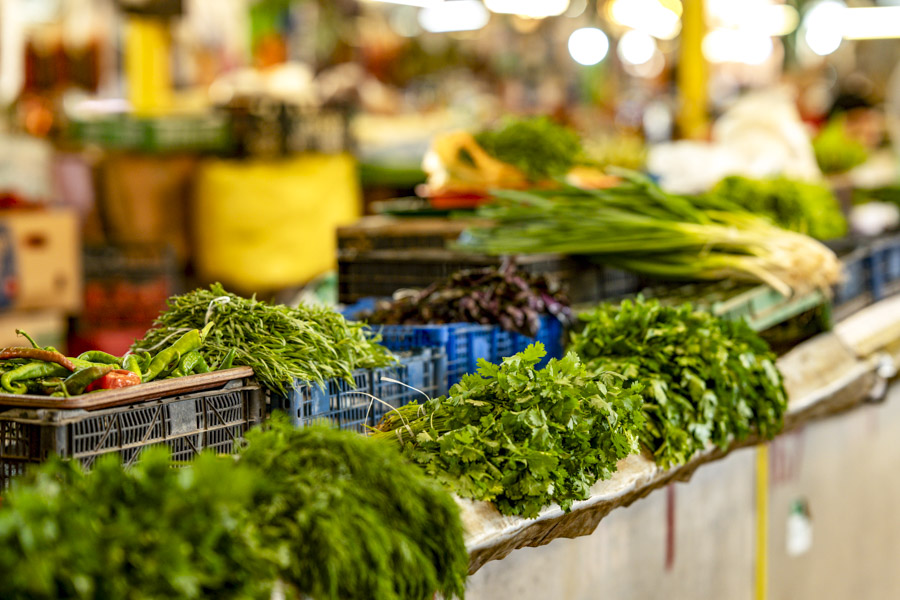
In spring, Georgian households and traditional restaurants may serve wild greens such as nettles, mallows or mixed field herbs. They’re typically boiled or sautéed, and sometimes combined with walnuts and garlic. They are usually vegan and reflect the seasonal, rural side of Georgian cooking.
Green beans, known as “mtsvane lobio”, are another summer and early-autumn dish. They’re often cooked with onions, herbs and sometimes walnuts, or stewed with tomatoes and spices. Most versions are naturally vegan.
Daily Salads, Pickles and Accompaniments
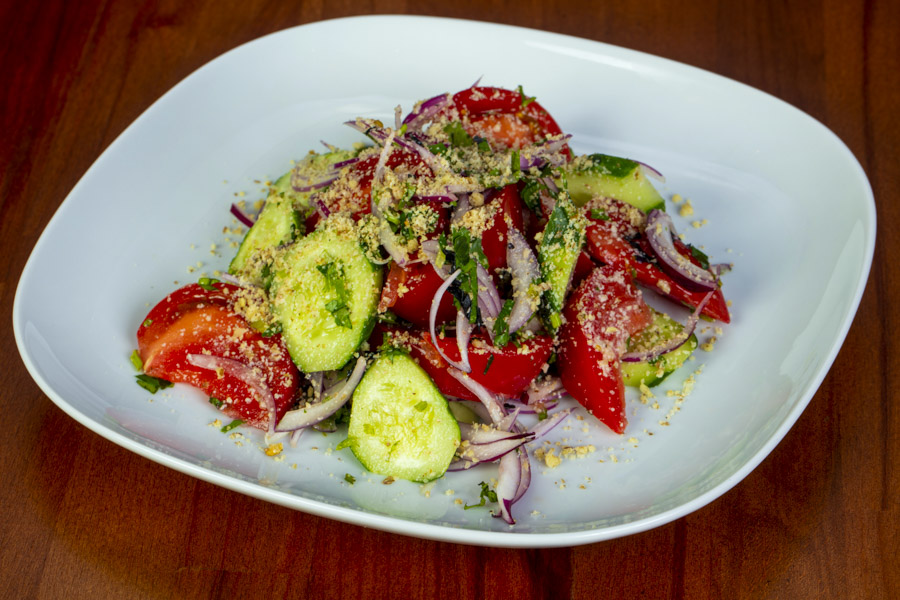
Basic salads and side dishes can help you build a fuller vegetarian meal from a standard Georgian menu. Options such as cucumber and tomato salad, cabbage salad, beetroot with herbs, rice-based sides, pickled vegetables and carrot salad with garlic are commonly found in cafés and casual restaurants.
While these dishes may not be the primary reason for selecting a restaurant, they matter once the meal is served. They add freshness, acidity and texture to richer foods.
Churchkhela and Fruit-Based Snacks
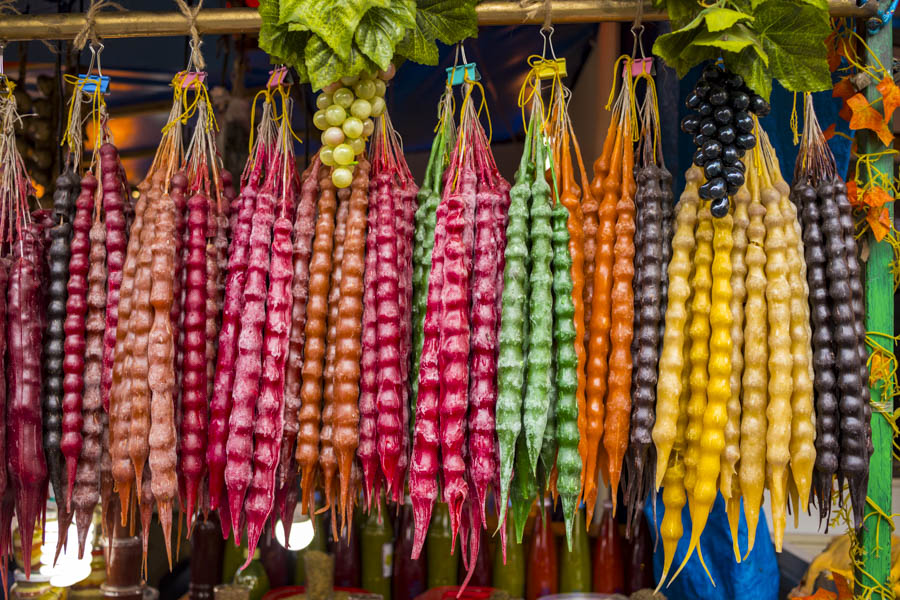
Churchkhela deserves mention as a plant-based Georgian snack. This delicacy is made by dipping strings of nuts in thickened grape juice and letting them dry until firm. It is inherently vegan and widely available in markets and roadside stalls.
Other fruit-based snacks, such as dried persimmons or fruit leather (tklapi), are prevalent throughout Georgia, providing convenient vegan options for snacking between meals. These snacks are useful during travel days or lengthy journeys when dining options may be limited.
Tips For Ordering Plant-Based Food
Ordering vegetarian food in Georgia is usually straightforward once the guest becomes familiar with the menu. However, ordering vegan food requires more explicit communication. In Tbilisi’s central restaurants, the term “vegetarian” may be interpreted merely as “no meat”, which does not always exclude fish, cheese, eggs, butter or dairy-based sauces. Therefore, the safest approach is to enquire about specific ingredients rather than relying solely on the term “vegan”.
In tourist areas, menus are increasingly labelling plant-based items, although the consistency of these labels can vary. It is also worth considering options beyond the best-known vegetarian Georgian dishes. Everyday meat-free meals may be built around simple ingredients like potatoes, mushrooms, lentils, or carrots used in soups and stews. These items are not always presented as vegetarian dishes, but they provide a means to construct a meal from standard menu selections rather than relying exclusively on specialised cafés.
During Orthodox fasting periods, restaurants, bakeries, and supermarkets may use the term “samarkhvo” to refer to food prepared without animal products. Nonetheless, it remains prudent to verify details for travellers with allergies or stringent dietary restrictions.
In guesthouses, private dining experiences, and guided meals, it is advisable to communicate dietary requirements in advance. Georgian hospitality is known for its generosity; however, many traditional meals are designed around communal dishes. Providing clear notice allows hosts to prepare suitable alternatives rather than merely omitting meat from the table.
Navigating Georgian Menus as a Vegetarian
Cheese remains central to many Georgian dishes. “Khachapuri”, “nadughi”, “sulguni”, imeruli cheese and cheese-filled pies are suitable for many vegetarians but not for vegans.
Menu translations can present minor challenges. The term “fasting” is often more relevant for vegan travellers than “vegetarian”, but it still requires confirmation. In Tbilisi and other major cities, many modern restaurants now include menu indicators that denote dishes as vegetarian, vegan, or dairy-free, making ordering easier at a glance. However, these labels are not always consistent, so individuals with specific dietary needs should still double-check ingredients. In rural areas, naming specific exclusions is often easier than explaining a dietary identity.
Useful Phrases for Vegetarians and Vegans
A few Georgian phrases can make ordering much easier outside central Tbilisi. Pronunciation does not need to be perfect; the effort usually helps.
“I don’t eat meat.” — Khorts ar vcham. — ხორცს არ ვჭამ.
“I don’t eat fish.” — Tevzs ar vcham. — თევზს არ ვჭამ.
“Without meat.” — Khortsis gareshe. — ხორცის გარეშე
“Without cheese.” — Kvelis gareshe. — ყველის გარეშე.
“Without egg.” — Kvertskhis gareshe. — კვერცხის გარეშე.
“Without butter.” — Karakis gareshe. — კარაქის გარეშე.
“Is this fasting food?” — Samarkhvoa? — სამარხვოა?
“Does it contain meat broth?” — Khortsis bulioni aqvs? — ხორცის ბულიონი აქვს?
For a very simple fallback phrase, travellers can also use:
“No meat.” — Khortsi ara. — ხორცი არა.
“No cheese.” — Kveli ara. — ყველი არა.
“No fish.” — Tevzi ara. — თევზი არა.
“No milk.” — Rdze ara. — რძე არა.
Individuals with allergies ought to be more specific. Walnuts are widely used in Georgian cuisine, including dishes like pkhali, aubergine rolls, and various sauces. Any nut allergies must be clearly stated before placing an order.
Where to Eat Vegetarian and Vegan Food in Georgia?
The capital city, Tbilisi, serves as the most convenient hub for vegetarians and vegans. Alongside traditional Georgian restaurants, the city boasts specialised vegan and vegetarian cafés, falafel eateries, Asian restaurants and modern bistros that prominently feature plant-based dishes. Establishments such as Kiwi Vegan Café, Café Leila, Muhudo Falafel Shop and Hummusbar cater to travellers seeking a completely plant-based dining experience rather than adapting a standard Georgian menu.
Batumi also has a growing choice of vegetarian-friendly cafés and restaurants. Visitors looking for vegan food in Batumi can explore venues such as Go Vegan Café, Tå-me Vegan Kitchen, Tint Plant Food or Freeduchio. Traditional restaurants usually serve well-known meat-free dishes such as “lobio”, “pkhali”, “ajapsandali”, “mchadi” and pickles.
In Kutaisi, vegetarian travellers should find a sufficient variety of choices in Georgian restaurants and cafés, particularly around the city centre. Lilestan, Palaty, Papavero, Sisters, and other local restaurants provide interesting salads, bean stews, mushrooms, and seasonal starters. Some menus also indicate vegetarian or vegan items, although it is advisable to verify ingredients before ordering.
Outside the major cities, dining options are more limited but still available. In Stepantsminda, Sighnaghi, Telavi, Borjomi and other travel destinations, Georgian restaurants can usually prepare basic meat-free meals if requested in advance.