

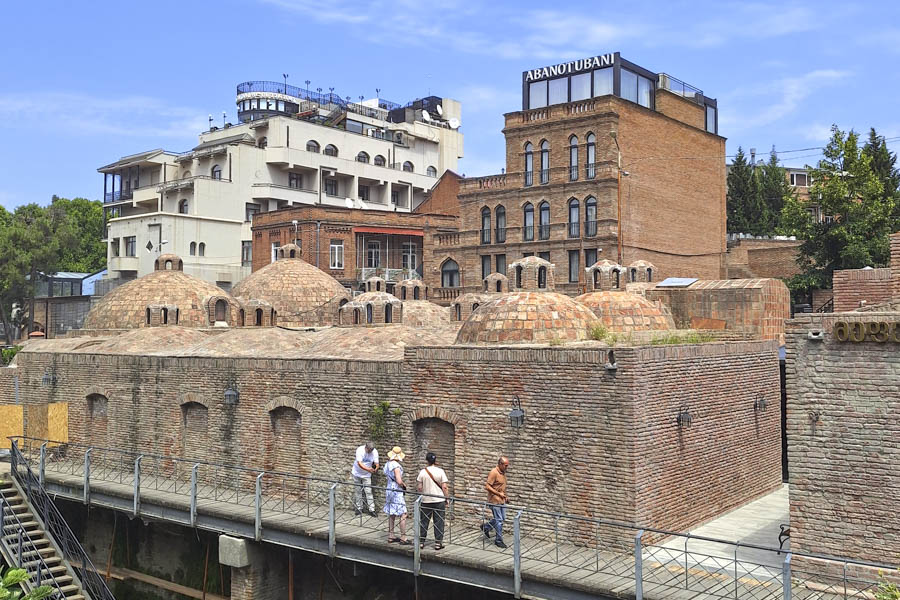
One of the most iconic destinations for sulphur bathing, Tbilisi’s foundation story comes from sulphurous waters. According to legend, the King of Iberia, Vakhtang Gorgasali, discovered the hot springs during a hunt in the 5th century. The city’s name, Tbilisi, comes from the Georgian word “tbili”, meaning warm.
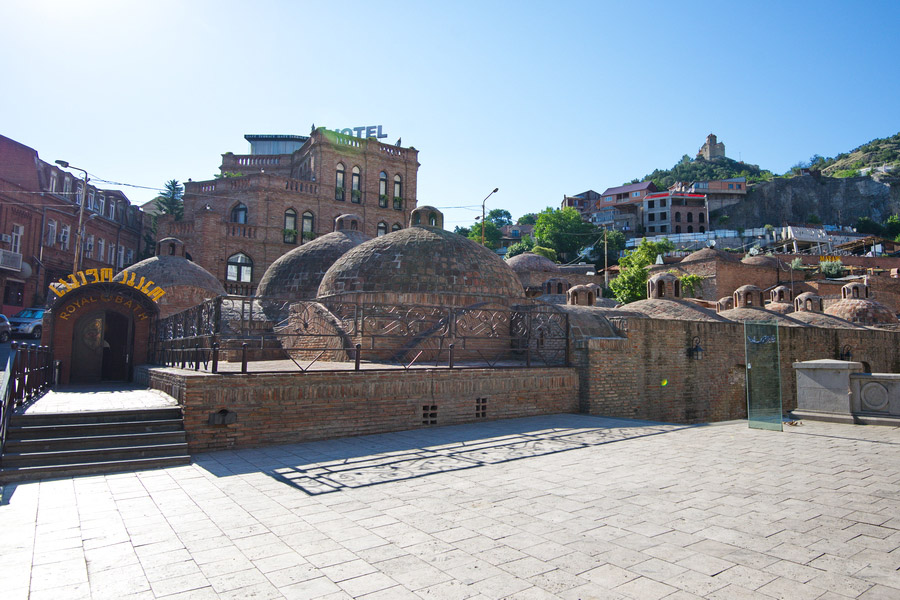
Among the thermal baths in Georgia, Abanotubani is the first place to see mineral water shaping the capital. This part of Old Tbilisi still keeps its low brick domes, tiled facades and underground bathing rooms. Steam rises through small openings in the domes, while the smell of sulphur hangs in the narrow streets.
The sulphur springs in Tbilisi influenced local habits, social life, architecture and the daily rhythm of the old town. Traditional Georgian baths were places for washing, resting, talking and meeting visitors from different routes across the Caucasus.
Today, the sulphur bathhouses in Tbilisi keep a plain local style, with simple rooms and public bathing areas. Others have renovated private rooms, marble surfaces, hot pools, cold pools and massage services. In our Tbilisi Sulphur Baths travel guide, we give a clear view of the city’s thermal culture.
Tbilisi Sulphur Bath Tours
Tours in Tbilisi’s sulphur baths centre around Abanotubani, where the old domes sit close to the stream, mosque and gorge. From here, the route can continue towards Metekhi Church, Meidan Square, Narikala Fortress and the Leghvtakhevi Waterfall.
Within a short walk, the city shows its Persian, Georgian, Russian and Armenian layers. The tiled facades face brick domes, wooden balconies, steep lanes and the road towards the Botanical Garden. Tours allow private bathing sessions after sightseeing, curating a Tbilisi spa experience, especially after walking through Old Tbilisi.
The baths also fit well into cultural tours of the old city, connecting architecture, trade routes and health rituals. For a half-day route, start near Metekhi and cross towards Meidan. Walk through Abanotubani, continue to the waterfall, then climb or drive towards Narikala. A bath session is perfect at the end of this route, when the walking is complete.
Best Time to Visit Sulphur Baths in Tbilisi
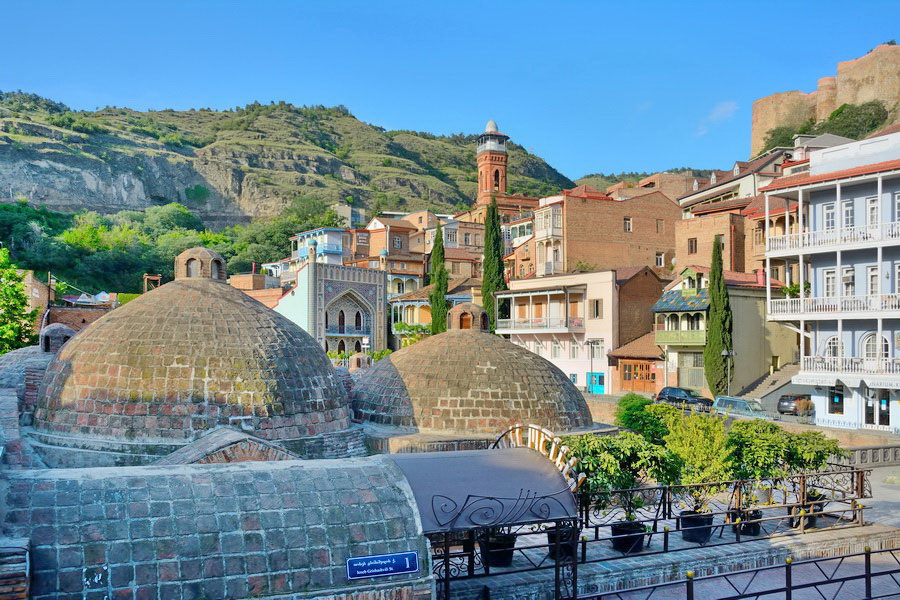
The best time to visit Tbilisi Sulphur Baths is winter, when steam rises from the domes and the streets are cold. Daytime temperatures sit between 0°C and 7°C (32°F and 45°F) from December to February. The contrast between the cold air and the heated pools is part of the appeal.
Spring and autumn are better for combining healing baths in Georgia with walking routes through Old Tbilisi. Daytime temperatures stay close to 15-18°C (59–64°F), and rain is less disruptive than in May, the wettest month. The weather is best for a walk through Meidan, Narikala, Leghvtakhevi Gorge and the old balcony streets.
Summer is still feasible, but mornings and evenings are more comfortable. July and August regularly go over 30°C. Midday is better left for shaded streets, museums or a slow lunch.
Best Time of Day
Morning is the calmest time to visit the sulphur baths in Tbilisi. Streets around Abanotubani are usually easier to cross, and the bathhouses feel calmer before the day fills up. It is also the best time for photos of the domes, tiled facades and narrow lanes because of the light. Evening draws more visitors, especially at weekends, so private rooms at the best baths in Tbilisi should be booked ahead.
How Long to Spend
Most private rooms in Tbilisi hot bath houses need about an hour, with two hours covering a standard visit. Add time for changing, washing, a kisa scrub, tea, and walking around the Abanotubani bath district before or after.
Visitors combining the baths with sightseeing in Abanotubani often plan for half a day in total. It leaves room to see the brick domes, the fortress above, and the waterfall path without rushing the bath itself.
History of Tbilisi Sulphur Baths
The Tbilisi foundation legend begins in hot sulphur waters with King Vakhtang Gorgasali hunting in the 5th century. The king’s falcon chasing a pheasant fell into a hot spring, boiling it alive, and the settlement grew around those waters. The first settlement, trade routes and early bathing culture developed near the hot water in Abanotubani.
By the mediaeval period, the hot springs Tbilisi was known for had already become an integral part of Tbilisi life. 10th-century Arab Muslim geographer and writer Muḥammad Abū’l-Qāsim Ibn Hawqal, in his Book of Roads and Kingdoms, compared Tbilisi’s baths to Tiberias, noting water that boiled without fire. By the 13th century, the city had around 65 mineral water baths, according to historical records. Travellers, including the Venetian merchant Marco Polo (and the Georgian prince Vakhushti of Kartli (Bagrationi Dynasty) later described the bathhouses in their own accounts.
Stone baths cut into the rock came first, before Persian influence shaped their domes and underground rooms. Most surviving Georgian bathhouses date from the 17th century, when today’s Abanotubani was a Persian district called Seyd-Abad Heights (Seidabad). The area gave the city its early economic base, and caravanserais and teahouses grew up alongside Tbilisi’s natural springs.
Bathhouses bearing names like Erekle, Orbeliani, Bebuta and Sumbatashvili date from this period, several of which still operate today. Ownership shifted between royal, noble and city hands, but the baths stayed central to the social and medical care and recovery. Tbilisi grew along Caucasus trade routes through the Silk Road, with the bathhouses becoming a must-stop for merchants and travellers.
The baths were used for washing, meetings and feasts, with families coming for matchmaking customs and visits with future brides. Women had fixed bathing days in some places, including Tuesday.
Writers helped spread the baths’ reputation, with Alexander Pushkin describing the Tiflis baths in Journey to Arzrum. French writer Alexandre Dumas (father) visited Tiflis in 1858 and wrote about the baths, describing the treatment as strangely pleasurable in Adventures in Caucasia. In Orbeliani Baths, room number 4 still carries his name, which keeps his visit visible in the building’s own memory.
In the 19th century, scientists began studying the springs and analysed the water for the first time in 1880. The city commission formed in 1884 to study building a dedicated bathing station and discussed organised balneological treatment.
Architecture
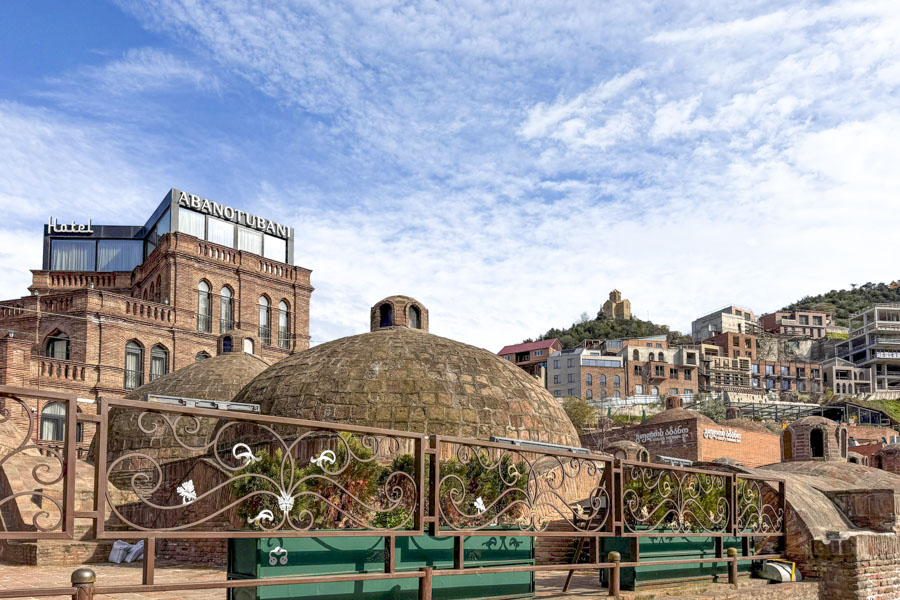
The line of low brick domes, small arched vents and underground bathing rooms defines the architecture of Tbilisi’s sulphur baths. With the rooms sitting below the street level, from above the district looks like a terracotta roofscape pressed into the slope. The roofline is made of different dome forms, from deep spherical caps to flatter, bowl-like shapes. Several carry small lanterns with arched openings, used for light and ventilation. Unlike the Turkish Hammams, there is no set circuit involving multiple rooms to follow; the Georgian baths possess a unique character of their own.
Royal Bath and the General Bathhouse Configuration
The heavy walls, arched niches and compact form of the Royal Bath follow the building’s purpose. Arches, domes, half-domes and brick joints create the decorative rhythm, with the roof sustaining the main design. The architecture of these thermal bathhouses Tbilisi developed worked perfect for steam, hot water and enclosed rooms.
Behind the domes, a staircase descends from the entrance into halls and smaller rooms of different shapes and sizes. These lower rooms hold the hot sulphur pools, resting benches and private chambers, built directly over the springs that feed them.
Orbeliani Baths and the Blue Facade
Chreli Abano, also known as the Orbeliani Bath or Colourful Bath, is the most decorative bathhouse in the district. Its street-facing facade carries blue tilework, pointed arches, stained-glass details and small side towers that recall minarets. The colour palette mixes blue, pink, yellow, green and white. It gives the building a sharper presence than the surrounding thermal bathhouses.
Its facade is symmetrical, with a deep central arch, smaller curved openings and ornamental panels around the frame. The design features Persian and Eastern influence with geometric patterns, floral details and coloured tiles. The structure dates to the 17th century, though decorative windows and changes to the facade were added in the 19th.
Tbilisi Sulphur Baths Etiquette
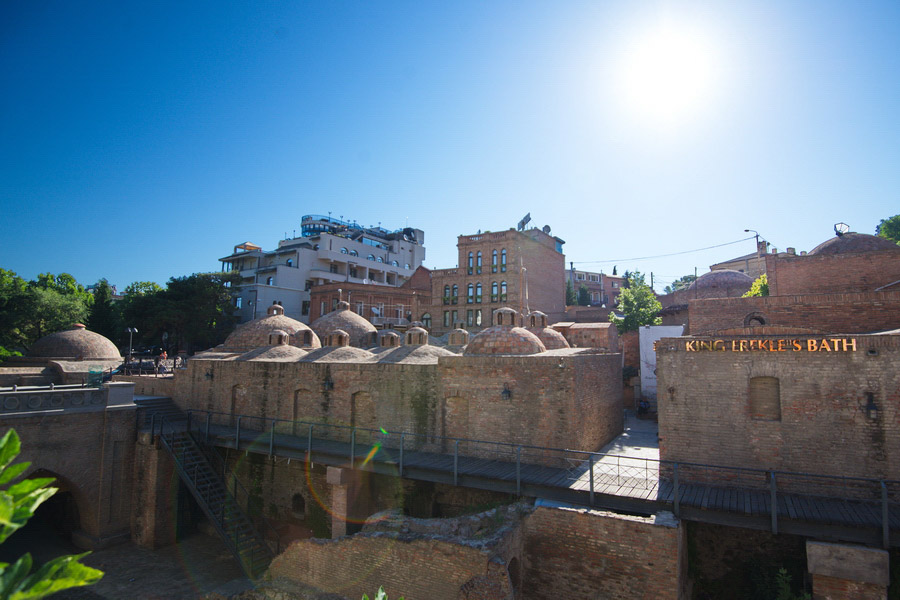
The sulphur baths in Tbilisi follow their own dress code, separate from a typical public pool. In private rooms, swimwear is optional since each room locks from the inside and guests bathe dressed by personal choice. Cameras are allowed in private rooms but not in communal areas.
A short list of customs at bathhouses in Tbilisi:
- Shower before entering the pools. This follows local hygiene practice and is expected rather than optional.
- Book a massage if time allows. Trained masseurs, both male and female, work in most bathhouses. The massage is part of the visit rather than an add-on.
- Keep noise low in communal rooms, where several guests bathe at once and conversation carries under the domes.
- Bring your own towel or rent one on site, since not all bathhouses include this in the room price.
- Keep valuables to a minimum, though many bathhouses have lockers or reception storage.
Public and private rooms carry slightly different expectations. Public baths are gender-separated, and guests should follow the same hygiene routine before entering the shared pool. Private rooms are locked and used by one group at a time, but the shower-first custom still applies. Bathhouses share actual differences in price, style and atmosphere, though the etiquette stays the same across all of them.
Therapeutic Benefits of Sulphur Baths
The health benefits of sulphur baths include softer skin, eased muscle tension, reduced stiffness and better circulation. In medical balneology, sulphur water is commonly linked with joint stiffness, muscle tension and some chronic skin conditions. It is also used in spa treatment for osteoarthritis and other musculoskeletal problems. Warm mineral water is applied for a limited time to support comfort, circulation and recovery.
Hydrogen sulphide contributes to compounds involved in connective tissue repair, including cartilage and sulphur-containing amino acids. Balneotherapy research showed sulphur bathing to reduce joint pain and improve blood flow in osteoarthritis and rheumatoid conditions. A study from a Polish health resort found measurable changes in blood cells after three weeks of sulphur bathing.
The Tbilisi sulphur baths draw on the same natural hot springs that gave the city its name and its founding legend. Water temperatures in most bathhouses sit around 40°C to 50°C (104°F to 122°F), within the therapeutic range generally recommended for sulphur bathing. The smell is part of the same mineral composition that gives the water its reputation. Visitors often describe softer skin after bathing, especially when the soak is followed by a kisa scrub.
The heat can also ease tired legs after walking through Old Tbilisi baths. A short bath may feel relaxing after flights, long walks or cold winter weather. Around 15 minutes in hot water is usually enough before taking a break. Drink water, rest afterwards and avoid alcohol immediately after bathing.
However, contrary to the hot sulphurous waters, the cold springs, which are less abundant in tbilisi, contain more mineral salts.
Avoid the baths if you have open wounds, acute skin inflammation, fever or serious heart problems. Pregnant visitors and people with unstable blood pressure should ask a doctor before using the baths. If the water feels too hot, leave the pool or ask the attendant to cool it.
List of Sulphur Baths in Tbilisi and Their Prices
Prices at the Tbilisi sulphur baths are usually charged per room and per hour and change by season and year. Public baths charge per person.
DISCLAIMER: Ticket prices are listed in local currency and may change without prior notice. Exchange rates are provided for reference only and may fluctuate. As a tour operator, Advantour is not responsible for errors, omissions, later price changes, exchange-rate differences, or services provided by third parties. Travellers are advised to check fares, terms and conditions, availability, and booking details with official suppliers or authorised booking platforms before making a reservation.
| Bathhouse | Location/Type | Approximate Price in GEL | Approximate price in USD / euro / British pounds | Notes |
|
Orbeliani Bath |
Abanotubani; |
₾130-600 Gel hourly | $49-227 / €43-200 / £37-172 | The most polished and photogenic option, known for its blue tiled facade. |
| Gulo’s Thermal Spa |
Abanotubani; |
From ₾150 Gel per hour | $57 / €50 / £43 | Larger rooms with saunas can reach around ₾300 GEL. |
|
Sulphur Bathhouse |
Abanotubani; |
₾6-10 GEL per person for public baths; private rooms from about ₾120 GEL per hour | $2.30-3.80 / €2-3.32 / £1.72-2.86 $45 / €40 / £35 |
One of the more traditional choices in the old bath district. |
| Bohema Sulphfur Bath / Mirzoyev Bath |
Abanotubani; |
From about ₾70 GEL per hour | $26.50 / €23.30 / £20 | Larger rooms can reach around ₾200. GEL |
| King Erekle’s Bath |
Abanotubani; |
From about ₾200 GEL per hour | $76 / €67 / £58 | More modern and spa-like than some older Georgian bathhouses. |
| Royal Bath House |
Abanotubani; |
₾150-290 GEL per hour | $57-110 / €50-97 / £43-84 | Prices range on room size and facilities |
| Lisi Bath |
Lisi Area; |
₾20-22 GEL for public baths; private rooms from about ₾100 GEL | $8 / €7 / £6 $38 / €34 / £29 |
Outside the Abanotubani Bath District |
| Kiyv Sulphur Spa |
Chughureti; |
From about ₾90 GEL | $34 / €30 / £26 | Also outside Abanotubani with all the sulphur bathing facilities. |
A kisai scrub or soap massage is usually charged separately, often around GEL10-30 GEL ($3.80-11.36 / €3.32-10 / £2.86-8.60). Prices change often, especially after renovation, high season or private room upgrades. Check directly with the bathhouse before booking.
What to See at the Sulphur Baths District?
As the story of Tbilisi starts in Abanotubani, many of the city's major landmarks sit around the bath district. Along the ancient setting, the area shows old trade streets, religious buildings and cliffside views in one compact quarter. Above the baths, the Leghvtakhevi gorge flows 20 metres tall through the grounds of the Botanical Garden.
The Juma Mosque, at the foot of the Narikala Fortress, is the only mosque remaining in the old town. Since the Shiite mosque was demolished to build Metekhi Bridge, Sunni and Shia worshippers have shared the same prayer hall. Metekhi Bridge frames Abanotubani from across the river, especially at dusk, when steam rises above the domes.
Further along Abano Street, the 17th-century Chreli Abano closes the view with its tiled, Islamic-influenced facade. Old residential lanes nearby still feature carved balconies and statues of the sparrowhawk and the pheasant.
How to Get to the Tbilisi Sulphur Baths District?
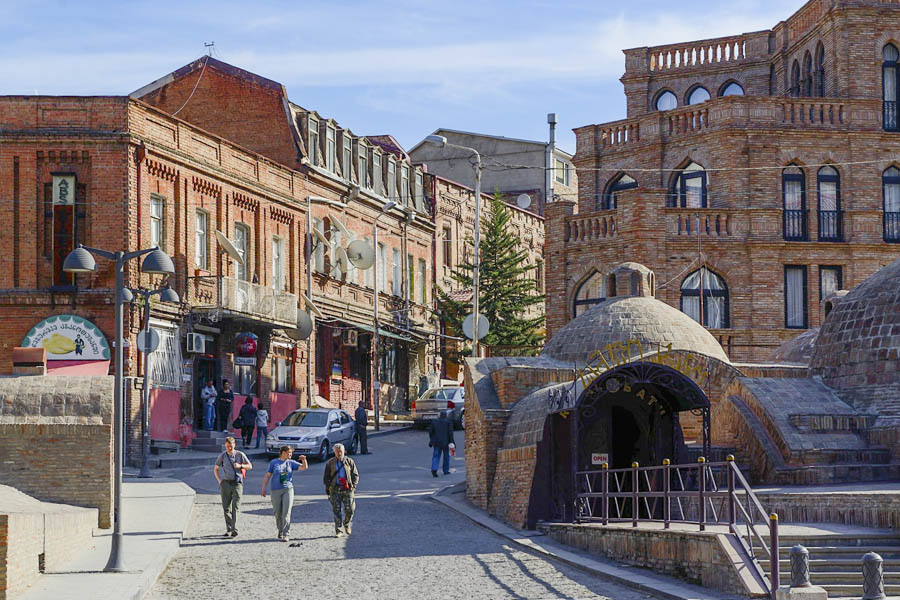
Situated in the lower part of the old city, the district sits near Meidan Square, Rike Park and Metekhi Bridge. Meidan Square is a short walk away, and the Leghvtakhevi Waterfall sits within the same small stretch of the old town.
Getting There on Foot
From Meidan, the bath district is barely a minute away. From Freedom Square, the walk runs through Old Tbilisi's narrow streets and takes around 15-20 minutes. Rike Park and Avlabari are both connected by a walk of roughly 10-15 minutes, crossing the Metekhi plateau or the Bridge of Peace. From Liberty Square, the route is scenic throughout but uneven underfoot in places, with old cobblestones and occasional steps.
Getting There by Metro
Avlabari and Liberty Square are the closest stations on the Metro 1 line. Abanotubani sits about 10 minutes on foot from Avlabari, making it the more direct of the two. From Liberty Square, the walk runs slightly longer, closer to 15-20 minutes.
Getting There by Taxi
A taxi from most parts of Tbilisi reaches Abanotubani quickly depending on traffic. Fares are typically low by international standards. Drop off near the Bath District straight, though parking nearby is limited, so taxis are best for arrival rather than waiting.
Nearby Places to Combine with the Baths
- Narikala Fortress
- Metekhi Church
- Leghvtakhevi Waterfall
- Meidan
- Shardeni Street
- Rike Park
- Narikala cable car
All these landmarks sit within easy reach of the Bath District, making them easy to fold into the same visit.
Tips for an Optimal Visitor Experience
The Tbilisi sulphur baths work best when you treat them as a local bathing ritual, not a standard spa visit. Keep your voice low in shared spaces, and leave your phone in the locker unless you are in a private room. In communal halls, swimwear is the norm, while private cabins give you more flexibility and privacy.
Book a Private Room in Advance
Popular bathhouses such as Chreli Abano can fill two to three hours ahead on weekends. Queues during July and August sometimes stretch past an hour. Booking ahead matters most for evenings and weekend slots. Weekday mornings between 09:00 and 12:00 are the easiest to walk into without a reservation.
Choose Public or Private Baths Carefully
Public baths are cheaper, gender-separated and closer to local custom. Swimming trunks or a towel are expected, and full nudity is uncommon even in the men's hall. Private rooms cost more but suit couples, families and first-time visitors who want a locked door and more control.
Try a Kisa Scrub
A bath attendant works with a rough mitt, removing dead skin before a soap wash and rinse. The scrub itself runs around 15-20 minutes, and bathhouses typically allow a further 15–20 minutes of rest afterward. Visitors can ask for a lighter touch if the standard scrub feels too rough.
Bring the Right Items
Pack flip-flops for slippery floors, a towel, a change of underwear and 0.5–1 litre of water, since the heat is dehydrating. Cash in GEL is safer than cards, as not every bathhouse takes payment by card. Soap and shampoo are usually available to buy on-site, but cost more than bringing your own.
Check the Room Before Paying
At smaller bathhouses, asking to see the room first is normal practice. This avoids surprises with size, water temperature, lighting or general condition before money changes hands.
Do Not Rush the Area
Sulphur water leaves skin sensitive to sunlight for a few hours, so direct sun is worth avoiding right after a visit. A walk through Abanotubani adds the domes, tiled facades and waterfall path to the bath experience.