

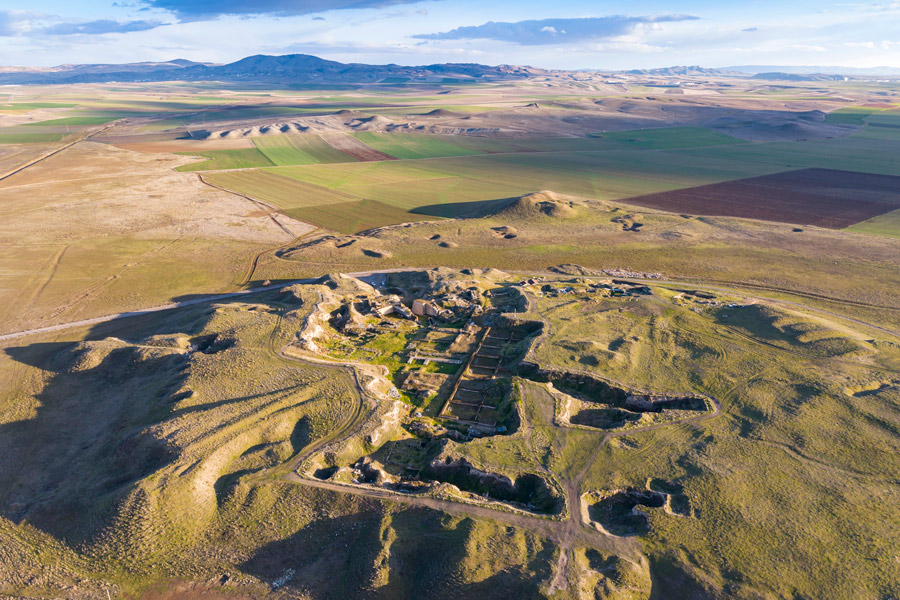
Gordion Ancient City near Ankara, a UNESCO World Heritage Site since 2023, presents something increasingly rare in modern travel – a place where the history of Türkiye feels intact. Visitors have a unique opportunity to see the Gordion archaeological site in person, where the first formal excavations were carried out by Alfred and Gustav Körte in 1900.
Gordion Antik Kenti, as it’s known in Turkish, served as the capital of Phrygia, an ancient kingdom in Central Anatolia, and was the birthplace of the legend of the Gordian Knot. Power, craftsmanship, and folklore come together within these ancient boundaries. The contrast between open fields and the enclosed stillness of the burial mound creates a shift that few places manage so effortlessly.
Today, Gordion, Turkey, is one of the most important archaeological sites in the country. For those based in Ankara, the route is straightforward, and the distance is modest. It means you can easily complete the entire journey in a single day. At the same time, pacing is the key, so taking a relaxed approach with an experienced tour guide can provide a clearer context.
Who is Gordion for?
Gordion suits travellers interested in archaeology and quiet exploration. The appeal builds gradually as the site's different parts connect to yield a clearer picture.
Moving from the mound to the museum, then into the settlement, provides a clear sense of progression. The area looks more extensive by the end than it did at first.
Fragments of items, open space, and a landscape shaped by history set this place apart from the remains of other ancient cities, such as Ephesus.
Ancient Gordion – The Capital of Phrygia
Where is Phrygia? Gordion Ankara, and Its Strategic Location
Phrygia occupied much of Central Anatolia during the first millennium BC, and modern-day Gordion Ankara, served as its political and cultural centre. Along with other Phrygian cities, like Pessinus, it anchored the kingdom, reaching its peak in the 8th century BC. Today, it remains the most complete window for that civilisation.
Ancient Gordion lies approximately 90 kilometres southwest of Ankara, near the village of Yassıhöyük. The road from the capital to the ancient city stretches across the wide plains of Central Anatolia.
Trade routes connected Mesopotamia to the Aegean, and control of this region meant influence over movement, goods, and ideas. In the midst of it all was Phrygia.
Who Ruled Phrygia?
A prominent character in legends, King Midas, is believed to have ruled Phrygia from Gordion. In tales, he turned everything he touched into gold.
The archaeological record supports the existence of a powerful ruler, though the stories attached to him are most likely enhanced. What is certain is that King Midas is associated with the “golden era” of Phrygia. His love for the arts was also a big contributor to the area becoming a cultural hub of sorts.
The Story Behind the Gordian Knot
What Is the Gordian Knot?
The Gordian knot refers to a complex knot tied to an ox cart in Gordium. According to tradition, whoever untied it would rule Asia.
Different Versions of the Story
The story appears in several narratives, with small variations. In the most widely accepted version, an oracle declared that the next ruler of Phrygia would arrive in a cart. Gordias, a farmer, arrived at that moment and was chosen as king. He later dedicated his cart to the city, and the knot became a symbol of his rule.
Other accounts add a divine element. Some describe an eagle landing on Gordias’ cart, marking him as chosen by Zeus and reinforcing his legitimacy. In these versions, the knot carries less of a puzzle-like quality and more of a sacred meaning tied to kingship.
Was the Gordian Knot Real?
While ancient sources mention it, no direct archaeological evidence confirms the original knot itself. What remains certain is its symbolic weight.
The story reflects how this city stood at the centre of power and ambition.
Where Did Alexander the Great Untie the Knot?
According to the legend, Alexander the Great, one of the greatest military commanders in history, reached ancient Gordion in 333 BC in his quest for expansion. Faced with the knot, he famously cut through it instead of untying it.
Some sources present a slightly different version. Rather than cutting the knot, Alexander is said to have removed the pin holding it in place. This version shows him solving the problem through a more practical approach.
The phrase "Gordian Knot” now has a broader meaning – a problem so complicated that it seems impossible to solve.
What to See at the Gordion Archaeological Site
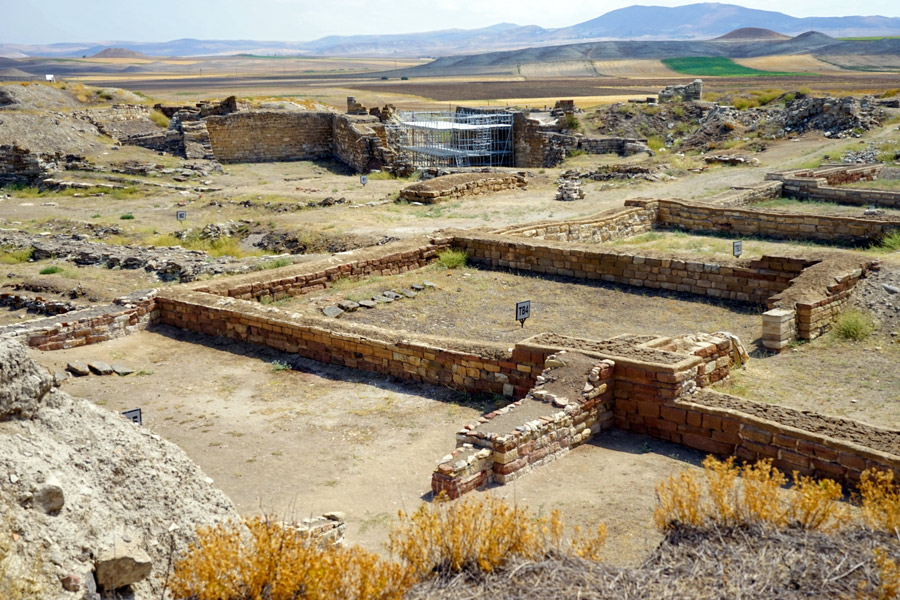
The Gordion Archaeological Site reveals a structured urban centre. Timber architecture dominated construction. It was supported by advanced engineering that allowed wide interior spaces without columns.
Gordion Midas: Tumulus MM
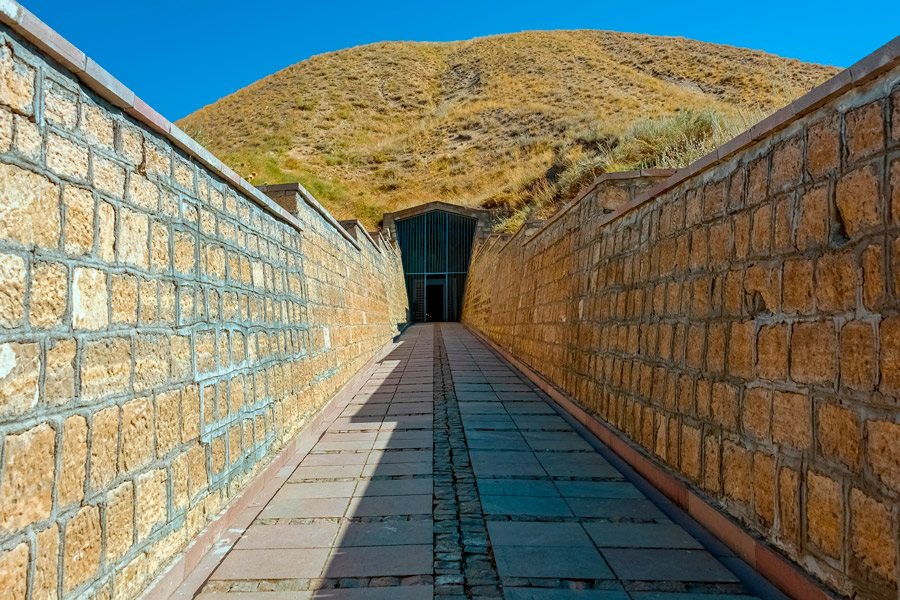
The most striking feature is Tumulus MM (Midas Mound). It rises over 50 metres and dominates the landscape.
Inside is a wooden burial chamber. Timber beams frame the space with precision, and the air feels cool and still. The tomb was filled with beautiful textiles, bronze containers, and a wooden funeral bed – highlighting the extraordinary craftsmanship of the Phrygians.
Gordion Museum (Gordion Müzesi)
The Gordion Museum, or Gordion Müzesi, gathers objects uncovered during Gordion excavations.
Displays include:
- Wooden furniture
- Tools and domestic items
- Burial artefacts
Each piece adds context. Together, they transform fragments into a coherent picture of life in ancient Gordion.
Citadel and Gordion Excavations
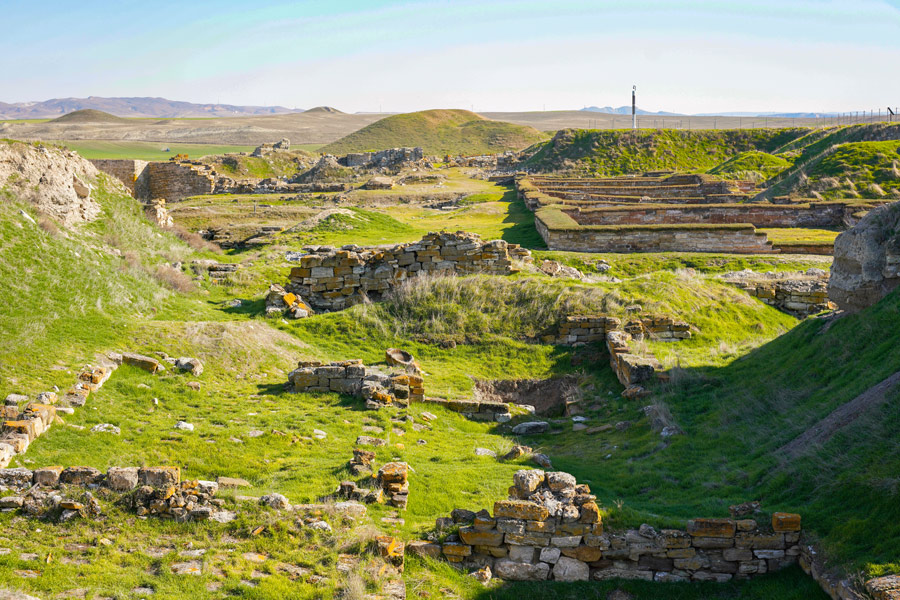
The citadel area shows how the city functioned. Foundations outline streets, buildings, and production zones.
Opening Hours, Tickets, and the Museum Pass
Entry to the premises is upfront and remains reasonably priced compared to larger sites in Turkey. In recent seasons, a standard ticket costs approximately €3 and covers both Tumulus MM and the Gordion Museum (Gordion Müzesi) on a single trip. Card payments may be accepted, though carrying cash is advisable.
For those planning a broader itinerary, Museum Pass Türkiye is worth considering. The pass covers a wide variety of archaeological sites and museums across the country, including Ancient Gordion. For those travelling to multiple locations, it can simplify entry and reduce overall cost. The pass covers 15 days since the first museum entry and costs €165.
MüzeKart is valid for Turkish citizens.
Opening hours generally run from morning until late afternoon, with the last entry slightly before closing. As of April 2026, the museum is open daily from 08:30 to 17:30, with last ticket sales at 17:00.
Note: Pricing and timings can shift seasonally, so it is advisable to check them in advance, especially outside peak travel periods.
Practical Recommendations for Visitors
A few practical details can help shape a smoother and more comfortable visit.
- Best time to visit Gordion: Spring and autumn have the most comfortable conditions. Mornings are ideal, with softer light and lower temperatures that make walking easier. Late afternoon can also work well.
- Footwear: Wear sturdy walking shoes. Surfaces around the mound and settlement can be uneven.
- Sun and water: Carry water and use high-SPF sunscreen. Much of the site is exposed, and shade is limited.
- Photography: Plan photos for morning or late afternoon, when the light is softer and better suited to the scenery.
How to Get to Gordion – Comfort vs Flexibility
There are a few options for getting to Gordion. Some prioritise independence, others remove effort altogether. The right balance depends on individual preferences.
Car Rental and Private Transfers
Driving is the most straightforward way to reach the ancient city. The route from Ankara is direct, and the traffic thins quickly after leaving the city.
A car allows flexible pacing. This is particularly valuable for those who prefer to move at their own rhythm rather than follow a set schedule. Parking near the Gordion archaeological site is simple, and distances between key points are manageable on foot.
For individuals who would rather follow than lead, private transfers and guided services provide a different kind of ease. This option is ideal for those who want to focus fully on the attraction without thinking about logistics.
Moreover, guided services add depth. While the Gordion excavations and visible remains are self-explanatory, interpretation enhances perception. This process is especially important at a site where much of its history is hidden beneath the surface.
Public Transport and Taxi Routes
Public transport is accessible, albeit less direct. The journey typically involves two stages:
- A train or intercity bus from Ankara to Polatlı
- A taxi from Polatlı to the site
Trains run regularly, and taxis are available, though timing and availability may vary, especially outside peak hours.
That said, either a private vehicle or a pre-arranged transfer generally creates a more enjoyable experience.
A Suggested Itinerary to Gordion Ancient City from Ankara
Leaving Ankara
Departure in the early morning allows a more natural transition from a busy city to the countryside. By mid-morning, central Anatolia takes over with its wide horizons.
The surroundings gradually set the stage for the historical context. It soon becomes apparent that Gordion’s location offered visibility, access, and control over movement across regions.
Arrival and First Impressions of Gordion
There is no defined entrance to the site. The low structures, open ground, and distinctive outlines of burial mounds in the distance welcome you.
Moving Through the Ancient City
A clear order helps structure the visit:
- Tumulus MM (Midas Mound)
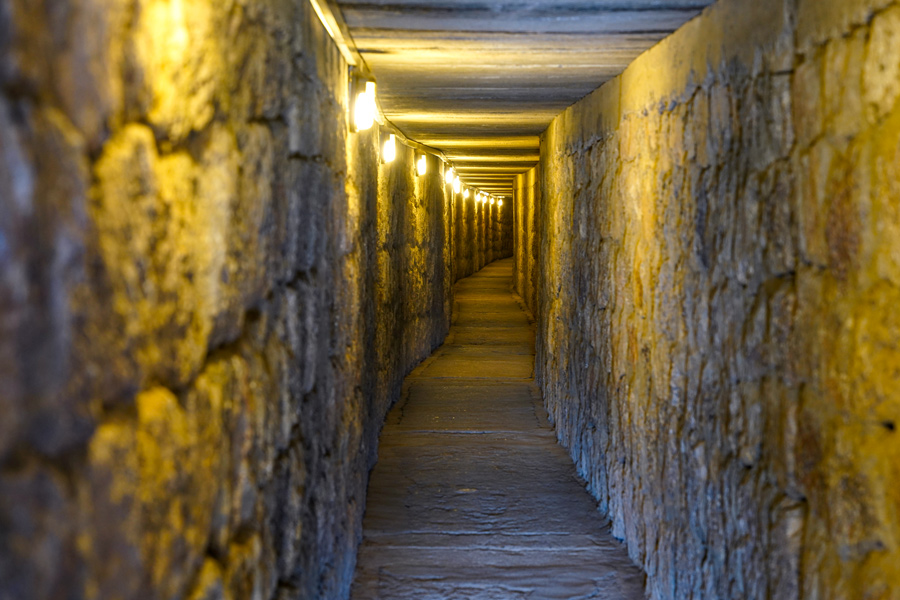
The mound rises gently from the plain. A narrow passage leads inside to a wooden burial chamber. There, thick timber beams support a structure that has remained intact for nearly three thousand years. The space is enclosed and dark, with no embellishments.
- Gordion Museum (Gordion Müzesi)
The museum displays wooden furniture, structural elements, tools, and burial items uncovered during the excavations. The focus shifts to showing how people lived, built, and worked here.
- Citadel and Settlement Area
The settlement is defined by foundations, low walls, and the outlines of large buildings. Sections of fortifications mark the former border of the citadel. It becomes possible to visualise where people lived and made textiles and crafts, with the surrounding plain always in view.
How Much Time to Allow on Site
Two hours on site alone are sufficient. The emphasis remains on rhythm rather than duration. Short pauses and clear transitions between areas foster a complete understanding.
Can You Return to Ankara Without Wasting a Day?
Yes. The distance allows a full excursion without fatigue. Travel time is manageable, and the core part fits comfortably within half a day.
Adding a lunch stop or a short detour improves the overall experience.
Extending the Day [Optional]
If time allows, we recommend exploring the surrounding areas to get a full feel of Ankara’s surroundings. Here is a suggested optional itinerary:
- Lunch in Polatlı
Polatlı serves as the main gateway town to Gordion, Turkey. It is a practical and comfortable stop for rest, dining, and orientation.
- Optional Stops (Pessinus or Sakarya Area)
Pessinus adds another layer to Phrygian history, as it served as an important religious centre. A stop near the Sakarya River, meanwhile, helps explain why such a civilisation developed here. The river provided a natural crossing that shaped movement and control in the region.
Gordion AVM [Optional]
On the way back, travellers can relax and shop at Gordion AVM. Turkish brands such as İpekyol, Koton, Madame Coco, and Oysho appear alongside international names like Adidas, reflecting a mix of local and global retailers.
A modern cinema adds another dimension to the experience, and the food stalls and restaurants in the complex are convenient places to enjoy Turkish delicacies and global dishes.
This stop works best as a brief interlude rather than a main activity.
Return to Ankara
In the late afternoon, the extended schedule returns to Ankara. This allows for more than enough time to spend a fruitful evening in the capital.
A Memorable Journey
Gordion Ancient City brings together landscapes, history, and the remains of a powerful civilisation.
The burial mound, the museum, and the open settlement each contribute a different layer. Together, they add up to an adventure that feels both balanced and complete.