

Overview: Why this Museum Matters
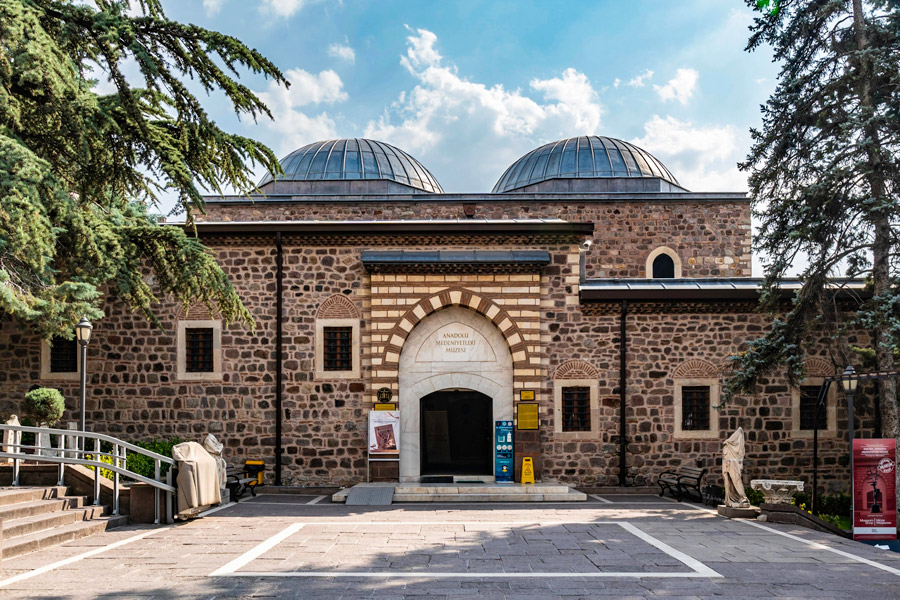
The Museum of Anatolian Civilizations (Anadolu Medeniyetleri Müzesi), located at the foot of Ankara Castle in the historic Atpazarı quarter, is one of Turkey’s must-visit museums. Here, visitors can follow tens of thousands of years of Anatolia’s history in clear chronological order, from the Palaeolithic period to the Ottoman era.
Anatolia, also known as Asia Minor, forms the Asian part of modern-day Turkey (Türkiye) and has, for millennia, served as a crossroads linking the Aegean world, the Caucasus, Mesopotamia, and the Levant. The museum tells this story in a way that is easy to follow and rich in detail.
The museum was founded in 1921 by Mustafa Kemal Atatürk (1881–1938), whose remains rest in Anıtkabir, at a time when the collection and protection of Anatolia’s archaeological heritage became a national priority. It later moved into its current premises following extensive restoration work carried out between 1938 and 1968. The museum has also gained international acclaim, winning the title of European Museum of the Year in 1997.
Visitor Information
Address: Gözcü Sokak No: 2, 06240 Ulus, Altındağ (Ankara).
Phone: +90 (312) 324 3160; +90 (312) 324 3161
Website: Museum of Anatolian Civilizations
Email: anadolumedmuzesi@ktb.gov.tr
Opening hours (seasonal):
Summer (1 April–1 October): 08:30–19:30 (ticket office closes at 18:45).
Winter (1 October–31 March): 08:30–17:30 (ticket office closes at 16:45).
Open every day except on public holidays.
Tickets
Adult ticket (as of January 2026): €12
Note: Admission prices are subject to change without prior notice. We recommend checking the official Turkish museums portal for the current prices. Website: www.muze.gov.tr
Free-entry categories:
- Children aged 0–18 (citizens of Türkiye)
- Children aged 0–8 (non-citizens of Türkiye)
- Visitors aged 65 and over (citizens of Türkiye)
- University students enrolled in art history, archaeology, or museum studies programs may be admitted free of charge upon presentation of a valid student ID.
Museum Pass
If you plan to visit several state-run museums during your trip, consider purchasing the MuseumPass Türkiye. It is valid for 15 days and covers more than 350 museums and archaeological sites, including the Museum of Anatolian Civilizations. The pass costs €165 (approximately 6,000 TL/TRY, depending on exchange rates).
Photography Rules
Under the regulations of Türkiye’s Ministry of Culture and Tourism, professional photography or filming in museums requires prior permission and may involve a fee. Amateur photography may also be restricted, depending on the museum’s policies.
Visitors are asked to follow the guidance on signage and from museum staff, as certain galleries or exhibition areas may have specific rules.
How to Navigate the Museum
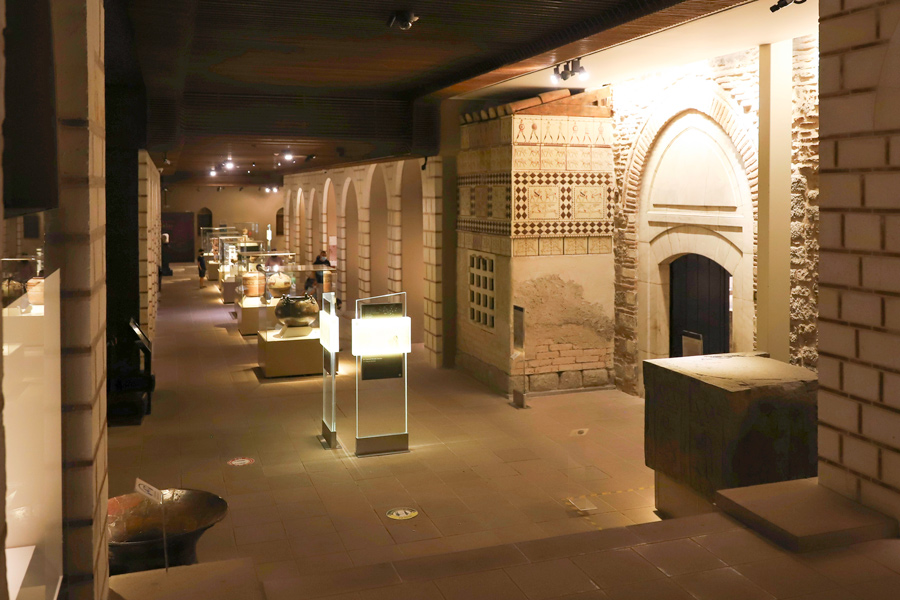
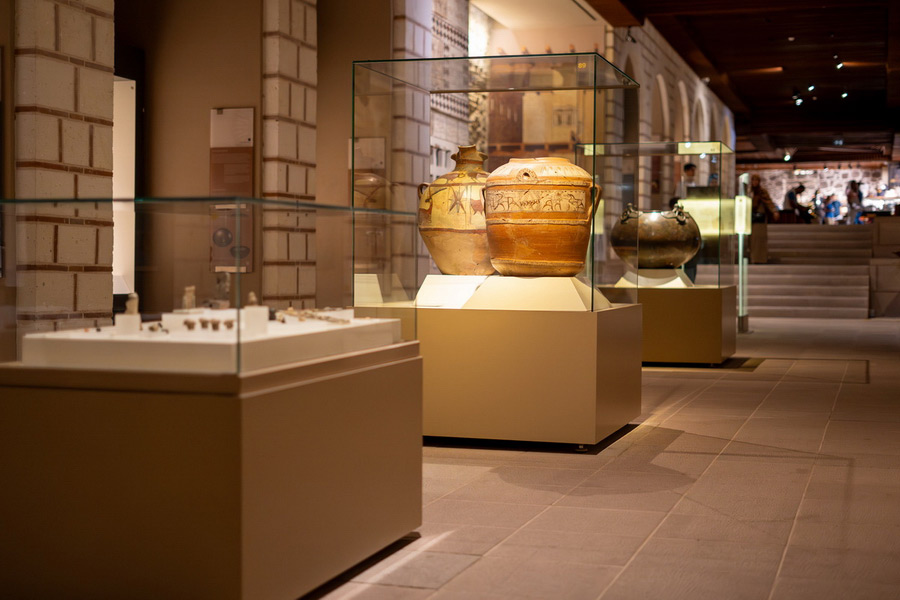
The Museum of Anatolian Civilizations is set within two beautifully restored Ottoman buildings near Ankara Castle, inviting visitors to step into the atmosphere of the city’s past.
One building, the Mahmut Paşa Bedesteni (a 15th-century covered bazaar), was once alive with trade and conversation, while the neighbouring Kurşunlu Han (a historic caravanserai, or inn for travellers) from the same period welcomed merchants arriving from distant lands.
As you stroll through these spaces, you can almost picture the merchants and travellers who once passed through these halls. The atmosphere draws you into the story long before you reach the first Bronze Age displays.
To make the most of your visit, start in the Upper Hall, where you will find the galleries dedicated to prehistoric and Bronze Age artefacts. From there, progress chronologically towards the Hittites and Iron Age sections. Conclude your journey in the Lower Hall, which features displays on “Ankara through the Ages” and the “Classical Ages” section.
What to See Inside the Museum of Anatolian Civilizations: Ancient Anatolian Artefacts and Key Highlights (by Period)
The Museum of Anatolian Civilizations is home to over one million artefacts. The highlights from each section provide a glimpse into the rich cultural heritage of Anatolia’s past.
1. Prehistory: Palaeolithic → Neolithic → Chalcolithic
Time period: c. 2.5 million years ago – c. 3,000 BCE
This section covers “how it all began”: stone tools, early village life, and the first experiments in farming, weaving, and household religion.
Artefacts to look out for:
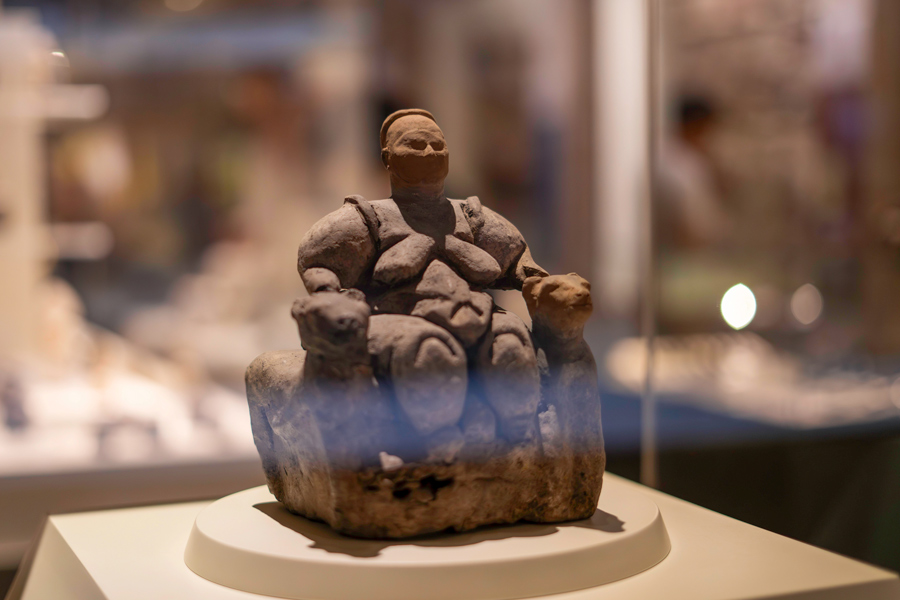
- The Mother Goddess figurine (5750 BCE) is a terracotta nude female figurine from Çatalhöyük. It stands out for its exaggerated form and the two leopards that flank her throne. Such figurines are often linked to power, fertility, or abundance. Although thousands were unearthed at Çatalhöyük, well-preserved examples like this are surprisingly rare.
- Çatalhöyük Wall Painting (6600-6200 BCE) is a renowned Neolithic fresco, frequently interpreted as a map of the settlement with an erupting twin-peaked Hasan Dağı stratovolcano in the background. Some scholars claim it serves as an early “map-like” depiction of the area. Others, however, contend that it is not a map at all but rather a decorative leopard-skin underlain by geometric patterns.
2. Bronze Age: Cities, Trade, and Royal Power
Time period: c. 3000–1200 BCE
This is the period when Anatolia became internationally connected and increasingly stratified.
Artefacts to look out for:
- Alacahöyük (Alaca höyük) Sun Discs (Early Bronze Age, c. 2500 BCE) are bronze standards found in the royal tombs at Alacahöyük. They combine circular forms with rays and decorative animal figures, such as deer and bulls. They were likely made for ceremonial display rather than everyday use. Their fine casting and detailing, sometimes with precious-metal inlays, point to the high level of craftsmanship and status in Early Bronze Age Anatolia.
- The Kültepe cuneiform tablets (c. 1895–1700 BCE) are clay artefacts from the Assyrian merchant colony at Kültepe, ancient Kanesh. The selection on display comes from one of the earliest large-scale archives of private letters and legal agreements.
What makes these tablets especially remarkable is their origin: they come from private households, not palaces or temples. Written in Old Assyrian cuneiform, they cover everyday concerns, including contracts, loans, marriage agreements, and inventories, giving an unusually close view of daily life and trade in Bronze Age Anatolia. Around 23,500 tablets have been discovered, making it the largest collection of private business records from the ancient Near East.
3. The Hittite Kingdom and Empire: A Major Anatolian Power
Time period: c. 2100/1700–1200 BCE
The Hittite Empire ruled from Hattusa (Boğazköy) and engaged in diplomatic and military interactions with the great powers of the Late Bronze Age.
Artefacts to look out for:
- The İnandık Vase (c. 1600 BCE) is a large, four-handled terracotta vase found at İnandık Mound near Çankırı, dating back to the Old Hittite Kingdom. Its surface is covered in relief scenes, depicting a religious festival with ritual processions. Priests and priestesses appear alongside gift-bearers, musicians, and dancers, creating a strong sense of ceremony in motion.
In places, the scenes become surprisingly intimate. The Turkish archaeologist Tahsin Özgüç interpreted part of the narrative as a “holy marriage”, which makes the vase an important visual source for Hittite ritual life.
The design may also offer clues about its use. Turkish museum experts note that liquid could be poured through the four bull heads around the rim, a feature that scholars associate with ritual pouring. - The Bronze Treaty Tablet (Date of the treaty 1235 BCE) is a cuneiform tablet from Hattusa and one of the museum’s most significant artefacts of Hittite statecraft. It records a treaty from the 13th century BCE, made between King Tudhaliya IV of Hatti and his cousin Kurunta of Tarḫuntašša. Discovered in 1986, it is the only known Hittite treaty tablet preserved on bronze, as most surviving treaties were engraved on clay.
The text is written in Hittite cuneiform. It affirms Kurunta’s right to rule in Tarḫuntašša and sets out the kingdom’s borders. It also notes that he was not held responsible for the earlier conflict. The treaty invokes a long list of gods and goddesses as witnesses, a standard feature of Hittite treaties. Its presentation on bronze is exceptionally rare, making it particularly valuable for understanding Hittite diplomacy and the political landscape of Anatolia in the Late Bronze Age.
At this point, the museum transitions from broad archaeological periods to the distinct kingdoms you will encounter in the galleries. The Iron Age is best understood as a patchwork of regional powers and should therefore be approached culture by culture.
Iron Age Kingdoms: Neo-Hittite City-States (1200–650 BCE), Phrygia (1200–700 BCE), and Urartu (858–595 BCE)
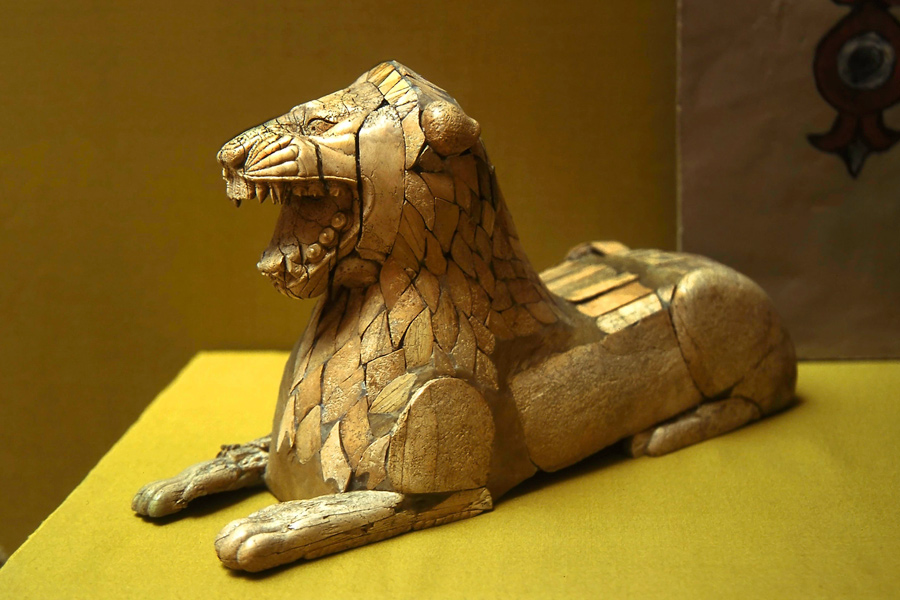
After the era of the Hittite Empire, Anatolia transformed into a mosaic of regional powers, each boasting its own unique expression of kingship, rituals, and high-status craftsmanship.
Anatolia’s Iron Age Cultures:
- Late Hittite (Neo-Hittite) principalities (southeastern Anatolia and northern Syria)
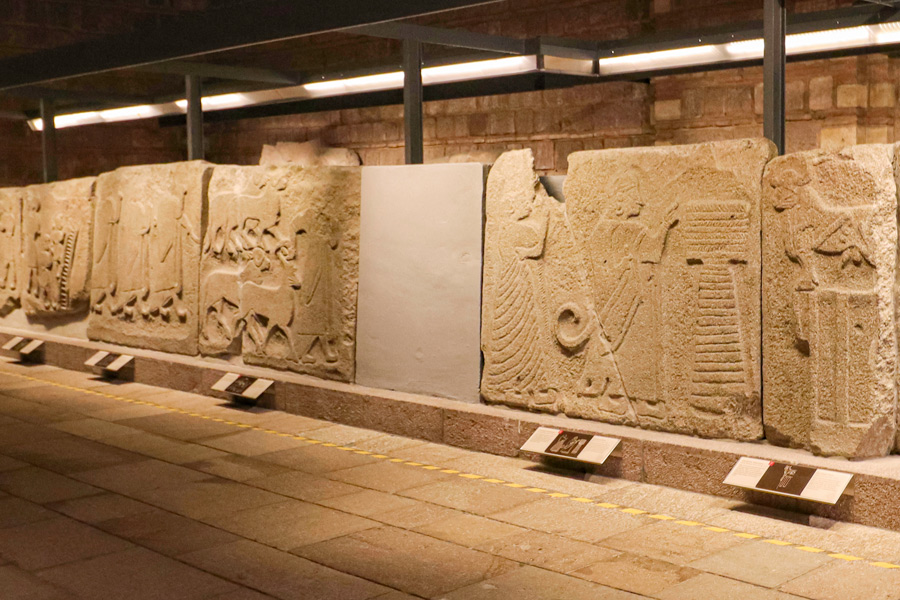
These successor states preserved elements of Hittite tradition, most notably in their large-scale public stone carvings. The museum’s stone galleries vividly bring this period to life.
Among the highlights is a royal statue from Aslantepe, often identified as Mutallu, an 8th-century BCE Neo-Hittite ruler of the city-state of Kummuh. A carved stone from Oluz Höyük, linked to the goddess Kubaba, is a recent discovery that offers fresh insights into Neo-Hittite religious practices.
Designed for gates and façades and intended for public display, these works demonstrate how kingship and ritual shaped identity and how that identity was expressed in stone.
- Phrygia (central Anatolia)
Phrygia is well known for its capital, Gordion, and for its high-quality metalwork and woodworking. Within the museum’s Phrygian section, you will find exquisite bronze cauldrons, animal-headed situlae (bucket-shaped vessels), distinctive Phrygian fibulae (brooches), and a selection of wooden artefacts from the ancient Gordion burial mounds, including a wooden serving table. Smaller pieces include miniature animal-shaped objects and a goose-shaped rhyton, vessels used for pouring liquids.
Two remarkable highlights catch the eye. The Lion-Headed Bucket (situla) from Gordion is a stunning example of elite Phrygian metalwork. Equally captivating is the Statue of Cybele, carved in limestone, which embodies the Phrygian mother goddess and reflects the region’s vibrant ritual traditions.
- Urartu (eastern Anatolia, Lake Van region)
Urartu is characterised by its fortresses, royal cult, and remarkable metalwork from the Iron Age. Look for ceremonial Urartian prestige items such as a ritual cauldron adorned with animal motifs like bulls and sirens. The museum also showcases a monumental Urartian stone relief from the Kef fortress, inscribed with cuneiform writing. Alongside these ceremonial objects, it provides a rare and tangible glimpse into Urartian iconography and how kings publicly asserted their power.
Together, these pieces illustrate Urartu’s unique blend of impressive engineering and divine kingship.
In the Lower Hall, the timeline transitions into longer imperial centuries, where the displays feel less like separate cultures and more like a continuous narrative.
Here, the museum combines local finds from Ankara with a broader overview of Classical, Byzantine, and Ottoman history.
Classical Age (559 BCE–651 CE) → Byzantine Empire (395–1453 CE) → Ottoman Empire (c. 1299–1922 CE): Empires, Faiths, and Everyday Life
The focus then moves from the Bronze and Iron Age kingdoms to the imperial eras that shaped both Anatolian history and Ankara itself. The displays combine local finds from excavations around Ankara with a broader overview of the Classical Age. This section covers the Archaic and Classical periods, followed by the Hellenistic, Roman, and Byzantine eras, and concludes with the Ottoman period.
Here you can expect a more urban and imperial atmosphere, highlighted by statues and small luxury items, with a strong emphasis on materials such as gold, silver, glass, marble, and bronze. The museum’s coin collections also offer insight into the everyday economy of these periods, showcasing everything from the earliest forms of money to contemporary coins.
How to Get to the Museum?
The museum is located in Ulus (Altındağ), close to the historic centre.
Public transport:
- Metro (recommended): The Ankara Metro M1 line (Kızılay–Batıkent) operates from Kızılay → (via) Ulus → Batıkent. Alight at Ulus, then either walk to the museum or take a short taxi ride.
- Bus: Try a journey-planning app such as Google Maps or Moovit to find the best route. Many buses stop at central hubs like Kızılay or Ulus, from which the museum is a short walk.
- Taxi: Use a licensed taxi with a taximeter to ensure your fare is based on distance and time. As rates vary, inform the driver of your route and provide either the museum’s name, “Anadolu Medeniyetleri Müzesi, Ulus (Gözcü Sokak)”, or its official address, Gözcü Sokak 2, 06240 Ulus.
Tips for Visitors
Recommended Duration: Plan to spend two to three hours exploring the galleries at a comfortable pace, especially if you wish to read the labels in detail. Those with a keen interest in Bronze Age history may find it rewarding to allow extra time.
Best time to visit: For a more tranquil visit, particularly in peak season, try to arrive when the museum opens.
Suggested half-day itinerary:
- Start your visit at the Museum of Anatolian Civilizations. Take your time here, as the galleries guide you through Anatolia’s rich history in clear chronological order, making it easy to follow the story as it unfolds.
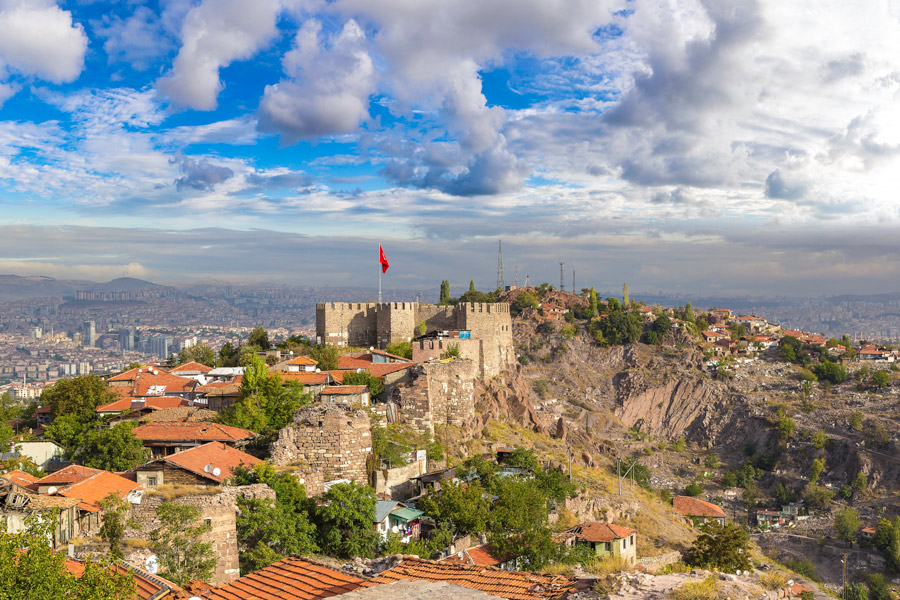
- Next, proceed to Ankara Castle nearby. Enjoy the walk as part of the experience, and once you reach the top, you will be rewarded with splendid views across the city. As you explore, the old streets and stone walls add plenty of atmosphere.
- Finally, unwind in Hamamönü. Wander past its beautifully restored 19th-century houses, then settle into one of the friendly cafés for a tea or coffee before continuing your day.
Nearby Attractions
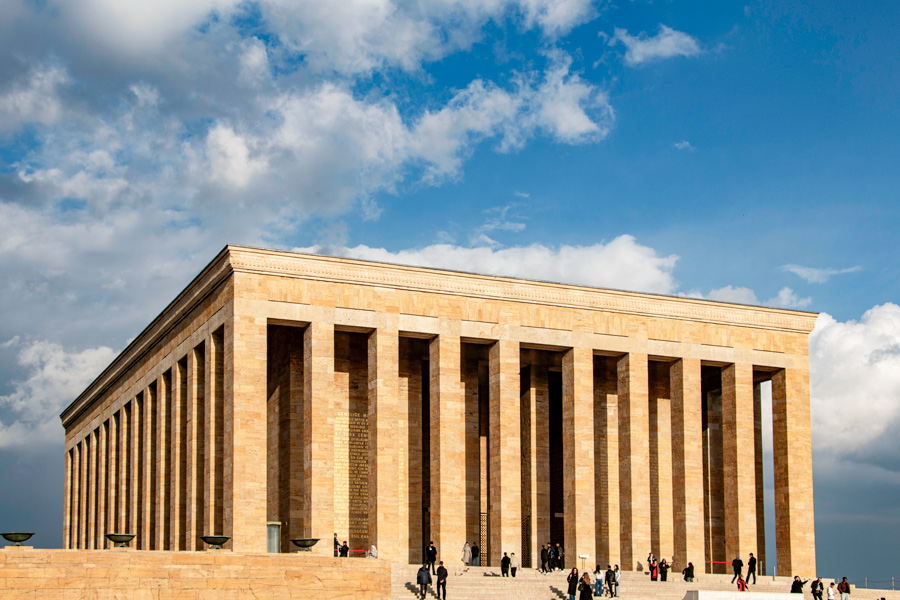
If you have time to explore beyond the museum, several important sites are easily accessible:
- Hacı Bayram Veli Mosque and surrounding area: Located on Augustus Square, the mosque stands amid layers of history, including the Tomb of Hacı Bayram and the remains of the Temple of Augustus, where Roman stonework still displays Latin inscriptions.
- Anıtkabir: This monumental mausoleum is dedicated to Mustafa Kemal Atatürk, the founder of modern Turkey. Its vast ceremonial courtyard and restrained architecture make it one of the country’s most significant national sites.