

Tours and Attractions in Edirne
Edirne Travel Guide
Imagine driving up to a faraway city via a highway that cuts through the vast agricultural fields like a lightning bolt splits the sky. Located in northwestern Turkey (officially Türkiye), the capital of Edirne Province has a rich history. With roughly 143,200 residents in 2024, it is the second-largest city in Thrace by population, after Istanbul.
Edirne has long been a gateway between Anatolia and Europe, and ancient trade routes such as the Silk Road brought innovation here. Nestled at the confluence of three rivers – Tunca and Arda, both tributaries of the Meriç river (also known as Maritsa, Maritza, or Evros) – the city is enveloped by lush, fertile plains that add to its serene charm. The natural beauty of the region, with its gentle hills, expansive greenery, and riverside views, makes Edirne a peaceful retreat that has long inspired artists, poets, and visitors alike.
So, if you are wondering whether you should visit Edirne, read the rest of this travel guide and see how you can enjoy every single moment spent in the westernmost city of Turkish Thrace.
Edirne Tours
Seeing all the main landmarks of Edirne is possible in one day, but we recommend staying for a little bit longer to truly savour every corner of this cosy town. Edirne does not experience a large seasonal influx of tourists. It means you can enjoy your time without the risk of overcrowded public spaces.
The city is about a three-hour drive from Istanbul, near the borders with Greece and Bulgaria. Thus, if you are looking for a little getaway from the busy city, rent a car or buy a bus ticket and get ready for a magical day surrounded by history and culture. The number of things this small town offers is quite impressive.
Admire local traditions, architecture and crafts, walk around the narrow alleyways and plentiful recreational zones around the small city, or just enjoy some locally produced wine in one of the wineries outside of Edirne.
Best Time to Visit Edirne
Seasons in Edirne are rather intense. There are four distinctive quarters that are weather-appropriate to their typical dictionary descriptions.
Spring here is mild, and it is rarely cloudy. Rain is common – though not permanent.
Summers in Edirne are hot and moderately dry, with an average temperature reaching a high of 29 degrees Celsius and a low of 15 degrees Celsius. The sky is usually cloud-free, and precipitation is also quite low, especially in July and August.
As for autumn and winter, temperatures begin to decline sharply in November, in preparation for winter. September and October are relatively mild, with temperatures similar to those in spring. On the other hand, winter is relatively cold – the sky is cloudy half of the time, and precipitation is at its highest level.
Visiting the city in each season has its advantages, but the best time to visit Edirne is from April to October.
History of Edirne
The first known settlers here were Central Asians who migrated to Thrace in ancient times. Like the rest of Thrace and Anatolia, the city, formerly known as Orestias, was first taken over by the Romans and later by the Byzantine (also known as Eastern Roman) Empire.
Thracian Orestias slowly started flourishing as the Roman Hadrianopolis (Adrianople); the latter name was given to this place in 124 AD, in honour of the Roman emperor Hadrian, who founded the city. Both Romans and Byzantines recognised the strategic role Edirne played in the region, so they facilitated its transformation into a crucial military and administrative centre.
From the 9th century, the Byzantine Empire lost control of the city to the Bulgarians. Still, it quickly regained control and remained there until the 14th century, when, in 1369, the Ottoman Sultan Murad I made it the capital of the Ottoman Empire. This marks the beginning of a golden era for the city. Slowly but surely, Edirne gained more architectural wonders, as well as cultural and commercial developments. At its prime, this place was known as the university city of the Empire. However, the 18th century marks the Ottoman decline, which was reflected in the fate of Edirne as well.
Back-to-back fires in 1745 and 1751 destroyed the once-powerful settlement. Then came the Russian, Bulgarian, and Greek occupations, consecutively. The city was a subject of conflict for a few years but was finally incorporated into the newly formed Republic of Turkey by the Treaty of Lausanne in 1923.
Notably, Turkey red (Türk kırmızısı) is closely linked to Edirne. The rubia plant (madder), which thrived in countless fertile gardens here, produces a true red dye used in textiles to this day, reflecting a rich cultural heritage.
What to Do in Edirne
As you enter the city, you will be greeted by the statue of a woman picking grapes off a grapevine. This is a symbol of the city as wine grape production and wine output increase.
From Ottoman mosques and European churches to museums displaying the local wonders, even if it seems small, Edirne is a city blessed with a plethora of interesting places to visit at all times.
Most of the landmarks are concentrated in or close to the town centre, easily accessible on foot; it will not take long for you to fall in love with this place.
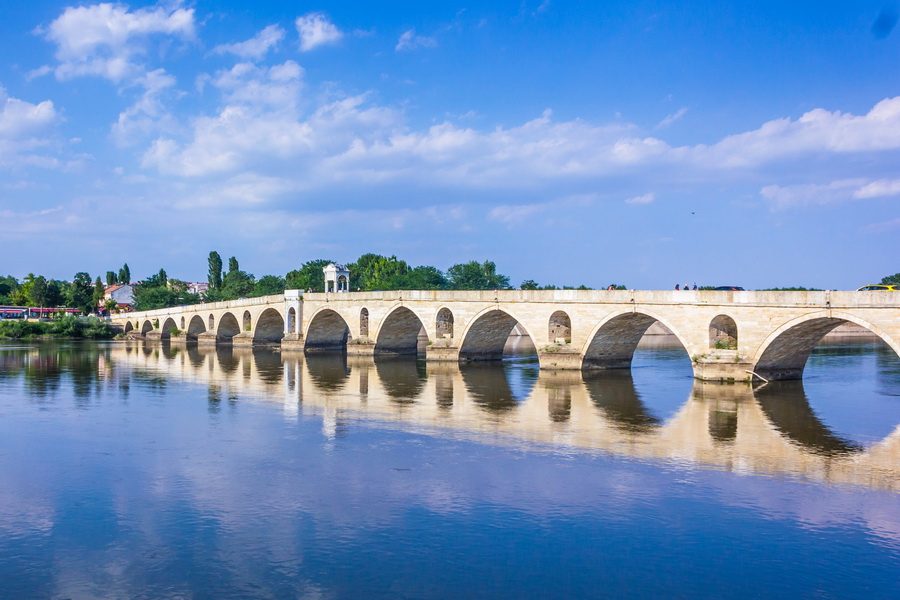
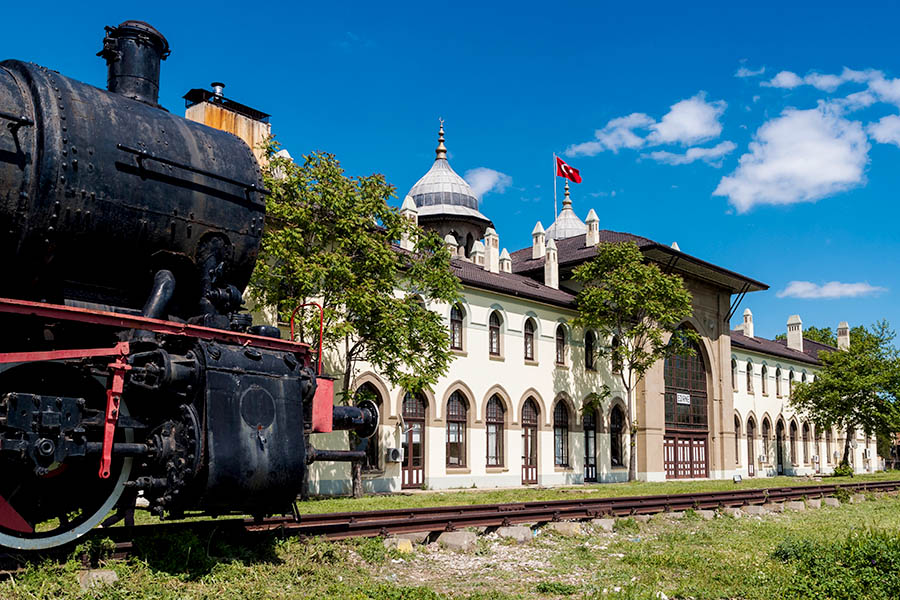
The Meriç and Tunca Bridges (Meriç Köprüsü ve Tunca Köprüsü) are historically significant and connect the old district of Karaağaç to downtown Edirne. Additionally, the historical Karaagaç neighbourhood is home to the old train station, the Martyr’s Monument, and the Lausanne Memorial.
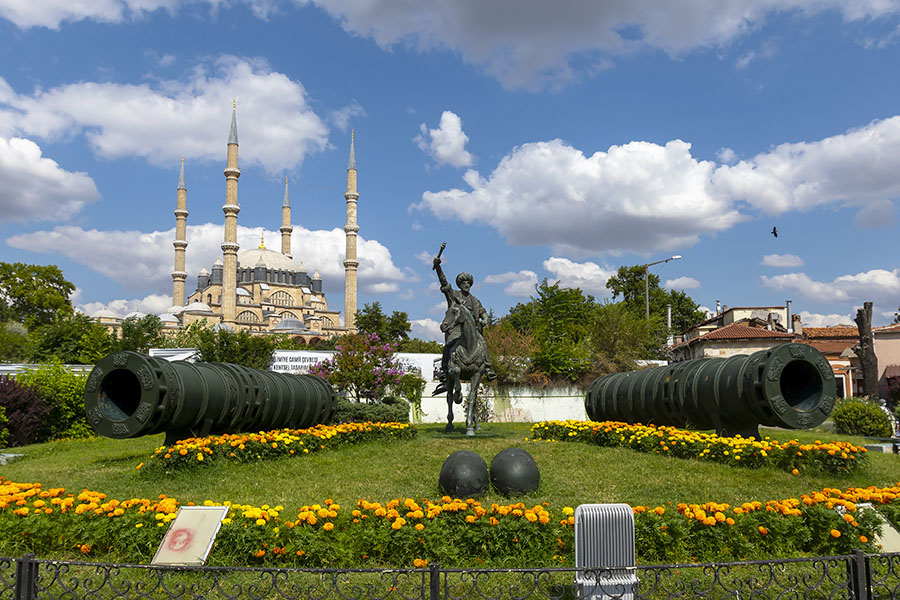
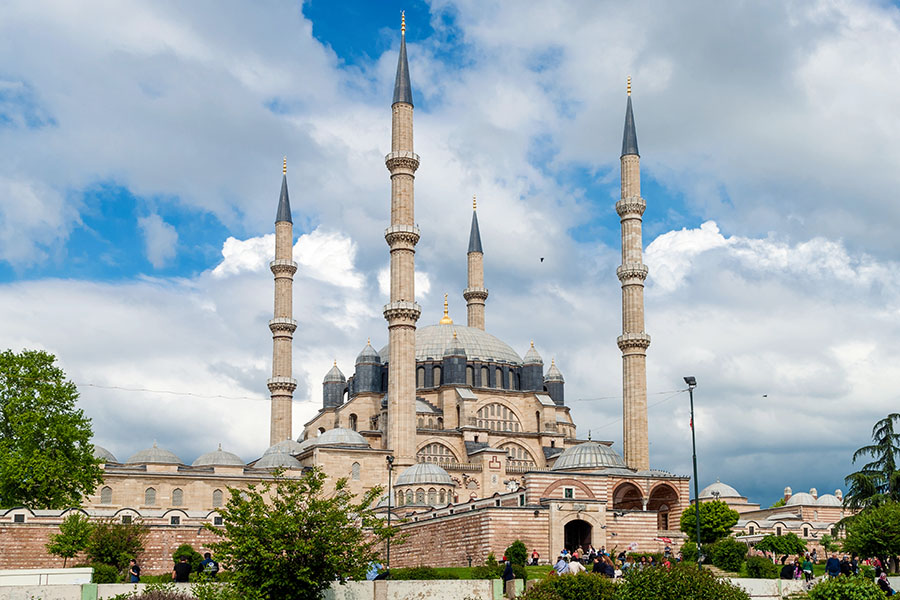
Another significant site is the majestic Selimiye Mosque (Selimiye Camii), which has been on the UNESCO World Heritage List since 2011. It was commissioned by Sultan Selim II and designed by the most acclaimed architect of the Ottoman Era, Mimar Koca Sinan ibn Abd al-Mannan, in the 16th century. He is also the mastermind behind the restoration and expansion of the Topkapı Palace (Topkapı Sarayı) in Istanbul.
The Old Mosque (Eski Camii) is the oldest 15th-century surviving structure in Edirne.
The ruins of the Edirne Palace (Edirne Sarayı) are another must-see place in the city. At its prime, the total area took up around 30-35 ha (74-86 acres). Its layout is similar to the famous Topkapı Palace.
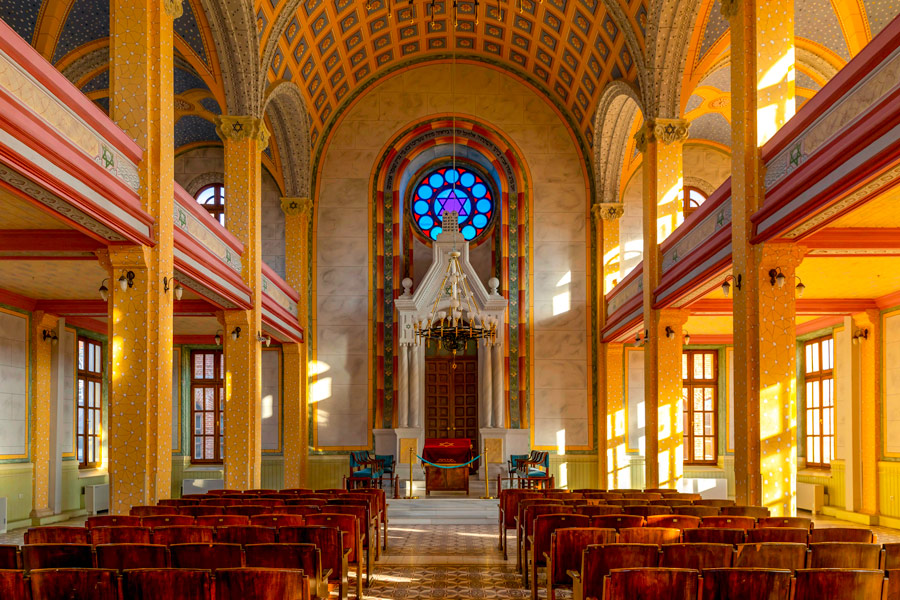
For a brief taste of European influence, guests can also visit the Bulgarian Orthodox Church of Saint George (Aya Yorgi Kilisesi), built in the second half of the 19th century, and the Great Synagogue of Edirne (Edirne Büyük Sinagogu), built in a Neo-Moorish style in the 20th century.
Edirne Museums
One can learn a lot about a place's culture through local archaeological finds and ethnographic observations.
Edirne Archaeology and Ethnography Museum (Edirne Arkeoloji ve Etnoğrafya Müzesi) is a perfect blend of the two.
Located in the southeastern part of the Selimiye Mosque, the Museum of Turkish-Islamic Arts (Edirne Türk-İslam Eserleri Müzesi) is the first museum in the city. Guests can view manuscripts, weapons, clothing, textiles, and everyday items containing characteristic art styles of Islamic Turkey.
Madrasahs, or medical schools, were extremely popular in Ottoman Turkey. They brought significant advancements to the field, some of which remain effective.
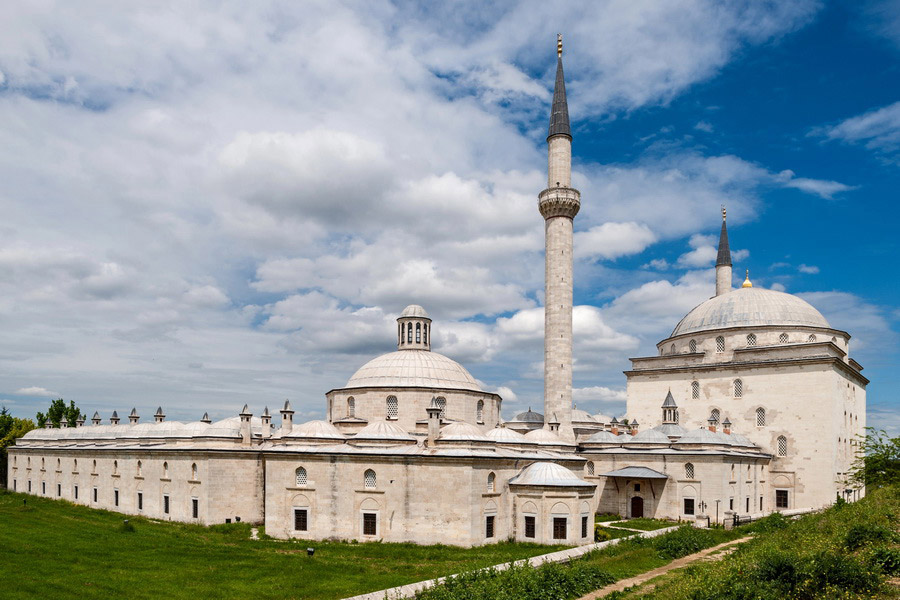
The Sultan Bayezid II complex (Sultan II Bayezid Külliyesi) in Edirne was a hub for medical students and scientists who practised innovative methods and utilised locally made medicine.
Other noteworthy museums to visit in Edirne include the Edirne Balkan History Museum (Edirne Balkan Tarihi Müzesi), Selimiye Foundation Museum (Selimiye Vakıf Müzesi), Edirne Necmi Iğe House Ethnography Museum (Edirne Necmi İğe Evi Etnografya Müzesi), and Hasan Ali Yücel Children’s Museum-Park (Hasan Ali Yücel Çocuk Müzesi). They all have their own niche and charm guests with unforgettable stories.
To make your journey even easier and more enjoyable, consider purchasing the Turkey Museum Pass, which provides access to many museums across the country, not just in Edirne.
Edirne Theatres
Edirne has limited theatre space. Nevertheless, the Edirne State Theatre (Edirne Devlet Tiyatrosu) leads the way for the local performing arts. Located in the Ekmekçizade Ahmet Paşa Caravanserai, the building is very low-profile, but what awaits guests inside is truly special. Shows are played monthly, and you can book the tickets in advance. The small theatre hall provides a cosy, pleasant experience for the audience.
Entertainment, Parks, and Shopping in Edirne
Entertainment
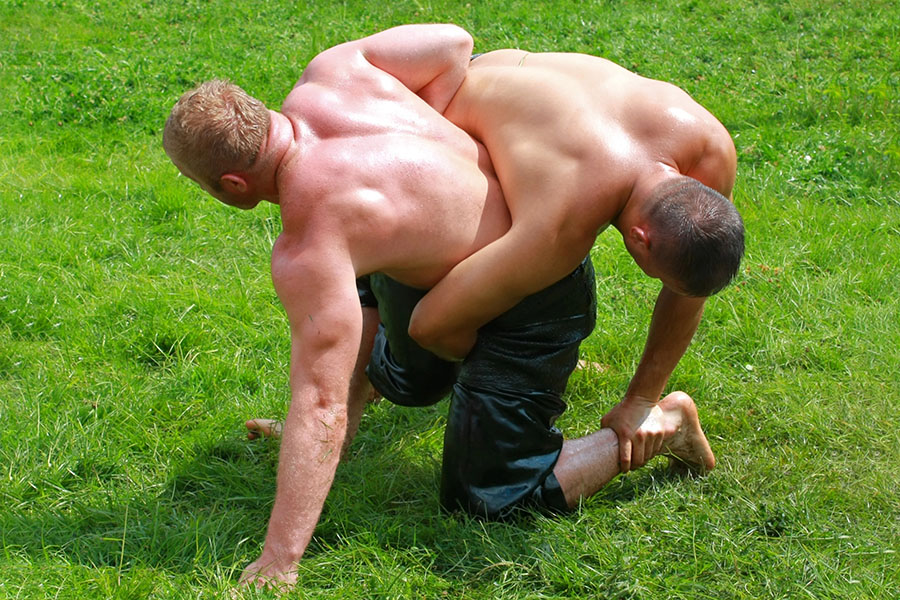
The annual Kırkpınar Oil Wrestling Festival, usually taking place between June 30 and July 6 or 7, is the largest event for locals in Edirne. It holds the Guinness World Record for “The world's oldest continuously sanctioned sporting competition” and is on the Representative List of the Intangible Cultural Heritage of Humanity. The Festival offers a wide array of entertainment in addition to the wrestling matches for its spectators.
Moreover, Edirne is the home of Edirnespor, a football club founded in 1966. If you are an avid football fan, you might be interested in attending one of their matches.
Parks of Edirne
The city is generally green. Every neighbourhood has at least a little playground where kids can play. Recreational spaces are prevalent along the riverbanks, where Edirne Forest is located.
Lavender Festival (Edirne Lavanta Festivali) is another festival that visitors to Edirne can expect in June. For this occasion, the Lavender fields, or Edirne Lavanta Tarlaları, get busy with vendors selling a variety of different lavender bioproducts.
Bariş Park's Artificial Pond is ideal for walking and entertaining your children. It is a quiet, small park known for its fountains. The walking paths are perfect for taking a stroll in the evening, and the playground infrastructure is modern and safe.
Besides the public spaces, there are some private gardens for tourists, like the Mustafa ve Eymen in Bahçesi. Additionally, those who like adventures and team games can visit the local paintball club – Big Hunter Paintball.
Shopping in Edirne
Edirne has some unique souvenirs and merchandise that guests can purchase as keepsakes. Fruit-shaped soaps and ornamental brooms are some unusual items you can buy to remember your trip here.
A few specific places we recommend visiting:
- Margi Outlet – popular among the locals and tourists. Visitors from Greece and Bulgaria often come here to shop since it is so close to their countries.
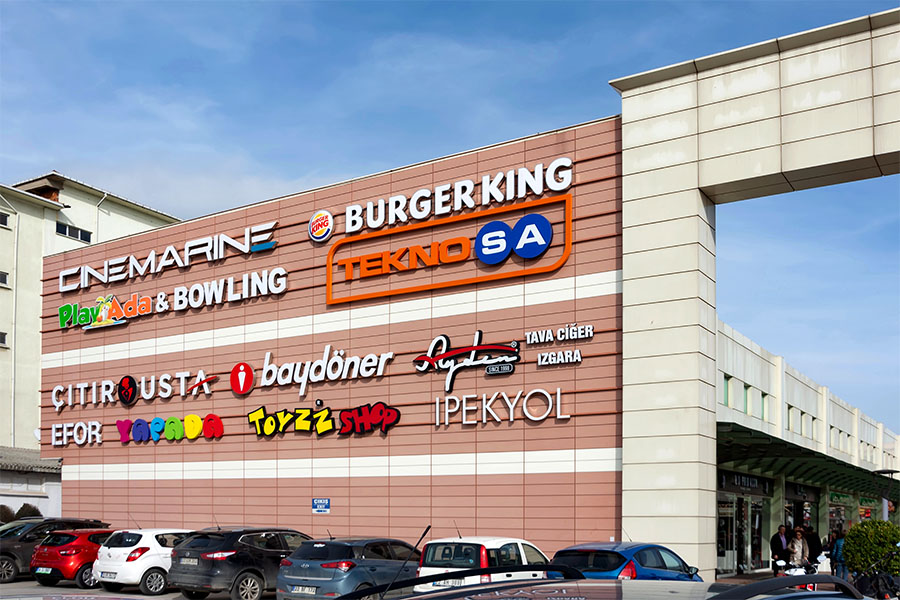
- Erasta Edirne AVM – another typical shopping centre you can go to, where you will see an abundance of local and international brands.
- Edirne Selimiye Arasta Bazaar – located near the Selimiye Mosque and an old hammam.
- Bazaar Bedesten – is the oldest bazaar of Edirne and is close to the Selimiye Bazaar. You will find everything here – from local produce to yarn and textiles.
- Alipasha Bazaar – a historical bazaar that was built by none other than Mimar Sinan.
Food in Edirne
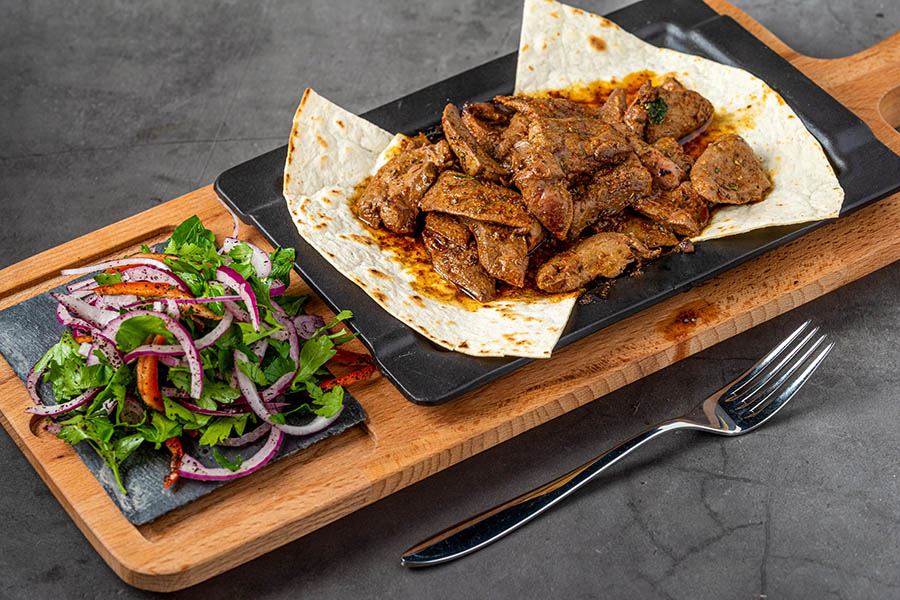
Turkish Cuisine
Experience a perfect blend of unforgettable flavours from Edirne, where Turkish, Middle Eastern and Balkan influences create a unique fusion of intense tastes. Savour the rich combination of couscous, beans, almonds, tender lamb, and savoury liver, expertly blended with local spices that define the region’s culinary heritage.
From hearty Kapama pilaf with succulent lamb or chicken to delicately prepared dishes like the Liver Wrap or the Pan Liver, the mixture of mouthwatering aromas in the streets of Edirne wafts enticingly. Local businesses like Hasbahce 22.5 Kahvaltı Cafe, Vargo Restaurant & Bar, and AYDIN TAVA CIGER greet their guests with outstanding service.
Also, consider the juicy delicacy from the Keşan district of Edirne – Keşan Satyr Meat, which has been registered by the Keşan Chamber of Commerce and Industry as an authentic local dish.
Vegetarian Restaurants
As much as meat is popular in local cuisine, Turkish restaurants are very flexible to fit their clientele. Still, Ziyafet Çiğköfte offers its guests a small but entirely vegetarian menu. Some of the dishes are also vegan. Friends22 is another place you can visit. Their selection of dishes is not entirely plant-based, but they offer options for people with dietary restrictions.
Coffee Houses, Bakeries, and Patisseries
Turkish desserts are sought after worldwide. Apart from the Turkish Delight and Baklava, you can give other sweet treats a taste. Among many, we recommend Deva-i Misk Halva, Trilliçe, Gaziler Halva, Almond Paste, and Edirne Cookies.
Coffee and tea are everywhere you go in Turkey, with Edirne being no exception to that rule. Taste coffee made on sand with a Cezve. Turkish people often drink water after enjoying this caffeinated beverage, so be sure to try it as well if you do not already.
Immerse yourself in this local hot beverage at Kahve Dünyası while shopping at Erasta Edirne AVM, or visit Konak Patisserie for mouthwatering cheesecakes, tarts, and other sweet treats.
City Transport in Edirne
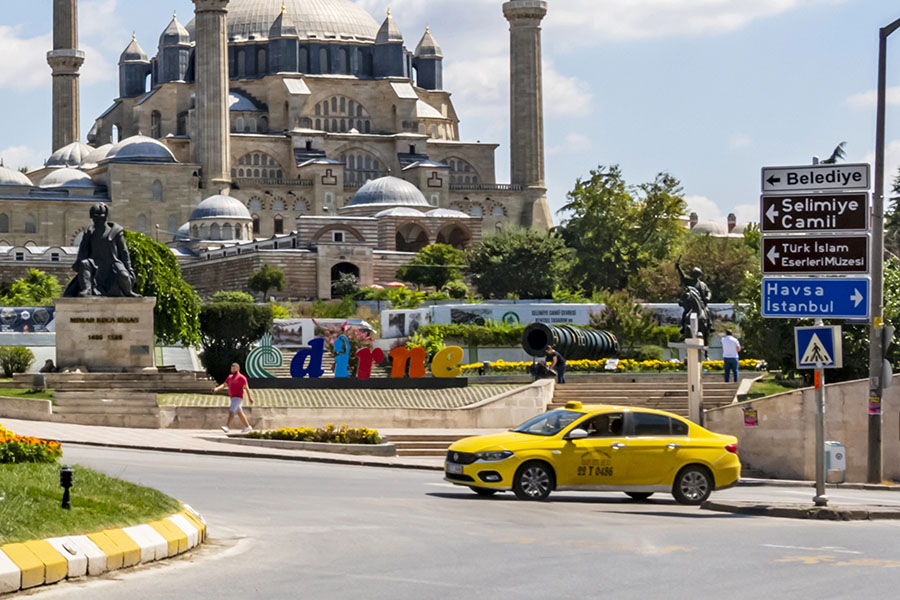
Public Transport
Given its status as a border city in Turkey, Edirne's road infrastructure is up to par. Two of the country’s major highways lead to the city, making travel by land comfortable for everyone.
Buses and Shuttles
Dolmuş, a type of Turkish minibus, is readily available throughout the city and remains the most affordable mode of transportation.
Other Modes of Transport
The city has relatively flat terrain and is not too large, so you can easily walk to all the historical landmarks if you wish. However, if that is not your preference, renting a bicycle is also an option.
Taxis
The yellow taxi cabs (Taksi) and their stations are not hard to spot in Edirne. You can either hail them on the street or book them in advance by phone or through a mobile app.
Car Rental
Renting a car in Edirne is just as simple as anywhere else. Rental companies that work 24/7, like Ulusoy Rent a Car & Emlak, are available for tourists at any time of the day. Additionally, highly rated businesses such as Budget Edirne and Garenta Edirne Erasta AVM Araç Kiralama offer luxurious service. The types of cars depend on the package you choose and the criteria you qualify for, so rent an optimal vehicle for you and embark on a beautiful journey.
How to Get to Edirne
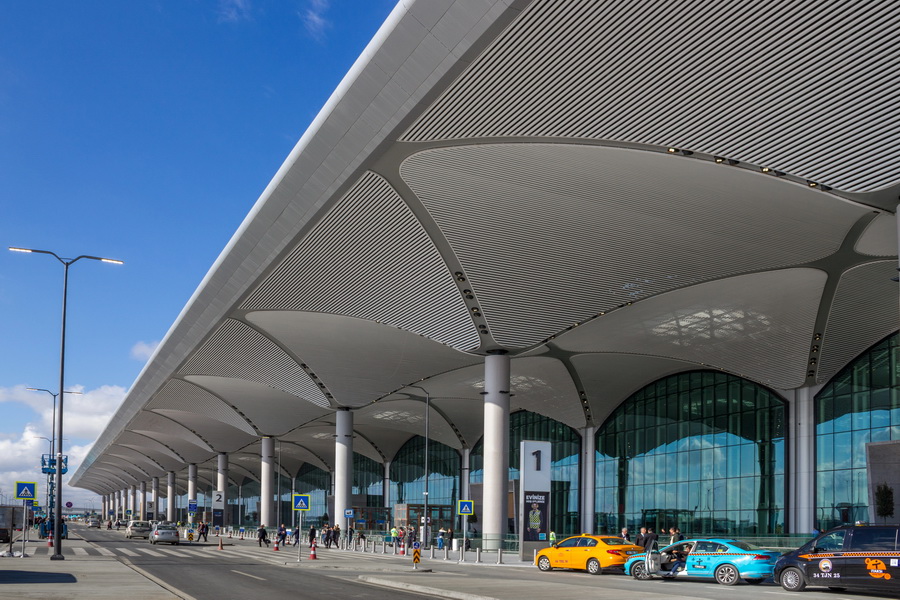
Due to the city’s proximity to one of the world’s busiest airports – Istanbul Airport (IST) – you can get to Edirne from any place in the world. It serves more than 350 domestic and international destinations in 110 countries. It takes only 2 hours to reach the city of Edirne from the airport.
Highways ensure connectivity with the rest of Turkey and its bordering states. Moreover, there is a daily bus service that departs from Kapıkule, stops in Edirne, and continues to Istanbul. You can also take the Istanbul-Sofia Express, which stops at Edirne station, or the Optima Express, a motorail service departing from Villach, Austria, which runs through the Balkans. It operates seasonally, from April to November, two to three times per week, and arrives at its destination within 32 to 37 hours.
Languages Spoken in Edirne
The predominant language spoken in Edirne is Turkish, just like the rest of the country. However, growth in tourism and the city’s proximity to the border led to more foreign communities relocating here. You will also hear Bulgarian spoken more prominently on the streets of Edirne. English is also widely spoken here, as tourists use it to communicate with locals.
Security in Edirne
Edirne is rather safe for its visitors. Nevertheless, as a precaution, we advise you to read up on road safety rules, customs, and laws relevant to travel and travellers. Edirne has a track record of huge floods after heavy rainfall, mostly in winter. Please check the weather before booking a trip there and avoid the river during the rainy season.