

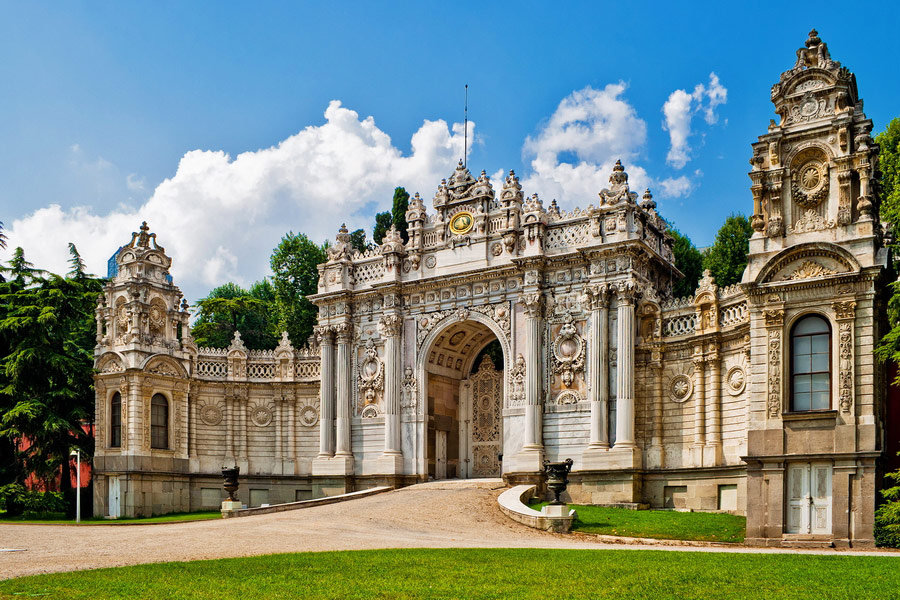
The Dolmabahçe Palace (Dolmabahçe Sarayı) on the European shore of the Bosphorus is among the most striking Istanbul landmarks.
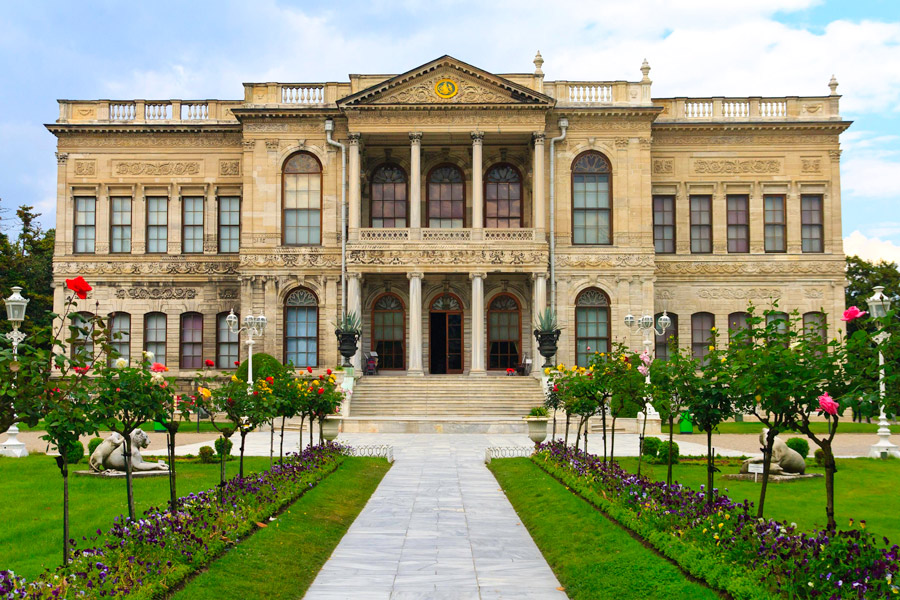
Built in 1856, the palace displays a unique fusion of Baroque, Rococo, and Neoclassical styles. It also blends traditional Ottoman architecture, creating a royal residence unlike any other in Turkey (Türkiye).
Visiting Dolmabahçe Palace opens a window into the final chapter of the Ottoman era and the birth of modern Turkey. The palace was home to six sultans, and Mustafa Kemal Atatürk spent his final days there.
Discover centuries of cultural heritage through this Dolmabahce Palace Istanbul guide – perfect for museum lovers and historic palace enthusiasts alike.
Dolmabahce Palace Visitor Information

Dolmabahce hours may vary slightly in winter or during public holidays, so visitors are encouraged to check the official National Palaces website before arrival: millisaraylar.gov.tr.
Opening Days & Hours
- Open: Tuesday – Sunday
- Closed: Monday
- Visiting Hours: 09:00 – 17:00 (last entry around 16:00, depending on the season)
Tickets & Entry
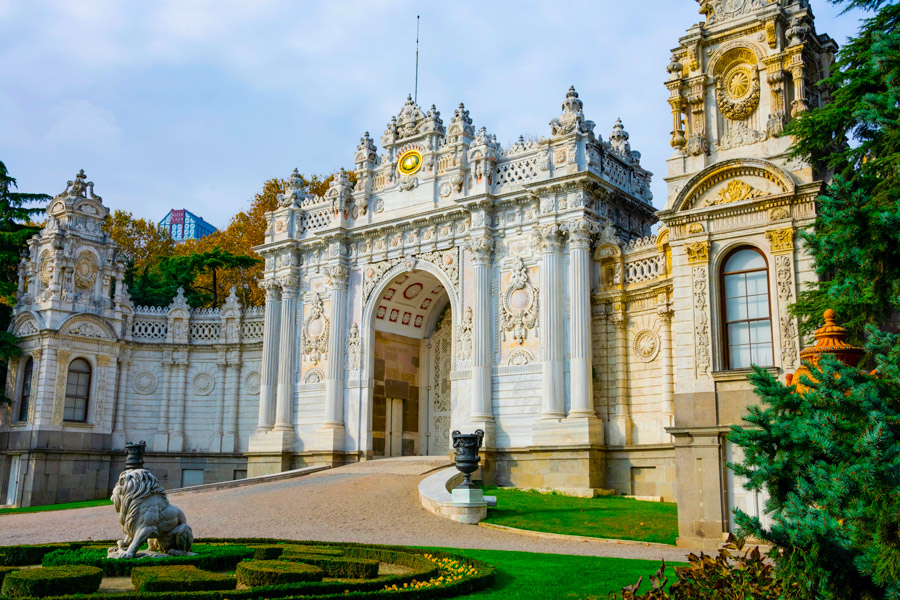
- Main Entrance: The Imperial Gate (Saltanat Kapısı) on Dolmabahçe Avenue (Dolmabahçe Caddesi) serves as the primary entry point for visitors.
- Tickets: Available at the on-site ticket office near the main gate or online through the authorised platforms.
Sections & Pricing
- Main Palace (Selamlık) + Harem Ticket: ~ ₺1800 TRY (combined admission).
- Separate section tickets may be offered for the gardens or museum halls.
- The Istanbul Museum Pass is not valid for the Dolmabahçe Palace – tickets must be purchased separately.
- Payment: Both cash (TRY) and credit/debit cards are accepted.
- Audio Guides: Free English-language audio guides are provided with standard tickets; guided Dolmabahçe Palace tours are available for an additional fee.
Tip: Buy tickets online or arrive early to avoid queues, especially in peak season.
Getting There
Dolmabahçe Palace is located on the European shore of the Bosphorus, in the Beşiktaş district, between Kabataş and Maçka.
Public Transport Options
- From Taksim Square: Take the F1 Funicular to Kabataş, then walk about 7–10 minutes to the palace entrance.
- From Sultanahmet (Old City): Take the T1 Tram to Kabataş → short walk to the palace.
- By taxi: Around 25–30 minutes from Sultanahmet (depending on traffic).
Suggested Visit Duration
Allow at least 2–3 hours to explore the Main Palace (Selamlık), Harem, gardens, and waterfront terraces.
Best Time to Visit
- Best Days: Tuesday to Thursday
- Best Hours: 9:00 – 11:00 (opening hours)
- Best Seasons: Spring (April–May) and Autumn (September–October) for pleasant weather and lighter crowds.
- Avoid: Weekends, public holidays, and peak summer (June–August), when queues can be long and interiors crowded.
Visitor Tips
- Dress comfortably: There is no strict dress code, but modest and practical clothing is recommended.
- Facilities: Restrooms, a small café, and a gift shop are available within the palace complex.
- Accessibility: Some sections of the palace include stairs; limited wheelchair access is available on main routes.
Should You Visit Dolmabahçe or Topkapı First?
Travellers often compare Dolmabahce vs Topkapi when deciding which palace to visit. Knowing the contrasts helps you choose the best palace in Istanbul that matches your interests.
Architecture & Atmosphere
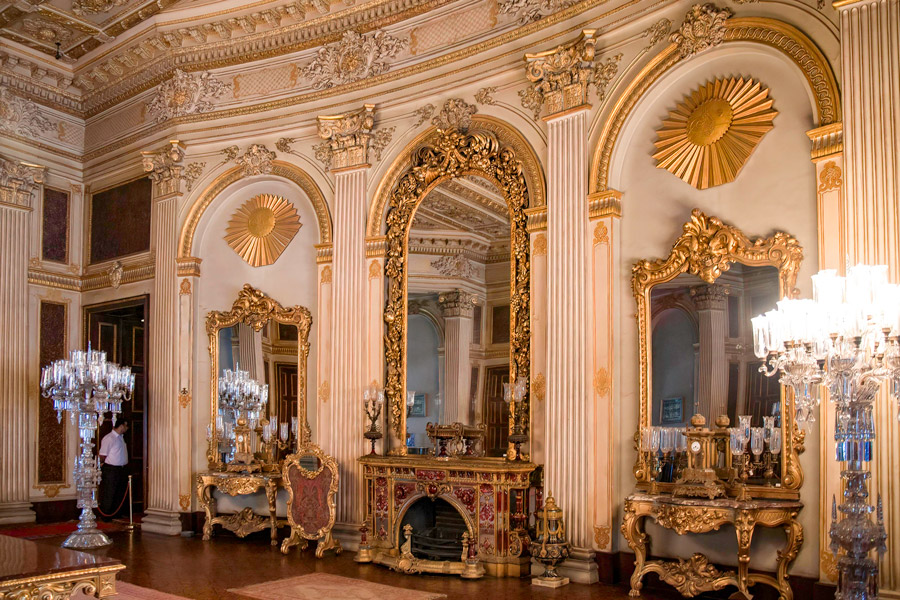
Dolmabahçe: European opulence, chandeliers, crystal staircases, ceremonial elegance
Topkapı: Ottoman courtyards, pavilions, holy relics, and an open-air feel
Visitor Experience
Dolmabahçe: Structured guided paths; focus on interiors
Topkapı: Large outdoor spaces; more freedom to explore
Choose Dolmabahçe If…
You love Baroque style, 19th-century architecture, and dramatic interiors.
You prefer Bosphorus views and European-inspired design.
Choose Topkapı If…
You want to learn about early Ottoman history, relics, and stories of the sultans.
You prefer courtyards and museums over furnished interiors.
Most travellers visit the Dolmabahçe Palace second, after the Topkapı Palace – but if you enjoy European palaces, start here.
What to See Inside the Dolmabahçe Palace
The Dolmabahçe Palace in Istanbul was a stage for imperial power projection. Ambassadors followed a choreographed path designed to overwhelm.
Selamlık – The First Section of the Palace
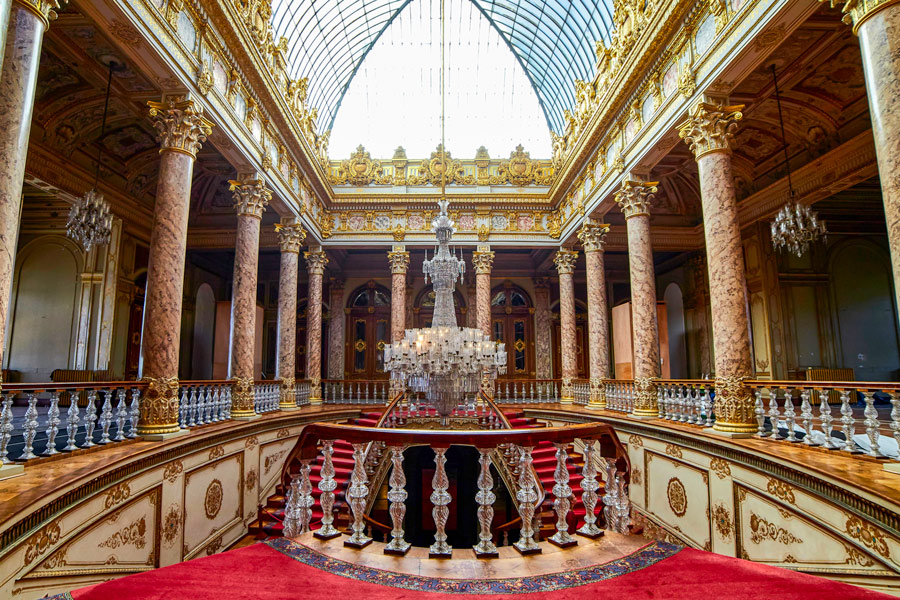
Upon entering the (Mabeyn-i Hümâyûn), also known as Selamlık, foreign envoys entered the Medhal Hall. And immediately, they encountered a crystal staircase and balustrades. In this area, diplomats waited for the chamberlain to lead them to the next hall.
Staff escorted dignitaries through the opulent Secretariat’s Room (known as the Tiled Room). Some other rooms here are akin to small exhibition halls. They showcase crystal objects, precious metals, paintings, and fine porcelain. From there, the guide takes guests through the stunning Crystal Staircase.
The upper floor invites more curiosity. The Ottoman court entertained foreign dignitaries in the Süfera Hall (Ambassadors' Hall). Ottoman architects lavishly decorated it with a handmade Iranian carpet, a crystal chandelier, and gold leaves.
The majestic Ceremonial Hall (Muayede Salonu) formed the climax of the route. There, the Sultan, framed by the world’s largest crystal chandelier, received ambassadors.
Every detail, from the fine porcelain to the silk Hereke carpets, demonstrated an exquisite statecraft.
What to See in Harem – The Second Section of the Palace Complex
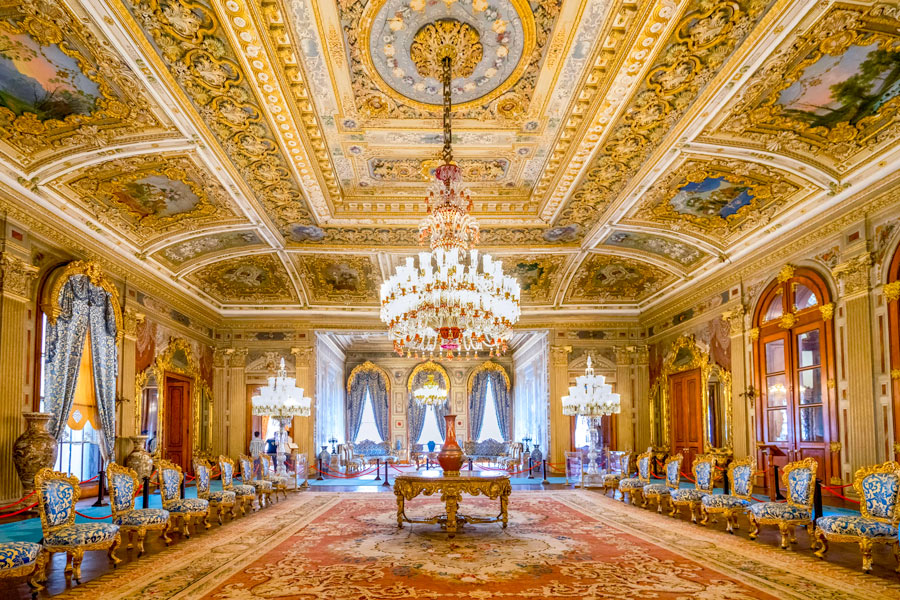
The Ottoman Imperial Harem (Harem-i Hümâyûn) was reserved for the sultan's private life and that of his family. Despite this, its interiors are just as sumptuous as the palace’s public halls.
In the Harem, you can see the living quarters of the sultan’s mother (valide), wives, and daughters. You also pass through the Blue Room, where the sultan met family members and concubines. In the Pink Room, the sultan's mother first received the future harem residents.
Mustafa Kemal Atatürk’s Room
Mustafa Kemal Atatürk, the founder of the Republic of Turkey, used Dolmabahçe as his presidential residence. He spent his final days in a quiet room of the harem section. It remains unchanged, with the clock stopped at 9:05, the time of his passing on November 10, 1938. The room is open for visitors.
Dolmabahçe Outside Structures

Dolmabahçe’s gates are architectural statements in their own right. Key gates include:
- Gate of the Sultan (Saltanat Kapısı)
- Gate of the Treasury (Hazine-i Hassa Kapısı)
- Gate to the Bosphorus (Deniz Kapısı)
These three were part of a carefully organised, symbolic and hierarchical circulation system.
Dolmabahçe Mosque

The Dolmabahçe Mosque (Dolmabahçe Camii) stands just steps from the palace, outside the main gate. It features Baroque curves and Ottoman religious architecture.
Built in 1855 under the patronage of Bezmiâlem Valide Sultan, the mosque served the royal household.
The Clock Tower – Neo-Baroque Landmark of Sultan Abdülhamid II

The elegant Dolmabahçe Clock Tower (Dolmabahçe Saat Kulesi) appeared later (1890–1895). It rises between the palace and the mosque, near the Treasury Gate. Its Neo-Baroque design echoes late Ottoman preferences and those of European architecture.
National Palaces Painting Museum
The National Palaces Painting Museum (Milli Saraylar Resim Müzesi) is in the Apartments of the Crown Prince (Veliaht Dairesi). It reveals the finest art collections in Istanbul from prominent Ottoman and European artists.
Clock Museum
The Harem Park of Dolmabahçe houses a Clock Museum, a collection of historic clocks from the 17th to 19th centuries.
Palace Gardens & Waterfront Terraces

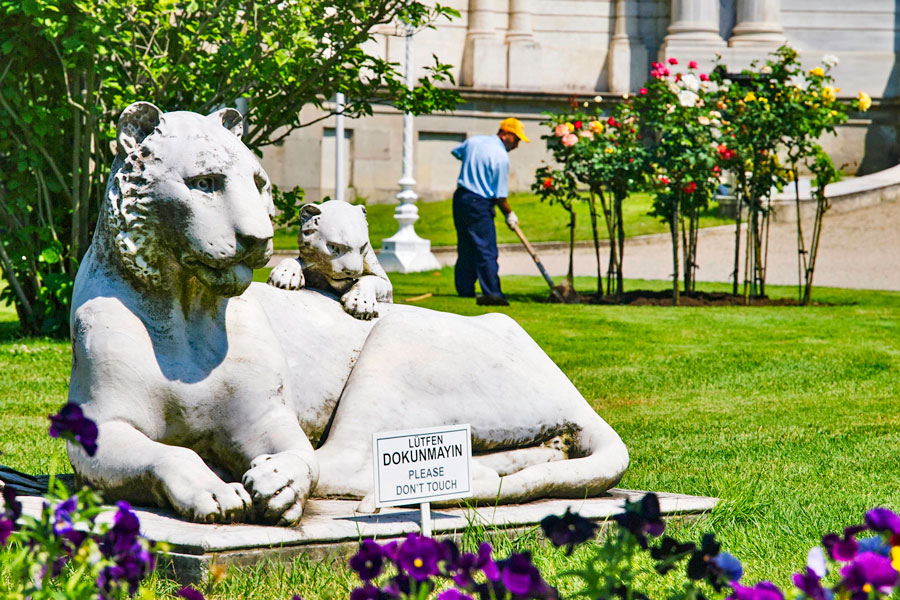
The Dolmabahçe Palace Garden (Dolmabahçe Sarayı Bahçesi) extends along the Bosphorus and follows European landscaping traditions. These are symmetrical paths, fountains, sculptures, and terraces overlooking the water.
The gardens once saw imperial ceremonies, promenades, and diplomatic gatherings. Their orientation toward the Bosphorus highlights the palace’s connection to the sea. Therefore, it offers visitors a serene place to pause during their visit to the Dolmabahçe Palace.
Things to Do Near the Dolmabahçe Palace
A well-planned Dolmabahce itinerary lets travellers see more of the city in a short time. Several Istanbul attractions near Dolmabahçe are within easy walking distance or a short ferry ride.
Bosphorus
After touring the palace, walk to the pier and join a Bosphorus tour in Istanbul. The scenery is stunning, and the cruise helps you see the palace from the water.
Beşiktaş Market & Waterfront
Beşiktaş is only a short walk away. The area is lively, local, and full of food spots. You can try street dishes, fresh simit, or a sit-down meal in a cosy café. The waterfront is great for a stroll and people-watching.
Çırağan Palace Walk
Walk along the Bosphorus toward the Çırağan Palace. A scenic Bosphorus route leading to another historic palace, now a luxury hotel.
Galataport (for Modern Istanbul Vibes)
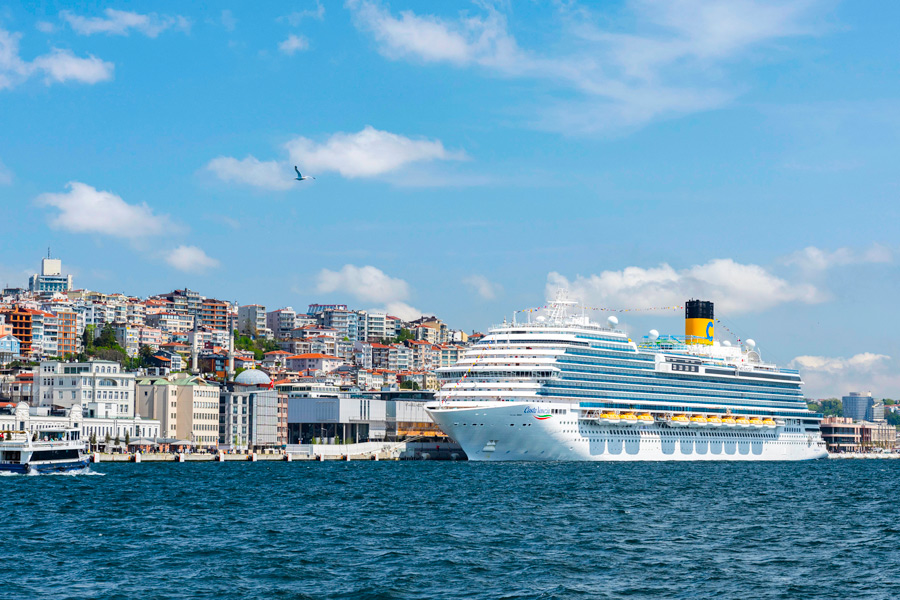
Galataport is a cruise terminal in Karaköy. The area is lively with shops, restaurants, cafés, art, and culture. You can enjoy the sea breeze, shop for local brands at the open-air mall, or grab dessert with a view of the Bosphorus.
Taksim Square
Taksim Square (Taksim Meydanı) is a 10-minute walk from the Istanbul Dolmabahçe Palace. It highlights cafés, shops, the historic Republic Monument, and the entrance to a famous İstiklal Avenue.
Places to Eat Near the Dolmabahce Palace
Several great Istanbul restaurants are just a short walk away. Madhu’s Istanbul, located inside Swissôtel The Bosphorus, serves flavourful Indian cuisine and entertains guests with traditional Indian dances.
In the same hotel, 16 Roof Bar & Restaurant offers stylish dining with stunning views of the Bosphorus Strait.
For something relaxed, head to Limonluk Cafe, inside a greenhouse near the Painting Museum (Resim Müzesi). It is a peaceful spot to unwind after your palace tour.
Photography Tips – Best Angles, Times & Viewpoints Around Dolmabahçe

Where to capture great Dolmabahçe photos? The following tips add value for visitors planning what to do in Istanbul. They also help them find the best time of the year to visit Turkey for ideal light and weather.
Consider the following Dolmabahçe Palace photography tips for the best shots:
Best Time to Visit Dolmabahçe Palace for Exterior Photos
Morning light is soft and even. It brightens the façade without strong shadows. The tones warm during golden hour, gently gleaming on the Bosphorus. At night, the waterfront glows with soft illumination, creating dramatic scenes for Dolmabahce Palace photography.
Top Viewpoints Around the Palace
Good viewpoints include Kabataş pier and the Beşiktaş ferry terminal. The waterside promenade boasts close angles and wide perspectives. The palace gardens give tree-framed shots and quieter spaces. A Bosphorus cruise passing from Üsküdar provides striking panoramic views of the full waterfront façade.
Rules for Taking Pictures of the Dolmabahçe interior
Most Dolmabahçe interior rooms have strict no-photo rules. Plan your photography around the exterior, gardens, gates, and the waterfront.
Dolmabahçe History – From Bosphorus Bay to Imperial Palace
The history of the Dolmabahçe Palace in Istanbul begins with its Bosphorus location, which served as a quiet natural harbour and naval anchorage for Ottoman ships.
Over time, the Ottomans reclaimed the bay to form royal gardens, an important historical site in Istanbul. By the 17th century, these gardens had become a favoured royal retreat, informally known as Dolmabahçe. The official name remained the Beşiktaş Waterfront Palace.
A century later, Sultan Abdülmecid I initiated the construction of a grand European-style residence. He created what would become one of Istanbul’s most iconic palaces. The Dolmabahçe meaning – dolma (filled) and bahçe (garden) – reflects its origins as a “filled garden.”
Built in 1856 during the Tanzimat reforms, the palace symbolised Ottoman modernisation with European-influenced façades, formal halls, gas lighting, heating, electricity, elevators, and imported furnishings.
It served as the administrative centre of the empire from 1856 to 1922, projecting a modern, outward-looking identity.
Designed by Garabet and Nigoğayos Balyan, the palace reflects the architectural dynasty that shaped 19th-century Istanbul, blending European aesthetics with Ottoman ceremonial traditions.
Symbolism and Daily Court Rituals
The Dolmabahçe Palace in Istanbul functioned as a world of its own, shaped by strict Ottoman court life and daily palace rituals that defined the empire’s final chapter.
Up to a thousand servants upheld social etiquette and hierarchy, managing kitchens, clocks, and the immaculate gardens.
Ottoman sultans and foreign dignitaries often arrived by imperial barge, stepping onto the marble pier in ceremonial displays that highlighted the palace’s bond with the Bosphorus.
Inside, artworks by Ivan Konstantinović Ayvazovsky reinforced this maritime identity. At the same time, the royal boat arrivals strengthened Dolmabahçe’s symbolic link to the strait.
The palace rituals of power and the quiet rhythm of daily life defined the empire's final chapter. This behind-the-scenes look at its administrative heart is a must-see for history buffs in Istanbul.
FAQ (Quick Answers)

Is the Dolmabahçe Palace worth visiting?
Yes – it's one of the most beautiful palaces in Turkey and very different from Topkapı.
Do I need to book tickets in advance?
Recommended, especially in high season.
How long does a visit take?
2–3 hours for the full experience.
Can I take photos inside?
Photography is restricted to most interiors.
Which palace should I visit first – Topkapı or Dolmabahçe?
Topkapı for early Ottoman history; Dolmabahçe for 19th-century European-influenced architecture.