

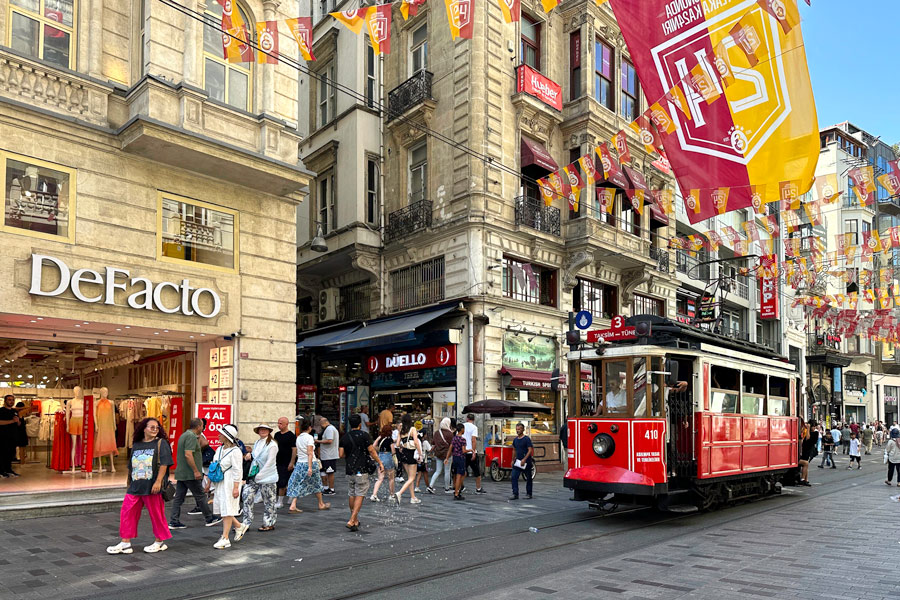
Istiklal Street, also known as Istiklal Avenue (İstiklal Caddesi), is the most famous pedestrian street in Istanbul, Turkey (Türkiye). It runs through the heart of Beyoğlu, stretching for almost 1.4 kilometres. Taksim Square marks its start in the north, and Tünel Square ends it in the south.
When you visit Istiklal Street, you walk through history, culture, and daily city life. Cafés, churches, art galleries, music venues, and historic buildings line up the street. Together, they comprise a vivid portrait of Istanbul.
What Is Istiklal Street Famous For?
In the past, the historical Istiklal Street was a place of diversity where cultures, religions, and lifestyles met.
Today, it draws thousands of locals and tourists for:
- Architecture from the 19th and early 20th centuries
- Cultural institutions, theatres, and contemporary art galleries
- Shopping, bookstores, and boutique stores
- Restaurants, patisseries, and traditional meyhane
- Street musicians, live music spots, and nightlife
- The nostalgic Istiklal Street tram
Few places in Istanbul combine history and modern life as seamlessly as Istiklal Caddesi.
A Short History of Istiklal Street
From Byzantine Roots to Ottoman Era
The roots of today’s Istiklal Street began to take shape during the Byzantine era. It was part of the settlement beyond the city walls, adjacent to Galata. Over the centuries, it first evolved into Pera/Beyoğlu.
Who Lived on Istiklal Street?
By the 18th-19th centuries, the area grew into a bustling quarter. Ottoman intellectuals and Jewish, Greek, Armenian, and European communities mingled here. French residents called it Grand Rue de Pera (Grand Avenue of Pera). Turks knew it as Cadde-i-Kebir (Big Street).
While walking along Istiklal Street, visitors can see old embassies. They belonged to Greece, Russia, Spain, Sweden, the Netherlands, and the United Kingdom.
Among Christian landmarks, there are two Catholic churches, the Armenian church, and many other churches.
The street also features synagogues, mosques, historic apartments, and cultural centres. Austria, Germany, and France founded academic institutions here in the early 19th century.
Istiklal: A Symbol of the Republic
After the founding of the Turkish Republic in 1923, officials renamed the street to İstiklal Caddesi (“Independence Street”). Most embassies moved to Ankara, Turkey's capital.
Later Changes
In the 1930s, nationalist policies, population shifts, and social pressures left their marks on its history. Consequently, many minority residents migrated abroad. These shifts continued across the mid-20th century and altered the street’s cultural life.
From the 1980s onward, urban renewal and pedestrianisation projects restored historic buildings and revived Istiklal as a cultural hub.
The country reinstated old tram lines, restored façades, and multiplied cafes, galleries, and shops.
Istiklal Street Walking Tour: From Taksim to Tünel
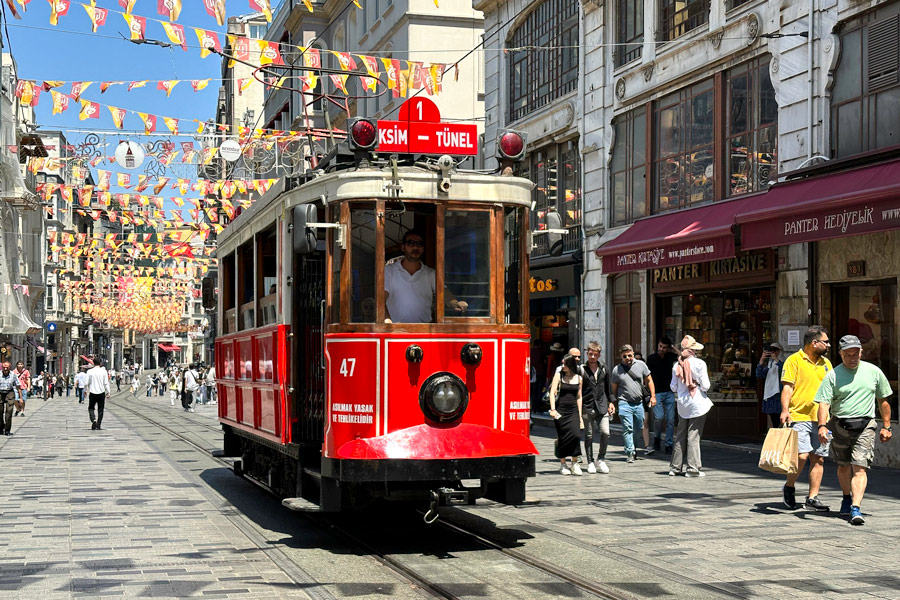
Exploring Istiklal Street is best done on foot, following its natural north-to-south flow.
Taksim Square: Where the Street Begins
Taksim Square (Taksim Meydanı) marks the northern entrance. From here, the street opens into a wide Istanbul pedestrian street, busy at almost every hour of the day. This is where the red tram begins its journey south.
Galatasaray Square: Istiklal Street Cultural Life
Located roughly halfway down the street, Galatasaray Square (Galatasaray Meydanı) is a key landmark. The historic Galatasaray High School stands behind its iron gates. Nearby, you will find Çiçek Pasajı (Flower Passage), an iconic dining arcade in Istanbul.
This area’s highlights are:
- Bookstores
- Traditional cafés
- Street musicians performing jazz, folk, or classical Turkish music
- Small side streets filled with local life
It is an ideal place to pause and observe the rhythm of Beyoğlu.
Tünel Square: Art, Music, and Old Istanbul
At the southern end of Istiklal Street lies Tünel Square (Tünel Meydanı), near the second-oldest metro station in the world (since 1875) called Tünel.
This area feels more bohemian. It draws visitors to art galleries, music shops, and cultural venues. Nearby streets lead towards Galata and Karaköy.
Istiklal Street Landmarks Today – and What They Used to Be
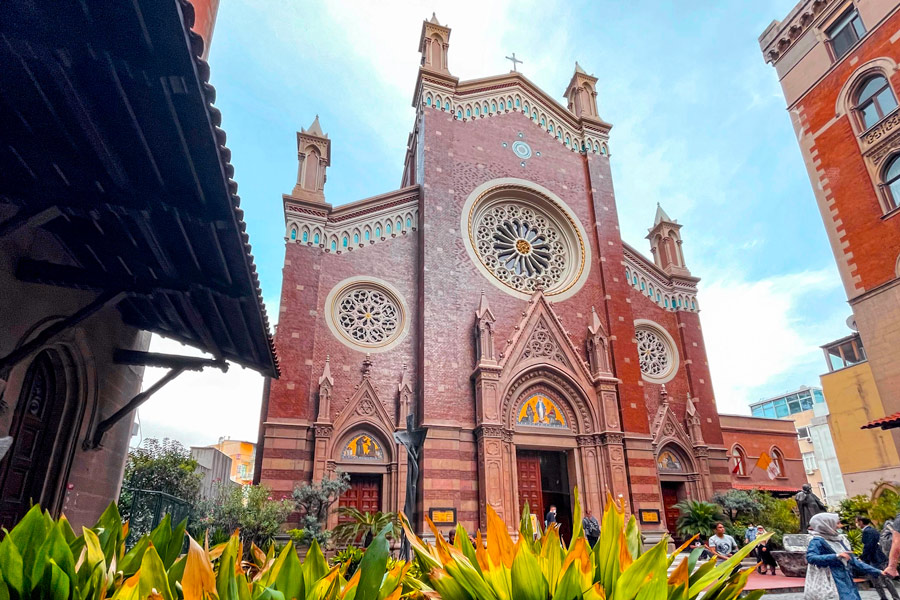
As you walk from Taksim Square to Tünel Square, look for the following notable places.
- Pera Museum (Pera Müzesi, a former Bristol Hotel). The museum now exhibits Ottoman, Anatolian, and modern art.
- St. Anthony of Padua Church (Sent Antuan Kilisesi). The largest Roman Catholic church in Istanbul was built by the Italian community in the 19th century.
- Flower Passage (Çiçek Pasajı). Originally, the Naum Theatre was a centre of opera in the 19th century. Today, it is a covered arcade full of restaurants.
- Atlas Cinema (Atlas Sineması). It was first opened in 1948. Today, it houses the Istanbul Cinema Museum.
- Suriye Passage (Suriye Pasajı). Built in 1908, this six-story historical arcade now contains shops, cafés, and residential apartments on the upper floor.
- Historic Banking Building (Iş Bank). A 20th-century building was once a bank branch. Today, it is a Painting Sculpture Museum (İş Bankası Resim Heykel Müzesi).
- Republic Monument (Cumhuriyet Anıtı). The monument on Taksim Square commemorates the foundation of the Turkish Republic.
- Narmanlı Han (Narmanlı Yurdu). Built in the 1830s as the Russian Embassy. It later gathered artists, writers, and intellectuals. Today, the inn hosts cafés, boutiques, and exhibitions.
- Mısır Apartment (Mısır Apartmanı). Hovsep Aznavur constructed the Mısır Apartment in 1910 for an Egyptian pasha. This Art Nouveau masterpiece once contained elite apartments and studios of artists and cultural figures. Today, it is home to galleries, bookshops, and design stores.
The above-mentioned buildings highlight Istiklal Street architecture and afford excellent photo opportunities.
Things to Do on Istiklal Street
Art shapes the soul of Istiklal Street. Street musicians perform throughout the day. Jazz, folk, and classical sounds fill the air.
Art, Music & Creative Life on Istiklal Street
Istiklal Street cultural sites, such as SALT Beyoğlu, housed in a historic building, and the Yapı Kredi Cultural Centre, host exhibitions and talks. Smaller Istiklal Street art galleries appear alongside the street.
Graffiti and street art add another creative layer, keeping Istiklal Street alive and changing.
Boutique Shopping on Istiklal Street
Beyoğlu is also a lively place for boutique fashion and design. Here, you will find a few options for boutique shopping on Istiklal Street, such as:
- Leila Boutique. Just a few steps off İstiklal on Boğazkesen Street No. 100A, Leila Boutique sells beautifully designed pieces made from natural fabrics.
- By Retro. For vintage lovers, By Retro is one of Istanbul’s largest and most distinctive vintage stores on Istiklal Street in Suriye Passage.
- Jimmy Key. This store is a high-end contemporary fashion destination in Istanbul.
Premium Brands
International fashion brands such as Mango and Zara are present along Istiklal Street. Both stores often sell higher-end seasonal collections, allowing visitors to enjoy fashionable, quality pieces within walking distance of the street’s cultural landmarks.
For True Luxury Shopping in Beyoğlu
For world-renowned luxury brands such as Chanel, Dior, Gucci, Louis Vuitton, Prada, and Vakko, head to Nişantaşı or luxury malls like İstinye Park and Zorlu Centre. These districts cater to clients looking for the most bespoke service experiences in Istanbul.
Historic Patisseries on Istiklal Street
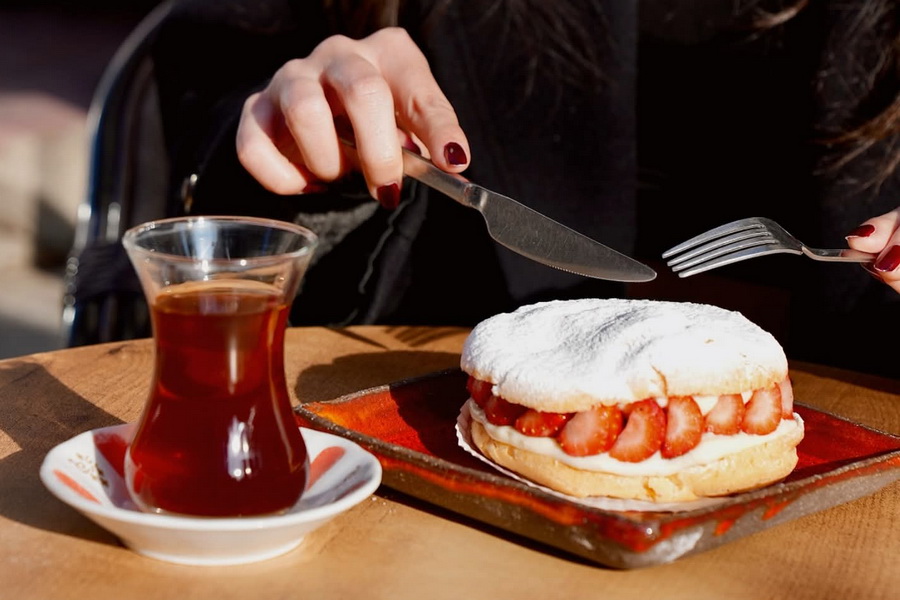
Photo by: www.facebook.com
Follow the Istiklal side streets to taste its sweetest history. For instance, Savoy Bakery on Sıraselviler Street is only a 9-minute walk from Tokatlıyan Han via Turnacıbaşı and Liva streets. It has been open since 1950.
İnci Pastanesi (since 1944) is a popular spot for profiteroles. It is a 1-minute detour from Istiklal through Mis Street.
Patisserie de Pera, inside the Pera Palace Hotel, boasts a fairy-tale interior and delicious sweets, a 4-minute walk from Suriye Pasajı via Gönül and Şamali Mescit streets.
Did you know?
At Passage Orientale (No: 174) once stood Lebon Pastanesi, Turkey’s first patisserie. French chef Edouard Lebon opened it in 1810. However, the business was closed in 2022.
Eating & Drinking on Istiklal Street
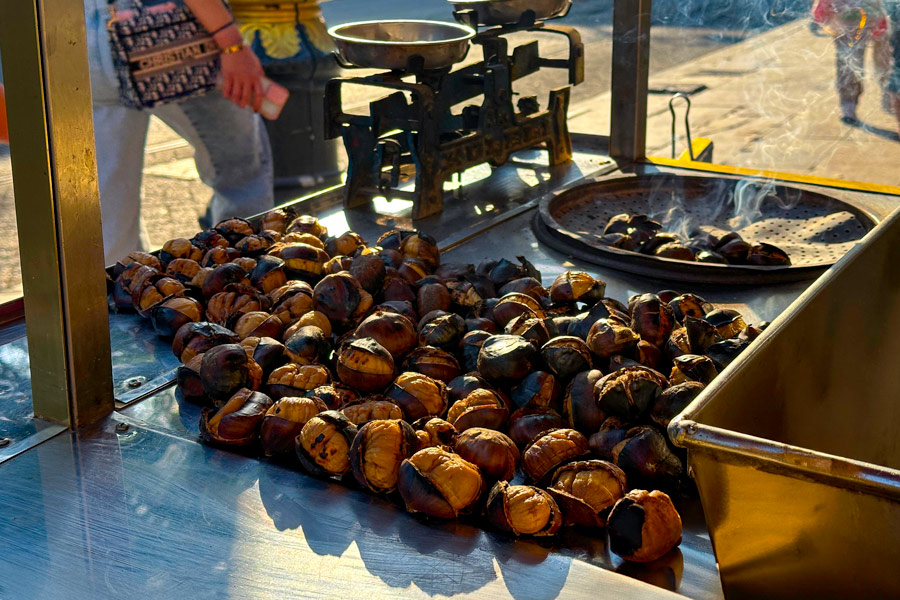
Istiklal offers one of the most varied food scenes in Istanbul. Visitors can try classic treats such as simit (sesame bread), roasted chestnuts, Turkish meatballs (köfte), stuffed baked potatoes (kumpir), traditional milk desserts like muhallebi, and Beyoğlu chocolate.
Istiklal Street Restaurants for Vegans and Vegetarians
Finding a fully vegetarian or vegan restaurant on Istiklal Street is not easy. Most dedicated places are tucked away on nearby side streets, just a few minutes’ walk from the main avenue.
One close option is Falafel Zone on Öğüt Sokak. You can reach it by walking along Istiklal from McDonald’s, turning onto Imam Adnan Street, and then continuing onto Öğüt Sokak.
Another nearby spot is Mawaa at Anadolu Sokak 25A, which offers a separate vegetarian and vegan menu.
Other good vegetarian-friendly places are about a 15–20-minute walk away. For instance, Vegan Dükkan Lokanta is close to Sıraselviler Street (No. 52), and Babel Café Restaurant is located on Turnacıbaşı Street (No. 56).
One important thing to remember: even if a café or restaurant is not strictly vegan, many places along Istiklal are happy to adapt dishes. Mezes, salads, and grain-based plates can often be made vegan on request. Classic Turkish mezes such as hummus, dolma, and ezme are frequently vegan by default – just ask to be sure.
Small Coffee Houses
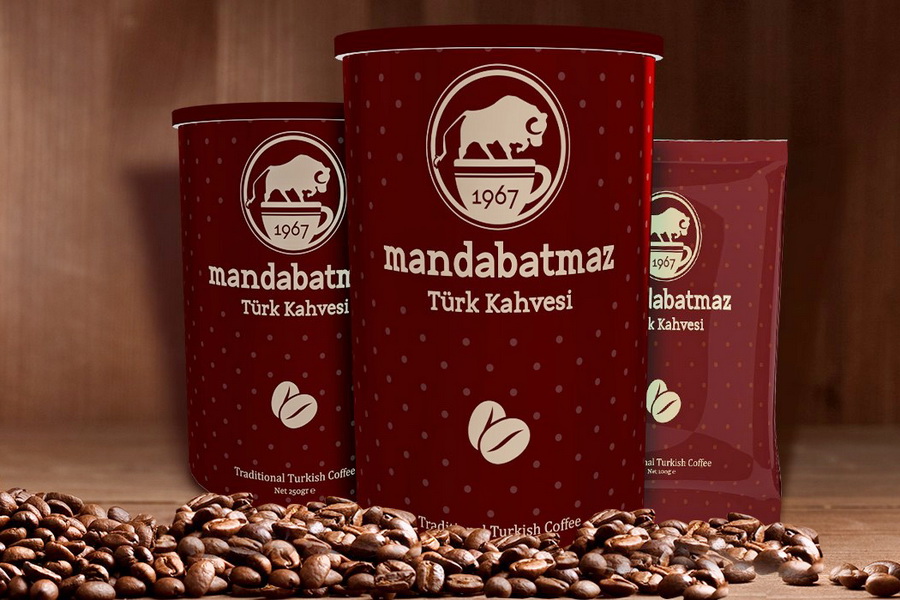
Photo by: www.mandabatmaz.com.tr
The Turkish-German Bookstore & Cafe is a beloved spot right on Istiklal for coffee and a bookshop vibe. However, we recommend trying Turkish coffee in small cafés outside Istiklal.
Adjacent streets and arcades (like Çiçek Pasajı) line cafes with historic architectural character. For example, consider Mandabatmaz (close to Istiklal), a tiny spot for traditional Turkish coffee, often ranked among the best in Istanbul.
Istiklal Street Nightlife: Meyhanes, Bars, and Live Music
Istiklal Street nightlife stays lively until late at night. At the beginning of Istiklal Street, in the Taksim area, several popular clubs attract night-owls.
For example, Escape Club Istanbul, Club Lupe, and Taksim Club IQ focus on DJs, dancing, and a young, energetic crowd.
For a more traditional experience, travellers often choose meyhanes, also known as Turkish taverns. These places feature Turkish music, shared plates, and conversation. Tables fill with mezes, fresh seafood, and glasses of rakı.
The two examples are Barba Rasimo 1956, located close to the Pera Museum, and Galata Meyhanesi, near Santa Maria Draperis Church (Meryem Ana Draperis Latin Katolik Kilisesi).
Best Time to Visit Istiklal Street
Istiklal Street feels different throughout the day.
Morning works best for photography and relaxed walks. The area is quieter, and the Istiklal Street shops open slowly. Afternoon suits shopping, cafés, and cultural stops. The evening brings music, dining, and nightlife. The atmosphere becomes lively and social.
Spring and autumn are ideal for long walks and outdoor seating.
Travellers should avoid 29 October, Republic Day. Authorities usually close Istiklal Street and other central streets for celebrations and security. Access becomes limited, and public transport may change.
How to Get to Istiklal Street
Istiklal Street is easily accessible from most parts of Istanbul. Public transport works well and saves time.
By Metro
At the northern end of the street, you will find Taksim Station on the M2 line. This station opens directly onto Taksim Square and the start of Istiklal Street.
Şişhane Station is at the southern end. From here, it is a short walk to the Tünel end of Istiklal Street.
By Tram and Funicular from Sultanahmet
For those staying in the historic centre, this route works best.
- Take the T1 tram from Sultanahmet. Get off at Kabataş. Transfer to the F1 funicular. It takes you uphill to Taksim Square and the beginning of Istiklal Street.
- Or get off at Karaköy. Transfer to the F2 Tünel funicular. This short ride brings you to the lower end of Istiklal Street near Beyoğlu and Tünel Square.
Frequently Asked Questions
How long is Istiklal Street?
Istiklal Street is approximately 1.4 kilometres long.
Is Istiklal Street expensive?
Prices vary. Street food and cafés are affordable, while some Istiklal Street restaurants and shops are more upscale.
Is Istiklal safe at night?
The area is generally safe, even at night. Police patrols and constant activity add to the sense of security. Solo travellers should still take basic precautions.
How far is Istiklal Street from Taksim Square?
Taksim Square marks the northern entrance.