

Gansu Province (甘肃, Gānsù) is located at the junction of the Mongolian Plateau to the north and the foothills of the Tibetan Plateau to the south. The name "Gansu" is formed from the first character of two historical regions: "Gan" (derived from Ganzhou, present-day Zhangye) and "Su" (derived from Suzhou, present-day Jiuquan). Located in northwestern China, Gansu is bordered by Shaanxi, Sichuan, Qinghai, the Xinjiang Uyghur Autonomous Region, the Inner Mongolia Autonomous Region, and the Ningxia Autonomous Region.
It stretches across northwestern China and was traversed by the ancient Silk Road, once the main artery connecting China, Central Asia and the Middle East. For centuries, caravans carrying silk, spices and precious stones passed through its towns and oases. Today, Gansu offers a view of China far removed from its eastern metropolises, shaped instead by desert frontiers, sacred sites and the long movement of people and ideas across Asia.
The scenery changes dramatically from one part of the province to another. Multicoloured cliffs and open deserts give way to fertile valleys, mountain pasture and settlements where older ways of life remain visible. Gansu is also home to major Buddhist cave complexes, sections of the Great Wall, fortified towns and some of western China’s most distinctive natural landmarks.
This guide covers the province’s principal attractions, cities and cultural traditions, along with its food, seasonal conditions, transport and the practical details needed to plan a journey.
Gansu Province Tours
Travelling through Gansu brings together several defining chapters of Chinese and Silk Road history along one route.
A week-long tour from Xi’an to Dunhuang follows the gradual transition from busy urban centres to the smaller towns and open landscapes of western China. In Gansu, the route enters the Hexi Corridor, where forts, Buddhist sites and former caravan stops reveal the region’s historic importance.
The Silk Road Tour in Western China continues from the Mogao Caves through the Flaming Mountains of Turpan and the parks around Ürümqi to the religious and trading centres of Kashgar. Along the way, Buddhist cave art and the remains of ancient oases gradually give way to Uyghur towns, bazaars and Islamic architecture – an unmistakable record of the Silk Road’s history.
Both routes place Gansu within its wider context, linking the Chinese heartland with the cultures and landscapes farther west.
Best Time to Visit Gansu Province
Gansu extends for more than 1,600 kilometres (995 miles) from north-west to south-east, and the weather varies considerably from region to region because of differences in altitudes and the province’s diverse landscapes. There is also a wide temperature range between day and night. In most areas, April to May and late September to late October usually bring the most comfortable conditions. January is typically the coldest month, while temperatures usually peak in July.
Spring (March to May) brings daytime temperatures of roughly 15 to 25 °C (59 to 77 °F) to many areas. The mild weather makes it a convenient season to visit historic towns and cultural sites and for longer road journeys along the Hexi Corridor, especially before the main visitor season begins.
In the summer (June to August), it is more pleasant to visit the northern and northwestern regions of Gansu, including Zhangye, Jiayuguan and Dunhuang. Desert temperatures often reach 30 to 35 °C (86 to 95 °F), but the dry air and long daylight hours allow time for long sightseeing days. At Zhangye Danxia, the striped cliffs are best seen in the early morning or near sunset, when the colours appear at their most vivid.
Autumn (September to November) is often clear and dry, with temperatures of about 10 to 22 °C (50 to 72 °F). These conditions are ideal for longer itineraries through Lanzhou, Wuwei, the valleys of Gannan and the Maijishan Grottoes near Tianshui. The exception is the week from 1 to 7 October, when National Day Golden Week brings the year’s largest crowds to many attractions. Visitor numbers and prices usually ease soon afterwards.
Winter (December to February) is quiet, dry and often sunny. Snow on the mountains and long shadows across the dunes give the deserts and frontier forts a stark character, although cold weather can limit some plans. Average daytime temperatures in many areas range from around −5 to +8 °C (23 to 46 °F), with relatively little precipitation.
Plan Your Holidays in Gansu
Where to Go for Historic Places
Gansu’s historic sites trace the passage of empires, religions and trading communities through the Hexi Corridor and the valleys surrounding it.
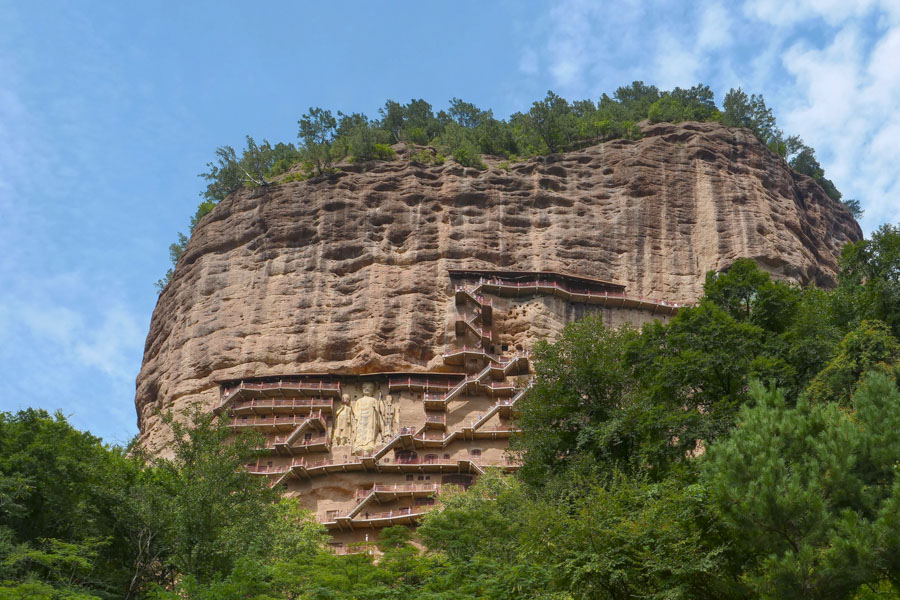
At the province’s eastern gateway, the Maijishan Grottoes (麦积山石窟, Màijīshān Shíkū), built starting from the Later Qin era (Sixteen Kingdoms, 384–417 CE), form a major Buddhist cave complex cut into a sheer cliff. Narrow walkways run along the rock face high above the ground, linking caves filled with expressive clay sculptures and finely modelled figures.
Farther west, the Bingling Temple Grottoes (炳灵寺石窟, Bǐnglíng Sì Shíkū) occupy steep cliffs beside the Yellow River and are usually reached by boat. The first caves were carved in the 3rd century under the Western Jin Dynasty. Over more than 1,500 years, artists created Buddhist murals and sculptures, dominated by a monumental statue of the Great Maitreya Buddha overlooking the river. The grottoes form part of a UNESCO World Heritage property.
Jiayuguan Pass (嘉峪关, Jiāyùguān) marks the western end of the Ming Great Wall. Its fortified walls and towers rise at the edge of the desert, recalling the citadel’s role as one of the Chinese Empire’s principal frontier outposts during the Ming dynasty (1368–1644).
Beyond Jiayuguan lie two Han-dynasty outposts that once controlled separate branches of the Silk Road. The Yumen Pass (玉门关, Yùménguān), the Jade Gate, guarded the northern route from around 202 BC to AD 220 and took its name from the jade caravans from Hotan that passed through it. Yangguan Pass (阳关, Yángguān), fortified by Emperor Wu of the Western Han dynasty around 120 BC, protected the southern road. The poet Wang Wei (699–761) later made it an enduring image of farewell and departure in classical Chinese poetry.
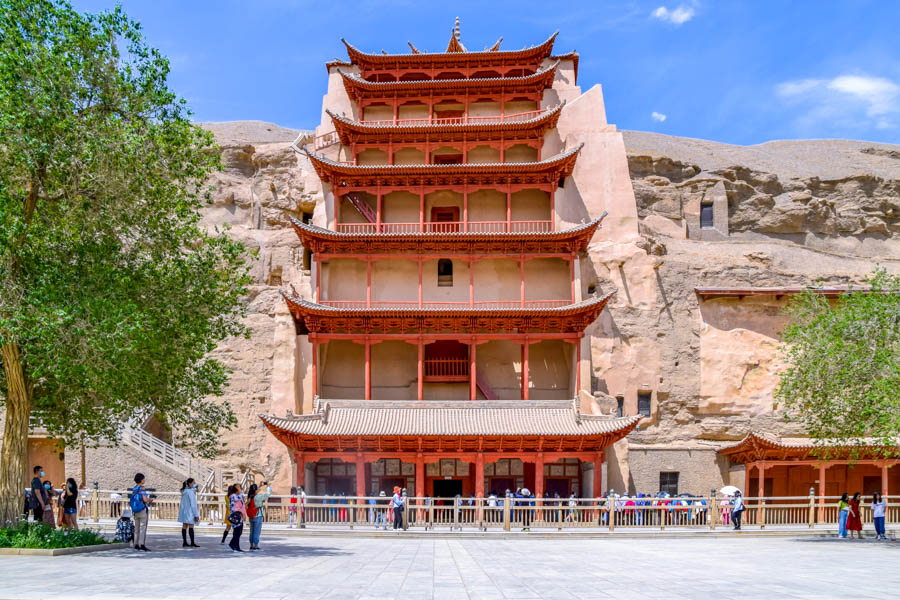
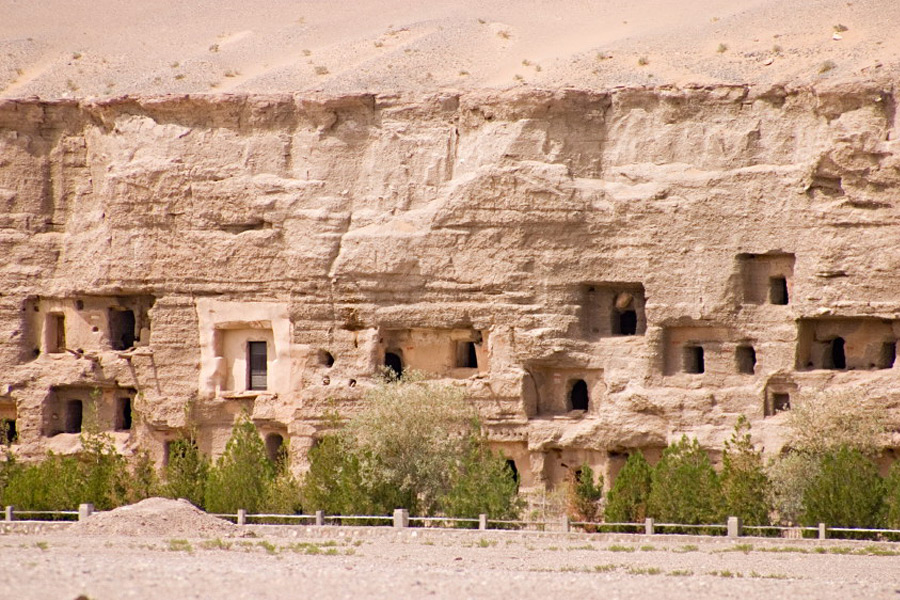
The route culminates at the Mogao Caves (莫高窟, Mògāo Kū) near Dunhuang. Successive generations of artists covered this vast monastic complex with murals and sculpture, from 366 AD onwards, creating an exceptional record of Buddhist art and the spiritual life of mediaeval China.
Where to Go for Scenery and Landscapes
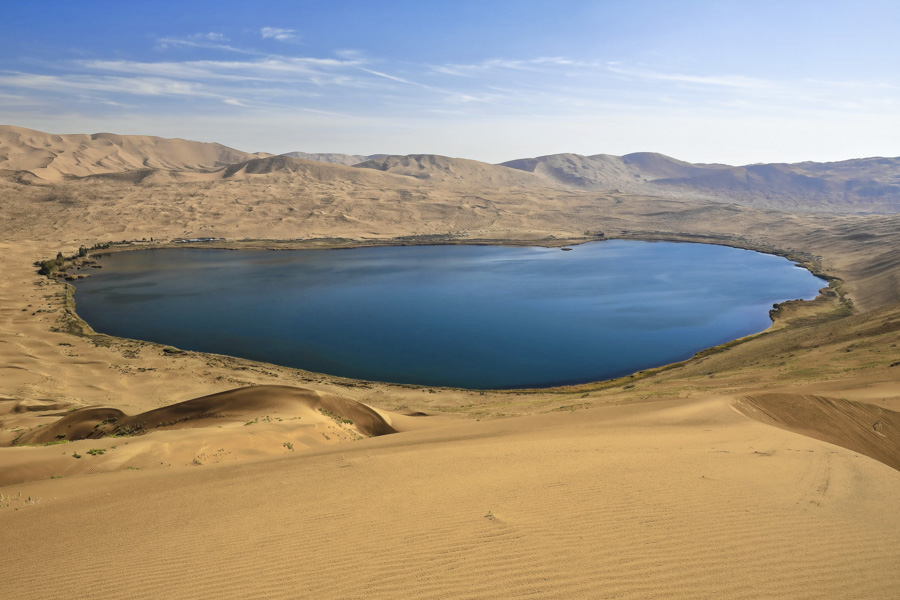
Gansu’s terrain ranges from the deserts and eroded rock formations of the north-west to river canyons, forests and high-altitude grasslands in the south. Touring Gansu means moving through spectacular, otherworldly landscapes. Whether you are drawn to the religious and historical significance of its landmark monuments or to exploring the vastness of its deserts and valleys, each day adds a new "chapter" in the ever-changing natural beauty of Gansu.
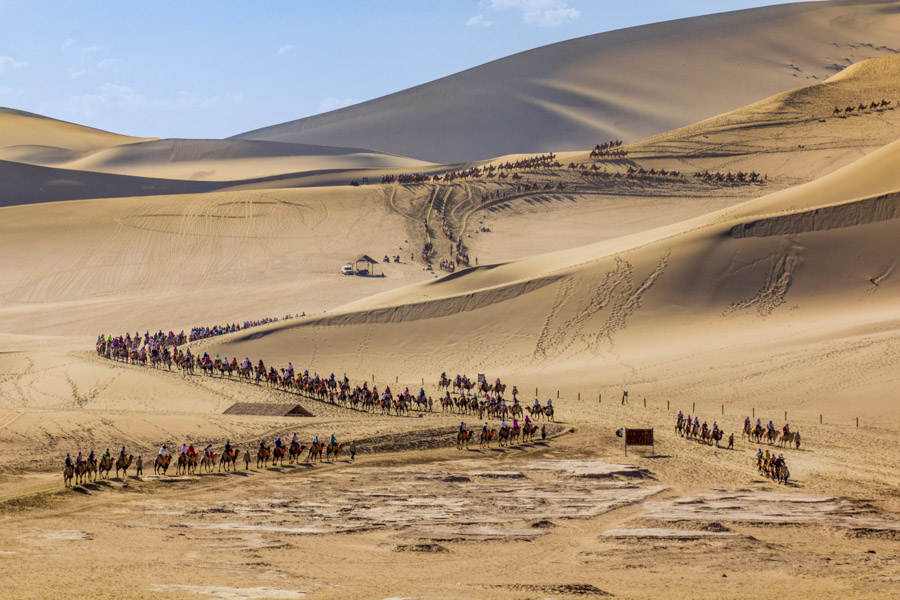
The province contains several major arid landscapes. The Gobi Desert and the Hexi Corridor are characterised by immense dunes and stony plains. The Badain Jaran Desert is renowned for its stationary dunes, some rising up to 500 metres, and for its hundred-plus lakes nestled between the dunes that are mysteriously fed by both fresh and saline springs. There is also the Tengger (Tengri) Desert where sandy dunes emit a strange bell-like sound.
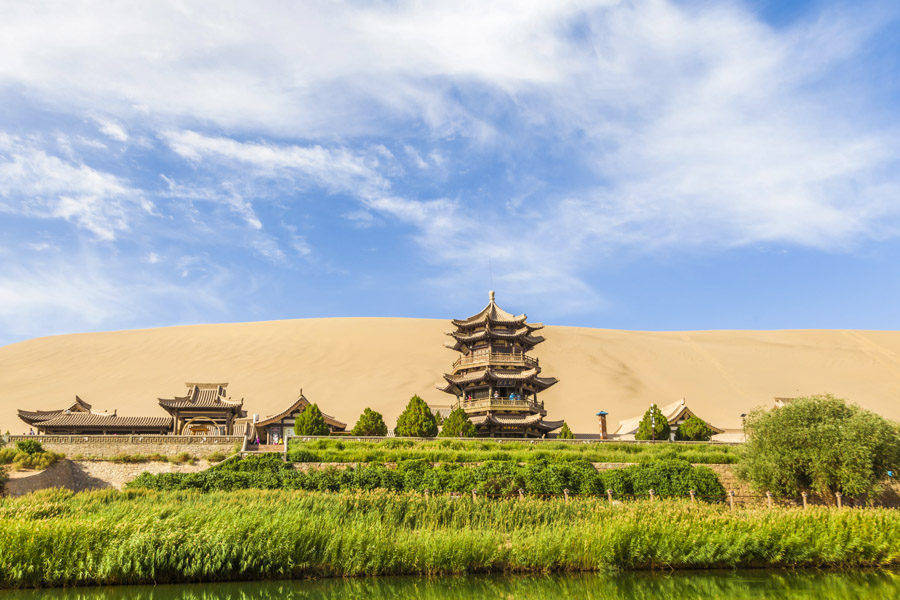
In the Hexi Corridor, near Dunhuang, the Singing Sand Dunes rise above Crescent Lake, a small oasis enclosed by golden sand. Wind moving across the dune faces produces the low resonance that gave them their name. The wider Dunhuang UNESCO Global Geopark contains sculpted rock towers, ridges and labyrinthine formations shaped by prolonged wind and water erosion.
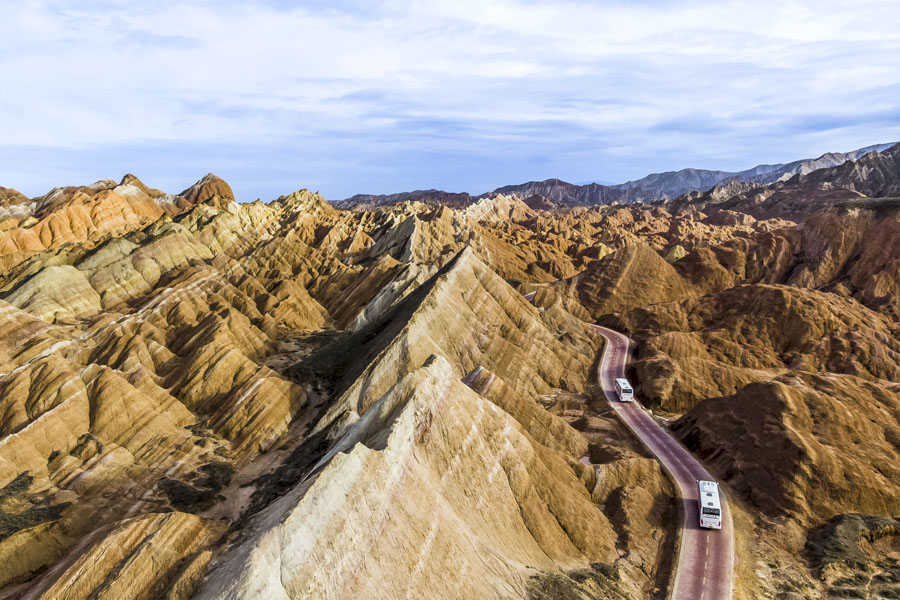
At Zhangye Danxia, bands of sandstone run across undulating hills in shades ranging from pale pink and ochre to deep red and burgundy.
Southern Gansu presents a sharp contrast. Trails cross alpine meadow, coniferous forest and high mountain passes, while the Yellow River Stone Forest occupies a canyon of eroded cliffs and narrow, sharply pointed rock formations.
Where to Go by Cities
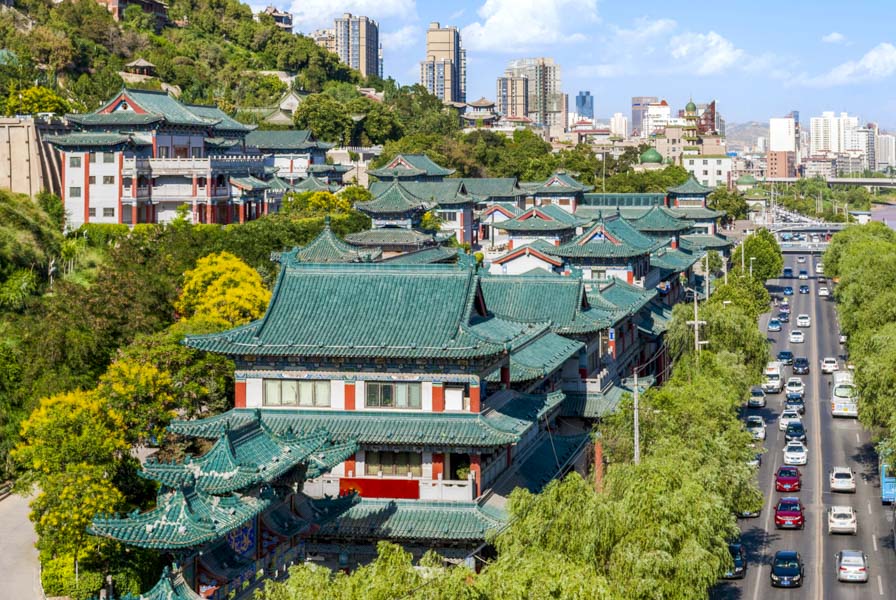
Gansu’s cities reveal different aspects of the province, from Silk Road markets and Buddhist centres to frontier fortresses and modern communities beside the Yellow River.
Lanzhou, the provincial capital, sits in a narrow valley along the Yellow River. The riverside, Zhongshan Bridge and the viewpoint on White Pagoda Mountain make a good introduction to the city and its unusual linear setting.
Dunhuang is the main base for the Mogao Caves and the surrounding desert. Mingsha Mountain and Crescent Lake lie just outside the city, while the Dunhuang Museum places the area’s archaeological finds and Silk Road history in context. There are large open-air performances staged against the desert landscape.
Jiayuguan is best known for its Ming fortress, but the Jiayuguan Great Wall Museum, East Lake Ecological Park and the restaurants of Da Tang Food Street reveal more of everyday life in this northwestern city.
Zhangye keeps a compact historic centre around the Giant Buddha Temple. Its wooden pagoda and bell and drum tower are among the main landmarks, and the nearby Danxia hills make the city an important stop on routes through the Hexi Corridor.
Tianshui has strong links to the early traditions of Chinese civilisation. Its old quarter and Fuxi Temple commemorate the mythological figure of Emperor Fuxi (伏羲) credited with introducing traditional medicine and writing, while Yuquan Temple offers a quieter setting at the foot of the mountains.
Away from the main route, Pingliang and Longnan provide access to less-visited historic and natural sites. Jinchang, Baiyin, Dingxi and Qingyang are especially relevant to travellers looking for a broader picture of contemporary Gansu.
Culture, Religion and Art of Gansu
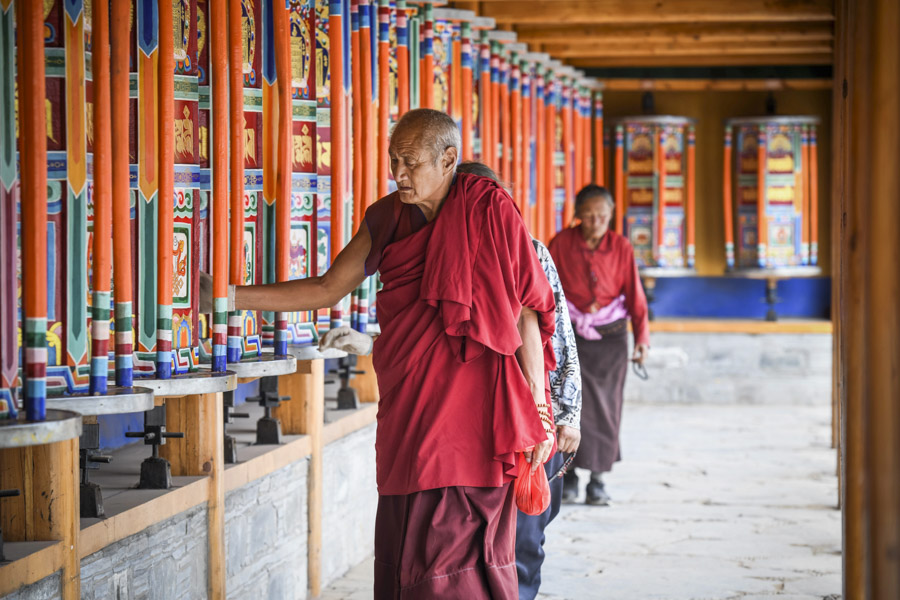
Gansu’s position between the Chinese heartland, the Tibetan Plateau and Central Asia has given the province an unusually varied cultural landscape. Regional differences are visible in its food, architecture, craft traditions and festivals, as well as in the range of religious traditions practised across the province.
Ethnic Communities
Han Chinese culture predominates in central Gansu, Hui traditions are particularly strong around Linxia, and Tibetan identity is most visible in Gannan. These differencies can be heard in local languages and dialects and seen in traditional clothing, settlement patterns and livelihoods. Flat-roofed, whitewashed houses are common in Tibetan areas, whereas central Gansu more often follows northern Chinese architectural styles. Farming communities and pastoral settlements also coexist within the province. In addition, influences from the Inner Asian steppes, historically connected with the Mongol era frontiers and nomadic routes, are particularly evident in the province’s northwest pastoral and border regions.
Religious Traditions
Buddhist monasteries, Islamic mosques and traditional Chinese temples reflect the different faiths that took root along Gansu’s trade routes. Tibetan prayer flags mark mountain passes in the south, while historic Muslim neighbourhoods developed in Lanzhou and Linxia. The province was therefore a religious as well as a commercial meeting point, visited over the centuries by pilgrims, monks and scholars from across Asia, as well as by the first Christian missionaries.
Buddhist Art and Sacred Sites
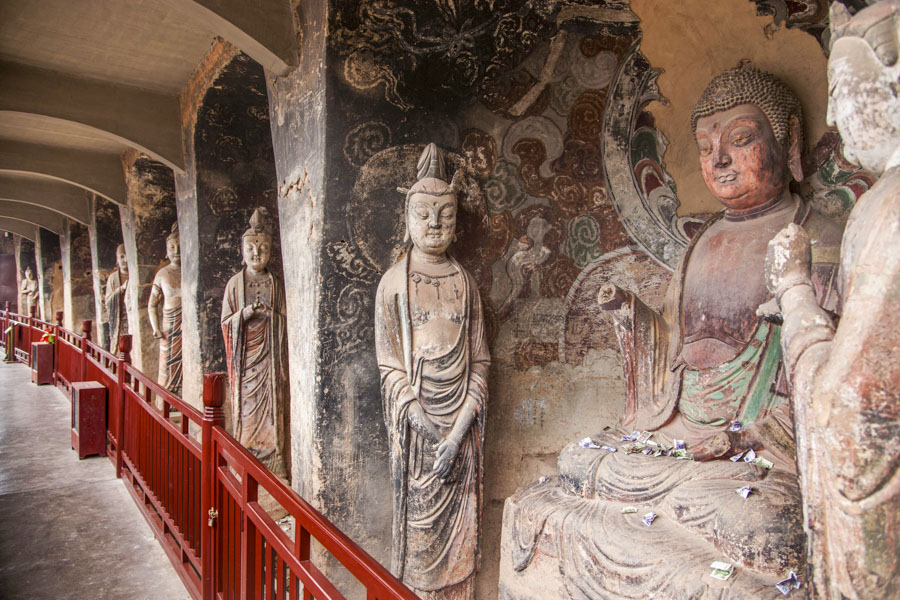
Buddhist art is central to Gansu’s cultural heritage. The murals of the Mogao Caves, the sculpture of the Bingling Temple Grottoes, the Maijishan Grottoes (麦积山石窟) statues near Tianshui, and the monastic buildings of Labrang span different periods and regional traditions in Buddhist painting, sculpture and architecture.
Many cave murals preserve intense mineral pigments, intricate ornament and narrative scenes from the Buddha’s life. The changing style of the sculptures shows how Chinese artists absorbed ideas and techniques arriving from neighbouring regions over successive centuries.
Islamic Heritage
Linxia is the main centre of Islamic culture in Gansu and is sometimes called the “Little Mecca of China” because of its many mosques and longstanding Hui traditions. Lanzhou’s historic Xiguan Mosque stands in a district of halal restaurants, bakeries and markets. Across the province, mosque design often blends Islamic features with traditional Chinese roofs and decorative forms, setting it apart from the architecture more familiar in Central Asia and the Middle East.
Traditional Crafts
Craft traditions offer another expression of Gansu’s regional diversity. Embroidery, woodcarving, textiles and ornamental work combine Chinese, Tibetan and Central Asian motifs, reflecting centuries of exchange with neighbouring communities. Artisans use wood, wool, silk, cotton and paper to make both practical household objects and finely decorated pieces, with some techniques still passed down within families.
Sports and Outdoor Adventures in Gansu
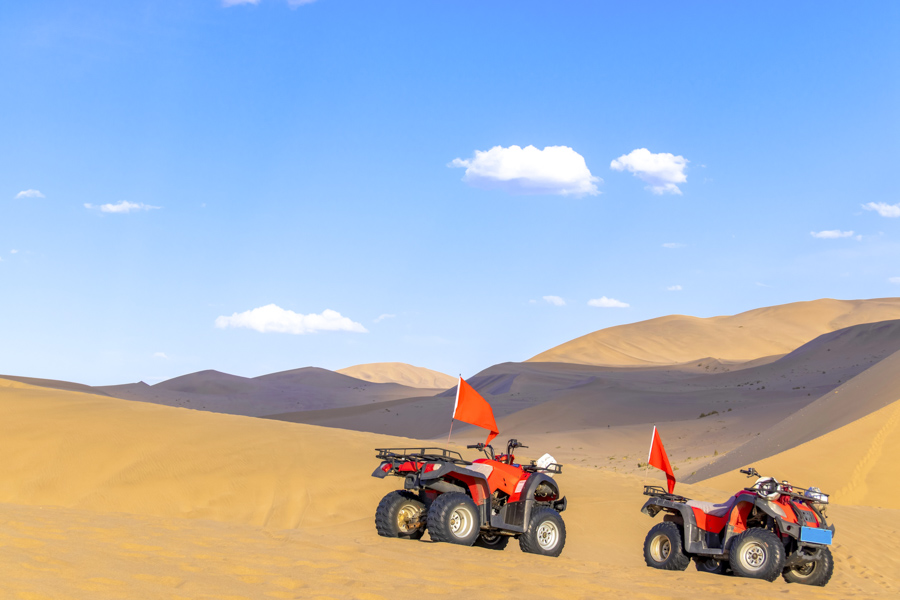
Gansu offers a wide range of outdoor pursuits, from desert trekking and sandboarding to walking, riding and birdwatching on the Tibetan Plateau.
Around Dunhuang, travellers can climb the dunes on foot, ride a camel, cross the sand by quad bike or 4x4, try sandboarding or join a multi-day trek with an overnight camp. Flights in light motorised gliders provide an aerial view of the desert.
In Gannan, walking routes take in alpine meadows, gorges and high pastures around Zhagana, Langmusi and Labrang Monastery. Horse and yak rides are available on the Sangke Grassland, where pastoral communities continue to graze their herds.
Winter activities include downhill skiing, snowboarding and snow biking at Wushaoling International Ski Resort. Festivals in Tibetan areas may feature gorshey circle dancing and traditional contests such as tug of war, although participation depends on the event.
For gentler exercise, Lanzhou’s Yellow River embankments have paths suitable for walking, jogging and cycling. Sightseeing cruises run in warmer weather and offer views of the riverbanks and surrounding gorges.
Gahai Wetlands and Yanchiwan National Nature Reserve are among the main birdwatching areas. Seasonal migrants include black-necked cranes, brown-headed gulls, bar-headed geese and whooper swans, alongside many other species adapted to the province’s wetlands, steppe and high-altitude habitats.
Gansu Cuisine
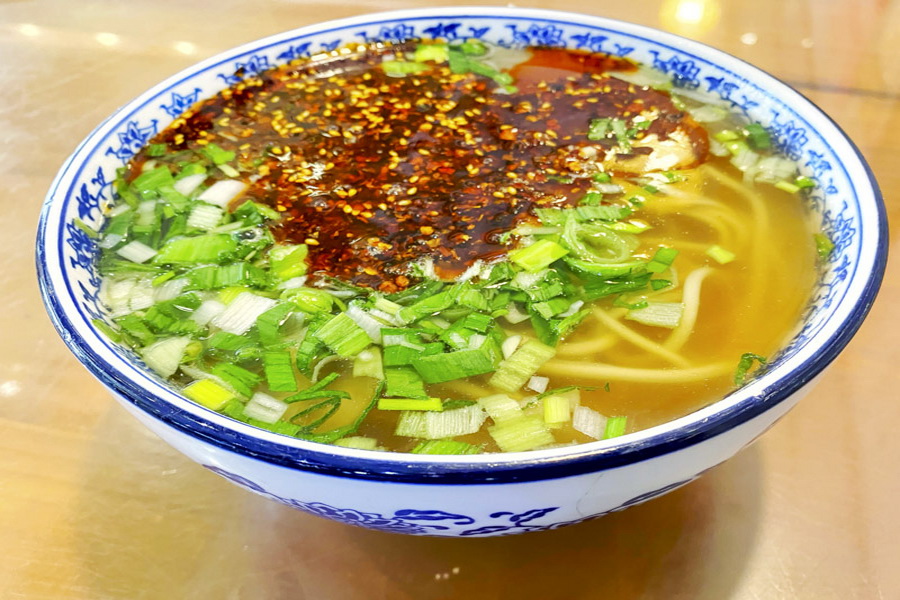
Gansu gastronomy is built around wheat noodles, mutton, warming broths and the flavours of northwestern China, with distinct Hui and Tibetan influences in different areas.
Lanzhou beef noodles (兰州牛肉面, Lánzhōu Niúròu Miàn) combine hand-pulled noodles with clear beef broth, sliced radish, herbs and chilli oil. In Dunhuang, huang mian (敦煌黄面, Dūnhuáng Huángmiàn) are yellow wheat noodles usually served cold with a savoury sauce that may include sesame paste, garlic and vinegar.
Mutton is especially common in areas with strong Hui traditions. Shouzhua yangrou (手抓羊肉, Shǒuzhuā Yángròu) is boiled mutton traditionally eaten by hand; yangrou paomo (羊肉泡馍, Yángròu Pàomó) is a rich soup containing pieces of flatbread, and yang za sui tang (羊杂碎汤, Yáng Zásuì Tāng) is made with mutton offal. Cumin, Sichuan pepper and dried chilli give many local meat dishes their characteristic warmth.
In the Tibetan areas of Gannan, the cuisine is quite different. Butter tea (酥油茶, Sūyóuchá) is a salty drink made with yak butter and well suited to the cool high-altitude climate. Other staples include tsampa (糌粑, Zānbā), made from roasted barley flour, along with yak meat and locally produced dairy foods.
Shopping in Gansu: What to Buy
Markets and specialist shops sell a mix of local craftwork, Tibetan goods, spices and regional food products.
In Lanzhou and Dunhuang, common Silk Road-themed gifts include silk scarves, painted scrolls, calligraphy, jewellery with traditional Chinese motifs, jade carvings and black pottery.
For Tibetan silver jewellery; yak-wool products; carpets, especially the Linxia handmade carpets by the Hui people; embroidery; woodcarving and traditional paper cuts, Gannan and Linxia are better places to shop. Many pieces are still made by hand in small workshops.
The Jiuquan Luminous Cup, made from a variety of jades, is available in Jiuquan City. Handmade hemp shoes from Gansu, once worn by local farmers, have since become a must-have fashion item, available in several styles.
The Bonan knife, named after the ethnic group associated with it, is entirely hand-forged by master cutlers and is recognised as part of the national intangible cultural heritage, making it a truly exceptional gift to pack in your suitcase.
Edible specialities include Lanzhou lily bulbs (兰州百合, Lánzhōu Bǎihé), Fumin black melon seeds (富民黑瓜子, Fùmín Hēi Guāzǐ), dried dates, goji berries, local tea and spice mixtures containing cumin and chilli. In Tibetan areas, you can also find pressed tea and the ingredients for Tibetan butter tea.
Traditional markets are usually at their liveliest in the morning, when residents buy fresh produce, spices and homemade goods. For better-quality handicrafts and a wider choice, try family workshops or specialist shops rather than general souvenir stalls.
How to Reach Gansu Province
Lanzhou is Gansu’s main transport hub and the most common entry point. From the provincial capital, rail and road routes continue towards Tianshui, Wuwei, Zhangye, Jiayuguan and Dunhuang.
Lanzhou Zhongchuan International Airport (LHW) has regular flights from Beijing, Shanghai, Guangzhou, Chengdu, Xi’an, Ürümqi and other major Chinese cities. Domestic flights within the province also serve Dunhuang, Jiayuguan and Tianshui. High-speed trains, airport buses and taxis connect the airport with central Lanzhou.
Lanzhou West Railway Station is part of the high-speed network linking the city with Xi’an, Xining, Ürümqi, Zhangye and other destinations across northwestern China. Rail services also make it relatively straightforward to travel between the province’s main cities.
A combination of high-speed and conventional trains works well along the Hexi Corridor between Lanzhou, Zhangye, Jiayuguan and Dunhuang. Intercity buses are still important in southern Gansu, particularly for Xiahe, Gannan and Langmusi, where the rail network is less developed.
Get Ready for Gansu
Gansu’s distances, varied landscapes and strong regional differences in climate require more planning than a compact city-based itinerary.
Start by deciding what matters most to you: Silk Road history, desert and mountain scenery, Tibetan and Hui culture or the province’s cities. Trying to cover all of Gansu in one trip usually leaves you spending too much time between places.
Identify any sites that need advance arrangements. Tickets for the Mogao Caves should be booked ahead, and it’s worth allowing at least half a day for the largest cave and temple complexes.
Build in realistic travel time between cities and group attractions geographically. Even with high-speed rail, many of Gansu’s highlights are far apart, so most itineraries work best when you focus on one or two areas of the province.
Pack for contrasting conditions. Deserts require sun protection, a hat and light long-sleeved layers in summer. Even in the warmer months, evenings in the mountains of Gannan can be chilly, so a warm jacket and sturdy walking shoes are useful.
Bring a power bank, dustproof bags for electronics and a refillable water bottle for longer journeys. Carry some cash as a backup, especially when travelling outside the main cities.
Leave room in your luggage if you plan to buy tea, spices, dried fruit or handicrafts, as these are widely available in markets along the route.
If you have dietary restrictions, prepare a short explanation in Chinese before heading to more remote areas. Major cities have a broad choice of restaurants, but smaller towns may have limited options beyond local dishes.