

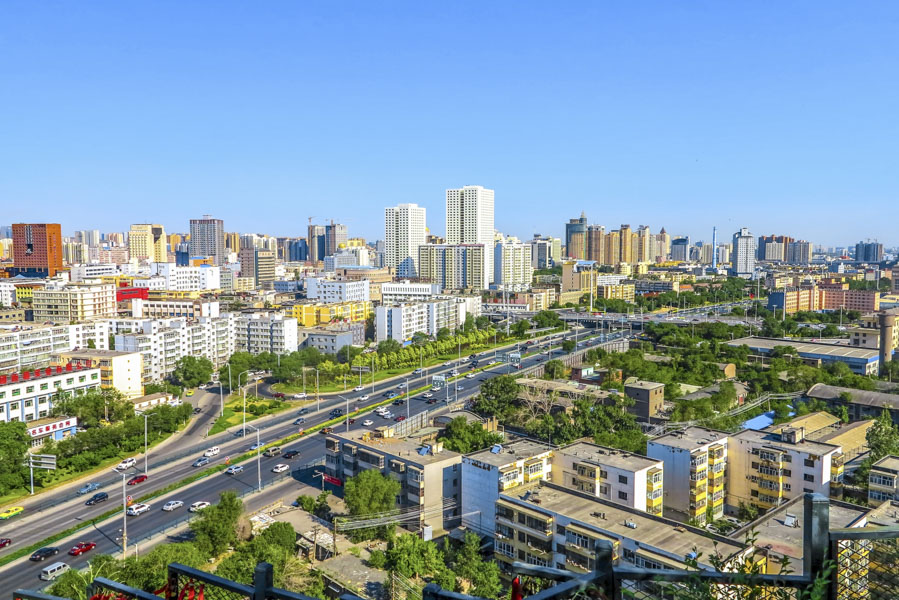
Ürümqi (乌鲁木齐, Wūlǔmùqí) is the capital of the Xinjiang Uyghur Autonomous Region, located on the foothills of the Tianshan Mountains, with striking mountain views, near the southern edge of the Dzungarian Basin. The city grew along a vital northern Silk Road route and for centuries served as a frontier military and economic hub connecting China with Central Asia and western regions. Here, trade routes intersected, carrying silk, tea, spices, and porcelain, while Buddhism, Islam, and other religious teachings spread alongside these goods. Centuries of contact between diverse peoples have left a lasting mark on the history and appearance of the city.
Today, Ürümqi is particularly interesting for the contrast between its historic centre and newer districts. In the old quarters, bustling markets fill the streets with activity, hot naan is pulled fresh from tandoor ovens, and people gather for leisurely conversations in teahouses. This part of the city is closely tied to the cultures of the Uyghur people, Tatar people, and other Muslim peoples, including the Hui. Numerous mosques have been preserved here, while street signs and shopfronts often feature large Arabic script. In the new districts, the cityscape gives way to a modern, high-tech metropolis with multi-lane avenues and futuristic glass skyscrapers. The Han population predominates in this part of Ürümqi. All communities contribute to the city’s character; its people, architecture, and atmosphere vary from one area to another.
A visit brings together Xinjiang’s cultural heritage and the energy of a rapidly developing Chinese city.
Ürümqi Tours
Choose from a range of tours to Ürümqi with maximum flexibility, from short trips to nearby natural attractions to longer journeys exploring the region’s history and culture. Find an itinerary that suits your interests and the pace you prefer.
A remarkable seven-day tour awaits through the country’s western region. This adventure will take you through millennia of history, from the rock frescoes of the Mogao Caves near Dunhuang to the Flaming Mountains of Turpan and the distinctive Uyghur quarters of Kashgar. Along the way, you will discover traces of vanished civilisations in ancient settlements and experience the grandeur of deserts giving way to oases.
Be inspired by the contrasts of Xinjiang and explore other adventures featuring Ürümqi, linking the city with key points along the Silk Road and iconic destinations in Western China.
Best time to visit Ürümqi
Visiting by Season
Ürümqi is situated at an altitude of about 800 metres (2,625 feet) above sea level and has a continental climate with cold winters, warm summers and marked seasonal temperature changes. Precipitation occurs throughout the year, with a wetter period in late spring and early summer. Spring weather can be changeable, so it is worth packing layers.
Spring arrives relatively late in Ürümqi. In April, average daytime temperatures reach around 17°C (63°F), but nights remain cool at about 6°C (43°F). The weather during this period is changeable: warm days can be followed by sudden cold snaps, rain, and sleet. Precipitation increases noticeably in April compared with winter, so temporary slush can form on the streets after wet weather. May becomes warmer, with daytime temperatures reaching around 24°C (75°F). The city becomes noticeably greener, trees and flowers begin to bloom, and the weather becomes more stable.
Summer is warm, sunny, and relatively dry. In June, daytime temperatures hover around 28°C (82°F), reaching 31°C (88°F) in July and falling slightly in August. Nights are considerably cooler, and rain is possible, particularly in early summer. This is a good season for excursions to Tianchi and the nearby mountain areas.
Autumn begins pleasantly warm. September highs average around 23°C (73°F), dropping to about 11°C (52°F) at night. October brings noticeably cooler weather, with temperatures around 14°C (57°F) during the day and 5°C (41°F) at night. Precipitation is light, while daylight hours gradually shorten. By the end of October, the first frosts and snow are possible.
Winter in Ürümqi is long and cold. In January, daytime highs average around −8°C (18°F), while nighttime temperatures can drop to −16°C (3°F). Snow falls regularly, and a persistent snow cover can remain throughout the cold period. Severe frosts are accompanied by dry air and cold winds, so it can feel colder outdoors than the thermometer indicates, so pack warm clothing. In winter is also a good time to visit Xinjiang’s ski resorts.
Festivals and Cultural Events
Set against the snow-covered slopes of the Silk Road International Ski Resort, the Urumqi Silk Road Ice and Snow Festival (乌鲁木齐丝绸之路冰雪风情节), which takes place annually in early December, pairs winter activities with performances rooted in Chinese tradition. The main venue is the Silk Road International Ski Resort (丝绸之路国际滑雪场), located approximately 40 kilometres (25 miles) from Ürümqi. Here, you can combine skiing and other winter pursuits and watch a range of competitions and spectacular shows, with snowy landscapes providing a stunning backdrop for music and dance.
Spectators can look forward to colourful performances, including the traditional Lion dance, as well as a captivating Flying Apsaras performance, bringing classic Dunhuang imagery to life amidst a world of ice and snow. In the evening, the spectacle extends beyond the stage: fireworks light up the sky above the snow-covered mountains, while dozens of drones form glowing shapes and words.
History of Ürümqi
Where the Steppe Met the Silk Road
Archaeological evidence points to human presence in the Ürümqi region from the Palaeolithic, with more sustained occupation during the Neolithic and Bronze Ages. From around 2000 BCE, steppe migrations brought new cultural influences and burial practices. Communities were largely mobile pastoralists, settling near water, fertile plains and ancient routes, with limited agriculture. Sites such as Alagou contain Bronze Age artefacts and later Iron Age material, while Wulapo preserves remains from the second half of the first millennium BCE. Burial sites and artefacts also point to continuing steppe connections between around 1000 and 500 BCE.
The region was characterised by dispersed communities rather than large urban centres before Tang administration began around 640. This land sat at a vital crossroads of the Silk Road, connecting the Dzungarian Basin and the Turpan Depression with the eastern regions of China. Trade and military routes passed through it, and the first settlements and fortified posts gradually emerged here. In 648, during the Tang dynasty, the county of Luntai was established, becoming a bustling frontier post. Later, the region changed hands multiple times: the Uyghur Khaganate, the Gaochang Kingdom, and Mongol states all held sway here, shaping the cultural diversity of this part of Central Asia.
The City of Dihua
The turning point came in the 18th century, when the Qing dynasty (1644–1912) defeated the Dzungar Khanate and established control over this part of Central Asia in 1755. Its troops occupied Ürümqi, and soon a new fortified city grew here and was renamed Dihua in 1763. It quickly transformed into a bustling commercial and financial centre. Two hearts emerged within it and developed over several decades. Gongning Cheng was built nearby in 1771 as a garisson and administrative centre, while Dihua became the commercial and financial centre. Many Han Chinese and Hui Muslims settled here, shops and workshops opened, and commercial streets became increasingly lively.
From Frontier Town to Capital
The 19th century brought upheaval to the city. Uprisings and the struggle for control over Xinjiang made Ürümqi an important military prize. In 1870, during the Battle of Ürümqi, Gongning Cheng was captured and burnt, then abandoned. Dihua survived and later recovered its importance. In 1884, the Qing dynasty established Xinjiang as a province and made Dihua its capital, raising the city from a frontier garrison to the principal administrative centre of the region.
A New Name, A New Era
After the fall of the Qing dynasty, the city remained Xinjiang’s political centre, though the 20th century was turbulent. Rulers and political systems changed, and Ürümqi gradually developed into a modern administrative, industrial, and commercial centre. On 1 February 1954, the city officially resumed the name Ürümqi.
Today, it is hard to imagine this modern metropolis without its steppe past. The name Ürümqi is commonly interpreted as meaning “beautiful pasture” and is often traced to Oirat, a Mongolic language, though its etymology is disputed. Ancient nomadic routes and caravan roads now intersect with modern avenues and skyscrapers, reflecting the city’s enduring position at the crossroads of cultures and trade routes.
Things to Do in Ürümqi
Places to Visit in Ürümqi
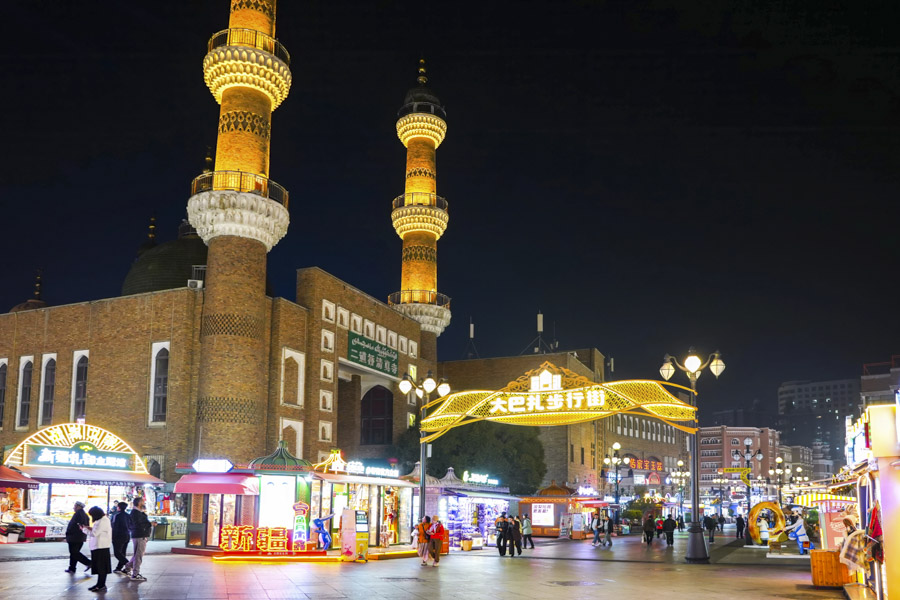
The ideal starting point for getting to know Ürümqi is the famous Xinjiang International Grand Bazaar (新疆国际大巴扎), which locals simply call the Grand Bazaar. Built in 2002 and opened to the public in 2003, this gigantic complex in the Erdaoqiao area is a true showcase of Xinjiang’s distinctive character. Its ornate domes and decorative façades evoke the fantastical world of One Thousand and One Nights, while the shops and food stalls offer a lively introduction to Xinjiang’s crafts and cuisine. Luxurious carpets in vivid colours are everywhere, silk shimmers, handmade brass pitchers gleam, and stalls are piled high with dried fruits and aromatic spices. Be sure to visit towards evening – the bazaar lights up, the air fills with the aroma of juicy shashlik and fresh flatbreads, and lively traditional dances are often performed in the square.
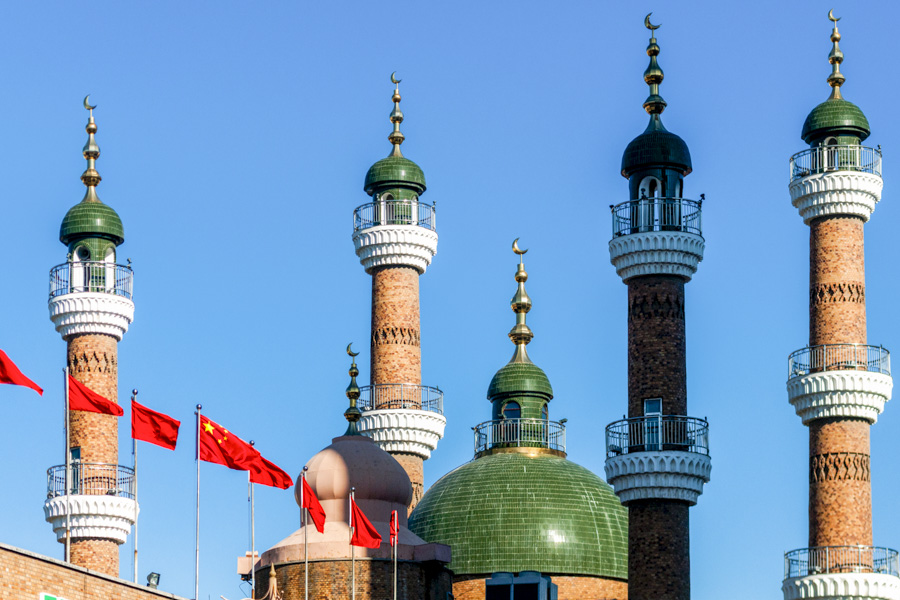
Just a few minutes’ walk from the bustling bazaar, a completely different atmosphere awaits you – the peaceful and magnificent Tatar Mosque (塔塔尔清真寺). Built in 1897 with funds from the Tatar merchant community of Ürümqi, this mosque charms visitors with its elegant lines and tranquillity. It serves as a living reminder of the city’s multi-ethnic history, which for centuries attracted settlers, pilgrims, and merchants from across Central Asia.
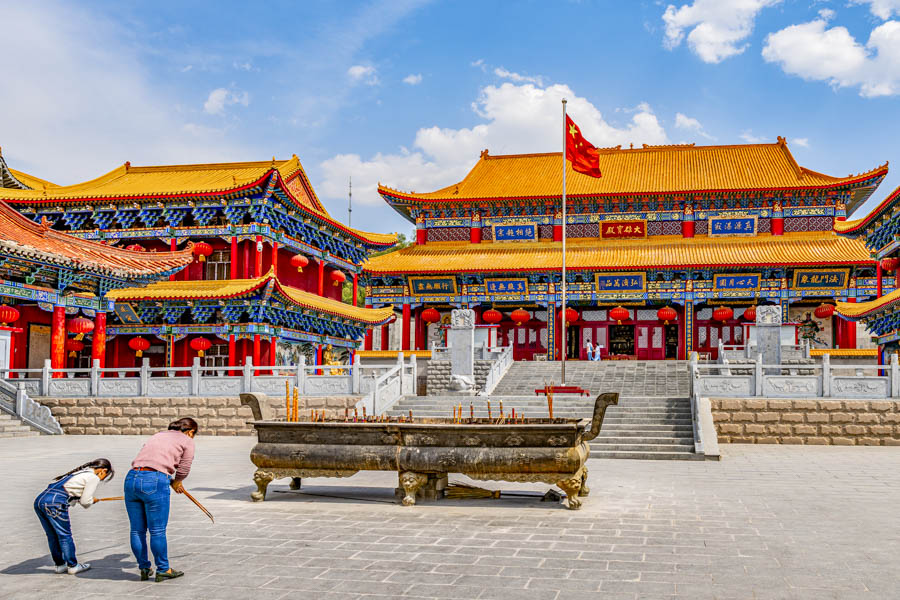
Another striking example of how different cultures have intertwined here is the Shaanxi Mosque (陕西大寺). Built during Qing Dynasty rule by Muslims from Shaanxi province, the mosque defies expectations. From afar, it can easily be mistaken for a traditional Buddhist or Taoist temple because of its distinctive Chinese architecture, with carved wooden roofs, upturned eaves, and tiled roofs. However, inside it is a functioning mosque. This unique synthesis of Chinese architecture and Muslim traditions is a rare sight worth seeing for yourself.
The historic Southern Mosque, the Hezhou Mosque, and the Qinghai Mosque are worth the visit for their splendid architecture, and the Mao Zemin Former Residence offers a glimpse into the city’s modern history.
Landmarks in the surroundings of Ürümqi
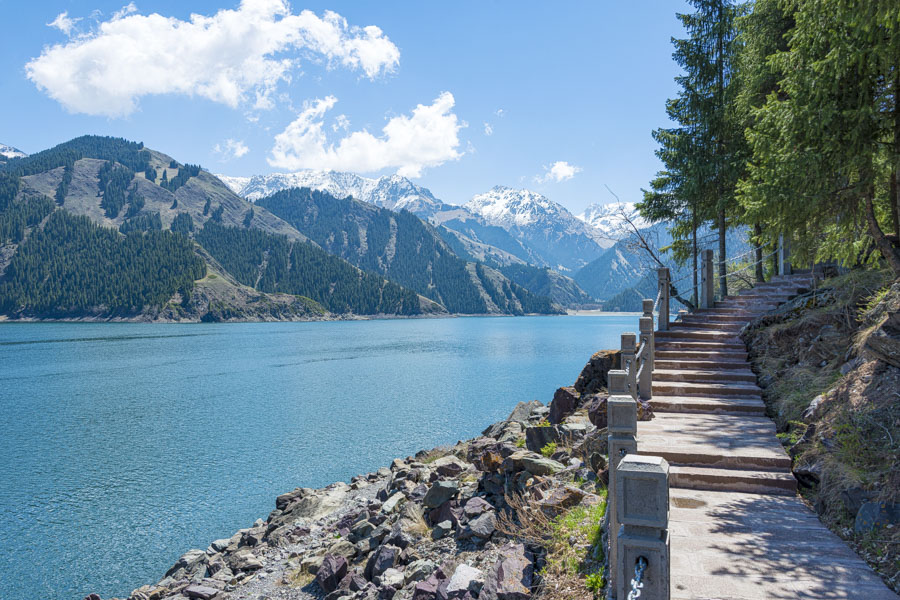
The surroundings of the city will amaze you with incredible contrasts: in just a couple of hours, you can leave bustling avenues behind for the silence of a hot desert, the coolness of forests, or fantastic saltwater lake landscapes. Very close to the city, approximately 45 kilometres (28 miles) away, lies the picturesque Chaiwopu Great Salt Lake (柴窝堡大盐湖), known as the Pearl of the Desert Fringe, where the glassy surface is framed by ancient burial mounds, and lakeside restaurants entice visitors with fresh fish and crabs.
At about the same distance lies the Tianshan Grand Canyon (天山大峡谷) – a spectacular natural park offering a remarkable variety of Xinjiang’s landscapes, from alpine meadows to glaciers surrounded by ancient spruce forests. Slightly further, 60 kilometres (37 miles) to the south, rise the mountains of Nanshan Pastures (南山風景區), where you can experience the traditional pastoral way of life among waterfalls and emerald slopes and stay overnight in a colourful yurt.
After travelling about 100 kilometres (62 miles) southeast of Ürümqi, Dabancheng Ancient Town (達坂城古鎮) is a modern recreation of a historic Silk Road garisson. It is known for its wind-bent “sabre trees” and ethnographic museum. Nearby, travellers are welcomed by the dazzlingly white Salt Lake Ecotourism Zone (鹽湖生態旅遊區), dubbed the Chinese Dead Sea for its ability to let visitors float effortlessly on the surface of the salt water and enjoy rejuvenating mud baths.
The region’s main natural attraction is associated with the UNESCO World Natural Heritage property of Xinjiang Tianshan (新疆天山). It comprises four separate areas covering 606,833 hectares. Its most famous attraction is the legendary high-altitude Tianshan Tianchi / Heavenly Lake of Tianshan (天山天池), whose crystal-clear turquoise waters are surrounded by snow-capped peaks of the Tianshan Mountains.
Some 180 kilometres (112 miles) northeast of the city, the ruins of Bashbaliq City (别失八里故城遗址) recall a major Silk Road city, and former summer capital of the Gaochang Uyghur Kingdom. Its substantial earthen walls and the nearby West Temple ruins are part of the UNESCO-listed Silk Roads: Chang’an–Tianshan Corridor. The temple site preserves traces of the city’s Buddhist heritage, including fragile murals.
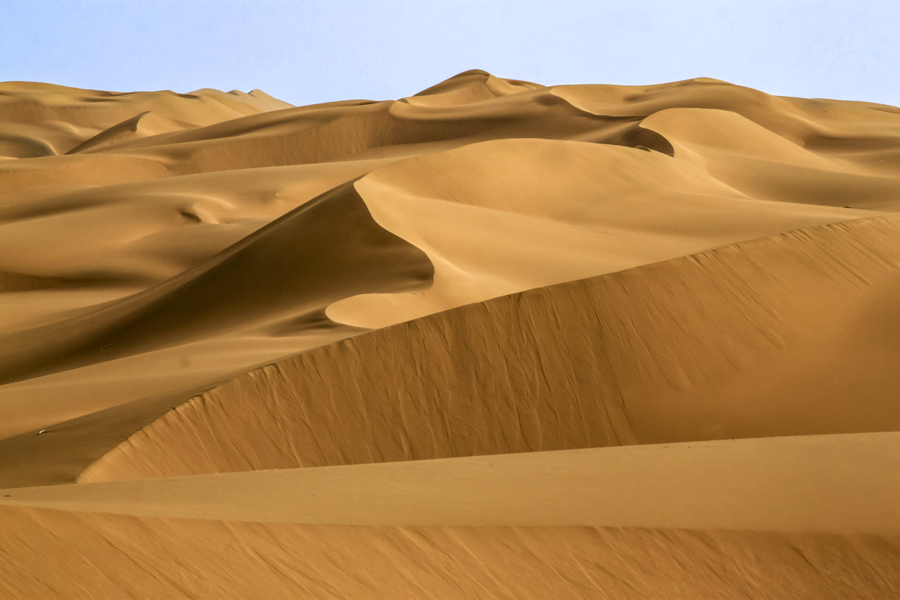
Finally, 280 kilometres (174 miles) from Ürümqi, near Shanshan and roughly 90 kilometres (56 miles) from Turpan City, the Kumtag Desert (库木塔格沙漠) Kumtag Desert’s golden dunes offer a boundless sea of sand, exhilarating buggy safaris and camel rides along the crests of giant dunes. High-speed trains run from Ürümqi to Shanshan North, followed by a local transfer to the scenic area.
Museums in Ürümqi
Urumqi offers a rich cultural experience, with visitors able to explore the Xinjiang Art Museum’s exhibitions of regional and contemporary art and the Xinjiang Science and Technology Museum’s interactive displays. The city also has museums devoted to geology, minerals, and the region’s natural heritage.
The Xinjiang Silk Road Museum, beside Ürümqi’s International Grand Bazaar, explores the history of the Silk Road and the region’s diverse cultures. Its displays include historical artefacts, silk, jade, pastoral arts and examples of rock art, with sections devoted to local history and ethnic groups. It offers a concise introduction to Xinjiang’s role as a meeting point for cultures and trade.
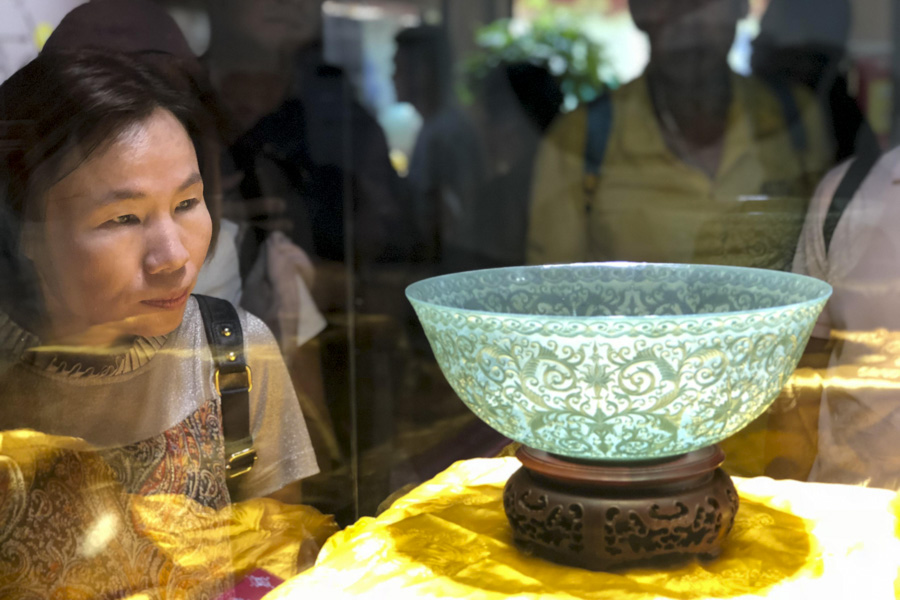
A natural next stop is the halls of the Xinjiang Uygur Autonomous Region Museum (新疆维吾尔自治区博物馆), which is rightfully considered one of the main historical treasures of Central Asia. Here, you will see priceless artefacts of the Silk Road, ancient manuscripts, and traditional costumes from across the region. The museum is famous worldwide for its unique collection of ancient finds from the Takla Makan Desert, particularly the Tarim mummies. Thanks to extreme aridity, cold climate and saline soils, these human bodies were preserved by desication. The famous “Beauty of Loulan” was naturally preserved along with her clothing and moccasins, offering a glimpse of life in the region around 4,000 years ago.
The Xinjiang Geology and Mineral Resources Museum offers a fascinating introduction to the region’s geological history and natural treasures. Its collection features more than 12,000 specimens, including minerals, rocks, fossils, and fossilised plants and animals, highlighting Xinjiang’s diverse landscapes and distinctive geological heritage. Visitors can also see remarkable displays such as a 33-tonne iron meteorite, while learning about Earth science and the formation of the region’s mineral resources.
Theatres in Ürümqi
Visit the high-tech Ürümqi Cultural Center Grand Theatre (乌鲁木齐文化中心大剧院), located in a futuristic urban complex. This architectural marvel, resembling a gigantic space station, houses a world-class stage with stunning acoustics. The main reason to come here is its large-scale national musicals, opera, ballet productions, and vibrant historical shows that bring the history of ancient trade routes to life.
Other notable venues include the Urumqi Peking Opera Theatre and the Xinjiang Art Theatre Opera Troupe Theatre. Check the current listings, as programmes and performance schedules vary.
Outside the city, you can experience the spectacular atmosphere of the Xinjiang Grand Theatre (新疆大剧院), considered one of the largest and most high-tech performing arts venues in Asia. The theatre building, designed in the shape of a blooming Tianshan snow lotus flower, is crowned with an impressive golden dome. The theatre is known for its legendary evening show, “A Thousand Years of the Western Regions”, which brings ancient Silk Road legends to life with hundreds of performers, live camels and horses, and impressive 3D special effects. The Xinjiang Grand Theatre is located 50 kilometres (31 miles) from Ürümqi, in the town of Changji.
Entertainment, Parks, and Shopping in Ürümqi
Ürümqi offers a wealth of opportunities for recreation, entertainment, and discovering the local culture. Modern attractions, leafy green parks, traditional crafts, and local products offer different ways to experience the city.
Entertainment in Ürümqi
The city’s entertainment industry is all about scale, effortlessly blurring the boundaries between historical myths and future technologies.
Visit Urumqi Water Park Happy World (乌鲁木齐水上樂園歡樂世界), a sprawling 600-acres destination with family attractions, more than 20 popular rides, and an immersive light-and-shadow experience featuring laser water shows awaiting you. Uncover the secrets of the East at the futuristic Amailong Fantasy Park (阿嘜龍幻想樂園) – the first theme park in northwest China, offering breathtaking roller coasters and an immersive journey into the legends of the Silk Road through advanced 5D cinemas. Step beneath the glass domes of the Ürümqi Aquarium (乌鲁木齐海洋館) to discover a vast marine oasis with hundreds of marine creatures, an interactive science museum, and entertaining fur seal shows.
Parks in Ürümqi
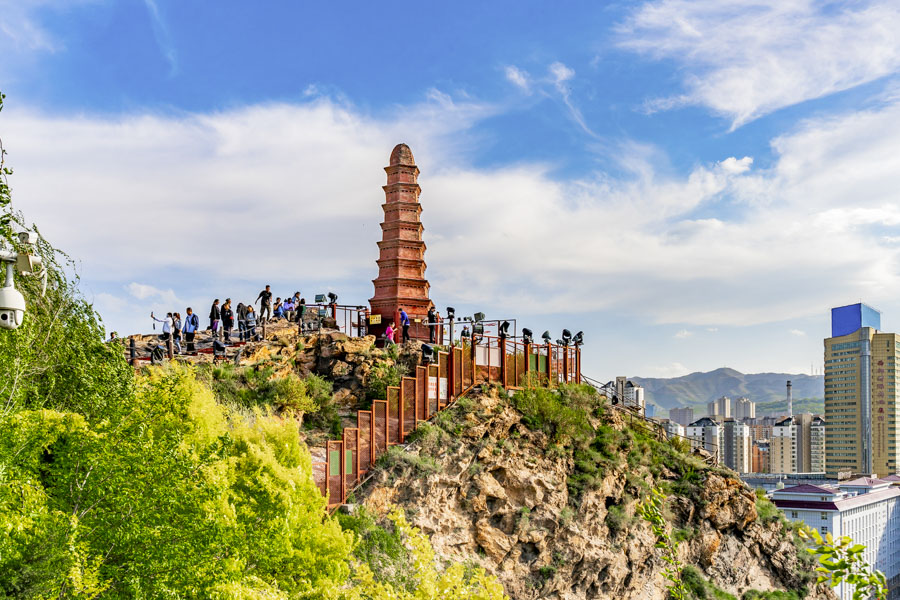
Ürümqi’s natural areas are ideal for slowing down, observing the relaxed pace of local life, and seeing the city from a bird’s-eye view.
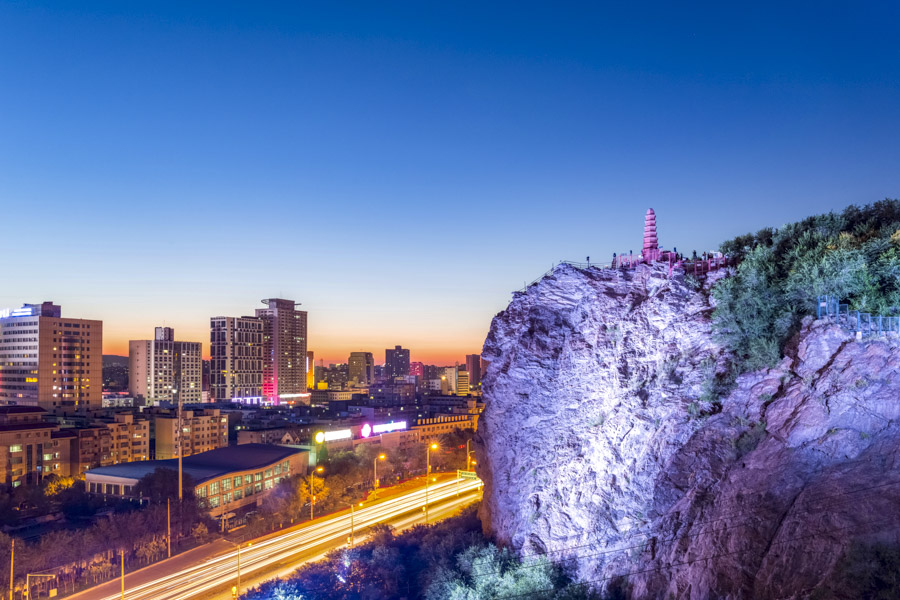
Ascend to the top of the iconic Hongshan Park (红山公园), also known as Red Hill Park and named for the ochre-red hue of its cliffs. This central mountain park is home to the stately three-storey Yuantiao Tower (远眺楼). Its observation decks offer breathtaking panoramic views of the city’s gleaming skyscrapers against the backdrop of the distant Tianshan ridges.
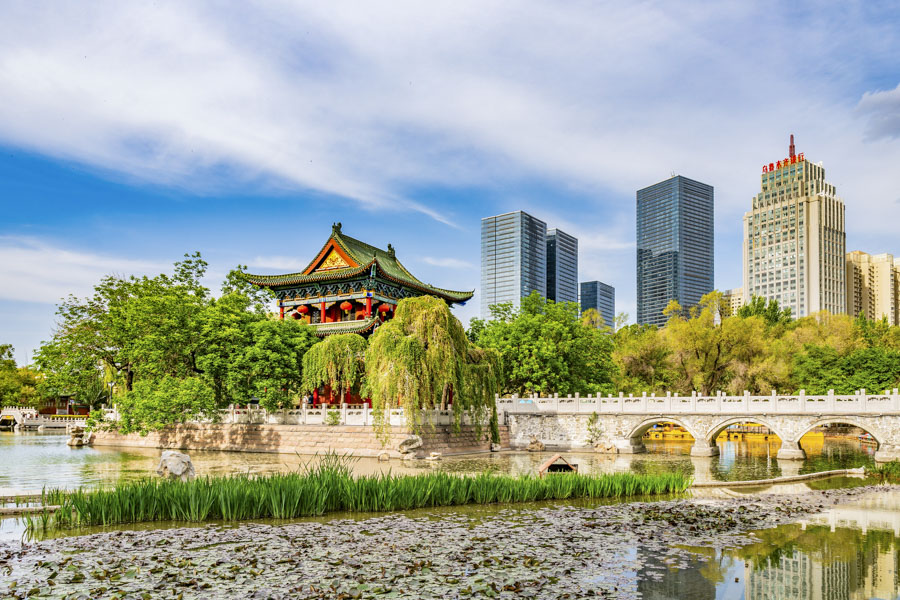
Catch the rhythm of local life in the shady People’s Park (人民公园), founded during the Qing dynasty as a place for officials to relax. Here, among centuries-old trees, a picturesque lake, and traditional Chinese pavilions inspired by the palaces of the Central Plains, you can watch locals dancing, take a boat ride, and relax in an oasis of tranquillity.
Find peace in the foothills of the vast Shuimogou Scenic Area (水磨沟风景区), known for its thermal springs that remain unfrozen in winter. A walk along conifer-lined paths, past ancient Buddhist temples, traditional watermills, and gorges, offers refreshing coolness in summer and enchanting frost-covered forests in winter.
Shopping in Ürümqi
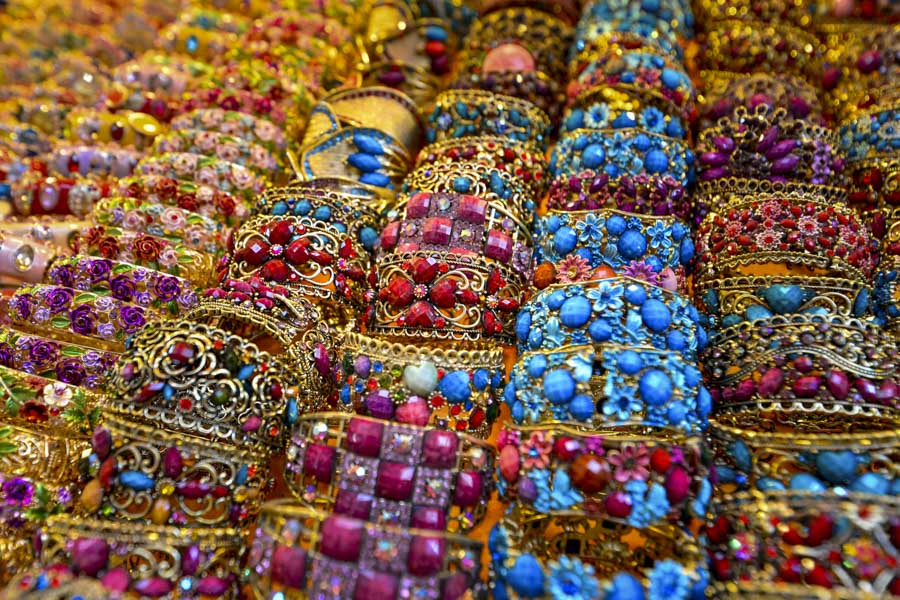
The city’s shopping streets still preserve the spirit of the ancient Silk Road, offering travellers rare craft treasures and unique flavours of Central Asia.
Take a closer look at the luxurious textiles, where the most prized is traditional Uyghur Atlas Silk (艾德莱斯绸), known for its distinctive bright abstract patterns. Equally valuable are authentic handmade Xinjiang Carpets (新疆地毯), renowned for their dense weave and rich, deep colours.
Explore the artisans’ shops for famous musical instruments such as the dutar (都塔尔), tanbur (弹拨尔), and rawap (热瓦普), hand-carved from mulberry wood and decorated with delicate bone inlay. The traditional doppa headwear (花帽), embroidered with intricate ethnic patterns, also makes a wonderful gift of the local culture.
Choose unique handicrafts, such as handmade silver jewellery with turquoise or Hetian jade items.
Put together a selection of exquisite local products with a long shelf life, starting with premium Xinjiang Dried Fruits (新疆干果): sweet seedless raisins and giant dried dates. Be sure to add the famous organic Ili Honey (伊犁蜂蜜), sourced from wild alpine meadows, and a block of dense, pressed Fu Brick Tea (伏砖茶).
Food in Ürümqi
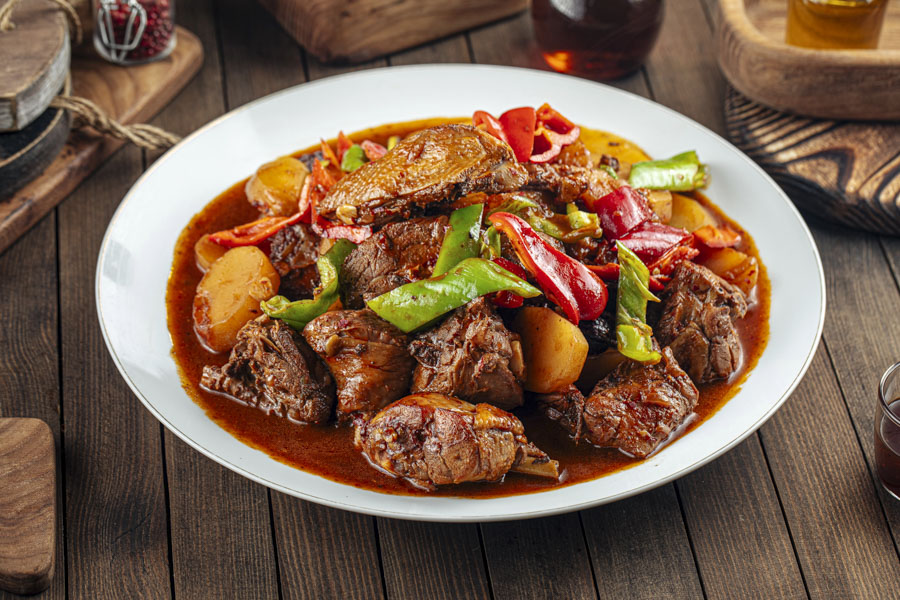
Chinese Cuisine
Ürümqi’s culinary traditions developed within a multi-ethnic environment, highlighting a distinct interplay between Uyghur, Hui, and Han cuisines. Its foundation consists of lamb, beef, and poultry, as well as an abundance of vegetables: potatoes, sweet and hot peppers, onions, and tomatoes. Here, traditional slow cooking and baking are complemented by quick stir-frying over high heat, while dishes are generously seasoned not only with cumin but also with hot chilli and Sichuan pepper.
An introduction to the city’s gastronomy should start with Dapanji (大盘鸡) – the legendary Big Plate Chicken. This aromatic and hearty stew features pieces of chicken, tender potatoes, and sweet and hot chilli peppers simmered in a rich, savoury sauce with beer and hot spices. Street food lovers should try Michangzi and Mianfeizi (米肠子和面肺子) – a cult duo of tender homemade rice sausage and boiled lamb lung filled with spiced wheat dough.
Do not miss the opportunity to try Kawap (烤羊肉串) – juicy pieces of lamb seasoned with salt, cumin, and chilli pepper, quickly grilled over open coals until crisp. Another cult meat dish of the north is Uyghur pilaf, or Northern Polo (抓饭): unlike southern variations, in Ürümqi it is often cooked with raisins, dried apricots, and other dried fruits, giving the rice a pleasant sweetness.
The main hit among noodle dishes is Laghman (拌面) – chewy, hand-pulled wheat noodles cooked al dente and served with a rich, savoury sauce of meat and stir-fried vegetables. Pastry lovers will certainly enjoy Samsa (烤包子) – tender baked pastries made with thin dough and filled with finely chopped fatty mutton and a generous amount of juicy onions, seasoned with black pepper.
To taste authentic Northern Xinjiang cuisine, head to Hotan 2nd Street (和田二街) – a bustling culinary artery with a huge selection of street food and Uyghur eateries. For traditional specialities, from pilaf to shashlik, it is worth dropping by Lingguan Alley (领馆巷), as well as the food street Xingfu Road (幸福路), home to more than 30 local restaurants.
Vegetarian Restaurants in Ürümqi
Finding vegetarian restaurants in Ürümqi is no easy task, but there is a reliable option. Located in the Shayibake District, Yuanqi Miaoshan (缘启妙膳) is a vegan restaurant with English-speaking staff. The café is known for its generous portions and also has a small shop selling prepared takeaway dishes. It can be found at: Building 4, Jiahe Phase II, No. 175 Altay Road (沙依巴克区阿勒泰路175号嘉和二期4号楼).
Tea Houses, Bakeries, and Patisseries in Ürümqi
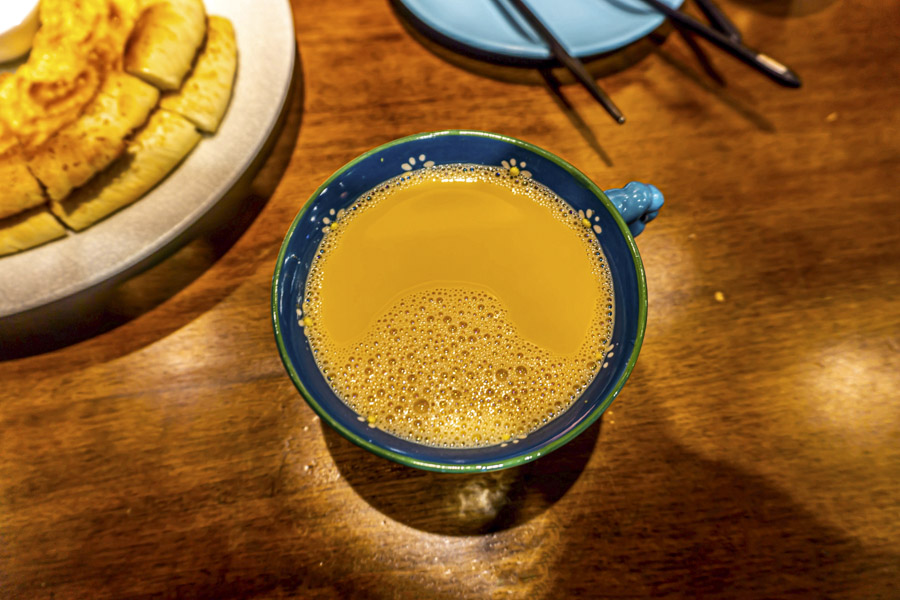
The tea and pastry traditions of Ürümqi clearly reflect a blend of Central Asian traditions and Han influence. In local teahouses, be sure to order Xinjiang Milk Tea (新疆奶茶) – a hearty hot drink made from strong brick tea, fresh milk, and a pinch of salt. Flatbread is often crumbled into it, or clarified butter is added for extra richness. Those who prefer classic sweet flavours can try Xinjiang Herbal and Fruit Tea (新疆药茶 / 新疆果茶), aromatic infusions made with saffron, cloves, cumin, and dried Xinjiang fruits.
A highlight of the city’s bakeries is traditional pastry served straight from the oven. Be sure to try Rose Naan (玫瑰花酱烤馕) – a popular round flatbread filled with sweet local rose petal jam, a recipe that is particularly popular in the north. Confectionery lovers should try Xinjiang Nut Cake (新疆切糕), known as Marantang – a dense cake made from pressed nuts, raisins, and dates held together with honey syrup – as well as tender Bahali (巴哈力) – a local dessert made with walnuts and honey that pairs perfectly with tea.
City Transport in Ürümqi
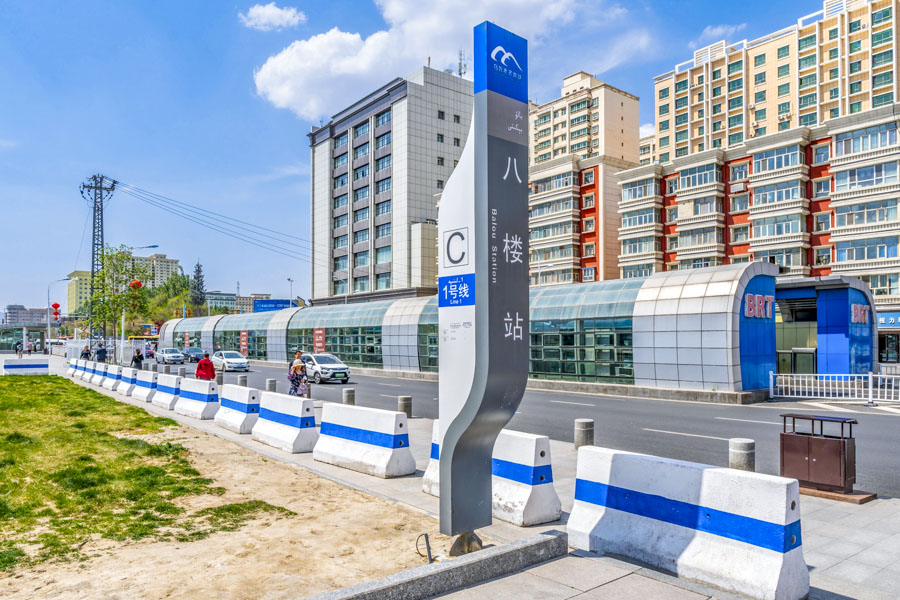
Travelling around Ürümqi is convenient by metro, city buses, and taxis. For short trips, you can also use rental bicycles and electric bikes, while the metro and BRT help you cross the city faster during peak hours.
Metro
There is one urban rail line operating in Ürümqi: Metro Line 1. To get to the city centre, it is recommended to take the Airport Shuttle bus, then the metro line 1. Metro Line 1 has 21 stations and passes through the city’s main districts. Three more metro lines are currently under construction.
Tickets can be purchased from vending machines, or you can pay for your journey via Alipay, WeChat, or the Ürümqi Metro app.
City Buses
The bus network covers the city’s main districts and is supplemented by Ürümqi Bus Rapid Transit (BRT) lines running in dedicated lanes. Around 100 routes operate in total. Operating hours are daily from 8:00 to 22:00. Standard city buses cost approximately CNY/RMB 1–2 ($0.14–0.28, €0.13–0.26, £0.11–0.22), while a journey on the BRT usually costs CNY/RMB 2 ($0.28, €0.26, £0.22).
Taxi
Taxis are convenient for short trips and destinations that the metro does not reach. The standard fare starts at approximately CNY/RMB 10 ($1.39, €1.30, £1.09) for the first 3 kilometres (1.9 miles), after which the cost is calculated by distance; a higher night fare applies. Ride-hailing services via apps, including DiDi, also operate in the city.
Car Rental
With a well-planned itinerary, renting a car can be a convenient option for visiting attractions in Ürümqi and its surroundings. A local driver service incurs an additional charge. For long trips outside the city, an off-road vehicle is recommended due to the condition of some roads.
Shared Bikes and E-Bikes
For short trips in certain areas of Ürümqi, rental bicycles and electric bikes are available. They can be unlocked via a QR code using the corresponding app or through Alipay.
How to Get to Ürümqi
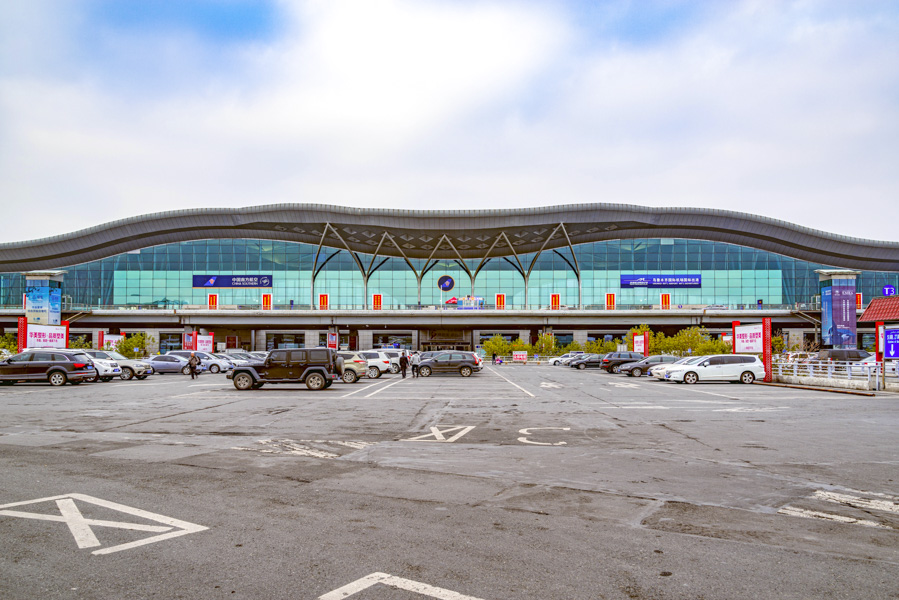
Thanks to its location at the crossroads of Western China’s transport routes, Ürümqi is well connected with other regions of the country, cities in Xinjiang, and international destinations. You can get here by plane, train, or long-distance bus.
By Air
Ürümqi Tianshan International Airport (URC) is located approximately 16 kilometres (10 miles) northwest of the centre of Ürümqi and serves as a major transport hub for travel within Xinjiang and beyond. The airport is connected to dozens of domestic destinations, including Beijing, Shanghai, Xi’an, and Guangzhou.
Additionally, international direct flights and options with a connection are available to and from Almaty, Tashkent, Bishkek and Dushanbe and Astana in Central Asia, as well as Ulaanbaatar in Mongolia. Moreover, China Southern operates to Tbilisi, Islamabad, and other cities in Asia, as well as to selected airports in Europe, such as Istanbul, and Africa.
By Train
Ürümqi is connected by rail to major Chinese cities, including Beijing, Shanghai, Xi’an, Chengdu, Dunhuang, Kashgar, Turpan, Zhengzhou, and Lanzhou, as well as to cities within Xinjiang, such as Korla, Aksu, and Kuitun. High-speed trains are particularly convenient for travel between Ürümqi and cities along the Lanzhou–Xinjiang High-Speed Railway. Sleeper trains are available for the longest routes. Railway services also connect Ürümqi with Almaty in Kazakhstan.
The main passenger railway stations in Ürümqi:
| Station name | Location |
| Ürümqi Railway Station | No. 1, North 6th Gaotie Road, Economic and Technological Development Zone, Toutunhe District |
| Ürümqi South Railway Station | Between Qingfeng Road and Nanzhan Road in Saybagh District |
By Long-Distance Bus
Long-distance buses depart daily from Ürümqi to most major cities and tourist destinations in Xinjiang. Special routes allow you to reach Tianshan Tianchi, Nanshan Pastures, Turpan, and Shihezi, while regular routes connect the city with Kashgar, Korla, Kumul, Ili, Karamay, and other regions.
The main long-distance bus stations in Ürümqi:
| Bus Station | Address |
| Jungong Passenger Transport Station | Nanzhan Road, near Ürümqi Railway Station |
| Northern Suburb Passenger Transport Station | No. 437, South Nanhu Road |
| Southern Suburb Passenger Transport Station | No. 21, Yan’erwo Road, Santunbei |
| Nianzigou Passenger Transport Station | No. 49, Heilongjiang Road |
Languages Spoken in Ürümqi
In Ürümqi, Standard Chinese (Mandarin) and Uyghur are most commonly used, reflecting the multi-ethnic character of the city. Mandarin is widely spoken in daily communication, education, government institutions, and business, while Uyghur is particularly prominent in areas with large Uyghur populations. Signs and indicators in both languages can be found throughout the city.
In the metro, station names and navigation signs are presented in English alongside Chinese and Uyghur, which significantly simplifies travel for international tourists.
Security in Ürümqi
Ürümqi welcomes travellers with a hospitable and peaceful atmosphere, and a high level of public order. For a comfortable and tranquil journey through the city and its picturesque surroundings, just follow a few simple local guidelines.
- Carry your original passport. As elsewhere in China, you may need the physical document to enter markets, shopping centres, and museums, or to board public transport. A photo on your phone may not be sufficient.
- Be prepared for security checks. Routine checks of personal belongings take place at the entrances to public venues and metro stations.
- Make use of accessible facilities. Checkpoints, metro stations, and transport hubs have dedicated wider lanes for travellers with limited mobility and those with pushchairs. Staff are on hand to help and keep things moving.
- Allow extra time for your journey: Checks at railway stations and airport can be thorough, so it is advisable to allow an extra 30–to 45 minutes for security checks before departure.
- Be considerate when taking photographs. Avoid photographing administrative buildings, infrastructure, road checkpoints, and on-duty personnel.
- Set up digital services before you travel. Download offline maps and link an international bank card to the Alipay payment system in advance to make it easier to pay at businesses around the city.