
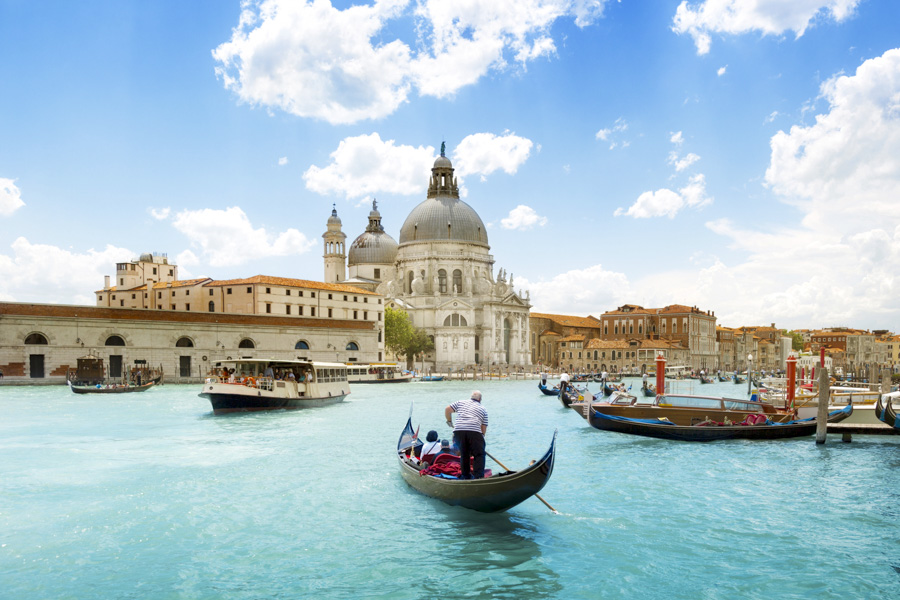
Tours and Attractions of Venice
While other Italian cities, such as Rome, are celebrated for the treasures they hold, Venice, La Serenissima, is quietly confident that it is a treasure in itself. The city somehow seems unreal, a fairytale, too extraordinary to be true, and yet undeniably real.
Like a jewel sitting on blue velvet, Venice is encircled by its lagoon, a few kilometres off the coast of mainland Italy, and is geographically, historically and culturally a city apart. It is not entirely Italian or European, for traces of Byzantine and the oriental opulence are sensed everywhere, and the result is that it feels utterly distinct and enchanting. See it and experience it to believe it, though you may still feel that it is not entirely plausible.
The improbability of Venice magnifies in the mind when one considers how it was built and on what foundations the magnificent buildings and bridges are perched. Can it really be true that the Doge’s Palace, St Mark’s Square and Basilica, the Rialto Bridge, the palazzos, and all the dense streets of the six “sestieri” (districts) are resting on little more than sand and mud? To be told of the millions of piles driven into the seabed by the tenacious Venetians is an explanation of sorts, but it adds to the sense of Venice’s marvellous, peculiar and precarious existence.
Then, navigating some of the 177 canals and 455 bridges, including Murano’s and Burano’s bridges, you will find the Arsenale, where industrialism was effectively invented. A merchant or naval vessel could be assembled here in just a day – yet another extraordinary fact that confirms one’s utter admiration for Venice.
The city of Marco Polo is far-fetched in other ways too. As Europe’s great trading portal and hub on the Silk Road, its influence and its explorer-merchants crossed continents. Goods, ideas and influences were shuttled towards it over many horizons, all playing a part in making tiny Venice mightily rich, outward-facing, and thoroughly unusual.
Venice Tours
The greatest magic tricks can be seen repeatedly, and you will still be joyously baffled. And so it is for Venice, a place you can never tire of. Indulge yourself for a week or two of aimless strolling, carnival revelling, fine dining, island exploration, exhibition gazing, and a bit of shopping, and your mental list of what to do next won’t get much shorter. Or perhaps Venice is the venue for that romantic short break that you have always promised yourself. Four or five days here would be magical, though you’re likely to want to return.
Venice is even suitable for a shorter foray: perhaps the ultimate complement to a holiday based at the Opera Festival in Verona, with a fast train speeding you between the two in little more than an hour. That same rail network means that Venice can form part of a trip taking in the marvels of Florence, Bologna, Milan, and Rome.
Or perhaps you may prefer to stick to the Veneto region, where experiences abound. Giotto’s frescoes in Padua are just thirty minutes away, as is Palladio’s Teatro Olimpico in Vicenza, and Treviso, the birthplace of Prosecco, is even closer.
Best Time to Visit Venice
Spring (March to May): A delightful time to visit Venice, spring is the season to enjoy the explosion of life in the city’s gardens: places such as the Giardini Reali just off Saint Mark’s Square, the parkland of the Biennale, and the sculpture garden of the Peggy Guggenheim Foundation. Daytime temperatures rise from 12 to 15 °C (54 to 59 °F) in March to 18 to 22 °C (64 to 72 °F) in May, with evening temperatures cool enough for a sweater or shawl.
Spring brings cultural events, including the early events of the Biennale during its active years. Easter is a time of increased visitor numbers, but between this holy festival and the height of the summer there is a lull in May, which is a good time to explore.
Summer (June to August): Venice is warm, bright and busy in the summer, with humidity making the typical temperatures of 28 to 32 °C (82 to 90 °F) feel warmer still. This season appeals to those who like long evenings by the water and vibrant bustle in the squares, but others may prefer to avoid the throngs that can make vaporetto platforms and bridges congested. Those who come in late July are rewarded with the Festa del Redentore, a celebration of the end of a plague in 1577 complete with spectacular fireworks over the lagoon. They will also enjoy open-air concerts along with the motivation to explore the islands and soak up the sun and the atmosphere at the Lido, the 11-kilometre-long (7-mile) barrier island in the lagoon.
Autumn (September to November): As is typical in Italy, the month of September, with temperatures of 24 to 26 °C (75 to 79 °F), is perhaps best described as a delightful and quieter period of summer. By November the temperatures fall to between 10 and 14 °C (50 to 57 °F), and city strolls are particularly atmospheric during morning mists. Conditions for walking around the city in autumn are generally excellent, but an umbrella is useful in October and November. The acqua alta (seasonal high water) that occurs usually in autumn and winter is accurately forecast, and the addition of raised walkways to flooded places – including St Mark’s Square – can provide interesting photo opportunities.
Winter (December to February): In a city with a reputation for high visitor numbers, there is an allure to encountering it during its low season. With temperatures typically 6 to 9 °C (43 to 48 °F), and rain possible at any time, you will need to be appropriately clothed, but those who come here at this time of year are often treated to crisp, misty days that give the city a magically hushed atmosphere. Christmas is a busier time, and the other winter period when people flock to Venice is in February for the Venice Carnival (Carnevale). Festivities involving gondola parades, elaborate masks and costumes last for two weeks, building to a crescendo on Shrove Tuesday.
History of Venice
According to local legend, the first Venetians were rich merchants from the mainland who hid themselves and their treasure on worthless-looking mudflats in the Venetian lagoon. Their motivation was imperative because this was the 5th and 6th centuries when Goths, Huns and Germanic Lombards were ransacking the crumbling Roman Empire.
Venetia was the term for the entirety of the northern Adriatic, and it was this name that was eventually adopted by the cluster of small islands centred on Rivo Alto, the future Rialto. Separated from the mainland, the island dwellers in their stilted houses remained free from Lombard control, paying only loose allegiance to the Roman-Byzantine centre of Ravenna and the Pope in Rome.
By the late 600s, they had established a military command centre in Malamocco on the Lido barrier island under the command of an elected leader known as the Doge (Duke or leader).
The Republic of Venice (697-1797)
The Venetians of the lagoon established local autonomy in the face of the weakening of Byzantine authority, and in 697 the Republic of Venice was promulgated, marking the emergence of a stable republican power which evolved into a maritime republic.
When the Franks succeeded the Lombards on the mainland in the 770s, Charlemagne sent his son Pépin to conquer this offshore anomaly. Malamocco was lost, but the Doge and his deputies escaped to Rivo Alto where they settled and built a fortress adjacent to where the Doge’s Palace now stands.
Though theoretically part of the Byzantine Roman Empire, Venice enjoyed independent momentum by trading in fish, salt, lumber, and slaves. In defiance of the emperor, the city started to trade with Muslims in the 9th century, and with the gold and silver secured by this arrangement, they began to import goods flowing along the Silk Road via Constantinople, selling them on to the rest of Europe at great profit.
In 829, two Venetian merchants set sail for Alexandria in Egypt, where they stole the body of St Mark the Evangelist, concealing it from Muslims for their journey back under slabs of pork, knowing that this animal is considered impure by Islam. On their return, the relic became the inspiration for the basilica of San Marco adjacent to the Doge’s Palace, and the city adopted the evangelist’s winged lion symbol as its own.
Key to Venice’s seafaring success was its Arsenale shipyards and armouries, where large-scale industrial production of swift galleys ensured that the city was leagues ahead of its competitors. By perfecting the processes required for the component parts of ships, Venetians could assemble vessels at a remarkable rate, flooding the eastern Mediterranean with its naval and merchant ships. Trade and plunder enriched the city, which, with the oligarchically elected Doge as its head and the lion of St Mark as its emblem, ran efficiently as a kind of corporation.
In the 13th century, Venice played an important role in the Fourth Crusade, though, true to Venetian principles, their motivation was commercial rather than religious. The crusaders were diverted from Jerusalem to Constantinople, and Venice shared in the significant financial and artistic spoils of the capture of the Byzantine capital. More importantly, Venice gained the important strategic node of Corfu to add to its network of trading bases.
During this period, Venetians developed the concept of trade shows, centred on the Rialto markets, where merchants from all round Europe would gather to buy goods from ships whose arrival was timed to perfection for trading. Standardised measurements and contracts, low rates of tax, good accommodation for visitors, and the use of the trusted Venetian ducat coin reinforced the confidence in the role that Venice played as the ‘middleman’ of trade.
In the 14th century, Venice vied with Genoa for control of trade routes in a rivalry that stretched from the Black Sea to the Strait of Gibraltar, but by the 15th century, a new and formidable foe had emerged in the form of the Ottoman Empire. The scale of Ottoman expansion gradually eroded Venice’s eastern dominance and territorial possessions.
In the 17th century, the Venetian lordship decided to name Venice “the Serenissima Repubblica di Venezia” (Most Serene Republic of Venice), reflecting the authority, resilience and magnificence of the Republic of Venice at that time - a name by which it is still widely known today.
Though Venice endured as an independent republic for centuries, this status ended in 1797 when Napoleon marched into the city and dissolved the state. The French handed Venice to Austria, in whose hands it would remain, despite an attempted declaration of independence in 1848, until it joined a unified Kingdom of Italy in 1866 following Austria’s defeat in the Third Italian War of Independence.
Things To Do in Venice
Venice offers far more than gondola rides and hopping between famous landmarks; it rewards those who seek out quiet luxuries, engage with the cuisine, and take the opportunity to seek out the city’s creative fibres. You might begin by checking into one of Venice’s exceptional hideaways, such as Aman Venice, set in a 16th-century palazzo on the Grand Canal, where you can enjoy frescoed salons and private gardens that combine centrality with elegant tranquillity. For a hands-on encounter, take a masterclass with a Murano glassmaker of a traditional mask atelier, and then perhaps finish the day at Glam by Enrico Bartolini, central Venice’s two-Michelin-starred restaurant, itself within another Grand Canal. Across the water on Giudecca, Oro Restaurant, housed in Hotel Cipriani, offers a further Michelin‑starred option, a jewel with views stretching towards the lagoon and the Lido.
Places to Visit in Venice
Sometimes called the ‘big show’, line number 1 of the vaporetto network is the best choice for appreciating the geography and beauty of Venice from the water. It starts from Piazzale Roma and stops at every station along the Grand Canal, passing under the Rialto Bridge, going past St Mark’s Square (Piazza San Marco) and onwards to the Lido. The trip takes about an hour in one direction, and then it’s possible to catch a faster boat directly back to Piazza San Marco. For a full circumnavigation of Venice, take line numbers 5.1 or 5.2, which complete the circuit in 80 minutes, respectively anti-clockwise and clockwise.
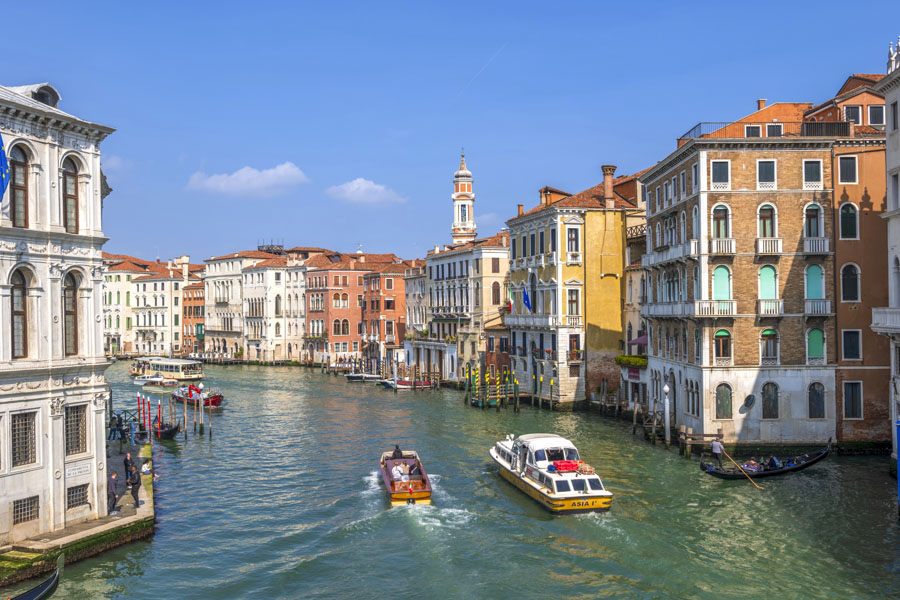
The Grand Canal is, in every sense, unmissable. It is effectively the busy main street of Venice, and its inverted S shape is plied by vaporetti, water taxis, gondolas and traghetto ferries. You will even see and hear fast police and ambulance boats speeding along, complete with flashing lights and sirens, seemingly oblivious to the backdrop of about 200 palaces built on the banks.
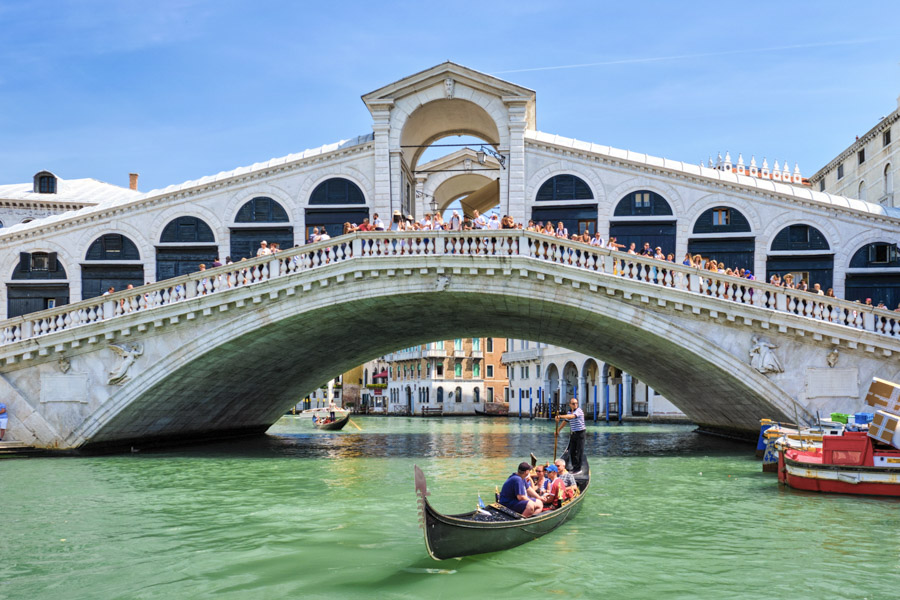
The first of the four bridges to be built across the Grand Canal – and indeed the only one for 300 years – was the Rialto Bridge. In its transition from simple pontoon to wooden structure to the beautiful arch we see today, there was a competition for its final design won by the Swiss architect Antonio da Ponte. He was chosen ahead of Michelangelo because he was the only architect who proposed a single-arch bridge with a 27-metre (88.6 feet) span to cross the canal.
The bridge leads directly into the liveliest part of Venice, the Rialto Market, which retains the colourful bustle it has continuously enjoyed since the 11th century. From here, it’s very close as the crow flies to Piazza San Marco (St Mark’s Square), but the journey on foot can, if you want, be a winding mystery tour through narrow streets from campo to campo (square to square), crossing bridges over numerous canals. The shortest itinerary is about 800 metres.
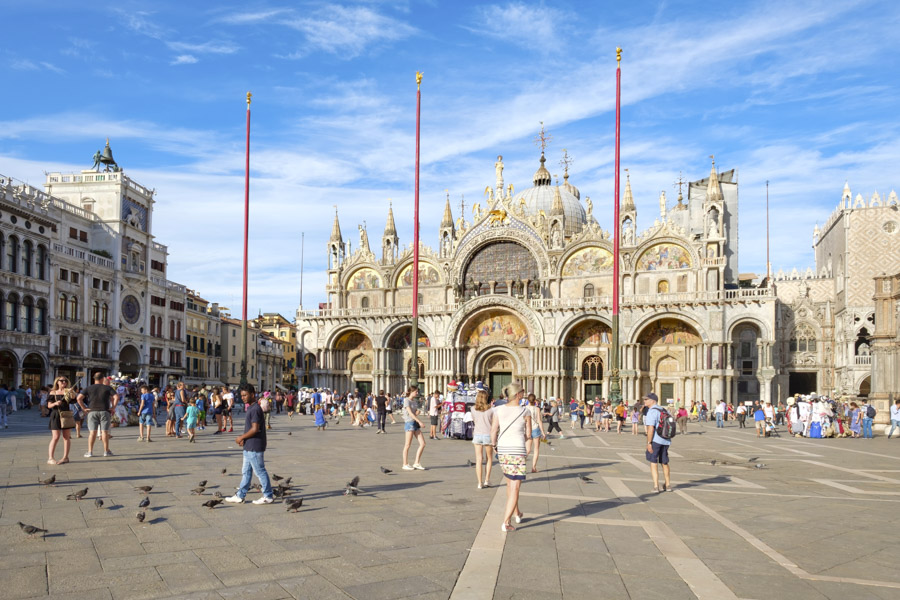
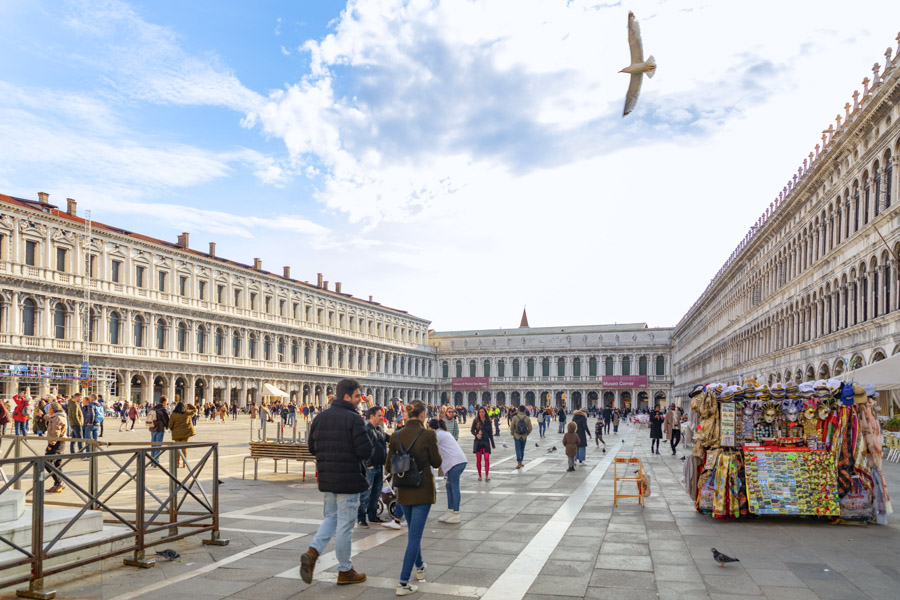
Though you may have seen its image many times, entering St Mark’s Square is an unforgettable experience. Superlatives feel inadequate when describing what the locals simply call the Piazza: a visual showcase for the city’s wealth and the venue for every kind of glorious civic occasion over the centuries. Imagine this space with knights setting out on crusades. Imagine glorious naval commanders and Marco Polo rubbing shoulders. Look up and you will see three flagpoles that have stood here since 1505, the towering campanile bell tower and the two famous waterside columns; one is topped by a statue of Saint Theodore and the other by the lion of Saint Mark.
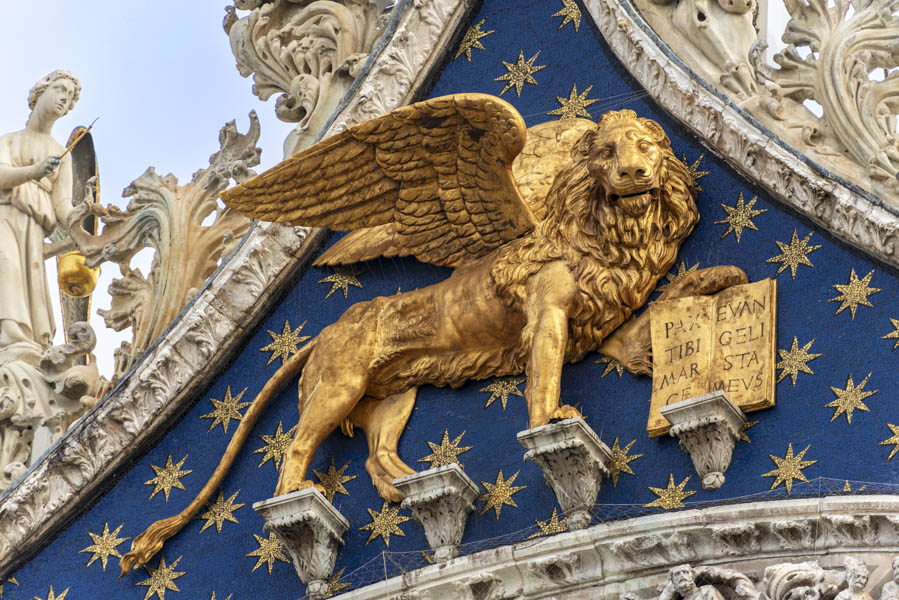
Of course, enter the Basilica of San Marco, a mysteriously Eastern yet gloriously Western space where the confusion of styles has accumulated since its first incarnation in 832 CE to house the stolen relics of Saint Mark. Gaze at San Marco’s four horse statues, which once crowned Trajan’s Arch in Rome and then the imperial hippodrome in Constantinople. Booty of the Crusades, the horses were looted again – this time by Napoleon’s forces – before being restored here in the 1815 restitution.
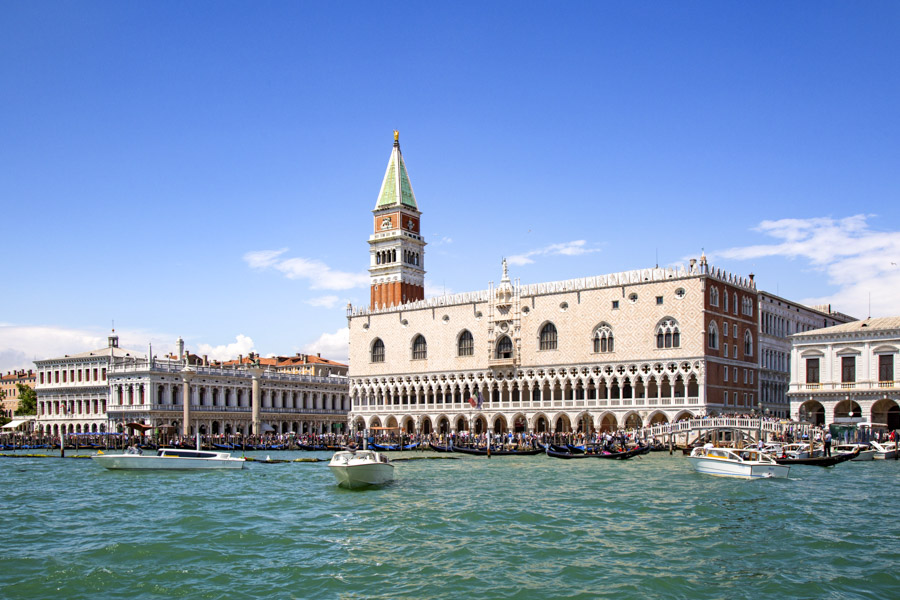
While the Rialto has always been the commercial centre of Venice, San Marco has been the administrative nucleus. Although construction of the Doge's Palace (Palazzo Ducale) began in the early Middle Ages, the entire complex underwent extensive renovation and reconstruction. Major work was carried out on the wings as early as 1340, followed by new construction after fires in 1483 and damage sustained over the ensuing centuries. The Doge’s Palace possesses the magnificent Porta della Carta (Paper Gate) adjacent to yet more plunder from Constantinople: the Portrait of the Four Tetrarchs, a sculpture of four Roman emperors. Inside the palace, there are maps from the journeys of Marco Polo, and over a canal separating the palace from the adjacent prison is the beautiful Bridge of Sighs (Ponte dei Sospiri). Pause here to think of the sorrowful doom of those led across from the court of the Doge. Inside the palace, there are maps from the journeys of Marco Polo, and over a canal separating the palace from the adjacent prison is the beautiful (Ponte dei Sospiri). Pause here to think of the sorrowful doom of those led across from the court of the Doge.
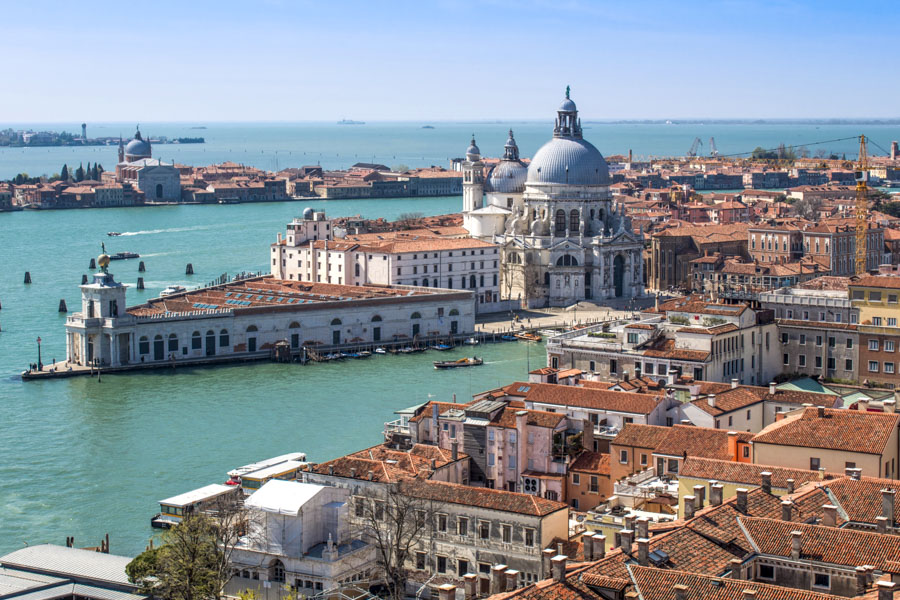
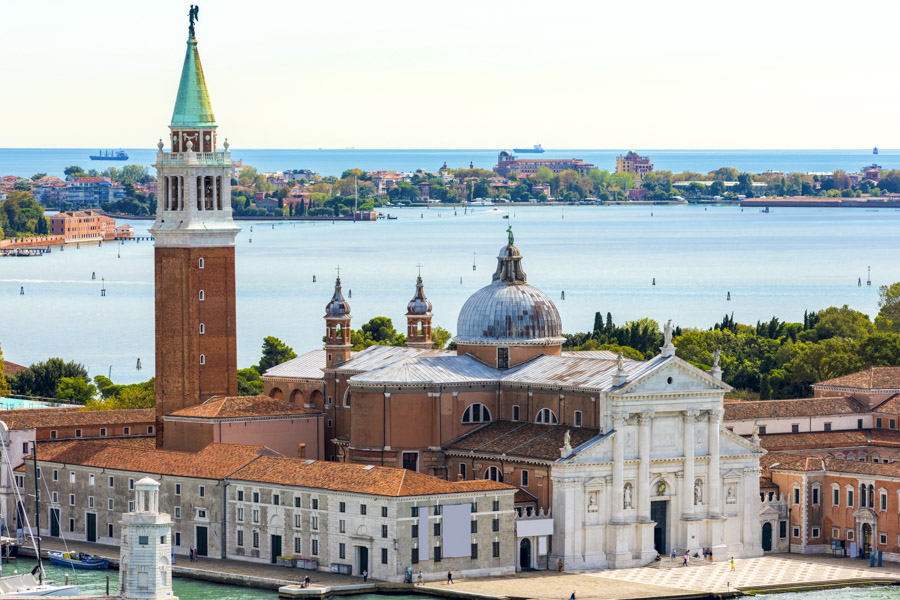
A few minutes by vaporetto takes you to the small island of San Giorgio Maggiore, an essential destination for its church and monastery and for the best view in Venice from the top of its campanile tower. The vista includes the third pole of the Venetian Republic’s success – the Arsenale – a place to visit to appreciate the mechanics of the seafaring dominance that enabled such an unlikely city to thrive.
Around the Venice Lagoon
Venice would be even more improbable without its lagoon, whose shimmering shallows are protected by the barrier beach known as the Lido. You can comfortably visit three of the lagoon’s most popular islands (and the Lido itself) in a day trip or make half-day outings to one or more of them to punctuate your stay with breezes and a quieter pace of life.
The Lido is the seaside escape for Venetians but has served many other purposes over the years. It was the hunting ground for the Doges, the setting for Thomas Mann’s Death in Venice, and the start point of Lord Byron’s swimming race to the Grand Canal. At the northern end, you can see the lagoon’s main passageway to the Adriatic, the gateway for trade and where Doges paid an annual tribute to the sea by casting a wedding ring into the waters.
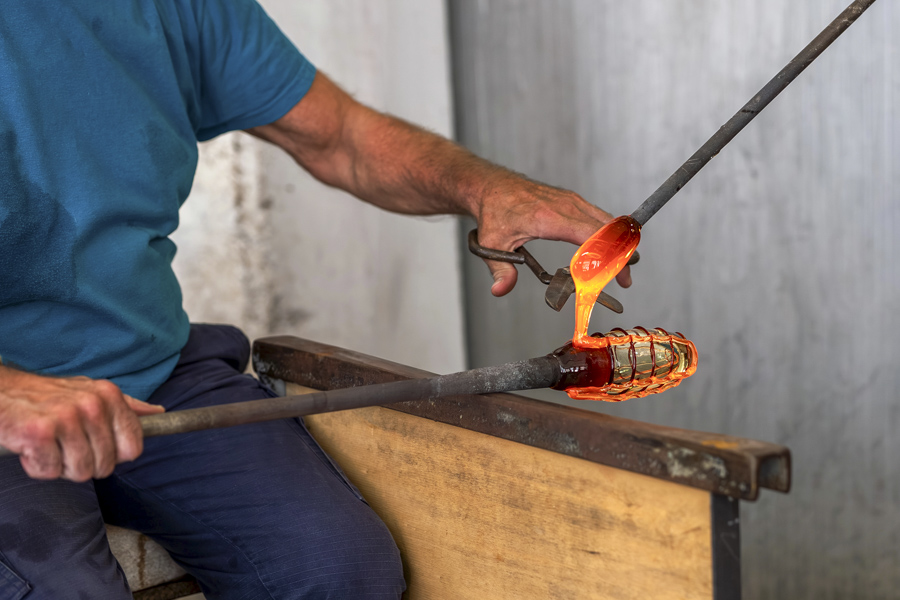
Glassmaking has been a Venetian speciality since the 10th century, but its centre of operation moved to the island of Murano by 1291 when the furnaces were deemed a fire hazard. Today, you can witness the skill of glassblowers and consider buying yourself a vase while walking to the Church of Maria e San Donato, which predates San Marco.
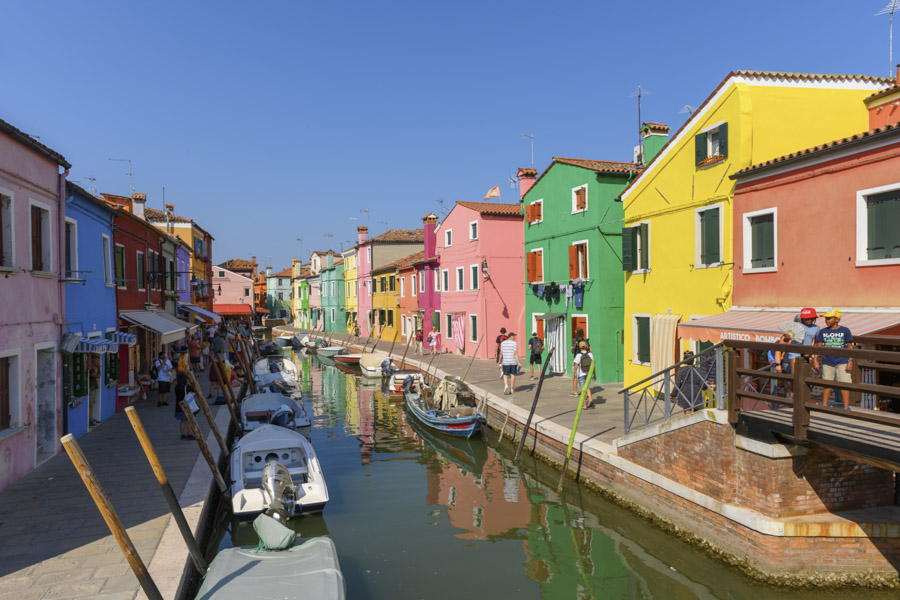
Your first sight of Burano will be of its dramatically leaning bell tower, but get closer and what emerges are rows of trim, colourful houses reflecting in the canals. It takes no more than an hour to wander around, and during that time you may see Buranese women making traditional lace, a skill that once supplied courts around Europe.
Peaceful Torcello is within the complicated reed-lined channels of the archipelago in the north of the lagoon. Older than Venice itself, a large population once lived on it, but today it is only home to a handful. For the finest mosaics outside Ravenna, enter the Cathedral of Santa Maria Assunta.
Further from Venice
Venice is the capital of the Veneto region, a plain stretching from the Dolomite Mountains to the Adriatic Sea sprinkled with historic towns and cities. Well-connected by good roads and train lines, Veneto is easily explored from Venice or – given that accommodation is cheaper on the mainland – the region presents a potential trip in its own right from a base such as Verona.
The largest settlement in Veneto and the setting for Shakespeare’s Romeo and Juliet, Verona is dominated by its enormous Roman Arena. During the summer season, this becomes one of Europe’s most atmospheric open-air stages during its opera Festival, with different productions throughout the evenings.
A short train ride from Venice is Padua, one of Italy’s oldest university cities and where frescoes were revolutionised by Giotto’s Scrovegni Chapel. Having taken in its arcaded streets and grand basilicas, it’s straightforward to carry on along the same train line to Vicenza. This is the city most closely associated with the architect Andrea Palladio, whose trompe-l’oeil stage set at the Teatro Olimpico is something to appreciate with hushed admiration. Closer still is compact and graceful Treviso, surrounded by the vineyards where Prosecco was born.
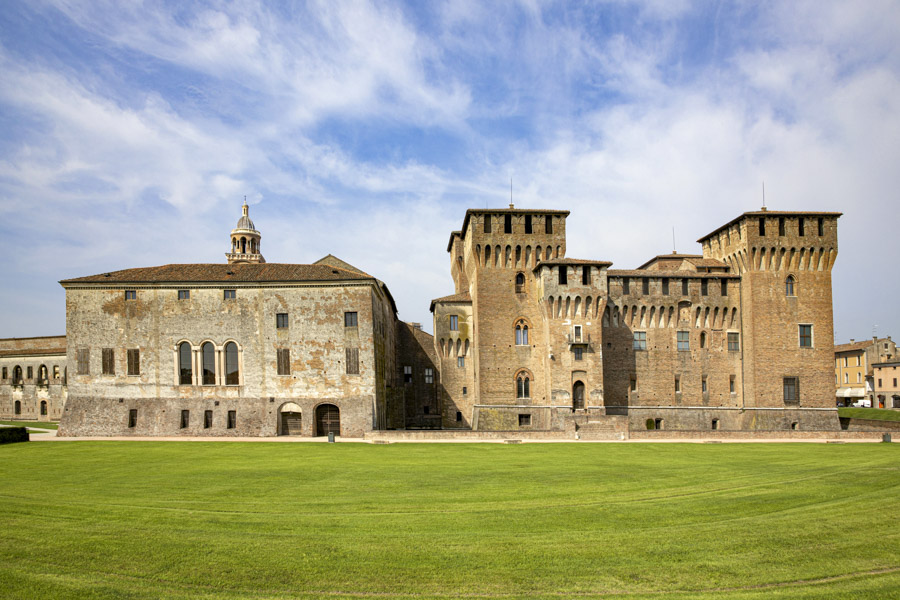
If time allows, you could even venture into Lombardy to experience Mantua, where the palaces of the Gonzaga family sit among the lakes. This stately and genteel town contrasts wonderfully with the maritime grandeur of Venice.
Museums and Galleries in Venice
In Venice, you can find world-class collections of Renaissance paintings, intimate palazzi filled with modern art, informative museums explaining maritime dominance, and contemporary pavilions of current global creativity.
The Gallerie dell’Academia, on the south bank of the Grand Canal, is Venice’s principal art museum. Though you could spend the best part of a week here, feasting your eyes on art from the 14th to 18th centuries, those with less time should prioritise Titian’s Pietà, Tintoretto’s Miracle of the Slave, Veronese’s Feast in the House of Levi, and Bellini’s gentle Madonnas. If you stride past the many other wonders to see just these, you will need a couple of hours.
Having profited from the sale of works of art belonging to Venetian aristocrats following the fall of the Republic, the collector Teodoro Correr significantly expanded his collection. To preserve it, he bequeathed it to the city in 1830. It is now the Museo Correr and occupies the southern side of the Piazza San Marco. Richly varied, the museum covers both the art and history of Venice and includes many sketches and neoclassical statues by Antonio Canova.
A refreshing contrast is the Peggy Guggenheim Collection, set in the American heiress’s former home on the Grand Canal. Complete with a delightful sculpture garden overlooking the water, the palazzo, which includes works by Picasso, Pollock, Kandinsky, Miró, and Magritte, is one of the world’s finest small collections of modern art.
Every other year, the Giardini and Arsenale districts host the Biennale, a celebration of contemporary art and architecture from around the world. During a Biennale year, you can walk around numerous national pavilions, installations and exhibitions; but the organisation doesn’t rest in the off-years, so film, dance, theatre and musical events are generally ongoing.
An understanding of Venice’s naval superiority can be gained at the Maritime Museum (Museo Storico Navale) near the Arsenale, thanks to its collection of navigational instruments, weapons and historic vessels. The adjacent Padiglione delle Navi has full-sized boats, including lagoon workboats and ceremonial vessels.
Venice Theatres
The theatres of Venice are small by the standards of many historic European cities, but they are rich in character and more intimate because of this, and just to be in the audience in one of them is a window into Venetian culture. Gilded, neo-classical Teatro La Fenice is the city’s most illustrious venue and is renowned for premieres by Verdi and Stravinsky. It hosts full opera seasons, orchestral concerts and major touring productions within its opulent interior. Pocket-sized Teatro a l’Avogaria is at the opposite end of the scale. It’s an experimental space rooted in commedia dell’arte traditions where performances are close, full of satire and often improvisational. Teatro Fondamenta Nuove, overlooking the northern lagoon, is a venue for contemporary plays, chamber concerts and modern dance and is the ideal place to see Venice’s creative edge. Finally, Teatro Goldoni, named after Venice’s greatest comic playwright, is one of Italy’s oldest working theatres and is the city’s home of traditional Italian theatre. Productions are polished, staging is elegant and the atmosphere is warm.
Entertainment, Parks, and Shopping in Venice
Entertainment in Venice
Gathering traditions like a rolling snowball accumulates snow; Venice is a city enlivened by the festivals that highlight both its history and its mentality. It’s well worth seeing them close-up to gain extra insight into what it means to be Venetian.
Spring begins with the Festa di San Marco on 25 April, in honour of the city’s patron saint. Traditionally, men offer a single rosebud (bòcolo) to the women they love. The main event of this festival is a grand liturgical procession to St Mark’s Basilica, where the Patriarch of Venice leads a solemn high mass. The Venetian rowing season kicks off now too, with colourful boat races on the lagoon.
May brings a trio of uniquely Venetian events: the Festa della Sensa (Ascension Day Festival), with its historic water pageant and the symbolic “Marriage of the Sea” when the Patriarch blesses a gold ring and the Mayor of Venice casts it into the waters; the exuberant Vogalonga (‘Long Row’), a theoretically silent non‑competitive 30-kilometre rowing event through the lagoon; and the Venice Boat Show, held in the Arsenale and celebrating the city’s maritime heritage.
From late spring into autumn, Venice entwines with the Biennale, the city’s most important cultural institution. Running from May to November, it alternates annually between contemporary art and architecture, drawing global audiences to the Arsenale and Giardini.
Summer reaches its emotional peak on the third weekend of July with the Festa del Redentore (Festival of the Redeemer), when a floating votive bridge – more than 300 metres in length – links the city to Giudecca and midnight fireworks illuminate the lagoon. This festival celebrates the building of Il Redentore Church on the island of Giudecca by Palladio in thanks for the end of the plague in 1577.
In early September, the Venice International Film Festival, known as the Mostra, transforms the Lido into a glamorous stage for world cinema. September also includes the spectacle with the Regata Storica, a magnificent procession of decorated boats followed by fiercely contested races on the Grand Canal. To watch the races for free, join the locals in the public square of Campo San Vio or Campo Santa Maria Nova. This month includes the Venice Glass Week, celebrating Murano’s artistry, while October’s Venice Marathon offers a scenic route from Stra into the historic heart of the city.
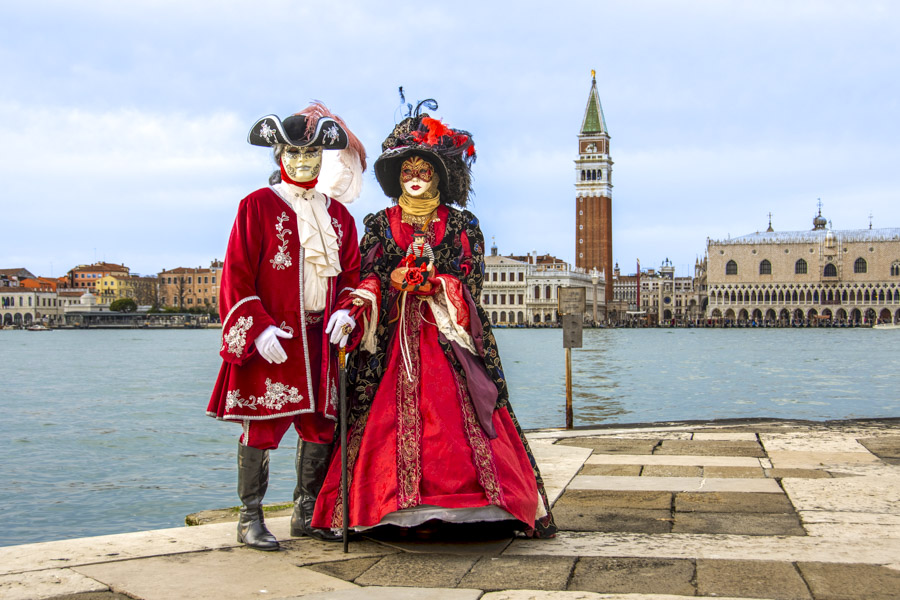
Winter is quieter but deeply traditional. On 21 November, locals cross another temporary pontoon bridge for Festa della Madonna della Salute, giving thanks for deliverance from the 1630 plague. This solemn event is a time when Venetians eat hearty Castradina soup to commemorate the Dalmatian merchants who kept the city fed during the plague. And in February, Carnevale di Venezia returns: masked balls, pageantry and elaborate costumes transform the city into a living theatre. Rooted in a decree of 1269, the festival allowed citizens to subvert rigid social classes by donning masks, allowing the poor to mock the rich and the rich to indulge in vices anonymously.
Parks of Venice
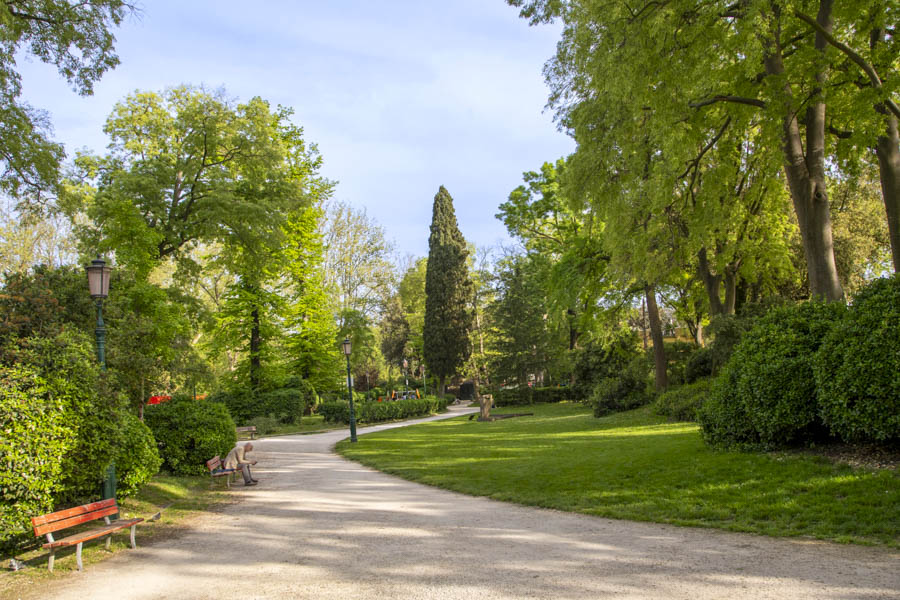
Because of its physical constraints, Venice is a place where buildings and canals are more common than lawns and trees. Its green spaces are cherished, quiet pockets where you can sit in the shade and savour a moment of rejuvenation.
Giardini della Biennale is the largest and most atmospheric of Venice’s parks. Commissioned by Napoleon and later expanded for the Biennale, it has long avenues of trees, sculptural pavilions and glimpses of the lagoon. During the Biennale it turns into a lively crossroads of art, architecture and international visitors, but outside exhibition periods it becomes a peaceful place of ease.
Near St Mark’s, the Giardini Reali is a beautifully restored 19th‑century garden commissioned by Napoleon. It’s compact, elegant and surprisingly serene given its location. Its manicured beds, shaded benches and views towards the basin make it an ideal pause between sightseeing stops, and many are surprised to find out that this oasis of calm is completely free to enter.
In Cannaregio, Parco Savorgnan feels more residential and lived‑in. It’s a small neighbourhood park with tall trees, winding paths and a relaxed, everyday atmosphere. Children play here after school, locals read on benches, and the occasional traveller enjoys joining Venetians getting some green therapy.
Shopping in Venice
The best of Venice’s luxury shopping can be found in the boutique district extending from St Mark’s Square along Calle Larga XXII Marzo. A number of significant names in fashion have, for historic reasons, gravitated to the lengthy street known as Mercerie, where the luxury textile and perfume emporia led John Evelyn, an English gentleman and royalist, to write in 1645 that it was ‘one of the most delicious streets in the world’.
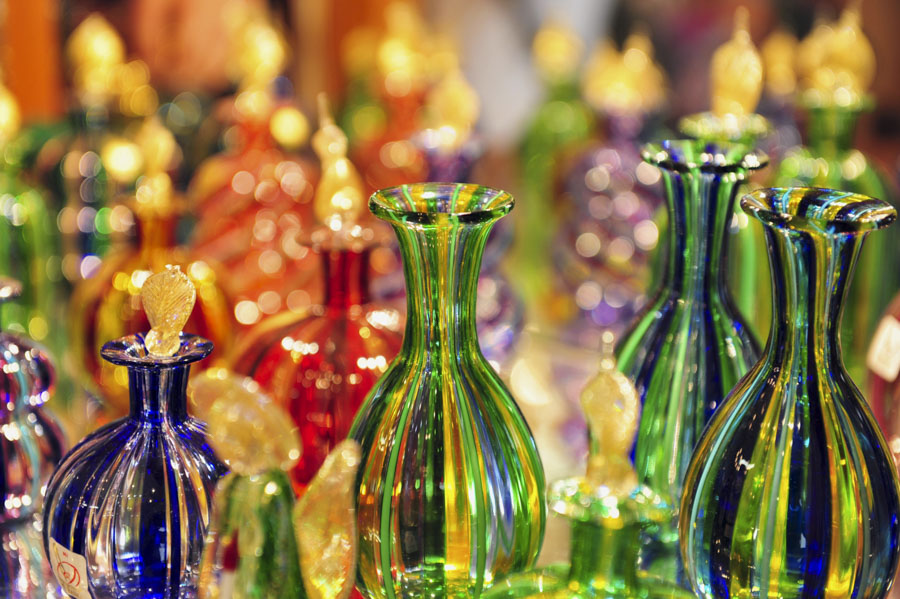
Stylish clothing outlets are a staple of all Italian cities, so any urge to shop in Venice is best used for finding the items that other cities cannot match. Chief among these is the Venitian glass produced for more than 1575 years. Venetian glass has been exquisitely shaped on the neighbouring island of Murano since the 13th century into vases, jewellery and chandeliers. Check for certificates of authenticity and buy from a reputable workshop on Murano itself, though expect to pay handsomely for genuine articles.
Masks are another product associated with Venice, worn in abundance during the festival of Carnevale and produced in workshops around San Polo, Dorsoduro, and Castello. True Venetian masks are thin, hand-painted papier‑mâché creations and noticeably lighter, porous, and more skilfully painted than mass-produced versions. For full effect, and for an outfit for the next fancy-dress party, consider buying the full bauta: a long-nosed mask together with a tricorn hat and a tent-like cape. So popular was this disguise in Venice in the 18th century – particularly among the elite who wanted to be unrecognisable in the streets – that a law was passed restricting its use to between Christmas and the start of Lent and other religious festivals.
For a beautiful product related to the Silk Road, explore the city’s tradition of hand-bound notebooks and high-quality stationery. Papermaking originated in China and was perfected in Samarkand, Uzbekistan, from where it was traded through Venice to the rest of Europe. By the 17th century, Venetian artisans were experts at paper marbling, particularly for book end papers. If you have a passion for paper products and you yearn for a full set of custom stationery, there’s no finer place than Gianni Basso Stampatore on Calle del Fumo in Cannaregio.
Food in Venice

While typical mainland Italian menus rely on pasta and heavy tomato sauces, Venice offers more exotic, aromatic and often lighter alternatives thanks to its maritime location and history of trade. Expect fresh seafood, polenta, rice and Eastern spices.
Italian Cuisine
Typical Venetian dishes worth trying include Risotto al Nero di Seppia, an inky black risotto cooked with cuttlefish in its own ink, and Risi e Bisi, a risotto-soup made with rice, peas and pancetta.
A tradition in Venice is to gather in bacari (small wine bars) for the local version of antipasto (appetisers) – known as “cicchetti” – accompanied by an “ombra” (a small glass of wine). Two favourite small bites are Sarde in Saor – fried sardines marinated in caramelised onions, raisins and pine nuts – and Polenta e Schie – polenta topped with tiny lagoon shrimp.
If you are here during the carnival season, your dessert may be frittelle di Carnavale, fried dough balls studded with raisins and pine nuts. Locals will be dipping these or Zaleti (diamond-shaped polenta biscuits) in sweet dessert wines.
To dine on a rooftop with a spectacular view of the lagoon, San Giorgio Maggiore and the mouth of the Grand Canal, book a table on the terrace of Hotel Danieli near the Palazzo Ducale. The outlook is entrancing at any time of day, but sunsets here are particularly striking.
Enticing in summer for the breezy boat ride to get to your dinner, Trattoria da Romano on the island of Burano is a restaurant that’s been in the Barbero family for four generations. With walls crammed with paintings from artists who have exchanged their works for food, this is the place to try Risotto di Gò, a dish made with the grass goby fish that lives in the lagoon.
Vegetarian Restaurants
While specialised vegetarian restaurants are a rarity in Venice, you’ll find that many offer a range of options for those who want to avoid meat and even fish. A good choice is Trattoria La Zucca, just a 2-minute walk from a canal and a picturesque bridge in the Santa Croce neighbourhood. Vegetarian dishes here include an excellent pumpkin flan, a meat-free lasagne, a vegetarian platter, and champignons stuffed with pecorino cheese. from a canal and a picturesque bridge in the Santa Croce neighbourhood. Vegetarian dishes here include an excellent pumpkin flan, a meat-free lasagne, a vegetarian platter, and champignons stuffed with pecorino cheese.
Coffee Houses, Bakeries, and Patisseries
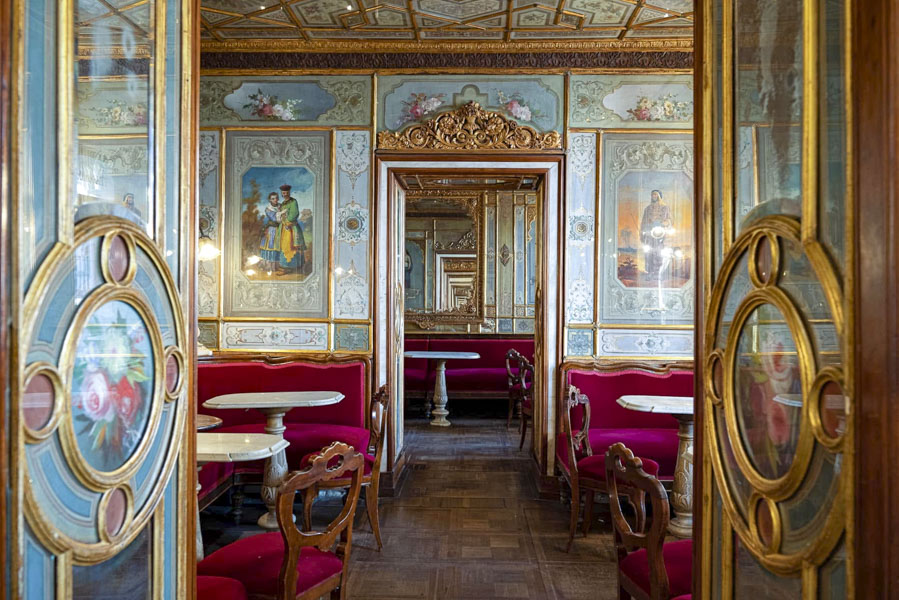
Photo source: www.facebook.com
Caffè Florian, founded in 1720 beneath the arcades of Piazza San Marco, is Venice’s most famous and atmospheric café. Its themed ornate salons, old‑world ceremony and live classical music have made it the city’s cultural living room for over three centuries. Casanova (who favoured it because it was the only café to allow women), Marcel Proust and Charles Dickens have all passed through its doors. Come here not only for coffee but also for its tiered trays of sandwiches, scones and Venetian macarons at afternoon tea.
Opposite, Gran Caffè Quadri offers a more contemporary feel despite its 18th‑century origins. Famous for selling the concentrated coffee known as “Turkish‑style”, introduced to the Venetian society by Ottoman merchants who opened a tasting shop in Venice in 1683. It is more than just a coffee house; upstairs, Ristorante Quadri provides Michelin‑starred dining with elevated views over St Mark’s Square.
Pasticceria Tonolo, founded in 1886 near Campo San Pantalon in Dorsoduro, is a legendary Venetian pastry shop and widely regarded by locals as the city’s most authentic. Unlike the grand cafés of St Mark’s Square, Tonolo remains refreshingly affordable. There are no tables, and guests follow true Italian tradition by squeezing into the narrow, bustling shop, ordering at the wooden counter and enjoying their treats standing up.
Rosa Salva, dating back to 1870, is one of Venice’s oldest and most prestigious food institutions. Originally a pioneering mobile catering service that later served the Italian Royal House, it is now run by the family’s sixth generation. It’s known for its classic sweet and savoury Venetian specialities at fair, non‑touristic prices and operates two distinct cafés in the historic centre, each with its own atmosphere. The one favoured more by locals is on Camp Santi Giovani e Paolo.
City Transport in Venice
Public Transport
Vaporettos (Water Buses)
A vaporetto is Venice’s version of a bus, and they are the main means of getting around the city and the lagoon quickly and cheaply. They serve the Grand Canal, the outer canals, the Lido, and the islands.
Purchase your ticket from machines located at the major stops such as Rialto, San Marco, and Piazzale Roma, then validate it at the electronic reader before entering the floating platform. Single ACTV tickets are valid for 75 minutes from first validation and allow transfers within that time. If you are planning to use the vaporetto network frequently during your stay, consider a 24-hour, 48-hour or 72-hour time-based pass, as they will be better value for money.
Lines 1 and 2 operate along the Grand Canal and are very frequent. Lines 1, 5.1 and 5.2 serve the Lido. Outer islands such as Murano, Burano and Torcello are reached by dedicated lagoon routes which are less frequent, particularly later in the day.
Other Transport Options
Gondolas
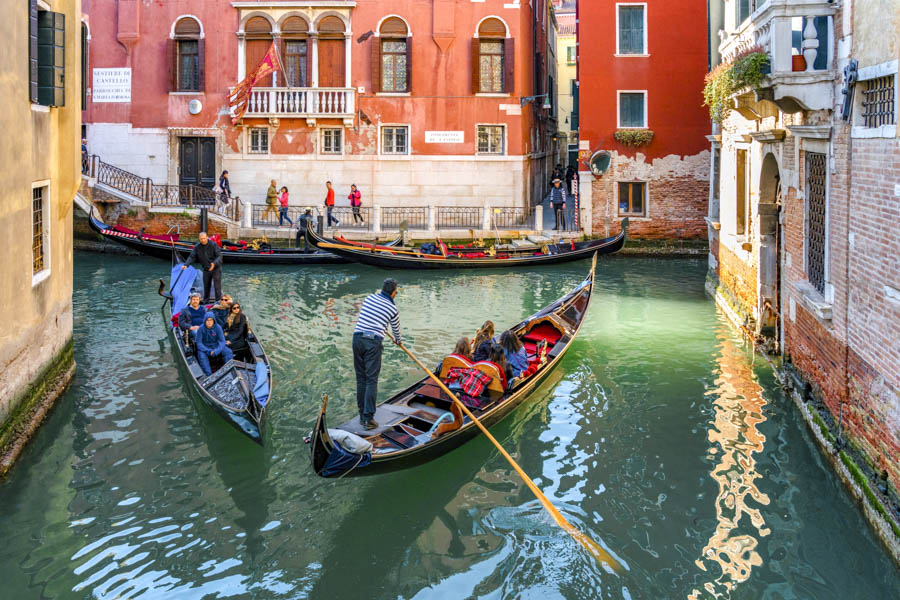
Though once the main means of getting around Venice, gondolas are now mostly used for leisure and tourism. Consider embracing a gondola ride at least once while you are in Venice, for the slow and peaceful progress up a canal is the way to appreciate the improbable beauty of its essence. You will find them fixed to traghetti (ferry) stands across the city and be charged a standard rate set by the city for a 30-minute ride. Gondola rides cost €90 for 30 minutes, higher after 19:00, but this price is for the whole boat rather than per passenger (3 to 6 people). Payment is direct to the gondolier, many of whom take cash rather than card.
For a quicker option, take a shared traghetto (a simple ferry gondola) across the Grand Canal. This journey saves the effort of walking to a bridge and gives you the experience of being transported by a gondolier, albeit in the company of other people, for about €2.
Water Taxis
These boats are identifiable by their registration number, and they are equivalent to a land-based taxi: they operate 24 hours a day and can pick you up and drop you off in locations such as private hotel docks. Though flexible and useful, a fare are between €180 and €200 from the airport, with extra charges if you have luggage. Payment is usually possible by card, but it is worth confirming this before boarding.
People Mover Shuttle
Linking Piazza Roma (Venice’s main transport hub) with Tronchetto (the main car-parking island) and the cruise terminal too, the People Mover is an automated elevated shuttle train. It costs around €1.50 per person and is quick. Payment is by contactless tap, self-service ticket machines, or mobile app.
Walking
Part of Venice’s great charm is that it is eminently walkable, and exploring its maze of alleys, bridges and canals feels like a treasure hunt. Don’t be surprised to feel disorientated occasionally and use such moments as opportunities to gaze and appreciate the corners of Venice that you might otherwise have missed.
Mapping apps on your phone will prove useful, but if you are navigating more traditionally and wondering which way up to hold your paper map, look out for the yellow signs pointing to San Marco, Rialto, Accademia, Aresenale, and Ferrovia (the station). These major landmarks are a useful internal compass to the city. Be aware that the Grand Canal only has four bridges across it, and the crowds at these bottlenecks can slow your progress. To avoid the need to walk to a bridge, consider taking a traghetto ferry (see below).
Wear comfortable shoes for exploring Venice on foot. Cobbles make high heels positively dangerous.
How to Get to Venice
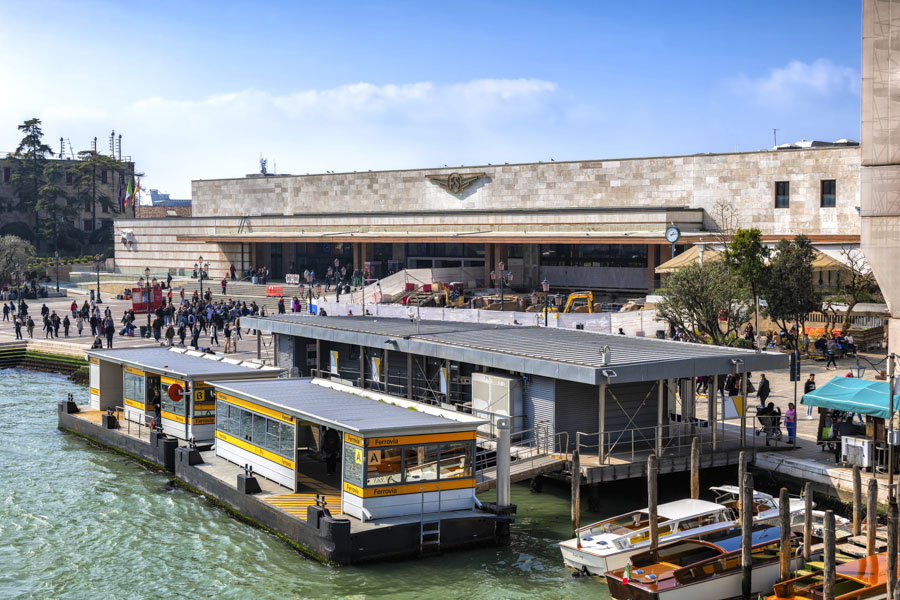
By Plane
Located on the mainland about 13 kilometres (8 miles) from Venice itself, Venice Marco Polo Airport (VCE) is one of the world’s few air gateways where you can collect your bags and hop onto a boat to reach your destination. The Alilaguna water bus connects the airport to San Marco and Rialto. Land-based options of buses and taxis will take you to the transport hub of Piazale Roma.
A secondary airport, Treviso (TSF), is about 40 kilometres (25 miles) from Venice and is the more usual touchdown point for low-cost carriers. To get to Venice from Treviso Airport involves a coach transfer to Piazale Roma.
By Train
Venice is connected to the rest of Italy by the high-speed rail network, with Frecciarossa, Frecciargento, and Italo services linking it with Verona (an hour away), Milan and Florence (both just over two hours away), Rome and Turin (about four hours), and Naples (six hours). Long-distance trains arrive at Venezia Santa Lucia station, located on the Grand Canal itself, where passengers disembark to continue on foot or by vaporetto (water-bus).
Venice has a mainland station too – Venezia Mestre – which is a major junction for regional and international trains. Services that cross the causeway to Santa Lucia also stop at Mestre, making the area around Mestre a convenient base for those wanting to stay on the mainland and visit Venice.
By Road
Venice itself is entirely car-free, so movement around the historic core is by foot or by boat. Drivers must leave vehicles at the central transport hub of Piazzale Roma or in the multi-storey car parks on Tronchetto Island. Both of these options are connected to the centre by vaporetto water-bus, and the two are linked by a People Mover train. Parking costs about €45 for 24 hours in Piazzale Roma, and spaces are scarce in peak periods, while Tronchetto’s prices are lower and long stays are more assured. For those arriving by coach, Piazzale Roma is the drop-off point before continuing by foot or water. in Piazzale Roma, and spaces are scarce in peak periods, while Tronchetto’s prices are lower and long stays are more assured. For those arriving by coach, Piazzale Roma is the drop-off point before continuing by foot or water.
Languages Spoken in Venice
Rather than having a dialect of standard Italian, Venice claims its own language (Venexiàn) that has its own vocabulary, syntax and grammar. You are most likely to hear it used in its fullest form by older residents, particularly away from tourist routes, or when Venetians want to speak to each other privately. A good place to hear it is in the working-class neighbourhood of Castello. Listen out for what linguists call the tell-tale ‘lilting prosodic’ cadence, which gives Venetian its distinctive sound, especially in everyday conversation.
Thanks to centuries of trade with the outside world, the Venetian vocabulary has absorbed influences from other languages such as Arabic, Greek and Germanic. In English, some Venice-associated terms, such as “lido” and “ghetto”, entered common usage via Italian/Venetian usage. Other Venice-linked words, like “arsenal” and “regatta”, also spread through Italian in particular contexts.
It is perfectly possible to experience Venice fully without speaking Italian, let alone Venexiàn, for staff in hotels and at the main tourist sites are generally competent in English.
Security in Venice
In Venice, more than other cities,the risk of dropping possessions in the water is real. Be careful when using your phone or camera on a boat, particularly in choppy conditions. A lanyard is a sensible precaution.
The canals of Venice are part of what makes the city so special, so at night simply move with care: take your time, watch your step on any damp or slippery surfaces after rain, and stay mindful when you’re near the canal edges.
Acqua Alta Season: Anticipate flooding with the Hi! Tide app, dedicated to Venice, which alerts you in real time in case of flood risk. Thanks to instant notifications, plan your day around the tides, avoid the most affected areas, and always follow the right route, especially if you're visiting iconic sites like St Mark's Square.
You may consult our general guide on security in Italy here.