

Address: Istiqlol Square, Rudaki Avenue, Dushanbe
Opening hours: Daily, approximately 08:00–20:00
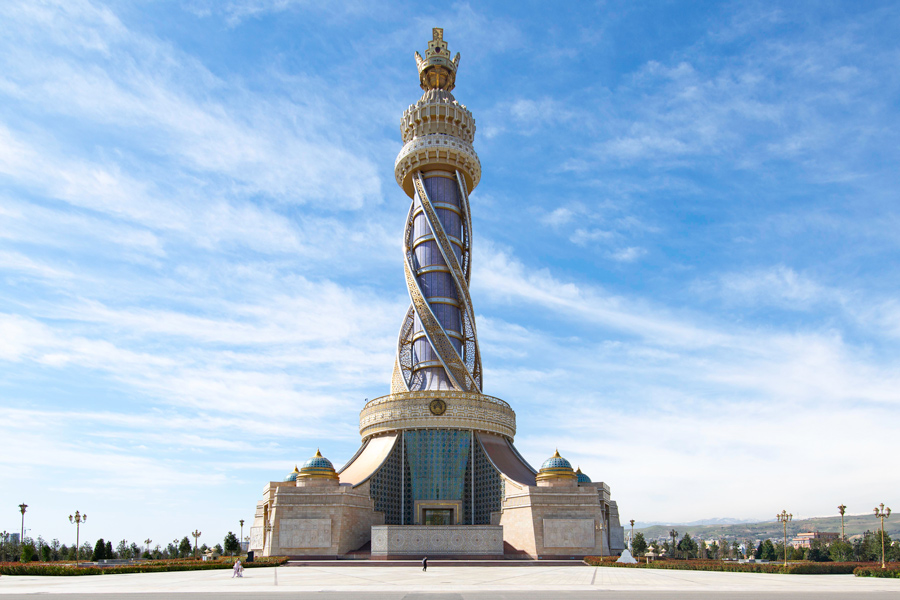
For the most breathtaking vantage point in Dushanbe, one must ascend to the 14th floor of the Istiqlol Complex. From its observation deck at a height of 94 metres, you are greeted by a captivating panorama: the city’s architectural landmarks set against the dramatic, jagged backdrop of the Pamir Mountains.
Inaugurated on 8 September 2022 to mark the anniversary of Tajikistan’s independence (Istiqlol), this ambitious complex serves as both a historical repository and a vision of the nation's future. Within its walls, millennia of history unfold – from the primitive tools of the Stone Age to the refined artistry of the modern era.
Symbolism in Stone and Steel
The central monument, reaching a total height of 121 metres, is steeped in numerological significance. The 30-metre base honours three decades of sovereignty, while the 91-metre tower pays tribute to 1991, the year of independence. Architecturally, the structure evokes the "Tree of Life", reaching upward in a gesture of growth and vitality
At the summit rests a shimmering titanium crown, mirroring the state emblem and the concept of Taj (the crown). This reflects a profound cultural sentiment in Tajikistan, where the people are often poetically referred to as the "crowned nation." Look closely and you will notice the recurring theme of the number seven – representing harmony and perfection – seen in the seven fountains encircling the monument and the seven sets of exquisitely carved wooden gates at its base.
The Museum Collections: A Journey Through Time
Halls of Craftsmanship and Decorative Arts
On the ground floor, the soul of Tajik culture is palpable. The displays feature regional costumes, intricate wood carvings, and the shimmering gold-leaf technique known as Kundal.
- Chakan Embroidery: A particular highlight is the Chakan needlework, recognised by UNESCO as Intangible Cultural Heritage. Its sun-based motifs, interspersed with pomegranates and tulips, symbolise light and fertility.
The Archaeological Gallery
This hall reveals the staggering depth of Tajik civilisation.
- Sarazm: Explore the legacy of Sarazm, a UNESCO World Heritage site dating back to the 4th millennium BC. Known as the "Beginning of the Earth", it represents one of Central Asia's oldest settled communities.
- The Throne of Ismoil Somoni: The gallery’s focal point is a symbolic gilded throne of the 9th-century founder of the Tajik state. Crafted from walnut and encrusted with gems, it is surrounded by seven golden keys representing the nation's principal cities
- The Oxus Treasure: Of particular interest to British visitors are the replicas of the Oxus Treasure (1st millennium BC). While the original gold and silver artefacts are famously housed in the British Museum, these replicas provide essential context to the site of their discovery near Takhti-Sangin.
The Evolution of Dushanbe
While Dushanbe officially achieved city status in 1924, the museum chronicles human habitation in the area back to the 4th millennium BC. The second-floor exhibits range from Bronze Age artefacts and Greco-Bactrian treasures to a detailed look at the Soviet era and the modern skyline, featuring intricate models of the Palace of Nations.
Treasures of the Earth: Minerals and Gems
Tajikistan is a land of vertical extremes, with peaks reaching 7,495 metres. The Hall of Stones and Minerals showcases this geological wealth.
A Historical Note: Tajik Lapis Lazuli was once so coveted that it formed the "Lapis Lazuli Road," a precursor to the Great Silk Road.
Today, visitors can admire raw and polished specimens of turquoise, jasper, onyx, and carnelian, alongside exquisite jewellery crafted by local masters.
The Observation Deck: Above the Capital
The circular observation deck is one of the highest in Central Asia. Telescopes allow you to inspect the city’s landmarks with precision:
The Abu Hanifa Mosque, a majestic feat of modern Islamic architecture.
The Dushanbe Flagpole, which at 165 metres once held the Guinness World Record for its height.
The four historic districts of the city: Ismoili Somoni, Sino, Firdavsi, and Shohmansur.
Expert Recommendation: Visit during the "Golden Hour." As the sun sets behind the Gissar Range, the city lights begin to twinkle, offering a sophisticated and tranquil end to your exploration.
Practical Considerations for the Visitor
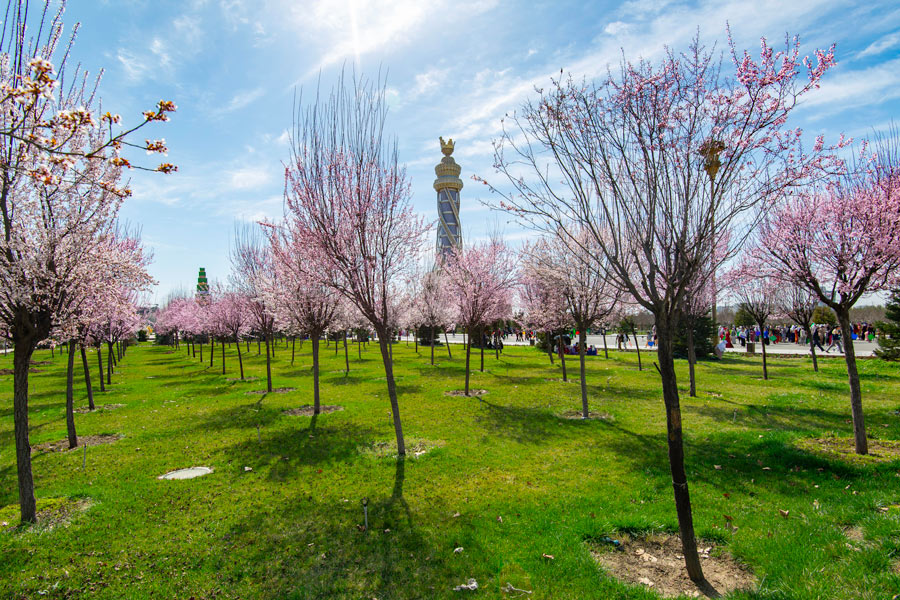
- Parkland: The monument is surrounded by 40 hectares of beautifully landscaped parkland, perfect for a leisurely stroll. Entry to the park is free, while a modest fee applies for the museum and observation deck.
- Souvenirs: The ground floor boutiques offer high-quality traditional art and handicrafts, far superior to standard tourist trinkets.
- Modern Amenities: For those interested in contemporary media, the complex also features a 5D cinema hall.