

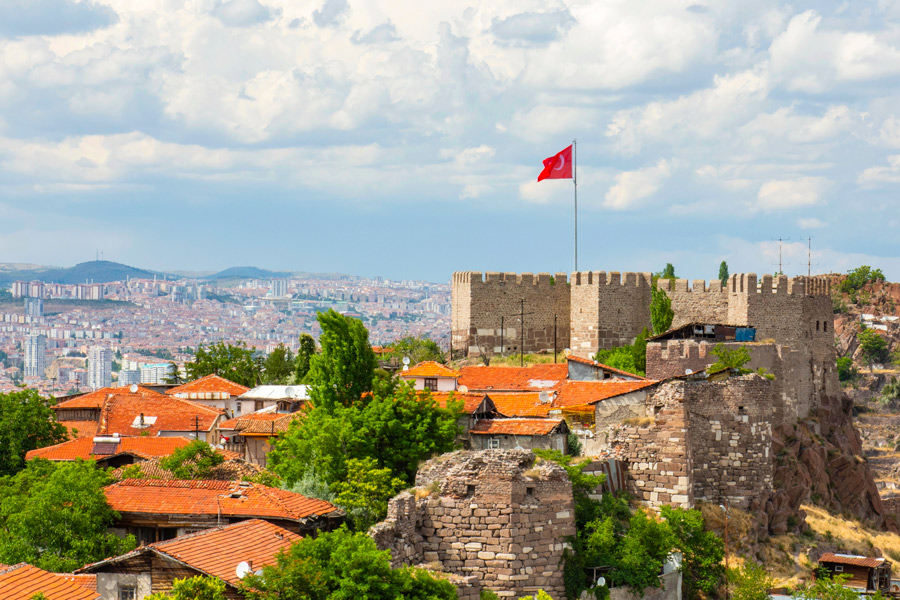
Rising above the narrow streets of Ulus, Ankara Castle (Ankara Kalesi) stands where it has stood for more than two thousand years. The hill at the heart of Ankara has been fortified since at least the Phrygian period, around the 8th-7th centuries BCE. Most of the surviving walls, however, date from the Byzantine era, and that sense of deep continuity is unmistakable long before any plaque comes into view.
The approach leads uphill through the lanes of the Ulus district. At each turn, more of the city comes into view – red-tiled rooftops, slender minarets, and the broad sweep of modern Ankara. From the upper ramparts, the landscape opens below – old Ulus tumbling away down the hillside, orderly boulevards and newer neighbourhoods stretching outward, and the bare Anatolian plateau on the horizon.
Inside the inner enclosure (İç Kale), the atmosphere shifts. What emerges is a compact, lived-in quarter. Ottoman-era houses with timber balconies stand alongside small workshops, cafés, and a modest mosque. Along the walls, column drums, carved blocks, and inscribed slabs sit embedded in the masonry. Many of these fragments are spolia – reused Roman architectural elements from ancient Ancyra, built into the structure during later repairs. Each one has been quietly absorbed into the city that followed.
The castle asks little and returns a great deal. There are no crowds to manage, no timed entry, no prescribed route – only a hill, a set of old walls, and the city that has grown around them for centuries.
Best Time to Visit Ankara Castle
Spring and autumn are the most rewarding seasons to visit Ankara Castle: mild temperatures, good light, and a climb that feels more like a stroll than a challenge.
Spring (April–May) brings temperatures of around 15-22°C, clear skies, and a freshness in the air that makes the walk through the lanes of Ulus especially pleasant. The soft morning light brings out the texture of the stonework particularly well.
Autumn (September–October) is equally appealing – often the finest season of all. The summer crowds have thinned, the air is crisp, and the low afternoon sun gives the walls a warm, golden tone.
Summer (June–August) calls for an early start. Temperatures regularly reach 30–35°C, and the upper ramparts offer little shade. Arriving before 10:00 or after 17:00 makes the visit far more comfortable – and the late light over the city makes the timing worthwhile.
Winter (November–March) is quieter and more atmospheric than many travellers assume. The streets empty out, temperatures hover around 0–5°C, and the wind on the upper sections has a bite to it. For visitors who do not mind wrapping up, the low winter light gives the castle a more contemplative character.
Opening Hours
Ankara Castle has no fixed opening hours. As a living neighbourhood rather than a managed heritage site, the outer enclosure (Dış Kale) and its streets are generally accessible throughout daylight hours. Entry is free of charge.
Practical Information
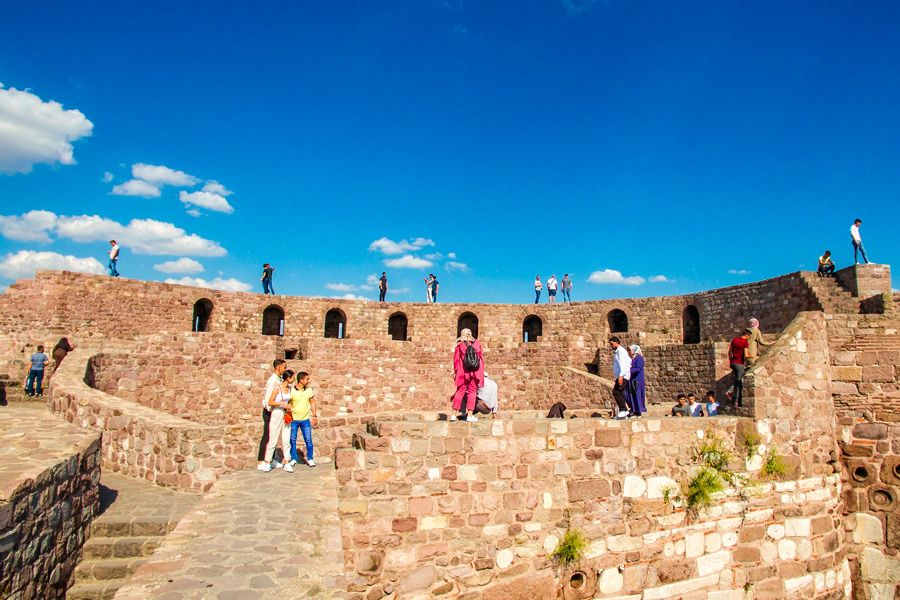
Ankara Castle is easy to visit independently. Come during daylight hours – cobbled paths and uneven stone steps become harder to navigate in low light. Signage is primarily in Turkish, and some areas have limited English-language information panels.
Address: Kale, 06240 Altındağ, Ankara
Contact: Ankara Provincial Directorate of Culture and Tourism
Tel: +90 (312) 415 48 00 | Tourism line: Alo 176 | Email: iktm06@ktb.gov.tr
How to Navigate the Site
Ankara Castle is best understood as two layers, one inside the other, and the difference between them becomes clear as you climb.
Most visits begin in the outer enclosure (Dış Kale). The pace naturally slows here. Alleyways wind past timber-fronted houses, small workshops, and restaurants tucked into restored buildings. The medieval walls are part of the neighbourhood – background to daily life rather than the main event.
From there, the path steepens towards the inner citadel (İç Kale). The fortifications grow taller, the towers draw closer together, and the skyline becomes fully visible. Two landmarks stand out along this route: the Akkale Tower at the north-eastern corner and Şark Kulesi to the east, which offer the widest panorama over the city.
A natural route runs from the lower entrance gate through the outer enclosure, then up to the inner citadel for the best-preserved stretches of wall and the main viewpoints. Descending the same way works well, though the lanes on the western slope offer a different perspective if time allows. A comfortable visit usually takes from 1.5 to 2.5 hours.
History of Ankara Castle
This hill has been fortified for well over two thousand years, and it has not stood empty since. The Phrygians were the first to recognise the value of the ridge, raising their citadel here around the 8th–7th century BCE. The Galatians held it after them. Then came the Romans, who left their mark across the city they called Ancyra. When Byzantine builders later rebuilt the circuit, they drew on whatever the city could supply – stone from Roman temples, public buildings, and monuments worked into the new walls rather than cleared away. Some of it, scholars believe, came from the Temple of Augustus itself, the building whose inner walls preserve one of the most significant Latin inscriptions to survive from the ancient world.
The Byzantines rebuilt the circuit more substantially in the 7th century CE – a period when Ankara stood near the contested frontier between the Byzantine Empire and the expanding Arab Caliphates. The citadel's dense design reflects the urgency of that moment: towers at short intervals, compact wall sections, a fortification built for a city that expected to be tested. The ramparts were reinforced again in the 9th century after periods of damage. Seljuk and Ottoman repairs followed – not replacements, but additions, each layer settling over the last without erasing it.
One detail catches most visitors off guard. Reports describe a substantial Second World War-era shelter cut into the rock beneath the castle. This hill was never likely to be left to history alone.
Highlights
The Panoramic View Over Ankara
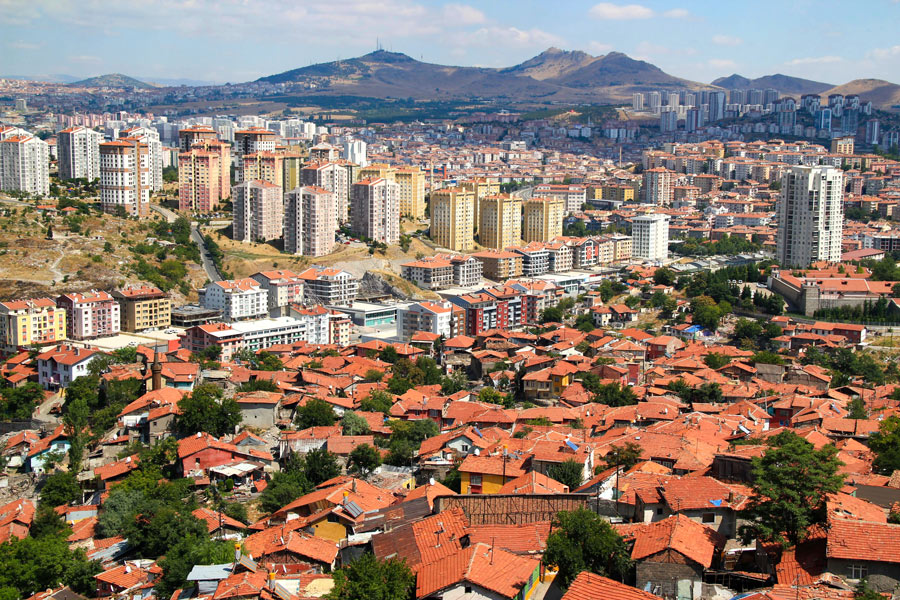
Stand on the upper ramparts near Şark Kulesi and the city arranges itself below you. To the south, the wide boulevards and civic squares of modern Ankara stretch toward the horizon – orderly, purposeful, and very much of the twentieth century. Turn north and the picture changes: the older Ulus quarter spills down the hillside in a tangle of rooftops and winding streets, the city as it looked long before anyone thought to make it a capital.
Anıtkabir is visible in the distance. Closer in, the trees of Gençlik Park and the domes and minarets of Melike Hatun Mosque mark out the skyline. Late afternoon is the best time to be here – the heat eases, the light sharpens, and the full extent of the city comes into relief.
The Inner Citadel Walls (İç Kale)
The inner enclosure is where the castle's age becomes something you can actually see. The stonework is thick, uneven, and layered – different stones, different textures, different periods sitting side by side in the same stretch of masonry. In places, the alternating courses of brick and stone reveal the Byzantine hand clearly – a building technique that stands apart from the rougher repairs added in later centuries. Nowhere in Ankara does the past feel quite this immediate.
The Outer Enclosure (Dış Kale) Streetscape
Within the outer circuit, the castle feels part historic site, part functioning district. Timber-fronted houses lean over narrow streets, small workshops stay open through the afternoon, and simple restaurants occupy restored buildings. The atmosphere is unhurried and unforced – not a staged heritage quarter, but a place where everyday life continues inside fortifications that are over a thousand years old.
The Small Mosque Within the Citadel
A modest Ottoman mosque stands within the inner enclosure, still in use today. Most visitors walk past without stopping – but it is worth a pause. Its presence inside a military fortification tells you something that no plaque quite captures: this was never just a defensive position. People lived here, prayed here, and went about their daily lives within these walls.
Hidden Details in the Stonework
Some of the most memorable details at Ankara Castle are the ones that become visible only when you slow down. The inner citadel is often described as having around 40 towers, many of them pentagonal, with walls rising to roughly 14–16 metres in places. The towers stand at short intervals, the wall sections between them are compact, and the ramparts create a dense, purposeful rhythm.
Look more closely and the walls begin to tell a longer story. Above the Hisar Kapısı gate, an Ilkhanid inscription dated 1330 is still legible. A second repair inscription in the north-western section marks Seljuk-period restoration work. These details are easy to walk past, but they show that the walls were repaired, reinforced, and adapted by each power that held this ridge.
How to Get to Ankara Castle
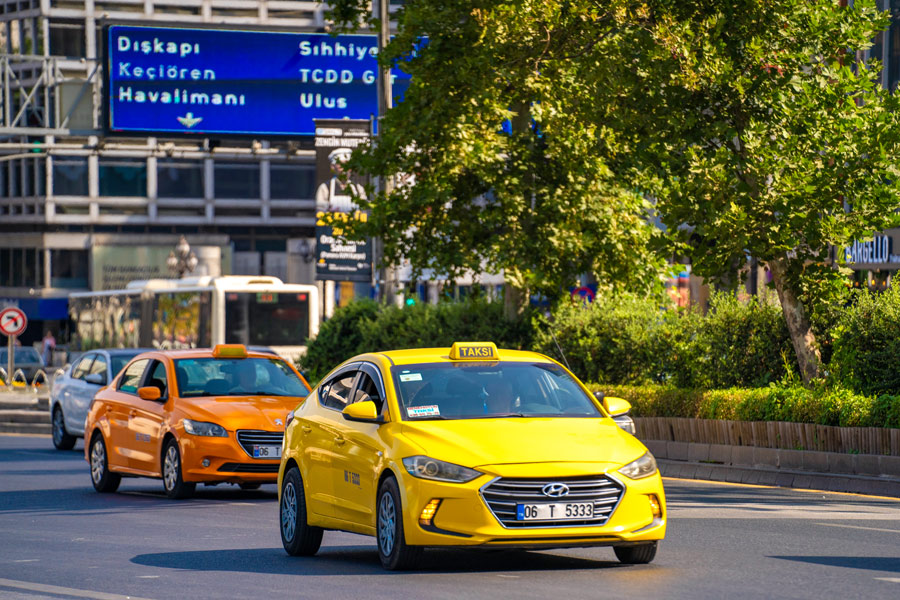
Ankara Castle sits above the Ulus district, and most routes pass through Ulus before the climb begins.
By metro and on foot: Ulus station on the Ankara Metro (M1 line) brings visitors to the foot of the castle hill. From there, the castle is a 15–20-minute walk uphill through the Ulus bazaar streets, following signs for Ankara Castle. A free city ring service also connects key Ulus heritage stops – including the Museum of Anatolian Civilisations and Ankara Castle – daily from 10:00–12:00 and 13:00–18:00, with departures roughly every 30 minutes from a stop opposite Ulus Metro Station. This is a useful option if you would prefer to skip the climb.
By taxi: Taxis from central Ankara (Kızılay) usually reach the lower entrance gate in around 10–15 minutes, depending on traffic. Ask to be dropped at the lower gate of the walls (Dış Kale).
By bus: Several municipal bus routes serve the Ulus district. Check the EGO website for current route numbers and stops, as these may change.
Tips for an Optimal Visit
Recommended duration: Plan to spend 1.5–2.5 hours at the castle. A shorter visit of 60–90 minutes covers the inner citadel and the main viewpoints. A longer stay allows time to explore the lanes of the outer enclosure on foot and stop for refreshments at one of the small restaurants within the castle area.
Best time of day: Early morning offers the most comfortable conditions for the ascent and the best light for photography. Midday in summer can be hot and exposed on the upper ramparts. Late afternoon, when the light softens, is a good time to explore the outer enclosure.
Suggested route: Enter through the lower gate and allow 20–30 minutes to walk the streets within the outer walls. Ascend to the inner citadel and spend 30–45 minutes exploring the defences, towers, and viewpoints. Descend at a relaxed pace, with the option of pausing at the mosque if it is open and stopping at one of the terrace restaurants on the way down.
Footwear: Wear sturdy, flat-soled shoes. The cobbled paths and stone steps are uneven and can be slippery after rain.
What to bring: Water, particularly in summer. Sun protection, especially on the upper ramparts. A small amount of cash for refreshments within the walls.
Ankara Castle turns out to be one of the most memorable stops in the city – not because of a single dramatic moment, but because of the way the experience builds. The climb, the outlook, the narrow streets, the old stonework. By the time you descend, the city below looks a little different – and the logic of the hill becomes clearer.