

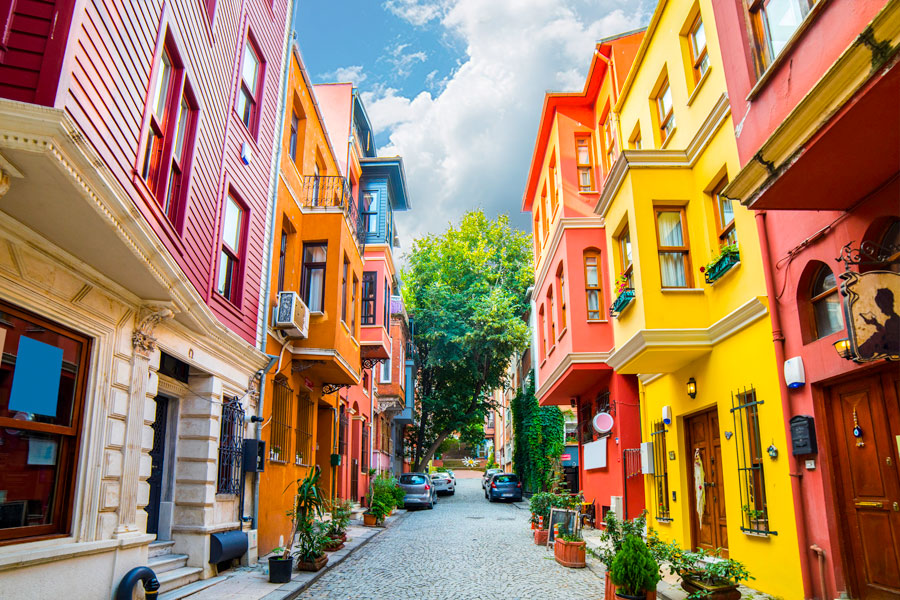
Balat Istanbul is among the city’s most atmospheric neighbourhoods. Here, history unfolds along cobbled streets, colourful houses, cafes, synagogues, churches, and mosques.
Sited on the western shore of the Golden Horn, Balat offers a more authentic side of Istanbul, Turkey, far from the crowds of Sultanahmet or Taksim. That is where the famed Iron Church, the Palace of Porphyrogenitus, and the Red School are located.
For travellers who enjoy history, photography, local culture, and walking through lived-in streets, Balat is one of the most rewarding things to do in Turkey.
What Is the Balat Neighbourhood?
For centuries, Balat was home to Jewish, Greek Orthodox, and Armenian communities.
Today, the district is known for its preserved historic buildings, brightly-hued houses, religious landmarks, and a growing café and art scene. In fact, it is part of the protected UNESCO World Heritage Sites under the Historic Areas of Istanbul.
Unlike more polished tourist areas, the old streets of Balat feel real. Laundry hangs between balconies; children play in the streets, and cafés occupy former workshops and homes.
Where Is Balat Istanbul Situated?
Balat is situated in a historic quarter in the Fatih district of Istanbul between Fener and Ayvansaray, overlooking the Golden Horn inlet.
It is often visited together with Fener, as the two neighbourhoods share a similar historical background and are connected by narrow streets and waterfront paths.
A Brief History of Balat
Balat’s history is closely tied to Istanbul's multicultural fabric. Following the Ottoman conquest of Constantinople in 1453, Jewish communities – including those expelled from Spain in 1492 – were encouraged to settle in the area. Over time, Balat became an important Jewish quarter in the Ottoman Empire.
Alongside Jewish residents, Greek Orthodox and Armenian populations also shaped the neighbourhood. Churches, synagogues, schools, and charitable institutions were built. Many of them still stand today.
Fires and periods of decline in the 19th and early 20th centuries changed the area’s fortunes. Yet Balat always preserved its identity.
In recent years, restoration and renewed interest in Istanbul’s historic districts have brought Balat back into the spotlight, without erasing its local soul.
Things to Do in Balat
Discover Historic Religious Sites
There are several Balat landmarks you cannot miss – and they will definitely end up in your camera roll.
Start with the ruins of a late 13th-century Byzantine palace called the Palace of the Porphyrogenitus (Tekfur Sarayı Müzesi). In fact, the district gets its name from this very structure.
A powerful reminder of the area's Jewish heritage is the Ahrida Synagogue (Ahrida Sinagogu), believed to be the oldest synagogue in Istanbul. It was built in 1472.
Close to the Golden Horn pier, you will find the Ferruh Kethüda Mosque (Ferruh Kethüda Camii), dating back to the mid-16th century. It is possibly the work of the great Ottoman architect, Mimar Sinan.
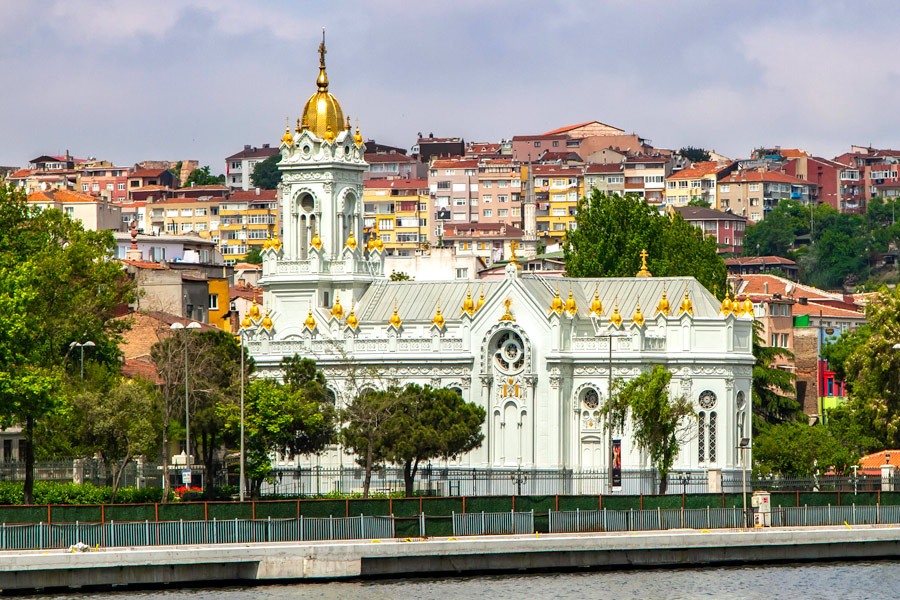
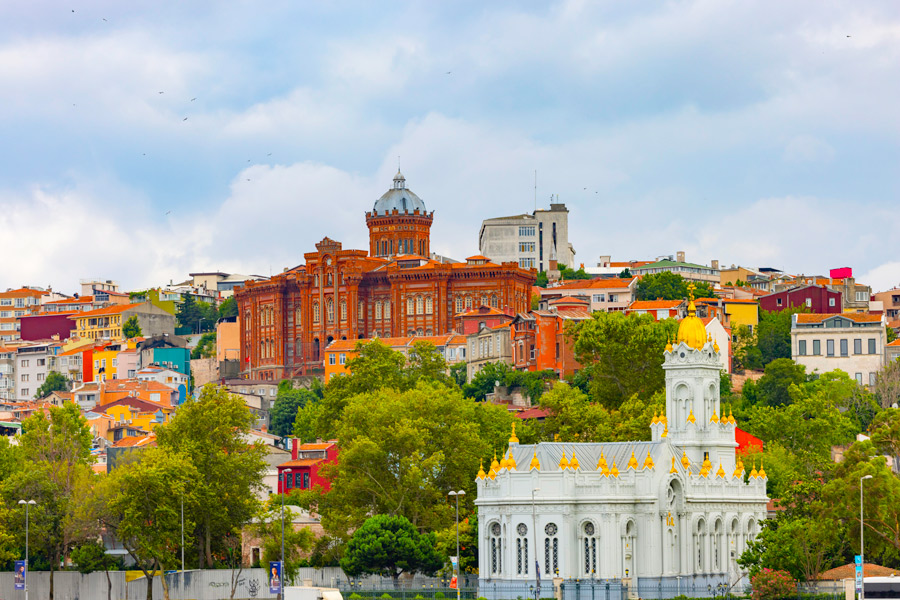
Also, along the waterfront stands the stunning St. Stephen’s Bulgarian Church (Sveti Stefan Kilisesi), often called the Iron Church (Demir Kilise). It earned this nickname because it was built using cast iron shipped from Vienna in the late 19th century.
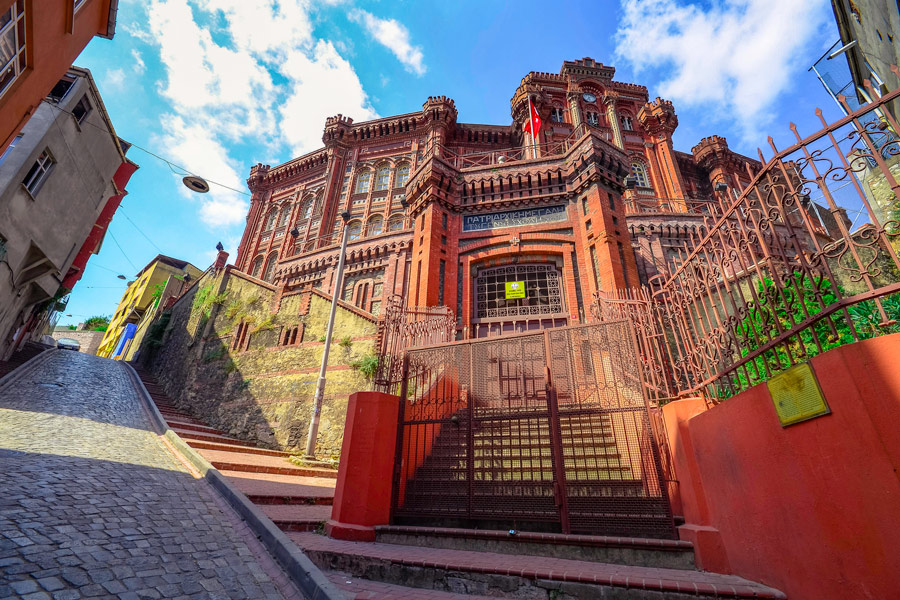
As you stroll through Fener, one building is sure to catch your eye – an impressive red-brick structure – the Red School. This is the Phanar Greek Orthodox College (Özel Fener Rum Lisesi), with its striking architecture. While access to the courtyard and interior is limited, you can still admire and photograph it from the outside.
Nearby, you will find the Fener Greek Orthodox Patriarchate, which houses the Patriarchal Church of St. George (Aya Yorgi Rum Ortodoks Kilisesi).
To the north of the Red School in Fener stands the Church of Saint Mary of the Mongols (Meryem Ana Rum Ortodoks Kilisesi). This beautiful Greek Orthodox church displays distinctive Byzantine architecture and impressive iconography. The church dates to the 7th century and was officially opened in 1281.
Balat is also home to the Panorama 1453 History Museum (Panorama 1453 Tarih Müzesi), the very spot where Mehmed the Conqueror entered the city with his army.
Browse Antique Shops and Catch a Live Auction
Balat is dotted with a few excellent antique stores. Some even host live auctions. Lighthouse Antique Auctions is a great venue to experience the thrill of bidding.
At Magic Lantern, guests will discover vintage toys ranging from delicate dolls to miniature carousels. Then there is Meison Balat (also called Meison Start) – a stylish antique shop that doubles as a cosy café.
Explore Balat Vintage Shopping
If you have a hipster spirit, do not miss Backstage Vintage (Kulis Vintage). This trendy second-hand shop near Magic Lantern sells a wide variety of pre-loved clothing at reasonable prices.
Take Part in Local Workshops
Why not kick off your morning with coffee at Workshop Head (Atölye Kafası), a peaceful café by the Golden Horn that also sells handcrafted wooden items?
Another hidden gem is Balart, a small ceramic studio where you can find miniature, colourful replicas of Balat’s iconic houses. The owner even runs workshops where visitors can learn to make their own ceramic keepsakes.
After wandering around Istanbul shopping malls and big-name stores, it is refreshing to find something different. In Balat, tourists will stumble upon a few wonderful gift shops selling handmade goods. Be sure to stop by Rawcrafts for one-of-a-kind souvenirs.
Take Photos of the Most Scenic Spots in Istanbul
Visiting Balat is one of the most authentic activities in Turkey. A typical route starts along the Golden Horn, moves uphill through Balat’s streets, continues into Fener, and ends near the Patriarchate. This flow minimises steep climbs while covering the main Balat sights.
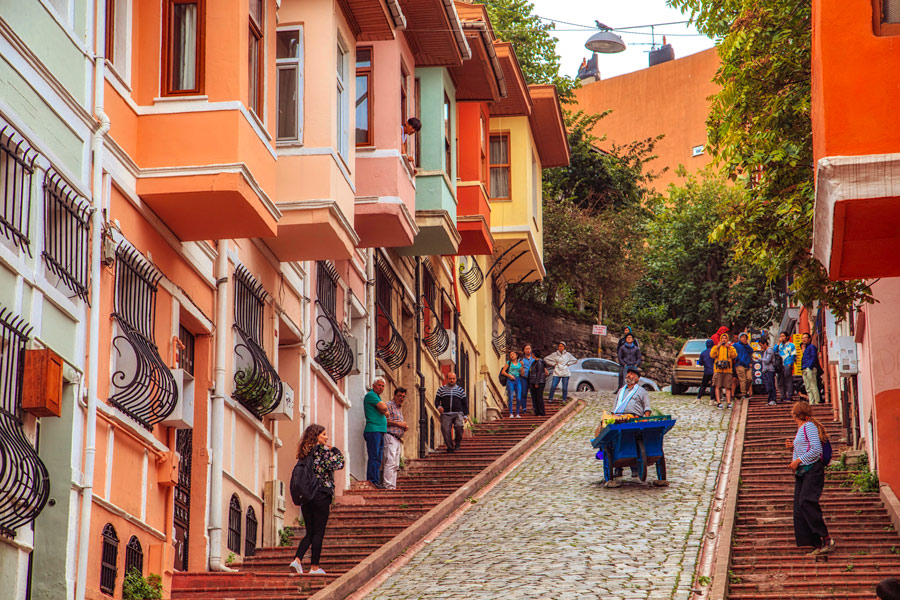
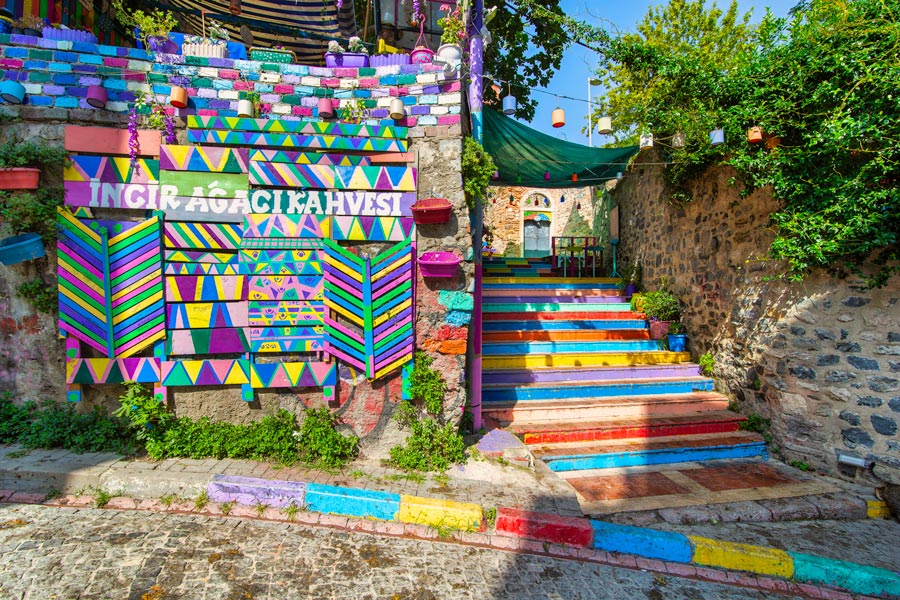
Balat’s brightly painted houses and narrow streets are among the most photographed scenes in Istanbul. The Coloured Houses of Balat (Balat Renkli Evler) capture the neighbourhood’s vibrant character.
A favourite spot for photographers is Colourful Stairs (Renkli Merdivenler), especially the staircase in front of İncir Ağacı Kahvesi. And the nearby Staircase Slope (Merdivenli Yokuş) or Pierre Lotti Hill has become a visual symbol of the city.
As many of these spots are in residential streets, visitors are encouraged to photograph respectfully and avoid blocking doorways or disturbing local life.
Where to Eat Local Turkish Food in Balat
Start Your Day with a Traditional Turkish Breakfast Spread
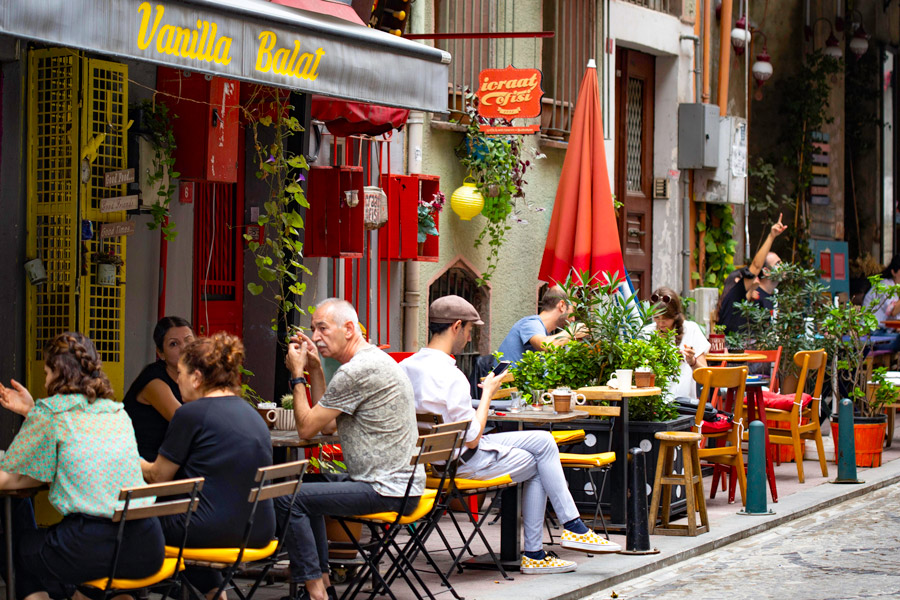
A true Turkish morning begins with kahvaltı – a breakfast that is more of a feast than a meal. And there is no better place for this than the vibrant neighbourhood of Balat.
Just a five-minute walk from the Church of Saint Mary of the Mongols, you will find Forno, a popular weekend breakfast spot. Here, anyone can enjoy an open buffet featuring fresh-baked pide (Turkish flatbread) with a variety of toppings.
Nearby, Cafesehrengiz boasts a charming ambience. Their menu includes Turkish-style dumplings and sandwiches, all served to the backdrop of soundtracks from classic Turkish films.
Tucked away inside Balat’s historic alleyways, Patika Cafe Kahvaltı catches the eye with its cheerful orange and turquoise exterior. Inside, it serves a traditional Turkish breakfast spread with olives, cheeses, tomatoes, jams, eggs, and more. They also serve third-wave coffee, desserts like cheesecake, regional snacks such as Kayseri's mantı (Turkish dumplings), schnitzel, and plenty of vegan or vegetarian options, including falafel and veggie burgers.
Taste Turkish Dishes in Balat’s Taverns
When in Istanbul, dining at a tavern – or meyhane, as the locals call it – is a must for food lovers. These traditional eateries specialise in meze, a delicious selection of small dishes meant to be shared. And in Balat, you are spoiled for choice.
Barba Vasilis is Istanbul’s famous tavern, especially if you are craving Greek-style meze paired with seafood. It is located on the ground floor of the Troya Boutique Hotel.
For something more adventurous, head to Cibali Balıkçısı Restaurant, not far from the Egyptian Bazaar (Mısır Çarşısı). Here, you can try sardines wrapped in grape leaves, along with a wide variety of meze inspired by Greek, Turkish, and Armenian cuisines.
Another excellent option is Balat Sahil Restaurant, known for its fresh seafood and bold local flavours. If you are feeling daring, try the liver wrapped in vine leaves, stuffed onions, or pickled mushrooms.
And as a bonus, most of these taverns render spectacular views of the Golden Horn, adding a scenic touch to your dining experience in Turkey.
Balat Walking Tours Combined with Fener
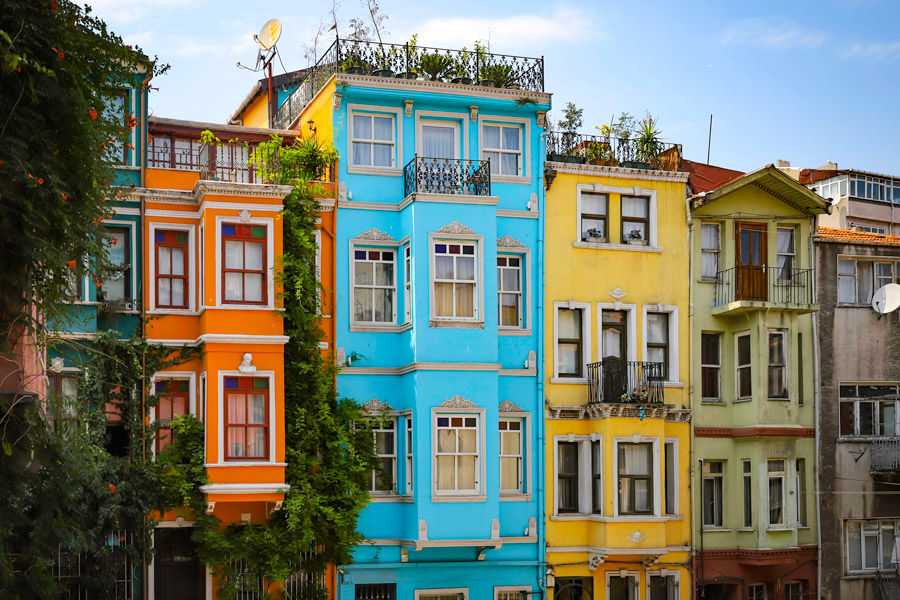
Balat is often toured together with the neighbouring district of Fener, another historic quarter with a strong Greek Orthodox heritage. The two areas flow naturally into one another and can be easily explored on foot during a single visit.
Practical Travel Tips for Visiting Balat
Best Time of Day to Visit Balat
The best time to visit Balat is in the morning, when the streets are quieter and better lit. Weekends and afternoons tend to be busier.
Best Season to Visit Balat
During spring and autumn, tourists can enjoy the best weather. Summers can be hot, and winters are often cool and rainy.
Is Balat Safe for Tourists?
Balat Istanbul is generally safe, but it is a residential area. Hence, visitors should dress modestly, avoid loud behaviour, and respect private property.
Balat vs Other Istanbul Neighbourhoods
Balat vs Fener
Balat feels more residential and colourful, while Fener is more institutional and religious.
Balat vs Karaköy
Karaköy is trendier and more commercial; Balat is quieter and more traditional.
Balat vs Istiklal Street
Istiklal Street focuses on landmarks and nightlife; Balat focuses on atmosphere and history.
How Much Time Do You Need in Balat?
Most travellers spend half a day in Balat. When combined with Fener and the Golden Horn, it can comfortably fill a full day.
How to Get to Balat by Public Transport
- Bus: Several buses from Eminönü and other central areas stop along the Golden Horn road.
- Tram + Bus: You can take the tram to Eminönü and continue by bus or taxi.
- Ferry: Ferries along the Golden Horn provide a scenic alternative.
Frequently Asked Questions About Balat Istanbul
Is Balat Istanbul worth visiting?
Yes, especially travellers interested in culture, history, and authentic neighbourhoods.
Is Balat touristy?
Parts are touristy, but it remains largely residential.
Can Balat be visited independently?
Yes, though guided tours provide a deeper understanding.
Is Balat suitable for families?
Yes, but strollers can be difficult on steep streets.
Are attractions free?
Most streets and churches are free; some sites may request donations.