


With its mountain resorts and varied skiing terrain, Georgia attracts skiers and snowboarders throughout winter. In the Caucasus Mountains, ski lifts climb towards snow-covered peaks, while pistes stretch across open slopes and through thick forests.
The five main ski resorts in Georgia cater to different tastes and abilities. Gudauri offers high-altitude slopes and freeride opportunities, while with spruce forests, Bakuriani is popular with families and beginners. Farther west, Hatsvali and Tetnuldi bring skiers to the mountains of Svaneti, with Mestia serving as their main base. In Adjara, Goderdzi attracts visitors with its abundant snowfall and forested slopes.
Mountain villages, traditional cuisine and centuries-old architecture add a cultural value to a skiing holiday in Georgia. In Svaneti, mediaeval stone towers stand beneath the snowy Caucasus peaks. Experienced skiers can venture beyond established resorts, with Bakhmaro and other mountain areas offering guided cat skiing.
Georgia Ski Resorts at a Glance
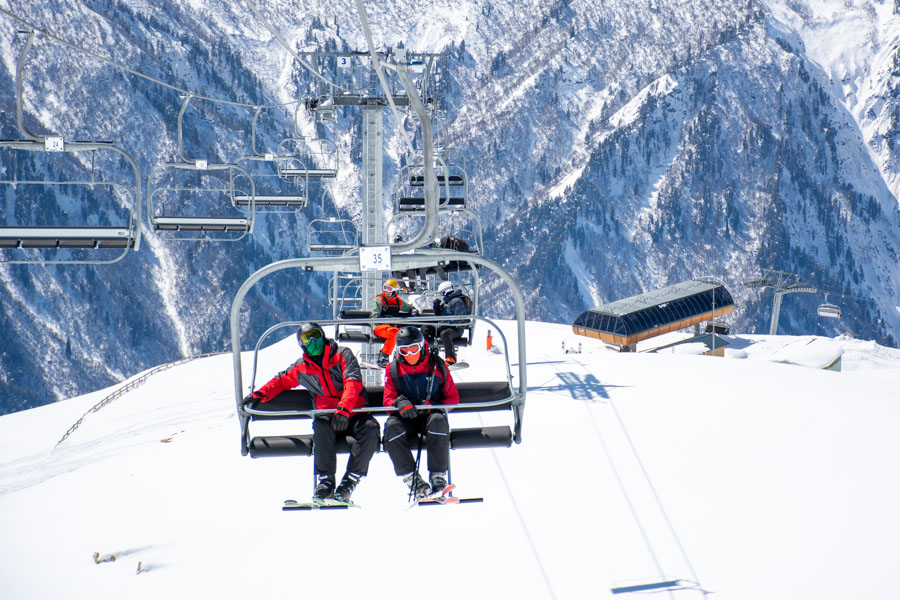
Georgia’s five main ski destinations differ considerably in size and layout. Gudauri’s lifts connect several mountain sectors, while Bakuriani’s Didveli, Kokhta and Mitarbi are reached separately. In Svaneti, Hatsvali and Tetnuldi ski resorts occupy different mountains, with Mestia serving as their base.
The table below compares the highest skiing elevations and approximate lengths of marked runs at each destination.
| Ski Resort | Highest Skiing Elevation | Marked Pistes (approximately) | Main Ski Areas |
| Gudauri | 3,276 metres (10,748 feet) | More than 80 kilometres (49.7 miles) | Gudauri and Kobi |
| Bakuriani | 2,702 metres (8,865 feet) | 29.1 kilometres (18.1 miles) | Didveli, Kokhta and Mitarbi |
| Hatsvali | 2,348 metres (7,703 feet) | 7 kilometres (4.3 miles) | Mestia and Hatsvali |
| Tetnuldi | 3,160 metres (10,367 feet) | 13 kilometres (8.1 miles) | Mestia and Tetnuldi |
| Goderdzi | 2,366 metres (7,756 feet) | 8.4 kilometres (5.2 miles) | Goderdzi |
Georgia Ski Tours
Ski tours in Georgia take you from Gudauri’s open slopes to Bakuriani’s snowy forests and Svaneti’s towering peaks. If you prefer a single-resort holiday, the 4-day Gudauri Ski Tour includes airport transfers and accommodation. Farther west, the 7-day Svaneti Ski Tour takes visitors to Mestia, with daily transfers to Tetnuldi’s ski area. This programme can begin in Tbilisi, Kutaisi or Batumi.
Travellers wishing to experience different skiing regions can choose the 7-day Bakuriani and Gudauri Ski Tour. The route passes through Borjomi before continuing to Bakuriani and Gudauri, with a stop at Ananuri Fortress.
For a longer Georgia ski holiday, the 11-day Grand Winter Tour connects Gudauri, Bakuriani and Mestia. The itinerary also includes sightseeing in Tbilisi and snowshoe trekking through the winter forests of Borjomi-Kharagauli National Park.
A ski holiday in Georgia offers the chance to combine mountain sports with the country’s Silk Road heritage.
Ski passes and equipment rental are generally not included in the tour price; please therefore check the terms and conditions specific to each tour.
Best Time to Ski in Georgia
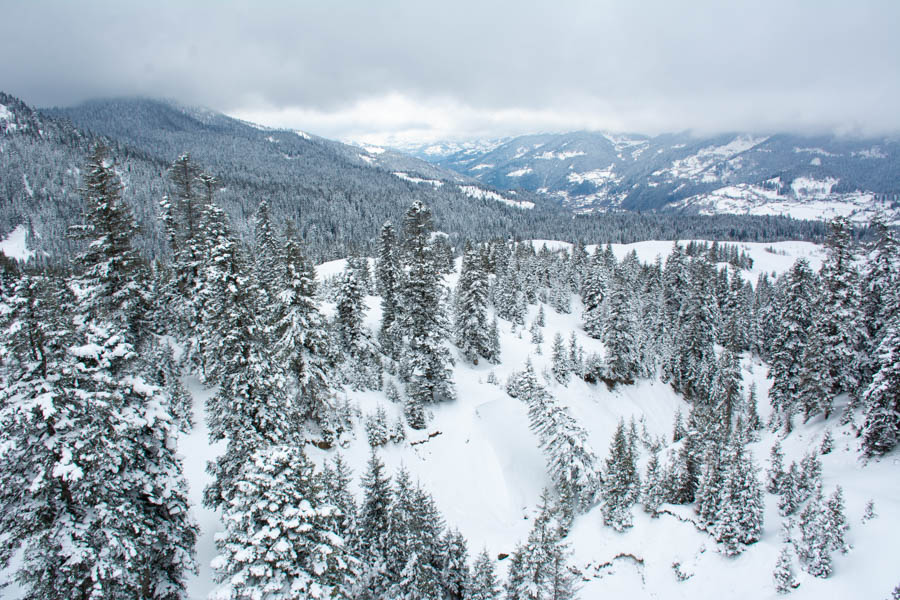
If you’re deciding when to ski in Georgia, January and February are the best choices, bringing the full snow cover. December marks the beginning of the season, although some lifts may open later depending on snowfall.
Spring still brings plenty of skiing, even as temperatures begin to rise in Tbilisi and the lowlands. March often has good snow conditions, while the higher slopes of Gudauri and Tetnuldi remain open into April. Longer daylight hours and milder weather make spring an attractive time to visit, although the snow tends to soften as temperatures rise.
In summer, Georgia has no regular lift-served summer skiing, even though snow and ice remain on its highest mountains. Some cable cars continue operating for sightseeing, while major ski resorts become popular destinations for hiking and mountain excursions. Skiing on remote glaciers is a specialised mountaineering activity rather than a conventional summer holiday.
Autumn brings the first snowfalls to the upper Caucasus, sometimes as early as October. However, these rarely provide enough coverage for skiing. November is too early to plan a skiing holiday, even if the mountain peaks are already covered in white.
Gudauri Ski Resort
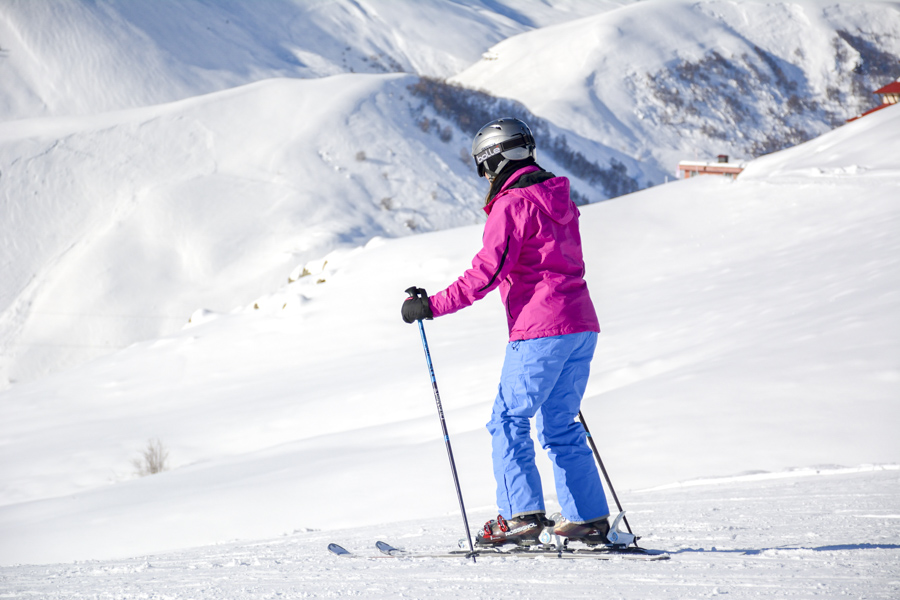
Set above the Georgian Military Highway, Gudauri is Georgia’s largest and highest ski resort, surrounded by the peaks of the Caucasus. Established as a winter sports destination in the late 1980s, it developed into the country’s centre for alpine skiing. Its treeless mountainsides allow long descents and wide views, though strong winds can make skiing difficult.
Ski Areas and Difficulty Levels
Skiing in Gudauri takes place across several interconnected mountain sectors, with marked routes for different abilities. Gentle green trails serve those learning their first turns, while blue runs provide longer, manageable descents. Experienced skiers can head towards Kudebi and the upper mountain, where steeper red and black routes demand greater control.
The Kobi connection extends the skiing area to the northern side of the Caucasus. Snow here often retains its quality longer into spring, thanks to the mountain’s orientation.
Ski Lifts and Facilities
Gudauri Ski Resort has 14 operating cableway lines, built by Doppelmayr of Austria and POMA of France. POMA was also contracted to build the Tianmen Mountain Cableway in China. This extensive network of gondolas and chairlifts connects New Gudauri with the higher sections of the mountain. The Good Aura gondola serves the main skiing area, while other lifts provide access towards Kudebi, Snow Park and Kobi.
Gudauri ski schools provide individual and group lessons, with equipment rental available near the main stations. There’s also a dedicated snow park for freestyle skiing and snowboarding, equipped with specially prepared features when conditions permit.
On weekends, skiers can enjoy illuminated evening runs beneath the Pirveli lift, with night skiing available from 20:00 to 22:00.
Heliskiing in Gudauri
For experienced and first-time heliskiers and groups, heliskiing offers access to remote backcountry beyond the lift-served slopes. A helicopter carries skiers to high-altitude starting points, including terrain around the Aragvi Gorge, Kobi Valley and the ridgelines east and west of the main resort. Routes depend on weather and snow conditions.
Winter Activities Beyond Skiing
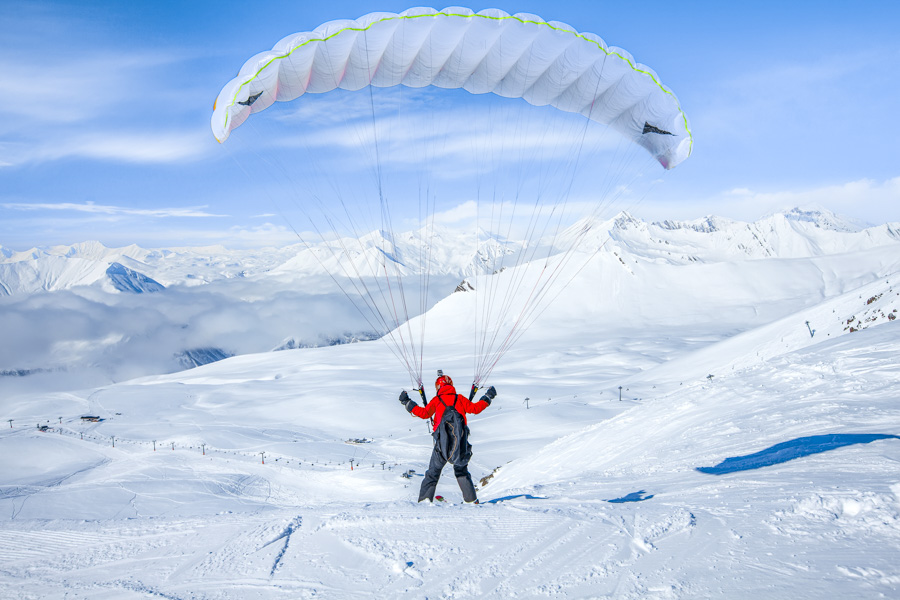
Winter paragliding is among Gudauri’s more unusual attractions. Accompanied by a certified pilot, visitors can fly above the snow-covered mountains when the weather allows. New Gudauri, the resort’s main village, offers dining and leisure options throughout the day, as well as après-ski activities.
Gudauri also has spa facilities offering saunas and massage services, as well as an indoor swimming pool, an ideal way to relax after a day on the slopes.
South of Gudauri, mediaeval stone towers stand along the hillsides of Khada Gorge. A short journey along the Georgian Military Highway leads to the colourful Friendship Monument, also known as Gudauri Panorama or Treaty of Georgyevsk Monument, overlooking the deep Aragvi Valley. Farther north, Stepantsminda and the Gergeti Trinity Church make an interesting excursion, provided the mountain roads are accessible.
Bakuriani Ski Resort
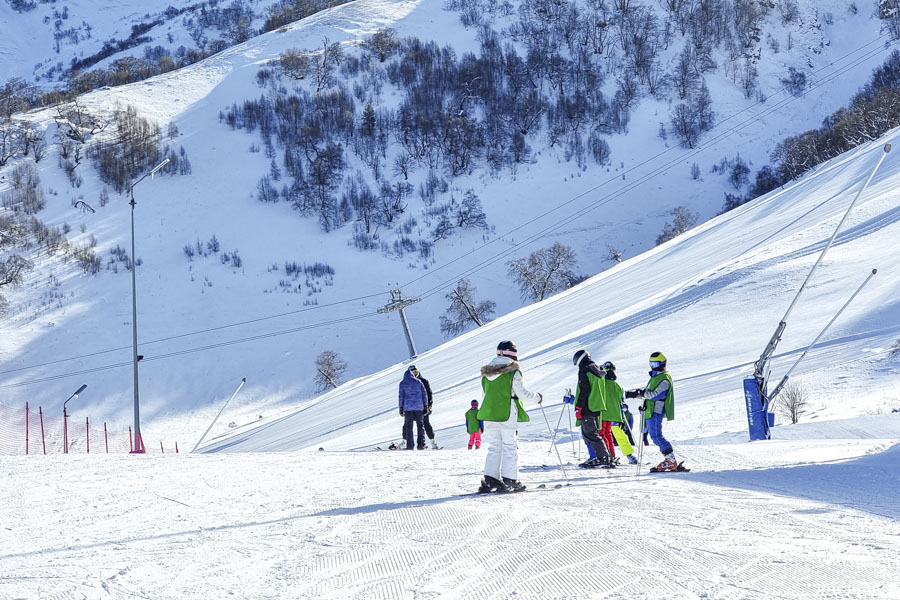
Skiing in Bakuriani dates back to 1932, when its first ski base opened in the mountains above Borjomi. Today, the resort stretches across several parts of the Trialeti Range, with spruce forests surrounding its winter sports facilities.
Ski Areas and Difficulty Levels
Bakuriani’s ski terrain is spread across three main areas: Didveli, Kokhta and Mitarbi.
Didveli is Bakuriani’s largest skiing area, with a combination of lower runs and routes higher up the mountain. Its broad, open sections provide room to practise turns, while the upper mountain has courses for winter sports competitions.
Kokhta has a different character. Its steeper descents pass through wooded hillsides, making it a good choice for confident skiers. Nearby Mitarbi has its own lift stations and a mixture of forested and open skiing, with Kokhta and Mitarbi connected by a saddle and shared lift system.
Didveli is separate from Kokhta and Mitarbi, so travelling between these parts of Bakuriani requires road transport. Smaller training areas around the town also provide space for first skiing lessons; the resort recommends “25” Park for beginners.
Ski Lifts and Facilities
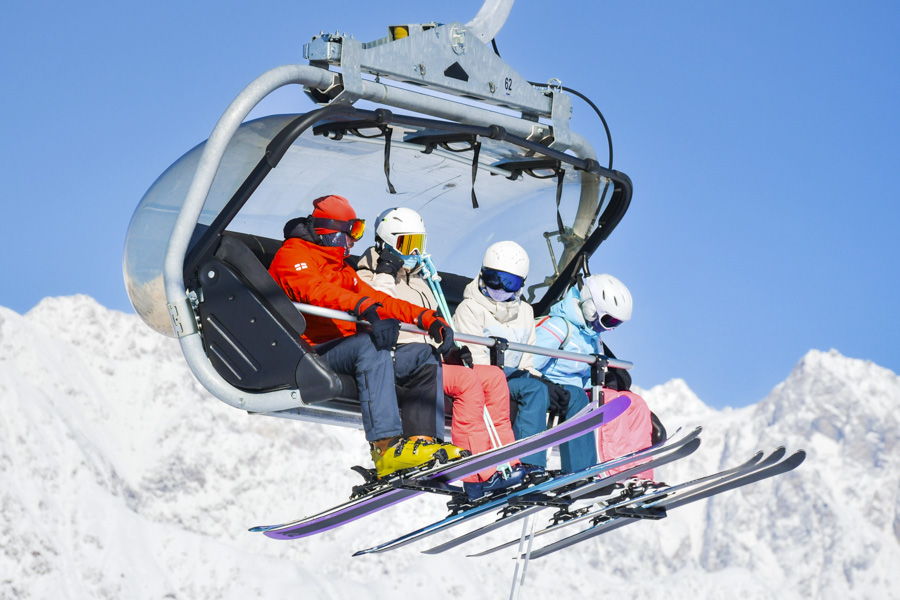
Bakuriani’s lift infrastructure includes gondolas, modern chairlifts and dedicated training facilities. Artificial snowmaking systems were installed across the slopes ahead of the 2023 FIS Freestyle, Snowboard and Freeski World Championships. The event brought international competitions to Bakuriani.
Ski schools and equipment rental operate around the main access points, while Didveli has also hosted night skiing. Evening sessions depend on seasonal schedules and snow conditions.
The main trail is also lit for evening skiing daily from 17:00 to 21:30.
Crystal Resort Area is a separate ski complex, independent of the MTA (Mountain Resorts Management Company) zones at Didveli, Kokhta and Mitarbi. It has its own lifts and slopes, along with artificial snowmaking and evening skiing.
Winter Activities Beyond Skiing
There’s plenty to do in Bakuriani without putting on skis. The town has an ice rink, sledging areas and a mountain toboggan ride. Additionally, horseback riding provides another way to see the surrounding landscape.
For a quieter afternoon, visitors can walk through the snow-covered spruce forests or visit nearby Borjomi. Its central park, mineral springs and wooded valley make it a convenient excursion from Bakuriani.
Skiing in Mestia: Hatsvali and Tetnuldi
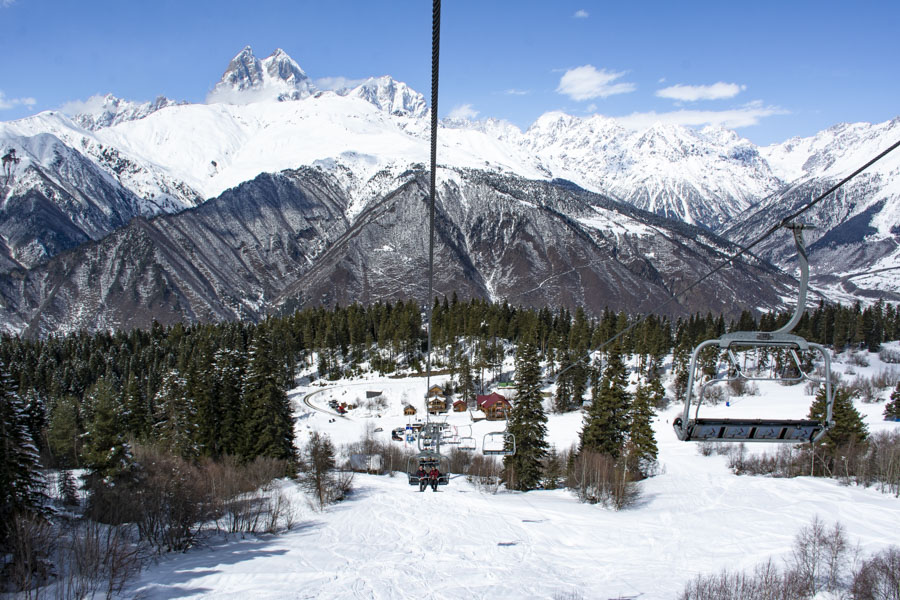
In Mestia, mediaeval stone towers rise above the rooftops, with the snow-covered Caucasus stretching behind them. This historic town in Upper Svaneti serves as the main base for two distinct skiing areas: Hatsvali and Tetnuldi. Hatsvali sits above Mestia, surrounded by forests, while Tetnuldi lies deeper in the mountains, amid more alpine scenery.
Hatsvali Ski Resort
Hatsvali is the more accessible of Mestia’s two skiing destinations. A cable car climbs towards Mount Zuruldi, where visitors can reach the skiing area without arranging a separate transfer.
The mountain has a small network of marked routes, including intermediate forest descents and a dedicated learning area. On clear days, the upper station offers views of Mount Ushba, with its distinctive twin summits rising above the surrounding peaks.
The wooded sections also attract freeriders, although skiing outside designated routes requires local knowledge and professional guidance.
Tetnuldi Ski Resort
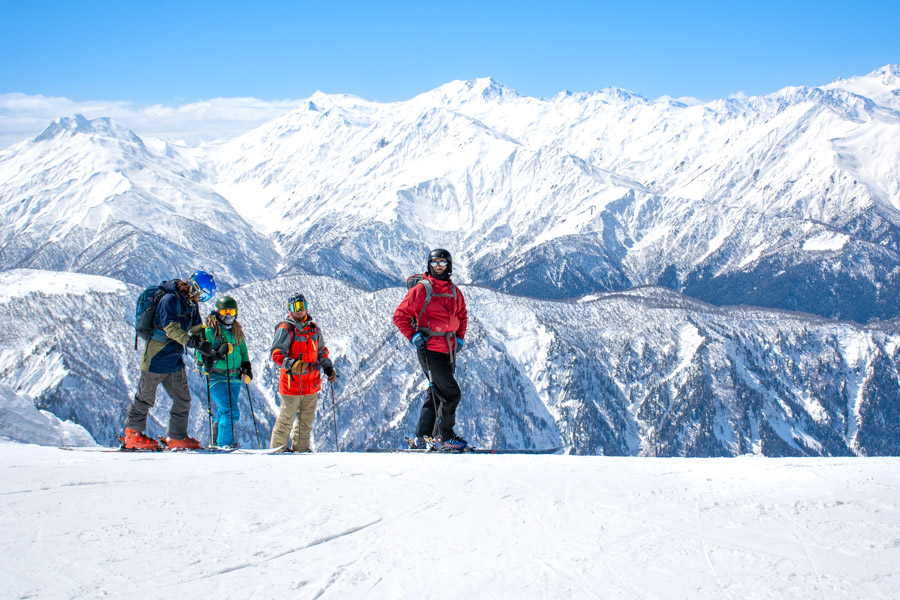
Tetnuldi takes skiing in Mestia to a considerably higher altitude. Around 15 kilometres from Mestia, Tetnuldi’s chairlifts rise through open alpine terrain to elevations above 3,000 metres.
The mountain has longer descents than Hatsvali, with routes suitable for different levels of experience. Its upper sections are particularly exposed, making wind and visibility important considerations when planning a day here.
Tetnuldi has also become an established destination for freeriding. In 2024, it hosted a Freeride World Tour competition, drawing international athletes to Svaneti’s mountain terrain. Reaching Tetnuldi requires a road transfer from Mestia, preferably in a vehicle equipped for winter conditions. Heavy snowfall can make the journey considerably slower.
Heliskiing in Mestia
Mestia is a base for heliskiing in the Central Caucasus, where high peaks, glaciers and varied terrain offer access to remote, powder-covered slopes. This activity runs from January to April, with long daylight hours providing plenty of time on the mountain.
Mestia Beyond Skiing
In Mestia’s historic Lanchvali neighbourhood, mediaeval defensive towers still rise, lining the narrow streets of the old town. At the Margiani House Museum, visitors can explore a traditional Svan dwelling and discover how families lived.
The Svaneti Museum holds an extensive collection of religious icons, manuscripts and archaeological objects from the region. For dinner, try kubdari, traditional Svan bread filled with seasoned meat, or chvishtari, cornbread with cheese.
Goderdzi Ski Resort
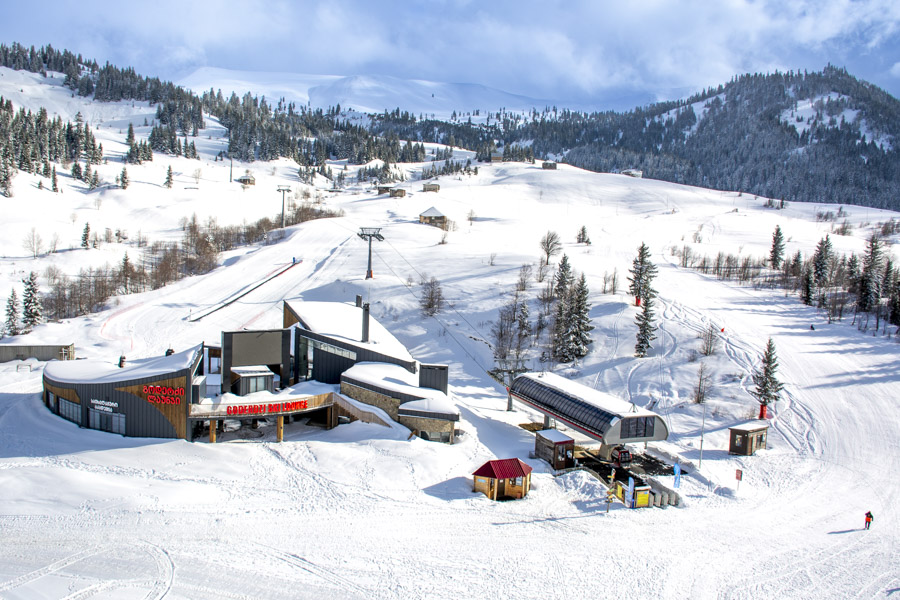
Deep snow covers the forests and wooden cabins around Goderdzi, a resort in the Adjara’s Arsiani Range. Near the Goderdzi Pass, it was developed for skiing in 2015 and remains smaller than Georgia’s other winter resorts. Its proximity to the Black Sea brings heavy snowfall, creating conditions that particularly attract skiers interested in fresh powder.
Skiing at Goderdzi
Goderdzi has a relatively small network of marked runs, with options for different abilities and many routes suited to intermediate skiers. There are also more demanding descents and a separate practice area for beginners.
Deep snow and gentle gradients can make Goderdzi’s flatter sections challenging for snowboarders, particularly after heavy snowfall.
The upper mountain has wide, open sections, while the lower parts are bordered by woodland. This combination gives Goderdzi a different character from Gudauri’s largely treeless landscape.
Beyond the marked runs, experienced skiers can venture into the surrounding forests and mountain valleys with qualified guides. Cat skiing is also another activity in the region, using specially adapted snow vehicles to reach off-piste terrain.
Snow Conditions and Ski Facilities
Goderdzi’s snowfall is strongly influenced by moisture carried inland from the Black Sea. Winter storms can bring substantial snow, but heavy precipitation and poor visibility may temporarily affect skiing and lift operations.
The resort has an eight-person gondola and a six-person chairlift, providing access to different elevations. A conveyor lift serves the practice area. Equipment rental, restaurants and accommodation are available near the main lifts.
Freeride Skiing in Georgia
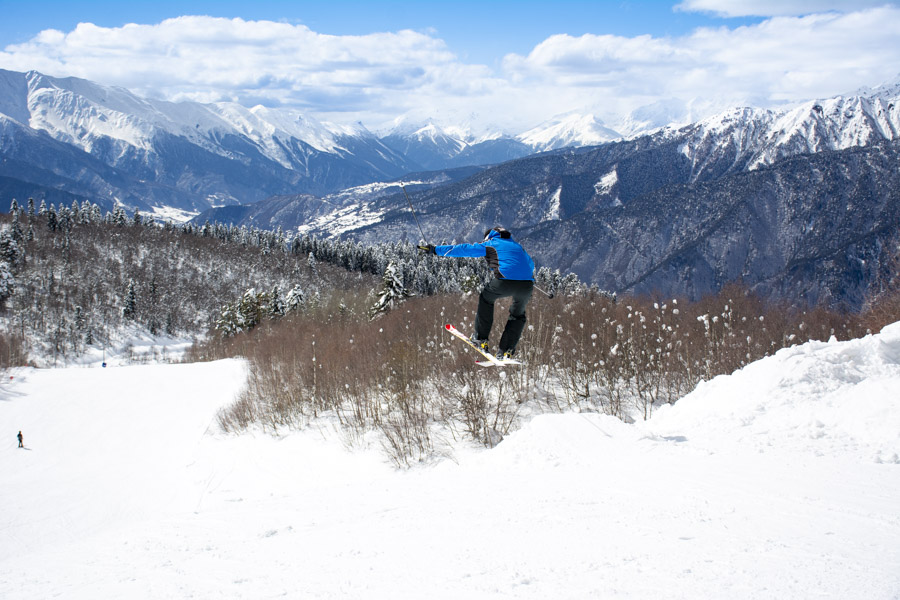
Freeride skiing in Georgia takes place on natural, ungroomed snow, often far from marked trails and ski lifts. Some descents begin near established resorts, while others require climbing on touring skis or travelling by specialised vehicles.
Bakhmaro, in the western region of Guria, is particularly well known for cat skiing. With no ski lifts, groups ascend the mountains in snowcats, tracked vehicles designed to travel through deep snow. From there, skiers descend through thick fir forests and across open mountainsides. Heavy snowfall, influenced by the nearby Black Sea, makes Bakhmaro a popular destination for powder skiing.
In Svaneti, the mountains around Tetnuldi provide longer off-piste routes, including descents towards Adishi and Zhabeshi. Ski touring in Georgia is also popular around Ushguli, where skiers climb using special equipment attached beneath their skis. Snowboarders can use splitboards for the ascent. These journeys may take several days, with accommodation in mountain villages.
Gudauri provides lift-assisted freeriding around Kobi and Mount Bidara. Goderdzi attracts visitors for forest skiing and guided cat-skiing trips. Experienced mountaineers can venture into the Greater Caucasus, with touring routes around Juta, Mount Kazbek and Racha’s remote valleys.
Heli-skiing in Georgia is another way to reach mountains inaccessible by conventional lifts. Specialist operators arrange helicopter-assisted descents around Gudauri and Svaneti, subject to weather conditions and availability.
Off-piste skiing in Georgia requires considerable experience and preparation. Avalanche risks, sudden weather changes and difficult mountain access make certified local guides essential. Skiers and snowboarders should carry an avalanche transceiver, shovel and probe, and know how to use them. Conditions and terrain choices still require careful assessment.
How to Get to Georgia’s Ski Resorts
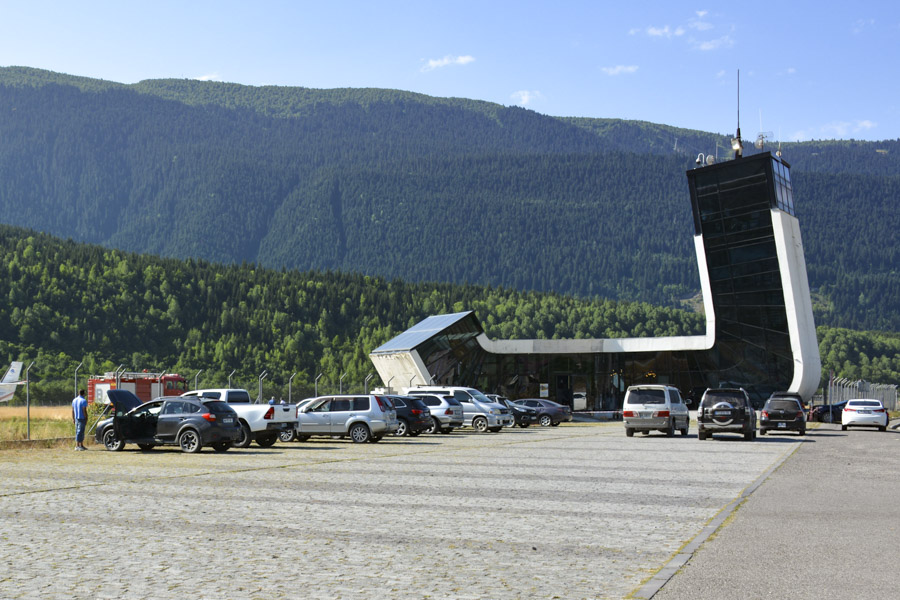
Tbilisi is the main gateway to Gudauri and Bakuriani, while Kutaisi is convenient for Mestia and Batumi for Goderdzi. Public transport serves the main routes, but mountain journeys require extra planning during heavy snowfall.
How to Get to Gudauri
Gudauri lies approximately 120 kilometres (74.6 miles) north of Tbilisi along the Georgian Military Highway. The drive usually takes two to three hours, depending on road conditions. Minibuses depart from Didube bus station towards Gudauri and Stepantsminda. Private transfers can collect travellers directly from Tbilisi Airport.
Private helicopter transfers are also available by prior arrangement, subject to weather conditions.
Getting to Bakuriani
From Tbilisi, the road passes through Khashuri and Borjomi before reaching Bakuriani, approximately 180 kilometres (112 miles) from the capital. The journey takes approximately 3 hours. Minibuses and private taxis serve this route. Kutaisi Airport is another convenient arrival point. The road journey is approximately 168 kilometres (104 miles) and takes about 2 and a half hours.
Travellers arriving in Borjomi can reach Bakuriani in about one-hour drive by local minibus or taxi. The historic Borjomi-Bakuriani railway, known as Kukushka, is being extensively restored, with services expected to resume in winter 2027. Check whether passenger services are operating before planning a rail journey.
How to Reach Mestia
The usual road from Kutaisi passes through Zugdidi and follows the Enguri Valley into Svaneti. Allow around five hours, possibly longer after heavy snowfall. Travellers from Tbilisi can also take a train to Zugdidi and continue by minibus.
A quicker alternative is flying to Mestia’s Queen Tamar Airport (ICAO: UGMS). Small aircraft operate from Natakhtari, near Tbilisi, with limited services from Kutaisi. Flights depend heavily on weather conditions, and luggage allowances are restrictive. Private helicopter charters are also possible.
Once in Mestia, Hatsvali is accessible by cable car. Tetnuldi is about 15 kilometres (9.3 miles) away and requires a separate mountain-road transfer, preferably by a four-wheel-drive vehicle.
Getting to Goderdzi
Goderdzi is approximately 110 kilometres (68 miles) from Batumi and is reached via Khulo. Winter driving conditions can extend the journey to four hours.
Minibuses connect Batumi with Khulo and Danisparauli, where local transport can be arranged for the final ascent. Private transfers are another option. The eastern approach across Goderdzi Pass is frequently closed during winter, making the route from Batumi more reliable.
Ski Schools and Lessons in Georgia
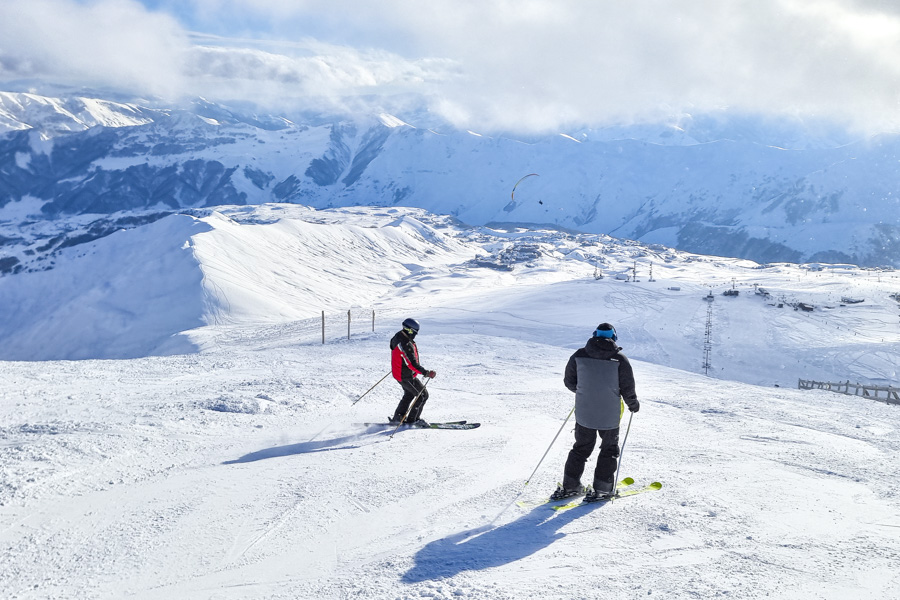
Gudauri and Bakuriani have established ski schools, with private instruction and group lessons for skiing and snowboarding. In Gudauri, English-speaking instructors teach everything from stopping and turning to improving technique on steeper runs. Bakuriani’s coaches work around Didveli, Kokhta and Mitarbi. Confirm your meeting point beforehand, as these skiing resorts are separate.
Lessons are also available in Svaneti. Mestia-based instructors teach at Hatsvali and Tetnuldi, with private lessons often easier to arrange than group classes. Goderdzi also has a practice area, but limited facilities make advance booking advisable, especially for lessons in English.
First-time skiers practise balance, stopping and controlled turns, while snowboard lessons introduce stance, edge control and changing direction. Experienced visitors can take classes to improve their technique or return to the sport after a long break. Private instruction allows greater individual attention, while group lessons usually bring together people with similar abilities.
Before booking a ski school in Georgia, check the instructor’s qualifications, teaching language and minimum age requirements. Allow enough time to collect properly fitted boots, skis or a snowboard before the lesson begins.
Ski Passes and Equipment Rental in Georgia
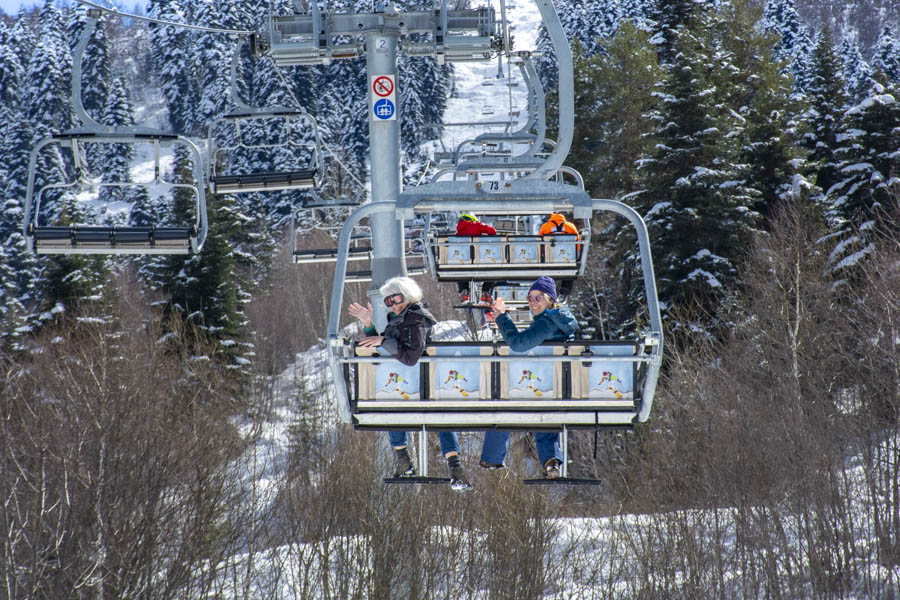
Lift tickets at Georgia’s main ski resorts are loaded onto a reusable Multicard. You can purchase or recharge one at resort ticket offices or through authorised online sellers. The physical card is required for ski lifts, as electronic confirmations and QR codes aren’t usually accepted at the gates. Keep your Multicard after your holiday, as it can be used again in future seasons.
Before purchasing a ski pass, check which areas it covers. In Bakuriani, a Mountain Trails Agency pass covers Didveli, Kokhta and Mitarbi, although private lifts may require separate tickets. Travellers visiting several destinations can choose a MultiSki pass covering Gudauri, Bakuriani, Mestia (Hatsvali and Tetnuldi) and Goderdzi. Night skiing may also require an additional ticket.
Ski rental in Georgia is available near the main lift stations in Gudauri, Bakuriani and Goderdzi. In Mestia, shops located in the town centre, offer skis and snowboards to visitors heading to Hatsvali and Tetnuldi.
Standard rental sets include boots and skis with poles or a snowboard, while helmets may cost extra. Check what is included and make sure your boots fit comfortably before leaving the shop. Rental staff should also adjust ski bindings to your weight and ability.
For backcountry trips, arrange touring skis, splitboards and avalanche equipment through specialist rental shops or mountain guides in advance.
Skiing Safety in Georgia
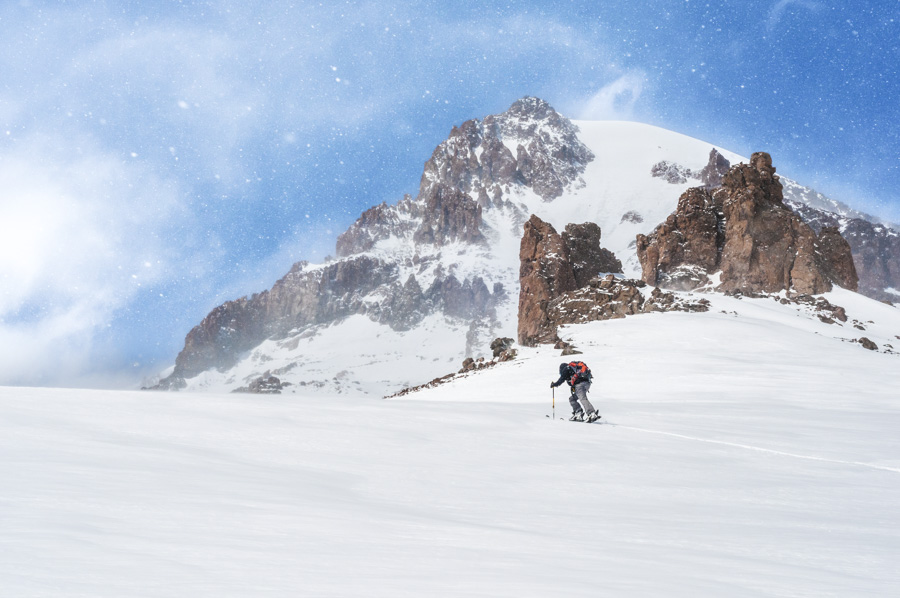
Before setting out, check the resort’s latest lift and piste status and consult a reliable weather forecast. Always follow warning signs and instructions from resort staff.
On marked routes, wear a helmet, control your speed and leave enough space for other skiers and snowboarders. Ski patrols operate at Gudauri to provide assistance if required. Off-piste terrain is unmaintained and may carry avalanche risks. In remote areas, rescue assistance can take longer to reach you.
Since January 2026, visitors to Georgia have been required to carry valid health and accident insurance. Check that your policy covers skiing, snowboarding and any planned off-piste activities. Mountain rescue and medical evacuation may require additional cover.
In an emergency, contact the nearest ski patrol or call 112, Georgia’s free emergency number. Explain what happened and provide your exact location, including the nearest lift or marked route. Mobile reception may be limited in isolated mountain areas.