
Milan is Italy’s second-largest city and its leading centre of fashion, design and finance. Here, style is not reserved for catwalks and shop windows. The Carabinieri are famously clad in uniforms designed by Valentino and Armani, while their Alfa Romeo cars carry an unmistakably Milanese badge. Look at the bonnet and you will see the Visconti Biscione devouring a man alongside the red cross, two historic emblems of the city. In a country shaped by the principle that if something is worth doing, it should be done stylishly, such luxuries are embraced rather than questioned. And if Italy desires, Milan provides.
Twice a year, Milan divides each fashion season's calendar into two separate weeks, one for women and the other for men, during which catwalks unveil the styles that will define the future contents of wardrobes, journalists, buyers, and celebrities descend on Milan. Whatever the month, however, the atmosphere of the city is inseparable from the designers it has produced: Armani, Prada, Versace, Dolce & Gabbana, Moschino, and many more. And for those who expect their homes to match the quality of their clothes, Milan Design Week is when the city peaks as the most elegant laboratory of ideas.
Despite the boutiques and the glamour, Milan is far from ‘all show’. It is Italy’s confident second-largest city, the country’s financial centre, an industrial powerhouse, and a place where trade and fortune have been sharpened for centuries.
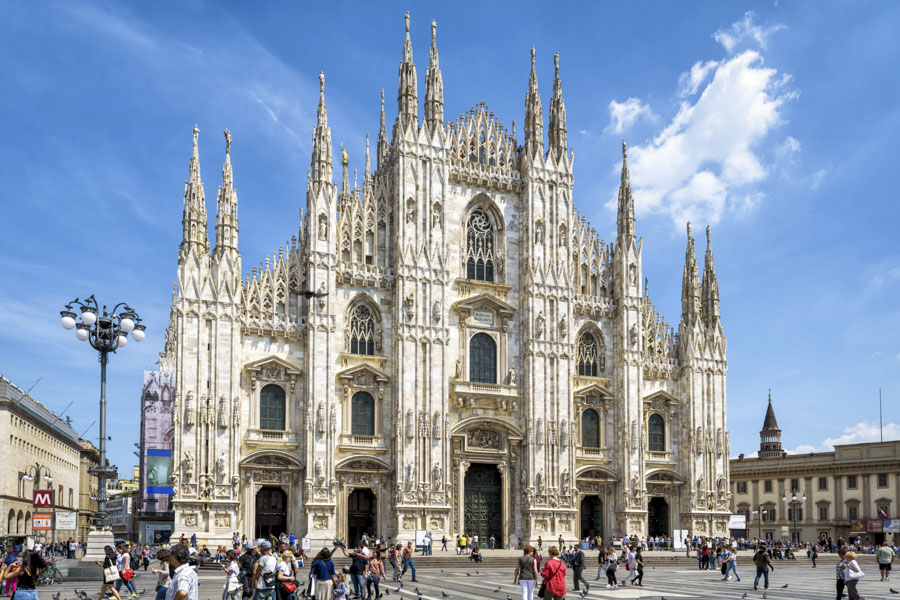
Form and function are everywhere in Milan, both in the contemporary sphere and throughout its history. Few figures demonstrate this more eloquently than Leonardo da Vinci, resident in Milan for two decades, whose legacy stretches from the haunting beauty of The Last Supper to the ingenious machine drawings of the Codex Atlanticus. Likewise, the Duomo may be a technical triumph, but it’s also a staggering Gothic artistic interpretation of grace. The Castello Sforzesco does more than overflow with masterpieces; its scale and setting dominate the city around it. And La Scala is the home of Italian opera, an art form perfectly suited to the Milanese instinct for combining beauty with technical brilliance.
Milan Tours
Well-connected internationally and within Italy, Milan, the capital of Lombardy, is a city that can be accessed and enjoyed by itself on the timescale of a long weekend to a week dedicated to enjoying its shopping districts, opera house, galleries, churches and parks. Staying exclusively in Milan, appreciating its food, its architecture, art and fashion, helps to understand how its confident modern face sits comfortably with a richly colourful historic development.
Another option is to use Milan as a base to explore the settlements and landscapes that surround it. Lombardy’s lakes and the vineyards of the Alpine foothills are within easy reach, and Lake Como’s mountain-fringed waters are just a day trip away. In winter, the slopes of Pila in the Aosta Valley, with more than 70 kilometres of pistes, can be reached in more than two hours by car. For those who prefer culture to cable cars, northern Italy abounds in historic towns and cities. Verona, Bergamo, Turin, Genoa, and more are linked by radiating roads and railways from Milan.
Milan is also an essential part of any trip based around the major Italian cities. Its high-speed rail connections mean that it can be combined with Rome, Florence, or Naples – indeed, all of them in one grand tour if you want an itinerary inspired by Lord Byron, Goethe or Alexandre Dumas. Seen one after the other, the differing characters of the great Italian centres of culture are truly appreciated.
Best Time to Visit Milan
Climatically, Milan is a city of seasonal swings, with winters typically relatively chilly and crisp and summers hot and often humid. Between these extremes, spring and autumn are milder and changeable. Weather, however, is just one factor in deciding when to experience Milan, for many come here for the cultural calendar.
Spring (March to May)
Daytime temperatures rise from 10 to 15 °C (50 to 59 °F) in March to 18 to 22 °C (64 to 72 °F) in May, with evenings cool enough for a light jacket. Spring is also Milan’s wettest season, with May typically seeing the highest rainfall and around 17 wet days. April is slightly drier, but throughout this season a raincoat and umbrella are advisable.
Despite some rainy days outdoors, spring is one of Milan’s most vibrant cultural periods. Women’s Fashion Week in March brings the autumn/winter collections to the city, while April’s Salone del Mobile – one of the world’s largest furniture and design fairs – is when Milan is perhaps at its sophisticated and creative best. Its companion festival, Fuorisalone, spills into courtyards, galleries, and entire neighbourhoods with installations, parties, and pop‑ups. April also brings MiArt, an international fair of modern and contemporary art that attracts collectors, gallery owners and art lovers, and the Milan Marathon registers participants from all over the world.
Summer (June to August)
Summer in Milan is warm, even hot, but not as intense as many other cities in Italy. Typical highs reach 28 to 32 °C (82 to 90 °F), though occasional heatwaves can push temperatures higher. Nights are typically around 20 °C (68 °F), creating warm, sultry evenings. Summer in Milan is by no means dry, but rain is typically confined to short, intense afternoon thunderstorms.
This is a season of outdoor culture and delight when open‑air concerts, courtyard events, and exhibitions enliven the city. Late June brings Men’s Fashion Week for next year’s summer collections, and the Milano Latin Festival, running from June, is a time of Latin music, dancing, and street food.
August, the hottest month, brings a change for the weeks around the Ferragosto national holiday. Some smaller shops and restaurants may close, and many locals leave the city for the beaches, giving Milan a calmer feel with less traffic and bustle.
Autumn (September to November)
As is typical of Italy, September still feels summery, with highs of 22 to 26 °C (72 to 79 °F), but the city settles into a businesslike pace after the holidays. By November, temperatures are typically 10 to 14 °C (50 to 57 °F), and Milan’s architecture is highlighted by the golden low light.
This is another major cultural time of the year for the city. The Monza Formula 1 Grand Prix takes place just outside Milan in early September, and Women’s Fashion Week returns later in the month, with catwalks full of the designs that the world will be wearing the following summer. The Milano Film Festival has been a platform for independent films since 1996.
Rain becomes more frequent from late October, so an umbrella is useful, but autumn is still a time when you can enjoy exploring the Duomo terraces, the Navigli canals, and the city’s museums.
Winter (December to February)
Winter in Milan is typically cool and crisp. With daytime temperatures of around 4 to 9 °C (39 to 48 °F). With evenings and some days approaching freezing, warm outerwear is essential, so take a coat or jacket, sweaters, a hat, a scarf, and gloves for those walks between museums and galleries.
Though you may take an umbrella, you may not need it, for this is the driest season. December, January, and February each receive only minimal rainfall, and February, with around six wet days, is the month in which you are least likely to get caught in the rain.
7 December, the feast of St Ambrose, marks the opening of the La Scala opera and ballet season, one of Italy’s cultural highlights. During the whole of December, there are festive markets. Milan celebrates crafts and traditional products from around the world at the Artigiano in Fiera fair. You can buy Christmas items and discover other exceptional finds.
January is quieter; if you want relatively dry conditions and don’t mind wrapping up in your winter fashions, January is a month to enjoy attractions without crowds. The end of January is when the Men’s Winter Fashion Week returns, and February brings longer-lasting Carnival celebrations than most Italian cities, along with the first hints of spring.
History of Milan
The Celtic settlement founded by the Insubres around the 6th century BCE, eyed by the Romans for its strategic position on the plain of the River Po, was conquered by them in 222 BCE and renamed Mediolanum. Over the coming centuries it grew in significance to such an extent that it was selected by Emperor Constantine as the venue for the critical geopolitical summit with his Eastern counterpart, Lucinius. Negotiations led to the Edict of Milan (313 CE): a declaration of the legality of Christianity that helped lay the groundwork for Christianity to play an increasingly influential role in Roman and later global affairs.
In the late 4th century, Milan’s most influential theologian and statesman emerged in the form of Bishop Ambrose. The patron saint whose day is now accompanied by celebrations and the commencement of the La Scala opera season, Ambrose solidified Milan’s importance as a centre of Christian authority and shaped the development of the wider early Church.
The collapse of the Western Roman Empire in the 5th and 6th centuries brought turmoil, with Milan being fully sacked by the Goths in 539 CE. Later, the city was subjected to shifting rule by Lombards and Franks, becoming part of the Carolingian realm under Charlemagne, with the foundations being laid for a region that would later be known as Lombardy.
By the Middle Ages, Milan was an influential trading commune. Milanese merchants were integrated into the routes that spread eastwards, becoming one of the western termini of ideas, arts and commerce of the Silk Road. The most potent symbol of the ambition and wealth of this period is the striking gothic Duomo, begun under the Visconti rulers and still one of Europe’s largest churches.
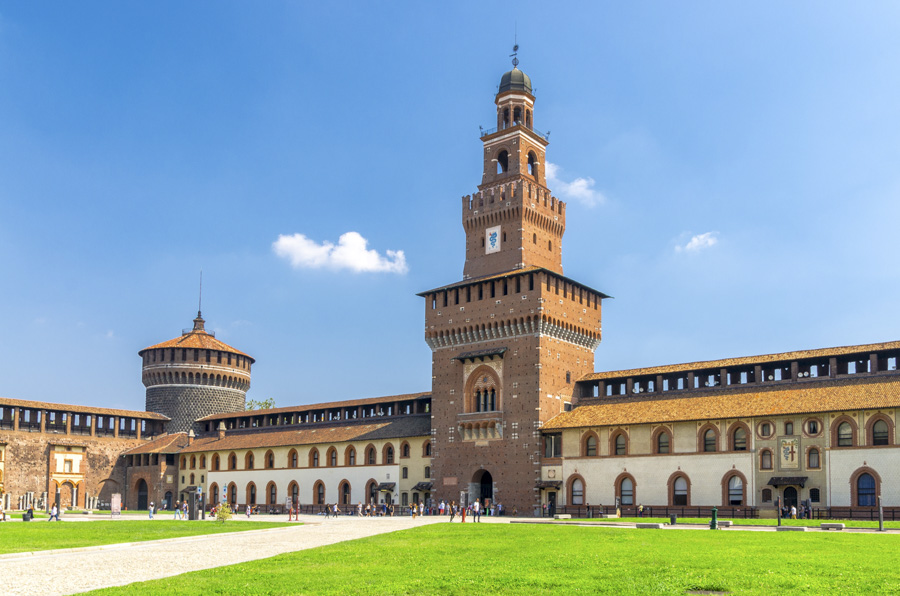
The city crossed another threshold of wealth under the leadership of the Sforza family, who seized power in 1450. During this period, Milan heavily developed mulberry cultivation and silk processing, allowing it to capitalise independently on the demand for this luxury good. The court became one of the foremost centres of the Renaissance and attracted the likes of Leonardo da Vinci, who contributed engineering and architectural ideas to the city and painted works such as The Last Supper. The Sforza Castle still dominates the historic core of Milan.
Following a series of unwise political decisions by Duke Ludovico Sforza, the resultant Italian Wars proved to be an opportunity for foreign domination of Milan and its region. Briefly French, Milan then passed to Spanish Habsburg rule in 1535 and was administered for two centuries from Madrid. From 1706, it was Austrian, and when Napoleon Bonaparte entered the city in 1796, he declared it first the capital of the Cisalpine Republic and then the Kingdom of Italy under his rule. Napoleon’s administration introduced significant reforms that shaped Milan’s governance and urban development.
After the unification of Italy in the 19th century, Milan industrialised rapidly thanks to its location, skilled workforce and entrepreneurial culture. It quickly became a centre of engineering and finance and, by the early 20th century, was Italy’s foremost industrial city. In the post-war years, it was the pole of the country’s recovery and boom.
From the 1950s onwards, Milan spawned numerous fashion and design houses, thereby making the city world-renowned for designer labels. The ‘Made in Italy’ sophistication extended further than clothing, with the Salone del Mobile annual show establishing Milan as the world’s design capital.
Today, Milan is Italy’s second-largest city and generates about 20% of the country’s GDP. The Borsa Italiana stock exchange is located here, and it has the most concentrated density of high-value industries on the peninsula. Like the best of Italian suits, it is refined, attractively superior and deserving of its price tag.
Things To Do in Milan
Places to Visit in Milan
Milan’s white marble Gothic cathedral (Cattedrale Metropolitana della Natività della Beata Vergine Maria) – the Duomo – bristles like a petrified forest, its pinnacles, statues, belfries and gables soaring as the city’s defining landmark. The first stones were laid here in the 14th century, on the remains of the Santa Maria Maggiore cathedral and the Santa Tecla basilica, built in the 4th century, but it was only completed in the early 19th century on the orders of Napoleon Bonaparte. You will be entranced at the sight of its majesty in the setting sun. The interior is sumptuous, but the real highlight is an ascent to the rooftop to be amid 135 pinnacles and a crowd of carved figures. At the centre, 108.50 metres from the ground, rises the Tiburio tower crowned by the gilded Madonnina.
On a more intimate scale, but arguably more powerful than any cathedral, is what is painted on the wall of the refectory of the Dominican monastery in Santa Maria delle Grazie: Leonardo da Vinci’s Last Supper. Access is by timed ticket, booked well in advance, but ticket formalities become irrelevant when you stand before one of the world’s most recognisable frescoes. You imagine the words of the Eucharist that have just passed the open lips of Jesus; you see his companions at the moment when they realise what will unfold; and, if you can turn around to see Montorfano’s fresco Crucifixion, which faces it, you will see how it all came to pass.
No visit to Milan would be complete without paying homage to Ambrose, the city’s ever-present saint. Visit the church he founded in the 4th century, Basilica di Sant’Ambrogio, where his body lies in the crypt along with saints Gervasius and Protasius. In the piazza outside, there is a Corinthian column with two holes that local legend attributes to the horns of the devil as he butted it in frustration at having failed to tempt Ambrose to sin.
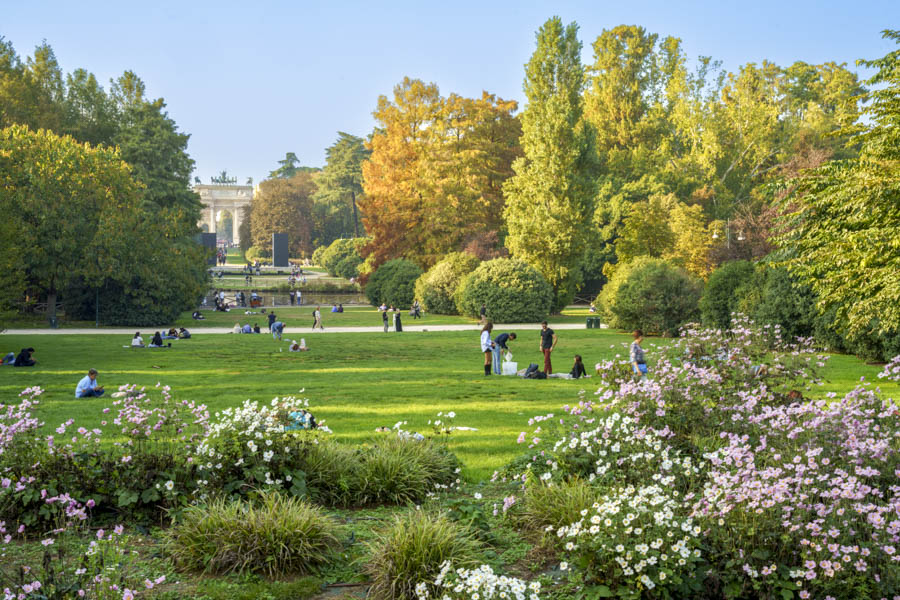
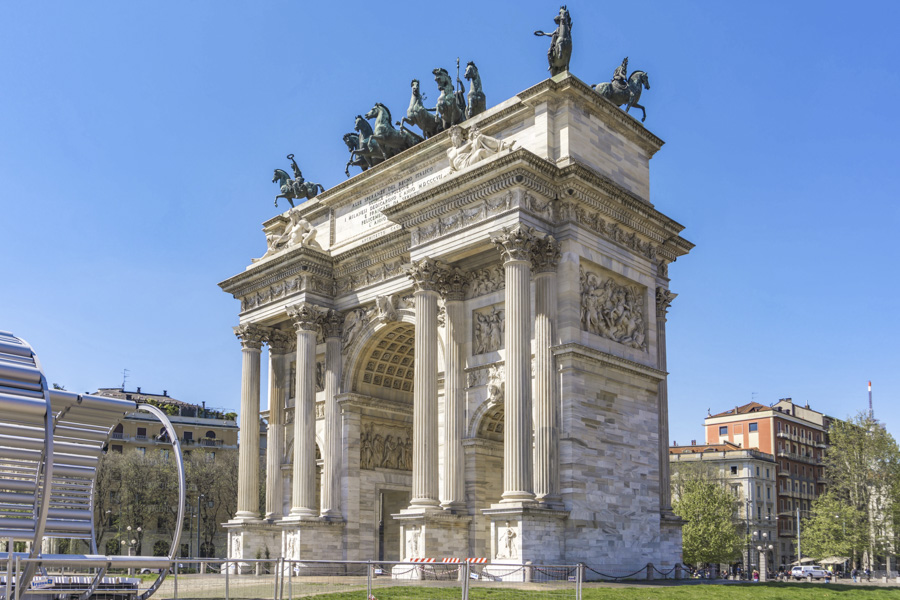
Dominating the city’s layout is the enormous fortress of Sforza Castle (Castello Sforzesco), the seat of the Dukes of Milan and nowadays the host to several galleries and museums. For a true sense of majesty, approach it through the Arco della Pace, Milan’s triumphal gateway built in honour of Napoleon Bonaparte. Between the arch and the castle is Parco Sempione, the largest park in Milan and a place to enjoy some cool shade.
From Sforza Castle, it is an easy walk to the Teatro alla Scala (La Scala Opera House), whose relatively unassuming exterior belies the splendour of what you discover inside. This pilgrimage site for music lovers has a grand horseshoe-shaped auditorium with six tiers of boxes and seating for an audience of 2,015.
North of La Scala is the Brera District, a neighbourhood in the heart of the old city, with cobbled streets and independent shops ideal for wandering, browsing and enjoying cafés. At its centre is the Pinacoteca di Brera museum.
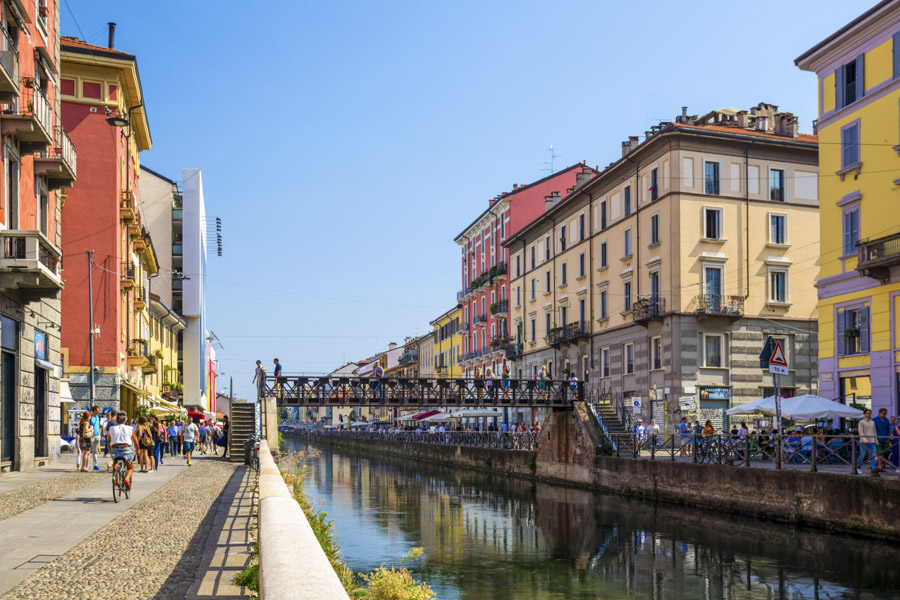
To the south of the city centre is Navigli, a much-loved district of canals known for its restaurants and bars. The waterways of Navigli were remodelled in the 12th century but were improved 300 years later by Leonardo da Vinci, who is sometimes credited with them. You can cycle along Naviglio Martesana, which he designed to connect the area with the Adda River and Lake Como, and later enjoy a drink by Conca dell’Incoranata, a historic lock that still features gates of the design first imagined by this Renaissance genius.
Officially called Stadio Giuseppe Meazza, though known to everyone as the San Siro, Milan’s football stadium is shared between two of the most celebrated and decorated clubs in world football (soccer): AC Milan and Inter Milan. As bold and impressive as you would expect from a city that is always at the forefront of design, the San Siro is the country’s largest stadium and is where its two clubs contest the Derby della Madonnina. If you come here, take the walk up the nearby Monte Stella for excellent panoramic views over Milan.
Day Trips from Milan
A city as significant as Milan is well-connected as a node of employment and industry. The same roads and rails that draw people towards it can also carry you away, making Lombardy and much of northern Italy remarkably easy to explore. Particularly by train, you can cover distances easily, reach lakes, Alpine hills and ancient cities and be back in Milan for the evening.
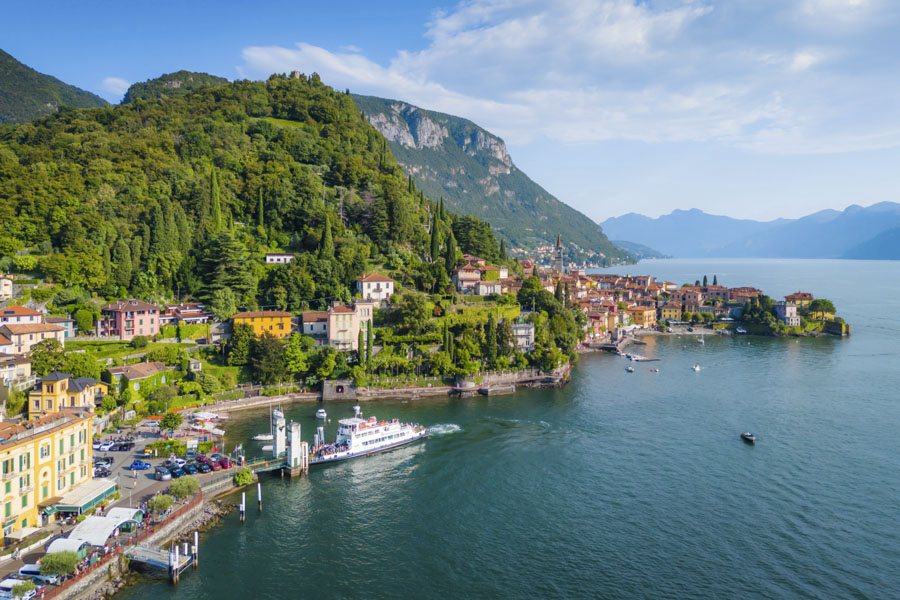
Lake Como is about 40 minutes by train from Milan. With mountains plunging into deep blue waters, this forking ribbon extending from the Alps has a network of ferries between its villages allowing it to be discovered by boat. Hikes abound, and two good options are the waterfalls at Domaso or the narrow Orrido di Bellano gorge. For a gentler stroll, enjoy the gardens around Tempio Voltiano, a neoclassical memorial to Alessandro Volta, inventor of the electric battery.
Lombardy’s second city, Brescia, is under an hour from Milan. At first glance it is modern and industrial, but go to its centre and you’ll find a superb Roman forum, the elegant Piazza della Logia, with a Venetian architectural influence and another square, Piazza Paolo VI, dominated by two cathedrals, the Summer Cathedral of Santa Maria Assunta (the Duomo Nuovo) in a Baroque style and the Winter Cathedral of Santa Maria Assunta (the Duomo Vecchio) from the Roman era. Just outside Brescia is the Franciacorta wine region, where you can enjoy tasting some of Italy’s finest sparkling wines in Alpine foothill agriturismo settings.
With a scholarly and quietly beautiful atmosphere, a venerable covered bridge, peaceful botanical gardens and impressive Castello Visconteo, the small city of Pavia is another easy excursion from Milan. Midway on the journey here, and off the beaten track, is Certosa di Pavia, one of Europe’s most impressive Gothic monasteries. Often rushed past by visitors heading to either Lake Como or Lake Garda, Bergamo is another small city within 40 minutes of Milan and was once described by the French writer Stendhal as ‘the most beautiful place on Earth and the most fascinating he had ever seen’. Its quiet, historic and immaculately preserved Città Alta (high city), surrounded by four kilometres of Venetian walls, can be reached either by a strenuous 20-minute walk or in comfort on the funicular. For even greater elevation, climb the Civic Tower (Campanone) before returning to ground level to enjoy a local speciality: the small yellow cakes of Bergamo called polenta e osei.
About 75 minutes by train from Milan is the magical city of Verona, a UNESCO World Heritage listed site, where mediaeval lanes and Roman ruins sit in romantic harmony. You can visit the 14th-century balcony associated with Shakespeare’s Juliet, marvel at the enormous Roman arena, and seek viewpoints on the other bank of the Adige River by crossing the fortified Ponte di Castelvecchio.
Turin (Torino), site of the Holy Shroud, a piece of linen that is said to be the burial garment of Jesus Christ, preserved in the Royal Chapel in the Cathedral of St John the Baptist (Duomo), is the capital city of the Piedmont region and about an hour by train from Milan. It’s known for its Baroque palaces, arcaded streets, stately squares and alpine backdrop. Also, it’s where you’ll find a world-class Egyptian museum and the National Automobile Museum. The city, which has produced more than forty car manufacturers, is a place of pilgrimage for those who love life behind a steering wheel, is a place of pilgrimage for those who love life behind a steering wheel.
Due south from Milan, and about 90 minutes away is Genoa, Italy’s largest port and, for centuries, the maritime trading rival of Venice. This is where Columbus was born. Not surprisingly, given its historic links with the sea, Genoa has an excellent maritime museum, but if you would rather be outside, explore the maze of narrow alleys and old harbour while photographing colourful hillside houses and grand merchant palaces.
Perhaps best enjoyed with an overnight stay, the UNESCO-listed national park of Cinque Terre is on the coast near Genoa. Five isolated villages are linked by cliff-top walking trails perched above the glittering Ligurian Sea. For couples, the short walk between Manarola and Riomaggiore (the Via dell’Amore) is the most romantic stretch.
Museums in Milan
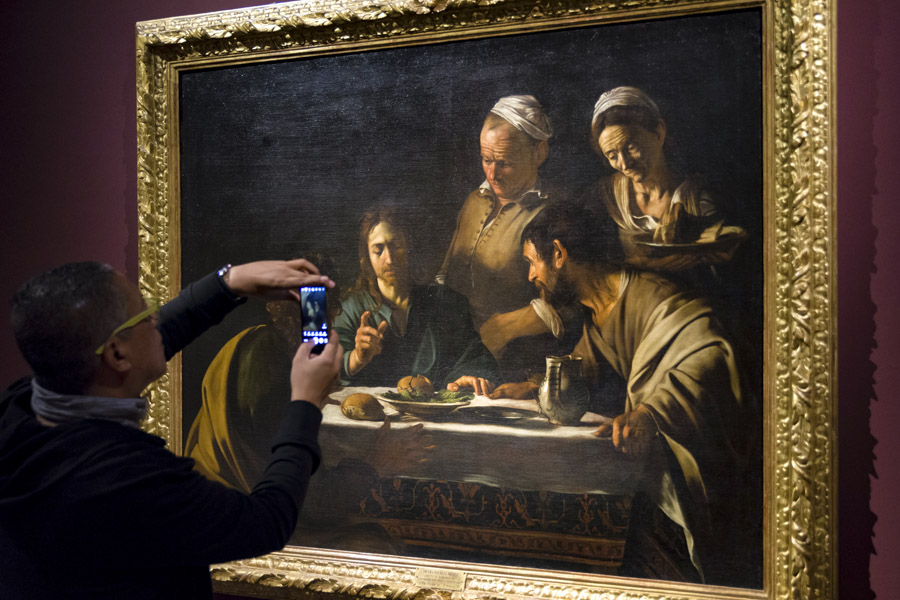
Milan’s foremost art gallery, Pinacoteca di Brera, is housed in a grand 17th-century palazzo whose courtyard is dominated by Antonio Canova’s statue of Napoleon Bonaparte standing, in the style of a victorious Roman emperor, as Mars the Peacemaker. Inside is a collection from across the ages that includes Raphael’s Marriage of the Virgin, Caravaggio’s Supper at Emmaus, Bellini’s haunting Pietà, and what’s said to be one of the most romantic paintings in Italian art, Hayez’s The Kiss.
One of the first public libraries, but now also a gallery and museum, Pinacoteca Ambrosiana holds a collection of Eastern illuminated manuscripts and early Islamic texts. Such treasures appeal to anyone interested in Milan’s intellectual and commercial ties with the wider Mediterranean world, but most who come here are drawn to the Leonardo da Vinci works. The first of these is his painting Portrait of a Musician, and the second is the Codex Atlanticus, twelve volumes of drawings and notes that give an insight into one of history’s greatest minds.
Another Renaissance genius – Michelangelo – will entice you to a serene chapel-like space in Sforza Castle to be in the presence of the statue he was working on when he died. The unfinished Pietà Rondanini is a haunting portrayal of the Virgin Mary mourning over the emaciated body of Jesus Christ and is notable for its elongated, almost dripping, form. The castle contains various other museums and galleries, including an excellent Egyptian section of the Archaeological Museum.
Not far from La Scala is the Museo Poldi Pezzoli, which preserves the eclectic collection of a 19th-century aristocrat. The oriental rugs, Persian carpets and Eastern metalwork were procured by the Milanese nobility who traded along the extended Silk Road networks.
All ages are delighted by one of Milan’s newest museums: Museo Leonardo da Vinci. Through interactive displays and full-scale models, Leonardo’s diverse and wondrous inventions are revealed, including a rapid‑fire crossbow, a mechanical submarine, flying machines, a time regulator, and an aerial screw.
Design of a different era awaits in southern Milan at the Fondazione Prada. This striking complex combines a restored industrial distillery with bold contemporary architecture, including a tower covered in gold leaf. Come here for the kind of cutting-edge exhibitions and installations that spring from a fashion label, and perhaps stop for a coffee at Bar Luce, a pastel-coloured café designed by the American film director Wes Anderson.
Not to be outdone, Giorgio Armani has curated a four-storey collection of garments, sketches and photographs in the minimalist space of Armani/Silos. Here, you can understand the evolution of one of the world’s most influential fashion houses and its founder’s aesthetic motivations.
Milan Theatres
Milan’s performing‑arts scene is headed by neoclassical Teatro alla Scala, long regarded as one of the world’s premier stages for opera and ballet. Its gilded tiers, impeccable acoustics and historic premieres make it the city’s most prized musical possession. During La Scala’s early‑2000s restoration, performances moved to the vast Teatro degli Arcimboldi, a modern venue of more than a couple of thousand seats that now hosts an eclectic mix of concerts, musicals and dance.
Milan’s theatrical heritage extends further still: the Piccolo Teatro di Milano, founded in 1947 as Italy’s first permanent repertory theatre, is far from small despite its name. Its three venues were created with the mission of making theatre accessible to everyone. Nearby, the 19th‑century Teatro Dal Verme offers concerts, plays, exhibitions, conferences and contemporary performances in a historic shell. And in Porta Romana, Teatro Franco Parenti is a hub for modern Italian plays and cultural debate, playing its part in Milan’s creative offering beyond its famous opera house.
Entertainment, Parks and Shopping in Milan
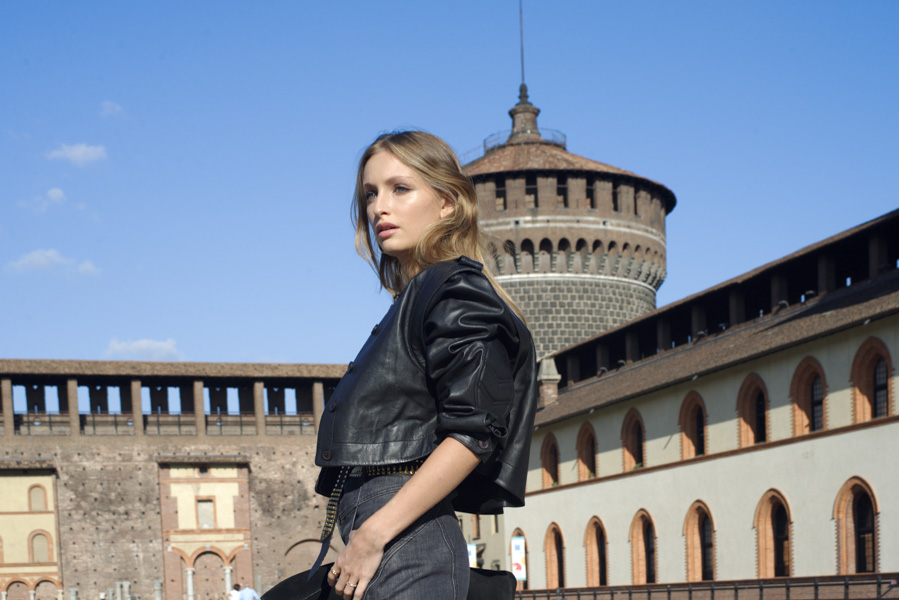
While Milan has its share of historic sites and galleries, it is perhaps best known for a wider range of experiences than you’ll find elsewhere in Italy, spanning both heritage and contemporary culture. Italians and visitors alike are drawn here for its world‑class opera house and theatres and for shopping, prized for its style and quality. Add to this a network of elegant parks that complement both heritage architecture and striking contemporary design, and Milan becomes a place to experience in a far wider sense than simply touring its past. It is a modern cultural city where history is only one part of a much richer present.
Entertainment in Milan
La Settimana della moda de Milan (Fashion week)
Usually held in January for the men’s fall/winter Men collections (five days) and in January-February for the women’s collections (seven days). It is also held in June for the men’s spring/summer collections and in September for the women’s. Milan Fashion Week is more than just seven days and is when leading designers present their collections in venues such as Palazzo Reale and Piazza del Duomo. This period also coincides with Milan’s designer sales, when boutiques clear stock ahead of new-season arrivals.
Festivals
Milan enjoys a dense calendar of cultural, artistic and fashion events. Winter festivities include the December tradition of Oh Bej! Oh Bej!, a Christmas fair around the Sforzesco Castle dating back to the 16th century, known for crafts, winter treats and warming vin brulé (mulled wine).
On Epiphany (6 January), the Corteo dei Re Magi sees a symbolic procession of the three wise men travel from Piazza Duomo to Sant’Eustorgio Basilica, where gifts are offered to children.
March brings Carnevale Ambrosiano, marked by fireworks, entertainment and a colourful parade along Corso Venezia, with children in costume and performers in Milan’s traditional Meneghino dress.
Summer opens with Piano City Milano, a May weekend featuring more than 300 free piano concerts in parks, courtyards, rooftops and metro stations. From June to August, the Milano Summer Festival at the Ippodromo Snai San Siro hosts major international pop, rock and electronic artists. Running concurrently, Estate Sforzesca presents open‑air theatre, dance and music within the courtyards of the Sforzesco Castle.
September begins with the On Dance Festival, featuring outdoor performances, flash mobs and masterclasses, and the Festival of the Holy Nail at the Duomo, when the archbishop ceremonially lowers a relic believed to be from the cross of Christ. October brings the Milano Film Festival, an important platform for emerging directors through screenings and workshops.
Grand Prix and Motor Show
The last quarter of the year in Milan has a particular appeal for lovers of motorised locomotion. September brings the Italian Grand Prix at nearby Monza, while the season concludes in November with EICMA, the world’s leading motorcycle and scooter exhibition.
Parks in Milan
Parco Sempione is Milan’s best-known open space and stretches between Sforza Castle and the Arco della Pace triumphal archway. Though designed to be English in style, its winding paths, lawns, lakes and shady groves are complemented by the decidedly Italian Triennale fine arts and architecture museum. The somewhat improbable 1930s Branca Tower is worth climbing for its excellent views of the city.
The Indro Montanelli Public Gardens in the Porta Venezia district are elegantly formal and contain both the Natural History Museum and the Planetarium (Civico Planetario Ulrico Hoepli).
Giardino della Guastalla is one of Milan’s oldest open spaces and has a compact, secretive feel. Its baroque fishpond, balustrades and clipped hedges combine to make it a perfect space for a pause in a walk between museums and galleries.
Orto Botanico di Brera is hidden behind the Brera Academy art museum and is a small botanical garden founded in the 18th century. Sit in the shade of ancient trees amid the medicinal plants and you’ll have a break from the lively street of Brera District.
Boscoincittà – literally ‘forest in the city’ – is an expansive area of woods, ponds, meadows and community gardens near the San Siro Stadium. It’s popular with walkers, runners, and cyclists.
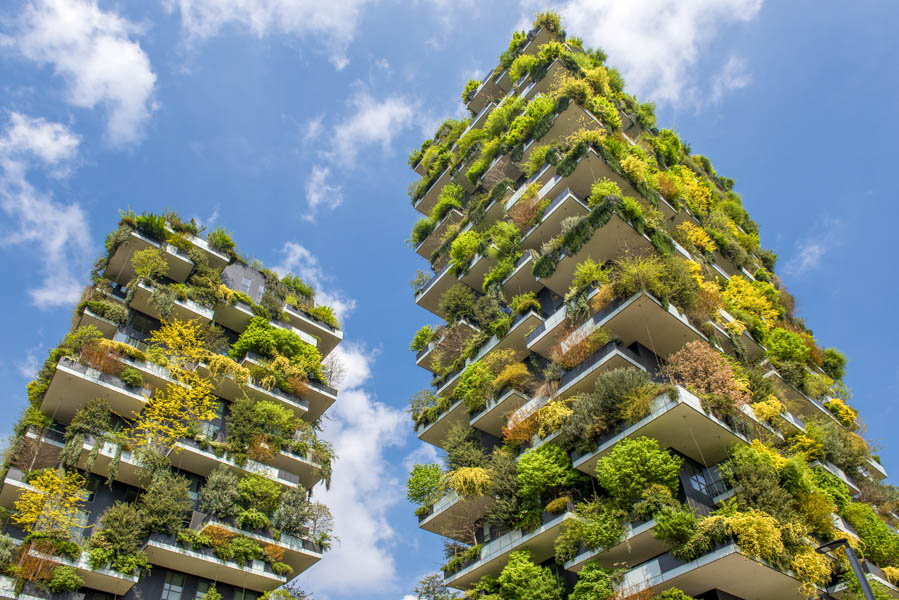
Bosco Verticale – While not a park you can wander through, the residential complex of two towers known as the “vertical forest” encompasses approximately 40,000 square metres of forest in total, or nearby 20,000 square metres per tower. These two towers in the Porta Nuova district can certainly be admired. They rise like living sculptures, their façades covered in 800 trees, 4,500 shrubs and 15,000 plants. Together they form one of the world’s most influential works of green architecture...
Biblioteca degli Alberi Milano (Library of Trees), commonly known as BAM, is a striking contemporary landscape of geometrical forms and themed areas, with plants arranged into groups like the rooms of a library. Unfenced and integral to the spaces between the tower blocks of Porta Nuova, BAM is imaginative and bold.
Parco Tre Torri (CityLife) is one of Milan’s ‘Green Rays’ that link open areas through the city from the woodlands of the north to the river plains of the south. The gardens sit at the base of three futuristic skyscrapers built on the area vacated by the relocation of the international Fiera (Trade Fair) to the nearby town of Rho.
Shopping in Milan

Prada, Versace, Dolce & Gabbana, Armani, and Moschino may seem to be the foundations on which Milan’s reputation as one of the fashion capitals of the world rests, but they are also the tip of the iceberg that lies beneath them. Hundreds of fashion houses are to be found in this city, and there’s a joy in discovering the up-and-coming, lesser-known ones that uphold the tradition of exceptional quality and design without appearing on the streets of other cities around the world.
Is there any downside to shopping in Milan? Too much temptation and being spoilt for choice. The sale seasons – summer reductions from mid-July to August and the post-Christmas restock – are the best times to go treasure hunting.
The Quadrilatero della moda (fashion rectangle) is Milan’s most desirable and elegant shopping neighbourhood, with Via Montenapoleone and Via della Spiga being the roads that attract the biggest names in luxury clothing. Shop here if you are already dressed in designer labels or otherwise perhaps enjoy some wishful thinking, window shopping and people-watching. If you are here during one of the fashion weeks, entry to some shops may be invitation-only.
Between the piazzas of the Duomo and La Scala, the octagonal Galleria Vittorio Emanuele II (known simply as the Galleria) is Italy’s oldest covered shopping arcade. It’s a lofty space with an enormous cast iron and glass dome at its centre. Some locals call the Galleria ‘il Salotto di Milano’ (Milan’s drawing room) because of its role as a common meeting and dining place. Enter its triumphal arch entrance, enjoy shopping in the mild and dry environment and then perhaps settle down for a meal at Biffi Caffè, a favoured spot with locals since 1867.
Department stores are not common in Italy, but Milan spawned a special and exceptional flagship store that has branches in several other cities: La Rinascente. The original is right on the Piazza Duomo and spreads over seven floors. The best place to finish and rest your bags is the terrace restaurant for its view towards the many spires of the cathedral.
The coolest place in town may well be 10 Corso Como, a marvellous collection of outlets selling the artiest versions of clothes, music, design, cuisine and books. The nucleus of this development was a gallery opened in an old garage by the fashion director Carla Sozzani, and it’s now the hub of the whole super-trendy street of Corso Como.
For some affordable boutiques along with bohemian and independent artisan shops, the pedestrian-friendly district of Brera is the place. Collectors of vintage and retro design classics love the Cavelli e Nastri boutique.
Food in Milan
Italian Cuisine
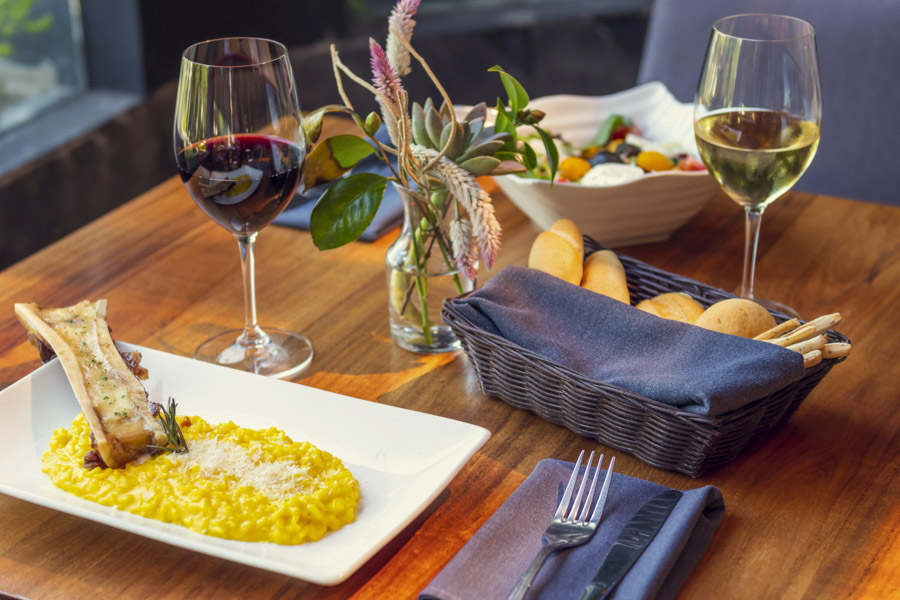
With the Germanic Lombard influence and the mountains not far away, the typical cuisine of Milan is often butter-based, hearty, and Alpine-flavoured. Rice is just as common as pasta, and the classic Milanese dish is Risotto all Milanese, a creamy golden rice dish flavoured with butter, saffron and Grana Padano or Parmigiano Reggiano cheese. A comforting winter favourite is Cassoeula stew made from Savoy cabbage and sausage. Milan’s signature cheese is Gorgonzola, which comes in two main varieties: pungent, crumbly picante and buttery, delicate dolce. A third cheese from Lombardy, even milder, is mascarpone.
An excellent place to enjoy typical Milanese food, some with modern twists too, is Ratanà in the Riccardo Catella Foundation’s sustainable urban development area in the Porta Nuova district. The setting is a beautifully restored railway building, and they offer a particularly good multiple-course tasting menu.
A Milan institution is Trattoria Milanese, an atmospheric restaurant founded in 1933 at the heart of the city. Reassuringly popular with the locals and with waiters that are loftily unflappable, it’s a place to enjoy all the classic Italian dishes produced with a high quality.
Close to the Duomo and with an ever-present (though quickly moving) queue is Luinzi Panzerotti. Perfect for food on the go, this establishment has been a Milanese favourite since the 1940s and serves soft, folded pastries filled with mozzarella and tomato.
The two ATMosfera tram restaurants offer a unique culinary experience in the refined setting of former tram carriages. The restaurant can be booked for private events. They depart from and return to Piazza Castello every evening.
Vegetarian Restaurants
Whether you are vegetarian or not, you should consider dining at Joia, the first fully vegetarian restaurant in Europe to earn a Michelin star. All ingredients here are also organic and, despite the accolades, it is understated, relaxing and intimate. For a full appreciation of the possibilities of vegetarian cuisine, try their sixteen-course tasting menu “Zenith”.
Coffee Houses, Bakeries, and Patisseries
In Milan’s fashion district, Cova on Via Montenapoleone is the classic stop for impeccable coffee and exquisite panettone. Founded in 1817, this fashionable café’ pedigree is summed up by its modern-day owners: LVMH - Moët Hennessy Louis Vuitton. Nearby, Marchesi 1824 offers a similarly historic experience, though its original café on Via Santa Maria alla Porta is more atmospheric than this recent branch. In either café, the Aurora Cake, a sponge filled with pastry cream and vanilla syrup, is well worth trying.
For traditional pastry houses, Pasticceria Cucchi (Corso Genova), established in 1936, attracts well-earned praise for its legendary brioche, classic panettone and superb pastry counter. Pasticceria Martesana (Via Cagliero) is another Milan favourite, renowned for its award‑winning cakes and inventive modern interpretations of Milanese sweets.
City Transport in Milan
Milan has a well-organised and efficient public transport system managed by ATM. An inexpensive standard urban ticket is valid for 90 minutes on overground services or a single journey on the metro or urban rail lines. For roughly three times the price, you can buy a pass lasting 24 hours after validation, and a 72-hour pass that is valid on all buses, trams and metros is not much more than €15. Physical tickets can be bought at station kiosks, newsstands and tabacchi, but contactless pay-as-you-go and digital apps are increasingly normal.
For unlimited use of public transport and entry to the major tourist sites, consider buying a 48-hour Milan Pass card.
Metro
The efficient metro has five colour-coded lines. It is the longest metro in Italy. The M3 (Yellow) line is one that many tourists find useful, as it stops at the Duomo, Via Montenapoleone (the main commercial area) and Milano Centrale. Line M4 (Blue) connects to Linate Airport in just 12 minutes.
Trams and Buses
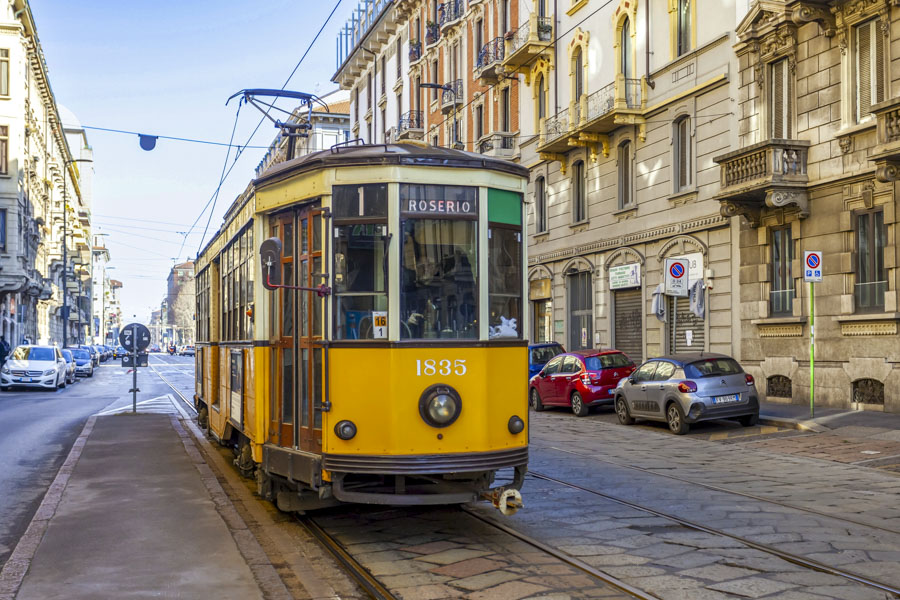
There are 17 tram lines in Milan, and trams are one of the easiest and fastest ways to get around the city. Historic orange and yellow Carelli trams are the most stylish option. As for bus routes, they are well-developed, with many routes operating all night. Costing just €1.50, a bus journey to Linate Airport is exceptionally good value.
There are dedicated sightseeing buses that operate on four routes. You can purchase a ticket lasting 24, 48 or 72 hours, allowing you to hop on and hop off while getting around sites that include Piazza del Duomo, Castello Sforzesco, Milan Cathedral, San Siro Stadium, Palazzo Lombardia or the Cenacolo.
Taxis
With such a good public transport system, you may never need a taxi. Indeed, because taxis summoned by phone start charging as soon as they receive your call, they can be quite expensive if they are stuck in the traffic. Charge rates also rise if the taxi exceeds 50 kilometres per hour. Taxis cannot be hailed, so you will need to get one from a taxi rank, and using ride-hailing apps in Milan can be more expensive than a standard cab.
Bikes and Scooters
Various bike sharing companies exist in Milan, such as the docking-station-based BikeMi and the free-floating RideMovi. Two companies – Dott and Lime – offer both e-bikes and e-scooters for hire via app. If you want something faster and more classically Italian, you can rent a moped-style e-scooter through eCooltra or Pikyrent.
How to Get to Milan
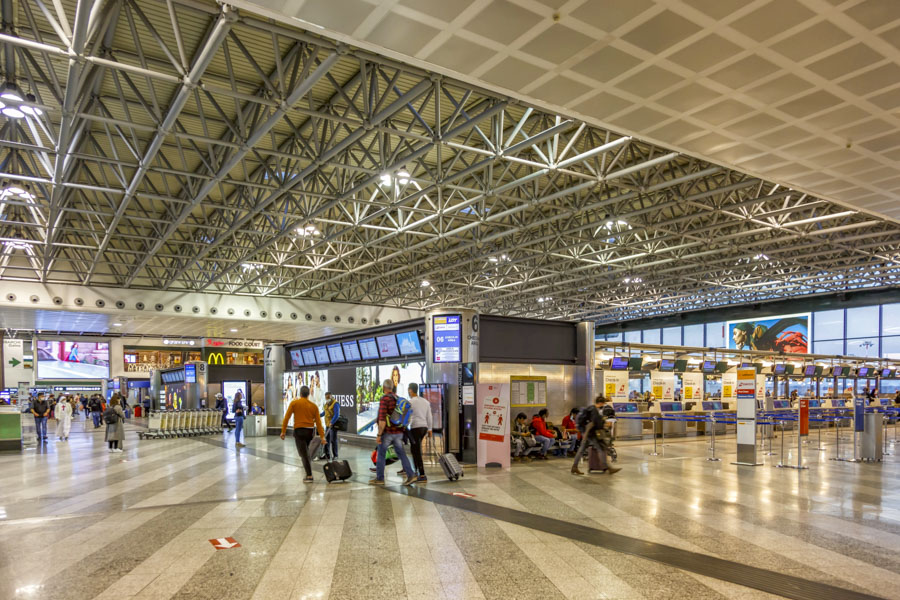
By Plane
Milan Malpensa Airport (MXP) is the largest airport in northern Italy and is located about 50 kilometres (30 miles) northwest of the city. It is ranked in the top ten globally for most direct flight destinations and is Italy’s second busiest airport after Rome Fiumicino.
Malpensa Express trains connect the airport with Cadorna Station in Milan and depart every 30 minutes, taking about 40 minutes for the journey. Buses take an hour but leave every 20 minutes for both Cadorna Station and Stazione Centrale (Central Station).
Milan has another two airports: Linate (LIN), for flights from many European cities, and Bergamo (BGY), catering to low-cost airlines other than EasyJet (which has exclusive use of terminal 2 of Malpensa). Linate is the closest to the city centre and is directly on the Milan Metro M4 line.
By Train
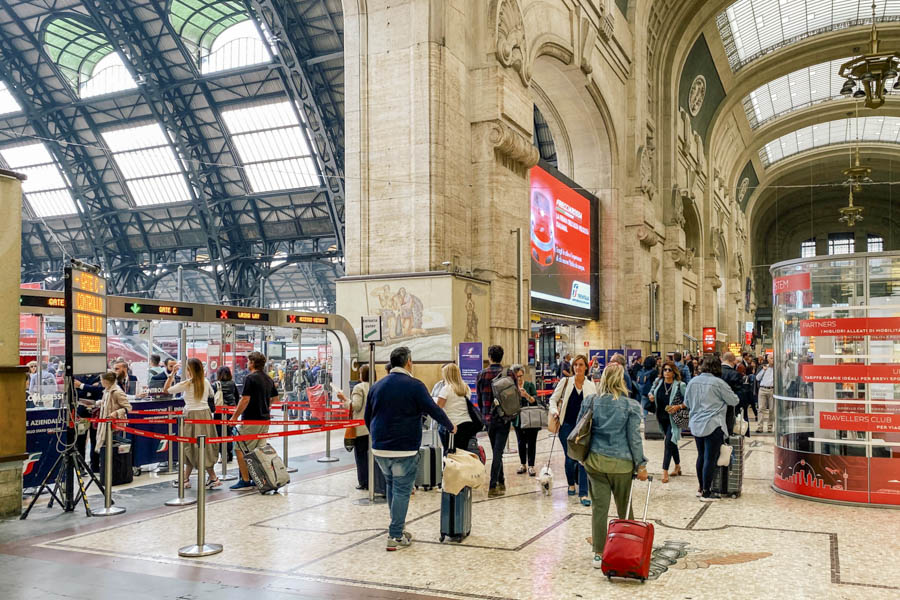
Getting to Milan by train from the rest of Italy is straightforward, fast and relatively cheap thanks to two competing high-speed operators (the state-owned Trenitalia and the private company Italo). Many trains per day connect Milan with Rome in three hours. Florence and Venice can be reached, respectively, in 1 hour and 45 minutes and in 2 hours and 15 minutes, while Naples is about five and a half hours. For regional and suburban travel within Lombardy, the Trenord network connects Milan with towns around the lakes and the region.
Long-distance journeys are cheapest if booked well in advance and, unlike the Trenord network, require reservations.
By Road
An excellent motorway network connects Milan with other Italian cities: the A4 (Turin–Milan–Venice), the A8/A9 routes to the lakes and Switzerland, the A7 to Genoa, and the A1 Autostrada del Sole running south through Bologna and Florence.
While driving to Milan is easy enough, driving within it is significantly more complex and best avoided. The city operates a camera-enforced central ZTL (restricted traffic zone) known as Area C, which requires the purchase of an entry ticket. Certain classes of vehicles are not allowed in at all, while fully electric vehicles can enter free of charge. There are other types of ZTL zones in Milan that apply to nightlife districts and some residential neighbourhoods, further complicating the picture.
Parking is also scarce and tightly regulated, so it is far easier to leave your car at a dedicated park and ride near a major metro station such as Lampugnano or San Donato. Parking on the street has other rules to be aware of: yellow lines are for residents only, while blue lines allow paid parking for up to two hours with a pre‑purchased scratch card or ticket.
Languages Spoken in Milan
Milanese pronunciation and phrasing can differ from standard Italian, and you may notice distinctive turns of speech compared with, for example, people from Naples. In Milan, conversations tend to be quick and reflect the city’s business-driven pace.
As Milan is Italy’s financial and fashion capital, it is multi-cultural and multi-lingual, with English commonly spoken by the dynamic population. Younger Milanese are particularly adept at switching between languages, and it is common to hear French, Spanish and even Chinese and Arabic.
Many signs in Milan are in Italian and English, as are many menus, and locals are accustomed to helping travellers who ask for help in their own language.
Security in Milan
Milan ranks as one of the safest major cities in the world, but some neighbourhoods and locations remain prone to petty crime. It is advisable to be extra vigilant in the Quarto Oggiaro, San Siro, and Corvetto districts, and central areas such as Stazione Centrale, China Town, and Duomo have a high risk of pickpocketing and are less safe at night. The central station is heavily patrolled by police during the day but is not a place to linger there at night.