
Tours and Attractions of Rome
Rome, the capital of Italy, is a city where the relics of antiquity, the Middle Ages, the Renaissance, the Baroque period and contemporary street life overlap. Italian bustle is never more than a few yards from ancient walls of historic consequence. There is no other place that can boast the likes of the Forum, where the oratory of Cicero forged Latin vocabulary and thought; the Colosseum, where Roman citizens thronged and united; and the Sistine Chapel, where Michelangelo quietly painted. The papacy, long established in Rome, has shaped the lives of millions, while the Holy See, its central governing authority, is now based in Vatican City State. And beyond such headline marvels, Rome is a treasure trove of museums, galleries, grand piazzas and quieter corners to be discovered.
Great cities and great rivers are often inseparable, and this is the case for Rome. Follow the Tiber course for thirty kilometres to the coast, and you will reach Ostia Antica, Rome’s principal port in antiquity, where goods of all varieties arrived. Flowing through this bustling port came the food and luxuries demanded by the wealth of Rome, the exotic origins of which were sometimes as far away as Central Asia and China through long-distance trade networks such as the Silk Road.
Rome Tours
A city that combines brilliance and beauty with dignity and power, Rome is a place where any visitor may feel staggered by the weight of history. It’s hard not to conclude that it warrants many return trips. Even so, it’s possible to feel as if you have done Rome a degree of justice if you can balance your experience of it by visiting sites from each of its main eras. This means not just taking in the ancient sites – such as the Forum, Colosseum and Pantheon – and the Renaissance masterpieces of St Peter’s and the Sistine Chapel but also some campanile bell towers of the Middle Ages and the Baroque piazzas and fountains.
Much of Rome can be experienced on foot and self-guided, but, in a city this significant, there’s wisdom in taking a tour with a local guide versed in the history of art and architecture. Several famous sites, such as the Colosseum, Vatican Museums and the Catacombs, offer after-hours access if you book well in advance and are willing to pay for a more private experience.
Best Time to Visit Rome
For the best experience, visit Rome in spring or autumn, when comfortable temperatures make long walks and outdoor dining especially enjoyable. Spring has the added appeal of Carnival, Holy Week processions, and celebrations of Rome’s Birthday on 21 April.
Spring (March to May): Days warm from 15–19°C (59–66°F) in March to 21–24°C (70–75°F) in May, while nights rise from 6°C (43°F) to 12°C (54°F). Parks are green, rainfall is moderate, and April is usually slightly wetter. Pack a light jacket, comfortable shoes, and an umbrella.
Summer (June to August): July and August often exceed 30°C (86°F), with nights above 20°C (68°F). Humidity can feel heavy and may bring afternoon showers. Visit outdoor sights early, move indoors at midday, use sun cream, wear a hat, and refill water at Rome’s nasoni fountains.
Autumn (September to November): September remains warm, around 26°C (79°F), but crowds thin after the school holidays. By November, days average 16°C (61°F), with nights falling to 8°C (46°F). The light and walking weather are excellent, though rain increases from October.
Winter (December to February): Days are usually 12–15°C (54–59°F), with nights above freezing. December and January are rainy, while February is often drier. Winter suits museums, galleries, lower prices, and quieter streets. Bring a warm coat and waterproof shoes.
History of Rome
Wind back the clock about 2,700 years and Rome would have been little more than a cluster of huts on the Palatine Hill. As the population grew, settlements spread across the six neighbouring hills rising above the plain of the River Tiber, gradually merging into a single city shaped by Latin, Sabine and Etruscan communities. According to legend, Rome was founded in 753 BCE by Romulus, who killed his twin brother Remus after the two, abandoned as infants and raised by a she-wolf, quarrelled over where the city should stand. Romulus became Rome's first king.
In 509 BCE, the Romans overthrew their kings and established a republic governed by elected magistrates and the Senate. Over the following centuries, Rome expanded across the Mediterranean, defeating Carthage and absorbing influences from Greece, Egypt and the Near East.
By the end of the 1st century BCE, rivalry and civil war had brought the Republic to an end. Following Julius Caesar's assassination in 44 BCE, his adopted heir Octavian (later Augustus) became the first emperor in 27 BCE, transforming Rome into the capital of a vast empire.
For the next three centuries, the Roman Empire brought relative stability and economic growth across much of its territory. In 312 CE, Emperor Constantine the Great embraced Christianity, leading to the Edict of Milan the following year. Christianity's position within the empire strengthened, while Rome gradually emerged as the spiritual centre of the faith and the seat of the Pope. Mounting pressure along the frontiers eventually brought down the Western Roman Empire in 476 CE, while the Eastern Empire continued to rule from Constantinople (modern Istanbul).
Although Rome's political influence declined during the Middle Ages, its religious authority endured. The Great Schism of 1054 formalised the split between Western (Catholic) and Eastern (Orthodox) Christianity, while the Pope remained a figure before whom even kings knelt and the Church became exceptionally wealthy.
The Renaissance (c. 1450–1600) and Baroque period (c. 1600–1750) brought another period of prosperity, as artists and architects including Michelangelo, Raphael, Bernini and Borromini transformed the city alongside its ancient monuments.
The French Revolution and Napoleonic campaigns brought instability in the early 19th century, but Rome became the capital of the newly unified Kingdom of Italy in 1870.
The 20th century brought the First World War, Mussolini's Fascist regime, and the Second World War. After 1945, Rome gradually regained its cultural and artistic vitality, particularly through cinema, while international tourism helped restore its reputation as one of Europe's leading capitals.
Things To Do in Rome
To experience a historic moment live, attend a papal audience with Pope Leo XIV on Wednesday morning or the Sunday midday blessing; many visitors from different faiths attend and observe from the audience area, and some also participate in the prayers.
For a truly Roman experience, stroll through Trastevere and its charming alleyways lined with traditional trattorias and cafes. Here, you can sample local specialities just like the Romans do. After enjoying a hearty breakfast, you will have the energy to visit some of the many monuments on your must-see list.
Have lunch at Mercato Centrale, then stroll to La Gelataria Romana to savour an authentic Italian gelato.
Then explore the shops and boutiques of Campo de' Fiori and the Monti district at your own pace.
For a break, choose one of the cafés nearby, order an espresso, and take a few minutes to watch the city move around you.
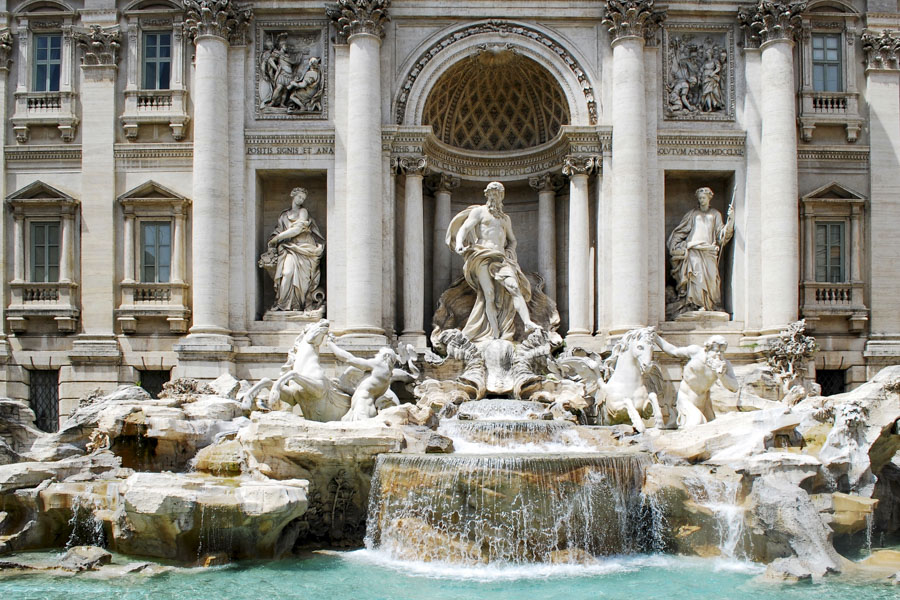
At the end of the day, you can also admire the sunset from a viewpoint such as Janiculum Hill. Before you leave Rome, visit the Trevi Fountain and toss a coin over your left shoulder to ensure you’ll return to the Eternal City.
Places to Visit in Rome
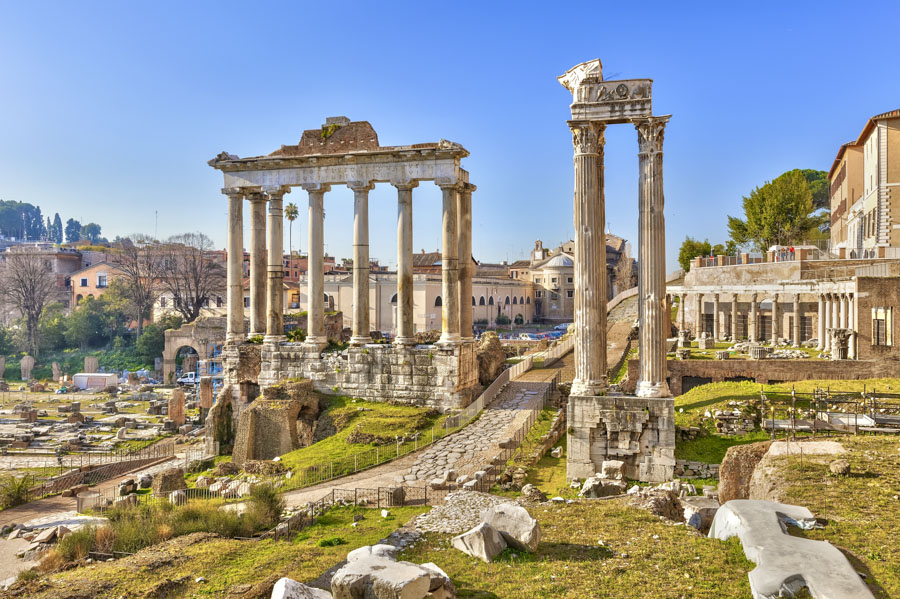
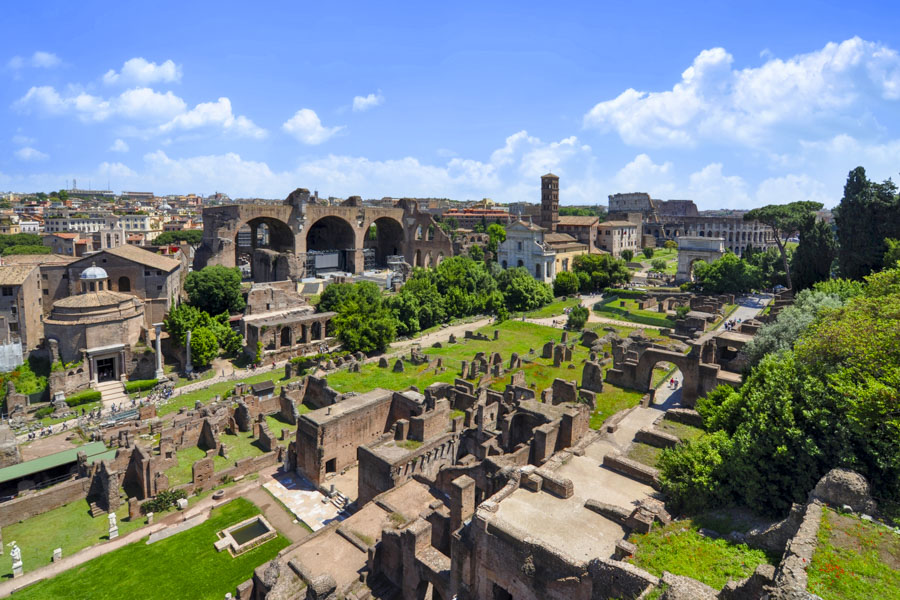
The Roman Forum (Foro Romano) is the natural starting point for any exploration of Rome, for it was in this low ground between the city’s foundational hills that Romans first gathered to trade and debate. The word ‘forum’ means ‘outside’, as this was the open space beyond the earliest clusters of houses. Over time, this marketplace also became a political stage and legal arena and the nucleus of the republic and empire. It was here that Cicero spoke from the rostra (a raised platform), and the fate of provinces and people was decided.
From here, it is worth walking up the Palatine Hill (Palatino), the legendary home of Romulus, from whose terraces you can look not only over the Forum but also over the Circus Maximus (Circo Massimo). This great ancient entertainment venue could hold 150,000 spectators, who came to watch chariot races of dramatic speed and danger. The Palatine was the vantage point of emperors from great houses built on its slopes and summit; indeed, it is from ‘Palatine’ that we get the word ‘palace’.
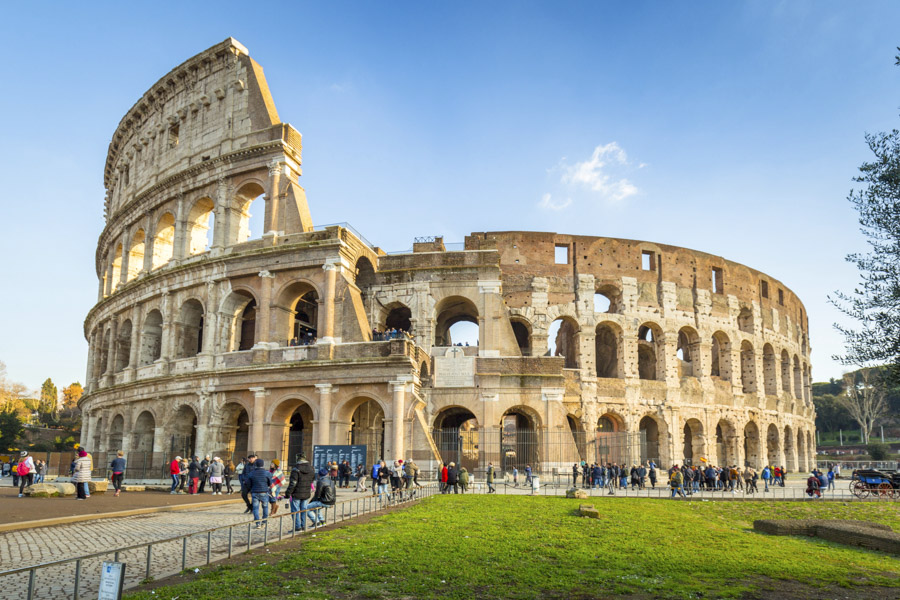
A short walk from the Forum is the Colosseum (Colosseo), also known as the Flavian Amphitheatre, the image of which is inseparable from ancient Rome. Completed in 80 CE, it was the venue for gladiatorial combat and other spectacles that played their part in cementing the Roman identity of the masses. Beside it is the Arch of Constantine (Arco di Costantino), built just fifteen years before the emperor founded Constantinople in 330 CE and moved his fulcrum of rule eastwards, away from Rome.
To the north of the Forum lies the Capitoline Hill (Campidoglio), the citadel complex that included the Temple of Jupiter, the most important religious site in ancient Rome. When Constantine’s Arch was built, however, its days as a place of pagan devotion were numbered with the official shift of the city to Christianity. It was closed under Theodosius I and finally destroyed in the beginning of the 4th century. To see what rose from Constantine’s religious legacy, it is simply a case of crossing the River Tiber to the Vatican City, but on the way, there are other sites to see, including, among many others, the Pantheon and the Theatre of Pompey (Teatro di Pompeo).
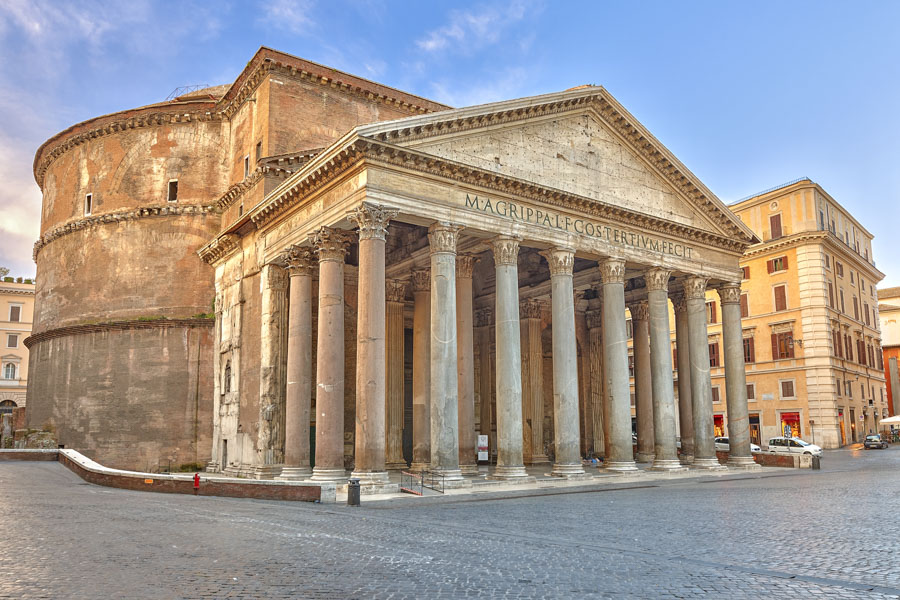
Rebuilt by Hadrian in 125 CE on the ruins of the Pantheon commissioned by Agrippa, it is a building that combines architectural grandeur, engineering brilliance and historic significance. Originally a pagan temple to all gods (the literal meaning of ‘pan-theon’), it was later converted to a church and features the largest unreinforced concrete dome in the world. The circular opening in the dome’s centre (the ‘oculus’, or eye) is the only source of natural light, through which you can see the tombs and monuments inside the building, including those of the artist Raphael and Victor Emanuel II, the first king of unified Italy.
A few minutes from the Pantheon, Largo di Torre Argentina preserves several Republican-era sanctuaries, including the Curia of Pompey (Curia di Pompeo). It was in this meeting hall in the Theatre of Pompey that Julius Caesar was assassinated in 44 BC.
Across the river rises St Peter’s Basilica, crowned by Michelangelo’s dome and built above the traditional site of St Peter’s tomb. According to Catholic tradition, Peter was the first bishop of Rome, and his successors now occupy Vatican City, the world’s smallest independent state. Its eastern edge opens onto Bernini’s great elliptical piazza, St Peter’s Square, where thousands gather during major religious festivals.
The Vatican Museums hold one of the world’s great art collections, spread through the papal palaces. Highlights include the Pio-Clementino Museum, with the Laocoön Group, Apollo Belvedere and Belvedere Torso; the Raphael Rooms, commissioned by Pope Julius II; and the Sistine Chapel, with Michelangelo’s ceiling and Last Judgement. Allow at least two hours for a focused visit, or up to four if you want to see the main galleries without rushing.
The Piazzas of Rome
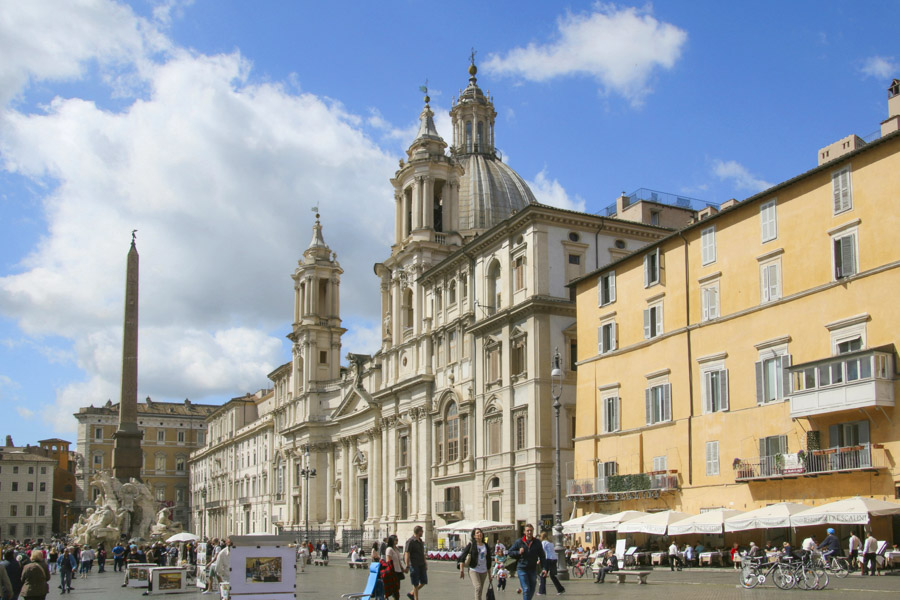
‘Piazza’ is the Italian word for a square or open space within an urban area, though few are actually square. They are communal gathering places that are typically surrounded by elegant buildings and adorned with monuments, columns and fountains.
Piazza Barberini is one of the most important road intersections in the city. The nearby wide Via Vittorio Veneto, with its trees, hotels, cafes and smart shops, leads to the Villa Borghese museum. In the centre of the piazza is Bernini’s famous fountain, Fontana del Tritone. On the south side of the piazza is the Palazzo Barbarini, which houses the National Gallery of Ancient Art (Galleria Nazionale d'Arte Antica).
Piazza Colonna, halfway along the Corso, is also flanked by fine palaces. In its centre is the great Column of Marcus Aurelius, with spiralling reliefs of his victories, modelled on Trajan’s Column in the Forum. On the north flank of the square is Palazzo Chigi, generally the official residence of the prime minister.
Piazza San Giovanni in Laterano is home to the Lateran Obelisk, the tallest (over 32 metres) and oldest ancient obelisk in the world, having stood in Karnak Temple (Egypt) since the 15th century BCE. Transported to Rome in 357 CE, its initial home was the Circus Maximus.
Piazza Navona was constructed on the ruins of Domitian’s stadium, from which it acquired its long, oval shape. The beautiful centrepiece is the Fontana dei Quattro Fiumi by Bernini, which depicts the rivers Nile, Ganges, Danube and Río de la Plata. There are two other fountains too: the northern one is the Fontana del Nettuno featuring Neptune battling with an octopus, while the southern one, the Fontana del Moro, shows a Moor wrestling with a dolphin. If you come to this piazza in December, you will find it transformed into a huge Christmas market.
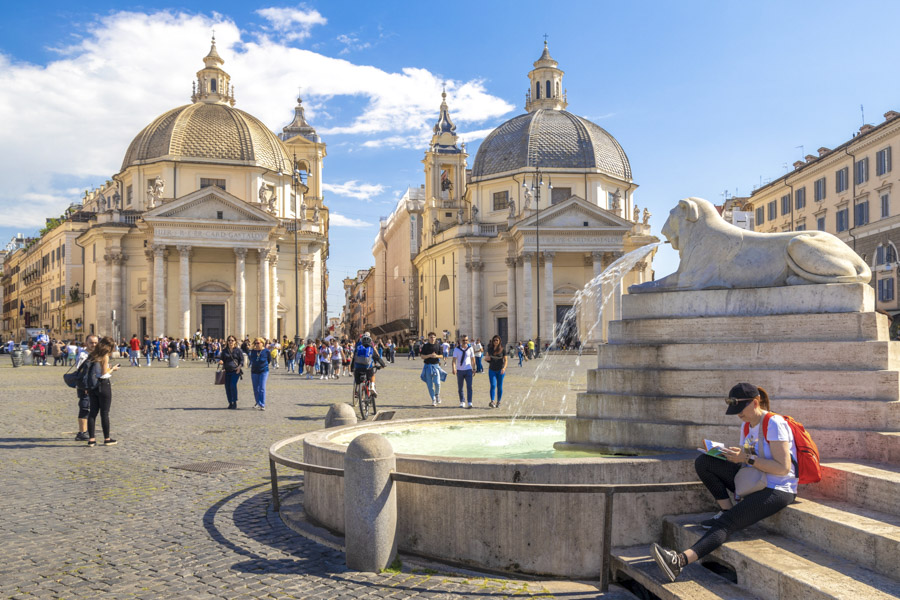
Piazza del Popolo, Piazza della Republica, Piazza di Spagna, Piazza Venezia, and Piazza di Trevi are the other major squares to visit in Rome.
Further from Rome
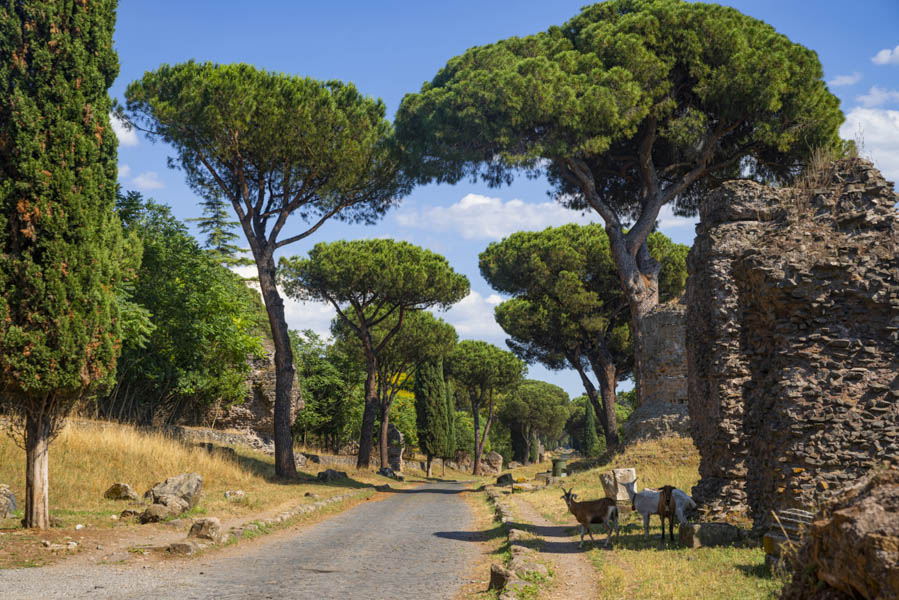
Getting away from the centre of Rome can have its appeal, particularly at the height of summer when crowds and heat may make you yearn for a quieter, greener, and cooler interlude. The immediate area around the city is called the Roman Campagna and is a landscape of rolling fields, aqueducts and ancient roads. Beyond is the wider region of Lazio, where you can discover hill towns, a coastal playground and plenty of archaeological sites, in addition to Ostia Antica, mentioned earlier.
The first and most famous of the Roman roads, the Appian Way (Via Appia) has a segment of about 15 kilometres that takes about 4 hours to walk. The early section is where you’ll find the Catacombs of Callixtus (Catacombe di San Callisto) and the Villa of the Quintili (Villa dei Quintili).
To the east of Rome, and a place for an excellent day trip, is the stunning hilltop town of Tivoli. In addition to the advantage of being somewhat cooler in temperature than Rome, it contains the significant attractions of Villa d’Este, a UNESCO World Heritage site from the Renaissance, famous for its terraced gardens and more than 500 fountains, 2nd-century Hadrian’s Villa and nature-focused Villa Gregoriana (1835).
For other day trips with a more local flavour, consider Lido di Ostia, near the port of Ostia Antica, the beach area where the residents of Rome flock, or a road trip to the Castelli Romani hill towns. Of particular appeal is Albano Laziale, a place of cool air and lush gardens overlooking a volcanic lake.
Museums in Rome
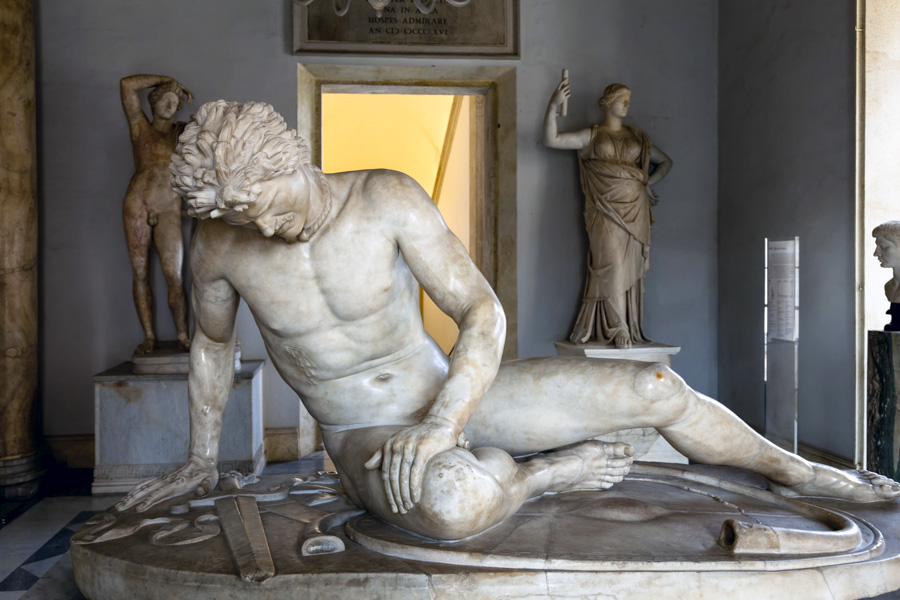
Rome is crammed with magnificent museums, including the world’s oldest: the Capitoline Museums (Musei Capitolini), founded in 1471. Seek out the Capitoline Wolf, the bronze she-wolf suckling Romulus and Remus, amid other treasures that include the Dying Gaul, a Hellenistic sculpture of a wounded warrior, and the Equestrian Statue of Marcus Aurelius. This depiction of the Stoic philosopher-emperor is one of the few surviving bronze imperial statues from antiquity.
Nearby are the Palazzo Massimo alle Terme and Palazzo Altemps, both part of the National Museum of Rome. Here you will find exquisite garden frescoes transported here from the Villa of Livia and haunting Fayum portraits that were attached to mummies in the Roman Egypt period. Other works of great importance include the Greek Discus Thrower, (Discobolus), the Boxer at Rest, the Sleeping Hermaphrodite, and the Wolf’s Head protome from Caligula’s ship.
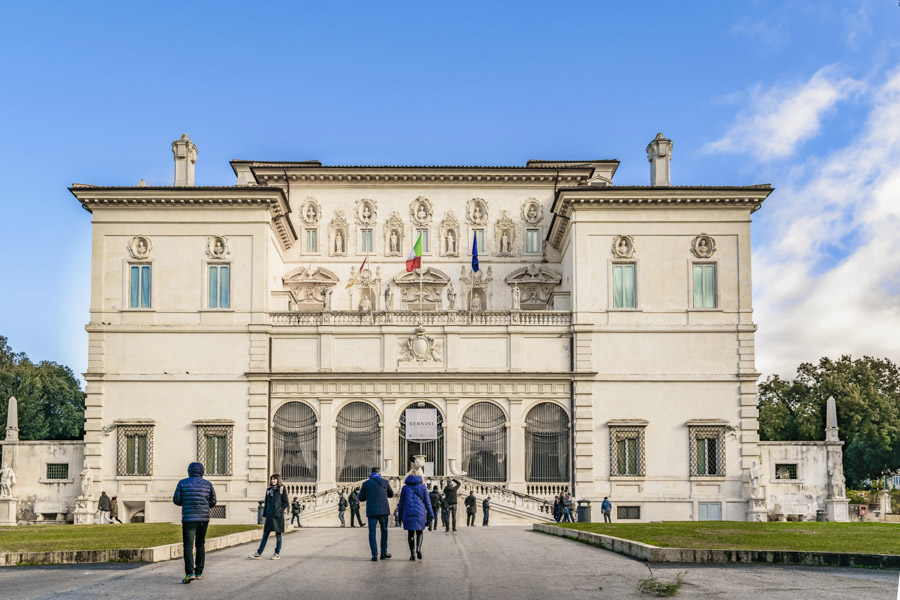
The favourite theme of David’s encounter with Goliath is depicted by Bernini’s David, housed in the Galleria Borghese, a villa containing a wonderful collection of Baroque art. Here, you will also find Apollo and Daphne, the Abduction of Proserpina, and paintings by Caravaggio, including Boy with a Basket of Fruit, David with the Head of Goliath, and St Jerome Writing.
Other museums span the ages, from the National Etruscan Museum of Villa Giulia for pre-Roman antiquities of Latium interest to the National Gallery of Modern and Contemporary Art housing works from the 19th century to the modern day.
Each museum in Rome warrants at least two hours of your time, but plan for four hours in each if you want to see the exhibits at the pace that they deserve.
Rome Theatres
Rome has a rich theatre culture, with performances ranging from classic opera and drama to contemporary productions. Many visitors begin with iconic venues like the Teatro dell’Opera di Roma and the Teatro Argentina di Roma, then explore smaller spaces such as Teatro Quirino and Teatro Brancaccio for touring plays, experimental productions, and lively contemporary work. For a great night out, check what’s on during your dates, book tickets in advance for popular performances, and in smaller theatres try to sit closer to the stage for a more immersive experience.
Entertainment, Parks, and Shopping in Rome
Entertainment
You can catch a live concert or street performers around popular areas, enjoy stand-up or comedy nights at venues that host touring acts, and browse lively markets and events that run seasonally. In the evenings, areas like Trastevere, Campo de’ Fiori, and Testaccio are great for a night out with food, music, and a lively Roman atmosphere.
To truly understand the soul of the country, share a football moment with the Romans, fans of Italy's beloved sport and an institution. During matches featuring the city's teams, Roma and Lazio, head to the Stadio Olimpico or a venue showing the game on screens and cheer for the team alongside the locals over a drink. It is also a great way to socialise, even if football isn't usually your cup of tea.
For something relaxed, consider a river cruise on the Tiber. It’s a scenic way to see different neighbourhoods from the water and iconic landmarks.
Parks of Rome
Rome also has several remarkable green spaces for relaxation. Among the three main parks is the Villa Borghese, a large central park with gardens and viewpoints, ideal for those interested in art.
After a Vatican visit, the Vatican Gardens are perfect for a peaceful escape. Pause here for a while and admire the views of the Sistine Chapel among fountains and terraces.
West of Trastavere, located in the Monteverde area, the Villa Doria Pamphili is the largest park in Rome. It is divided into three parts: the villa and its gardens (pars urbana), the pine forest (pars fructuaria) and the agricultural land (pars rustica). This public garden appeals as much to art lovers as to budding agronomists, as well as families.
Shopping in Rome
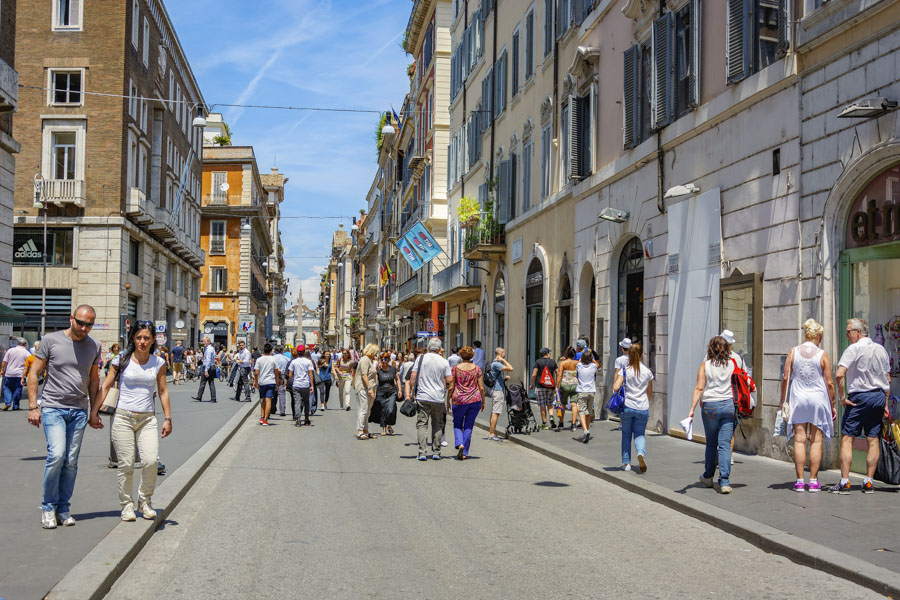
It’s hard to avoid Rome’s main shopping artery – Via del Corso – purely because it runs straight from Piazza Venezia to Piazza del Popolo and is therefore an essential navigational route. If international brands attract you, the Via del Corso is enough for your shopping needs, but there are far more interesting places elsewhere for shopping. Step off this street into Galleria Alberto Sordi, for example, and you are in a place of polished marble floors, stained glass and a grand central atrium. Worth seeing for the architecture alone, it’s also a place to find a quiet bookshop.
Leading directly to the Spanish Steps, the Via dei Condotti is Rome’s luxury district. Buy that beautiful accessory or perhaps just enjoy the window displays of the flagship stores of labels such as Gucci, Prada, Bulgari, Fendi, and Dior.
Again, near the Spanish Steps, connecting to the Piazza del Popolo, is the Via del Babuino. This street has an aristocratic air and is where you’ll find plenty of galleries, antique shops and high-end boutiques.
Then there’s the bohemian Monti District, with Via del Boschetto and Via Urbana. Shops here are small and full of character. If you want one-off pieces from independent designers, vintage specialists or artisan studios, then this is the place to go. There’s a good weekend market too.
Food in Rome

Italian Cuisine
Most visitors to Rome prioritise the monuments and museums over food, and you will find plenty of restaurants offering good rather than outstanding staples of Italian cuisine such as pizzas and pasta dishes. Prices are cheaper than in cities like London, Paris and Milan, but more expensive than in provincial Italian towns. Above all, Roman gastronomy is a way of life.
If you want a food treat, there are some long-standing institutions that might be worth a booking. For example, Armando al Pantheon is popular with locals and visitors alike; indeed, reservations here (which open 30 days in advance) are quickly snapped up. Widely regarded as one of the best and most authentic trattorias in Rome, Da Enzo al 29 is a place to enjoy traditional Roman pastas such as Carbonara and Cacio e Pepe. As there are no reservations here, expect to queue. A bit away from the tourist track and known for generous portions is the legendary Felice a Testaccio.
Are you coming to Rome for an exceptional culinary experience? In this case, book well in advance at La Pergola accompany the delicate dishes served, the only restaurant in Rome with three Michelin stars. In a warm and inviting setting with a view of the roofs of the capital, you can choose a prestigious wine to accompany the delicate dishes served.
In Italy, establishments known as "bars" are often much more than just places for a quick drink; they typically offer snacks and sometimes serve as casual little restaurants. One of the locals' favourite evening pastimes is enjoying an aperitivo accompanied by antipasti. At the end of the day, the city comes alive with the sound of conversation and clinking glasses, while tables and counters fill up with tempting bite-sized treats—making every day feel like a celebration. Bar Locarno (Popolo), Massa Rooftop and Aurora Bistro & Bar are three must-visit spots with different atmospheres to experience the local culture.
Vegetarian Restaurants
Rome is not traditionally a vegetarian city, but there are always dishes on the menu for those who want to avoid meat. Many Italian dishes are plant‑based, including carciofi alla romana (braised artichokes), puntarelle with anchovy dressing, and supplì (fried rice croquettes). Vegetarians are well catered to by the Jewish-Roman cuisine in the Ghetto, and the long-established vegetarian restaurant of Il Margutta can be found near the Spanish Steps.
Coffee Houses, Bakeries, and Patisseries
For the Roman café experience, perhaps opt for one of two choices near the Pantheon: Sant’Eustachio Il Caffè or Tazza d’Oro. The latter has a famous granita coffee, which is a welcome treat on hot days. For an authentic vintage vibe, head across the Tiber to Sciascia Caffè 1919, where you can enjoy their renowned Caffè al Cioccolato.
City Transport in Rome
Tickets and Passes
Rome’s public transport network of buses, trams, metro, and suburban trains is operated by ATAC and Trenitalia. Good ticket options include the BIT (Biglietto Integrato a Tempo 100‑minute ticket, currently €1.50), ROMA24/48/72-hour passes, or the CIS weekly pass. These are valid across buses, trams, and the metro and can be purchased at metro stations, newsstands, and tabacchi shops. Tickets must be validated by a yellow machine on boarding or at metro turnstiles. Contactless bank‑card payment is also available at metro gates, where you simply ‘tap in’.
Note: prices are subject to change; it is therefore advisable to check them before travelling.
Public Transport
Metro
Rome’s metro is compact but efficient, with three lines (A, B/B1, and C) covering major hubs such as Termini, the Colosseum, the Vatican area (Ottaviano), and Piazza di Spagna. Trains run roughly every 3–6 minutes, from about 05:30 to 23:30. The system is easy to navigate, with clear signage and colour‑coded lines.
Buses and Trams
Rome’s bus and tram network reaches areas that the metro does not. Services generally run from around 05:00 to midnight, with night buses covering key routes after hours. Buses can be slow during peak traffic, but they are often the most direct way to reach neighbourhoods such as Trastevere, Gianicolo, and the Appian Way.
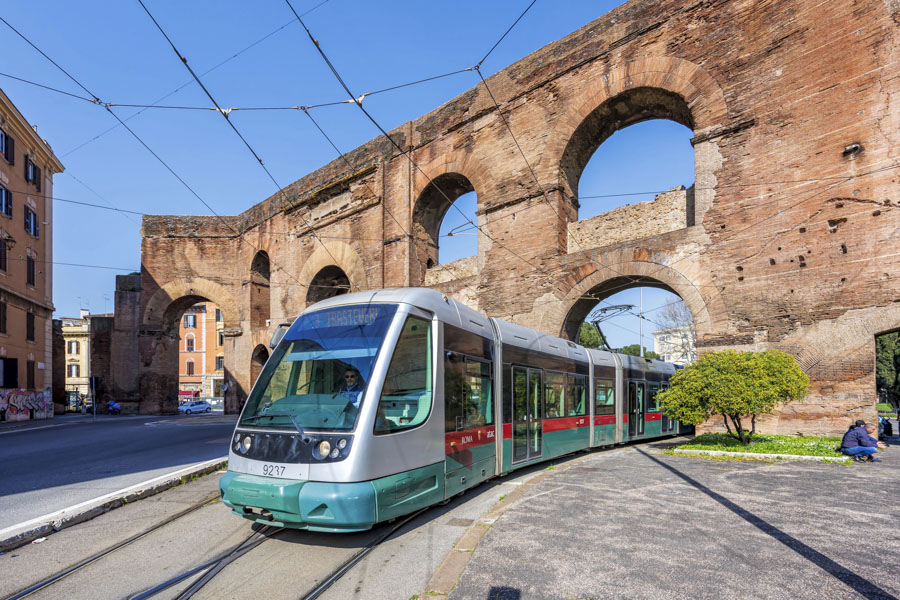
Trams offer smoother rides and predictable routes, especially lines 3 and 8, which connect major historic districts. The tram network skirts around the historic centre of the city, keeping it out of the heavy traffic.
Suburban Trains
Several suburban rail lines are useful for visitors. The FL1 connects Trastevere, Ostiense, and Tiburtina stations with Fiumicino Airport (FCO). The Roma–Lido line runs to the coast at Ostia and the archaeological site of Ostia Antica, while the Roma–Viterbo and Roma–Giardinetti lines serve outlying districts. If you want to get to Tivoli by train, the journey from Roma Tiburtina takes more than an hour and costs less than €4.
Other Modes of Transport
Taxis
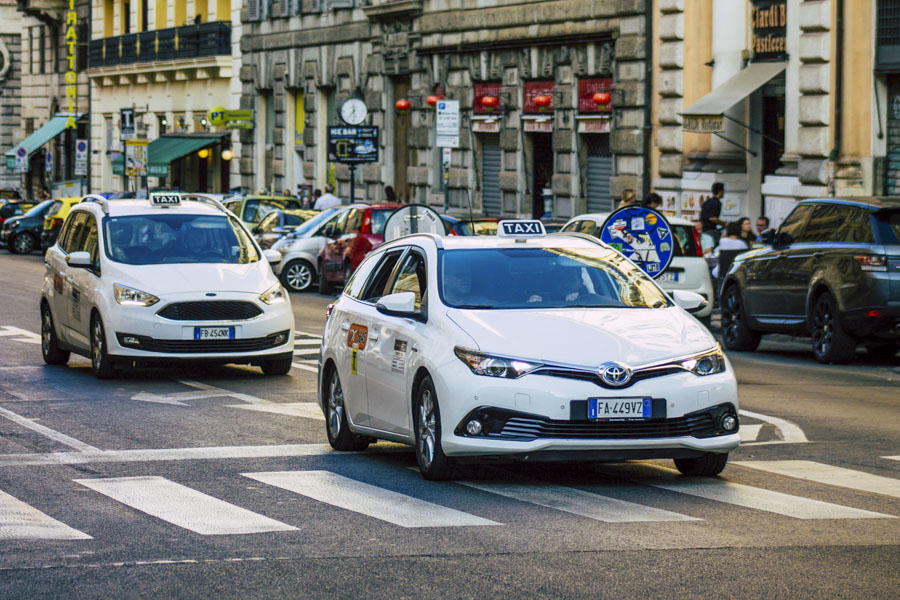
Official white taxis operate 24/7 and can be found at designated ranks or booked by phone or app. Fares are metered, with fixed rates to and from Fiumicino Airport. Traffic can be heavy, especially during morning and evening peaks, so allow extra time for cross‑city journeys. Ride‑hailing apps operate in Rome but typically dispatch licensed taxis rather than private cars.
Car Rental
Major car rental companies, such as Sixt, Europcar, Hertz, and Avis, as well as many others, have locations in Rome. You can pick up and drop off your vehicle at the airports and train stations: Fiumicino Airport (FCO) – the largest selection; Ciampino Airport (CIA) – a more limited selection; near Termini Station, in the heart of Rome – convenient if you are already staying in the city; at the Port, near the cruise terminals – less common, but some agencies have counters nearby.
Driving yourself in Rome can be quite an adventure, and a good GPS is mandatory: narrow streets, heavy traffic, passionate local drivers, limited parking, ZTL (limited traffic zones), and automated fines will leave you with unforgettable memories.
Let Rome’s rhythm be part of the pleasure while you enjoy the ride in comfort with a taxi (or a chauffeur service) instead.
Bikes, E‑Bikes, and Scooters
Shared bikes and e‑scooters are widely available and are ideal for short trips in flatter areas. Cobblestones and traffic require caution, and bikes are best avoided at the height of the summer. Dedicated cycle paths exist along the Tiber and parts of the Appian Way.
Hop-On Hop-Off Boat Tour on the Tiber
Turn your Rome day into an easy river adventure. This hop-on hop-off boat tour lets you travel sustainably, avoid gridlock, and discover major sights along the Tiber with flexible stops.
How to Get to Rome?
By Plane
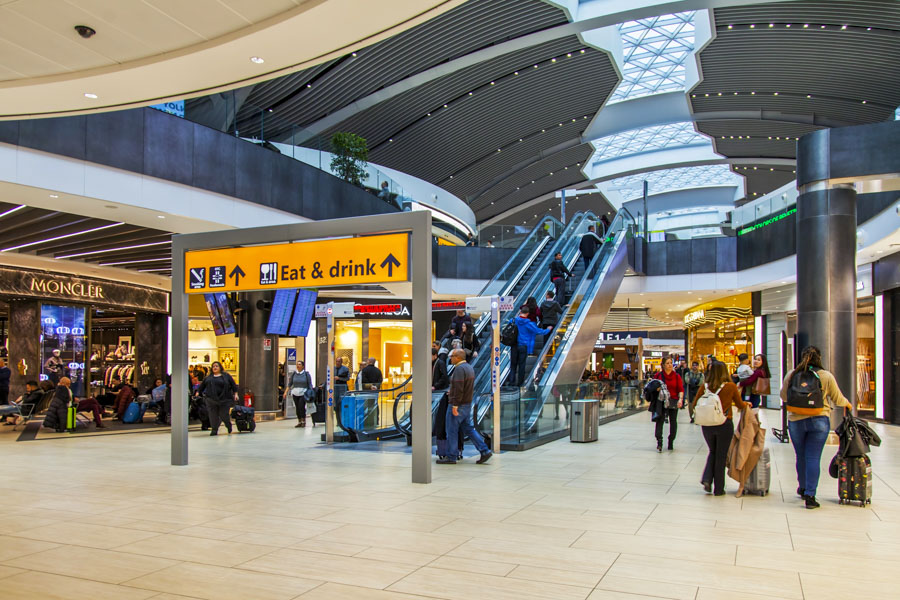
Rome has two main airports. The primary international hub is Leonardo da Vinci–Fiumicino Airport (FCO), which is 30 kilometres (19 miles) southwest of the centre of the city. The smaller Ciampino Airport (CIA) airport is used mainly by low-cost airlines. Though closer to the city, Ciampino Airport does not have a train station and is therefore less convenient for transfers. By comparison, the other airport is served by the dedicated Leonardo Express, which departs every 15-30 minutes.
By Train
High-speed rail services converge on Rome, allowing good access to cities all around the country. Roma Termini is the city’s main station where fast trains from and to Florence, Naples, Milan and Venice arrive and depart. This is also the station of arrival for the Leonardo Express from the main airport.
The secondary hub of Roma Tiburtina serves Milan, Venice, Florence, Bologna and Verona. To reach here from the Leonardo da Vinci–Fiumicino Airport, you will need to take the FL1 regional train.
A third major station – Roma Ostiense – also serves Fiumicino Airport via the FL1 line, along with the cruise port (Civitavecchia, via FL3 or FL5), Tyrrhenian coastal towns such as Pisa, and the beaches around Ostia.
By Bus
Rome is also accessible by long-distance coach (intercity bus) from many Italian and European cities. Buses generally arrive at the city's main terminals, making it easy to connect with the metro, tram, or local buses.
By Cruise Ship
Cruise itineraries often stop at the nearby port of Civitavecchia, from where you can reach Rome by train or bus and continue to the city centre.
Language in Rome
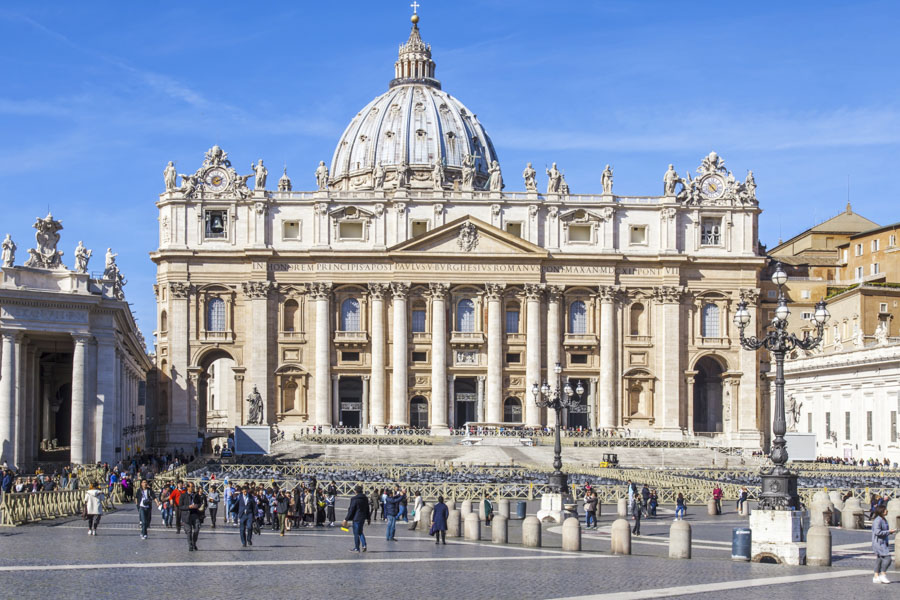
People who live in Rome speak standard Italian but have some pronunciations and vocabulary that create a ‘romanesco’ dialect. Those with a trained ear may be able to make our clipped endings, softened consonants, characteristic expressions, or a Roman drawl. Though you may imagine that you’ll be trying out your Latin in Vatican City, you may be disappointed, although it is the official language with Italian, for while they still use it for documents, the everyday language here is Italian, with English, French, German and Spanish also used.
English is widely spoken in all areas visited by tourists, so this can be defaulted to in hotels, major museums and restaurants in the historic centre of Rome. There are often bilingual signs too.
Security in Rome
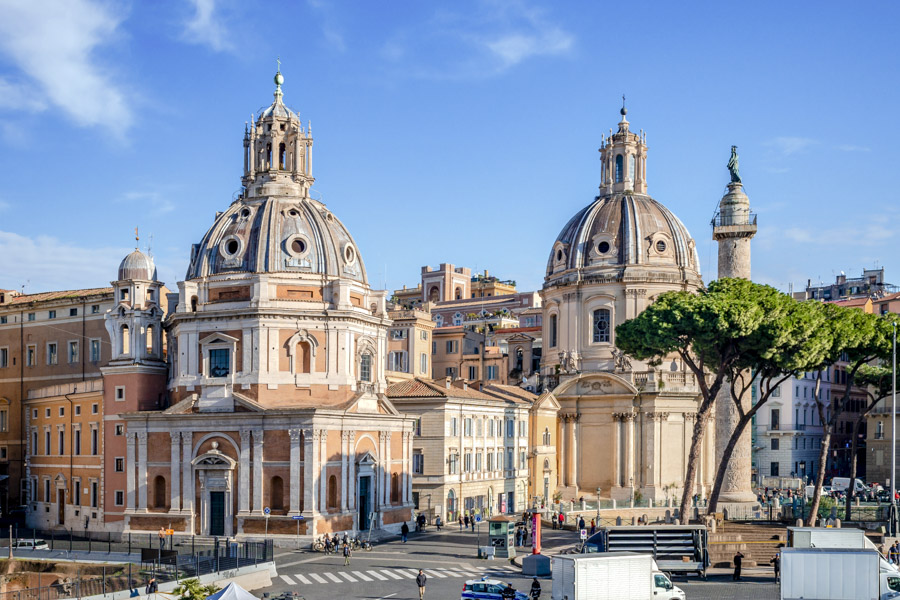
Rome can be regarded as a safe place to take a holiday, but, as with other major European tourist destinations, there are things to know to ensure your experience of it is as safe as possible.
The important emergency number throughout Italy (and Europe) is 112 for police, fire, and medical services. Operators usually speak at least basic English.
Only use official transportation, including licensed white taxis from designated ranks. Apart from their colour and location, you can recognise a genuine taxi by its taxi sign, meter, and city licence number.
Beware of pickpockets. Crowded tourist areas – such as on metros, at the Termini Station, the Colosseum, and the Trevi Fountain – can be the haunts for people who might relieve you of your wallet or phone. Keep your bag zipped, do not place phones or wallets in back pockets, and be cautious if anyone displays distracting behaviour, such as offering unsolicited help. In restaurants, don’t hang your bag over the back of your chair.
Documents are important. Travel with a photocopy or digital backup of your passport. Have comprehensive travel insurance and check the fine print if you drive, rent a scooter or take part in outdoor activities.