
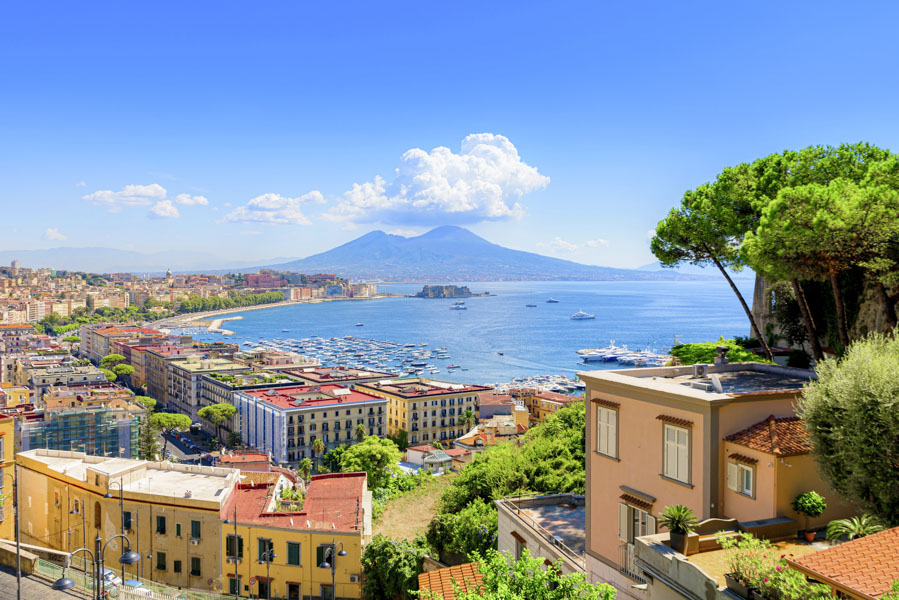
Tours and Attractions of Naples
Naples (Napoli), founded as an ancient Greek colony, has always stood slightly apart from the rest of the Italian peninsula. Historically, its trade and cultural ties extended southwards to Sicily and across the Mediterranean. It attracted poets such as Virgil and Horace, as well as Roman nobles seeking respite from the pressures of the capital. Later centuries brought successive ruling dynasties – Normans, Angevins, Aragonese and Bourbons – each leaving its mark on the city’s architecture and art.
Perhaps the most frequently repeated phrase about the capital of Campania is “See Naples and die”. Far from being morbid, the saying suggests that the city is so beautiful that seeing it makes a life complete. Naples is portrayed not as a place that shortens life, but as one that enriches it.
Neapolitans, who live beneath a volcano and beside the sulphurous Phlegraean Fields, often express their joy of life through their music and dance, from the tarantella to local festivals, and even in their cuisine, renowned for its conviviality.
Naples Tours
Little more than an hour from Rome by high‑speed train, Naples is the perfect complement to a two-centre trip combined with the capital. Accessibility is, however, only part of the reason for such a pairing, for it was to the Bay of Naples that Romans once escaped for pleasure, winter sunshine and intellectual refreshment. And it is from nearby Pompeii and Herculaneum that we now understand so much about how they lived, worked and relaxed. Experience Naples, and Rome becomes clearer.
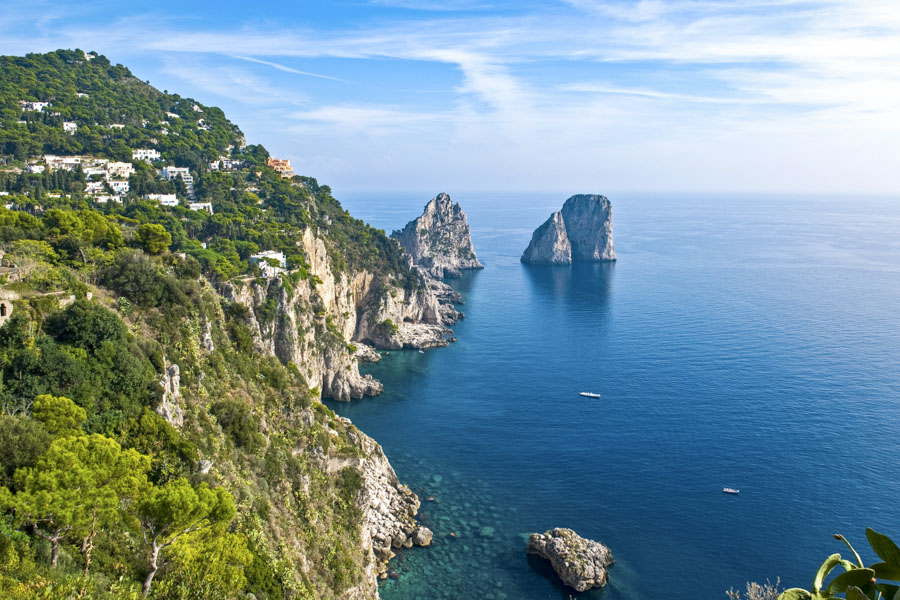
The city is also an excellent base in its own right. Its historic core is layered with more than two millennia of history, from its Greek foundations to its mediaeval lanes and Bourbon palaces. Within easy reach are the key ancient sites of the region, the slopes of Vesuvius, and the cliff‑side towns of the Amalfi Coast. Ferries link the city to the islands of Capri and Ischia, while trains make day trips to Sorrento and Paestum eminently feasible.
Best Time to Visit Naples
Climatically, Naples is a city of very warm summers, mild, wet winters and long, pleasant seasons between, when outdoor life is a joy. The city is a stage for an annual cycle of festivities because, whatever the season, Neapolitans enjoy life.
Spring (March to May)
With daytime temperatures rising from around 14 to 17 °C (57 to 63 °F) in March to typical days in May of 20 to 24 °C (68 to 75 °F), spring is a good time to visit Naples, particularly to explore the archaeological sites. Before the heat of the summer, it’s much easier to do justice to the scale of Pompeii, and an ascent of Vesuvius is feasible for everyone.
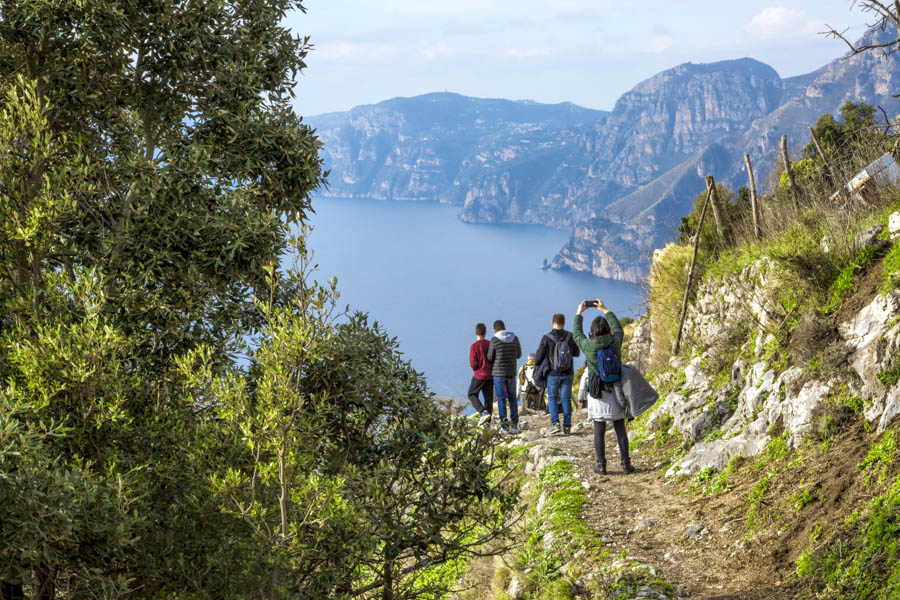
Easter adds colour and public religious ceremony, and May’s Maggio dei Monumenti (May of Monuments) opens normally closed palaces and underground sites for special tours. Across the wider bay and Amalfi Coast, wildflowers brighten the cliffs, and paths such as the Sentiero degli Dei (Path of the Gods) are at their most pleasant, with resorts lively but not yet overwhelmed.
Summer (June to August)
The summer months are hot in Naples, with typical temperatures of around 28 to 32 °C (82 to 90 °F) and periods when temperatures push even higher. Nights remain warm, often around 22 °C (72 °F), making air conditioning essential for a good sleep. Many visitors love this time of year for the late mornings, long shady lunches, afternoon snoozes, beach life and late evening meals amid the lively atmosphere. Rain is very infrequent, though there is a chance of thunderstorms.
The Festa della Madonna del Carmine in mid‑July brings dramatic fireworks to the historic centre. On the Amalfi Coast, ferries are frequent and the sea inviting, but crowds and prices peak.
Autumn (September to November)
There are many reasons to come to Naples in September, the first of which is that the weather is summery but without the fierce heat of August. Days are typically 24 to 28 °C (75 to 82 °F), and evenings remain warm. Neapolitans are back to work after the Ferragosto holidays, and beaches are quieter. The 19th September brings the Feast of San Gennaro, one of the major celebrations in the Naples calendar.
As temperatures drop to around 14 to 18°C in November, this becomes another rewarding season for exploring Pompeii and Herculaneum. Late October sees the shift to noticeably shorter days and increased rainfall.
Winter (December to February)
Though cold for Neapolitans, many of whom respond with puffer jackets, winter is warm compared with the rest of Europe. Daytime temperatures typically sit around a pleasant 10 to 15 °C (50 to 59 °F), though rain is quite frequent. During the winter, you can expect 10 to 15 days per month on which rain occurs.
In December, Naples glows with Christmas lights and the famous presepi of Via San Gregorio Armeno. On 17 January, the feast of Saint Anthony Abbot is marked with ritual bonfires. Tourism is at its quietest, attractions are uncrowded, accommodation is cheaper, and on clear days the climb up Vesuvius can be wonderfully crisp.
History of Naples
Naples is one of the oldest continuously inhabited cities in Europe despite its early name – Neápolis (New City) – which it acquired as it developed from its diminutive beginnings. It began life as a Greek colony in the 6th century BCE, founded by settlers from nearby Cumae, and it remained proudly Greek in language, customs and outlook for many centuries.
The Romans conquered the region in the 4th century BCE but allowed Naples to retain its Hellenic character. Because the Roman elite were often fascinated by Greek culture, many prominent figures gravitated to the Bay of Naples, among them the poets Virgil and Horace, the philosophers Philodemus and Lucretius, and the emperors Augustus, Tiberius and Nero.
Thanks to the carbonised library discovered at Herculaneum – preserved by the hot deposits associated with the eruption of Vesuvius in 79 CE – scholars have long noted the presence of Epicurean philosophy among the texts found there. Its emphasis on retreat, garden-dwelling, simple pleasures and friendship may have contributed to the region’s appeal for Roman statesmen seeking respite from the pressure of the capital. The same eruption devastated settlements around the Bay, including Stabiae, Oplontis and Pompeii, yet the ash-covered remains have given archaeologists and historians an extraordinary window into daily life in Roman times.
After the Byzantine reconquest (535-554), Naples became a fortified duchy under imperial rule, resisting Lombard pressure from 568 onwards. In the 9th century, Naples also repelled Saracen naval raids along the Tyrrhenian coast, through alliances against its Lombard rivals. Around 840, de facto independence was consolidated under Duke Sergius I, with power evolving toward a hereditary authority while Byzantine ties remained largely symbolic. In 1137, after the death of Duke Sergius VII without an heir, Naples surrendered to Roger II of Sicily, thus becoming part of the Kingdom of Sicily and ending the duchy.
In the complex history of Naples, the period from the 12th century onwards was a time of a succession of dynasties, disputes and shifting control. The Normans and Hohenstaufens established it as a major trading centre, then the Angevins and the Aragonese cultivated its Renaissance architecture, and from the 16th century, the city became a key possession of the Spanish and then Bourbon crowns.
From the early Middle Ages, Naples and the maritime republic of Amalfi were part of a trading system dominated by Arab, Byzantine and later Norman and Spanish powers. Importing constantly from Sicily, the major regional trading node, Naples and Amalfi were portals for silks, cottons, dyes, spices and ideas passing through the Islamic world (al-Andalus, North Africa, Egypt, the Levant and beyond). The influence of this period is shown in the eastern motifs in Neapolitan ceramics and the culinary traditions using citrus, spices and almonds.
The French Revolution sent shockwaves across Europe, including down to Naples. In 1799, French troops established a short-lived Parthenopaean Republic, named after the mythical siren Parthenope, who failed to enchant Ulysses, whose tomb was said to be on the island of Megaris, near Naples. In 1806, Napoleon Bonaparte installed first his brother, Joseph Bonaparte, and then his brother‑in‑law, Joachim Murat, as kings. After 1815, the Bourbons returned, making Naples the capital of the Kingdom of the Two Sicilies, and ruled until 1860 despite periodic uprisings.
In 1861, Naples joined the newly unified Kingdom of Italy. Today, its UNESCO-listed historic core preserves evidence of many of its formative periods – from Greek street grids to Roman ruins, mediaeval fortresses, Baroque churches and Bourbon palaces – and Vesuvius continues to dominate the landscape surrounding Naples.
Things To Do in Naples
Places to Visit in Naples
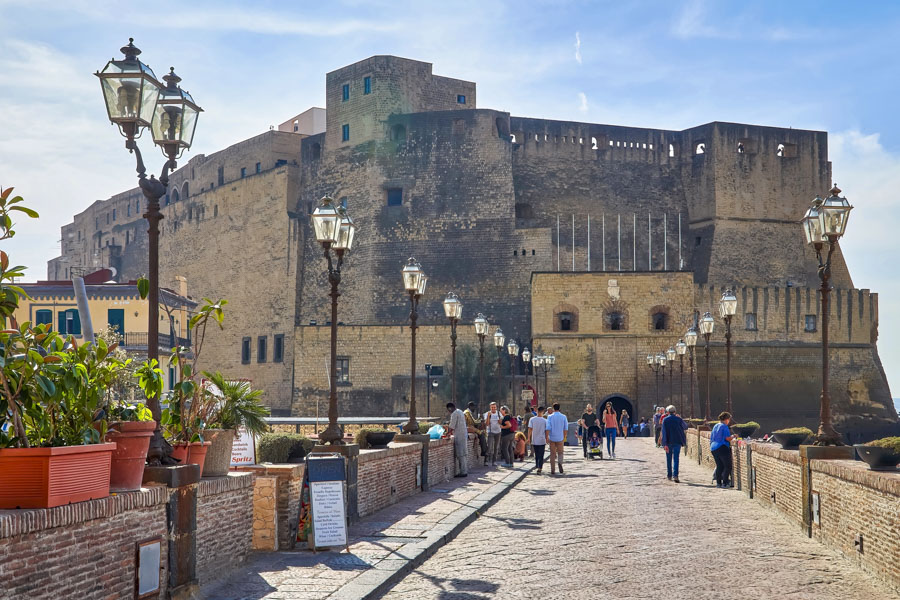
To appreciate the very basis of the existence of Naples, start in Santa Lucia, the small harbour where the Cumean Greeks founded the precursor to Neápolis. It was here, between the beach, the small island of Megaride and the slopes of the Pizzofalcone Hill (Monte Echia) that a fishing village took root. In the late Republic, the Roman general Lucullus built an opulent villa overlooking Santa Lucia, which, centuries later, became the place of exile for Romulus Augustulus, the last Western Roman emperor.
On Megaride island itself stands Castel dell’Ovo, the oldest fortress in Naples, rebuilt by the Normans but whose legendary history stretches further back. It was said that the poet Virgil, revered in Naples as a magician, hid a protective magic egg (uovo) in the castle’s foundations. By day, particularly with the white stone Fontana del Gigante as the foreground, the view from here over the bay towards Vesuvius is striking. By night, a stroll towards Piazza Vittoria will give you an evening of glittering lights on the slopes of Vomero and Posillipo neighbourhoods. Wherever you walk in Santa Lucia’s waterfront district, you’ll be following famous footsteps, for this was a key stop of the Grand Tour, its beauty – and its waterfront casino – attracting the likes of Giacomo Casanova and Alexandre Dumas.
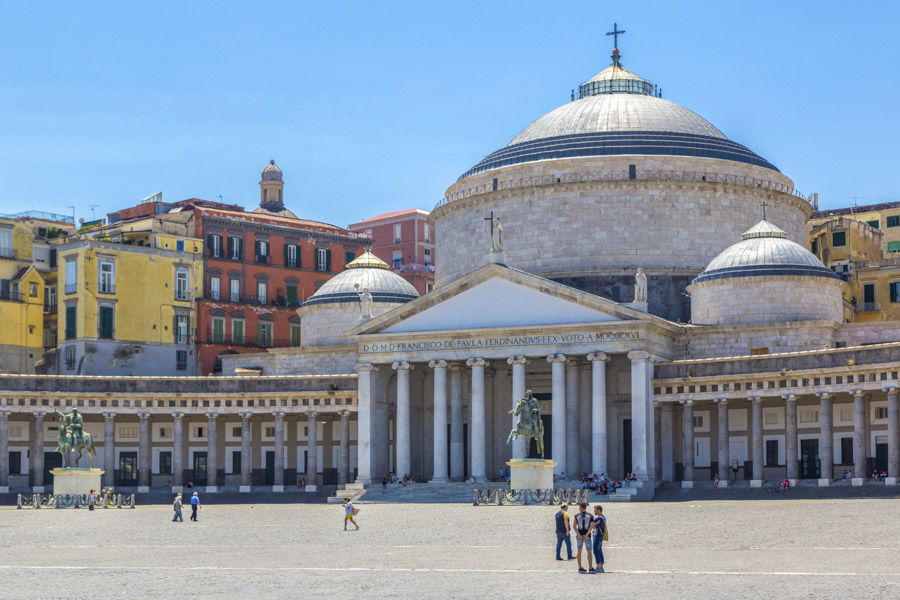
From the harbour, take the elevator up Monte Echia to some of the remains of the palace of Lucullus and then continue to Piazza del Plebiscito, the grandest square in Naples. Begun under King Murat, Napoleon’s brother-in-law, it was completed with the return of the Bourbons. At its head is the Basilica of San Francesco di Paola, whose design echoes the Pantheon in Rome, opposite which is the Royal Palace, and the Castel Nuovo beyond.
For a spectacular panorama of the city and its setting on the Bay of Naples, ascend to Castel Sant’Elmo either by walking the terraced slopes or by taking the funicular. From the belvedere, the whole sweep of the Bay of Naples unfolds, including the islands of Capri and Ischia and the peninsula of Sorrento. It’s easy to imagine Pliny the Younger, a Roman lawyer, described the eruption of Mount Vesuvius in 79 CE, which plunged day into darkness and shook the ground, or Admiral Nelson’s ships found themselves anchored after a major naval battle (the Battle of the Nile). Beside the fortress lies the Certosa di San Martino, a Carthusian monastery whose Great Cloister, with a balustrade topped with carved skulls, offers a striking memento mori – “remember that you have to die” – of the unpredictability of life.
Descending from the heights of Vomero, you join Via Pasquaale Scura, the first stretch of an arrow-straight road known to locals as Spaccanapoli. Literally translating as the ‘Naples-Splitter’, this road slices through the city, linking a series of piazzas and more than a dozen noble palaces and major churches. Highlights include the Santa Chiara complex and the Gothic masterpiece church of San Domenico Maggiore.
Walking along Spaccanapoli and the neighbouring dense grid of streets is a lesson in how energetic Naples can feel. Perhaps it is time for a quieter interlude, so do as the locals do: head west. Just a short ride to the Mergellina metro station takes you to the parkland that marks the start of the refined Posillipo district. There, you can visit Villa Guidice, where Oscar Wilde, the Irish poet, lived during his Neapolitan stay in 1897. From this area, the next highlight is the poet Virgil’s tomb. A well-known pilgrimage site connected in tradition with major mediaeval poets such as Dante and Petrarch. This hushed and little-visited place has a celebrated outlook that was sketched by the British painter J.M.W. Turner.
Ancient Sites in Naples
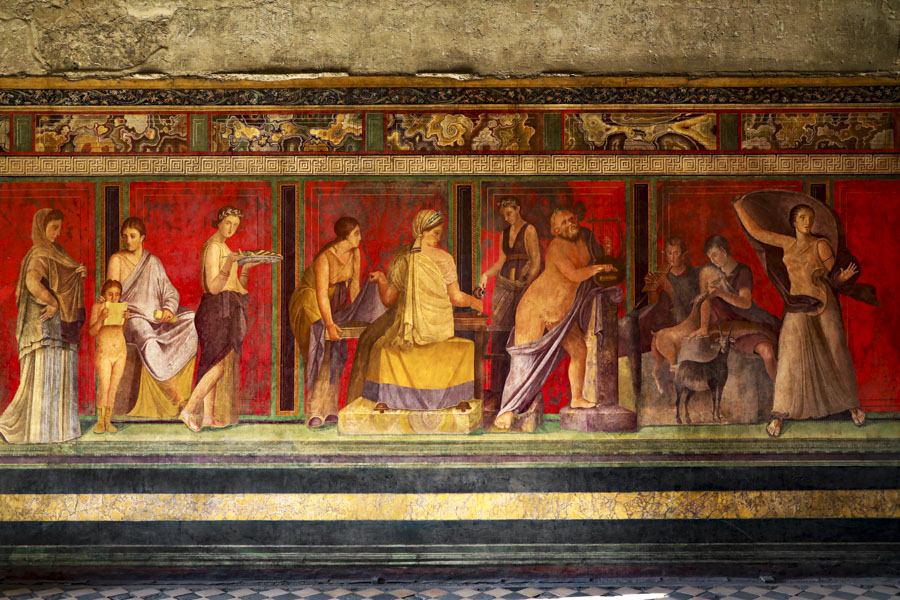
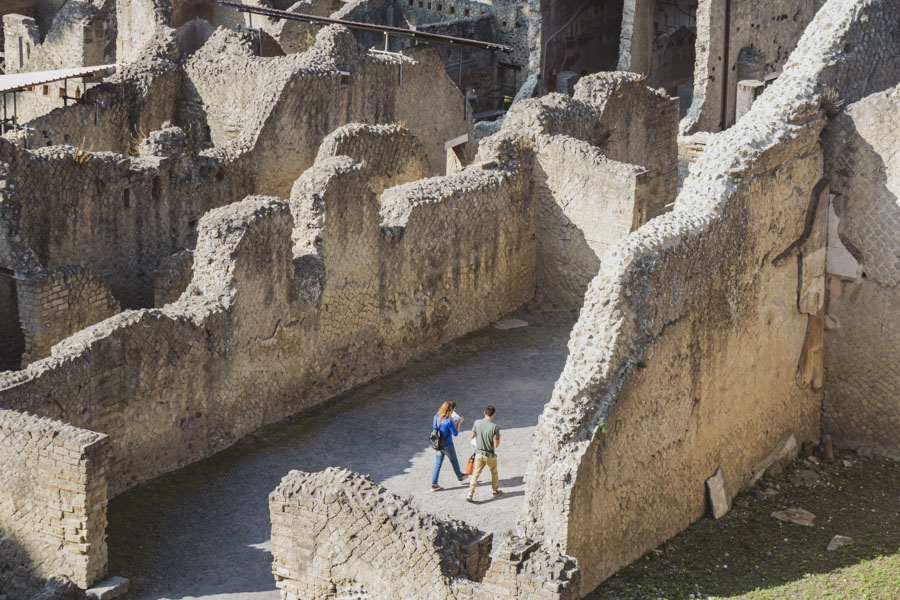
It is impossible to overstate the significance of Pompeii, the Roman city frozen in time by the eruption of Vesuvius in 79 CE. A place that more than 25,000 called home, its final two days were ones of a horrifying suffocation under more than six metres of volcanic ash. Life was snuffed out, and yet evidence of that same life awaited the discovery of archaeologists, whose excavations uncovered shops, bathhouses, frescoed and mosaiced houses, shrines and temples, chariot-rutted streets, theatres and marketplaces.
The House of the Faun, the Villa of the Mysteries and the Forum are essential places to explore, but it’s tempting just to wander and marvel at the scale of both what has been lost and what has been preserved. The total still to be excavated is about 163 acres (66 hectares). Doing justice to Pompeii in less than half a day is a challenge, and it’s a place that needs comfortable shoes, snacks and plenty of water. Shade is in short supply.
More intimate in scale and therefore more affecting is Herculaneum, a wealthy small seaside town overwhelmed during the same eruption, not by ash but by pyroclastic flows that carbonised everything. Over 1,800 scrolls found in the Villa of the Papyri are now being analysed with advanced X-ray and imaging techniques, revealing major parts of Epicurean philosophical texts. This compact site can be comfortably seen in two to three hours, though you will want to spare enough time to pause near the waterfront boathouse area where people had little chance.
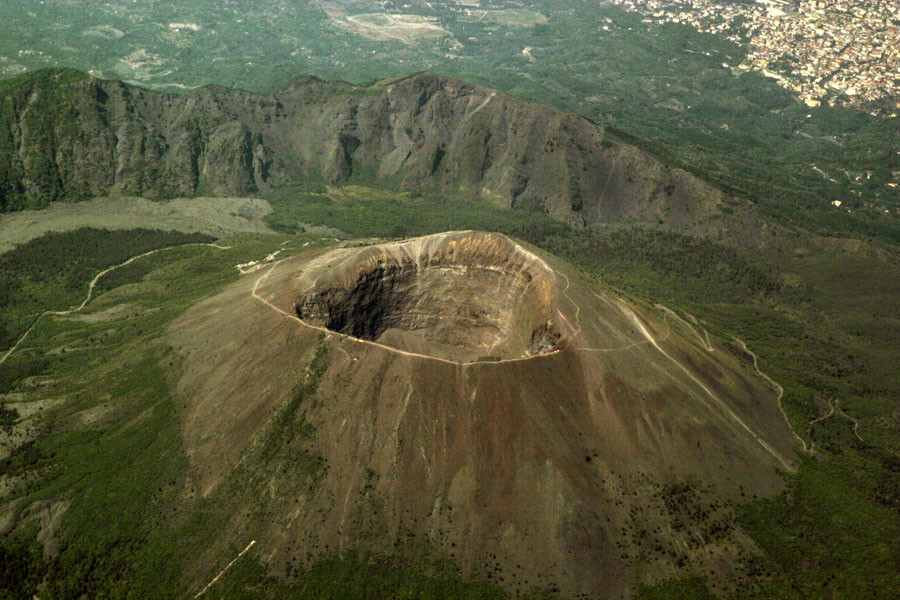
Overlooking both Pompeii and Herculaneum, and reached via the same visitor routes by shuttle, is Mount Vesuvius. The volcano last erupted in 1944. From the drop-off point, a well-maintained path winds up to the crater. This ascent is challenging, but suitable for most visitors in reasonable health with sturdy shoes. Take in the view of the city spread across the slopes. Then look into the crater to see the steam vents indicating that Vesuvius is only slumbering.
To the northwest-west of Naples lies another volcanic zone: the Campi Flegrei (Phlegraean Fields). This restless caldera pockmarked by craters and steamy fumaroles borders Pozzuoli, with its impressive Flavian amphitheatre. Not much smaller than Rome’s Colosseum, it’s a place to see the underground passages where gladiators and animals waited for the crowds above.
Nearby is the Cuma Archaeological Park, where the Cumean Sibyl occupied a subterranean lair dug into the volcanic tufa rock of the crater rim of Lake Avernus. Extending more than 130 metres, the passageway provided her with more than enough sulphurous fumes to inspire her prophesies. This oracle’s home was the gateway to the underworld in Virgil’s Aeneid and another place where you will reflect on the fact that civilisation only exists through geological consent.
Museums in Naples
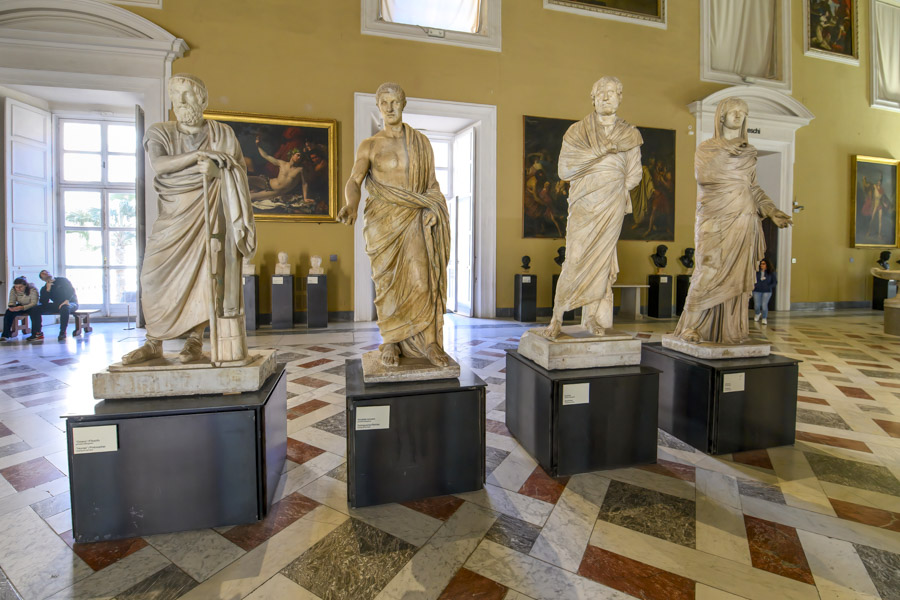
No stay in Naples is complete without a visit to the Museo Archeologico Nazionale (MANN), Italy’s most well-stocked museum of antiquity. It holds the majority of the finds from Pompeii and Herculaneum, along with the Farnese Collection of marbles, Rome’s collection of lost Greek statue masterpieces. Highlights of the museum include the powerful Hercules at Rest, a sculpture by Pozzuoli, the delicate Portrait of the Poet Sappho, and hundreds of everyday objects preserved by the eruption of Vesuvius.
The Galleria Nazionale di Capodimonte, a Bourbon palatial masterpiece set in leafy parkland, is also one of Italy’s largest museums. Its collection spans the Renaissance and Baroque periods, with a particular focus on the works of Caravaggio and those he inspired. When he arrived in Naples in 1607, his dramatic chiaroscuro and psychological intensity transformed the local painting style. Other notable artists represented here include Titian, Botticelli, Ribera, and even Andy Warhol, who developed a fascination for Naples.
In the heart of the historic centre of Naples is the Capella Sansevero, a space exhibiting almost thirty statues from the Baroque period. Commissioned by the eccentric Prince Raimondo di Sangro in the 18th century, its centrepiece is the Veiled Christ, whose marble is so finely carved that it seems translucent. The chapel’s ornate opulence is striking, but this statue’s technical and emotional power eclipses everything.
Those who love unusual curiosities will like Certosa di San Martino for more than its collection of marble skulls. Inside, the marvellous Cuciniello Nativity Scene – a tableau with 800 pieces – is a marvel to behold. If you’re inspired to build your own, stock up on figures in San Gregorio Armeno.
Naples Theatres
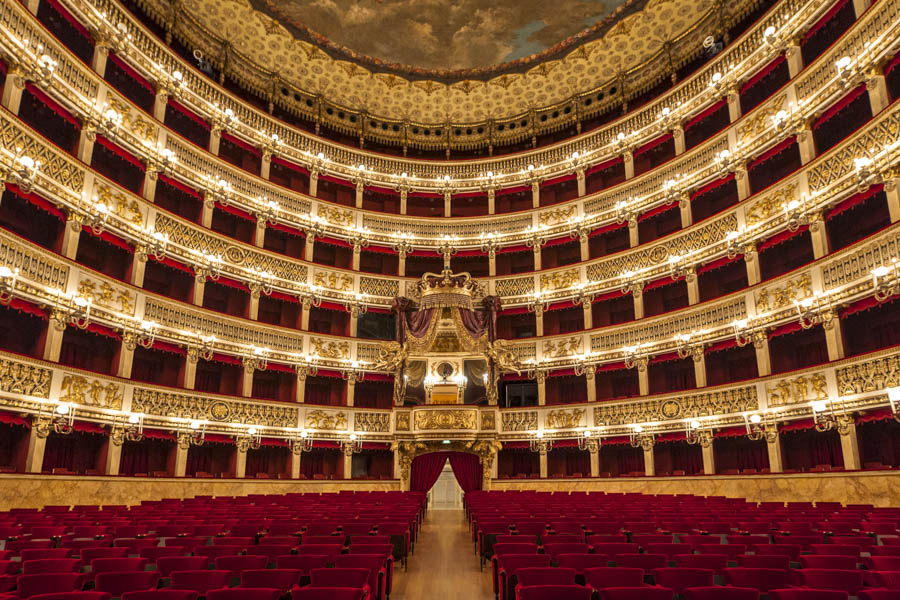
True to the Epicurean idea that emotional fulfilment, friendship, and freedom from worry are important, Naples has long embraced theatre, opera, and popular song as ways to celebrate everyday life. Canzone Napoletana, the traditional song form of Naples, expressive narrative‑driven melodies like ’O Sole Mio can read as vivid reflections of joy, longing and the pleasures of Mediterranean life: sun, sea and companionship. Closely related is the sceneggiata, a uniquely Neapolitan blend of theatre, music and melodrama. Together, these performances often highlight romances and small triumphs, projecting a spirit of community and pleasure rather than fear.
At the pinnacle of the city’s expression of its love of drama and song stands Teatro di San Carlo, the oldest continuously active public opera house in the world. Founded in 1737 by King Charles III of Bourbon and connected directly to the Royal Palace, it is renowned for exceptional acoustics and a programme that attracts the world’s finest singers and conductors.
For drama with a contemporary edge, Teatro Bellini – a beautifully preserved late‑19th‑century venue – hosts an energetic mix of modern plays, experimental productions and musical performances. Nearby, Teatro Mercadante, opened in 1779 as the Teatro del Fondo, once welcomed Mozart and Rossini. Today it is a prestigious home for classical and contemporary prose.
Finally, Teatro Trianon Viviani, known as the House of Neapolitan Song, feels like an intimate immersion into local folklore. Dedicated to preserving traditional music, cabaret and storytelling, this small and cheerful place is in the heart of the historic centre and provides one of the most authentic cultural experiences in the city.
Entertainment, Parks and Shopping in Naples
Naples offers a rare balance between culture and leisure; a stay here is therefore rarely limited to museums and historical sites. Parks and viewpoints, thermal baths, beaches, and lively festivals intertwine with a joyful, everyday elegance, allowing visitors to plan their days as they please. Whether you are in Naples for history, relaxation, or simply the city's energy, you will generally find a greater diversity than you might expect.
Entertainment in Naples
Get off the beaten track in Naples by exploring the city streets with a camera, a true haven for street art, where you can admire Francisco Bosoletti's Partenope fresco at number 38, Salita San Raffaele; the portrait of San Gennaro on Piazza Crocelle ai Mannesi, painted by Italian street artist Jorit Agoch; and Sophia Loren, the iconic Italian actress, by Mexican street artist Maker Garcia on Via di Tribunale, among many other works scattered throughout the streets. Wander amidst scenes of daily life to see laundry drying on the balconies of houses with crumbling facades, soak up the local atmosphere at the Pignasecca market, and, if you're feeling adventurous, rent a scooter to weave through the narrow streets. End your day with a cruise on a small boat for a different perspective of the bay.
Festivals
While the modern festival calendar of Naples largely follows Christian traditions, the city’s instinct for communal feasting, friendship and happy‑go‑lucky celebration – often with Vesuvius as a dramatic backdrop – gives each occasion a distinctly local feeling. New Year's Day (January 1st) arrives with celebrations and festive gatherings throughout the city. Easter sets the tone in March and April, when solemn Holy Week processions are quickly enhanced by lively family gatherings for generous meals crowned with slices of pastiera. In May, crowds fill the Duomo for the first of the year’s San Gennaro ceremonies, hoping to witness the liquefaction of the saint’s blood before spilling into the streets for lively processions. The same month brings Maggio dei Monumenti, when normally closed palaces, museums and archaeological sites open their doors for special tours and cultural events.
Summer begins with Napoli Pizza Village in June, transforming the Lungomare Caracciolo waterfront into a huge open‑air pizzeria as dozens of establishments fire up ovens along the bay. July’s Festa della Madonna del Carmine adds theatrical flair with the Incendio del Campanile, a symbolic “burning” of the bell tower created through elaborate fireworks. By mid‑August, Ferragosto draws Neapolitans to the beaches and islands for lavish dinners, parties and late‑night fireworks over the Bay of Naples.
Autumn is centred on the main Feast of San Gennaro on 19 September, the city’s largest celebration of its patron saint, marked by street fairs, music and religious ceremonies around the Duomo. Nearby in Mergellina, the Piedigrotta Festival continues an ancient tradition of folk devotion and musical contests, filling the streets with colour and song.
Winter begins with All Saints’ Day and the Feast of the Immaculate Conception, which commence the wider festive season. December brings the full spectacle of Via San Gregorio Armeno – the famed “Christmas Alley” – where artisans display intricate handmade presepi (nativity pieces). As the year draws to a close, with the third San Gennaro Festival. Neapolitans also recount a famous tradition from the 1631 Vesuvius eruption: as San Gennaro’s relics were carried in procession, the lava was said to have stopped short of the city, an episode remembered in the celebrations on 16 December. Christmas (December 25) gives rise to special religious services and a lively festive atmosphere, with Christmas traditions culminating around Via San Gregorio Armeno.
In Naples, people not only seize each day; they seem naturally inclined to stretch them out and multiply them, savouring each one granted to them with characteristic gusto.
Parks in Naples
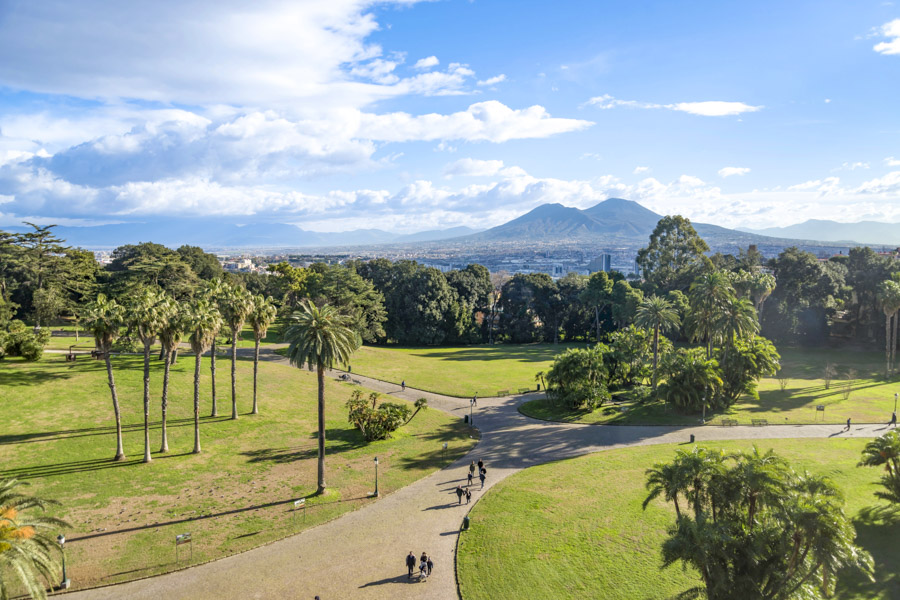
Head to Parco Virgiliano. Set high on Posillipo’s terraces, it offers spectacular coastal panoramas, with trails and viewing platforms overlooking the volcanic islet of Nisida.
Closer to the centre, where Posillipo’s eastern slopes rise, the Parco delle Tombe di Virgilio e Leopardi forms a quiet, historical enclave. It is famed for being the location of the tombs of the philosopher poets Virgil and Giacomo Leopardi, giving the park a contemplative, literary air. To the north of the centre of Naples, the vast Bosco di Capodimonte – once a Bourbon hunting reserve – spreads across 130 hectares of woodland and meadow. Its paths and picnic spots frame views towards the Capodimonte Museum.
In the upland central district of Vomero, Parco di Villa Floridiana is a more intimate, terraced refuge. Once the estate of the Duchess of Floridia, it is threaded with winding paths, grottoes, and glimpses of the sea. Within it is the National Museum of Ceramics.
For something wilder, the Riserva Naturale Cratere degli Astroni in the Agnano area of the Campi Flegrei provides forested trails inside an extinct volcanic crater. It’s a peaceful WWF (World Wide Fund for Nature) reserve ideal for birdwatching, and nearby, the Terme di Agnano continues the ancient tradition of thermal bathing, with modern spa facilities set on the site of the original Greek complex but with the remains of Roman ruins.
Shopping in Naples
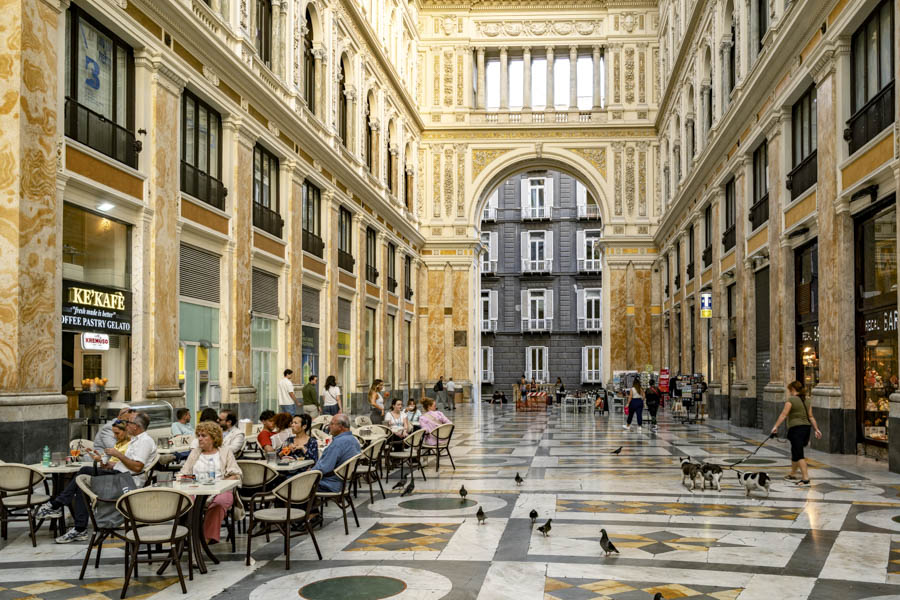
Rather than the grand boulevards and designer boutiques of other major Italian cities, Naples tends to offer a more intimate, diverse and local retail experience. If you seek something polished, however, enjoy Galleria Umberto I, a grand 19th-century arcade of vaulted glass and iron just opposite the San Carlo opera house. Its soaring main dome is 57 metres in height at the tip of the spire, beneath which you’ll see plenty of people seeking out their astrological sign on the marbled zodiac mosaic.
Naples is the spiritual home of the Italian tradition of presepe nativity scenes, with the workshops of Via San Gregorio Armeno working year-round to produce the figures that appear in them. You may be tempted by a classical shepherd or angel to complete your Christmas mantelpiece, or you could opt for a more contemporary character or comic miniature.
Nearby, and intersecting with the city-slicing Spaccanapoli, Vico San Domenico has often been called the ‘Alley of Artisans’. Though you might not have room in your luggage for a violin from the local liutaio, a more feasible indulgence is a handmade leather bag or accessory from Bottega 21, a workshop rated highly by locals. Discover other districts of the city for even more desirable craftsmanship, such as the handmade gloves found at Omega Guanti in the Sanità district, or the impeccable gentlemen’s tailoring in wealthy Chiaia.
Naples is home to some of the most prestigious universities in Italy, with the spinoff from their students and academics being a thriving bookshop culture. The Port’Alba area, the remnant of one of the city gates, bursts with stalls selling second-hand classics alongside boxes of prints and dog-eared postcards. Libreria Tàmú, on Via Santa Chiara, is a bookshop selling intellectual editions in numerous languages.
Bargaining has long been a tradition in Naples, though it is far less common nowadays than it once was. Judge the situation by the nature of the shop, and there’s no harm in a good-humoured enquiry as to whether the price is as low as it could be.
Food in Naples

Italian Cuisine
Forget the artificial and pale imitations in the frozen aisle of your local supermarket: Naples is where you’ll enjoy pizza in its truest form, which means soft, blistered at the edges and topped sparingly with fresh ingredients. The two classic recipes are Marinara (tomato, oregano and garlic) and Margherita (tomato, basil and mozzarella cheese). The alternative to the city’s signature mozzarella di bufalo – the tangy but delicate cheese made from buffalo milk – is fior di latte, a cow’s milk version often used in antipasti.
Meals in Naples are generally lighter than those of northern Italy, and seafood is common. Dishes such as spaghetti alle vongole (clams), frittura di paranza (fried fish) and impepata di cozze (peppered mussels) are loved by locals.
Compared with its Bolognese cousin, ragù napoletano is a slow-cooked affair with larger chunks of meat (even meatballs) and whole, peeled tomatoes. A family favourite in Naples is parmigiana di melanzane, made from fried aubergines dipped in egg then oven-cooked in layers with mozzarella.
Restaurants serving pizzas abound in Naples, but one to try is Pizzeria da Attilio in the Pignasecca neighbourhood. Its reputation extends far and wide, and they don’t take reservations, so expect to queue. And if you want to experience where the margherita was born in 1889, Pizzeria Brandi is right on Via Chiaia.
If your day’s itinerary is too crowded for a sit-down meal, two street food options allow for a speedy refuel. Cuoppo is a paper cone of fried seafood or vegetables, while pizza fritta is a deep-fried folded pizza that is pure Neapolitan comfort food on the go.
Pescheria Azzurra, in the Pignasecca market, is the favourite place for Neapolitans to enjoy delicious fresh fish, especially fried fish, and an ideal place to discover Naples in all its authenticity.
Vegetarian Restaurants
An enormous, organic, vegetarian and vegan menu can be enjoyed at Amico Bio, tucked away behind a row of bars near the Dante metro station. This sustainable and ethical restaurant has been around for almost two decades, and tables are hard to come by without a reservation.
Coffee Houses, Bakeries, and Patisseries
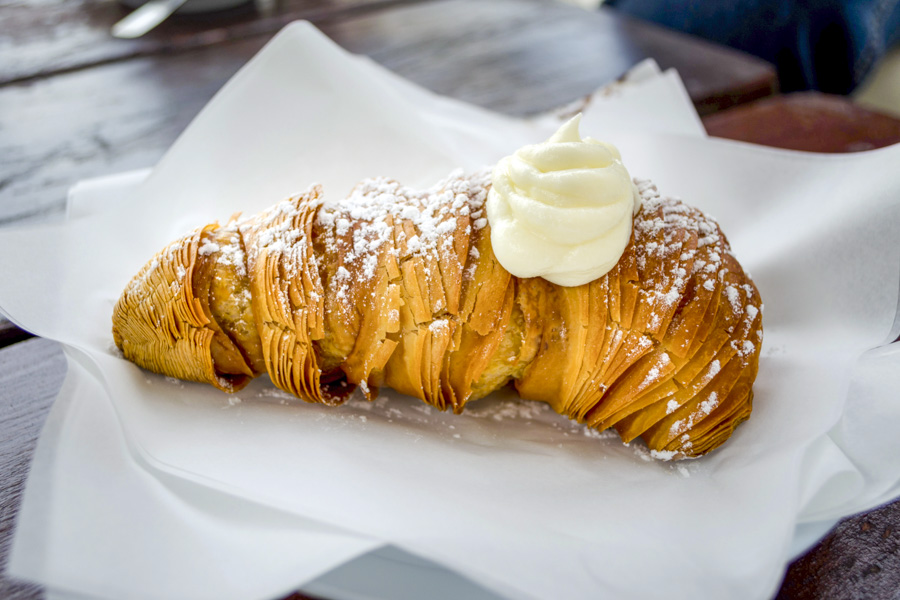
Naples excels in pastries. Divine Sfogliatella (either the crisp, layered riccia version or the softer frolla) is filled with ricotta, cooked semolina, and citrus. Another delight is Babà, a rum-soaked sponge cake originating from Poland and also adopted by the French in a different version. The most elegant place in Naples to enjoy pastries and excellent coffee in a refined atmosphere is Gran Caffè Gambrinus, a favourite haunt of the literary set. It’s on a corner of the Piazza del Plebiscito.
Nearby, Caffè del Professore on Piazza Trieste e Trento offers a large variety of coffee, though remember the Italian rule: after midday, a cappuccino is inappropriate.
Scaturchio is located on Piazza San Domenico Maggiore and is a pastry shop celebrated for inventing the Ministeriale (a rich, medallion-shaped chocolate filled with cream). And Antico Forno delle Sfogliatelle Calde Fratelli Attanasio is a tiny bakery that is famous for serving piping hot, freshly baked sfogliatelle straight out of the oven. Situated near the Napoli Centrale train station on Vico Ferrovia, its queue of regulars rarely seems to diminish.
City Transport in Naples
Naples has an inexpensive public transport network, including buses, trams, the metro and funiculars, most of which are operated by ANM. The system is simpler to use than it seems at first. Key to getting to most places is the TIC integrated ticket; valid across all services in the city and costing less than €2, it allows you unlimited journeys and transfers within 90 minutes of validation. Day-long or weekly passes are also available.
Tickets for public transport can be bought at metro stations, Tabacchi and bars near major stops, or on the ANM GO app. Tap-and-go contactless payments are yet to be introduced, so you must buy a ticket and validate it at the yellow machines before boarding or face the prospect of a heavy fine.
Public Transport
Metro
The third-largest metro in Italy after Rome and Milan, the version found in Naples is made up of three lines: Line 1 (yellow), Line 6 (blue) and Line 11 (rainbow or orange) and complemented by metropolitan railways. Most visitors rely on Line 1, which links the historic centre with the waterfront and the hilltop district of Vomero, climbing the change in altitude through a dramatic loop under the city.
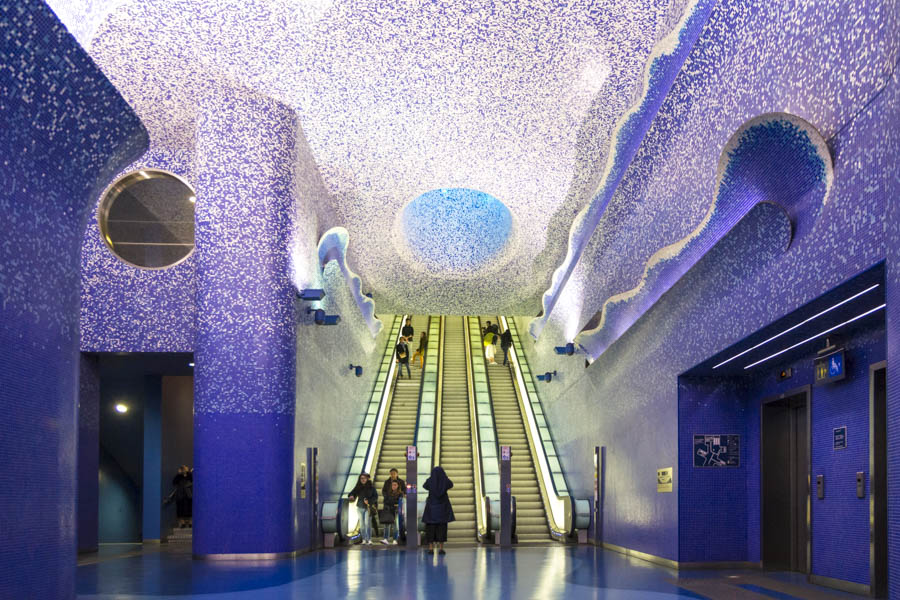
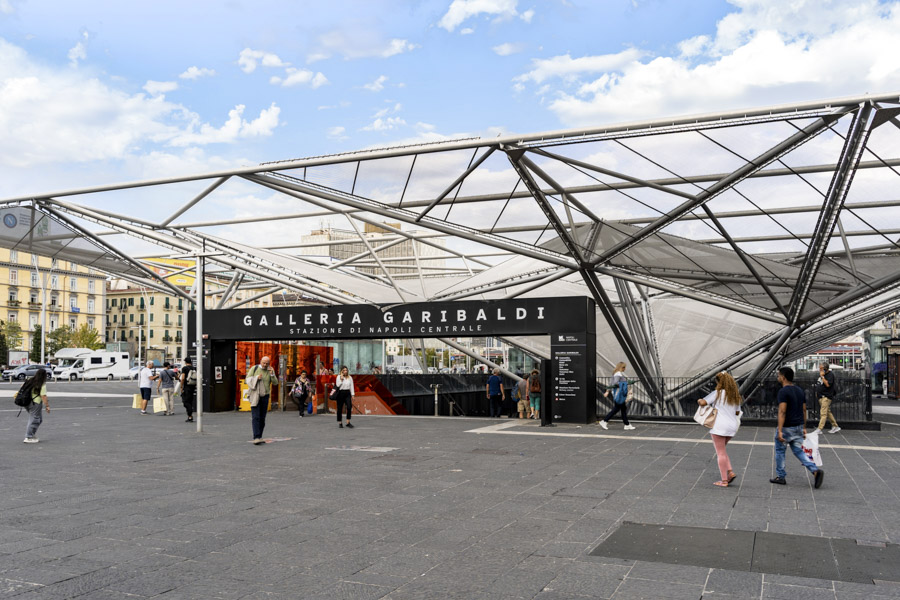
Some of the stations on Line 1 are destinations in their own right, having been designed by leading architects, the pick of the bunch being Toledo, said to be one of the most beautiful metro stations in the world. Others worth visiting include the Università, with its human‑shaped pillars and bold colours; the geometric, steel‑and‑glass Garibaldi; the red‑plastered Museo; and the ultra‑modern Municipio, where archaeological finds are displayed beneath the concourse.
Trains
The most commonly used train line for visitors is the Circumvesuviana, which runs between central Naples and Sorrento, looping back around the base of Mount Vesuvius. The full journey to Sorrento takes just over an hour, but two key stops lie along the way: Ercolano Scavi (for Herculaneum) and Pompei Scavi – Villa dei Misteri (for Pompeii).
The Circumvesuviana is extremely useful but can be crowded, especially in summer, as it serves both tourists and commuters. Much of the rolling stock is old, with limited luggage space and no air‑conditioning, which can make journeys uncomfortable at peak times. A helpful tactic is to board at Porta Nolana, where trains begin their route, giving you a far better chance of securing a seat before the crowds join at Piazza Garibaldi.
Funiculars
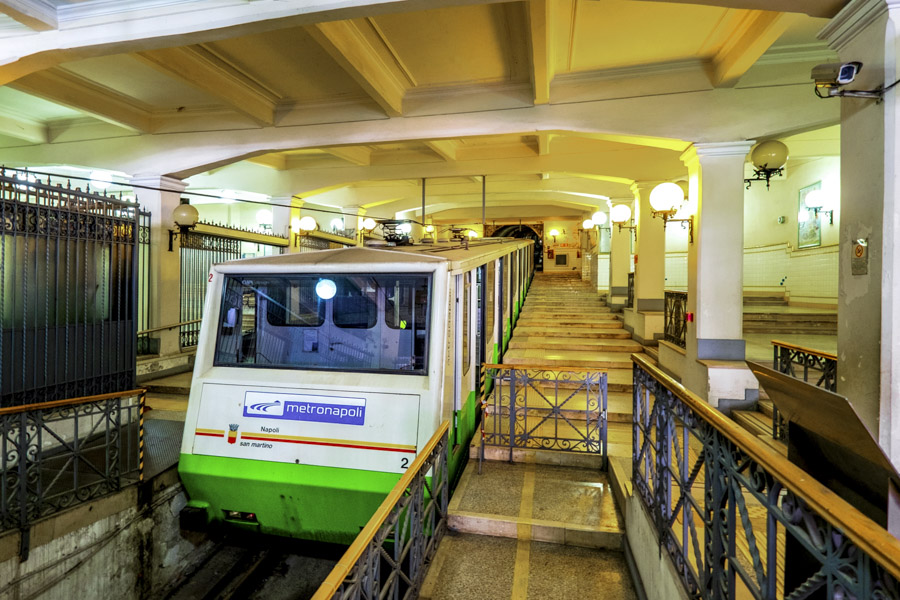
Because Naples rises steeply from its bay, funicular lines are extremely useful for reaching Vomero and other hill districts. Quick, scenic and covered by the TIC ticket, they are well worth seeking out.
Buses and Trams
Buses and a limited tram network reach places that the metro does not, but traffic in Naples is very heavy, and this makes buses a slow and unreliable option for discovering the city.
There are official Vesuvius shuttle buses from Pompei Scavi and Ercolano Scavi train stations if you want to climb the mountain. The journeys on both are around 20 to 25 minutes and must be pre-booked because to hike from the trailhead requires a timed-entry ticket. A guided tour, which includes a vehicle and a ticket for Vesuvius, is a good alternative.
The Alibus shuttle connects Piazza Garibaldi with the airport in 15 to 20 minutes. It is not covered by the TIC ticket.
Other Modes of Transport
Taxis
A taxi journey may be unavoidable to reach a hotel in the centre of town with your luggage, but traffic congestion makes taxis less attractive than other transport options for most excursions. They have a fixed fair from the airport, but it is always worth confirming this before getting in.
How to Get to Naples
By Plane
Naples International Airport (NAP), also known as Capodichino, is only 7 kilometres from the city centre, to which it is connected by the inexpensive and frequent Alibus shuttle. Flights arrive here from many European cities, but those arriving by long-haul flights land in Rome or Milan and then connect to Naples by train.
By Train
Naples sits at the southern end of the country’s high-speed rail network, with Frecciarossa, Frecciargento, and Italo services linking it directly with major cities. Rome is 70 minutes away, but other cities are substantially further: Florence is almost three hours; Milan is four; Venice is five. Trains arrive at the Napoli Centrale station, and from here it’s simply a case of descending to the Piazza Garibaldi station to link with local and regional services. These include the Circumvesuviana line to Pompeii, Herculaneum and Sorrento, along with others that link Naples to Salerno and the towns of the Campania coast.
By Road
Naples is linked via the north-south A1 Autostrada to Milan, Bologna, Florence, and Rome. While getting to the city is straightforward, driving within it is a challenge only for the bold. Traffic is heavy and often somewhat unruly; parking is very limited, and the ZTL (limited-traffic zones) are zealously enforced. The most sensible thing to do is to park on the outskirts and head in by public transport.
Languages Spoken in Naples
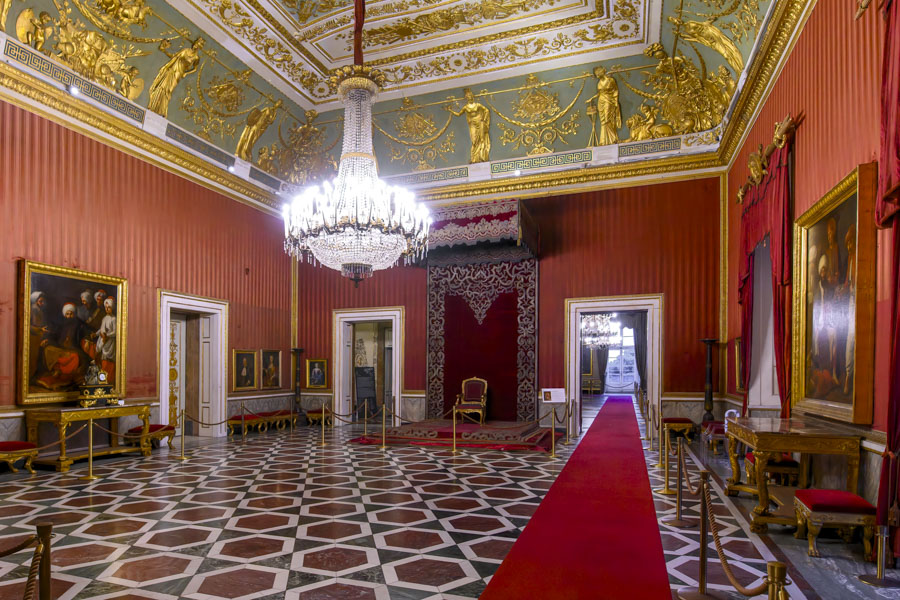
In Naples, many people speak standard Italian, often alongside Neapolitan, a Romance language in its own right, listed by UNESCO for its cultural significance. In everyday speech, the Neapolitan influence is still perceptible in pronunciation, expressions, and vocabulary, as well as in a distinctive accent, which allows other Italians to recognise Neapolitans.
English is less widely spoken than in the cities of the north, but you’ll still find bilingual menus and museum information panels, along with plenty of staff in tourist areas who are fluent.
Security in Naples
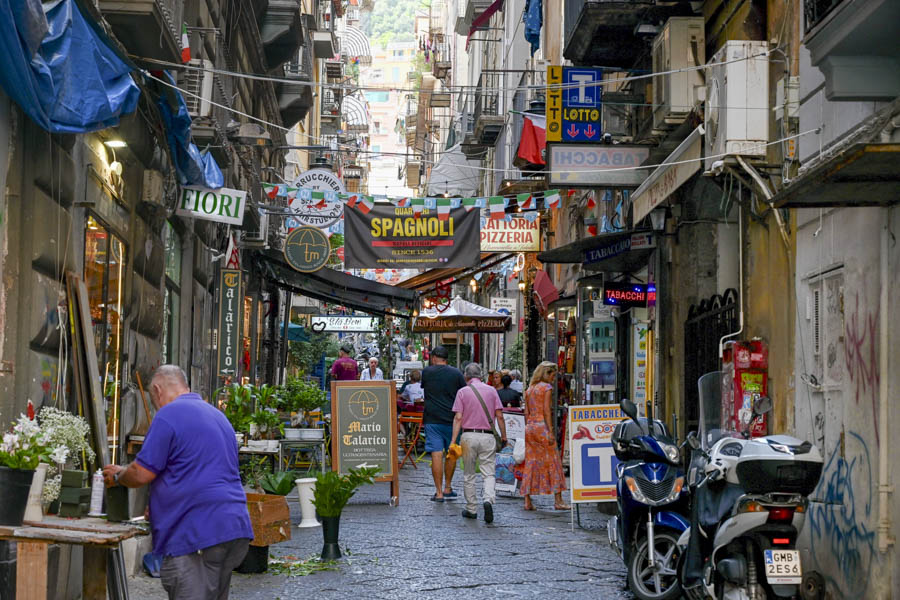
Naples has a reputation for petty crime, but it is no worse than other tourist destinations around Europe. Exercise caution in crowded places like Via Toledo, along Spaccanapoli, in Piazza Garibaldi, and on the Circumvesuviana platforms.
Know the neighbourhoods. Extra caution in Scampia, Quartieri Spagnoli and Forcella is required in the evening and at night. By contrast, Chiaia, Vomero and Posillipo are low-crime areas at any time.
The authorities have developed a monitoring programme for the volcano and the surrounding area, which is intensively monitored. To feel safe, download the Volcanoes and Earthquakes app on your mobile phone for real-time updates on activity.