

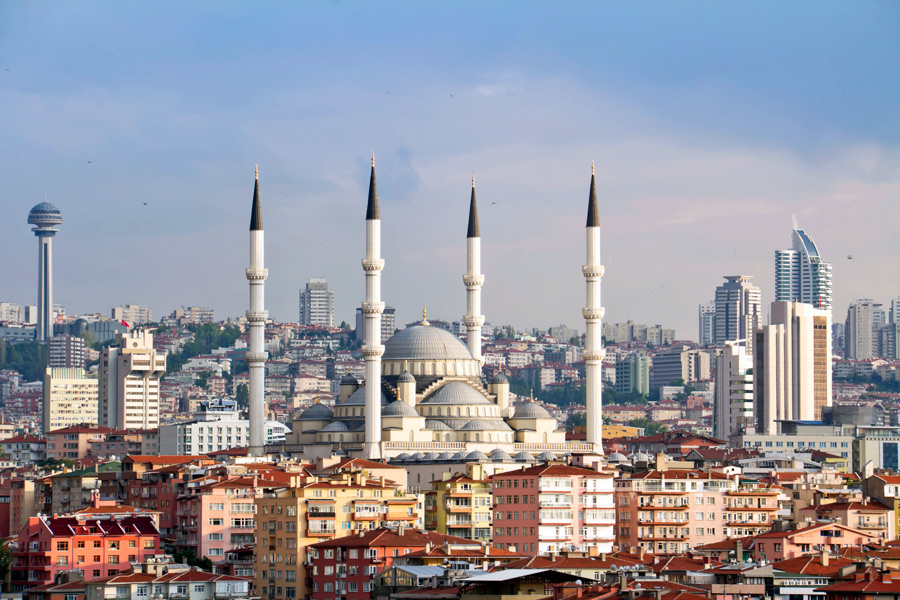
Kocatepe Mosque is the largest mosque in Ankara and one of the most symbolically important religious structures in contemporary Turkey. Its design takes inspiration from Ottoman architectural traditions within a 20th-century context, influenced by Ankara’s role as the republican capital.
For visitors, Kocatepe offers a clear lens through which to understand how architecture, politics, and cultural memory intersect.
Historical Background of Kocatepe Mosque
The history of the Kocatepe Mosque (Kocatepe Camii) begins in the 1940s, when Ahmet Hamdi Akseki, a leading figure of Turkish Religious Affairs, along with the founding members of the society, started advocating to build a major mosque in Ankara. The city held an architectural competition, and eventually, the joint modernist design of Vedat Dalokay and Nejat Tekelioğlu won.
Reactions were mixed. Many felt the capital's main mosque should reflect Ottoman architectural tradition rather than break from it. In the end, the modernist plan was dropped, and a new design rooted in classical Ottoman style was commissioned to Hüsrev Tayla and M. Fatin Uluengin.
The shift wasn't just about aesthetics. Choosing a classical design for a modern capital was a statement. Ankara was saying that its historical roots still belonged in its present identity. In that sense, Kocatepe is as much a cultural decision as it is a building.
Construction of the mosque took decades, finally finishing in 1987. As for the initial modernist concept, Dalokay used a modified version of the project to build the Faisal Mosque in Islamabad, Pakistan.
Architectural Grandeur: Ottoman Inspiration Reinterpreted
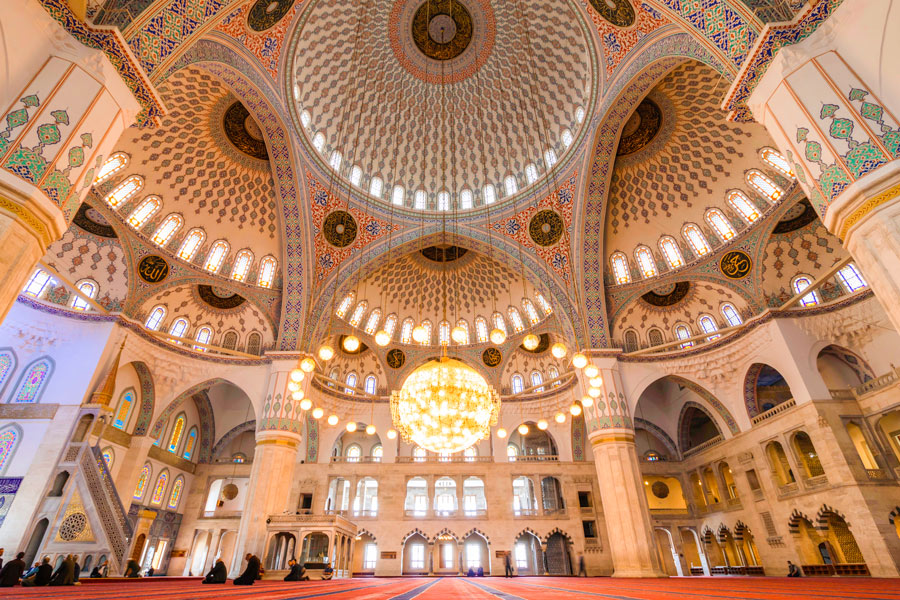
The Kocatepe Mosque is a reinterpretation of 16th-century Ottoman aesthetics, realised through 20th-century engineering. Its modern structural methods (including reinforced concrete) and contemporary systems only confirm this.
With four tall minarets and a large central dome, this landmark clearly references the great mosques of the Ottoman Empire. It is easy to see echoes of Istanbul's Blue Mosque or the Selimiye Mosque in Edirne, the celebrated work of the legendary architect Mimar Sinan.
The central dome rests above a vast prayer hall that can accommodate approximately 24,000 worshippers. While not the biggest mosque in Turkey, its scale attracts attention within the capital.
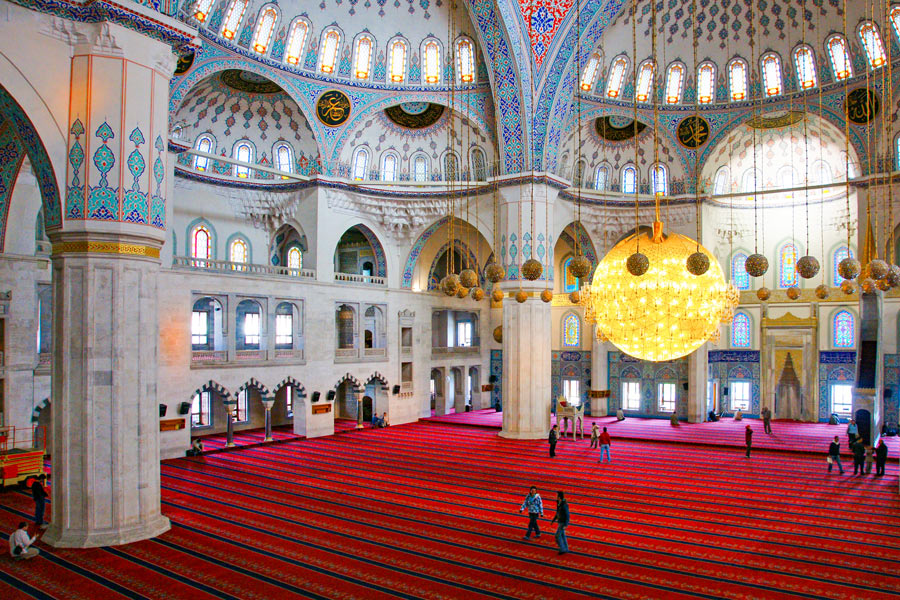
Inside, marble-covered surfaces reflect natural light streaming through the glass windows. The mosque's geometry directs movement and attention toward the mihrab (a niche in the wall that points toward Mecca). The acoustic design enhances the call to prayer, and the light shapes the atmosphere. In addition, calligraphic inscriptions of sacred verses adorn the interior walls, adding a sense of calm for visitors.
How Kocatepe Mosque Compares to Turkey’s Great Mosques
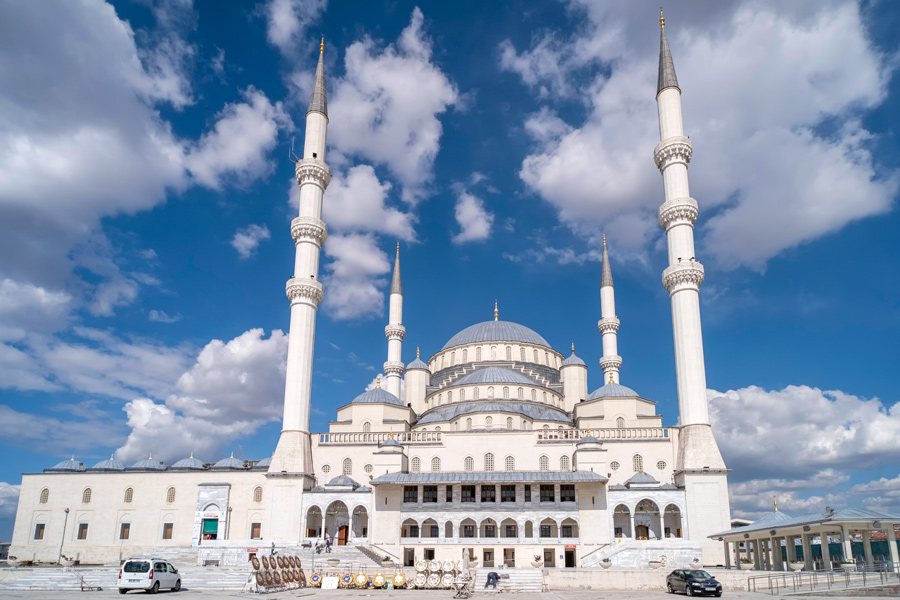
Turkey is home to some of the most significant examples of Islamic architecture in the world. The Sultan Ahmed Mosque showcases imperial ambition, the Selimiye Mosque demonstrates structural mastery, and the Çamlıca Mosque features monumental scale in the 21st century. Each represents distinct moments in architectural history.
Where does Kocatepe stand among them?
While Istanbul’s imperial mosques often dominate international attention, Ankara presents a different architectural narrative. As the capital of the modern republic, it reflects political transformation as much as historical inheritance.
Ankara had spent decades breaking from the Ottoman past – yet when the time came to build its most prominent mosque, it chose Ottoman forms. That choice is what gives Kocatepe its place in the national story.
Travellers who have explored historic mosques can see how Kocatepe consciously reintroduces architectural heritage as the identity of a modern administrative city.
Practical Information for Kocatepe Mosque Visitors
Entry, Etiquette & Timing
The Kocatepe Mosque admission is free. It remains open for most of the day, only closing briefly during the five daily prayer times.
Getting the timing right is key to a rewarding Kocatepe Mosque visit. Since Friday is a communal prayer day in Islam, mosques are especially busy. Ramadan is also an especially significant period, when the mosque becomes busier and more socially active. Keeping the schedule in mind helps you plan better and enjoy the space in its quiet.
Inside the mosque, people typically take their shoes off and dress modestly. Women should cover their hair, shoulders, and knees, and men should avoid shorts. For tourists, headscarves may be available at the entrance, but it is best to bring one.
Independent visits are simple to plan and carry out. Experienced tour guides, however, add context that transforms a brief stop into a deeper look at Ankara's identity.
It is best to experience Kocatepe on a curated cultural day that includes nearby archaeological, urban, and nationally significant sites, such as Ankara Castle, Anıtkabir, and Hacı Bayram Mosque. Together, they trace Turkey’s political, cultural, and spiritual history from past to present.
How to Get to Kocatepe Mosque in Ankara
The Kocatepe Mosque is located in the Kızılay district of central Ankara – one of the most easily accessed areas in the city. The elevated position makes it visible from several surrounding streets; major hotels, commercial avenues, and government institutions are all within walking distance.
Visitors using public transportation can easily reach the mosque via the Ankara Metro. The Kızılay Station, a central interchange point, is approximately a 10–15 minute walk from the mosque. Several city bus lines, such as 112-1, 193, 220-7, 261-7, and 263-7, also serve the nearby neighbourhood.
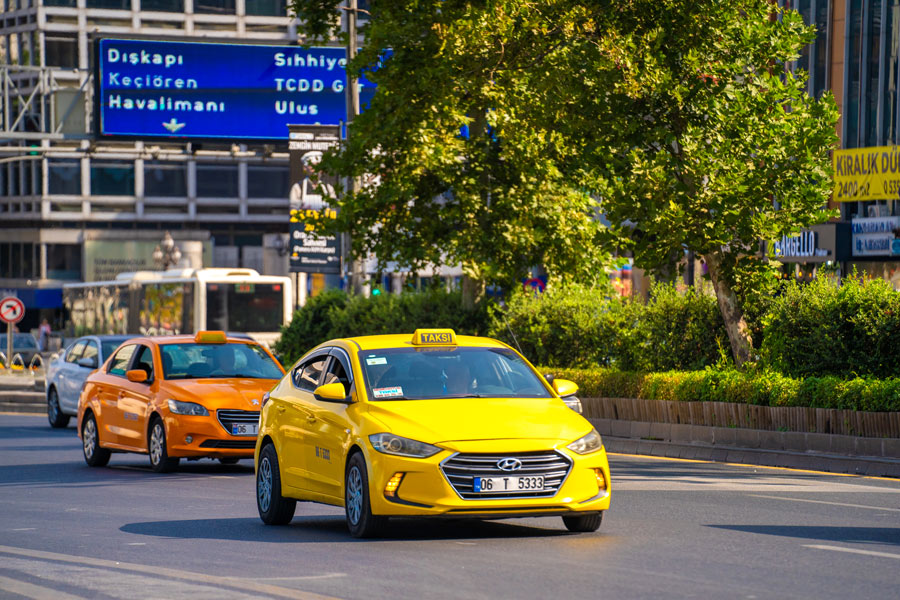
Taxis and ride-hailing services are widely available throughout Ankara and drop visitors directly at the mosque entrance. For those exploring the capital as a planned itinerary, Kocatepe conveniently sits between Anıtkabir and the historic Ulus district.
Kocatepe Mosque Address: Kültür, Dr. Mediha Eldem Sk. No: 67, 06420 Çankaya/Ankara, Türkiye
What to Expect Inside the Kocatepe Mosque
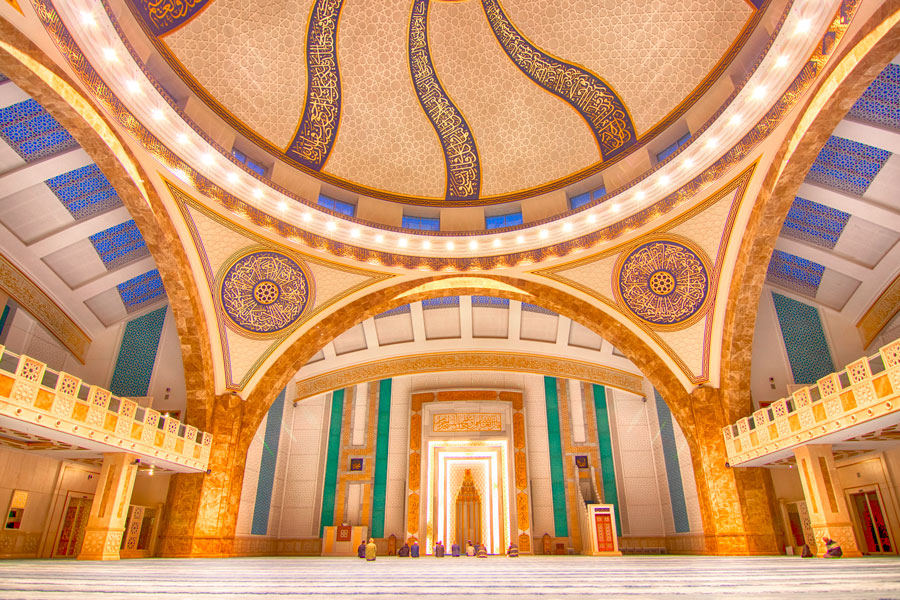
Despite its size, the interior atmosphere is harmonious instead of overwhelming. Sunlight filters under the dome, shining on patterned carpets and casting soft shadows on marble surfaces. Quiet dignity fills the massive interior.
During prayer, the acoustics carry the imam’s voice clearly throughout the hall. Rows of believers face the mihrab, which indicates the direction of Mecca. The repetition of movement – standing, bowing, prostrating – transforms architecture into a lived ritual.
Between services, the mosque is open for quiet reflection, regardless of one’s religious beliefs. Non-Muslim visitors are generally permitted outside prayer times. It is here that a Kocatepe Mosque visit becomes more than sightseeing; it becomes a cultural immersion.
Along with the Kocatepe Mosque photos, travellers often leave with a deeper appreciation for spiritual life in contemporary Turkey. Those unfamiliar with Islamic practices often find that learning what each element means deepens their respect for it.
The Commercial Level Beneath the Kocatepe Mosque
One of the less well-known parts of the Kocatepe Mosque hides under the prayer halls. An underground level that runs below the mosque is home to a supermarket, small shops, conference rooms, and parking – ordinary urban infrastructure tucked beneath extraordinary architecture.
For visitors, the real focus is in the contrast itself. The coexistence of worship, commerce, and community activity illustrates how Kocatepe functions not only as a place of prayer but also as an element of Ankara’s contemporary urban landscape.
Cultural Significance of the Kocatepe Mosque in Ankara
Unlike older mosques tucked away in historic neighbourhoods, Kocatepe sits in the heart of modern Ankara. Ministries, commercial avenues, universities, and apartment towers surround it.
Its size sets it apart. As the largest mosque in the city, it welcomes worshippers from across Ankara – not just the local area – for Friday prayers and religious holidays. That citywide reach gives it a larger social role than a typical neighbourhood mosque.
During Ramadan, the large gatherings here feel like more than a religious event. They bring people together in the national capital, reinforcing a shared sense of community and identity.
Including Kocatepe Mosque in an Ankara Travel Itinerary
The Kocatepe Mosque is the centrepiece of many Ankara excursions. Paired with other things to do in Ankara, it helps tell a bigger story.
This curated adventure presents:
- Ancient Anatolian civilisations
- Ottoman spiritual heritage
- Republican reform
- Contemporary cultural identity
Well-designed private or small-group programmes allow for deliberate pacing and educated explanation. Without rushing from one landmark to the next, visitors get more information and a better understanding of the bigger picture.
Why the Kocatepe Mosque is Worth Visiting
Kocatepe Mosque rewards a visit not simply because of its scale, but because of the quality of experience it offers within Ankara. It brings together architectural presence, historical depth, and a setting that remains fully part of the city’s contemporary life.
For travellers planning to spend time in the capital, it works especially well as part of a carefully structured day. It pairs especially well with the city’s major historical and political landmarks. In that context, Kocatepe is not just another stop on the itinerary but a site that adds texture, balance, and perspective to the wider journey.
Approached with time and the right context, it becomes one of Ankara’s most rewarding visits: elegant, substantial, and far more revealing than first impressions suggest.