

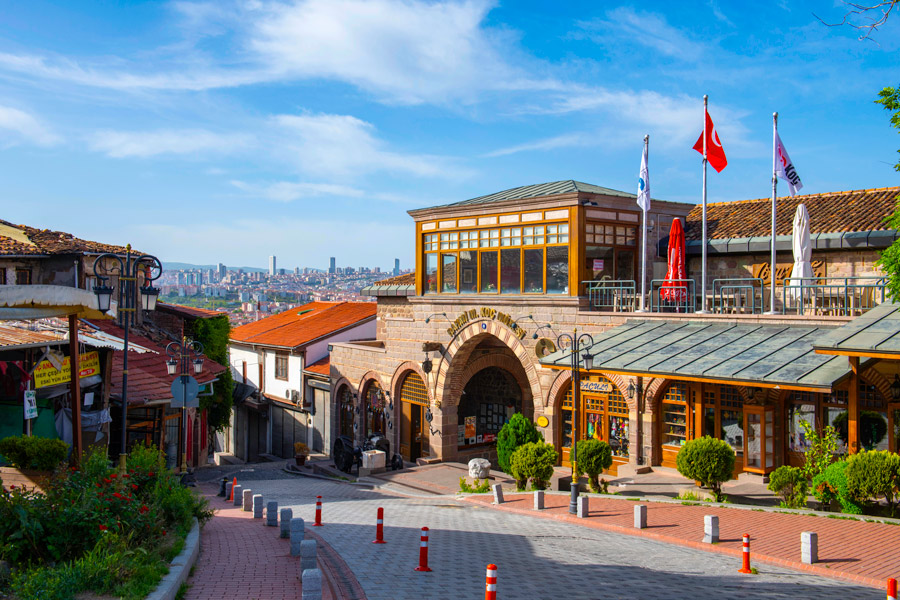
In Ankara’s historic Ulus district, the Rahmi M. Koç Museum Ankara (Rahmi M. Koç Müzesi) reveals the machines and inventions that shaped modern life. Vintage automobiles, aircraft components, maritime models, and early communication devices trace the evolution of transportation, engineering, and industry over the past two centuries.
The museum opened in 2005 inside Çengelhan, a restored Ottoman caravanserai that once welcomed merchants travelling along Anatolia’s trade routes. Together with the neighbouring Safranhan building, it forms the Ankara branch of the museum network. Rahmi M. Koç, a Turkish businessman, established it to preserve the history of technology and industrial innovation.
Inside the stone halls of what is often called the Çengelhan Rahmi Koç Museum, exhibits trace the journey from Ankara’s historic trade routes to the rise of modern industry. It stands out as one of Ankara’s most rewarding cultural visits because visitors can easily combine the museum with other landmarks in Ulus.
History of the Rahmi M. Koç Museum
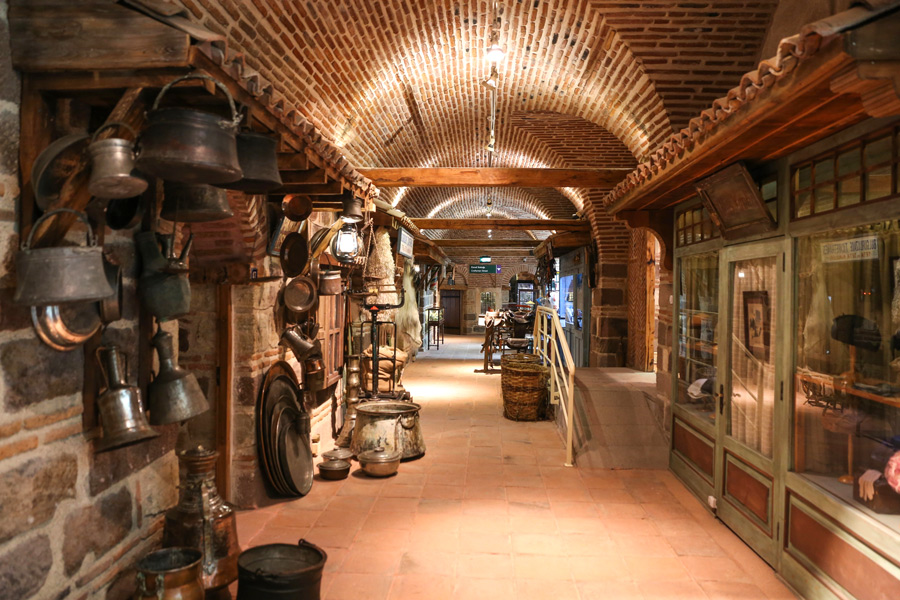
The museum occupies two historic caravanserais at the heart of Ankara’s former Atpazarı district (Horse Market): Çengelhan and Safranhan.
Çengelhan dates to 1522–23 and is traditionally associated with Rüstem Pasha, the grand vizier and son-in-law of Süleyman the Magnificent. Merchants travelling across Anatolia stopped here to store goods, rest and exchange news before continuing along regional trade routes.
Caravanserais such as Çengelhan supported the Ottoman trade network. They served as warehouses, lodgings, and marketplaces. Through buildings like this, Anatolia was connected to the wider Silk Road economy.
Centuries later, the building gained a new role under the vision of Rahmi M. Koç. His foundation restored the structure and transformed it into a museum. Later, in 2016, it expanded to nearby Safranhan (Zafran Han or Zağfiran Han), an Ottoman caravanserai built in 1511 that served as a warehouse and a prison at different times in Turkish history. Additionally, it is associated with one of the earliest film screenings in Ankara. It was acquired in 2012 by the Rahmi M. Koç Museology and Culture Foundation and restored to its original plan.
Together, the two caravanserais trace Ankara’s long trading tradition, making them a natural home for a museum of this character.
What to Expect Inside the Rahmi M. Koç Museum Ankara
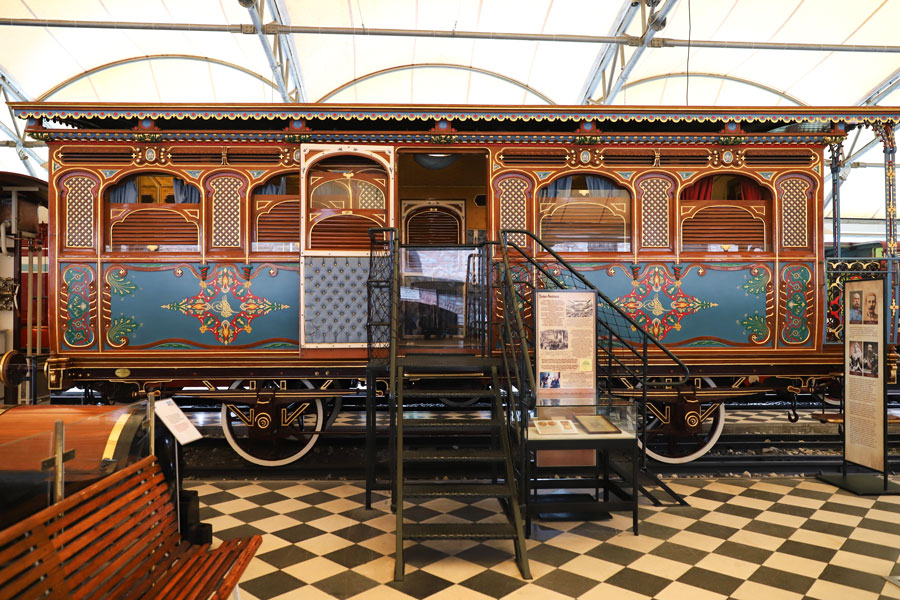
The galleries are arranged by theme, each covering a distinct chapter in the history of technology and industry. The collection leans toward the Turkish context while placing local developments within an international timeline. The result is a balance that works well for both domestic travellers and foreign guests.
Classic Cars and Transport Heritage
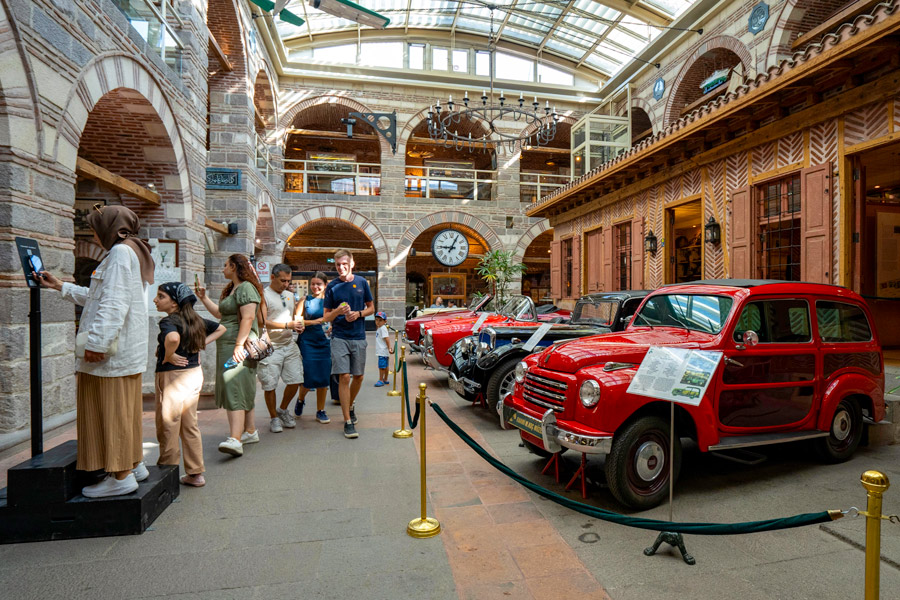
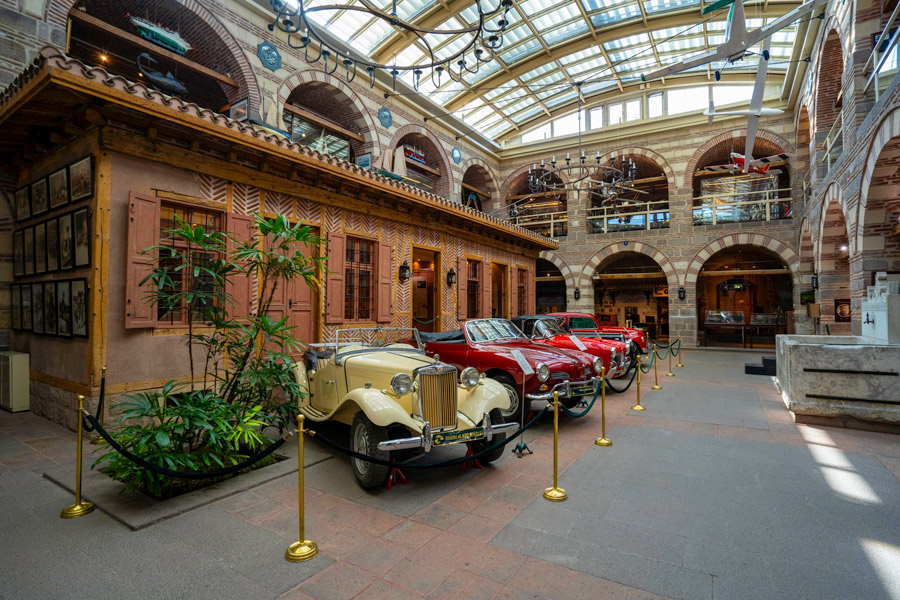
The automotive collection is likely to be the section that attracts most visitors first. Vintage cars and motorcycles are displayed as objects of craft and engineering – the bodywork, the leather interiors, and the quality of the chrome detailing all reward close attention.
The collection also covers maritime history through miniature replicas and artefacts, demonstrating how it shaped the movement of people and goods across Anatolia.
Even those with only a modest interest in transport history will find the section engaging.
Aviation and Navigation Devices
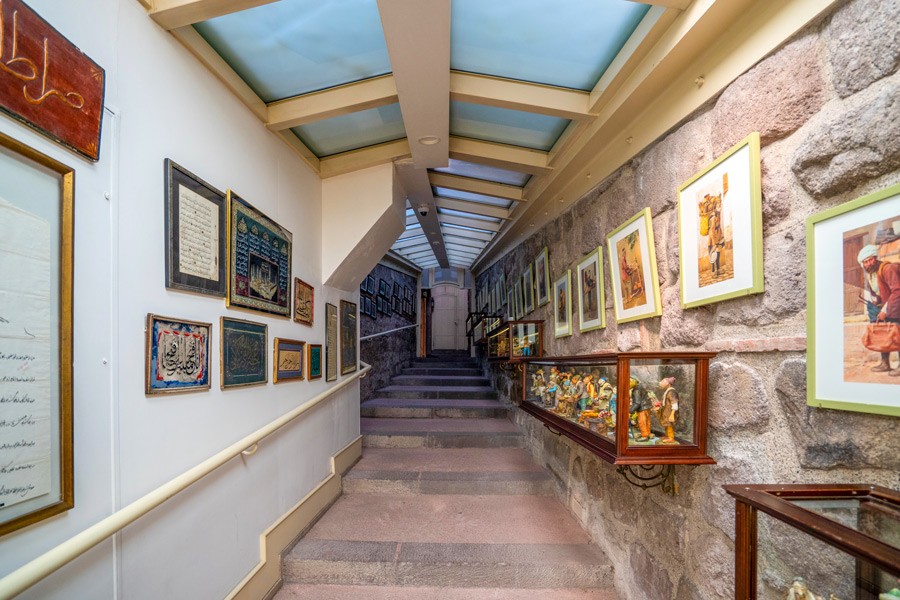
Aircraft models hang from the ceiling, and precision instruments, navigation devices, and engineering tools contextualise the objects rather than label them. The display helps viewers understand not only what these objects are but also why they mattered in their time.
Communication Devices
Telegraphs, early telephones, and optical instruments reflect a period when connectivity was genuinely transformative. Many of these are modest in scale, yet they reflect the significant shifts in communication and daily life.
Interactive Learning for All Generations
Certain exhibits let visitors engage directly, which makes the museum work well for younger individuals. The interactive elements are carefully integrated, adding accessibility without disrupting the museum’s historical character.
More Than Just Walls: A Living Architectural Experience
While many arrive in Ankara to see landmarks such as Anıtkabir or the renowned Museum of Anatolian Civilisations, only a short walk away is one of the capital’s most distinctive museums.
Çengelhan and Safranhan are classic examples of an Ottoman urban caravanserai. A central open courtyard formed the core of the structure, surrounded by thick stone walls and two levels of arcaded galleries. Storage rooms, stables, and workshops typically occupied the ground floor, while the upper levels housed the merchants' rooms.
The Rahmi M. Koç Museum Ankara retains this traditional layout. The central courtyard of Çengelhan still anchors the building, while the surrounding galleries maintain the rhythm of the original structure. The Rahmi M. Koç Museology and Culture Foundation restored the complex, preserving the stone fabric, timber-beamed ceilings, and spatial proportions that define the caravanserai form.
Today, the Çengelhan’s courtyard hosts a small café, and the surrounding rooms house the museum’s exhibitions. The original architecture remains clearly legible, allowing people to understand how these buildings once functioned as vital hubs of commerce and travel.
Practical Visitor Information
| Detail | Information |
| Opening hours | 10:00–17:00 Tuesday-Friday 10:00–18:00 at weekends |
| Closed on | Mondays A day before and after religious holidays On the 31st of December On the 1st of January Note: Check for seasonal variations before a trip |
| Recommended visit duration | 1.5-2 hours; up to 3 hours for those with a strong interest in the subject matter |
| Ticket pricing | 700 TL for adults – 650 TL for a group of 10 or more 350 TL for students – 320 TL for a group of 10 or more Discounts apply for Koç Ailem Card (My Koç Family) holders Note: the ticket office closes half an hour before the Museum closes |
| Café on site | Yes - courtyard café within the caravanserai |
| Accessibility | Contact the museum in advance to discuss specific requirements |
| Address | Ankara Rahmi M. Koç Museum, Kale Mahallesi, Depo Sokak No:1, 06250 Altındağ/Ankara |
| Telephone | +90 312 309 68 00 |
| Fax | +90 312 309 12 10 |
| Social media links | Instagram X |
A Suggested Luxury Day Itinerary in Ulus
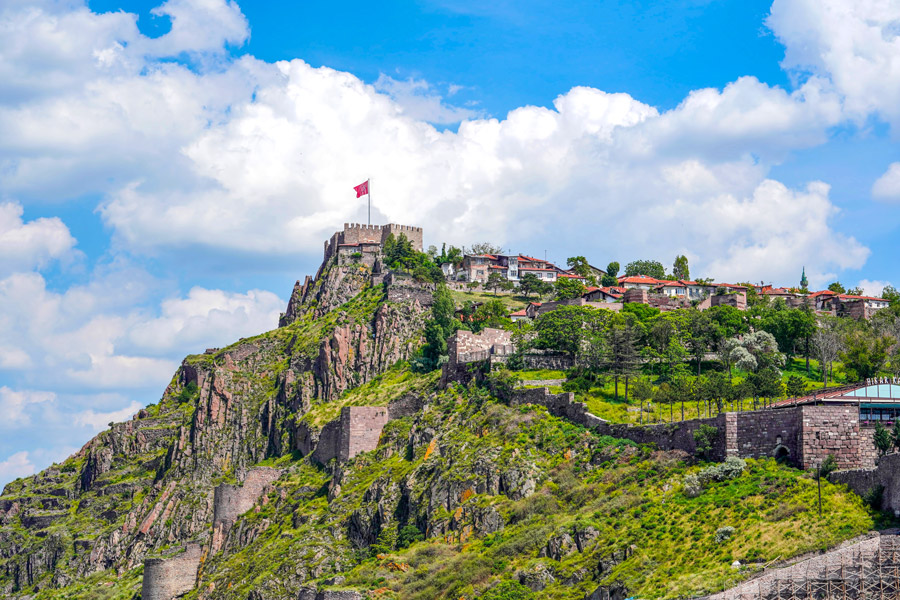
Given how compact the Ulus district is, it would be a missed opportunity not to combine a little tour of other landmarks with the Rahmi M. Koç Museum visit. The sequence below follows the natural geography of the area, starting at the highest point and working downhill.
1. Ankara Castle (Ankara Kalesi)
Focus: Orientation, panoramic views, architectural texture.
Recommended time on site: 45–60 minutes.
The natural starting point is the hilltop citadel, both for orientation and for the panoramic views across the city. The castle walls and narrow passages connect Ankara to its pre-Ottoman and early Ottoman history. The elevated position makes everything that follows in Ulus feel more grounded once the descent begins.
Private transfer or taxi (recommended for comfort):
From central hotels in Çankaya, it takes 20–30 minutes to reach this site, depending on traffic. This option delivers the smoothest arrival and preserves energy for walking later.
Public transport:
- Take the Ankaray or Metro to Ulus Station.
- From Ulus Station, continue by taxi (approx. 5–10 minutes) or walk uphill for 15–20 minutes.
Total journey time from central Ankara via metro: 25–40 minutes, depending on connections.
2. Museum of Anatolian Civilisations
Focus: Ancient Anatolia, archaeological mastery.
Recommended time on site: 60–90 minutes.
Time from Ankara Castle:
- On foot (downhill): 10–15 minutes
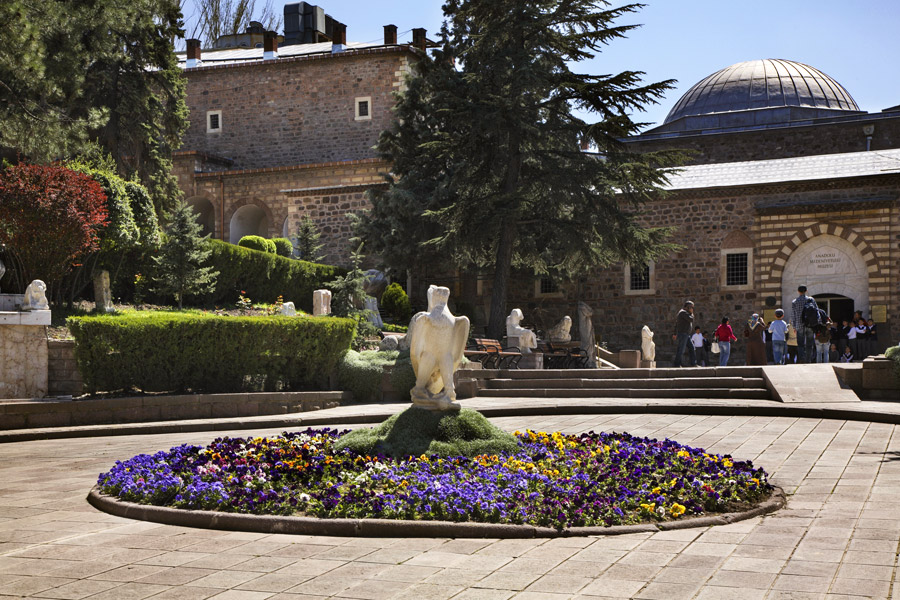
Situated in the restored Ottoman market hall and caravanserai, the museum covers Anatolian history from the Palaeolithic to the Roman era. It has outstanding Hittite and Phrygian collections that history enthusiasts can admire.
The descent from the Ankara Castle (Ankara Kalesi) feels atmospheric. Cobbled streets curve between restored Ottoman houses. Small artisan shops and antique dealers appear along the route and offer a variety of souvenirs to take home as keepsakes. Because of this, most visitors choose to walk the short distance to the museum.
Alternative option:
- Short taxi transfer: 5–7 minutes
The museum’s setting complements its extraordinary archaeological collection. A private guided tour will add deeper context to the experience.
3. Lunch in the Ulus District
Focus: Refined Anatolian cuisine in an intimate heritage setting.
Time from the Museum of Anatolian Civilisations:
- On foot: 3–8 minutes
A cluster of restaurants serving regional Anatolian cuisine made with fresh ingredients is within walking distance of the Museum of Anatolian Civilisations (Anadolu Medeniyetleri Müzesi). Several occupy converted historic buildings with courtyard seating.
Gramofon Kafe (Gramofoncu Ali) affords an atmospheric setting with vintage vinyl players, cassette tape players, and radios, along with other memorabilia from different decades of the 20th century.
Guests can enjoy breakfast with Turkish coffee or tea while listening to classical Turkish music.
Kirit Cafe is a more vibrant spot near the Rahmi M. Koç Museum. The wooden ceiling beams, along with the contrasting white ceilings and ceiling fans, create a cosy atmosphere for visitors. The food ranges from local flavours to dishes that are more familiar to Western palates.
Hotel concierge teams can make reservations in advance.
Suggested pace:
Approximate time for lunch is 60–90 minutes. The district encourages unhurried dining and reflection.
4. Rahmi M. Koç Museum Ankara
Focus: Industrial heritage, architectural ambience.
Recommended time on site: 90–120 minutes.
Five to ten minutes on foot from the lunch cluster, the walk ends at Çengelhan – the destination this guide is built around. Arriving at a 16th-century stone caravanserai feels like a natural continuation of Ankara’s Ottoman layers.
The afternoon time frame works well here, and ending the visit with a cup of coffee in the museum’s courtyard is one of the best things anyone can do in Ankara.
5. Hidden Museums and Historic Streets of Ulus
Focus: Niche collections, architecture, local character.
Recommended time on site: 45–60 minutes.
Time from the Rahmi M. Koç Museum:
- On foot: 3–7 minutes.
A short walk from the Rahmi M. Koç Museum leads to two smaller institutions that add a cultural dimension to Ulus. The Gökyay Foundation Chess Museum (Gökyay Vakfı Satranç Müzesi) displays one of the world’s largest collections of chess sets, with pieces from dozens of countries.
Nearby, the Erimtan Archaeology and Art Museum (Erimtan Arkeoloji ve Sanat Müzesi) make for a quieter but equally refined experience. Its carefully curated collection of Anatolian artefacts sits inside a contemporary gallery space near the castle’s walls.
The walk between these sites passes through areas like Gözcü Street. Here, traditional tiled roofs appear above narrow lanes, offering small glimpses of the neighbourhood’s architectural character.
Suggested pace:
Allow around an hour to explore this part of Ulus. The quieter streets and smaller museums create a relaxed final stop before returning to central Ankara.
How to Get to and from the Rahmi M. Koç Museum

Ulus is a central district of Ankara with excellent connections to the rest of the city. There are two optimal alternatives to and from central districts: public transport or a taxi.
The museum may provide shuttle connections from nearby points; visitors should confirm current arrangements on the official website.
Public transport:
Ulus Station is the nearest stop to the Rahmi M. Koç Museum and is served by both the metro and the Ankaray line. From there it's a 10–15 minute walk to the museum (largely flat once past the station area) or a 5–7 minute taxi for those who'd rather not walk.
Individuals coming from Kızılay or Çankaya should plan 15–25 minutes on the metro for the journey itself.
Private transfer or taxi:
The journey to the central districts typically takes 20–30 minutes, depending on traffic conditions. A professional driver will provide the most seamless and comfortable option, particularly in the late afternoon.
Note: Departures during peak traffic may add 10–15 minutes to travel time.
| Route | Method | Approximate time |
| Central Ankara → Museum | Metro to Ulus + walk | 25–40 min total |
| Central Ankara → Museum | Taxi / private transfer | 20–30 min |
| Museum → Central Ankara | Walk to Ulus Station + metro | 30–45 min total |
| Museum → Central Ankara | Taxi (peak hours) | 30–40 min |
Best Time to Visit the Rahmi M. Koç Museum
As an indoor museum within a stone caravanserai, Rahmi M. Koç Museum is a comfortable visit at any time of year. That said, the season and the hour of arrival both shape the experience in ways worth considering before planning the day.
Spring and autumn are the strongest seasons for a visit. The temperate weather makes the walking distances between sites easier rather than more difficult.
Additionally, winter visits have their own appeal. When snowfall settles across Çengelhan, the architecture takes on an added depth. The contrast between the fresh snow and weathered stone can make the courtyard especially attractive for photography. The museum itself stays warm, so the experience inside is unaffected.
Within any given day, the timing of arrival also matters. Morning hours before 11:30 tend to be quieter – the better option for those who want to move through the collection at their own pace without navigating around group tours. On the other hand, afternoon light between 14:00 and 16:00 transforms the courtyard into one of the most photogenic places in the Ulus district, making it the strongest window for anyone prioritising photography.
Frequently Asked Questions
Is the Rahmi M. Koç Museum Ankara good for children?
Rahmi M. Koç Museum in Ankara is indeed good for children, particularly those with curiosity about how things work. The transport exhibits are visually engaging, and interactive elements are spread throughout the collection.
How does the Ankara museum compare to the Rahmi M. Koç Museum in Istanbul?
The Istanbul branch in Hasköy is considerably larger – it includes outdoor exhibits, a full-scale submarine and a broader range of installations. The Ankara branch is smaller and more focused, but it has something the Istanbul branch doesn't: the Çengelhan building itself. The Ottoman caravanserai setting gives the Ankara experience a distinct character that's genuinely difficult to replicate at a larger site.
How long does a visit to the Rahmi M. Koç Museum in Ankara take?
Two to three hours comfortably cover the collection. For those with a genuine interest in industrial history or Ottoman architecture, allowing closer to four hours is worthwhile – the building invites that kind of unhurried exploration, and the courtyard café is worth factoring in rather than rushing past.
Is it worth visiting on its own, or is it better to combine it with other sites?
Given that Ankara Castle and the Museum of Anatolian Civilisations are both within easy walking distance, combining all three into a single day is the more rewarding option.
Is the Ankara Rahmi M. Koç Museum wheelchair accessible?
The historic building's structure does create some limitations. Visitors with specific accessibility requirements should contact the museum directly before their visit. This will help them determine which sections are accessible and what assistance is available on the day.
Do museum passes apply at the Rahmi M. Koç Museum?
The Rahmi M. Koç Museum is a privately operated institution, meaning it is not included in the Turkish museum passes. Reduced rates typically apply for students, and it's worth checking the museum's official website for any current concession categories before visiting.
Is Photography Permitted Inside the Rahmi M. Koç Museum?
Photography is generally permitted in most areas, but there may be some temporary restrictions around specific exhibits. We recommend checking the most recent policies with the museum's official representatives.