

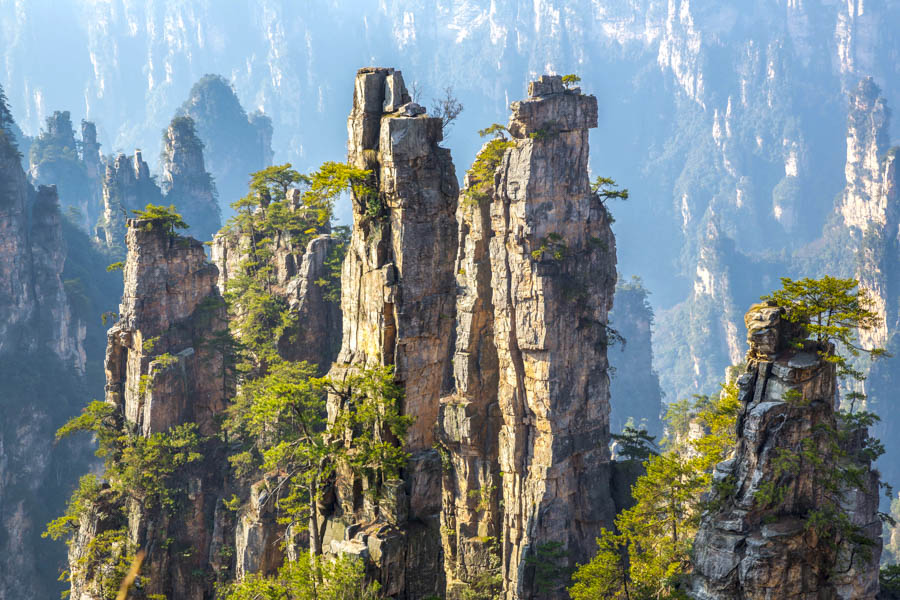
Zhangjiajie National Forest Park (张家界国家森林公园, Zhāngjiājiè Guójiā Sēnlín Gōngyuán) is the most accessible and widely visited part of the Wulingyuan Scenic and Historic Interest Area, known for its dense concentration of sandstone pillars, forested valleys, and elevated viewpoints. It serves as the main gateway to the region and the core area around which most visits are organised.
The park forms part of a UNESCO World Heritage Site that also includes Suoxi Valley, Tianzi Mountain, and Yangjiajie. Although the name “Zhangjiajie” is often used loosely to refer to the entire area, these zones are spread across a wide territory and differ in terrain, access, and viewpoints, which makes advance planning important.
Nearby Zhangjiajie City serves as the main transport hub for travellers, while Wulingyuan District, near the East Gate leading into Suoxi Valley, is a common base for visitors thanks to its wide range of accommodation and cultural activities. This guide leads you through the main areas, access points, and route options to help you plan your visit clearly and efficiently.
Wulingyuan Scenic Area, Zhangjiajie Tours
The park can be visited in several ways. You can spend a few focused days in the Wulingyuan Scenic Area itself, in the city of Zhangjiajie, or weave it into a longer journey that takes in historical capitals and modern cities elsewhere in China.
The 4-day Amazing Zhangjiajie (Avatar Mountains) Nature Tour concentrates on the region’s key natural highlights: panoramic platforms, walks through old-growth forest and encounters with local wildlife. The itinerary is deliberately compact, making it a good fit for travellers with limited time who still want to experience one of southern China’s most distinctive landscapes.
For travellers looking beyond Zhangjiajie alone, the 15-day China Natural Wonders Group Tour brings together several of the country’s best-known natural areas. Zhangjiajie is one of the key stops, alongside other major scenic destinations.
The 10-day Central China Panorama Tour and the 14-day Central China Extended Tour focus primarily on historic centres and major cities. A stay in Zhangjiajie introduces a natural counterpoint to an otherwise urban itinerary.
Best Time to Visit Zhangjiajie National Forest Park
The best time to visit Wulingyuan Scenic Area, including the Zhangjiajie National Forest Park, is usually spring or autumn, when the weather is mild and visibility is often at its clearest. The weather is mild, visibility tends to be good, and morning mist drifts between the rock pillars in a way that feels inseparable from the park’s character. Winter brings quieter trails and a more contemplative atmosphere, though some cable cars may operate with reduced frequency. Summer can bring heavy cloud and persistent rain, occasionally limiting views from the upper platforms.
Opening Hours
Entry is controlled by a timed slot and designated gate, two details that often catch first-time visitors off guard. The park is open daily from 07:00 to 17:00, and your booking confirms both your entry window and the gate you must use.
There are nine daily entry windows: 07:00–08:00, 08:00–09:00, 09:00–10:00, 10:00–11:00, 11:00–12:00, 12:00–13:00, 13:00–14:00 and 14:00–17:00.
Most tour groups arrive before 10:00. Booking a midday slot is a straightforward way to avoid the worst of the entrance queues.
Entry is through one of five gates:
- East Entrance Gate (Wulingyuan Sign Gate)
- South Entrance Gate (Forest Park Gate)
- North Entrance Gate (Tianzi Mountain Gate)
- Southeast Entrance Gate (Zimugang Gate)
- West Entrance Gate (Yangjiajie Gate)
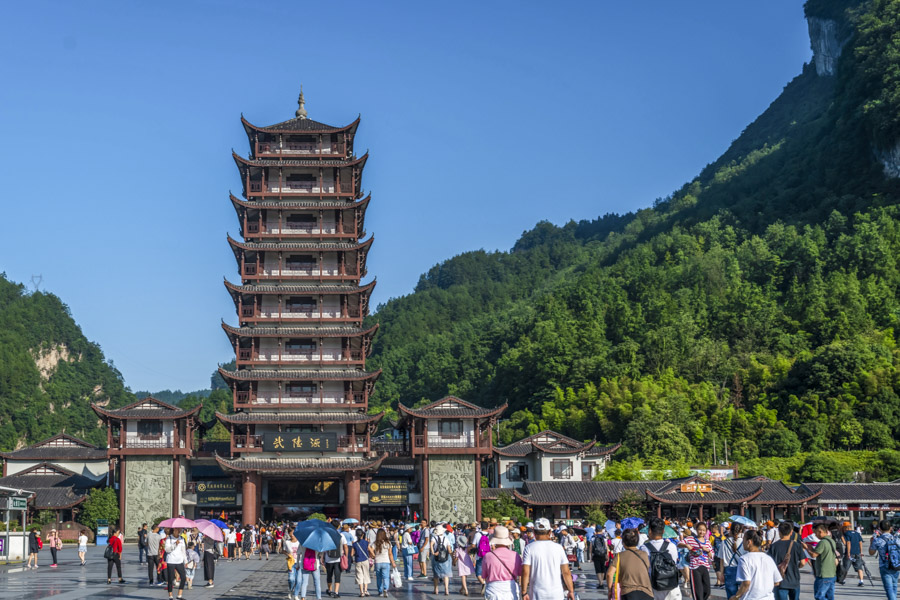
The East Gate and South Gate are the main entry points for visitors. Allow enough travel time from your accommodation to reach the correct entrance before your slot.
If you are planning a multi-day visit, each subsequent day must be booked separately, and only after the previous visit has been completed. Tickets can be purchased at the gate offices or through the official WeChat mini-programme. Your passport is required to confirm the booking.
Internal shuttle buses operate within the park from 07:00 to 18:00.
Ticket Prices
Admission is priced by age group, with the visitor’s date of birth as stated on their valid ID used to determine the applicable rate. The standard ticket covers:
- Entry to the park
- Travel on internal eco-shuttle buses
- Mandatory insurance (CNY/RMB 3)
| Visitor Category | Price in CNY/RMB* | Price in $* | Price in €* | Price in £* |
| Adults (18–59 years) | 239 | 35 | 30 | 26 |
| Teenagers (14–17) & Seniors (60–64) | 122 | 18 | 16 | 14 |
| Seniors (65+) | 39 | 6 | 5 | 4 |
| Children under 14 | Free** | Free* | Free* | Free* |
* Prices in CNY/RMB are indicative and approximative in the other currencies and may change without prior notice.
** A separate insurance fee (approximately CNY/RMB 3) may apply for children.
Note: Those admitted free of charge still need to pay for eco-shuttle bus travel if they plan to move around the park.
Additional Transport (not included in the standard ticket)
Cable car rides and the Bailong Elevator are charged separately. Approximate single-journey fares:
| Attraction | Price in CNY/RMB* | Price in $* | Price in €* | Price in £* |
| Tianzi Mountain Cableway | 72 | 10.50 | 9 | 7.90 |
| Huangshizhai Cableway | 65 | 10 | 8 | 7 |
| Yangjiajie Cableway | 76 | 11 | 9.50 | 8.30 |
| Bailong Elevator | 65 | 10 | 8 | 7 |
* Prices in CNY/RMB are indicative and approximative in the other currencies and may change without prior notice.
Combined Ticket Options
Combined packages are also available, bundling admission, insurance and unlimited eco-bus travel with a set or unlimited number of cable car and elevator rides:
| Package Type | Coverage | Age Category | Price in CNY/RMB* | Price in $* | Price in €* | Price in £* |
| 2-Ride Package (Elevator + 1 Cable Car) |
One Bailong Elevator ride plus one Tianzi Cable Car ride | Adult | 376 | 55 | 48 | 41 |
| 14 to 17 & 60 to 64 |
259 | 38 | 33 | 29 | ||
| 65+ | 176 | 26 | 22 | 20 | ||
| 4-Ride Package (3 Cable Cars + 1 Elevator) |
One ride on each of the three cable cars plus one Bailong Elevator ascent | Adult | 477 | 70 | 60 | 52 |
| 14 to 17 & 60 to 64 |
360 | 53 | 46 | 40 | ||
| 65+ | 277 | 41 | 35 | 31 |
* Note: All prices are subject to change. These figures are provided for guidance only.
It is recommended to verify current opening hours, timed-entry rules, and gate names on the official Wulingyuan/Zhangjiajie ticketing site or the official WeChat mini-programme, since operating hours, slot schedules, and entry procedures can change without prior notice.
Practical Information
Wulingyuan Scenic Area covers 26,000 hectares, and its highest peak, Doupeng Mountain, rises to nearly 1,900 metres. Getting the logistics right before you arrive shapes how much of it you actually see.
The Area at a Glance
The facts to know before you arrive.
- More than 3,000 quartzite rock pillars and peaks of unusual shapes rise across the terrain.
- Around 200 natural landmarks and vantage points are scattered across the area.
- The area is home to 41 species of birds and 28 species of animals, among them the giant salamander.
Average Visit Duration
A thorough visit to the main areas takes two to three days. This allows time for the key trails, ascents to the viewing platforms and unhurried movement between the different areas. It is possible to see the principal attractions in a single day, but the schedule will be full and requires careful advance planning.
Food and Drink
Snack bars, small cafés and drinks stalls are distributed throughout the park, selling mainly noodles, rice dishes and stir-fried vegetables. Prices tend to be higher than in the city. For longer walking routes, it is advisable to bring water and a snack. Near the main entrances – particularly around Wulingyuan Village – proper restaurants serve hot meals and local dishes. These work well for a meal before or after the park.
On-Site Facilities
Bathrooms are located at the main tourist stops and near the viewing platforms. However, it is recommended to bring a compact personal hygiene kit (tissues, wet wipes, and hand sanitiser). Western-style facilities are available at the larger hubs.
History of Zhangjiajie National Forest Park
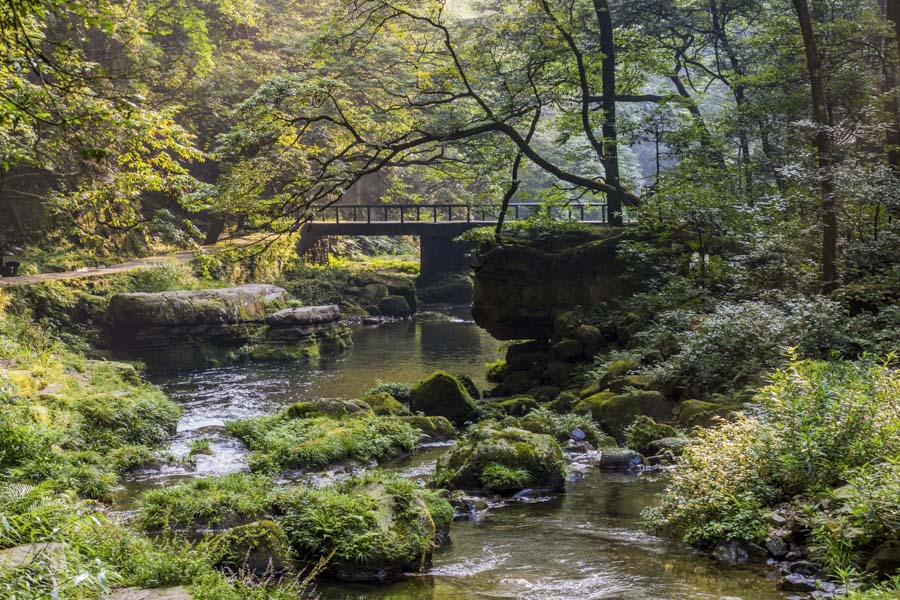
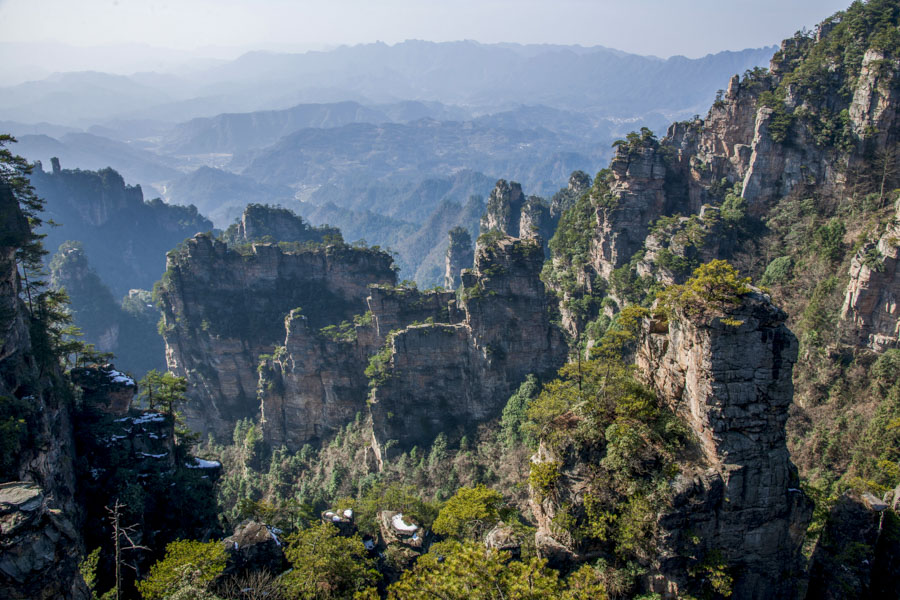
The rock pillars of Zhangjiajie are the product of geological processes that took place over hundreds of millions of years. Thick beds of quartz sandstone, deposited in ancient river and lake basins, were gradually uplifted by tectonic forces and fractured along vertical fault lines. Water, temperature changes and prolonged erosion then removed the less resistant material, leaving the isolated columns that define the landscape today.
Human presence in the wider area dates back to ancient times. In the Lishui River basin, archaeologists have found evidence of prehistoric settlement that some researchers suggest may date to around 100,000 years ago.
After the founding of the Qin dynasty (221–206 BCE), the region formed part of Qianzhong Commandery, one of the earliest administrative units in what is now Hunan Province. Over the following centuries its boundaries and status changed repeatedly, reflecting broader political shifts across imperial China.
For most of its history, the Zhangjiajie remained remote and sparsely populated; the quartz sandstone pillars attracted little outside attention until the second half of the twentieth century.
In 1958 the park was a run-state tree farm with a rich biodiversity with species such as the dawn redwood that was believed to be extinct. On the contrary, beautiful pink-purplish lobster flowers can be found in large numbers near the streams, particularly along the Golden Whip Stream, and Chinese chestnut trees abound in the park.
The region's modern reputation is largely due to the artist Wu Guanzhong. In 1979, while travelling through Hunan Province, he heard from local residents about Zhangjiajie’s the unusual terrain and went to see it for himself. Within a few days he produced a series of paintings and, a year later, published an account of the area in the Hunan Daily. The piece attracted wide public interest and is largely credited with putting Zhangjiajie on the map.
In 1982, Zhangjiajie was designated China’s first National Forest Park. A decade later, in 1992, it combined with two adjacent nature reserves, the Suoxiyu Nature Reserve and Tianzi Mountain Nature Reserve, to be granted status as a UNESCO World Heritage Site under the name of Wulingyuan Scenic Area (武陵源風景名勝區, Wǔlíngyuán Fēngjǐng Míngshèngqū).
The park’s international profile rose sharply after the release of Avatar in 2009. The film's 'floating mountains' of the planet Pandora were widely associated with Zhangjiajie's rock formations, bringing a new international audience to the park. Zhangjiajie is now consistently ranked among China’s most visited natural landscapes, attracting millions of visitors each year.
Must-See Landmarks in Zhangjiajie National Forest Park
The area contains more landmarks than any single visit can absorb. These are the formations and viewpoints that give Zhangjiajie its character – the ones no itinerary should leave out.
The Zhangjiajie National Forest Area was the first area designated for ecological protection. Finding a balance to combine protection of the site with its endangered species and tourism remains a challenge. In order to participate in the effort to protect the park, visitors are encouraged not to feed the macaque monkeys that are in the wild. Nature lovers can be in contact with pristine nature when going on trails to visit the numerous spectacular landmarks of the site.
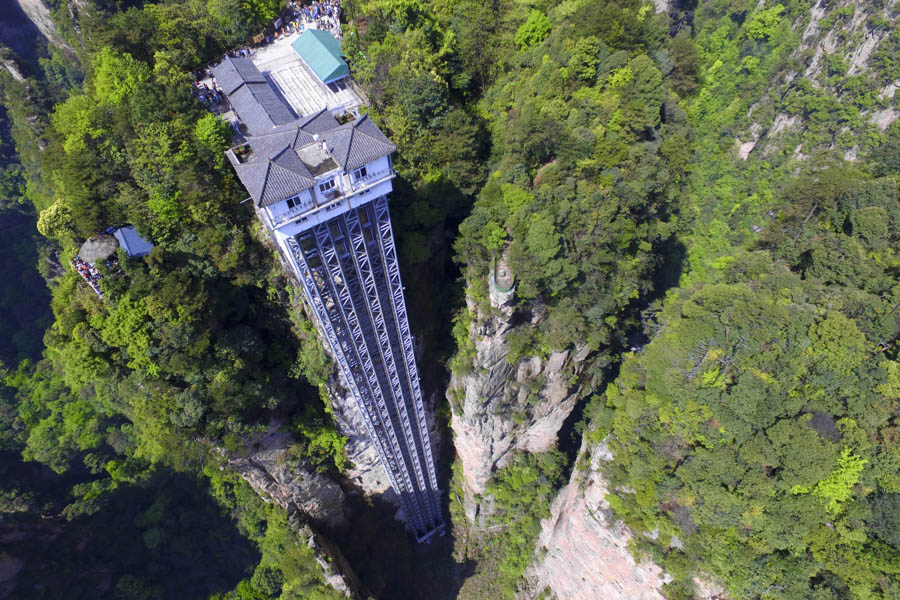
Yuanjiajie Scenic Area (袁家界景区, Yuánjiājiè Jǐngqū) is one of the most recognisable parts of the park, its sandstone pillars and rock formations shaping much of Zhangjiajie’s visual identity. The area’s best-known landmark is the Qiankun Pillar (乾坤柱, Qiánkūn Zhù), now widely referred to as Avatar Hallelujah Mountain (阿凡达·哈利路亚山, Āfándá Hālìlùyà Shān), a striking vertical column that has become emblematic of the park. Nearby, the First Bridge under Heaven (天下第一桥, Tiānxià Dì-Yī Qiáo) links two peaks more than 350 metres above the valley floor, while the Bailong Elevator (百龙天梯, Bǎilóng Tiāntī), a glass lift built directly into the cliff face, provides access to the plateau.
For a more intimate experience, the Golden Whip Stream (金鞭溪, Jīnbiān Xī) valley, stretching from the north of Huangshizhai to the north of Yuanjiajie, offers a long trail following the stream at the base of the cliffs. The path is relatively flat, winding through forest with views of sheer rock faces and isolated pillars rising directly above the water.
Tianzi Mountain (天子山, Tiānzǐ Shān)
The widest panoramas in the park are found at Tianzi Mountain (天子山, Tiānzǐ Shān), where layered stone peaks dissolve into the mist on all sides. The viewpoints around He Long Park (贺龙公园, Hèlóng Gōngyuán) and Imperial Brush Peak (御笔峰, Yùbǐ Fēng) offer different perspectives on the same terrain; from each the landscape takes on a fresh sense of depth and scale.
Access is by the Tianzi Cableway (天子山索道, Tiānzǐ Shān Suǒdào), which spans gorges and rocky ridges and gains considerable height in minutes, revealing the full panorama of forest and pillars opening up below.
Suoxi Valley Nature Reserve
Located in the northeast of the Wulingyuan Scenic Area, Suoxi Valley is a tranquil corner of Wulingyuan where a shaded stream winds beneath soaring sandstone pillars. Stroll the gentle trails and discover highlights such as the Ten-Mile Gallery (accessible by scenic train), Shuiraosimen, Yellow Dragon Cave and Baizhang Valley. This destination is perfect for relaxed exploration, photography and escaping the crowds.
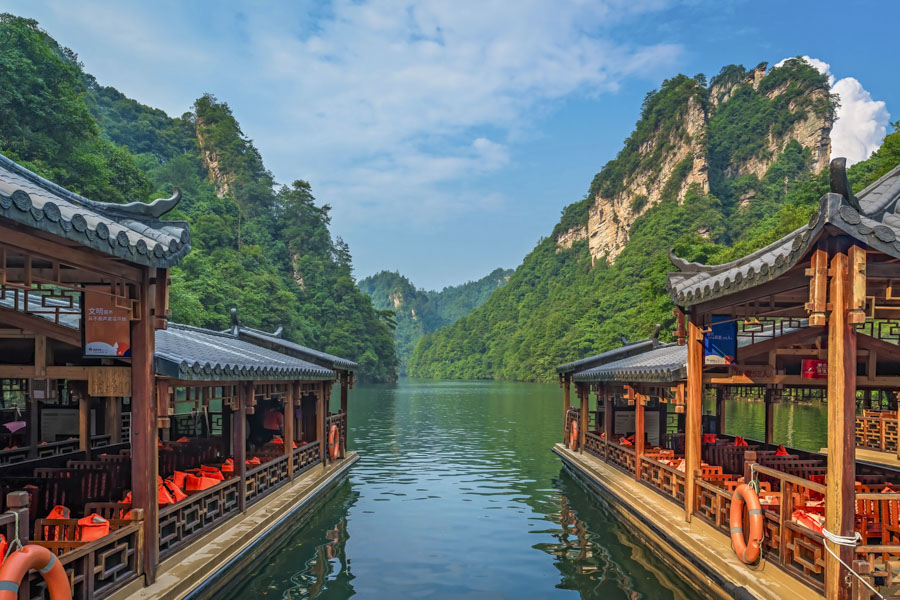
A short distance away, Baofeng Lake (宝峰湖, Bǎofēng Hú) draws visitors for its still blue water set against steep rocky cliffs, and you can take a cruise on the lake.
Hidden Gems of Zhangjiajie National Forest Park
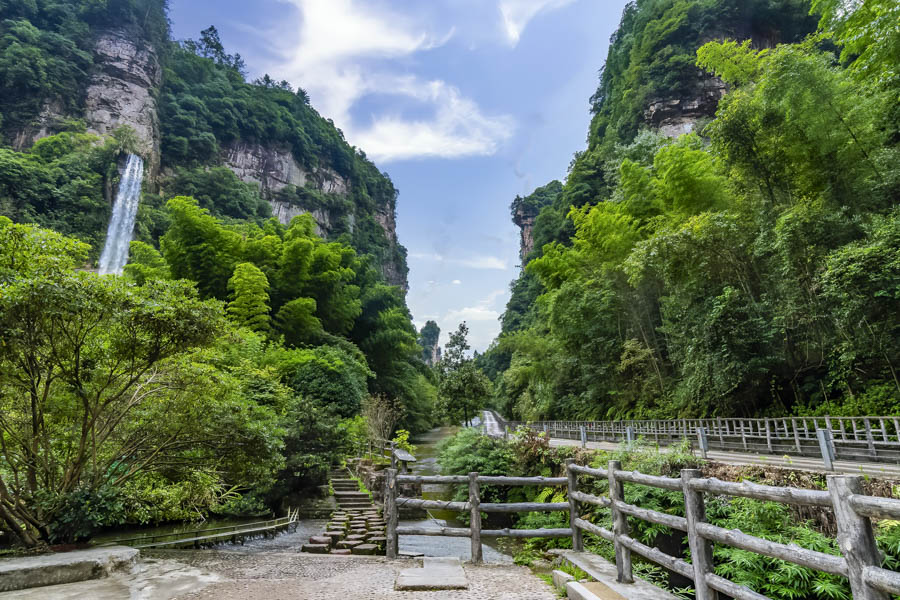
Away from the main viewing platforms, the park has quieter trails where the atmosphere of the gorges and ancient forest can be felt more directly.
Yangjiajie (Yang Family Territory, 杨家界, Yángjiājiè) receives noticeably fewer visitors than the park’s central areas. It features dramatic rock arches, narrow passages and massive columns. The path climbs steeply to a summit where the 'Natural Great Wall' awaits. It is a long, winding ridge of intertwined, forest-covered rock that runs through the valley much like its namesake across the northern plains.
Huangshi Village (Yellow Stone Village, 黄石寨, Huángshí Zhài) is a small hill set among the peaks, bypassed by most visitors. From here, vertical cliff faces and neighbouring ranges surround you on all sides, giving a sense of being inside the landscape rather than above it.
The Old House Area (Laowuchang, 老屋场, Lǎowūcháng) is a quieter district of historic buildings and footpaths. Here the landscape softens from dense stone pillars into gentler, more undulating terrain. Within it lies Sky Field Garden (空中田园, Kōngzhōng Tiányuán) – a patch of rice paddy perched on the edge of a cliff, from certain angles, appears to float above the precipice.
Attractions Beyond Zhangjiajie National Forest Park
The area around the park is worth at least another day. Two sites stand out.
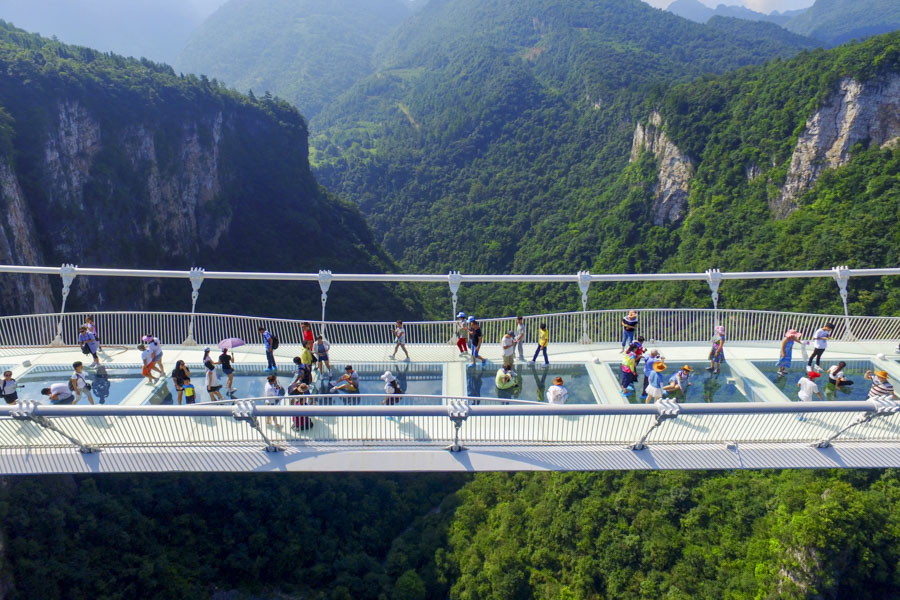
Perched about 30 km (approximately 19 miles) from Zhangjiajie National Forest Park, Zhangjiajie Grand Canyon (张家界大峡谷, Zhāngjiājiè Dàxiágǔ) and its Glass Bridge (张家界大峡谷玻璃桥, Zhāngjiājiè Dàxiágǔ Bōlíqiáo) are a must for nature lovers and thrill-seekers. Stroll across the glass-bottom bridge suspended over a 300-metre drop and feel as if you’re walking on air, then follow cliff-top paths to dramatic viewing platforms with breathtaking canyon vistas. The canyon also offers zip-lining and riverboat rides for a fast, unforgettable rush.
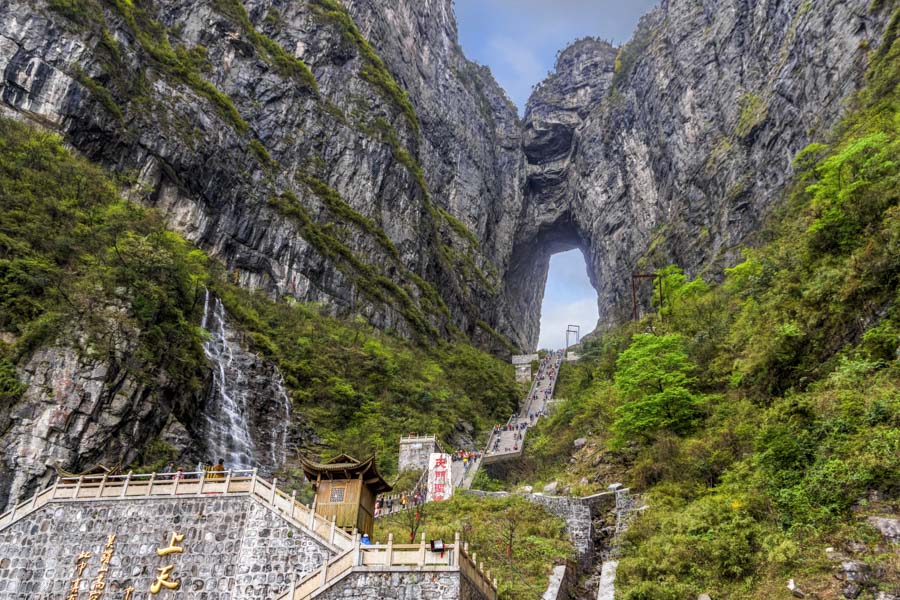
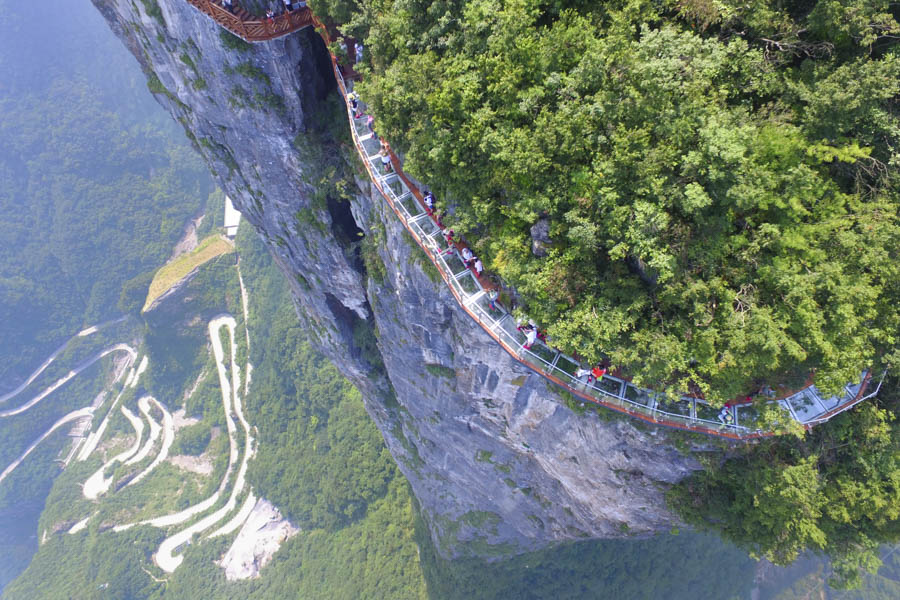
Tianmen Mountain (天门山, Tiānmén Shān) is approached by a road with 99 bends, symbolising eternity and long-lasting doubles. On a clear day, the platforms open onto some of the most dramatic scenery in the region. The central feature is Heaven's Gate (Tianmen Cave, 天门洞, Tiānmén Dòng) – a vast natural arch in the rock, accessible by a staircase of 999 steps, which symbolises intensified auspiciousness. For those with a head for heights, the thrilling glass skywalks section of trail runs directly along the cliff face. For dramatic views, the summit is also served by the Tianmen Mountain Cableway (天门山索道, Tiānmén Shān Suǒdào), the longest one in the world.
Top Scenic Routes Zhangjiajie National Forest Park
For visitors with limited time, the following two-day itinerary covers the park’s principal highlights efficiently.
Day 1 – Huangshi Village, Golden Whip Stream & Ten-Mile Gallery
Enter via the South Gate:
- Shuttle bus – Take the shuttle from the South Gate to the cableway station.
- Huangshi Village – Take the cable car up, or hike for 40 to 60 minutes. Explore the summit viewpoints and the cliff-side trail, then descend by cable car or on foot.
- Golden Whip Stream – Follow the stream through the valley.
- Ten-Mile Gallery (十里画廊, Shí Lǐ Huàláng) – Continue to this valley corridor, known for its distinctive sandstone formations; a sightseeing train with an open-air upper deck runs along the route.
- Return to the South Gate, or move to accommodation near the East Gate ahead of Day 2. – ‘
Estimated time: 5 to 6 hours*.
Day 2 – Yuanjiajie & Tianzi Mountain
Enter via the East Gate:
- Shuttle bus – Take the shuttle to the lower station of the Bailong Elevator.
- Bailong Elevator – Ride up to Yuanjiajie Scenic Area and proceed on foot between the main viewpoints.
- Shuttle bus to Tianzi Mountain – Explore the viewing platforms.
- Descend by cable car or shuttle bus back towards the East Gate.
Estimated time: 5 to 6 hours*.
*Allow more time, 7 to 9 hours in high season, with waits, lunch, and photography stops.
Heritage and Conservation of Zhangjiajie National Forest Park
Behind the landscapes of Wulingyuan Scenic Area lies not only the work of nature, but also a carefully developed conservation system that helps protect this remarkable terrain. How the “stone forest” was shielded from overdevelopment, which technologies are now used to monitor its fragile environment, and what role visitors themselves play in its preservation are all examined in detail in our full guide. For those who want to look beyond the scenery and better understand how this place has retained its distinctive character, it is well worth a closer read.
How to Get to Zhangjiajie National Forest Park
From the City of Zhangjiajie
Shuttle buses to Zhangjiajie National Forest Park's attractions and the Wulingyuan Scenic Area depart from Zhangjiajie Central Bus Station on Guanliping Street. The journey from the city to those destinations takes approximately 50 minutes. The first bus leaves at 7:00; the last return departs at 18:00.
Cable Car
Departing from the city centre, the cable car takes you up to Tianmen Mountain. It is one of the longest cable cars in the world, offering an exhilarating experience as you marvel at the splendour of this exceptional site.
Taxi
Taxis are plentiful and easy to hail. The starting fare in the city centre is roughly CNY/RMB 5 to 7, and a journey of a few kilometres typically comes to CNY/RMB 10 to 20. For longer trips – especially to the scenic areas – it is advisable to agree on a fixed price beforehand. A taxi from the airport or either railway station to Wulingyuan Scenic Area usually costs between CNY/RMB 100 and 150 ($15 and $22 / €13 and €19 / £11 and £17). DiDi Chuxing is the most convenient way to book a car: the app allows you to enter your destination and pay directly via WeChat or Alipay, cutting out the need for cash and any language barrier.
A short ride will take you to the park gates or cableway and elevator stations.
Park Eco-shuttle Buses
The East Gate is reachable with the frequent eco-buses running during the day from Wulingyuan Visitor Centre.
Zhangjiajie National Forest Park Travel Tips
The park has a unique preserved environment. A little preparation makes the visit much more enjoyable.
1. Be mindful of macaques.
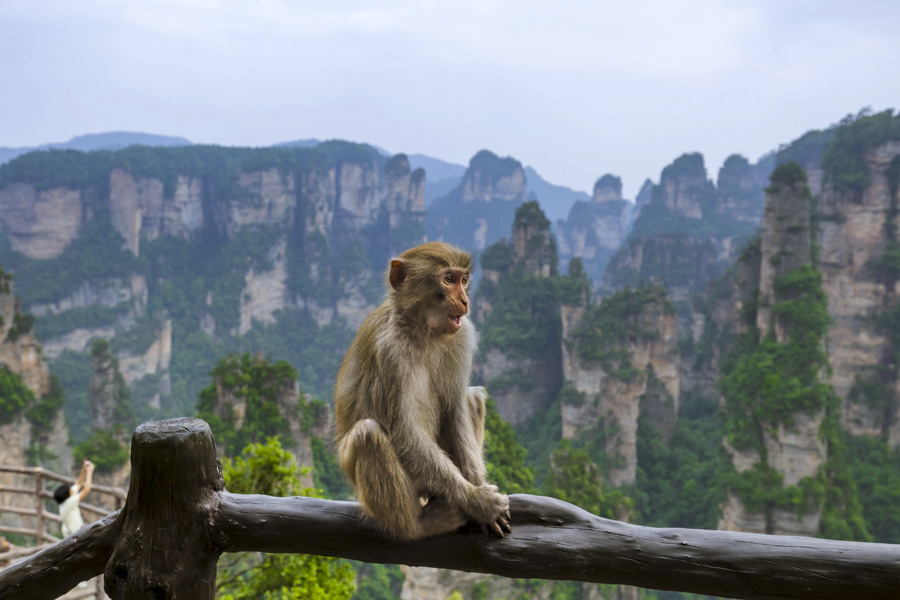
Macaques are common, especially near the Golden Whip Stream and Tianzi Mountain areas. They are curious and may try to take food or shiny objects. For everyone’s safety, don’t feed them or approach them for photographs; keep mobile phones, drinks and snacks tucked away in a closed bag.
2. Wear supportive footwear
You will encounter long walks, many staircases and uneven stone paths. Shoes with good arch support and non-slip soles make walking easier and safer, especially after rain.
3. Carry some cash just in case.
Most payments in the park and the Wulingyuan area are made via Alipay or WeChat Pay. If you don’t use Chinese digital payment services, bring a small amount of cash in low denominations for snacks, bathroom or small purchases.
4. Pick up a map at the entrance.
Free trail maps at ticket offices and gates show key viewpoints and cable car stations. A map helps you orient yourself and adjust your route as the day unfolds.
5. Plan for physical effort.
Even with lifts and cable cars, a full day in the park typically involves walking more than 10 kilometres (6.21 miles). Schedule regular rest breaks and pace yourself so the day stays pleasant.
6. Give yourself extra time.
Elevation changes, queues for lifts and lingering viewing points all add up. Distances that look short on a map can take longer on foot. The key is to complete your chosen route at your own pace so you can fully appreciate the scenery and savour the moment.