

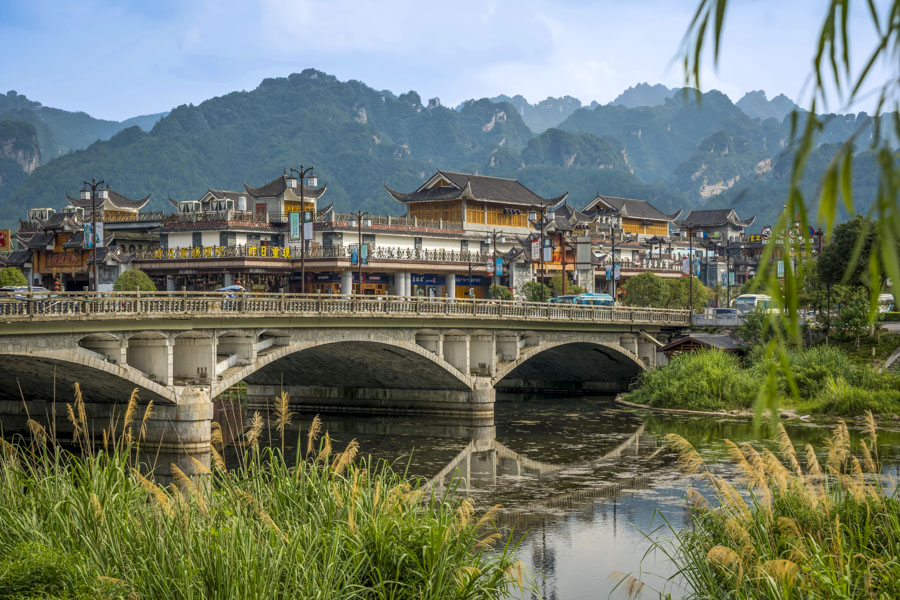
Perched 35 kilometres (21.7 miles) from Zhangjiajie city, Wulingyuan District is the visitor green hub for the UNESCO-listed Wulingyuan Scenic and Historic Interest Area (武陵源风景名胜区, Wǔlíngyuán Fēngjǐng Míngshèngqū). Close to the East Gate entrance Wulingyuan District is a small town, almost like a mountainous village and one of the most convenient starting points for exploring Zhangjiajie National Forest Park.
Over the past two decades, tourism has reshaped the district. Luxury and boutique hotels stand alongside tiny guesthouses, while local authorities balance development with conservation through strict protection measures and managed visitor flows.
The district itself is compact, but it has everything most travellers need. Here life unfold at the park’s pace. In the morning, the streets echo with the footsteps of travellers making their way to their meeting points to visit the Wulingyuan Scenic Area. Brief conversations are exchanged over tea or coffee, and shop doors open. By midday, the pace slows and part of the site is sleepy and relaxing. Then, as evening approaches, the district comes alive again, ready to welcome guests. Lights come on in the windows, terraces fill with strollers, and nightlife is in full swing. Wulingyuan is perfect for a one- or two-night stay, especially for those who prefer to explore the surrounding scenery at a leisurely pace.
Wulingyuan District Tours
The Wulingyuan district is a pleasant stop when visiting Zhangjiajie. Part of the UNESCO World Heritage site, it offers a lush and pleasant setting for a day or two of rest before or after our 4-day Amazing Zhangjiajie (Avatar Mountains) Nature Tour.
Locals will welcome you warmly and be happy to share with you their rich culture. Every corner of China is even more fascinating than the last, brimming with immeasurable riches where there is something for everyone.
Best Time to Visit Wulingyuan District
As with most mountain climates, the air is pure and invigorating in the Wulingyuan district, and temperatures there are slightly cooler than in the city of Zhangjiajie. Spring and autumn are usually the most comfortable seasons for walking, with milder temperatures, clearer views and less oppressive humidity. Summer is hot and damp, while winter tends to be cool and often foggy.
Average seasonal temperatures:
- Spring (March and May): 15 to 25 °C (59 to 77 °F)
- Summer (June to August): 25 to 33 °C (77 to 91 °F)
- Autumn (September to November): 15 to 28 °C (59 to 82 °F)
- Winter (December to February): 5 to 12 °C (41 to 54 °F)
Mountain weather changes quickly, so it is wise to carry:
- a light jacket or raincoat
- water
- sun cream, hat and sunglasses
- insect repellent
Things to Do in Wulingyuan District, Zhangjiajie
Wulingyuan is more than a practical base for visiting the scenic area. It also opens a window onto the region’s cultural life, which makes it an important stop in any Zhangjiajie travel guide. Spend a little time in the district itself, and its streets, small landmarks and local venues begin to reveal a character of their own.
Streets and Viewpoints
A walk around the district is part of the experience, as each street has its own character. Mouth-watering aromas of food drift along the way. Follow the main road, turn down to narrower lanes, and allow time for the lively pedestrian sections along the Suoxi River waterfront — every part of the district offers a different perspective.
The main thoroughfare is Wuling Avenue (武陵大道, Wǔlíng Dàdào), a wide boulevard lined with restaurants and shops. Signs beckon you into tea houses and sweet shops, while the distant mountain silhouettes quietly remind you why most people come here.
For views of the Suoxi River, head to Gaoyun Bridge (高云桥, Gāoyún Qiáo) or Baofeng Bridge (宝峰桥, Bǎofēng Qiáo). They are particularly appealing at dusk, when the promenade and bridge lights begin to shimmer on the water and the district takes on a more festive feel.
Places to Visit in Wulingyuan District, Zhangjiajie
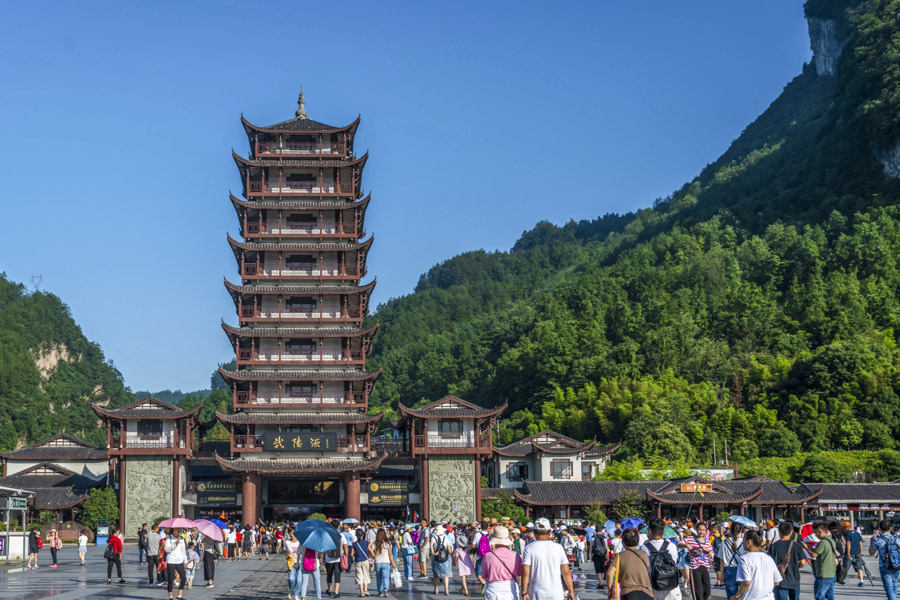
Near the East Gate stands Biaozhimen (标志门, Biāozhìmén), a multi-storey tower with curved eaves. In traditional Chinese architectural symbolism, this roofline is thought to offer protection from harmful forces. Two smaller towers flank it, their carved reliefs depicting scenes connected to the peoples of Xiangxi. Visible from afar, the structure has become one of Wulingyuan’s most recognisable images.
Travellers who venture a little beyond the main streets may wish to visit Zixia Taoist Temple (紫霞观, Zǐxiá Guān). Founded during the Ming dynasty (1368–1644), roughly five centuries ago, it has been destroyed and rebuilt more than once and is often described as the oldest Taoist temple in the region. Set among bamboo and cypress are more than a dozen buildings, including halls, pavilions and altars. Incense hangs in the air, and the quiet is broken at intervals by the sound of bells. Inside are calligraphic inscriptions, ancient relief carvings and around a hundred paintings depicting Taoist stories.
- Address: No. 2202, Middle Baofeng Road (宝峰路中段2202号)
Museums in Wulingyuan District, Zhangjiajie
Those who want a broader sense of local life may find it worth visiting the DaXiangxi Memory Exhibition Hall (大湘西记忆博览馆, Dà Xiāngxī Jìyì Bólǎnguǎn). It brings together thousands of artefacts linked to the Xiangxi culture whose history has long unfolded across the surrounding mountains. The exhibition is arranged as a mysterious journey, using 4D light, sound and holographic scenes to present ceremonies, legends and episodes of everyday life.
- Address: 144 Guihua Road (武陵源区桂花路144号)
- Opening hours: 07:00 to 18:00*
- Ticket price: CNY/RMB168 ($24 / €22 / £19)*
A very different experience awaits at the Chinese Giant Salamander Biotechnology Museum (中国大鲵生物科技馆, Zhōngguó Dàní Shēngwù Kējìguǎn). The museum’s focus is the giant salamander (大鲵, dàní), a river-dwelling species with an evolutionary history that stretches back hundreds of millions of years. Aquariums, models and interactive exhibits explain its biology and the conservation effort around one of China’s rarest creatures. It is also one of the few places where visitors can see the world’s largest amphibian upclose.
- Address: No. 8 Baofeng Road, Wulingyuan District (武陵源区宝峰路8号)
- Opening hours: 08:00 to 18:00, extended to 22:00 in summer*
- Ticket price: CNY/RMB 100 ($15 / €13 / £11)*. Free for children under 1.2 metres (3.9 feet).
*Note: Opening hours and prices are indicative only and may change without prior notice.
Entertainment, Parks and Shopping in Wulingyuan District, Zhangjiajie
Wulingyuan is best known for its landscapes, but its evenings have their own energy. After a day’s walking the district turns towards performances, bustling streets, food stalls and small local shops.
Entertainment
An evening show is an easy way to experience local traditions in a theatrical setting, with folklore, music and costume brought to life on stage.
Charming Xiangxi Cultural Performance
The Charming Xiangxi Grand Theatre (魅力湘西大剧院, Mèilì Xiāngxī Dàjùyuàn) presents one of the area’s best-known productions: the Charming Xiangxi Show (魅力湘西, Mèilì Xiāngxī). The performance celebrates the culture of western Hunan with a sequence of dances, songs and theatrical scenes drawn from ethnic minority traditions.
The programme features folk themes such as the Miao Drum Dance, the Yao courtship ritual known as “Climbing the Tower”, and the Tujia crying-wedding custom. Traditional costume, projected visuals and dynamic staging give the production scale, while the theatre’s modern architecture and purpose-built design accommodate large multimedia performances. Shows run every evening and usually last around an hour.
- Location: Gaoyun Road (高云路), near Gaoyun Bridge (高云桥)
- Times: 17:30–22:00
- Prices: from CNY/RMB 228 to 308 ($34 to 46 / €29 to 39 / £25 to 34)
Zhangjiajie Eternal Love Show
Another large-scale performance experience can be found at the Zhangjiajie Eternal Love Scenic Area. At the entrance, visitors are greeted by an imposing statue of the Eternal Love Goddess and carved columns inspired by Xiangxi’s ethnic decorative traditions. Inside is a themed complex with workshops, attractions, snack shops and cafés.
The main production is the Zhangjiajie Eternal Love Show (张家界千古情, Zhāngjiājiè Qiāngǔqíng), a song-and-dance spectacle that portrays local history, legends and cultural imagery through a series of visually elaborate scenes. Water effects, lighting, sound and stage technology all contribute heavily to the experience. Each performance lasts around 1.5 hours, with several shows usually scheduled throughout the day.
- Location: 1 Chaoyang Road
- Times: 16:00–20:50
Zhangjiajie Misty Rain Show (雾雨张家界演出)
This show is a theatrical spectacle staged at Huanglong Concert Hall close to the entrance of Yellow Dragon Cave Scenic Area, in Wulingyuan District. The production evokes the love story between Tujia-ethnicity man and a Miao ethnicity woman through a blend of dance, aerial choreography, music and large-scale 3D visual effects that recreate the area’s famous fog-shrouded pillars.
- Location: Huanglong Concert Hall, near Yellow Dragon Cave Scenic Area, Wulingyuan District
- Times: Evenings (shows usually start at 19:50 and end at 21:20; the exact schedule varies by season)
- Prices: Typically from CNY/RMB 195 (approximately $29 / €25 / £22)
Parks near Wulingyuan District, Zhangjiajie
Wulingyuan comprises protected scenic areas rather than conventional city parks, but several of these are within easy reach. Here the sound of traffic and evening crowds gives way to birdsong, rushing water and forest trails.
Baofeng Lake Scenic Area (宝峰湖风景区, Bǎofēng Hú Fēngjǐngqū) is known for its still water, steep surrounding slopes and waterfalls. Boat rides across the lake offer broad views of the wooded cliffs and rocky heights.
Suoxi Valley (often called Suoxiyu Nature Reserve) forms part of the wider Wulingyuan landscape and includes broad valleys, streams and distinctive stone peaks rising from dense greenery. The road from the East Gate reaches Suoxi Lake (索溪湖, Suǒxī Hú), and the reserve contains more than 300 scenic spots. Among the best known are Baizhang Gorge (百丈峡, Bǎizhàng Xiá), Yixiantian Gorge (一线天, Yīxiàntiān), and the Ten-Mile Gallery (十里画廊, Shílǐ Huàláng), where the Three Sisters Peak (三姐妹峰, Sān Jiěmèi Fēng) is one of the most recognised formations.
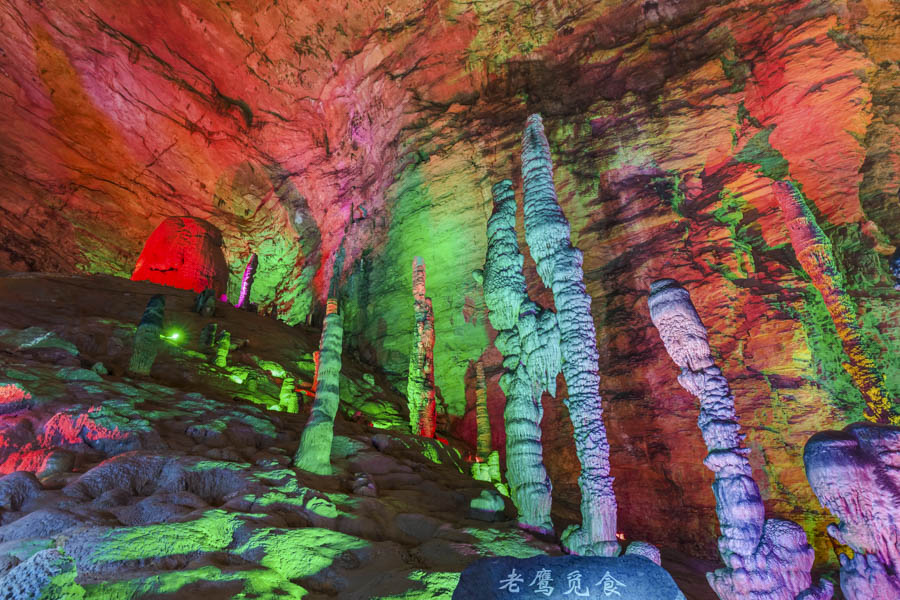
Yellow Dragon Cave (黄龙洞, Huánglóng Dòng), also known as Huanglong Cave, offers a very different setting: a vast underground system of chambers and winding galleries filled with stalactites and stalagmites. Soft lighting highlights the formations, and part of the route is covered by boat along an underground river. One of its best-known features is the Dragon Palace (龙宫/后宫) chamber formed of more than 1,700 stone columns. The Dragon King Throne, a 12-metre-high stalagmite, is particularly imposing.
Shopping in Wulingyuan District, Zhangjiajie
The district’s shopping streets are busiest in the evening, when smoke rises from food stalls, signs light up, and the market atmosphere becomes part of the night.
Where to Shop in Wulingyuan District, Zhangjiajie
Tianzi Street (天子路, Tiānzǐ Lù) is one of the livelier stretches, lined with gift shops, small craft stalls and cafés serving local sweets and tea.
Xibu Ancient Street (西部街)
Stroll down Xibu Street to discover Tujia culture woven into lively market stalls selling traditional folk crafts. By night the street comes alive with Tujia performances, drawing both locals and visitors to its convivial atmosphere. The striking architecture—bold, ornate and utterly evocative—reflects the spirit of the Tujia people; every corner feels like a step back in time. The entrance to Xibu Street is free and can be entered from 7:00 to 23:30 upon presentation of your passport.
Night market area
Jundi Road (军邸路, Jūndǐ Lù) is another busy area, known for snacks, desserts, local dishes and a late-night atmosphere. It is sometimes referred to as “Beer and Music Street”, because of its casual restaurants and regular street performances.
What to buy in Wulingyuan District, Zhangjiajie
It is easy to leave Wulingyuan with a few local purchases, especially if you are interested in textiles, jewellery or regional food products.
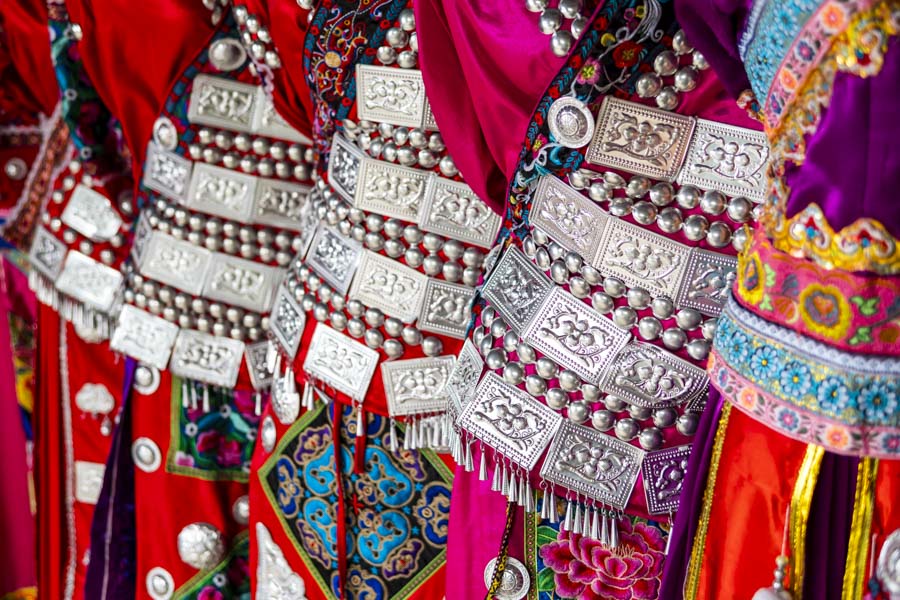
Xilankapu (西兰卡普, Xīlánkǎpǔ), the traditional Tujia people brocade, is one of the most distinctive crafts on sale. Its dense weave, strong colours and geometric patterns often incorporate motifs associated with protection, memory and daily life. Smaller items such as belts, bags and decorative cloth pieces are among the easiest to carry.
Miao silver jewellery is another common sight in local shops. Bracelets, earrings and engraved pendants catch the light delicately and remain closely linked to traditional dress, where silver has long carried symbolic associations with protection and well-being.
Tujia batik is also worth noting. Using wax-resist dyeing, artisans create fabrics decorated with birds, flowers and scenes from daily life; because the process is done by hand, no two pieces are exactly alike.
Many other beautiful gifts are available, such as sandstone paintings and cinnabar crafts that travellers like to bring back home.
Among edible gifts, Zhangjiajie Berry Tea (莓茶, Méi Chá) is especially popular. Its leaves have a pale, powdery coating, and the brewed tea is known for a smooth flavour that moves from slight sweetness to a refreshing bitterness.
Another well-known local snack is crispy shiitake mushrooms (香菇脆, Xiānggūcuì), sold as a light, savoury treat with a distinctly crunchy texture.
Food in Wulingyuan District, Zhangjiajie
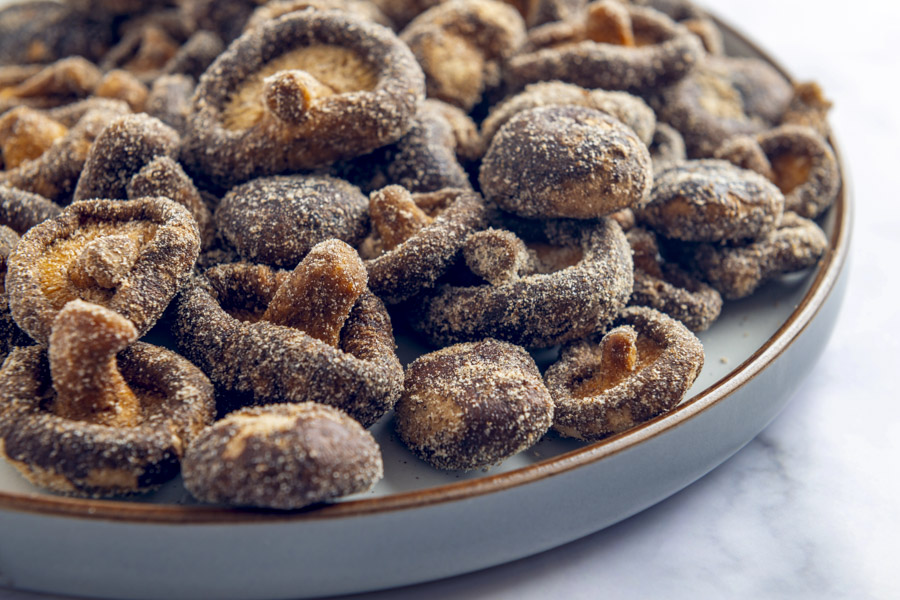
Food shapes much of the experience in Wulingyuan, especially in the evening, when restaurant signs come on and market stalls fill the streets. For many travellers, the district is also one of the best places to discover what to eat in Zhangjiajie more broadly.
Chinese Cuisine
Braised local chicken with rock ear mushrooms (岩耳炖土鸡, Yányěr Dùn Tǔjī) is a well-known regional dish. It is a clear, aromatic broth made with free-range chicken and a mountain fungus that grows on rock surfaces. The result is light in appearance but full in flavour.
Zhangjiajie mildewed tofu (霉豆腐, Méi Dòufu) is a memorable local snack. Its texture is soft and almost creamy beneath a light outer layer, and flavoured with ginger, Sichuan peppercorn and white spirit, it tends towards salty, tangy and mildly spicy.
Sanxiaguo, or “Three-in-One Hot Pot” (三下锅, Sānxiàguō), is a signature hearty dish. Bacon, tofu and radish form the base, while other meats and vegetables can be added and cooked together in a rich spicy sauce, building layers of flavour from chilli, garlic and soy. This dish can be presented dry or as a soup.
Braised belly pork with preserved mustard greens (梅菜扣肉, Méicài Kòuròu) also appears regularly on local menus. The pork is slow-cooked until tender, while the preserved greens bring salt, depth and balance.
Tea Houses, Bakeries and Patisseries
Street snacks and sweet stalls are part of the local rhythm, particularly in the evening. You will find Tangyou baba (糖油粑粑, Tángyóu Bābā) made from fried glutinous rice flour coated in a glossy caramelised brown sugar sauce, which is crisp on the outside and chewy in the middle. Or try zha ciba (炸糍粑, Zhá Cíbā), deep-fried sticky rice cakes, often sold with sugar and sesame, which are also a Hunan speciality.
Roasted chestnuts (糖炒栗子, Tángchǎo Lìzi) are sold in paper bags from street stalls, while fried bananas remain a simple but reliable favourite.
Most of these sweets and pastries are easy to find at the evening markets, where browsing from stall to stall can become part of dinner itself.
Vegetarian Options in Wulingyuan District, Zhangjiajie
Vegetarian food is available, though separate vegetarian menus are not always common. Tofu, rice and vegetable dishes appear widely, especially in smaller cafés and casual restaurants.
Street stalls can be convenient because ingredients are often displayed openly. In traditional eateries, simple stir-fried vegetables (炒蔬菜, chǎo shūcài), tofu dishes (豆腐, dòufu) and rice-based meals are usually the safest choices.
Useful phrases: 不要肉 (bù yào ròu) means “no meat”, and 不要肉汤 (bù yào ròu tāng) means “no broth”.
Must-Visit Restaurants in Wulingyuan Village, Zhangjiajie
Xiangxi Diet Culture Museum (湘西饮食文化博物馆) is a Hunanese restaurant with décor inspired by local history and ethnic minority traditions. Painted walls, ceramic vessels and figures in traditional dress give the place a distinctive identity. It is often recommended for travellers who want to try regional dishes in an approachable setting, and the staff are usually willing to adjust spice levels.
- Location: Beside the West Gate of Xibu Old Street
If you are looking for a popular restaurant known for balanced flavours, careful presentation and familiar regional dishes, head to Tangshifu (唐师傅).
- Location: Wuling Road
Groups will enjoy Zhai Zi Li De Bo Bo Cai (寨子里的钵钵菜), a casual restaurant serving rustic local dishes, often accompanied by rice wine.
- Location: 593 Wuling Road
Wulingyuan Halal Muslim Restaurant (张家界清真餐厅) is a halal option offering chicken, fish, beef, lamb, noodles and vegetable dishes.
- Location: 151 Wuling Road
Transport in Wulingyuan District, Zhangjiajie
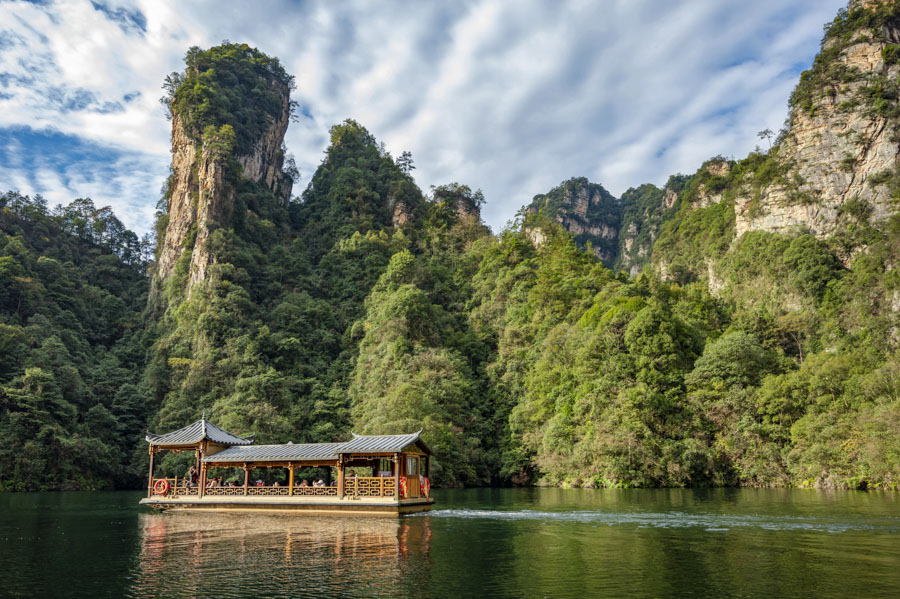
Wulingyuan District is easy to navigate on foot in its central area and only 10-minute walk from the entrance of Wullingyuan Scenic Area. Transport links also make it straightforward to reach the main nearby scenic sites.
Local Buses
Wulingyuan Bus Station (武陵源汽车站) stands at the junction of Guihua Road and Weiyang Road (29.35015, 110.54609) and offers first-class service. From here, local buses connect the district with nearby attractions:
- Bus No. 1 goes to Yellow Dragon Cave.
- Bus No. 2 reaches Baofeng Lake Scenic Area.
Operating hours: 06:30 to 18:30
Shuttle services also leave from here for Zhangjiajie National Forest Park, the Grand Canyon Glass Bridge, Zhangjiajie Railway Station and Zhangjiajie Central Bus Station.
Taxi Service
For short trips between entrances and attractions, taxis and DiDi are usually the most convenient option; many wait at the entrance of the Wulingyuan Scenic Area.
E-Mobility Rentals
E-bikes and scooters can be rented via online services such as MotoShare, which aggregate offers from local rental companies and allow travellers to book anything from basic e-bikes to more powerful scooters for a few hours, a day, or longer.
Transport within the Scenic Area
Inside the scenic area, the main transport system is the eco-shuttle bus network linking Yuanjiajie, Tianzi Mountain and Golden Whip Stream. Use of these buses is included in the entrance ticket, and visitors can generally board them as often as needed within the Wulingyuan Scenic Area.
Operating hours: 07:00 to 21:00
An electric tram also runs through the Ten-Mile Gallery in Suoxiyu Nature Reserve. With aglass roof, it offers open views of the rock formations along the route. The one-way journey takes about 10 minutes; many visitors take the tram one way and return on foot, which takes around 1.5 hours.
Fare: CNY/RMB 38 ($5.60 / €4.50 / £4.20)*
How to Get to Wulingyuan District, Zhangjiajie
Most visitors reach Wulingyuan District of Zhangjiajie city. The simplest option is the bus from Zhangjiajie Central Bus Station (张家界汽车站, Zhāngjiājiè Qìchēzhàn), next to Zhangjiajie Railway Station (张家界站, Zhāngjiājiè Zhàn) and the Tianmen Mountain Cableway (天门山索道, Tiānménshān Suǒdào). The journey takes around 40–60 minutes and usually costs about CNY/RMB 10 to 20. Buses generally run every 10 minutes.
A taxi or ride-hailing service is quicker and more direct, taking roughly 30 to 40 minutes and costing around CNY/RMB 80 to 100 ($12 to 15 / €10 to 13 / £9 to 11).
From Zhangjiajie Hehua International Airport (DYG) (荷花机场, Héhuā Jīchǎng), the easiest option is a direct taxi, which usually takes around 40 minutes.
Essential Travel Tips for Wulingyuan Village, Zhangjiajie
A comfortable stay in Wulingyuan often comes down to practical details: where you stay, the season you visit and how busy the area is likely to be. A little planning usually makes the experience smoother.
Where to Stay
Accommodation ranges from larger 4- and 5-star hotels – such as the Pullman Zhangjiajie, Hilton Garden Inn Zhangjiajie Wulingyuan, or Jianghan Mountain Villa – to boutique hotels such as Zhangjiajie Song Boutique B&B to 3-star and charming family-run guesthouses. Recent reviews and photographs are worth checking, as they give the clearest sense of room size, service standards and overall condition.
For easier access to the park, many travellers choose accommodation near the East Gate, especially if they plan to spend most of their time in Wulingyuan Scenic Area. This makes it simpler to start early and reach the main entrances before the busiest hours.
Although there are plenty of hotels and guesthouses in the village, rooms can fill quickly in high season, so booking ahead is advisable.
Many properties offer facilities such as swimming pools, fitness rooms, lounge bars and meeting rooms.
Average prices: CNY/RMB 250 to 550 ($37 to 81 / €32 to 69 / £27 to 60).
Access to Wulingyuan Scenic Area and Tickets
Tickets for Wulingyuan Scenic Area are valid for four days, but entry usually needs to be confirmed in advance for a specific date and time. The park operates with visitor limits, and during the busiest months (especially May to October), spaces may sell out without prior booking.
When using shuttle buses inside the scenic area, it is sensible to return before 18:30, as queues build up towards the end of the day.
Connectivity, Money and Everyday Details
- Mobile signal is usually stable in the village itself, though it may weaken in the valleys. Wi-Fi is widely available in hotels, restaurants and Wulingyuan Bus Station.
- Learn a few basic phrases, such as Nǐ hǎo (“hello”), Xiè xiè (“thank you”), and Duō shǎo qián? (“How much is this?”). Keeping your hotel name and address written in Chinese can also make everyday logistics easier.
- China is largely cashless, but foreign travellers may find it useful to carry some cash in yuan, especially for smaller cafés and shops that do not accept international cards. Linking a bank card to WeChat Pay or Alipay in advance can make purchases considerably easier.
- Tipping is not a mandatory part of the culture and is not usually expected.
Security and Practical Advice
- Wulingyuan Village is generally peaceful and easy to navigate, with infrastructure designed around tourism.
- The busiest pedestrian areas become crowded in the evening, so it makes sense to take usual precautions.
- Main streets are usually well lit, but side streets and smaller roads can be dimmer, so offline maps or a navigation app are helpful.
- Traffic is light, though scooters and small electric vehicles often move quietly and can be easy to miss when crossing the road.
Wulingyuan District is an ideal destination for solo travellers and families wishing to relax among the dramatic Wulingyuan mountains before setting off on a new adventure.