

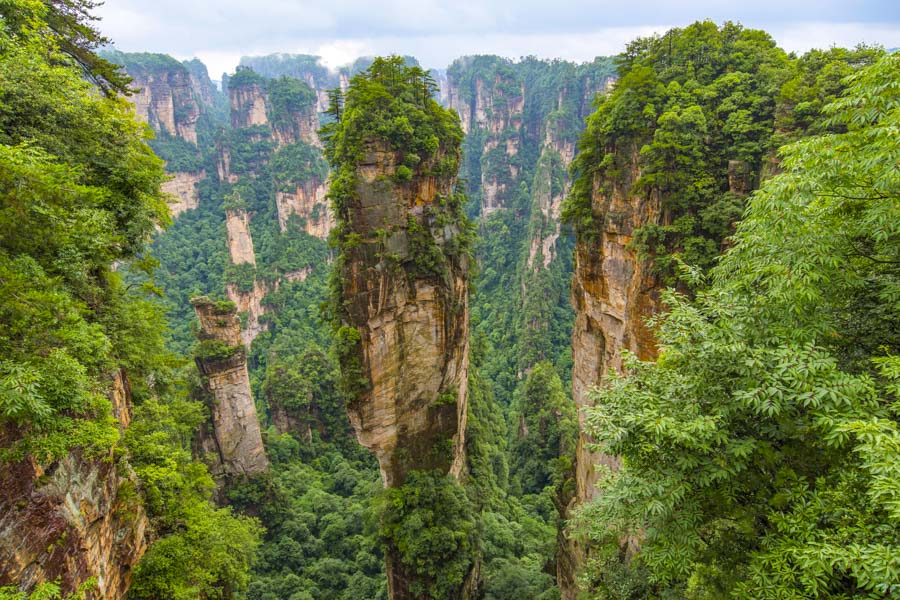
Zhangjiajie (张家界), in the north-west of Hunan Province and within the Wuling Mountains, is known for some of China’s most distinctive mountain scenery.
About 35 kilometres (21.75 miles) from the city lies the Wulingyuan Scenic Area (武陵源风景名胜区), which includes Zhangjiajie National Forest Park, Suoxiyu Nature Reserve, and Tianzishan Nature Reserve. A UNESCO World Heritage Site, Wulingyuan is known for its striking geological formations – towering sandstone pillars, deep gorges, and forested ridges that rise through drifting mist.
Zhangjiajie city itself, crossed by the Lishui River, offers a quieter counterpoint to the surrounding landscapes. Alongside access to the region’s main natural attractions, visitors will find local food, cultural performances connected with the traditions of the area’s ethnic minority communities, and a lively evening atmosphere.
Whether you come for the mountain landscapes or for the city itself, Zhangjiajie offers a varied and memorable travel experience.
Zhangjiajie Tours
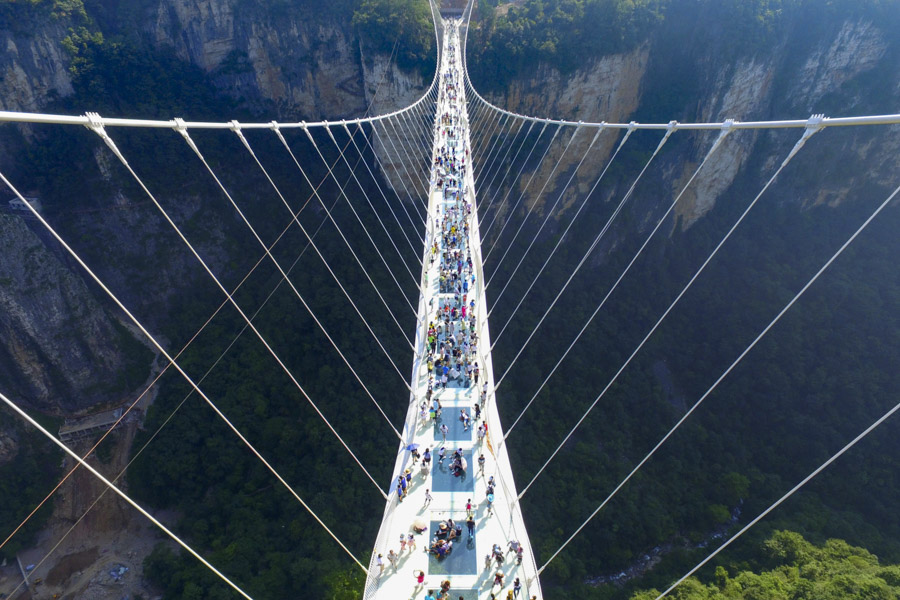
Travellers who want to explore the national park in depth can focus their visit on its ancient mountain trails, high viewpoints, and the famous glass bridge spanning the Zhangjiajie Grand Canyon. The 4-day Amazing Zhangjiajie (Avatar Mountains) Nature Tour is built around these highlights, also including an ascent of Tianmen Mountain and a quiet boat ride across the clear waters of Baofeng Lake.
Those interested in combining Zhangjiajie with other destinations may prefer a longer journey.
The sandstone peaks of Zhangjiajie also fit naturally within classic routes across the country. Itineraries such as the 10-day Central China Panorama Tour and the 14-day Central China Extended Tour combine the great historic cities – Beijing, Xi’an, and Shanghai – with several days in the mountains, where the mood shifts to something quieter and wilder, shaped by geological time rather than dynastic ambition.
Best Time to Visit Zhangjiajie
The most important factor in timing a visit to Zhangjiajie is the weather. With its monsoon climate, the city experiences humidity throughout much of the year, and in the colder months, the forest-covered peaks are frequently shrouded in thick fog. However, each season offers unique experiences and activities that make visiting the city centre worthwhile.
The hot season spans 4 months, from mid-May to mid-September, with average daily high temperatures exceeding 27°C (81°F).
- In spring, rhododendrons bloom spectacularly against the backdrop of stone pillars, colouring the mountain slopes in deep shades of scarlet. This is an excellent time to explore the urban parks and gardens. By May, the rains nourish the landscape, inviting fresh greenery in local squares and markets, ideal for leisurely strolls and outdoor dining.
- Summer brings the richest, most lush version of the landscape, though high humidity and frequent downpours can disrupt outdoor plans. July is the hottest month, averaging 24°C (75°F) for lows and 31°C (88°F) for highs. This season is ideal for enjoying indoor attractions, such as visiting museums, temples and theatres, which often feature seasonal performances and exhibitions.
- Autumn clears the air and turns the leaves a blaze of warm colours. This is one of the best periods for panoramic views. This season is perfect for exploring the city's cultural sites, as the sharp light enhances the vibrant colours of local architecture and parks. It's a great opportunity to photograph the city by the river and indulge in seasonal local cuisine at outdoor cafés.
Conversely, the cool season lasts 3 months, from December to the beginning of March, with average daily high temperatures below 14°C (57°F).
- During winter, while the city remains lively, there's a unique charm as colder temperatures occasionally bring a serene atmosphere. January is the coldest month, with an average low of 1°C (34°F) and a high of 10°C (50°F). On the coldest days, hoarfrost settles on the peaks, and the mountain trails empty out, revealing Zhangjiajie in its most mysterious and intimate form. This is a great opportunity to participate in a folk art workshop and to engage in a tea ceremony to taste the Maoyan Berry green tea from the Wulingyuan Scenic Area’s plantations.
Best Time for Cultural Events in Zhangjiajie
Consider timing your visit around the 6th day of the 6th month of the Chinese lunar calendar, which typically falls around late June or early July, when the area’s ethnic minorities celebrate the Double Sixth Festival with music, dancing, festive food, and ritual ceremonies throughout the city.
History of Zhangjiajie
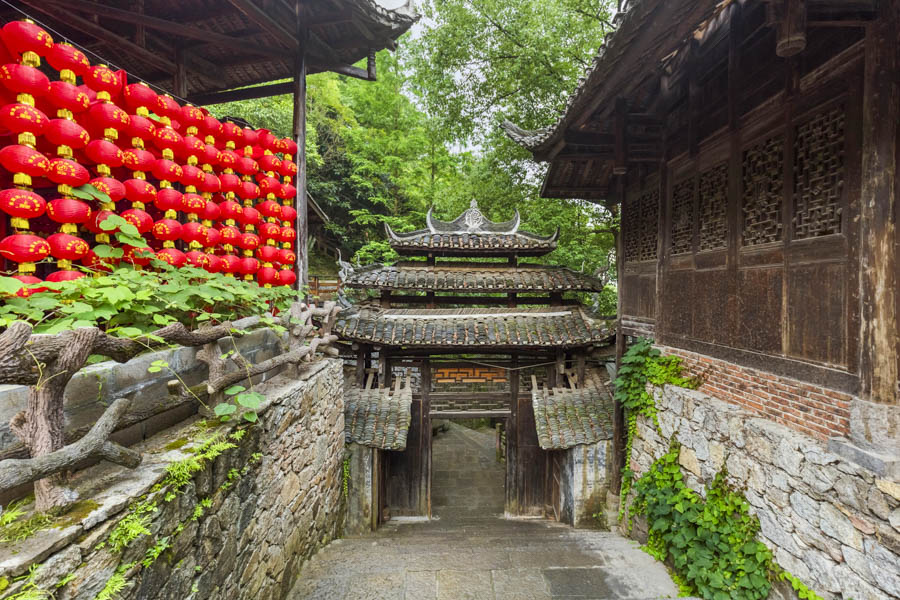
Human presence in this part of Hunan reaches back at least 100,000 years. Stone Age settlements have been identified here, and tools of comparable antiquity to those found near Xi’an and Beijing have been recovered from the banks of the Lishui River. Among the most striking finds is a black clay pot with distinctive ornamentation – approximately ten thousand years old – unearthed in nearby Sangzhi County. These discoveries speak to a sustained and culturally distinct human presence that developed its own traditions long before the region came to the attention of China’s political centres.
The area's rugged, mountainous terrain kept it largely beyond the reach of China's great dynastic powers for much of its history. Historical records refer to it only in passing, usually in connection with the ethnic communities who made it their home – principally the Tujia, Bai, and Miao peoples.
Local legend connects the name Zhangjiajie to Zhang Liang (c. 251–189 BCE), a celebrated military strategist of the Han dynasty (202 BCE–220 AD) who is said to have withdrawn to these mountains to escape political danger. The name itself translates loosely as “Zhang family homeland”. Whether or not the historical record fully supports this connection, the story has become deeply embedded in the region’s identity – and in that sense, it forms part of its history.
During the Qin Dynasty (221–206 BCE), the area began to see more organised governance as the state sought to consolidate control over the southwestern regions, although Zhangjiajie remained relatively remote. By the Yuan Dynasty (1271–1368), Zhangjiajie was more explicitly referenced in administrative records due to the establishment of Jinshi, a military outpost, indicating increasing military importance in controlling the mountainous region.
The Tujia culture, with its unique language and traditional practices, began to flourish in the area. Festivals and rituals from this ethnic group played a significant role in community cohesion.
In 1982, Zhangjiajie became the first national forest park in China, marking a pivotal shift towards conservation and tourism. In 1992, Wulingyuan Scenic Area was designated a UNESCO World Heritage Site, establishing its importance globally. The area's landscapes also inspired the floating mountains in the film Avatar in 2009, leading to a tourism boom and increased international attention.
Things to Do in Zhangjiajie
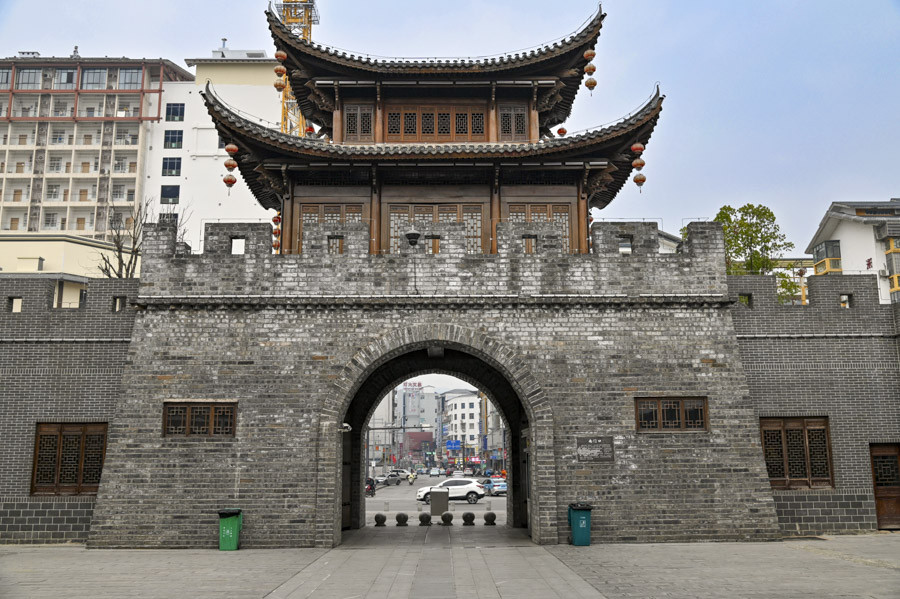
Zhangjiajie city seamlessly blends modernity and tradition, offering visitors a captivating array of activities. Explore the innovative designs of contemporary architecture. The modern skyscrapers of Zhangjiajie city intriguingly mirror the shape and grandeur of the natural formations found in Tianzi Mountain, while close by you can wander through charming streets lined with ancient houses. Discover local culture in vibrant markets and museums, making it an ideal destination for those seeking both adventure and cultural richness.
Places to Visit in Zhangjiajie’s Yongding District
Tian's Old Courtyard is an ancestral home to the Tian clan from the early Qing Dynasty. It hosts a wealth of treasures, notably well-preserved antique furniture that offers history lovers a unique glimpse into the life of a family of scholars spanning eight generations.
Zhangjiajie Dayong Town
- Nestled on Jiefang Road in Zhangjiajie City, Dayong Town beckons visitors with its enchanting blend of diverse ethnic cultures. Here, you’ll encounter the rustic charm of the Tujia people’s suspended buildings, the ethereal beauty of the Miao people village, and the romantic wind-rain bridges of the Dong people, each with its own unique architectural flair. Don't miss the majestic Pan King's Palace of the Yao people and the serene, flower-filled lanes of the Bai people, complete with a picturesque screen wall at its entrance. The atmosphere is quite stunning here.
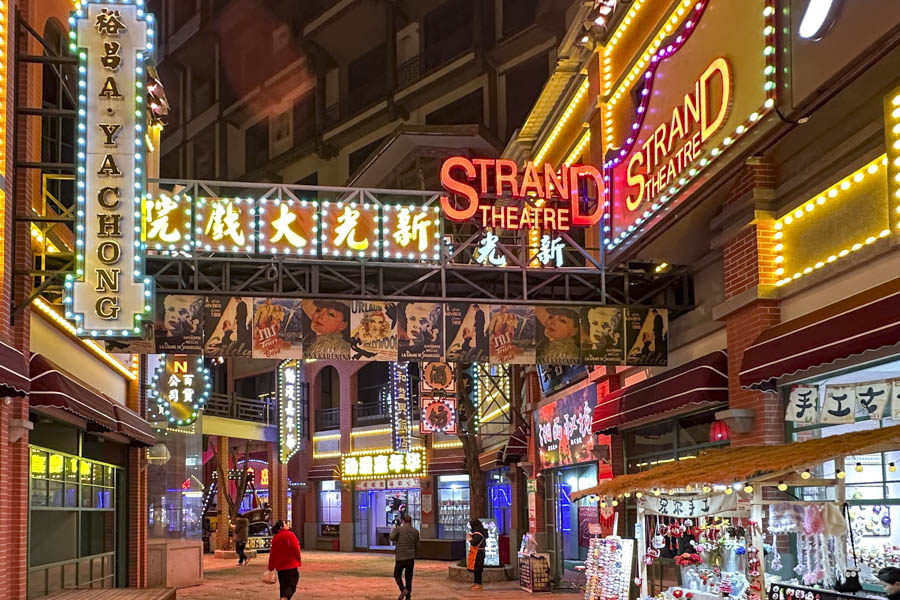
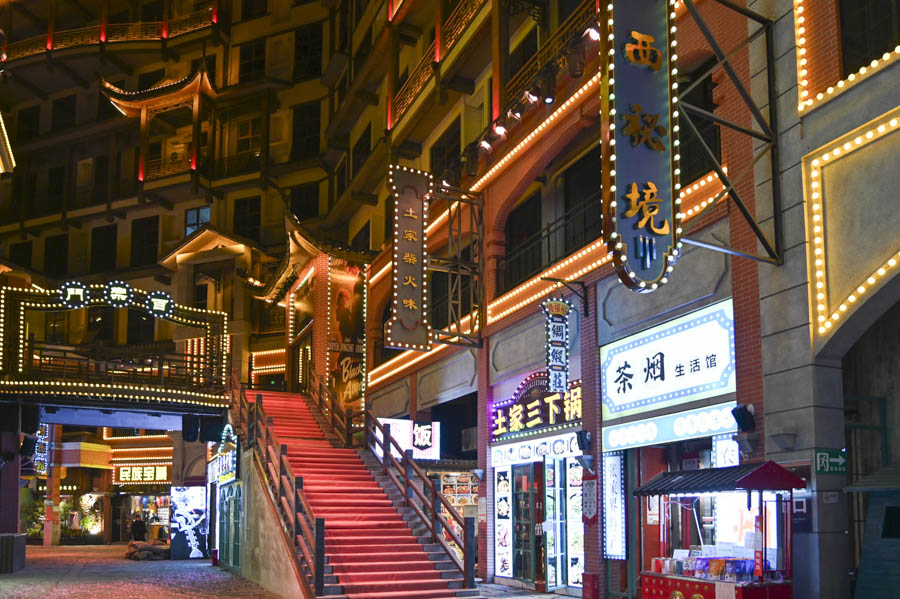
- The 72 Qilou (七十二奇楼), also known as the 72 Wonder Towers or 72 Strange Buildings, is the main attraction of Dayong Town. This Tujia-style stilted house, which holds a Guinness World Record at a height of 109.0 metres (358 feet), is located at No. 1 Wulingshan Avenue in the Yongding District. It is a must-see, particularly for its night show. Although inaugurated in 2022, its architecture incorporates elements from the Ming and Qing dynasties, beautifully adorned with LEDs and 7D holograms.
Places of Worship
On Liberation Road, visitors can explore the Puguang Temple (普光禅寺), which dates back to 1413 during the Ming Dynasty. This Buddhist temple is an exquisite representation of traditional Chinese architecture, featuring intricate carvings and serene surroundings that provide a glance into the spiritual heritage of the region.
Additionally, the Christian Gospel Church (基督教福音堂), constructed in 1905 along the banks of the Lishui River, stands out with its distinctive red roofs and white walls. This church not only offers a fascinating contrast to the surrounding architecture but also serves as a testament to the cultural exchange that occurred during its establishment.
Museums in Zhangjiajie
For those wanting to go deeper into the region's history and culture, Zhangjiajie has a handful of museums that repay the detour.
Zhangjiajie Museum (张家界市博物馆)
A well-organised city museum with permanent exhibitions spanning local history, archaeology, ethnography, and the natural environment. The collections include rare artefacts and ethnographic materials relating to the Tujia and Miao peoples, as well as displays tracing the formation of the region’s landscapes and the growth of its tourism industry.
- Address: Dayong Road, Yongding District, Zhangjiajie, Hunan
- Opening hours: 9:00–16:30 daily (last ticket issued at 15:30; last entry at 16:00). Closed on Mondays
- Admission: Free.
Zhangjiajie Sandstone Painting Museum (张家界军声砂石画院)
Founded by local artist Li Junsheng (李军声), this three-storey museum houses a collection of paintings created entirely from sand and stone – a highly distinctive medium that repays every second you spend with it. The ground floor is given over to the gallery; the upper floors house souvenir shops where visitors can purchase paintings and handmade crafts. The building itself is a masterpiece of modern architecture and well worth a visit.
Address: No. 2 Ziwu Road, Yongding District
Xiuhuashan Museum (秀华山馆)
Considered China’s first museum dedicated to the culture of the Tujia ethnic minority, the Xiuhuashan Museum presents the heritage of this community. It offers an immersive experience that seamlessly blends historical exhibits with dynamic folk performances. Visitors are captivated by the lively demonstrations of Tujia traditions, including music, dance, and crafts, making it a unique cultural attraction. The museum not only showcases ancient artefacts but also highlights Tujia architecture and its rich, intangible heritage, all within the context of the Xiuhuashan Hall.
Address: 195 Jiaochang Road, Yongding District.
Zhangjiajie Theatres
Zhangjiajie, celebrated for its rich cultural heritage, is particularly renowned for its captivating Yang Opera. Nestled in the Yongding District is the National Grand Theatre (民族大剧院), located on Xixiping Road. This striking venue serves as a hub for traditional performances, where the vibrant costumes, melodious tunes, and dramatic storytelling of Yang Opera come to life.
To truly capture the essence of the cultures of the local ethnic minorities, the Zhangjiajie Multinational Immaterial Culture Show Hall, located in Dayong Town, showcases a remarkable collection of traditional artefacts and invites skilled folk artists to perform captivating folk art theatre. Visitors can participate in hands-on activities such as making rice paste, weaving silk tapestries, and learning the techniques of wax dyeing.
Entertainment, Parks, and Shopping in Zhangjiajie
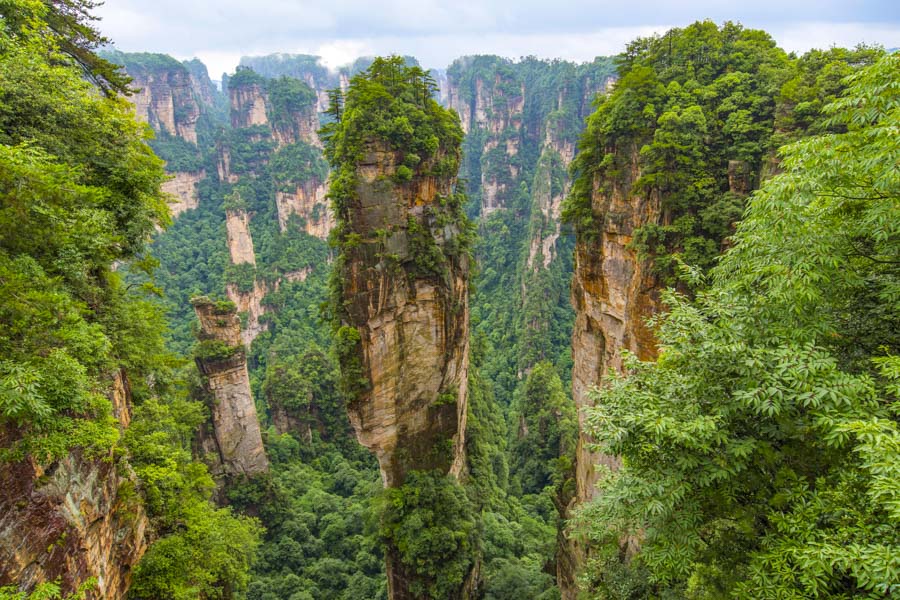
Aside from the mountain trails, the city presents a different facet with energetic performances, lush parks, and bustling shopping streets that truly come alive after dark.
Zhangjiajie After Dark
After a full day at the city’s main attractions, many visitors find their way to one of the region’s evening performances. These productions draw on natural landscapes, ethnic traditions, and local folklore to create shows that are both large in scale and vivid in effect.
To experience the Tujia ethnic culture, the light shows at the 72 Strange Buildings include the Festive Lantern and Love of One's Life, which transform the complex while martial arts performers appear in the open air.
The most celebrated of these is the Tianmen Fox Lady Show (天门狐仙), performed outdoors at the foot of Tianmen Mountain, which lies 5 kilometres away from the city centre. The piece draws on the legend of a fox spirit, weaving folk mythology into an ambitious outdoor spectacle where the mountain itself serves as the backdrop, and sweeping theatrical lighting pulls the audience into a world shaped by the surrounding landscape.
Parks in Zhangjiajie
The city's parks offer a different rhythm, one that is less dramatic than the mountains but is worth an hour or two for that very reason.
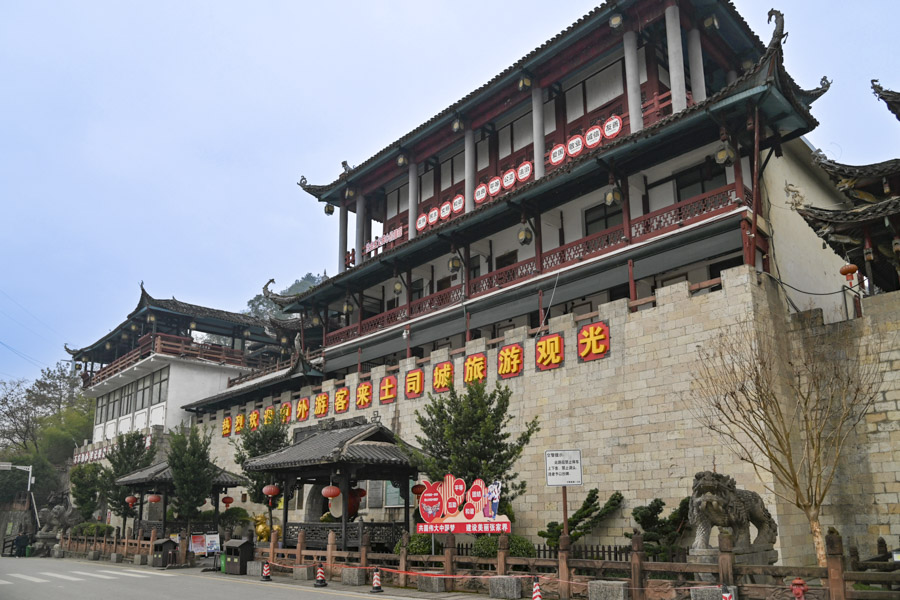
Tujia Folk Customs Park (土家风情园), also known as Zhangjiajie Tusi Imperial City, was built in 1730 during the Qing Dynasty. It combines the aesthetics of a Chinese garden with regular performances by artists in traditional costume, craft exhibitions, and demonstrations of festive rituals. More than just a park, it features the ancient Imperial Tusi city, which includes a castle known as the South China Forbidden City. The highlight is the Nine-Storeyed Hereditary Hall, a museum of Tujia folk customs with several sub-halls. The site is divided into two parts: Tusi Castle and the Bizka Holy Fire Hall, which hosts various ethnic song and dance performances. Visitors should spend at least two hours exploring this cultural landmark, although four hours would be more comfortable for fully appreciating the site and the authentic heritage of the Tujia ethnic group.
Ziwu Park (紫舞公园) is a tranquil green space with shaded walkways, pavilions, and neat lawns. Tai Chi classes are held here in the mornings; by evening it becomes a natural gathering place for picnics.
Dayongqiao Park (大庸桥公园) offers wide walkways, benches, and a musical fountain that comes to life after dark. The quays and green spaces along the Lishui River, which flows through the city centre, offer a peaceful alternative, with views of the city’s skyscrapers, providing a glimpse of everyday Zhangjiajie, away from the beaten path.
Top Natural Wonders of Zhangjiajie’s Surroundings
Begin with the scenery that first brought the region international attention. Zhangjiajie National Forest Park is a landscape of countless rock peaks rising through dense forest – a setting that can feel otherworldly, an impression not lost on the filmmakers behind Avatar.
Wulingyuan Scenic Area
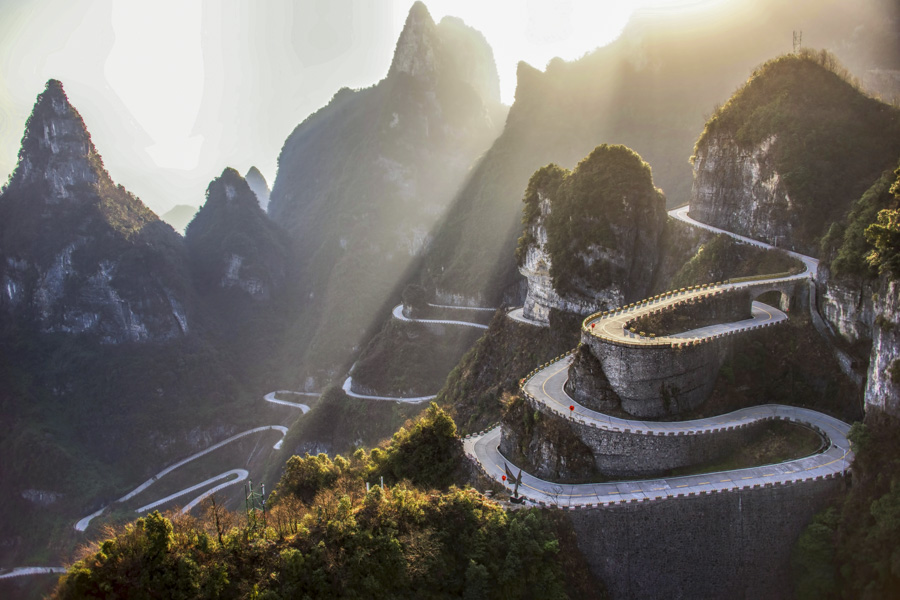
A good route starts at Golden Whip Stream (金鞭溪, Jinbian Xi), which follows the base of the cliffs through cool forests. From there, the Bailong Elevator (百龙天梯) – at 326 metres (1,070 ft), the world’s tallest outdoor lift of its type – rises to the Yuanjiajie Plateau (袁家界), which sits atop the massif and opens into the park’s most iconic views.
The neighbouring Tianzi Mountain area (天子山) is known for its dense clusters of rock pillars, which are most striking when the morning mist rolls in and partially obscures them, creating an effect of peaks floating above clouds. In the Ten-Miles Gallery (十里画廊), the valley path features rock formations with evocative names like: Longevity Star Greeting Guests, Old Man Gathering Herbs, Couple Holding a Child, Three Sisters Peaks.
Travel northwest from Zhangjiajie city centre
Baofeng Lake is the quieter side of Zhangjiajie – still water, fewer crowds, and boats moving slowly between the cliffs.
Travel northeast from Zhangjiajie city centre
Round off the itinerary with a visit to Zhangjiajie Grand Canyon (张家界大峡谷), 30 kilometres from the city, where a glass bridge spans a deep gorge far below.
Travel south from Zhangjiajie city centre
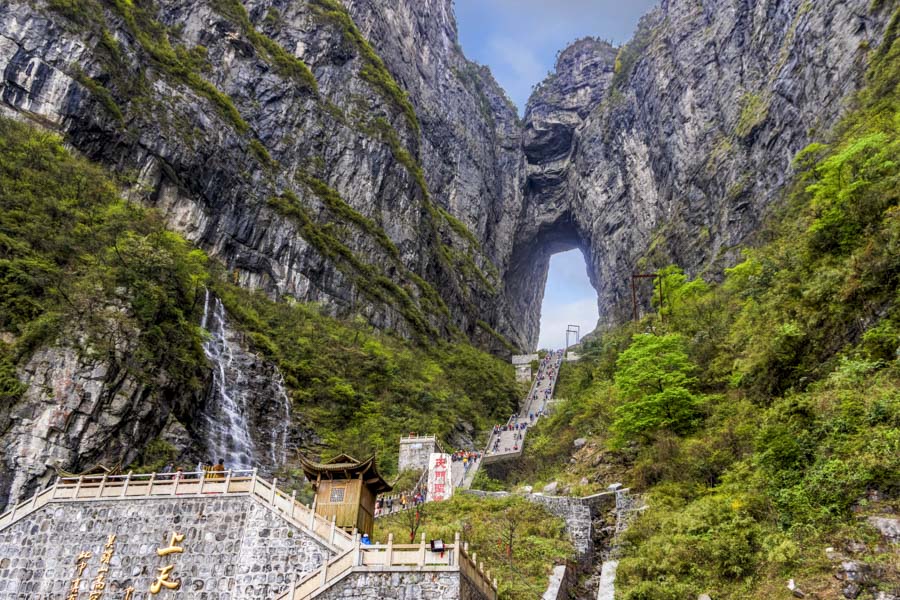
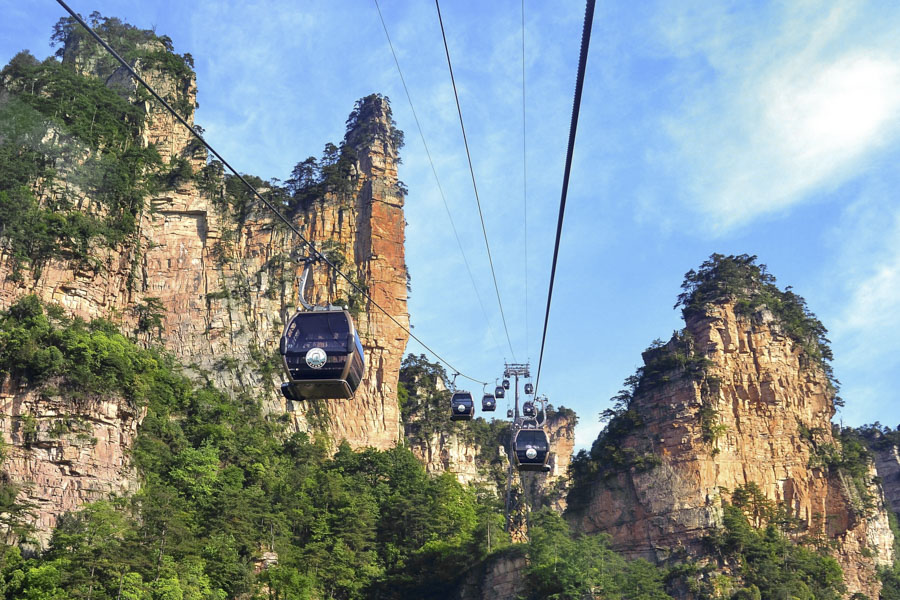
Tianmen Mountain (天门山), which is part of the Tianmenshan National Forest Park, and its remarkable natural arch, Heaven’s Gate (天门洞), are reached by a winding mountain road and a network of vertiginous cliff-side walking trails. You may also take a cable car from the city to the top of the mountain.
Breathtaking landscapes, holidays, wellness, sport, science and exploration are the keywords to describe what you will experience in this indescribable destination, which is Qixing Mountain Scenic Area.
Shopping in Zhangjiajie
Zhangjiajie's shopping streets reward an unplanned hour – with gifts and local specialities on one side, and the ordinary rhythms of neighbourhood commerce on the other.
People’s Square Commercial Pedestrian Street (Lvyou Shangye Pedestrian Street, 旅游商业步行街) and the surrounding area offer a broad range of folk handicrafts, tea, spices, and dried fruits alongside local accessories and street food.
When it comes to traditional gifts, look out for Xilan Kapu (西兰卡普), the traditional brocade of the Tujia people – boldly coloured fabric with geometric patterns fashioned into bags, scarves, and decorative panels. Tujia Batik is another sought-after exquisite article. Tujia pasting pictures, made from natural materials such as roots, bark, branches, and stone, are another distinctive local art form. Zhangjiajie Berry Tea (Mei Cha, 莓茶) – whose leaves carry a light white frost – makes for an unusual and pleasantly healthy purchase alongside dried kiwi fruit and kudzu root powder.
Several modern department stores and shopping centres offer a wide range of options to suit various budgets and preferences. From the Zhangjiajie Department Store (张家界百货大楼) and Better Life Mall (步步高百货) to Zhongshang Plaza (中商广场), the selection is extensive, and you may find yourself pressed for time to explore them all.
The street markets in Zhangjiajie offer a lively glimpse into local culture, where vibrant sights and sounds create an unforgettable experience. As you browse through bustling stalls, you'll find an array of artisanal crafts, fresh produce, and enticing street food that fills the air with aromatic spices.
Taken together, these unique shopping experiences in Zhangjiajie allow you to take a piece of the city with you, enriching your understanding of the region through the crafts, produce, and unique items created by its people.
Food in Zhangjiajie
Zhangjiajie cuisine has plenty in store for those willing to explore – what follows are the dishes that define this corner of the province and where to find them at their best.
Chinese Cuisine
Hunan cuisine, one of the eight great cuisines of China, is known for its directness: strong flavour, liberal use of chilli, and ingredients treated with confidence rather than delicacy. The Tujia cuisine, the traditional food culture associated with the Tujia people, brings a heartier, more mountainous register to the table – slow-cooked, fermented, and preserved. The two traditions sit naturally alongside each other, whether in a formal restaurant or a small family establishment.
Dishes to look for:
One of the most representative dishes is Sanxiaguo (三下锅), a traditional Tujia specialty prepared as a slow-cooked combination of meat, vegetables, and tofu, typically served sizzling and meant for sharing. Another well-known dish is Tujia Doufu (土家酿豆腐), a distinctive version of fermented tofu with pork, notable for its rich, spicy aroma and deep flavor.
Tujia Kou Rou (土家扣肉), braised pork belly with vegetables, holds a special place in local food culture and is traditionally served to guests during major family celebrations, reflecting its status as a dish of hospitality. Alongside these meat-based specialties, Suan Cu Yu (酸酢鱼), fried fish marinated in a sour sauce, introduces a contrasting tangy note that balances the overall flavor profile of the region’s cuisine.
Traditional Restaurants and Local Dining
Each of the restaurants below approaches Tujia and Hunanese cooking differently – in setting, in price, and in register – but none of them could belong anywhere else.
- Qindama (秦大妈传家菜, Aunt Qin’s Family Recipes) – in business since 1999 and still drawing regulars for good reason. The kitchen is rooted in the home-cooking tradition: pan-fried pig’s trotters with a lacquered crust, a deeply satisfying Sanxiaguo, and century eggs that arrive with conviction. Unpretentious, generous, and rooted in the area.
Address: Yongding District, near Huatian Hotel. - Zhaisao Dangjia Restaurant (寨嫂当家) serves authentic cuisine that highlights the rich flavours and traditions of Hunan cooking. Guests can expect a delightful array of dishes featuring locally sourced ingredients, with an emphasis on bold spices and fresh vegetables, stir-fried pork and stewed chicken that truly reflect the essence of the region.
Address: Building S2, Huatiancheng Community, Xingmin Road, Yongding District
Vegetarian Restaurants
Fully vegetarian restaurants are scarce in Zhangjiajie. Visitors following a plant-based diet should inform their guide in advance or specify their requirements when ordering. The phrase “请不要放肉” (qǐng bú yào fàng ròu) – “Please, no meat” – is understood in most establishments.
Tea Houses, Bakeries, and Patisseries
In the bustling heart of Zhangjiajie city centre, dessert lovers can enjoy a variety of sweet treats that reflect the region's culinary heritage. A popular choice is Tujia Rice Cake (土家年糕), a traditional delicacy made from glutinous rice and often filled with sweet red bean paste. These chewy cakes are served warm or drizzled with sugar syrup, offering a comforting end to any meal. The 72 Strange Buildings houses many eateries where you may find unique local desserts.
City Transport in Zhangjiajie
Zhangjiajie is easy to navigate. The main districts, shopping areas, and transport hubs are well connected within the city, and the mountains are easily reached by public or private transport.
Public Transport
City Buses
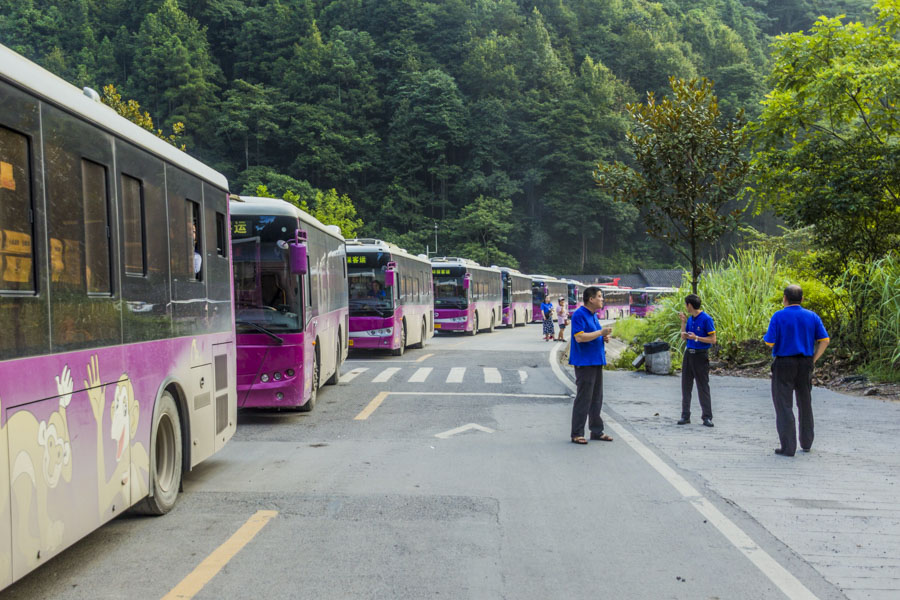
City buses are the most economical option, with around ten routes covering the central districts, the railway station, the bus station, and the airport. Fares run from CNY/RMB 1 to 2, and services continue into the evening. Routes 1–7 are the most useful for reaching hotels, shopping streets, night markets, and the main tourist sites within the city.
A free double-decker sightseeing bus also operates from Zhangjiajie Railway Station, with stops at the 72 Strange Buildings complex, the Tianmen Mountain Cable Car Lower Station, and Tujia Folk Customs Park. It runs from 5:00 to 22:30.
Other Transport Options
App-Based Electric Bike Rentals
Available throughout the city, app-based electric bike rentals are handy for short journeys (especially during peak hours). The rate is 4 yuan for the first 20 minutes, then 2 yuan for every additional 10 minutes.
Transport to Scenic Areas
Transport connections from Zhangjiajie city extend beyond its urban area, with regular services linking it to Wulingyuan Scenic Area, the region’s main scenic destination. Buses depart from Zhangjiajie Central Bus Station, while taxis and ride-hailing services such as DiDi Chuxing provide a more flexible option for direct travel.
Tianmen Mountain is directly accessible from the city centre via cable car, making it one of the most convenient natural attractions to reach.
How to Get to Zhangjiajie
Zhangjiajie is well connected by air, rail, and long-distance bus, with direct services to most of China’s major cities.
By Air
Zhangjiajie Hehua International Airport (DYG) is around 5 kilometres (3.1 miles) from the city centre. It receives flights from Beijing, Shanghai, Guangzhou, Shenzhen, Changsha, and several international destinations across Asia. Due to the airport’s compact size, a taxi can reach the city centre in about 15 minutes.
By Train
There are two train stations in Zhangjiajie:
- Zhangjiajie Railway Station – 4 kilometres (2.5 miles) from the city centre;
- Zhangjiajie West Railway Station – 8 kilometres (5 miles) from the city centre.
Both stations offer connections to major cities such as Beijing, Shanghai, Guangzhou, Changsha, Hong Kong, and Shenzhen. In addition, around ten daily services run between Zhangjiajie and Furong Ancient Town, another popular destination in the region about 80 kilometres (50 miles) from the city.
By Bus
Zhangjiajie Central Bus Station sits directly beside Zhangjiajie Railway Station, making transfers straightforward.
Intercity buses serve Shanghai, Guangzhou, Chongqing, and Changsha. Buses to popular nearby destinations – including Fenghuang Ancient Town and Furong Ancient Town, roughly 80 kilometres (50 miles) away – also depart from this station.
Languages Spoken in Zhangjiajie
The linguistic environment of Zhangjiajie reflects the region’s cultural plurality. Putonghua (Standard Mandarin) is the language of education, administration, and most public life. However, this area is also rich in local speech traditions. Southwestern Mandarin (西南官话), with its characteristic soft tones and regional vocabulary, is especially widespread in Yongding District.
In rural areas and more remote villages, some members of the older generation still speak Tujia (土家语), a Tibeto-Burman language that is increasingly rare among younger speakers, who tend to use Putonghua. The language has two varieties – northern and southern – with the southern form spoken in Zhangjiajie. Unusually, Tujia historically had no widely used writing system; when written, Chinese characters are typically employed. Ongoing efforts to document and preserve the language reflect connections between the Tujia and neighbouring peoples that stretch back centuries.
The Hunanese language group, also known as Xiang (湘语) and comprising various dialects, is also spoken across Hunan Province, including in Zhangjiajie. Some varieties carry six or more tones and contain archaic vocabulary that can be opaque even to speakers of standard Mandarin.
In Zhangjiajie, language itself is a kind of archive, with the national standard coexisting alongside older, distinctly local forms of speech that carry centuries of the region's history.
Security in Zhangjiajie
Zhangjiajie is generally a safe place to travel, though the usual awareness is advisable in busy tourist areas.
Keep your documents and valuables secure, especially at the entrances to popular attractions and on public transport.
For travel-related queries and tourist rights, the China National Tourism Hotline (12301) is available in English.
Tourist information points are located at major transport hubs and at the entrances to the main attractions. Staffed visitor centres can be found at the principal entrance to Zhangjiajie National Forest Park, near the Tianmen Mountain Cableway ticket office, in the arrivals hall of Zhangjiajie Hehua International Airport, and at Zhangjiajie Railway Station. All can supply maps, directions, and general guidance.
Accessibility Services in Zhangjiajie
The urban areas of Zhangjiajie are reasonably accessible, featuring lifts and ramps at key locations such as Zhangjiajie Hehua International Airport, Zhangjiajie Railway Station, and Zhangjiajie West Railway Station. These venues provide barrier-free entrances and facilities tailored for passengers with reduced mobility, ensuring a comfortable experience for all. In addition, major shopping centres are equipped with similar accessible features.