

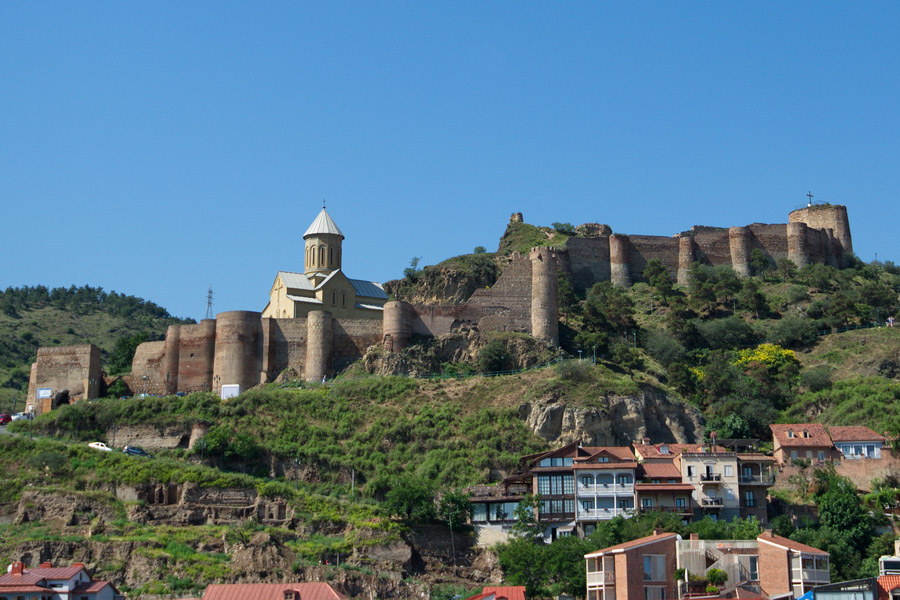
On a hill above Old Tbilisi, between the sulphur baths district and the Botanical Garden, stand the remains of the ancient Narikala Fortress. It is one of the best-known and oldest landmarks in Tbilisi, often called by locals “the heart and soul of the city”. The first fortifications on this site are usually dated to the 4th century AD, placing them among the earliest layers of the city’s history. Over the following centuries, the fortress was expanded and rebuilt many times. In the 7th–8th centuries, Arab rulers played an important role in strengthening it, and traces of this period are still visible in Narikala’s defensive architecture.
In the 11th–12th centuries, the fortress was further enlarged and reinforced during the reign of King David IV the Builder. One of its early names was Shuris-Tsikhe, usually translated as “the Enviable Fortress” or “the Rival Fortress”. Later, during the period of Mongol rule, the citadel became known as Naryn-Kala, from the Turkic words naryn (“small”) and kala (“fortress”).
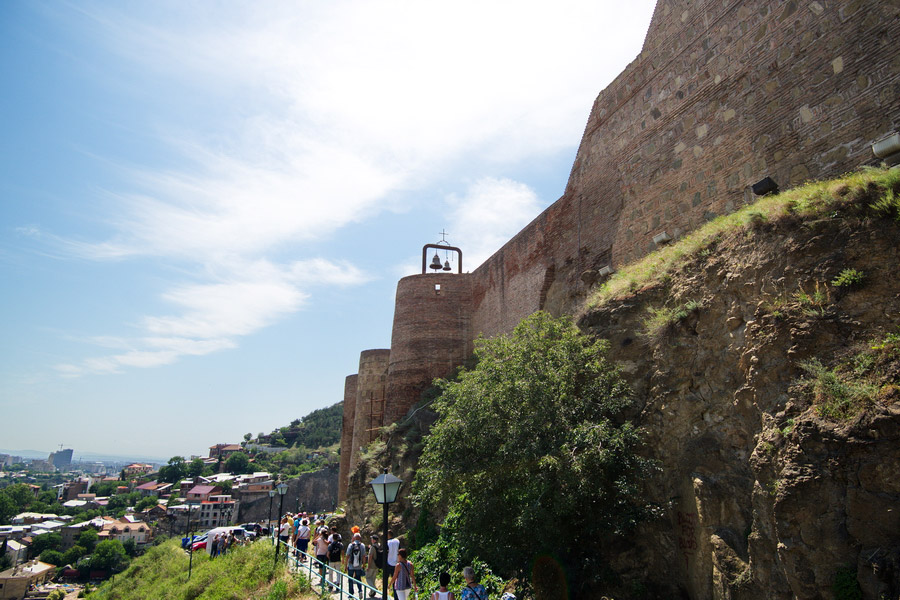
Listed among the top things to do in Tbilisi, Narikala Fortress offers a journey through centuries of the city’s history.
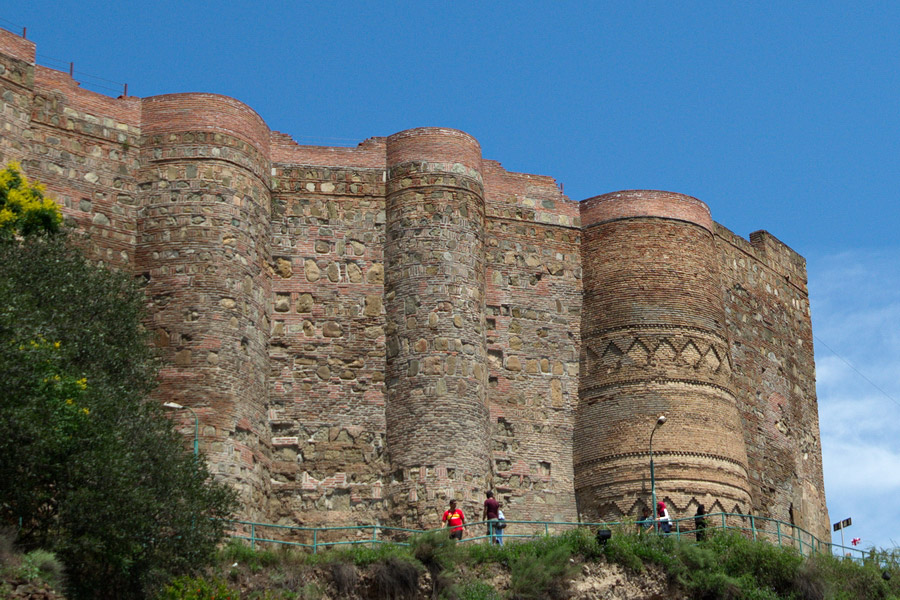
Thanks to its position above the historic centre, Narikala was one of the key elements in Tbilisi’s defensive system and controlled important approaches to the city, which stood at the crossroads of Caucasian trade routes. In the 19th century, the fortress suffered severe damage: some of the destruction is linked to the explosion of an ammunition depot established here during the Russian imperial period, while several sources also mention an earthquake in 1827. Since then, the citadel has never been fully restored. Still, the surviving stone towers and walls of Narikala remain silent witnesses to the history of the ancient city.
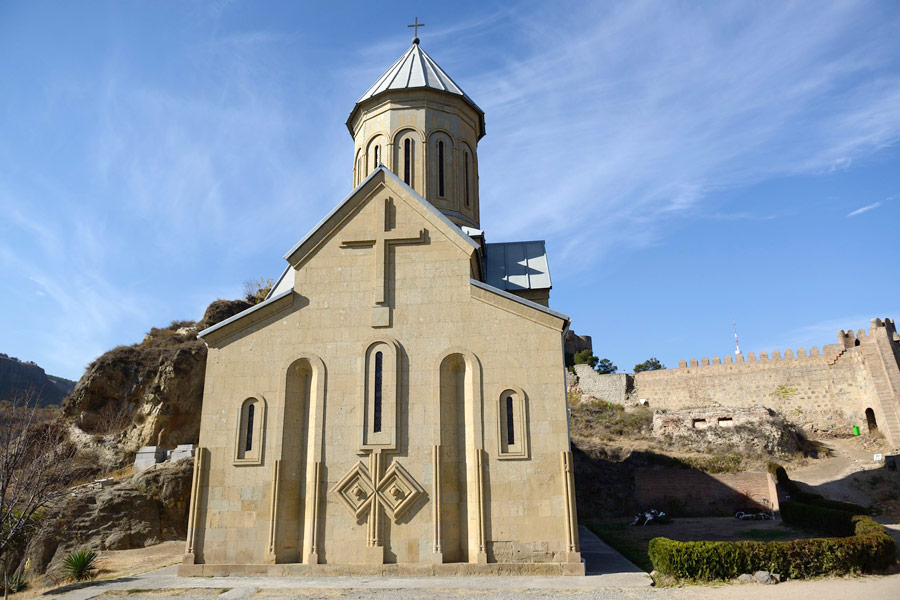
The fortress grounds contain the Church of St Nicholas. The medieval church that once stood here is usually dated to the 13th century; its remains were discovered during archaeological excavations in 1966. The present building was restored in 1996–1997 on the old foundations and in the traditions of Georgian church architecture. Inside, the church is decorated with frescoes depicting biblical scenes and episodes from Georgian history.