

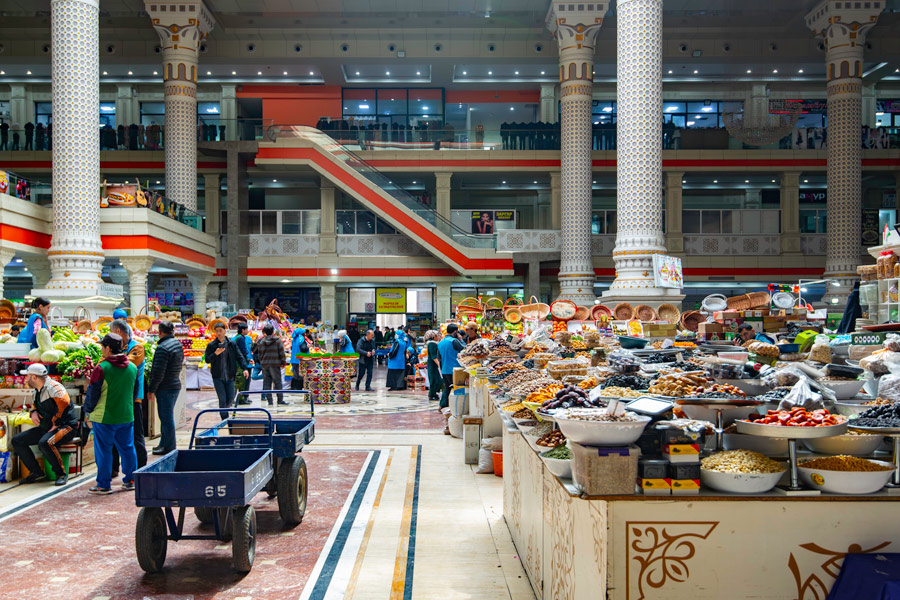
Address: 4 Mehnat Street, Dushanbe.
Opening hours: Daily, from early morning until evening
Approaching the eastern side of Dushanbe, one might easily mistake the Mehrgon Bazaar for a royal residence. With its three-storey facade, grand columns, and extensive use of marble, the building projects a sense of ceremony and prestige. Yet, behind this imperial exterior lies a vibrant Oriental bazaar – perhaps the most opulent in all of Central Asia.
The interior is as impressive as the architecture. The stalls are a showcase of Tajikistan’s rich agricultural heritage: seasonal fruits, world-renowned nuts and dried fruits, bespoke spice blends, traditional breads, and a curated selection of antiques and souvenirs.
History and Cultural Significance
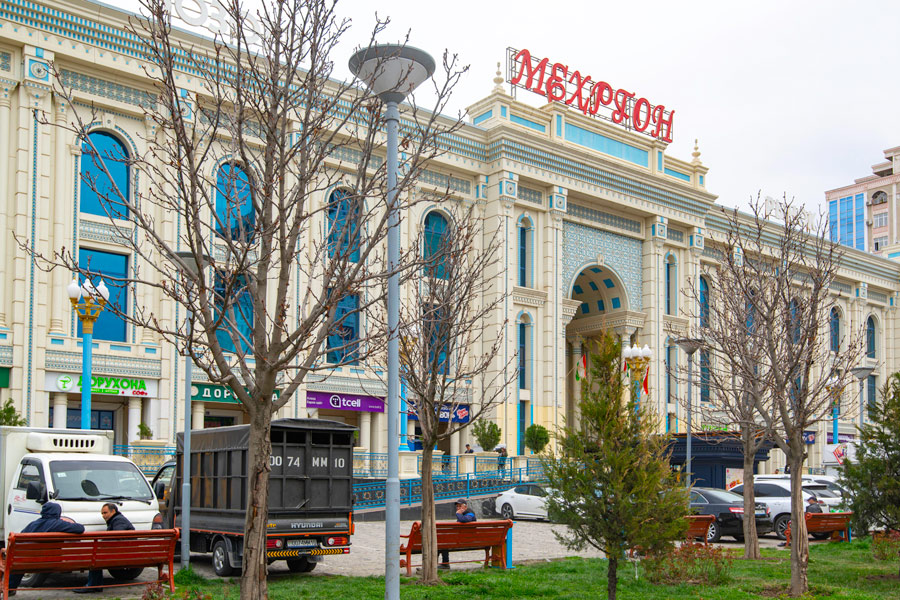
In Dushanbe, the bazaar is the heartbeat of the city. Indeed, the city’s name translates to "Monday", traditionally the primary trading day. Historically, the city coalesced around its marketplace, a tradition that remains steadfast today.
For decades, the Shohmansur "Green" Bazaar was the city’s commercial hub. However, as Dushanbe evolved, there was a need for a more structured and grander space. This led to the inauguration of Mehrgon in 2014. The name "Mehrgon" is derived from the ancient Persian harvest festival celebrated in October, symbolising abundance – a fitting tribute to the diverse produce brought here from every corner of the republic.
The Atmosphere: Where Tradition Meets Comfort
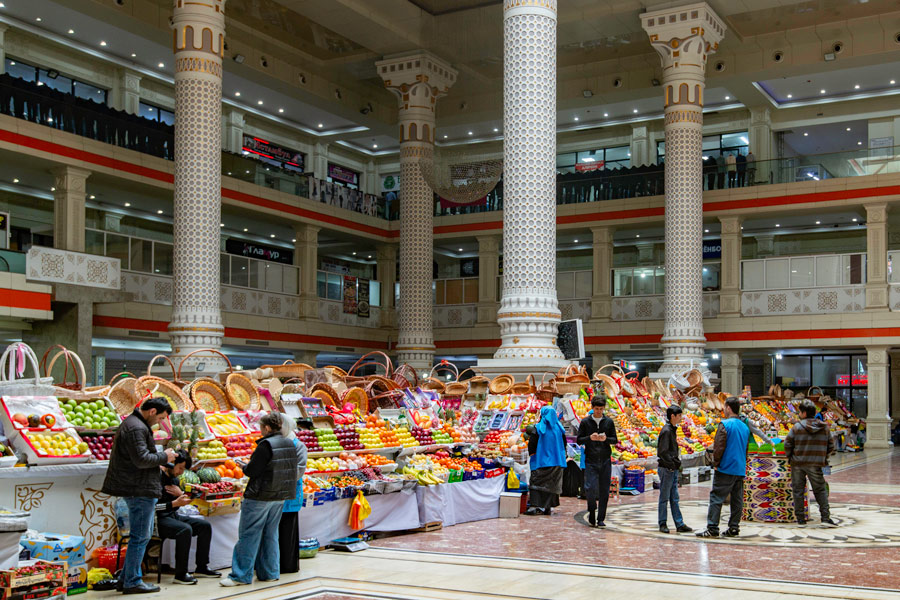
Mehrgon successfully balances the spirited energy of a traditional market with the modern amenities of a high-end shopping centre. Unlike the open-air markets of old, the entire complex is enclosed and climate-controlled, ensuring a pleasant experience regardless of the Tajik summer heat.
Expert Tip: To experience the bazaar at its most authentic, we recommend a morning visit when the displays are freshest and the atmosphere is most spirited.
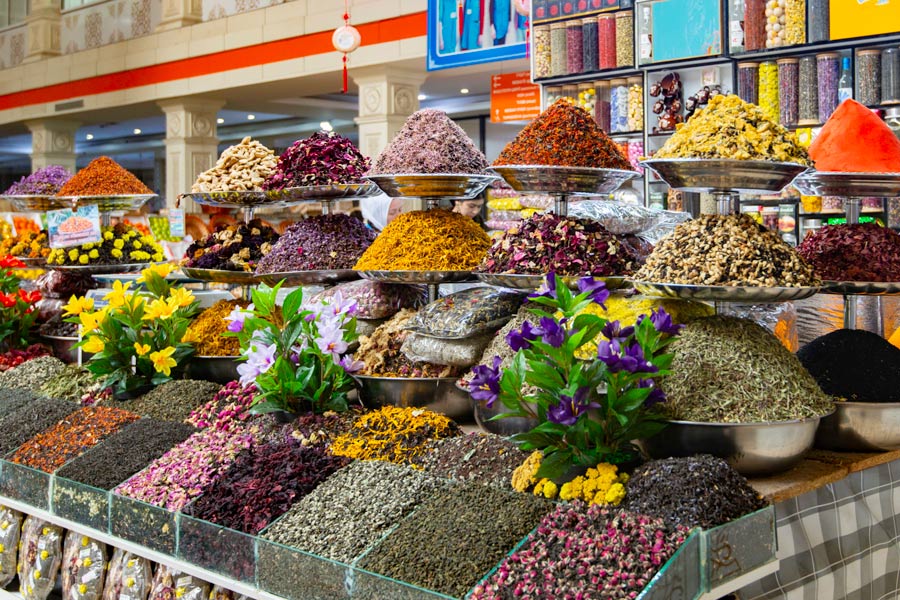
Despite its modern infrastructure, the timeless rituals of Central Asian trade remain. You will see locals gliding between rows, engaging in polite conversation and careful selection. In the central aisles, teas and spices are meticulously arranged into vibrant "pyramids." It is customary – and encouraged – to sample the produce. Most vendors provide disposable spoons for this purpose.
A Note on Etiquette: Haggling is a respected part of the culture. It is expected to be conducted with a smile. Many international guests find that vendors often include a small "gift" – a piece of fruit or a warm flatbread – as a gesture of hospitality.
What to Purchase: A Connoisseur’s Guide
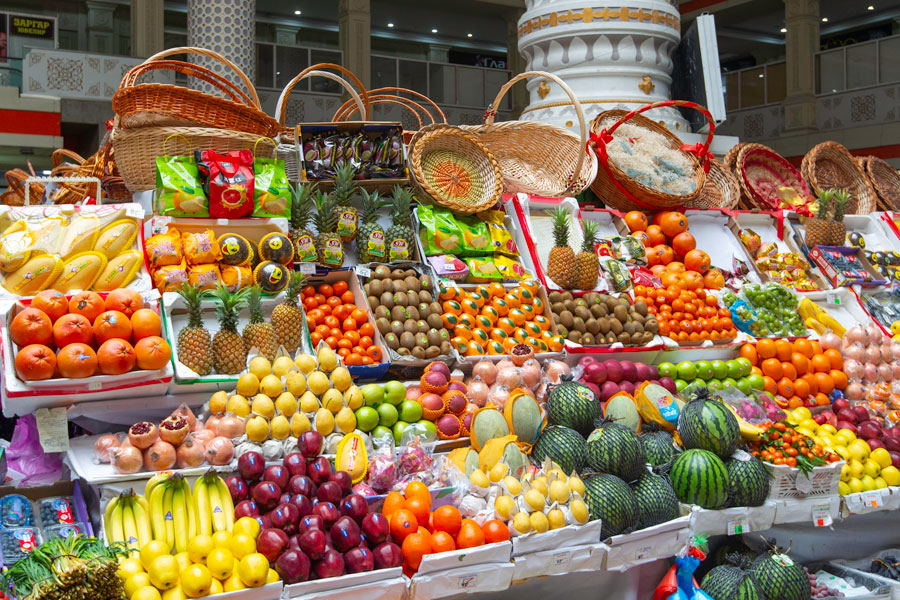
The selection at Mehrgon reflects the staples of the Tajik diet and the richness of its soil. We suggest focusing on the following:
- Fruits and Vegetables: Depending on the season, you will find crisp apples, honey-sweet pears, and various grape varieties. The tomatoes, in particular, are celebrated for their deep, natural flavour.
- Dried Fruits (Tajikistan’s Pride): Look for the large, sun-dried apricots (kuraga) from Isfara, the national centre for apricot production. Beautifully packaged gift sets are available and make for an excellent, healthy souvenir.
- Nuts and Honey: Often sold together as energy-rich mixes. Keep an eye out for rare Black Cumin Honey, prized for its potent anti-inflammatory properties.
- Tea Culture: While green tea is the daily staple, the bazaar offers premium black teas, hibiscus (karkadeh), and medicinal mountain herb blends.
- Artisanal Flatbreads: Freshly baked in tandyr ovens, some loaves exceed 40 cm in diameter. These oversized breads are a local speciality, often reserved for weddings and unique to Tajikistan.
- Plov Essentials: Dedicated rows offer specialty rice, chickpeas, and oils. You will notice mounds of meticulously sliced carrots – both the orange and the traditional yellow varieties – essential for an authentic Tajik Plov.
- Dairy and Meat: The bazaar offers high-quality beef and lamb (including the famous Hissar breed). For the adventurous, traditional Chakka (a strained yoghurt) and Kurut (dried salty cheese balls) are a must-try. Kurut is the base for Kurutob, Tajikistan's national dish.
Quality Assurance and Safety
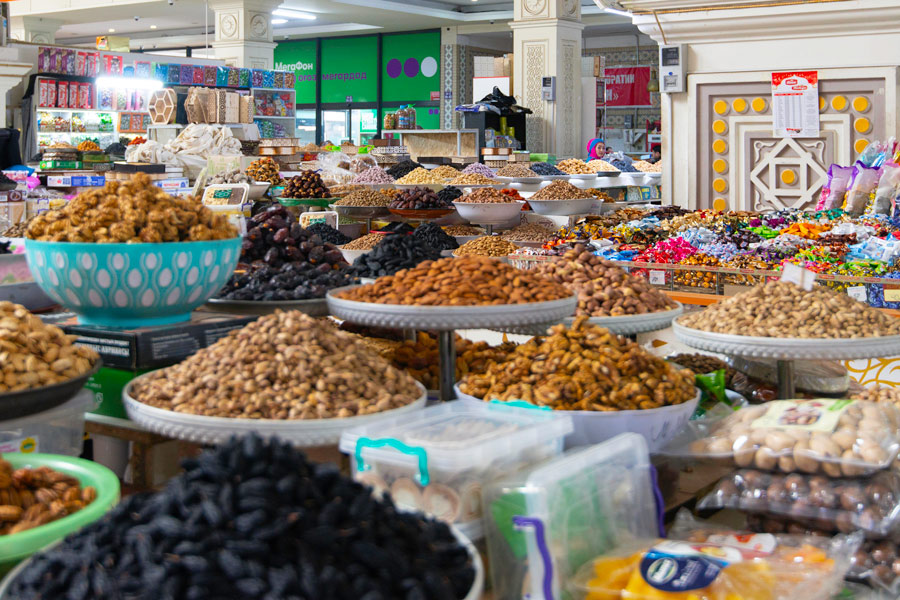
For those accustomed to the clinical environment of Western supermarkets, the bustle of a bazaar can sometimes feel daunting. However, Mehrgon maintains exceptionally high standards:
- Transparency: While vendors are remarkably honest, "check-scales" are positioned in the centre of the hall for customer use.
- Regulation: An on-site laboratory inspects all perishable goods daily to ensure they meet health and safety standards.
- Integrity: The market authorities operate a zero-tolerance policy regarding unfair trading practices, ensuring a safe environment for tourists.
Beyond the Food Stalls
The upper levels of the bazaar cater to those seeking more than just groceries. Here, you will find boutiques and antique stalls offering Soviet-era curiosities, such as vintage cameras and commemorative coins.
To conclude your visit, wander the perimeter of the building where the street food vendors reside. Sampling a fresh Sambusa (a savoury pastry filled with meat or vegetables) or a succulent kebab is the quintessential way to end your journey through Mehrgon.