

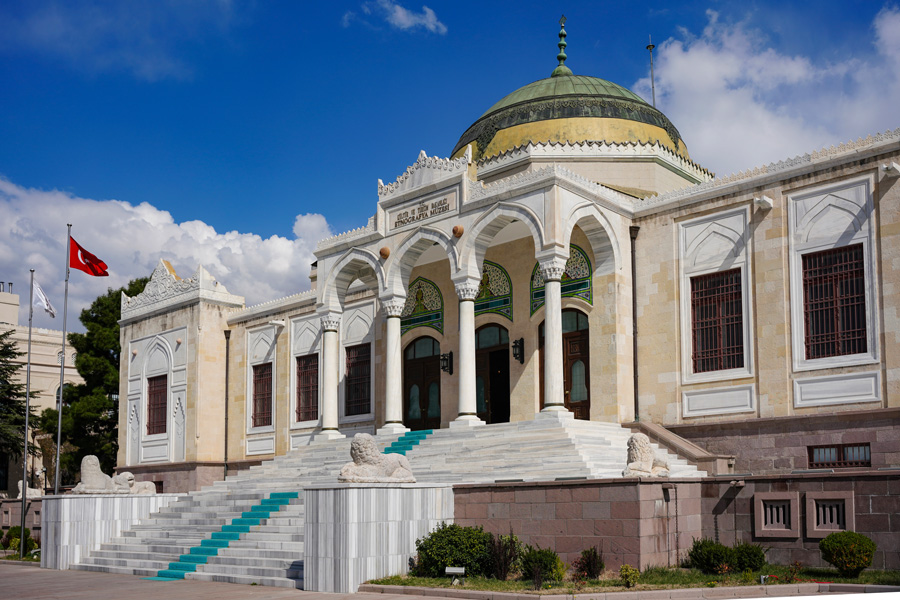
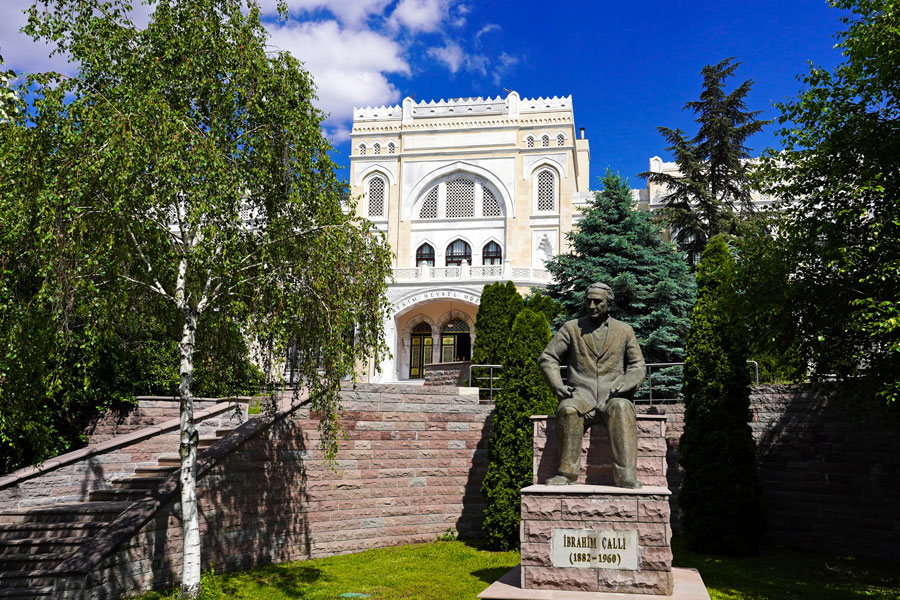
The Ankara Ethnography Museum (Ankara Etnografya Müzesi) is one of the most prominent cultural institutions in the Turkish capital. Akin to many buildings of the early Republican era, it represents a pivotal point between the past and a forward-looking future.
On one hand, the museum faces the new city. On the other hand, it is mounted on historic Namazgah Hill, with the ancient citadel rising behind it. Its very location denotes this dialogue between eras.
The same notion can be seen in CSO Ada Ankara, which was deliberately intended to stand between Anıtkabir and Ankara Castle – juxtaposing modern Türkiye with its deeper roots. An analogue to this can be seen in Atatürk Boulevard. Running from historic Ulus through the newer district of Kızılay, it connects Ankara’s past with its irresistible modernism.
The Ethnography Museum in Ankara showcases centuries of Anatolian and folk heritage. It was designed by Turkish architect Arif Hikmet Koyunoğlu. Later, it would become the temporary resting place of Mustafa Kemal Atatürk for 15 years.
Traditional arts, crafts, and more await visitors at the Ankara Ethnography Museum. It promises a visually engaging history within the broader scene of Ankara museums and cultural tourism in Turkey.
History of the Ankara Ethnography Museum in Turkey
The museum opened to the public in 1930 as part of the young Republic’s effort to document and safeguard Anatolian identity. The name of the Namazgâh Hill, on which it sits, translates as “place of prayer.” The area was historically used for prayers and gatherings. During the War of Independence (1919–1922), Friday prayers for victory were held here.
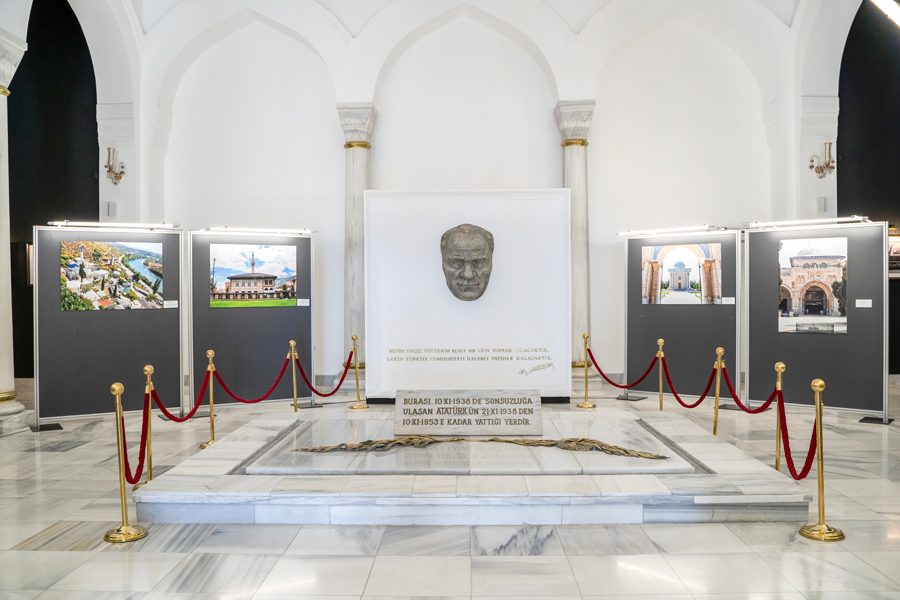
After Atatürk’s death on 10 November 1938, his body lay in state within the museum’s domed hall for 15 years before being transferred to Anıtkabir in 1953. This period meaningfully tied the institution to the foundations of modern Türkiye.
The section of the central hall where Atatürk’s temporary tomb once stood is still identifiable today.
Unlike archaeological institutions, the Ankara Ethnography Museum focuses on the Seljuk and Ottoman periods, yielding glimpses of Anatolian life rather than ancient civilisations.
Architecture and Layout
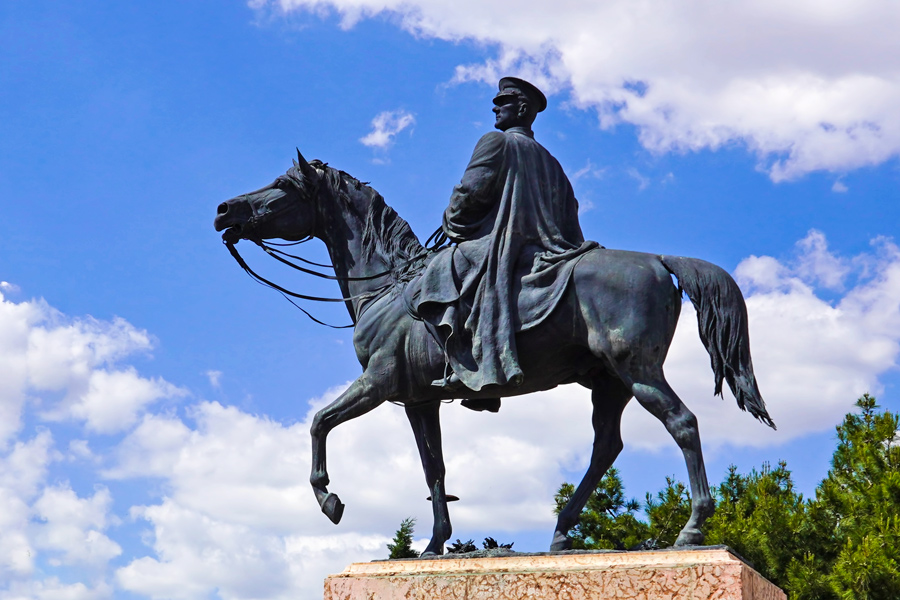
The Ankara Ethnography Museum has a well-organised rectangular layout. But first, visitors notice the statue of Mustafa Kemal Atatürk in front of the building. From here, two broad flights of white marble stairs stretch out before the entrance, like a ceremonial path guiding guests upward.
Once inside, they enter a large domed Main Hall. Nine smaller exhibition rooms are arranged around it in a simple loop. Visitors can move from one gallery to the next without getting confused.
Each room depicts a distinct theme. One section displays carpets and textiles; another features ceramics and metalwork. The collection then continues naturally with calligraphy, Sufi artefacts, and regional costumes.
The museum’s compact design makes it easy to enrich one’s cultural insight by visiting the nearby Ankara Painting and Sculpture Museum (Ankara Resim ve Heykel Müzesi) as part of wider Ankara museum tours.
What to See: Ankara Ethnographic Exhibits
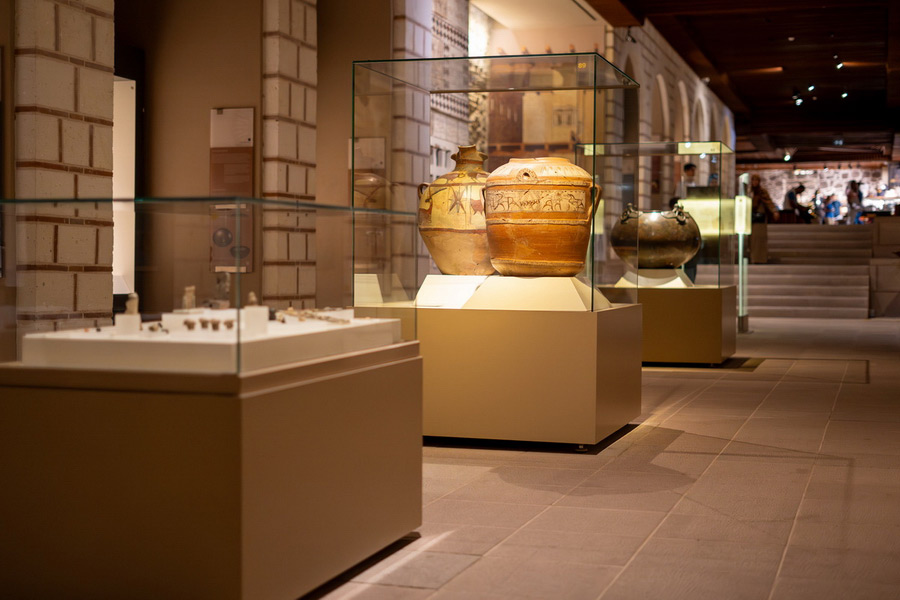
The regional breadth and the technical beauty of its artefacts define the Ankara Ethnography Museum. It is all about the Turkish-Islamic material culture from the Seljuk and Ottoman periods.
Glimpses into Weaving Traditions: Anatolian Carpets and Ottoman Textiles
The carpet collection is among the museum’s most highlights. All the major Anatolian weaving centres are represented here:
- Bergama carpets (northwestern Anatolia) – geometric patterns and strong colour contrasts;
- Kula carpets (western Anatolia) – fine prayer rugs with elegant medallion designs;
- Milas (southwestern Anatolia) – bright tones and characteristic mihrab motifs;
- Ladik carpets (southcentral Anatolia) – tulip patterns;
- Karaman carpets (central Anatolia) – early Anatolian Turkish weaving traditions.
Many of these trace back to early Turks and Ottomans. They illustrate regional weaving techniques, such as the gördes knot. The carpet masters used natural dyes such as madder root and indigo.
The museum also exhibits embroidered textiles, ceremonial garments, and Ottoman-era kaftans from Turkey’s different regions. For example, pay attention to the bindallı dresses. These are velvet or satin attire with metal thread, pearls, and sequins.
There is a fascinating collection of Henna night gowns, which women wore during the “henna night” ritual. Another elaborate form of clothing from the Ankara region is the Beypazarı regional costume.
Carpet enthusiasts may also consider visiting the Ankara Vakıf Museum (Ankara Vakıf Eserleri Müzesi). Its ethnographic collection boasts stunning rugs and weaving tools.
Understand Mysticism and Faith: Religious and Sufi Artefacts
The museum houses pieces from dervish lodges (tekke), guild lodges (zaviye), and Sufi institutions. Woodworks, calligraphic panels, ritual garments, and ceremonial objects are all represented here. A 12th-century hand-carved wooden pulpit (Siirt Great Mosque Pulpit) and the 14th-century Aşkınpaşa Mosque Mihrab stand among the highlights.
Admire the Art of Empires: Ottoman and Seljuk Masterpieces
The prominent Seljuk art items are the 13th-century throne of Sultan Kaykhusraw III (Keyhusrev) and the coffin of Ahi Serafettin, also made from wood.
Ottoman art attractions comprise intricately carved mosque doors and minbars, as well as Ottoman calligraphy and artefacts made from tiles and glass.
Some of this museum's glass and tile holdings were donated by a famous Turkish figure, Besim Atalay, a member of the Turkish Grand National Assembly.
The museum also continues to expand its collection through international repatriation efforts led by Türkiye’s Ministry of Culture and Tourism. In 2025, for example, a 16th-century İznik tile was returned from Britain after being identified in a foreign auction house.
Unearth the Past: Archaeological Artefacts
Although primarily ethnographic, the museum also displays Roman and Hittite finds recovered from excavation sites in Ankara. However, a must-visit for travellers interested in prehistoric and ancient Anatolia is the Museum of Anatolian Civilisations (Anadolu Medeniyetleri Müzesi).
Ankara Ethnography Museum vs Museum of Anatolian Civilisations
Many visitors wonder about the difference between these two museums in Ankara.
| Feature | Ankara Ethnography Museum | Museum of Anatolian Civilisation |
| Focus | Ottoman & Seljuk Folk Culture | Prehistoric & Ancient Anatolia |
| Period | Medieval to Ottoman | Palaeolithic to Roman |
| Location | Namazgah Hill | Ulus district |
| Experience | Culture & Ethnographic, connected to Atatürk’s history | Archaeological & Historical |
The Ethnography Museum in Ankara is ideal for those interested in cultural tourism in Turkey and living traditions. On the contrary, the Museum of Anatolian Civilisations may suit visitors who prefer ancient civilisations and Hittite artefacts. Both can be explored in one day.
Practical Information
Ankara Ethnography Museum Location
The museum stands on Namazgah Hill, near Ankara Castle and adjacent to the Ankara Painting and Sculpture Museum. Its central position makes it easy to include in the Ankara museum tours.
Opening Hours
Opening times typically follow standard museum hours in Turkey (8:30-17:30), but visitors should check official sources before arrival.
Best Time to Visit the Ankara Ethnography Museum
The best time to visit the Ankara Ethnography Museum is in the morning when visitor numbers are lower. Weekdays are typically quieter than weekends.
Night Museum Visits
The Turkish Ministry of Culture and Tourism has introduced night programs for museums in Turkey. The Ethnography Museum in Ankara is included, providing a unique after-dark cultural experience. The Museum of Anatolian Civilisations also participates in this initiative.
Is the Ankara Ethnography Museum Free?
The museum operates under the national museum system. Entry is ticketed, though Museum Pass holders may enter for free. Pricing is modest compared to major international institutions.
How to Book Tickets
Tickets can typically be purchased at the entrance. Advance online booking is available through the official Turkish museum platform – www.turkishmuseums.com.
How Long to Spend
Most visitors spend between 1 and 1.5 hours exploring the ten exhibition halls. Combining it with nearby Ankara's cultural museums can extend the visit to a half-day.
Facilities
Basic visitor facilities are available. However, dining options are limited within the museum; cafés and restaurants are available in the surrounding Ulus area.
Who Should Visit the Ethnography Museum in Ankara?
This museum appeals to:
- Cultural travellers interested in Anatolian heritage;
- Students studying Ottoman or Seljuk art;
- Visitors exploring Ankara cultural museums;
- Those curious about Mustafa Kemal Atatürk’s history;
- Tourists combining Ankara Castle and Ulus visits.
It offers a meaningful introduction to Turkey’s folk identity and complements other Turkish museums in Ankara.
An Essential Stop on Any Journey Through Cultural Tourism in Turkey
Traditions shape our everyday life, and the best opportunity to learn about them is in ethnographic museums. For travellers exploring Turkey’s capital, the Ankara Ethnography Museum provides a rich historical heritage and a profound appreciation of Turkish folk culture. You can admire colourful carpets, regional costumes, Sufi artefacts, and Ottoman artistry. Furthermore, the museum is connected to the legacy of Mustafa Kemal Atatürk, making it a unique landmark among the museums in Ankara.