

Address: Yeşil Mahallesi, 1. Yeşil Caddesi, 16360 Yıldırım, Bursa.
Contact information: Bursa Provincial Directorate of Culture and Tourism, bursa.ktb.gov.tr.
Turkish and Islamic Arts Museum (Green Madrasa): +90 224 327 76 79, bursamuzesi@ktb.gov.tr
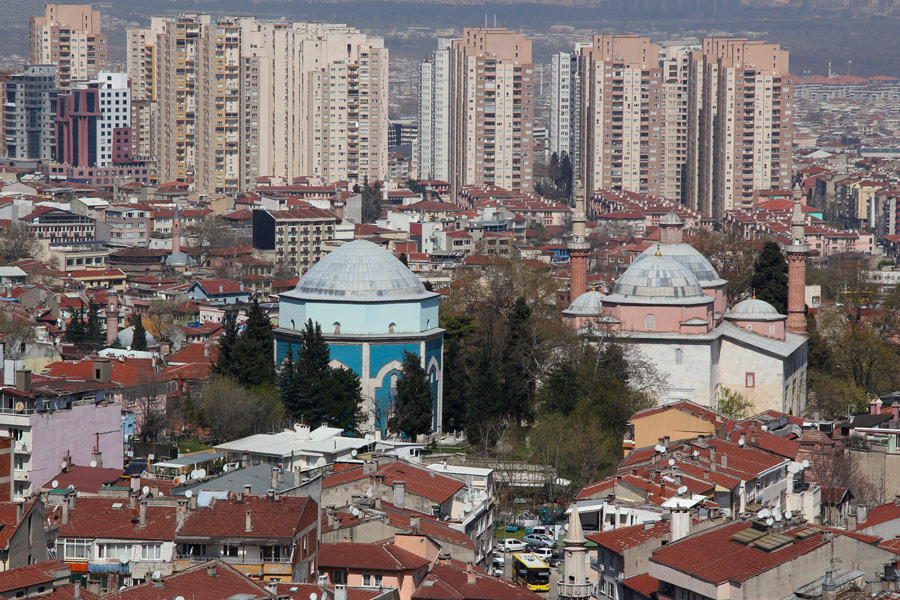
Built for Sultan Mehmed I, the Green Mosque and Green Tomb face each other across a narrow street in eastern Bursa. In 2014 the complex joined the UNESCO World Heritage List as part of Bursa and Cumalıkızık: the Birth of the Ottoman Empire, and remains one of the finest historical sites of Bursa.
The mosque stands lower, faced in pale marble. Opposite, the tomb rises among cypresses. Its tiled walls show blue-green from far across the city. Between the two, a terrace looks north over rooftops and minarets.
Ottoman records called the complex the Sultan's imaret, but locals named it after its tiles. By the 17th century, the traveller Evliya Çelebi knew it as the Green Imaret. The name spread to the whole neighbourhood, still called Yeşil today.
History of the Green Mosque and Green Tomb
The complex marks a recovery. In 1402 Timur crushed the Ottoman army at Ankara and captured Bayezid I, who died in captivity a year later. Timur's troops sacked Bursa, the old Ottoman capital. For eleven years Bayezid's sons fought one another for the throne. Mehmed Çelebi outlasted them all. In 1413 he reunited the state, and many call him its second founder. Tradition gives him 24 battles and 40 wounds.
Mehmed began his own complex in 1414. His grandfather, Murad I, had built to the west of the city and his father to the east. Mehmed chose the ground between them, on a spur flanked by a stream and two ravines. Around the mosque rose a madrasa, a soup kitchen and a bath. The madrasa became one of the leading colleges of its day. Ebussuud Efendi, later the empire's chief jurist, taught there. Three hans in the bazaar belonged to the same foundation.
The architect was Hacı İvaz Pasha, a soldier from Tokat who had just held Bursa against a Karamanid attack. The sultan rewarded him with the governorship and later made him a vizier. His name is carved beside Mehmed's on the portal, where the inscription credits him with the building’s design, proportions and rules.
The decoration came from much further east. After Ankara, Timur had carried Ottoman scholars and craftsmen off with him. One was a young Bursa painter, Ali bin İlyas Ali (Ali the son of Ilyas). He learned his art in Samarkand. When Timur died in 1405, Ali came home. The returning craftsmen brought artists from Tabriz with them. Ali went on to lead the painted and tiled work on both buildings. Work on the mosque ended in December 1419, but its decoration took almost five more years, until August 1424. The sultan did not live to see it finished. Local tradition holds that his tomb was completed forty days before he died in 1421. His viziers then kept the death secret for a similar span, and Hacı İvaz Pasha helped conceal it until Prince Murad reached Bursa. Sadly, loyalty earned the architect little: Murad II came to suspect him of plotting and had him blinded. He died of plague in Bursa four years later.
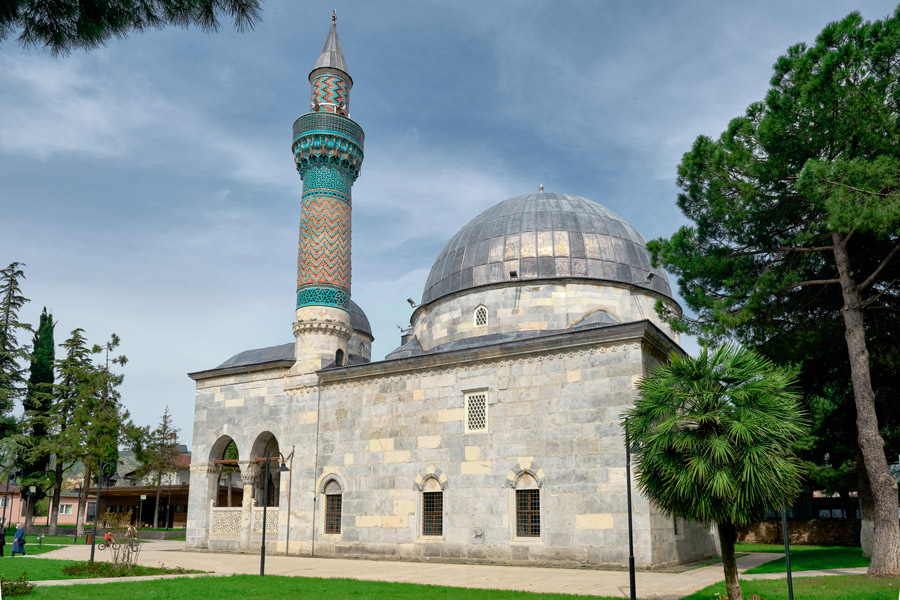
In 1855 an earthquake shook Bursa, and the mosque's only minaret fell. Years passed before real repairs began. In 1863 the governor, Ahmed Vefik Pasha, called in a French architect Léon Parvillée, who took charge of restoring the tiles. A second minaret followed in 1869. In May 2008 Queen Elizabeth II came to see the complex.
Highlights
A visit usually starts at the mosque and continues across the street to the tomb. An unhurried hour covers both.
The Unfinished Façade
The north front is faced in white marble. Two bands of script, in thuluth and Kufic, frame the portal. A deep muqarnas hood fills the arch above the door. Thousands of small carved motifs cover the stone. The bronze window grilles carry fine filigree ornament. Yet the front was never finished. Stubs of arches remain above the windows, waiting for a porch that was never built, and some carved inscriptions stop halfway.
The Prayer Hall and the Mihrab
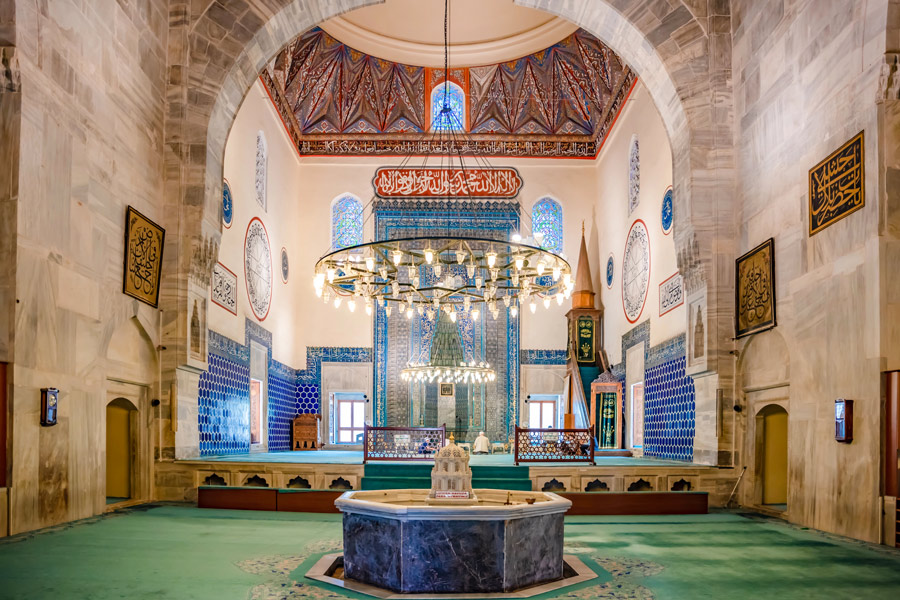
A short vestibule leads up a few steps into a square domed hall with a fountain basin at its centre. Raised side halls, the eyvans, open to the left and right, forming the inverted T plan, typical of early Ottoman Bursa.
A further flight of steps leads up to the mihrab. It rises more than ten metres, tiled almost from top to bottom. Navy, turquoise, yellow, green and white run through the patterns. A wide band of Qur'anic script frames the niche. On the right-hand colonnette, the tilers signed themselves as the Masters of Tabriz. Green hexagonal tiles line the hall to head height. Painted decoration once covered every wall above them, but after the earthquake only the domes kept theirs.
One line near the mihrab has long intrigued researchers. It is a Persian couplet, usually traced to the Persian Sufi poet Sa'di Shirazi. The wrong done to us, it says, stays on the wrongdoer's neck. One popular reading ties it to the architect's fall. However, no document supports the idea.
The Sultan's Loge
Above the entrance sits the sultan's loge, reached by stairs from the vestibule. It is laid out like a small pavilion, with fireplaces in its rooms. The chambers on either side are said to have housed the sultan's household. Its tiles differ from every other set in the building: glazed in yellow, navy, turquoise and white, some in low relief. Ali's own inscription runs above the arch. Two tiny signatures sit where the side arches spring. Both read the work of Mehmed Mecnun, or Mehmed the Mad. A closer look at the loge is at the caretaker's discretion.
The Green Tomb
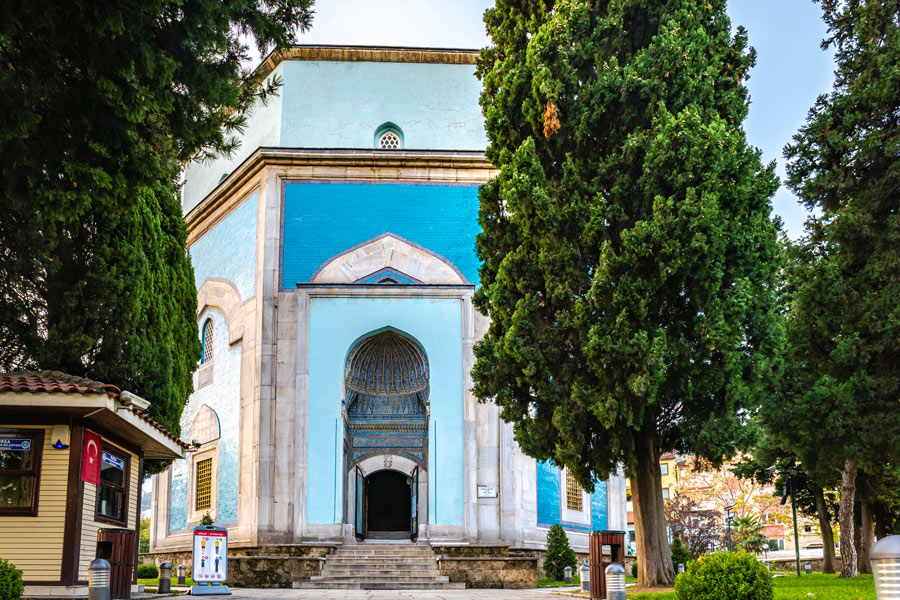
The tomb is octagonal, each side a little over eight metres long. At about 25 metres high, it is one of the tallest single-domed Ottoman mausoleums. Most of the outer tiles are later replacements from Kütahya, but the entrance niche keeps its early tiles beneath a thirteen-lobed half-dome. The walnut doors are carved with interlocking geometric stars. They name the sultan and his architect.
Inside the Tomb
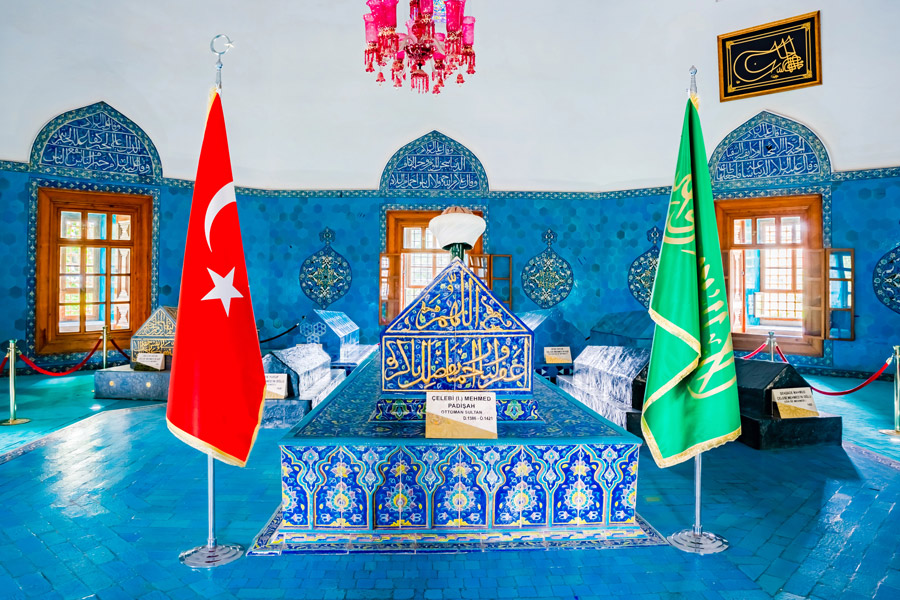
Inside, the light turns turquoise. Hexagonal tiles clad the walls to almost three metres, broken above by large medallions and window panels of script. A tiled mihrab stands on the wall facing Mecca. At the centre, the sultan's sarcophagus rests on a raised platform. Relief tiles of yellow, navy and white cover it entirely. No other Ottoman sarcophagus is dressed like this.
Eight more cenotaphs share the room, belonging to three of the Sultan’s sons, several of his daughters and his wet nurse; the bodies lie in a vaulted crypt below. Before he died, Mehmed tried to settle his sons' futures. Murad would rule, and Mustafa would keep Anatolia. The arrangement did not last. Consequently, the young Mustafa rose against his brother and was strangled in 1423, aged about fifteen. He lies a few steps from his father.
Practical Information
Opening hours: The mosque opens daily, from around 08:00 until the evening prayer. Visits pause during each of the five daily prayers. In summer the tomb is open from about 09:00 to 19:00. In winter it closes earlier, in the late afternoon. Hours may vary on religious holidays, so check locally.
Entry: Both buildings are in religious use and free to enter.
Turkish and Islamic Arts Museum: The complex's old madrasa, just west of the mosque, now holds this museum. It is open daily from 08:00 to 17:00, with last entry at 16:30. Tiles, woodwork, metalwork and Ottoman costume fill the former student cells. Carved Bursa tombstones stand in the courtyard garden. A ticket is required, and the MüzeKart is valid for Turkish citizens.
How to Get to the Green Mosque and Green Tomb
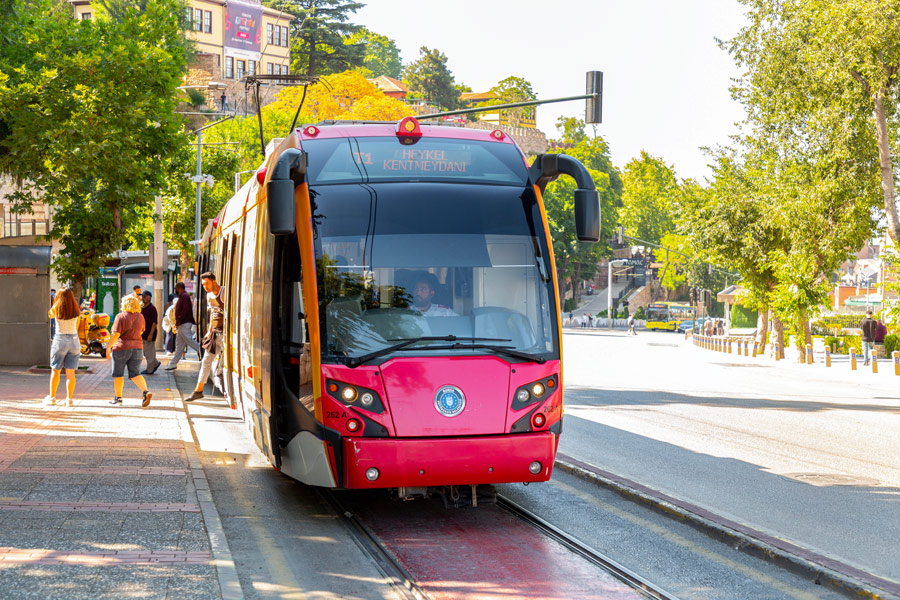
Public transport tickets: A rechargeable BursaKart covers the metro, trams and city buses. It is sold at station kiosks and newsagents.
By tram: The green T3 heritage line stops at Kozahan, beside the bazaar. It runs east to Gökdere, about 10 minutes from the complex on foot. From Heykel on the red T1, walk east over the Setbaşı bridge. The climb up Yeşil Caddesi takes 10 to 15 minutes.
By bus: Routes 1A and 36A run from Kent Meydanı to the Yeşil stop. Route numbers change, so check the Moovit app before boarding. Or board any passing bus heading east from Atatürk Street (near the stop opposite the historic Grand Mosque / Ulu Cami) toward the Yıldırım/Yeşil district.
On foot: From the Ulu Cami the walk takes about 20 minutes. Follow Atatürk Caddesi east to Heykel, then cross the Gökdere at Setbaşı.
By taxi: Metered taxis wait across the centre. It is only a short ride from Heykel.
From the Otogar: Bus 99 runs from the terminal to the Yeşil stop. The T2 tram reaches Kent Meydanı in about 25 minutes. Change there to the T1 for Heykel. A taxi takes around 20 minutes, longer at peak.
From Istanbul: Fast ferries cross to Mudanya or Güzelyalı in about 2 hours. Buses connect the piers with the Bursaray metro. By road over the Osmangazi Bridge, allow about 2.5 hours.
Tips for an Optimal Visit
Recommended duration: A relaxed one hour is enough to cover the mosque and the tomb; allow another hour for the museum. The complex's old soup kitchen now serves as a café.
Best time of day: Early morning is quietest, before the crowds build. Avoid Friday midday, when the mosque fills for congregational prayer.
Dress and conduct: Cover shoulders and knees in both buildings; women should also cover their hair in the mosque. Remove your shoes at each entrance. The tomb is a place of prayer too, so keep your voice low.
Order of visit: Start at the museum, whose tile collection helps you read the decoration in the mosque and tomb.
Photography: Photos without flash are permitted outside prayer times, but avoid close-up shots of worshippers.
Accessibility: Step-free access is limited, as the mosque's halls sit at different levels linked by steps.
Combine with: The Emir Sultan Mosque lies a short walk further east. Heading west, cross the Irgandı Bridge, still lined with craft workshops, to reach Koza Han. The Ulu Cami stands beside it, about 20 minutes on foot from the complex.
No other Ottoman building names so many of its makers. Several inscriptions record them, from the sultan to Mehmed the Mad. For some, a signature is all that survives. The door carver is one of them. The walnut carries his name: Hacı Ali, son of Ahmed of Tabriz. Every visitor to the tomb passes it on the way in.