


At the heart of Georgia’s Kakheti wine region, Telavi is also the administrative centre. Telavi spreads across seven hills on the north-eastern slopes of the Tsiv-Gombori Range, creating a layered layout. From the upper neighbourhoods, views open across the Alazani Valley towards the Greater Caucasus.
Detached houses and private gardens shape the city, while apartment blocks sit in only a few areas. The historic centre is compact, with cobbled lanes, brick buildings and older houses around the royal complex of Batonis Tsikhe. Telavi has served as an important Kakhetian centre for centuries, including periods as a noble capital.
The wider municipality has close to 60,000 residents, while Telavi itself remains compact. It is Kakheti’s largest city and a convenient base for exploring the region’s wine country, with wineries and historic sites within easy reach. Our Telavi travel guide covers the city, nearby attractions, and practical details for planning your trip.
Telavi Tours
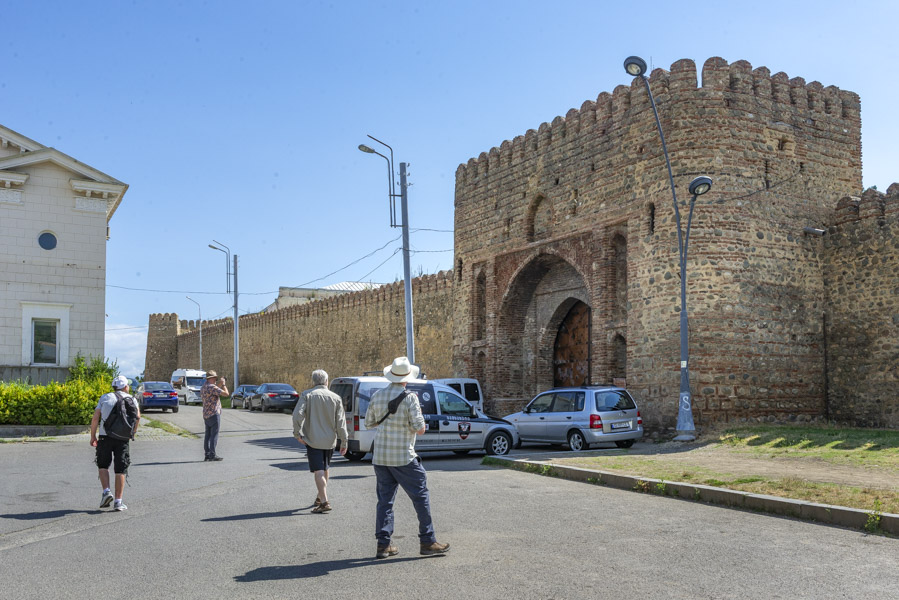
Telavi tours typically combine the city with wineries, monasteries, and historic estates across Kakheti. The city is also a practical starting point for nearby qvevri-making communities and mountain villages, as well as a common stop on day trips from Tbilisi through central Kakheti. One-day programmes commonly connect Telavi with Tsinandali, Alaverdi, Ikalto, Vardisubani or Napareuli. Some focus mainly on architecture and regional history, while others concentrate on winemaking and cellar visits. Telavi wine tours usually include tastings and introductions to traditional Georgian winemaking methods. Tours with a stronger cultural focus generally place greater emphasis on monasteries, estates, and the history of Kakheti.
Longer itineraries use Telavi as one stop within wider journeys through Kakheti or across Georgia. These routes may continue towards Gremi, Kvareli, Sighnaghi and Bodbe before returning to Tbilisi. Several private tours operate throughout the year, while some scheduled group itineraries run between spring and autumn.
History of Telavi

Telavi is one of the oldest urban settlements in Georgia, with archaeological evidence reaching back to the Bronze Age. The name probably derives from the Georgian word tela, meaning elm tree. Ptolemy mentioned a settlement called Teleda in the second century, the earliest known written reference linked to Telavi.
In the early 11th century, Kvirike III made Telavi the capital of the united Kingdom of Kakheti-Hereti. It remained the political centre until 1104 and developed strong links with Armenia, Azerbaijan and Black Sea trading centres. After Mongol invasions and later political fragmentation, Telavi’s importance declined.
The city recovered in the seventeenth century, when King Archil II moved the Kakhetian royal residence back from Gremi. Under Teimuraz II and Erekle II, Telavi became one of eastern Georgia’s leading political and cultural centres. A philosophical and theological school opened in 1758, followed by the Telavi Seminary in 1782.
Under Erekle II, Batonis Tsikhe was strengthened and expanded, and it remains one of the city’s principal historical sites. Russian annexation in 1801 ended Telavi’s royal status, but the city remained an administrative centre. During the nineteenth century, new roads, markets and residential streets pushed the city beyond its old fortress.
The Kakheti railway reached Telavi between 1913 and 1915, improving connections with Tbilisi and surrounding districts. Soviet planning after 1947 introduced apartment blocks, administrative buildings, and new public spaces around the city centre. Today, historic fortifications, royal buildings, and old residential streets remain among the main Telavi attractions.
Best time to Visit Telavi
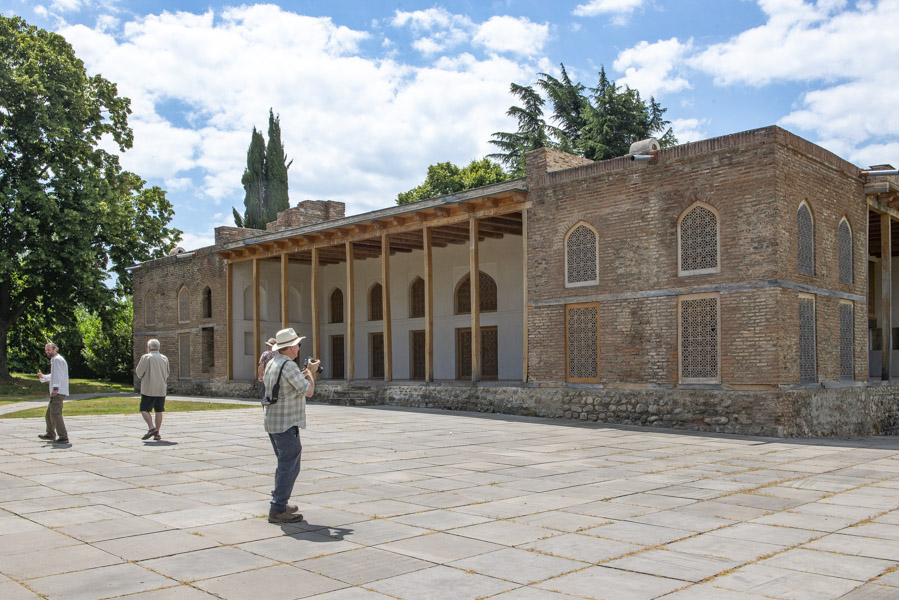
The best time to visit Telavi is from May to October, with September and October especially rewarding during Rtveli, Kakheti’s grape harvest.
| Season | Months | Average Daytime Highs | Average Night-time Lows |
| Spring | March – May | 9-21°C (48 –70°F) | 0-10°C (32 – 50°F) |
| Summer | June – August | 25-28C (77 – 84°F) | 13-17°C (55 –63°F) |
| Autumn | September – November | 10-24°C (50 –75°F) | 2-12°C (36 – 54°F) |
| Winter | December – February | 2-9°C (36 –41°F) | −5 to −3°C (23 – 27°F) |
Autumn brings grape picking, cellar activity, and the first stages of winemaking. Wineries are busiest, and some visitors can join harvest activities or taste fresh grape must. Days are usually warm, but evenings cool quickly, so bring a light layer.
In spring, vineyards and gardens turn green again, although short showers are common. This is also a good time to taste young local wines from the previous autumn harvest.
Summer brings long and clear days, with daytime highs around 28-31°C and even hotter temperatures across the lowlands. Early mornings and evenings are better for walking and Telavi sightseeing.
Winter is cold and much quieter, with frost and occasional snow. Smaller wineries may reduce hours, while larger estates stay open for quieter cellar visits and hearty local food.
Things to Do in Telavi
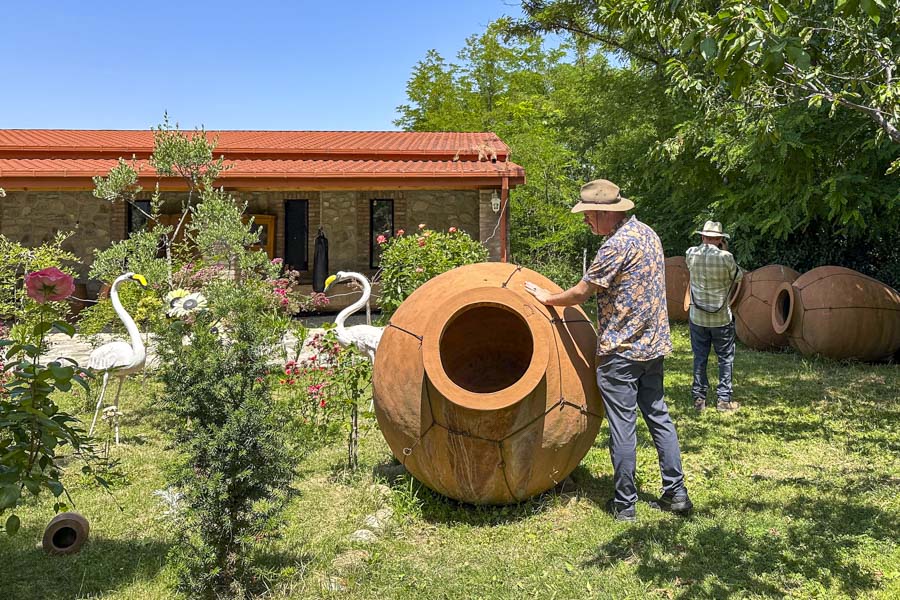
Many of the best experiences in Telavi involve winemaking, crafts and traditions still practised nearby. Some are strongly seasonal, while others are available throughout the year. Family cellars around Telavi preserve centuries-old winemaking traditions centred on fermentation and ageing in buried qvevri.
Visit Traditional Qvevri-Maker & Taste Local Wine
Vardisubani, around three kilometres from Telavi, is one of Kakheti’s main qvevri-making centres. The Kbilashvili family builds these large clay vessels by hand, using techniques passed through several generations. Visitors can see how the clay is prepared and each vessel is shaped, dried and finished, followed by a wine tasting on site.
Chona’s Marani and Milorauli offer more intimate settings, with traditional Kakhetian winemaking explained directly by the people involved. Shumi Winery in Tsinandali presents a larger operation using both qvevri and European techniques. Telavi wine tours often cover these different scales, making comparisons between methods easier.
Join Rtveli and Make Churchkhela
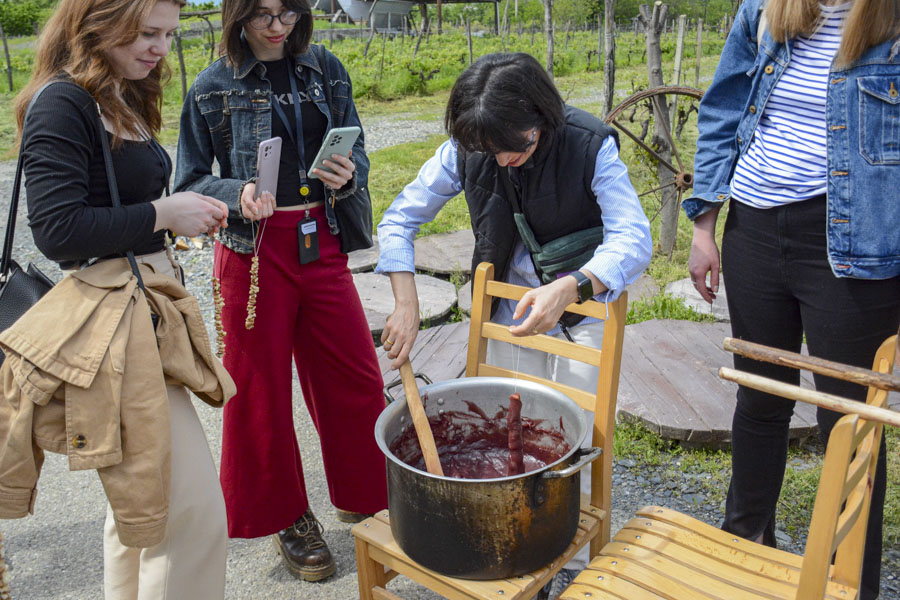
Rtveli, the traditional grape harvest, usually takes place around Telavi from late September into October. Visitors can join families or wineries to pick grapes. The work is often followed by a shared supra, a traditional Georgian feast.
Churchkhela is closely associated with harvest season: walnut halves are threaded and dipped several times into grape juice thickened with flour. During Rtveli, some wineries and guesthouses around Telavi include the process in seasonal workshops.
Explore Tushetian Textile Crafts
About 30 minutes from Telavi, Lower Alvani preserves several Tushetian textile traditions. At Tushuri Pardagi, visitors can see looms, dyeing equipment and naturally coloured wool. Activities may include carding, spinning, felting, rug weaving, and knitting traditional chiti slippers. The workshop occupies a traditional house and also features a small family wine cellar.
Places to Visit in Telavi

Telavi’s main sights range from royal monuments to old churches, hilltop ruins and Soviet-era heritage. Most lie within a compact area, although several viewpoints require an uphill walk.
Batonis Tsikhe
Batonis Tsikhe is the former royal residence of the kings of Kakheti and one of Telavi central landmarks. The fortified complex includes defensive walls, royal churches, a bath and the palace associated with King Erekle II. What survives today dates from the 17-18th centuries, when Telavi served as an important royal and political centre.
Giant Plane Tree and King Erekle II Monument

Telavi’s giant plane tree stands beside Batonis Tsikhe and is one of the city’s best-known landmarks. Traditionally said to be around 900 years old, it stands approximately 40 metres (131 feet) high, with a trunk circumference of about 11.4 metres (37 feet). Nearby, the King Erekle II Monument commemorates the eighteenth-century ruler of Kakheti and later Kartli-Kakheti. Born in Telavi and closely associated with the city throughout his life, Erekle II remains central to its historical identity.
Cholokashvili Street and Gorijvari
Cholokashvili Street is among the best routes to see old Telavi with restored nineteenth and early twentieth-century houses. Small side lanes reveal different angles of the houses, many of which have carved wooden balconies. Rising above Cholokashvili Street, Gorijvari reflects Telavi's Armenian heritage with its 18th-century Armenian Gregorian Church. The small garden at the top opens towards Telavi, the Kakhetian lowlands and the Greater Caucasus.
Flag Monument and Zuzumbo Viewpoint
The Flag Monument stands on Zuzumbo Hill, around 2.5 kilometres from central Telavi. Built during the 1970s, it commemorates fallen heroes through a large curved concrete structure and several stone figures. The hill also has one of Telavi’s broadest views across the city, Alazani basin and Caucasus Mountains.
Historic Churches
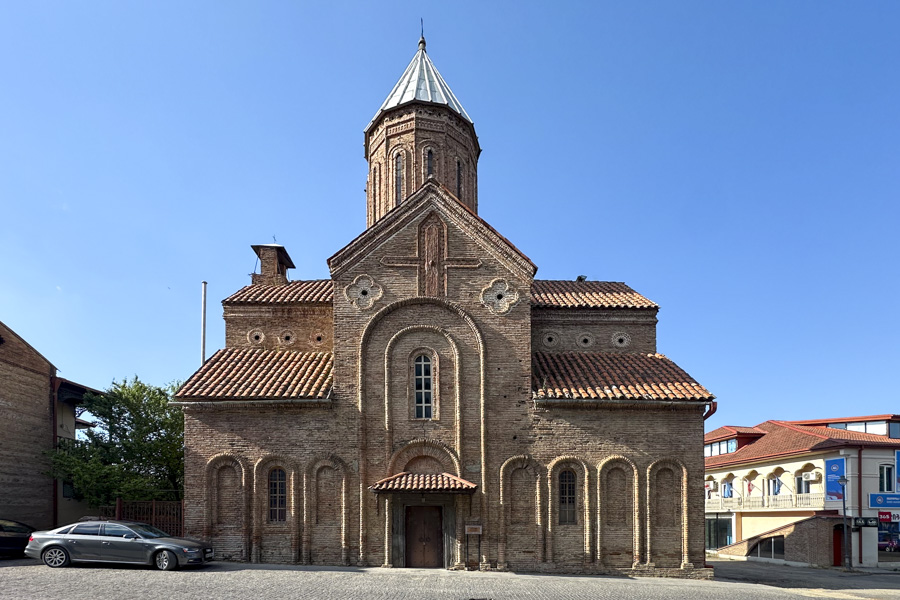
The Church of the Deity, dating from the fifth or sixth century, is among the city’s oldest surviving buildings. Its structure combines early stonework with later brick additions and a bell tower. Nearby, the medieval Church of the Holy Mother of God was built from traditional Kakhetian brick. Its exterior features brick arches, relief crosses, and a twelve-windowed dome.
Places to Visit Near Telavi
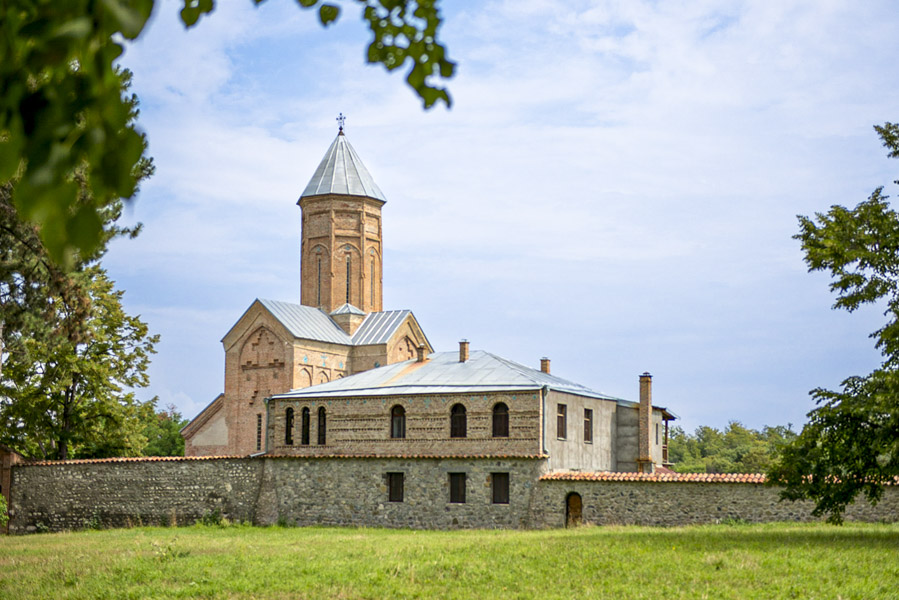
Several major Kakhetian landmarks sit just outside the city and require little travel time. Most are 10 to 40 minutes away by car, so they can be easily added to a Telavi itinerary.
Bochorma Fortress & Shuamta Monasteries
Bochorma, on the south-western slopes of the Gombori, makes a perfect stop when travelling from Tbilisi to Telavi. The complex includes ruined defensive walls, towers and the Church of St George, with surviving twelfth-century frescoes. At the end of Gombori Pass, the Shuamta monasteries stand in forested hills west of Telavi. Old Shuamta contains churches from roughly the fifth to seventh centuries, while New Shuamta dates from the 16th century.
Alaverdi Cathedral & Ikalto Monastery
Around 18 kilometres from Telavi, Alaverdi Monastery is one of Kakheti’s most important medieval religious complexes. The present cathedral dates from the early eleventh century, although monastic life here began much earlier. Ikalto lies around eight kilometres from Telavi and combines a medieval monastery with the ruins of an important academy. The complex developed into a major centre of Georgian scholarship during the Middle Ages.
Gremi & Nekresi Monasteries
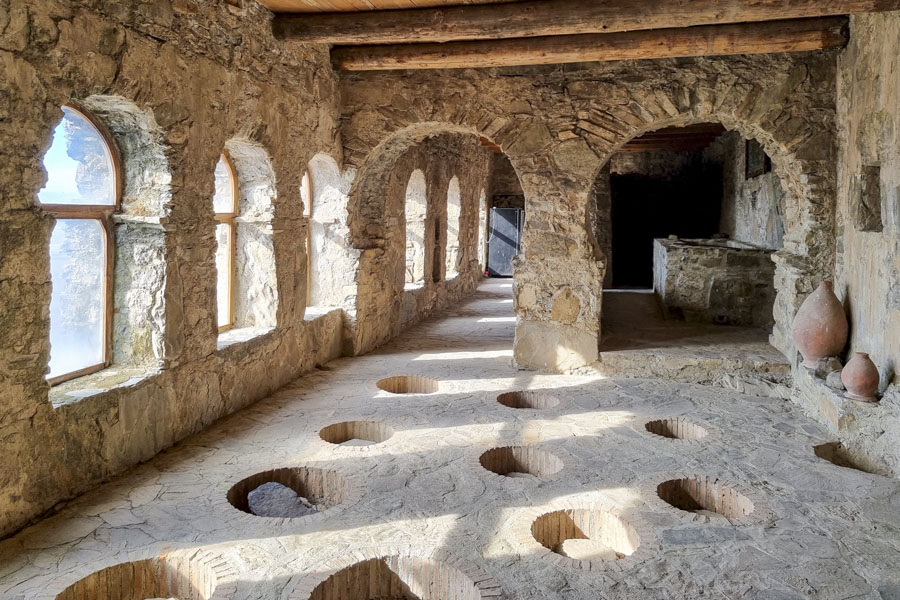
Gremi was the capital of Kakheti before the royal court later returned to Telavi. Its surviving complex includes the sixteenth-century Church of the Archangels and a palace-bell tower. Shah Abbas I’s campaigns devastated Gremi in the early seventeenth century. Nekresi occupies a wooded hillside above the Alazani Valley, east of Telavi. The monastery was founded in the sixth century and later became an important episcopal centre. Its buildings include early churches, a bishop’s palace, wine cellar, refectory and defensive tower.
Torghva’s Bath
Around 50 kilometres from Telavi, Torghva’s Bath is a mountain resort in the Stori River valley. Its thermal sulphur springs have a water temperature of around 36.5°C (98°F) and are traditionally used for bathing. Conifer forests and cool mountain weather surround the resort at roughly 1,800 metres above sea level.
Telavi Theatres
Telavi has one major theatre, the Vazha-Pshavela State Drama Theatre on Erekle II Square. Telavi’s theatrical tradition reaches back to the eighteenth century, when performances developed under King Erekle II. In 1782, a school theatre was established as part of the city’s royal educational institutions, followed by more organised theatrical activity in the 1790s.
The present theatre building opened in 1981 and remains one of Telavi’s most distinctive modern structures. Its large stained-glass façade faces the city centre, while the foyer incorporates a tower from King Erekle's period.
The theatre continues to stage Georgian and international drama and remains an active part of local cultural life. A performance can add another dimension to a Telavi cultural tour, although it is worth checking the current programme in advance.
Telavi Museums
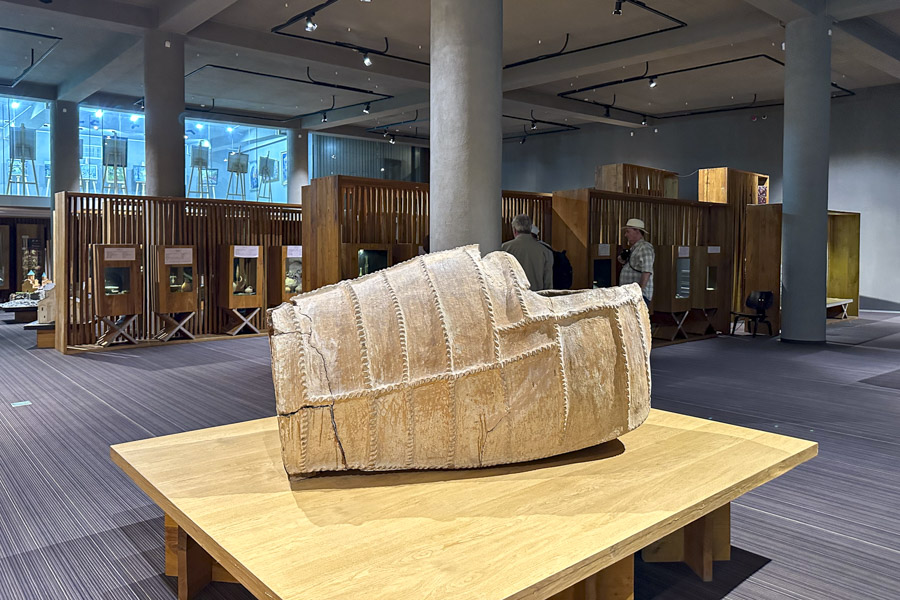
The Telavi History Museum, housed inside Batonis Tsikhe, presents archaeological finds, ethnographic objects, manuscripts, weapons, coins, books and items connected with the royal family. Its collections cover Telavi and Kakheti’s political, social and everyday history. The complex also contains the Ketevan Iashvili Art Gallery, with works by major Georgian and international artists.
Entertainment, Parks and Shopping
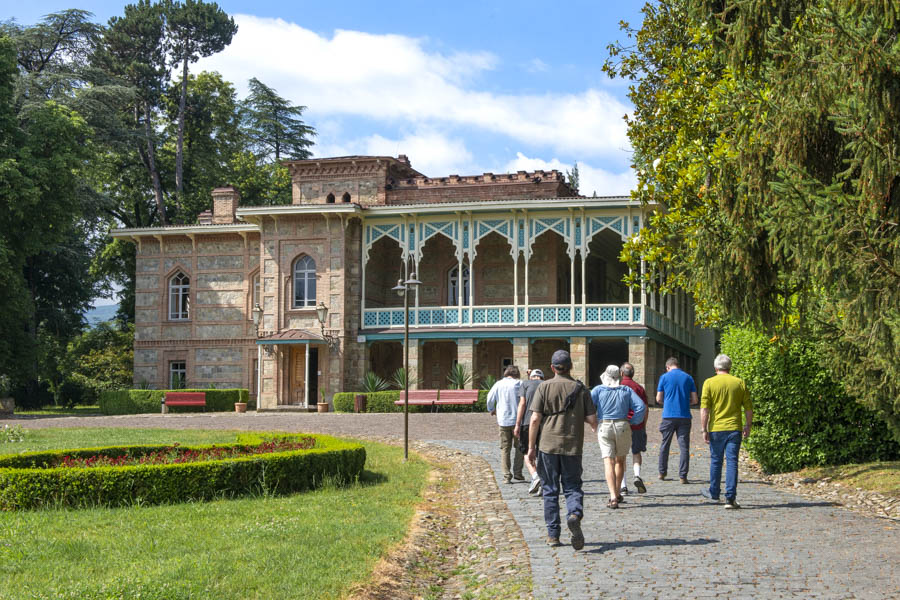
Telavi has a small but varied leisure scene, ranging from outdoor activities and local shopping to annual festivals. Parks such as Nadikvari offer open space and wide views, while smaller gardens provide quieter places to sit. Shopping revolves around Telavi Bazaar, local markets and a few modern retail spaces, all within easy reach of the city centre.
Entertainment in Telavi
Telavi adventure tours range from skydiving and hot-air balloon flights to outdoor trips into the surrounding mountains and countryside. Tandem skydiving operates from Telavi Airport, with jumps reaching approximately 3,000 to 4,200 metres. Hot-air balloon rides provide another aerial view of Kakheti’s vineyards, villages and mountain landscape. Flights usually last around 40 to 60 minutes, with complete experience taking two to three hours.
Founded by pianist Eliso Virsaladze, the International Music Festival in Telavi has taken place each October since 2010. Around 15 minutes from Telavi, Tsinandali Estate hosts the Tsinandali Festival, a major classical music event held each September.
Telavi celebrates Erekleoba, also known as Telavoba, on 7 November, King Erekle II’s birthday, with concerts, folk performances and food stalls. The annual autumn wine festival TelaVino brings family cellars and larger producers to the courtyard of Batonis Tsikhe. The Historic and Classic Auto-Moto Festival is another recurring event, bringing classic cars and motorcycles to the city centre.
Telavi Parks
Nadikvari Park is Telavi’s principal public park and the city’s most complete green space. Set on a small hill, it has walking paths, shaded benches, fountains, lawns and children’s attractions. An amphitheatre hosts concerts and public events, while viewing platforms open towards the surrounding lowlands and the Greater Caucasus. A monument to Ukrainian poet Lesya Ukrainka also stands here, recalling the period she spent in Telavi.
Closer to the centre, beside Batonis Tsikhe, lies a small public park that locals commonly call the Old Garden. Mature trees provide shade, while paved paths and benches make it popular for short walks. The space is part of everyday life, especially in the evenings, and nearby streets connect the garden with Erekle II Square.
Kadori Garden sits in the Dzveli Galavani district, among some of Telavi’s oldest urban areas. The garden overlooks old walls, stepped streets and houses built along the hillside. Peace Park, covering almost two hectares, includes children’s play areas, walking paths and Kakheti’s first skate park. Just outside the city, Shuamta Recreational Park features a forested option for short walks and cooler summer air.
Telavi Shopping
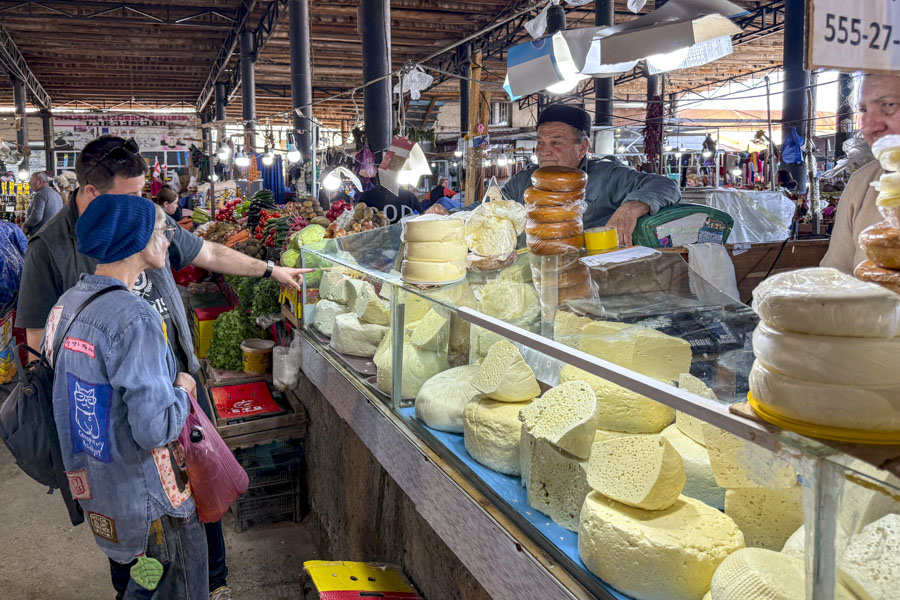
Shopping in Telavi revolves around seasonal produce, traditional Kakhetian qvevri wine and locally made artisan crafts.
The city’s major shopping experience is Telavi Bazaar, a working market visited daily by local residents. Stalls sell seasonal fruit and vegetables, cheeses, spices, churchkhela, fruit leather, honey, meat and other regional produce. Wine and chacha also appear throughout the market, alongside ingredients from Kakhetian and Tushetian cooking.
Wine is another obvious purchase in Telavi, whether bought directly from producers or from specialist shops in town. VinoOdor stocks around 200 wines from different Georgian regions. Visitors can also buy bottles after tastings at family cellars and wineries around the city.
Cheese is another good local purchase, particularly from Tsivis Kveli, a producer based in nearby Kurdgelauri. Founded in 2008, the factory makes dozens of varieties, including guda and sulguni, using milk from local farmers.
For crafts, the historic centre around Cholokashvili and Erekle II streets has several small workshops. Kera ceramic studio makes locally produced pottery, including bowls, plates and wine vessels. Iadoni Art & Crafts Workshop sells handmade textiles, feltwork, ceramics and decorative pieces. Tella leather workshop specialises in small leather goods and accessories.
For conventional retail, Telavi Mall on Alazani Avenue provides a modern alternative to the bazaar and craft shops. The shopping centre opened in 2025 and is useful for branded goods and everyday purchases.
Telavi Food
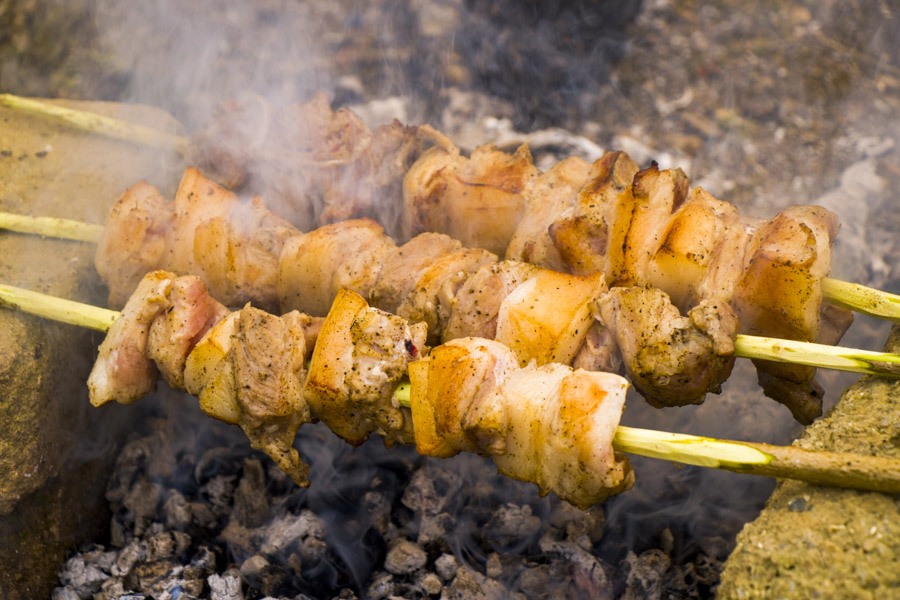
Food in Telavi includes grilled meat, fresh herbs, dairy, bread and vegetables, usually accompanied by regional wine. Meals are often leisurely, especially when shared dishes and toasts turn dinner into a small supra. Dining ranges from neighbourhood restaurants to winery tables and more contemporary kitchens in Telavi and nearby Tsinandali.
Georgian Cuisine
Georgian food in Telavi draws heavily on local farming traditions, with meat dishes, fresh herbs, cheese and seasonal vegetables. One of Kakheti’s signature dishes is mtsvadi, pork chunks grilled on skewers over charcoal or vine cuttings and served with onions. Spring brings chakapuli, a lamb or veal stew prepared with tarragon, green plums, herbs and white wine. Other local favourites include khashlama, tender boiled meat, fresh cheeses and bread baked in a traditional Georgian tone, a clay oven.
Where to Eat in Telavi?
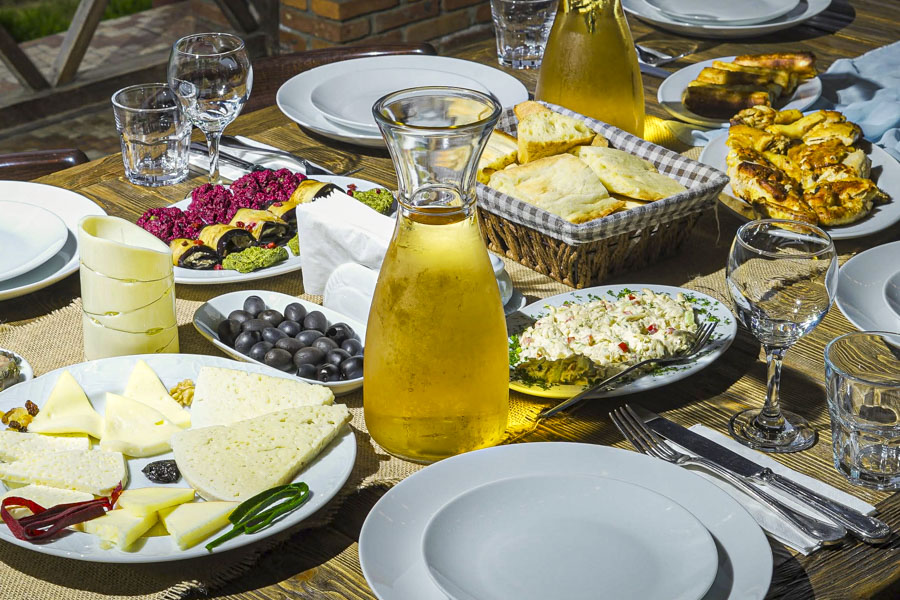
Photo source: www.facebook.com
Restaurant choice depends on whether you want traditional cooking, a winery setting or a more contemporary interpretation. Doli combines local ingredients with wood-fire cooking,giving familiar Georgian dishes a modern treatment. Badia focuses on Georgian food and seasonal, locally sourced ingredients. Kapiloni is a convenient central option for familiar Georgian dishes near the main sights.
Just outside Telavi, Château Mosmieri combines Kakhetian cooking with wines produced on the estate. In Tsinandali, Natella serves Kakhetian-inspired dishes made with seasonal ingredients, alongside wines from the estate.
Vegetarian Restaurants
Telavi currently has no dedicated vegetarian or vegan restaurant, but meat-free dishes are widely available. Georgian cuisine already includes many naturally meat-free dishes based on vegetables, beans and walnuts. Look for lobio (bean stew), pkhali (vegetable and walnut pâté), walnut aubergine, Georgian salad and lobiani (bean-filled bread).
Several popular restaurants also offer vegetarian and vegan choices. Doli has vegetable dishes alongside classics such as lobiani and seasonal pkhali. Badia also has plenty of meat-free dishes, including salads, beans, mushrooms and seasonal vegetables. Natella in nearby Tsinandali also serves several vegetable-based Georgian dishes.
Coffee Houses, Bakeries and Patisseries

Photo source: www.facebook.com
Telavi’s coffee and bakery scene is small, but it has gradually expanded beyond traditional bakeries. ArtBean Coffee is a convenient stop for coffee, tea and cold drinks, particularly convenient while exploring the city centre.
For pastries and baked snacks, Corner Bakery near Erekle II Avenue serves coffee alongside pastries and Georgian snacks. Patisserie Malina is another local option for cakes and sweet pastries. Traditional neighbourhood bakeries remain better for fresh shoti, khachapuri and lobiani, often sold shortly after leaving the oven.
For traditional sweets, Telavi Bazaar remains the stronger choice with churchkhela, fruit leather, dried fruit and other Kakhetian products.
Telavi City Transport
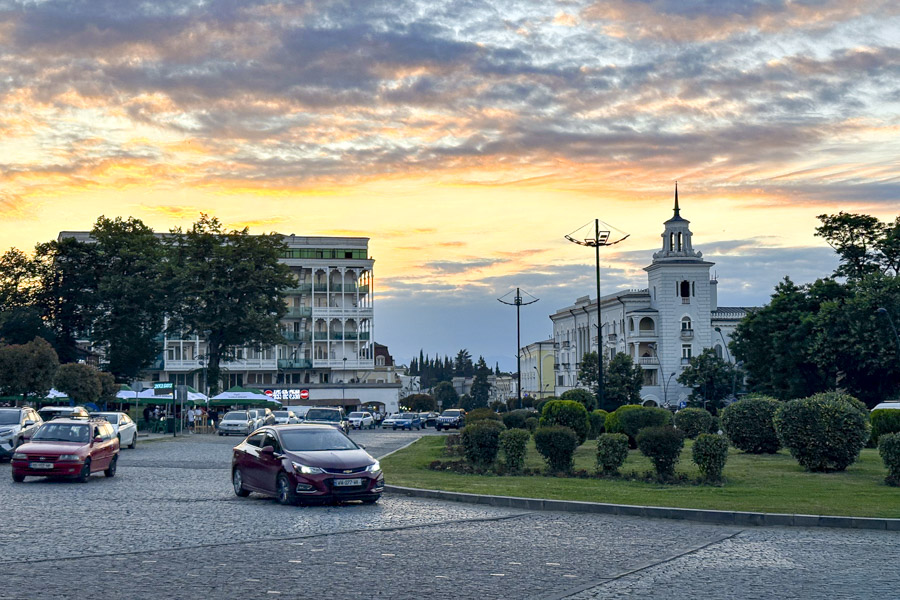
Telavi is compact enough to cross on foot in about 30–45 minutes. Because the city spreads across several hills, taxis are especially useful for uphill journeys or trips beyond the centre.
Telavi Buses
Municipal buses connect central Telavi with outer neighbourhoods and nearby villages, including Vardisubani, Kurdgelauri and Shalauri. Several routes begin or stop near Telavi Bazaar. Standard fares are 0.70 GEL on routes 1 to 8 and 1 GEL on routes 9 to 11.
Pay with a Telavi transport card or an accepted contactless bank card. Transport cards cost 2 GEL and you can top up at compatible payment terminals. Payments with accepted foreign-issued bank cards carry an additional 0.50 GEL charge per journey.
Minibuses (Marshrutkas)
Shared minibuses, known as marshrutkas, depart from the bus station area around Telavi Bazaar and Alazani Avenue. Routes include Akhmeta, Gurjaani and Kvareli, alongside services to surrounding villages. These are separate from municipal buses, and fares depend on the destination. Carry cash in Georgian lari and confirm the last return departure before setting out.
Telavi Taxi
Taxi applications such as Bolt and Yandex are available in Telavi and display an estimated fare before booking. Short journeys generally cost only a few lari, although prices vary with distance and demand. When taking a taxi from the street, agree the fare in lari before departing.
For wineries or monasteries outside town, discuss the entire journey rather than just the outward ride. Agree on waiting time, additional stops and the return fare before setting off. Check luggage space when several people are sharing a car.
How to Get to Telavi
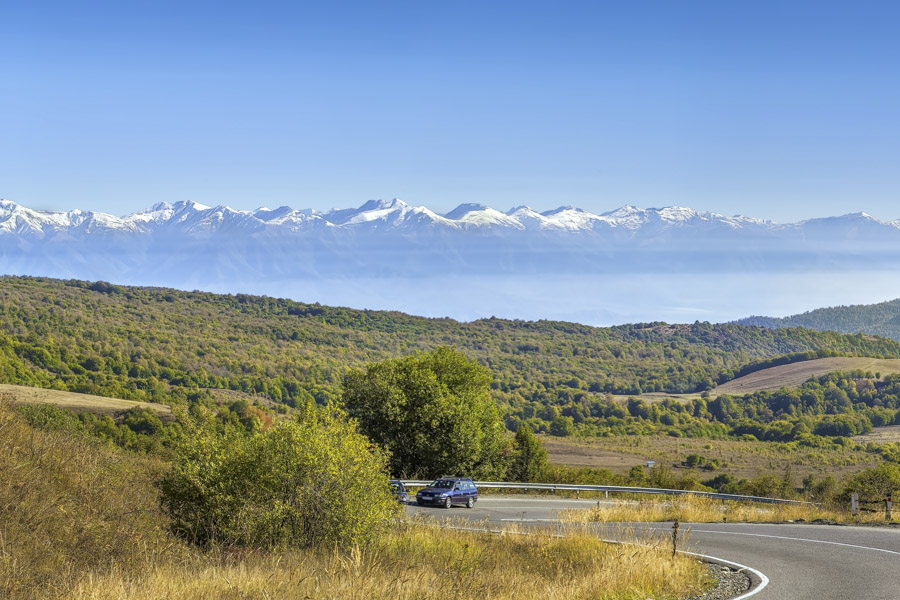
You can travel to Telavi from Tbilisi by minibus, shared taxi or private car. The journey crosses either the Gombori mountains or the lower countryside through Sagarejo and Gurjaani. The route affects both travel time and the scenery along the way.
By Road
The Gombori Pass is the shorter route, usually taking around two hours from central Tbilisi. The paved road climbs through woodland and mountain villages before descending towards Telavi. Sharp bends and changing visibility require careful driving. Snow and ice can bring restrictions, so check Roads Department updates before travelling in winter.
The alternative passes through Sagarejo and Gurjaani, avoiding the mountain pass. Allow around two and a half to three hours, depending on traffic and your starting point. A private transfer or hire car lets you add stops, but these will extend the journey.
By Minibus (Marshrutka)
Minibuses depart from Ortachala Central Bus Station and Navtlughi Bus Terminal, beside Samgori metro station. Ortachala is at 5 Dimitri Gulia Street; ask for the Telavi departures on the upper level. Budget around 15 GEL per person and allow roughly three hours, depending on the route and stops.
Departures run during the day, but published timetables differ between stations and can change. Confirm the next service locally and arrive early, as a full minibus may leave before its advertised time. Carry cash and ask where the driver will stop in Telavi.
By Shared Taxi from Isani
Shared taxis wait beside Isani metro station and generally depart once all four passenger seats are filled. Budget around 20 GEL per person, confirming that the quoted price covers one seat. Most take the Gombori road, with approximately two hours of driving, excluding the wait for other passengers.
Ask whether the driver can drop you near your accommodation. You can also negotiate a price for the whole car rather than waiting for it to fill. This is different from booking an ordinary city taxi for the entire journey.
By Plane
International visitors can fly into Tbilisi Airport and continue to Telavi by road. Allow around two hours for a direct transfer, depending on traffic and the chosen route. A prearranged driver avoids travelling into central Tbilisi solely to find onward transport.
Telavi’s Mimino Airport works as a pilot training and recreational aviation centre, including skydiving flights. Telavi Airport does not currently handle regular scheduled passenger services. United Airports of Georgia announced a tender for construction of a new passenger terminal on 28 August 2026.
Languages Spoken
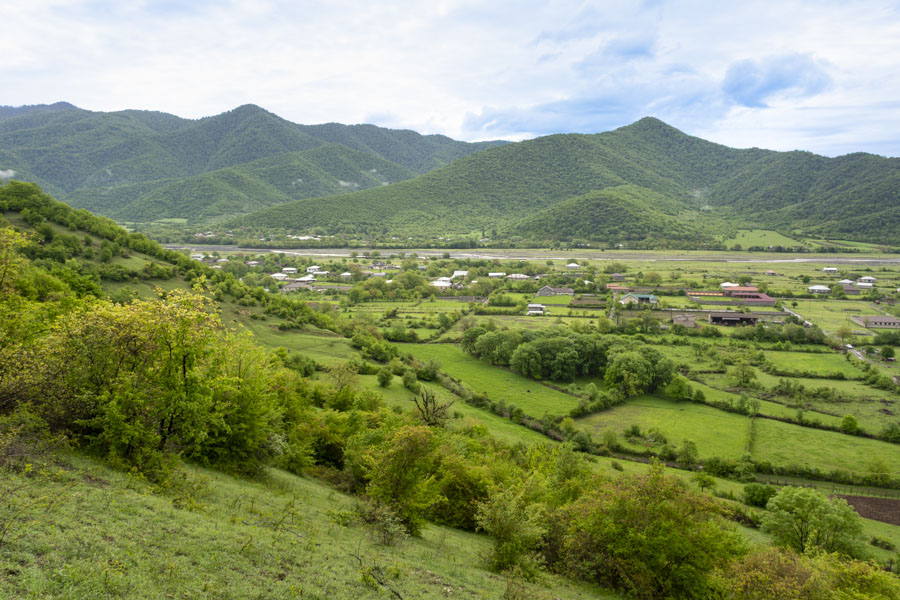
Georgian is the everyday language of Telavi, with local speech belonging to the broader Kakhetian dialect. English is often spoken in hotels, wineries and other tourism businesses, while Russian is also understood by some residents, particularly among older generations.
The countryside north of Telavi has an unusually rich linguistic heritage. In Zemo Alvani, around 28 kilometres away, Batsbi is an endangered language spoken by the Tsova-Tushi community. Batsbi is related to the Chechen and Ingush languages, and only a few hundred fluent speakers are reported to remain in the community.
Communities in Pankisi Gorge speak Kist, a local form of Chechen shaped by centuries of contact with Georgian. Fifty kilometres from Telavi, the village of Zinobiani preserves Udi, another endangered Caucasian language with deep historical roots in the region.
Security
Telavi is a small and remarkably welcoming city, with a calm atmosphere and a strong sense of community. Locals generally meet visitors with warmth, especially in family-run guesthouses, wineries and small restaurants. The centre is compact and easy to navigate on foot, while taxis are inexpensive for longer journeys.
For practical assistance, Georgia uses the nationwide emergency number 112, which connects callers with police, ambulance and fire services. English-speaking assistance is available. Travellers should also keep their accommodation details and insurance information accessible during the trip.