


One of Georgia’s major cultural getaways, Kutaisi, the third-largest city of the country, enchants with ancient history, riverside architecture, religious landmarks and exceptional urban subculture. Located in the Imereti region of western Georgia, its story reaches back to ancient Colchis, linking the city with Medea, Jason and the myth of the Golden Fleece. Strategically positioned in the Caucasus, Kutaisi once linked Black Sea maritime trade to the legendary arteries of the Silk Road.
Kutaisi served as a royal capital of Georgia, leaving Bagrati Cathedral and nearby Gelati Monastery among its defining monuments. The old Jewish quarter and historic synagogues mark Kutaisi as an important heart of Jewish heritage in Georgia. Nearby, Kutaisi’s historic Catholic Quarter, once known as the “French Quarter”, preserves the Holy Annunciation Temple.
The influential Blue Horns, a group of Georgian Symbolist poets, formed in Kutaisi in the early 20th century. The city later gave Georgian cinema a pioneer director, Vasil Amashukeli, who shot the first Georgian feature film. Theatre, music, poetry, cinema and underground subcultures have all shaped Kutaisi’s cultural identity.
Beyond the city, Prometheus Cave, Sataplia, monasteries and nearby canyons make Kutaisi an excellent base for exploring western Georgia. Our Kutaisi travel guide takes you through the city’s attractions, cultural heritage, day trips and essential travel tips.
Kutaisi Tours
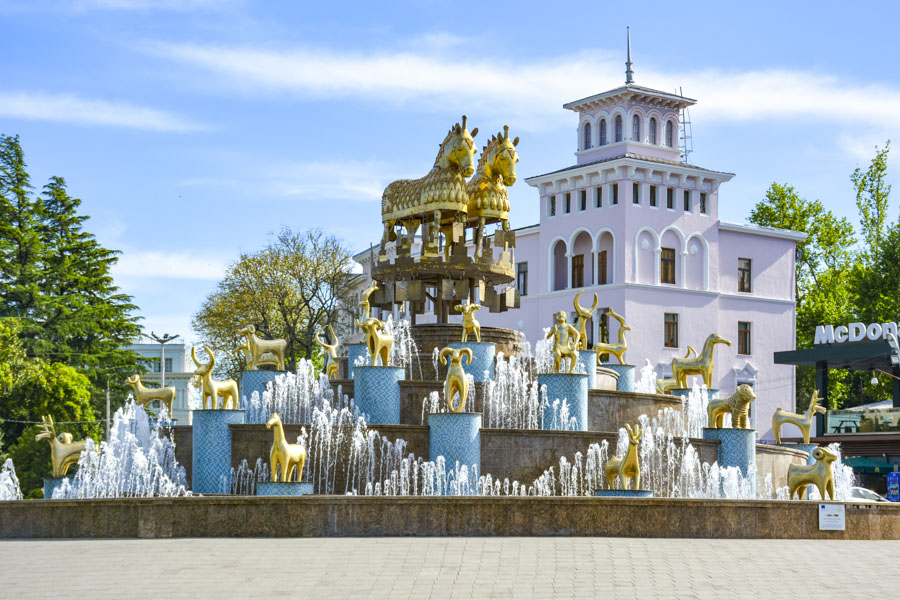
Travellers can easily reach most of western Georgia’s major monasteries, caves, canyons and wine-producing villages. Most Kutaisi sightseeing tours begin in the historic centre, visiting Bagrati Cathedral, Colchis Fountain and the Green Bazaar.
Popular routes lead to Gelati Monastery and Motsameta, both located within a short drive. Nature-focused day trips head towards Prometheus Cave and Martvili Canyon. Other itineraries take travellers to Martvili and Okatse, known for walking trails and views across the canyons.
Wine excursions from Kutaisi lead south to the villages around Baghdati. Family wineries introduce Imeretian winemaking, qvevri cellars, and the UNESCO-recognised traditional qvevri wine-making method, and local varieties such as Tsolikouri and Otskhanuri Sapere.
Travellers with more time can spend two or three days discovering Kutaisi, its surrounding monasteries and natural landmarks. Such Kutaisi-guided tours make the city a practical starting point for travelling across Imereti and western Georgia.
History of Kutaisi
Among Georgia’s oldest cities, Kutaisi traces its history to prehistoric settlements along the banks of the Rioni River. The city’s earliest history is closely connected with Colchis and the Greek myth of Jason and the Argonauts, who journeyed there in search of the Golden Fleece. Ancient tradition associated Aia, the residence of King Aeëtes, with the area around present-day Kutaisi.
During the 6th century, the Byzantine Empire, ruled from Constantinople (Istanbul), and the Sasanian Empire of Persia (Iran) were engaged in a long series of conflicts over territory and influence in the Caucasus, which includes modern-day Georgia.
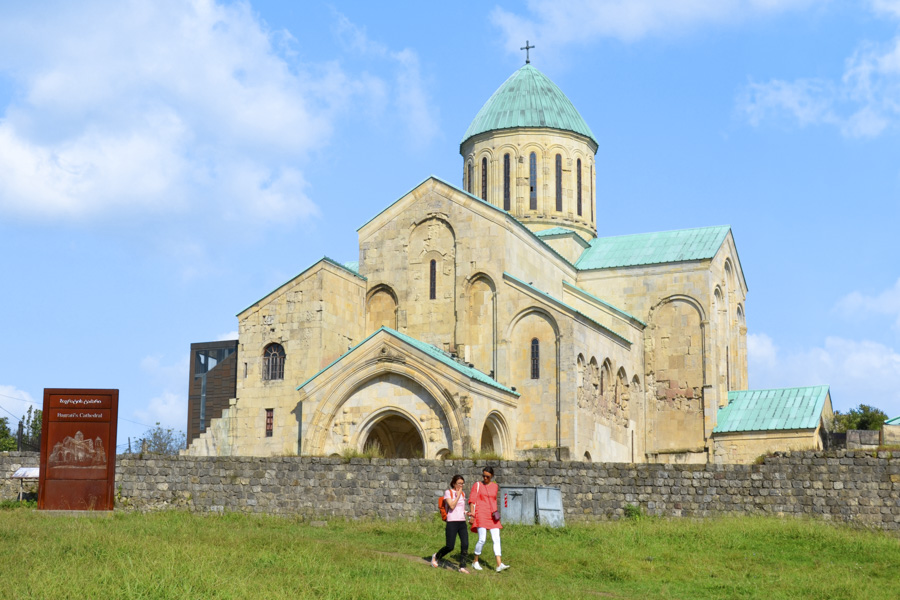
By the late 8th century, Kutaisi had become the capital of the Kingdom of Abkhazia under King Leon II (r. 778-828). From 1008 to 1122, it served as the capital of united Georgia. During this era, Bagrat III the Unifier (c. 963-1014) commissioned the Bagrati Cathedral, a Georgian Orthodox church dedicated to the Dormition of the Virgin Mary.
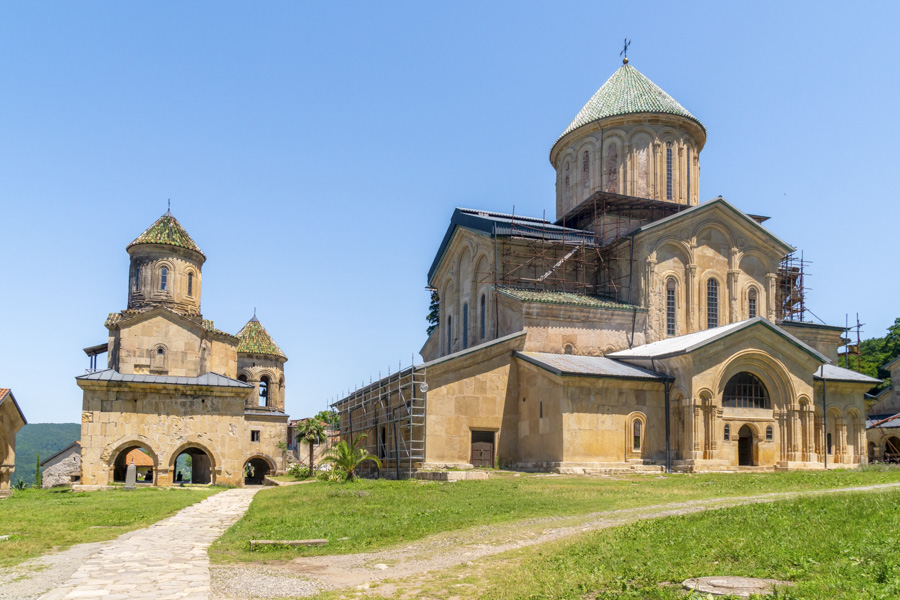
David IV the Builder (r. 1089-1125) founded nearby Gelati Monastery in 1106 as a royal monastery and educational hub. Its academy gathered scholars, theologians and philosophers, making mediaeval Kutaisi an important intellectual centre.
After the royal court moved to Tbilisi in 1122, Kutaisi remained politically important in western Georgia.
From the 15th century, Kutaisi became the capital of the Kingdom of Imereti. Its kings faced powerful local nobles and growing pressure from the Ottoman Empire. In the 18th century, Solomon I strengthened royal power and resisted Ottoman influence, although instability continued. Russia established suzerainty over Imereti in 1804 and annexed the kingdom in 1810.
From 1846, the city had become the administrative centre of the Kutaisi Governorate.
The 19th century brought schools, theatres, printing houses and an active literary scene. Kutaisi later became a heart of Georgian symbolism, with the Blue Horns founded here in 1916.
Soviet rule transformed the city through large-scale industry. An automobile factory opened in 1945, followed by machinery and electrical enterprises. After the Soviet collapse, many factories declined. The 1990s brought a new cultural movement of rock, punk, heavy metal and early Georgian hip-hop.
Georgia’s Parliament moved to Kutaisi in 2012 and returned to Tbilisi by 2019. Today, the city remains the administrative centre of Imereti.
Best Time to Visit Kutaisi
Kutaisi can be visited year-round, with each season offering a different experience. However, the best time to visit Kutaisi is spring, particularly from mid-April to early June. Mild days suit walks through the city, monastery visits and trips to nearby caves and canyons. Kutaisi weather is generally mild in spring and autumn, making both seasons particularly good for sightseeing.
Summer brings long days, warm evenings and full access to most natural attractions around Kutaisi. July and August can exceed 30°C (86°F), making early starts useful for outdoor activities in Kutaisi. Prometheus Cave and Sataplia provide cooler conditions during the hottest hours.
Autumn is another excellent season for Kutaisi travel, especially in September and October. Days remain mild, the hills gradually turn gold and rust, and canyon trips continue in comfortable weather. Imereti enters the grape harvest season, making family wineries particularly interesting.
Winter in Kutaisi is cool rather than severely cold, with daytime temperatures often around 5°C to 10°C (41°F to 50°F). Snow is uncommon in the city itself but more likely in surrounding higher areas. Museums, churches, cafés and karst caves remain easy to visit.
Things to Do in Kutaisi
For travellers wondering what to see in Kutaisi, the old town is a natural starting point. Things to do in Kutaisi also cover Soviet architecture and some of western Georgia’s most dramatic natural landscapes. Rafting trips depart from Kutaisi for rivers across western Georgia, with transfers taking travellers directly to the starting point.
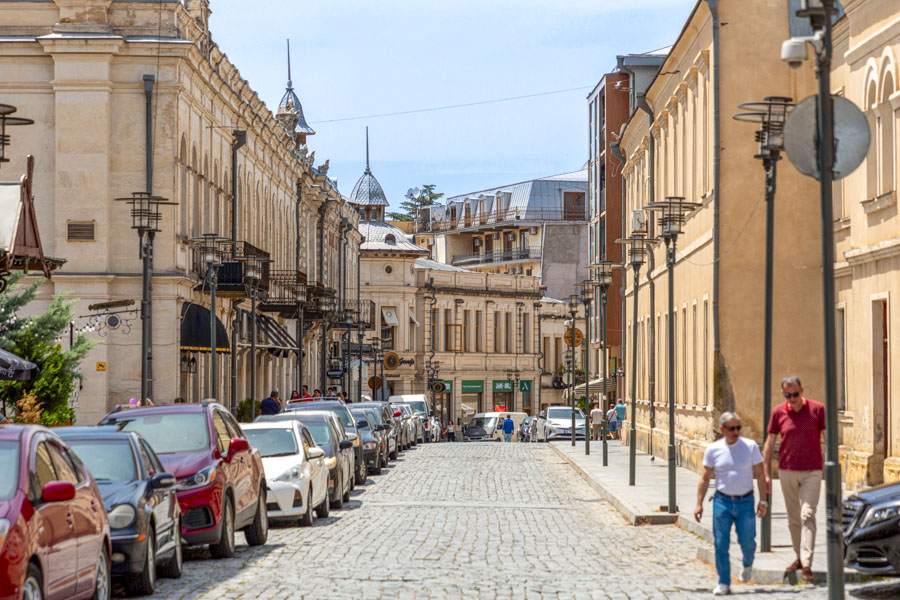
Traditional craft workshops introduce another side of the city. Visitors can attend a workshop to try Georgian cloisonné enamel and create a small piece of jewellery under the guidance of local artists. Kutaisi is equally rewarding on foot. Walking through its older streets, bridges and historic Jewish and Catholic quarters reveals residential architecture and hidden courtyards.
Places to Visit in Kutaisi
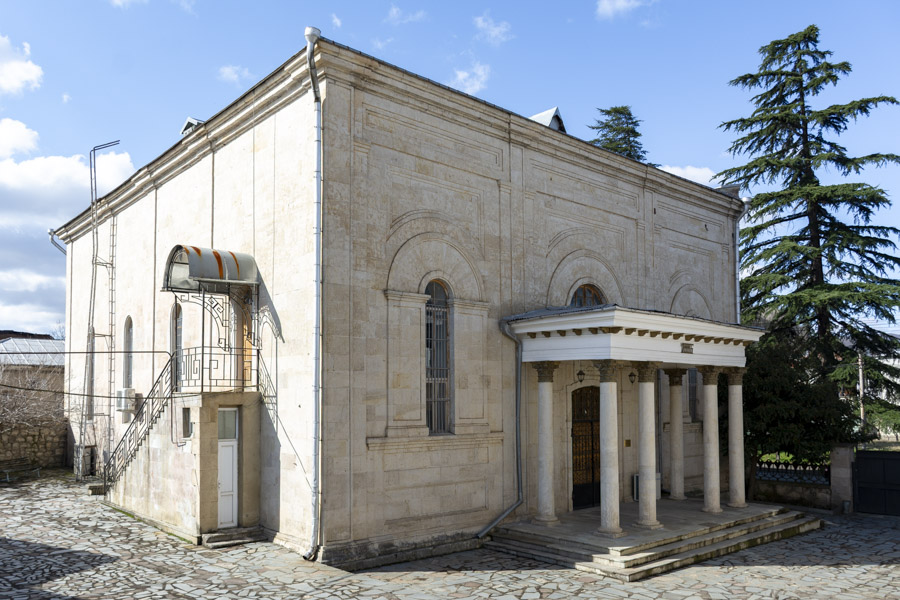
Most places to visit in Kutaisi lie within walking distance of the Rioni River and downtown. Start at David Agmashenebeli Square, where the Colchis Fountain, by Georgian architect David Gogichaishvili, points towards the city’s ancient past. Its gilded figures reproduce archaeological finds associated with Colchian culture, including animals, jewellery and the famous Tamada figure.
Above the city, Bagrati Cathedral dominates Ukimerioni Hill. King Bagrat III commissioned the cathedral around the beginning of the 11th century, during the unification of Georgia. Its stone ornamentation, surviving inscriptions and hilltop position make it the must-see landmark in Kutaisi.
The historic Jewish Quarter developed around Boris Gaponov Street. Three synagogues survive here, including the 1852 Old Synagogue, and a larger synagogue used by the community today.
Nearby, the former Catholic or French Quarter grew around the Holy Annunciation Temple. Capuchin missionaries settled in this part of Kutaisi during the 17th century. Many residents described as “French” were in fact Georgian Catholics. The church later became an Orthodox place of worship, and its Catholic architectural details remain visible.
The former Georgian Parliament building is worth seeing from the outside for its striking glass-and-steel dome and sweeping, eye-like design. Opened in 2012, it served as parliament’s seat until the legislature moved back to Tbilisi in 2019; take a moment to view its unusual silhouette against Kutaisi’s more traditional cityscape.
Keep an eye out for Kutaisi’s murals as you explore the city. Among many others, With Love, by Sasha Korban, shows a grandmother making Imeruli khachapuri on the blood bank building; Cranes and Pomegranates, by Ksyu Brice, uses symbols inspired by Georgia; and Care, by Irakli Qadeishvili and Zviad Esartia, can be found at Kutaisi International University.
Bridges of Kutaisi
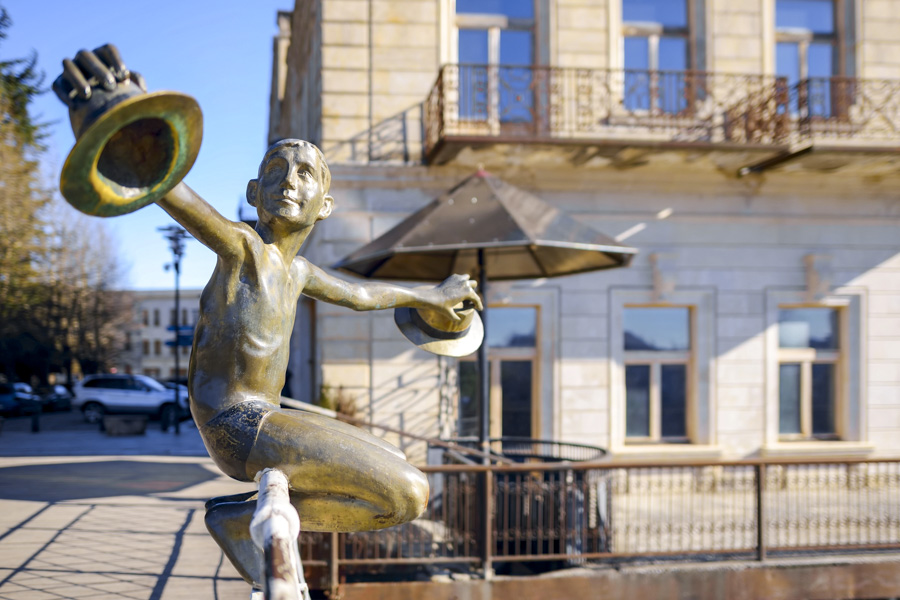
Crossing the Rioni River is part of exploring Kutaisi, with several historic bridges linking the city’s central neighbourhoods. The best-known is the White Bridge. It was rebuilt in 1872 after an earlier wooden crossing was damaged by flooding. Its iron structure arrived from France, and the white-painted metal gave the bridge its present name.
A small bronze figure known as Picasso’s Boy sits on its railing. The character comes from the iconic Georgian film An Unusual Exhibition (1968). It refers to the old “Baptism as a Kutaisian” tradition, when young men jumped from the bridge into the Rioni.
Little upstream stands the Chain Bridge, the oldest surviving crossing point in Kutaisi. Archaeologists have found traces of a fifth-century bridge at the site. The present crossing developed through several reconstructions, and chains introduced during the 1850s eventually gave it its name.
The Red Bridge followed in the 19th century and became Kutaisi’s first iron bridge. It opened in 1862 and remains among the city’s most popular river crossings. City legends associate its ironwork with a French factory later connected with the Eiffel Tower.
Places to Visit Near Kutaisi
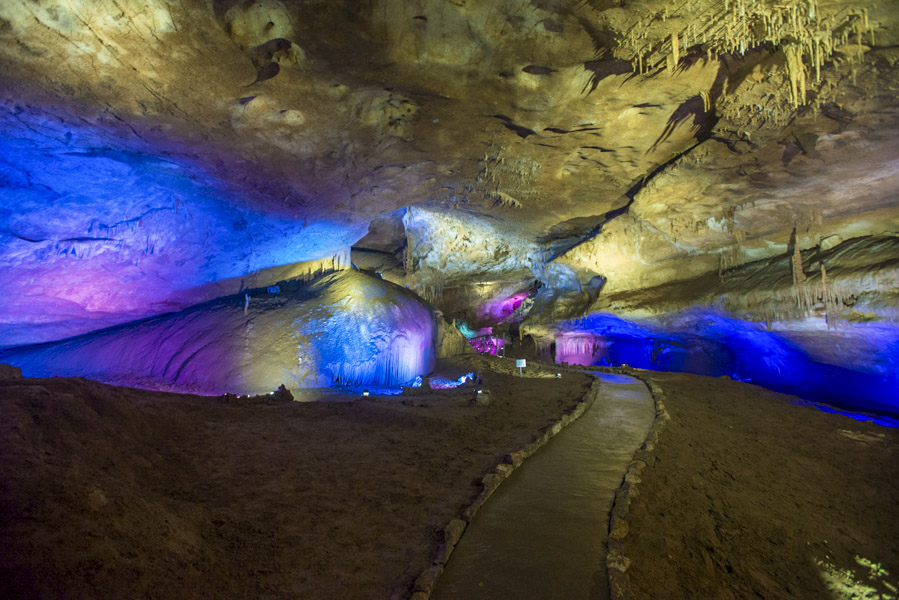
Some of the best day trips from Kutaisi lead to mediaeval monasteries, caves, canyons and the former spa town of Tskaltubo.
Around 11 kilometres from the city, Gelati Monastery is the most important historical excursion. David IV founded it in 1106 as a monastery and a centre of education. Its academy became a significant intellectual institution in mediaeval Georgia. Frescoes and a 12th-century mosaic survive inside the complex, which remains a UNESCO World Heritage Site.
Nearby Motsameta Monastery occupies a cliff above the Tskaltsitela River. Its name means “place of the martyrs” and refers to the Christian brothers, the Princes of Georgia, David and Constantine of Argveti, who, according to Georgian tradition, were executed during the Arab invasion for refusing to convert to Islam. The monastery is considerably smaller than Gelati, with its position above the wooded gorge providing much of its character. Shorapani Fortress preserves the ruins of ancient Sarapana, a strategic stronghold on the route between Colchis and Iberia.
For natural attractions, Sataplia Nature Reserve lies just seven kilometres from downtown. A karst cave, Colchic forest and preserved dinosaur footprints form the main visitor route.
A trip to the Prometheus Cave from Kutaisi takes visitors into some of Georgia’s largest show caves. Six of its 22 halls are open to visitors, with stalactites, underground lakes and a marked walking route. A seasonal boat section operates when conditions permit.
A Tskaltubo day trip from Kutaisi is particularly rewarding for Soviet-era architecture, spa history and nearby caves. The relationship between the two cities appears in Galaktion Tabidze’s poem From Tskaltubo to Kutaisi, later adapted into a popular song by Bidzina Ghoghoberidze. Its added refrain describes Tskaltubo as Kutaisi’s “adornment”. Once among the Soviet Union’s major spa destinations, Tskaltubo still contains monumental sanatoriums, bathhouses and Stalinist architecture.
Near Tskaltubo, Tetra Cave is a smaller karst cave known for its archaeological finds and unusual Soviet history. Around 15,000 artefacts were discovered there, and the cave was once used as a training site for cosmonauts. The cave has also been adapted to make it accessible to visitors with disabilities.
Visiting Martvili Canyon from Kutaisi is a half-day excursion, following the Abasha River through dense Colchic vegetation. Travellers heading to Okatse Canyon from Kutaisi can combine the canyon with other sights in northern Imereti. A 5.6-kilometre (3.5-mile) hike from Okatse leads to the Kinchkha Waterfall. The marked trail winds through woodland, offering a refreshing escape into nature.
The Katskhi Pillar, around 65 kilometres (40 miles) by road from Kutaisi, rises dramatically above the valley, its tiny clifftop church evoking Greece’s Meteora on a miniature scale. This remarkable limestone monolith is a striking day-trip destination near Chiatura, admired from below rather than climbed.
Museums
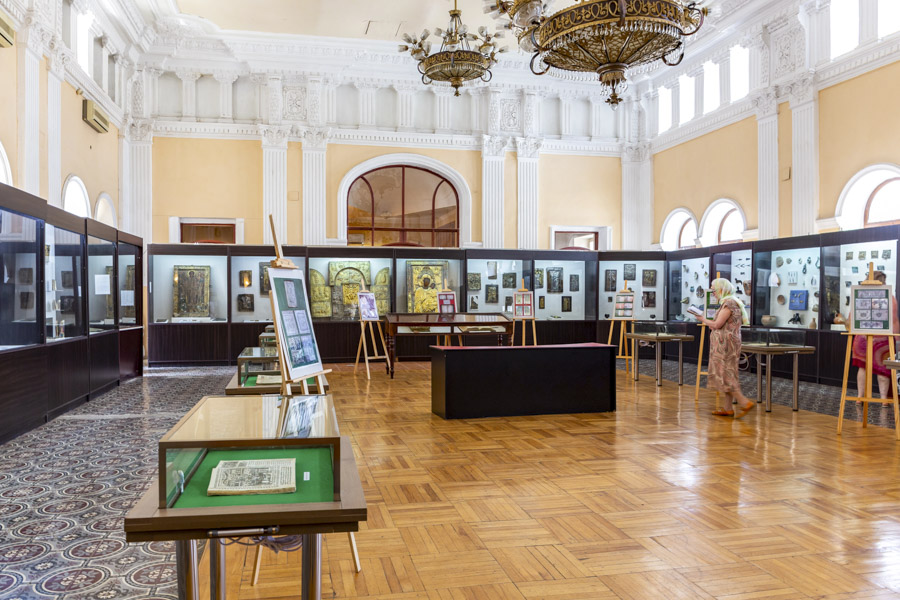
Kutaisi’s museums range from archaeology and fine art to cinema, music and sport. The most important museum is the Niko Berdzenishvili Kutaisi State Historical Museum, home to more than 200,000 objects. Its collections include archaeological finds, mediaeval religious art, manuscripts, coins and material from across western Georgia.
The David Mkheidze Photo-Cinema Chronicle Museum focuses on photography and film. It preserves cameras, photographs and archival material connected with Kutaisi and Georgian visual culture. Sports history has its own museum, where exhibits trace Georgian achievements in football, cycling, basketball, fencing and other disciplines.
Music lovers can visit the Zakaria Paliashvili House-Museum, dedicated to the iconic Georgian composer. The David Kakabadze Fine Art Gallery displays works by major Georgian painters and sculptors. The Museum of Military Glory and several memorial museums explore individual chapters and figures from Kutaisi’s past.
Around 30 kilometres (18.6 miles) from Kutaisi, the Vladimir Mayakovsky House Museum in Baghdati occupies the poet’s childhood home. The museum displays personal belongings, photographs and editions of his work. Around 40 kilometres (24.9 miles) from Kutaisi, the Vani Archaeological Museum presents finds from ancient Colchis. It features gold jewellery, bronze objects and burial artefacts uncovered at the nearby archaeological site.
Kutaisi Theatres
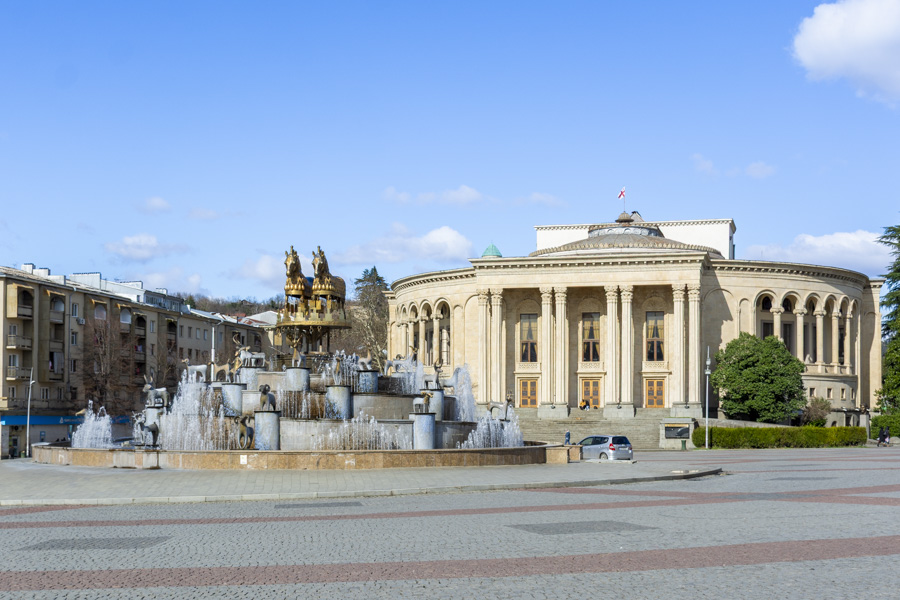
Kutaisi’s first documented performance took place in 1861, with amateurs staging Giorgi Eristavi’s comedy The Family Settlement. A professional company followed in 1880, establishing Kutaisi as an important axis of Georgian theatre.
The Lado Meskhishvili State Drama Theatre remains the city’s principal stage. Lado Meskhishvili directed the theatre between 1894 and 1905, and it took his name in 1940. The present building opened in 1955 and remains a striking example of Soviet monumental architecture.
Architect Mikhail Shavishvili designed the semicircular classical façade to frame David Agmashenebeli Square. The 1,100-seat theatre was granted Monument status in 2009. A smaller stage and museum dedicated to Kutaisi theatre history opened in 2008.
The Meliton Balanchivadze State Opera and Ballet Theatre opened in 1969 with Zakaria Paliashvili’s Abesalom and Eteri. Part of an earlier theatre, destroyed by fire in 1946, survives within the present structure. The Iakob Gogebashvili State Puppet Theatre has worked since 1946 and occupies a historic building dating from 1890.
Entertainment, Parks and Shopping in Kutaisi
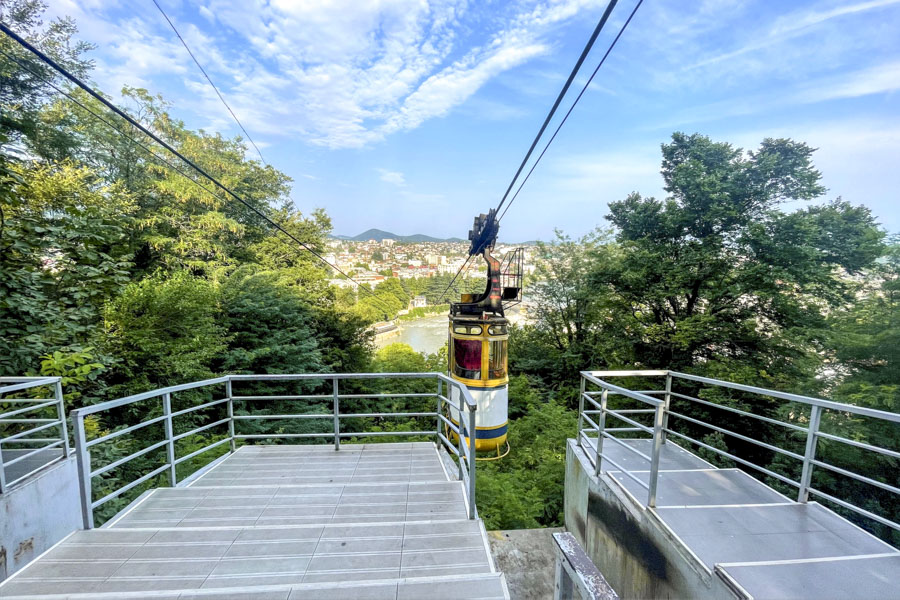
A cable car rising above the Rioni River towards Besik Gabashvili Park is Kutaisi’s strikingly arresting sight. Since 1961, its gondolas have carried passengers to the hilltop amusement park, with its Ferris wheel and city views. Back by the river, old gardens and busy bazaars remain part of everyday Kutaisi. Film festivals, football matches, live music and small bars bring a different pace after dark.
Entertainment in Kutaisi
Kutaisi’s biggest annual festival, Kutaisoba, or Gviriloba, takes place on 2 May. Concerts, performances and public activities take over, continuing a tradition linked to schoolgirls selling daisies for charity.
Autumn brings the Kutaisi International Short Film Festival, with international competitions, retrospectives, lectures, discussions and music evenings. FC Torpedo Kutaisi plays home matches at the 10,700-seat Ramaz Shengelia Arena. For Kutaisi nightlife, electronic music has a dedicated home at Reflector, hosting DJs and alternative acts.
Kutaisi Parks
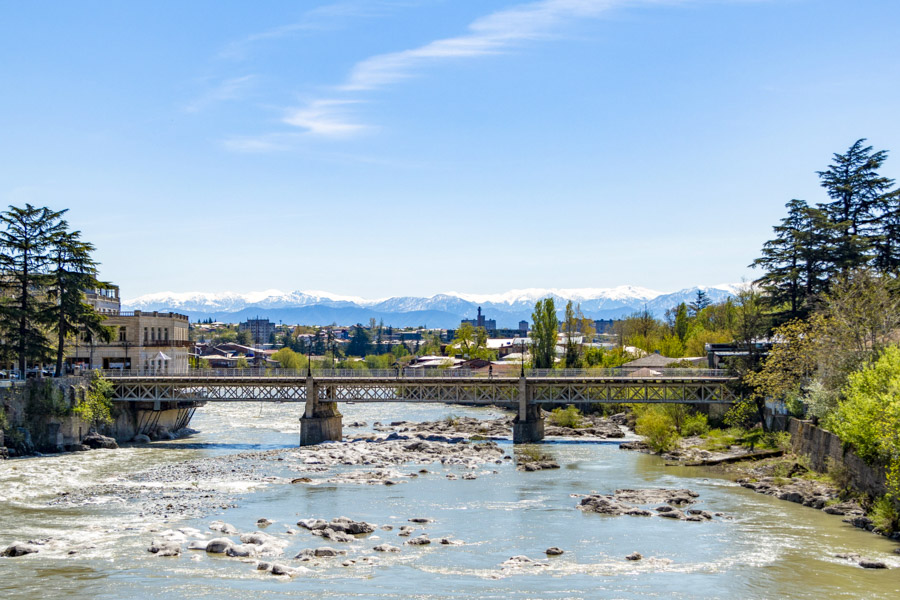
Among the loveliest green spaces in Kutaisi is Veriko Anjaparidze Square, commonly called the Garden of Love. Set beside the Rioni River near the White Bridge, it is a favourite meeting place for couples, students, families and older residents. Nearby, the 1961 cable car climbs to Besik Gabashvili Park, a hilltop amusement park above the city. The park itself mixes shaded paths with amusement rides and a Ferris wheel overlooking the city.
In the heart of the city, Kutaisi Boulevard has served as a public garden since the 19th century. Locals once nicknamed it the “Kutaisi Parliament”, as writers, politicians and public figures regularly gathered beneath its trees to debate. Monuments to Akaki Tsereteli, Zakaria Paliashvili and the Ishkhneli Sisters sit along its paths.
Kutaisi Botanical Garden contains around 700 species of trees, shrubs and other plants from different parts of the world. Natural terraces descend through the garden towards the Rioni River on its right bank.
Shopping in Kutaisi
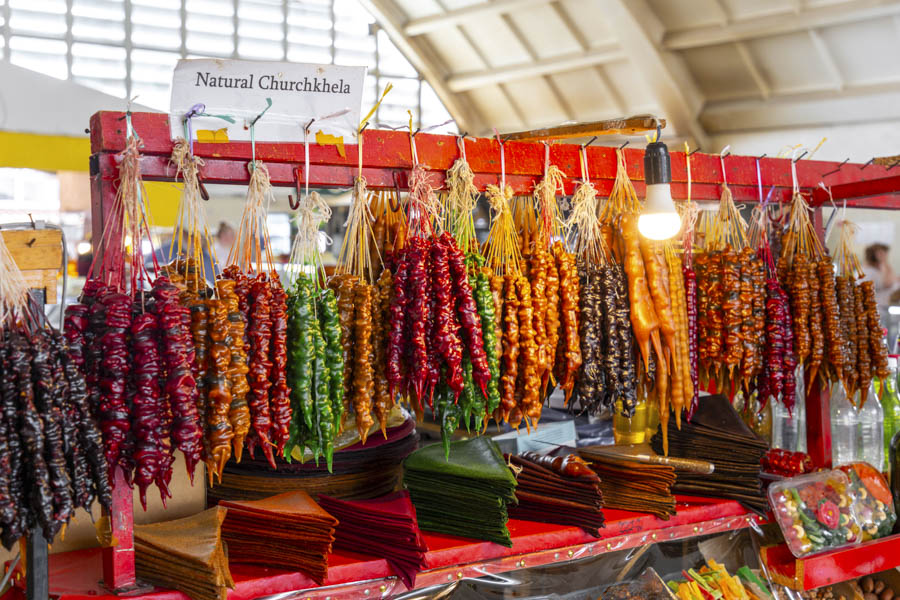
Kutaisi Green Bazaar (Mtsvane Bazari), close to the city centre, has served as a meeting and trading place for generations. Today, its two floors remain packed with fresh produce from the nearby villages, including fruit, vegetables, Imeretian cheese, spices, dried fruit, churchkhela, tklapi and homemade sauces. At the entrance, the Kolkheti relief, a spectacular ceramic panel by sculptor Bernard (Franz) Nebieridze, depicts historical and mythological figures associated with Kutaisi.
Additionally, head towards the large market district around Chavchavadze Avenue and the Central Bus Station. Open-air stalls, second-hand clothing shops and covered bazaars stretch across several blocks. Hidden inside the Trade Center Bazar, the Imereti Market Hall features faux-marble fountains, classical columns, statues and painted canvases above the stalls.
Gift shops sell Georgian ceramics, jewellery, wine accessories, traditional hats and decorative versions of the chokha. Local wine, churchkhela, spices and Imeretian cheese remain some of the easiest edible gifts to take home.
For conventional shopping, Karvasla and Grand Mall contain clothing, accessories and everyday goods.
Kutaisi Food
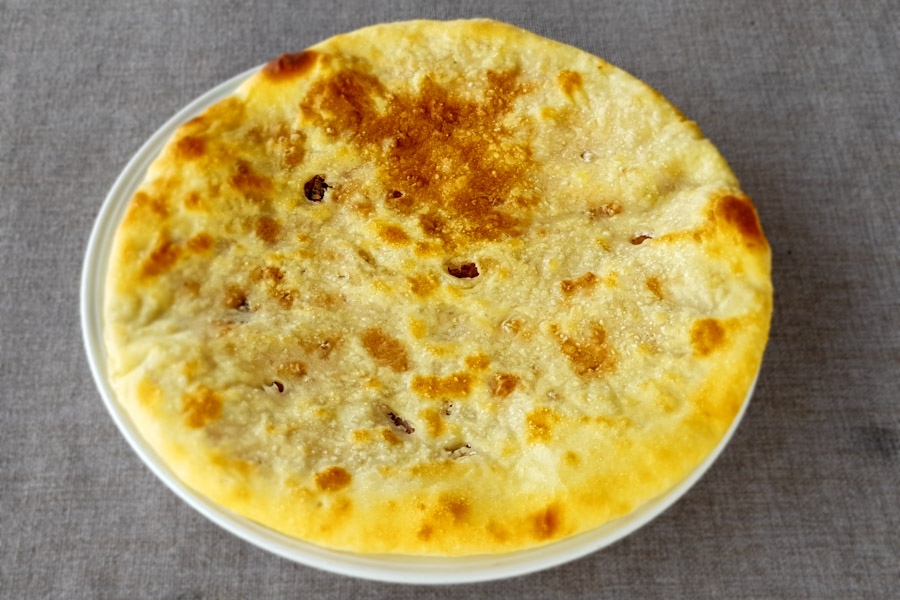
In Kutaisi, food is closely linked to Imereti. This region is known for fresh herbs, vegetables, cheese, corn, walnuts and local wine. Meals tend to feel informal and generous, with seasonal ingredients taking priority over elaborate presentation. Kutaisi restaurants range from family-run cellars and old workers’ canteens to contemporary dining rooms.
Georgian Cuisine
Imeretian cuisine gives Georgian food some of its most familiar dishes. Imeretian khachapuri encloses salty local cheese inside thin, round dough, making it lighter than its Adjarian counterpart. Local menus often feature mchadi corn cakes, walnut-based pkhali, and several varieties of Imeretian cheese. Chicken in isrimi (crushed semi-ripe grapes) with blackberry sauce is a local staple. Kuchmachi, which is prepared with walnuts and pomegranate, is a more distinctive regional speciality.
Kutaisi’s Jewish heritage survives in its cooking too. Kalia, a beef and pomegranate stew, belongs to the culinary tradition of the city’s Georgian-Jewish community.
For western Georgian cooking, Doli serves seasonal pkhali, Imeretian cheese, cornbread and dishes influenced by neighbouring Samegrelo. Palaty is another long-standing favourite, especially for kuchmachi, lobiani and Georgian wine.
Two places reveal a more old-fashioned side of Kutaisi. Bikentia’s Kebabery is a local eatery where diners eat kebab with spicy tomato sauce at standing counters. The simple Soviet-style interior is part of the experience.
For music and late evenings, Sisters occupies a historic building near Central Park. Vintage interiors, folk musicians and occasional polyphonic singing make it one of the city’s most recognisable dining rooms. Imereti is one of Georgia’s five main wine-growing regions alongside Kakheti, Kartli, Racha-Lechkhumi and Adjara. Tsitska, Tsolikouri, Krakhuna and Otskhanuri Sapere are among the varieties worth looking for on local wine lists.
Vegetarian Restaurants
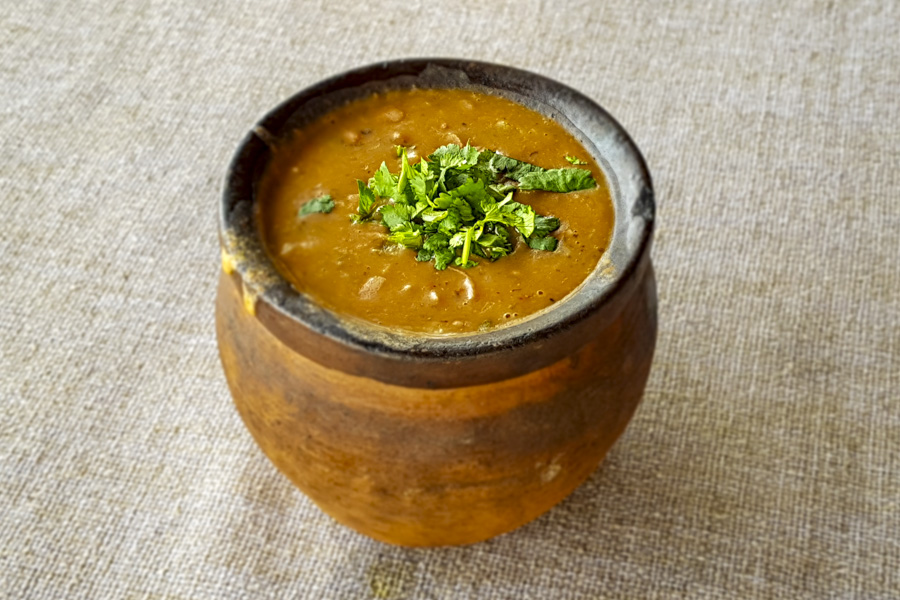
Among Georgia’s regional cuisines, Imeretian cooking is particularly friendly to vegetarians. Vegetables, herbs, walnuts, beans, cheese and corn form the basis of many traditional dishes.
Other common choices include lobio bean stew, lobiani bean-filled bread, and mchadi corn cakes. Imeretian khachapuri, round bread filled with local cheese, is one of the easiest meat-free meals to find across the city. Kutaisi hardly needs a specific vegetarian restaurant for travellers who don’t eat meat. Georgian restaurants usually carry several vegetarian dishes as part of their standard menu.
Walnut-filled aubergine, mushroom ojakhuri, beetroot pkhali and different versions of lobiani make plant-based eating easy. Seasonal cooking matters here too. Ekala pkhali, made from a local wild green, appears particularly in spring.
Coffee Houses, Bakeries and Patisseries
Kutaisi has unique small café geography, with locals informally calling one cluster of coffee shops “Kavebi”, meaning “the coffees”. An espresso at one of these tables, followed by a fresh bubliki, a type of bagel, from a nearby shop, is a small Kutaisi ritual.
Tea House Foe-Foe is popular for its Georgian teas and distinctive interior. The yellow walls are decorated with large-scale reproductions of works by Kutaisi-born artist Petre Otskheli.
Coffee culture has expanded quickly recently. Tuta pairs coffee with cinnamon rolls, cakes and other pastries in a contemporary café setting. Specialty coffee itself is still relatively new to Kutaisi, where it is now offered as a dedicated experience.
Traditional bakeries remain just as important. Fresh shoti, the canoe-shaped bread, lobiani, filled with beans, and Imeretian khachapuri are inexpensive and easy to find.
There is one more drink worth trying: Laghidze Water. Georgian pharmacist Mitrophane Laghidze created his flavoured mineral waters in Kutaisi in 1887. Tarragon, cream and other syrups are still closely associated with Georgian café culture.
City Transport in Kutaisi
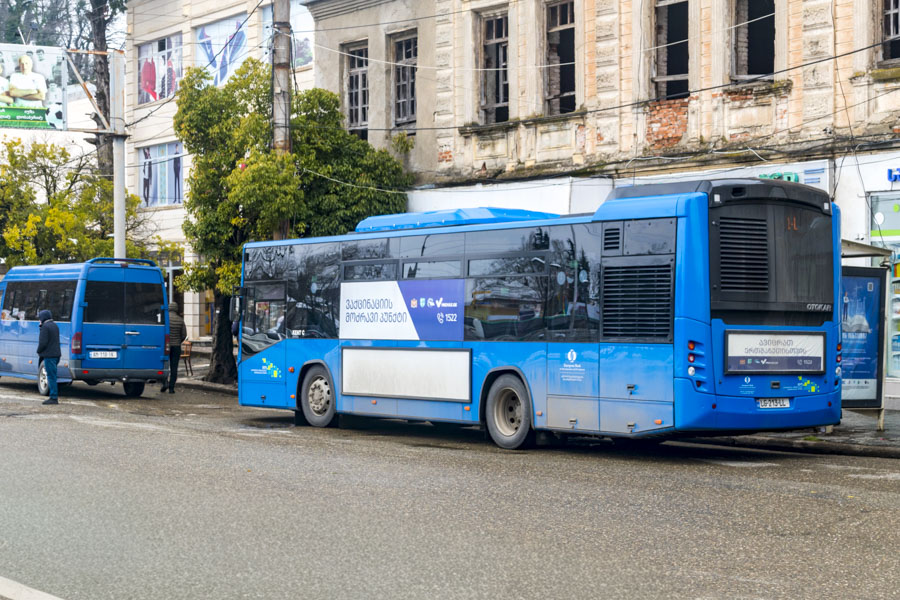
Getting around Kutaisi is straightforward, with most central attractions set within walking distance. The White Bridge, the Colchis Fountain, the Green Bazaar and the riverside streets can be covered in around 20 minutes, but visitors should allow extra time to explore each one, especially the Green Bazaar.
Public Transport
Buses, minibuses and taxis connect the downtown with outer districts, railway stations and the main bus station.
Buses and Minibuses
Routes cover the centre, outer neighbourhoods and important transport hubs across the city. Bank cards can be used for payment on municipal transport, alongside local travel cards. The Kutaisi Transport app is particularly useful for visitors. It provides route planning, timetables, stops and real-time arrival information for buses and minibuses.
Other Transport Options
Taxis
Taxis are inexpensive and practical for places outside the walkable areas. Bolt is widely used in Kutaisi and shows the fare before booking. Taxis are especially convenient for outer sites, the railway station, bus terminals and late-evening journeys.
Car Rental
A rental car is unnecessary if you plan to stay mainly in the central city. Additionally, traffic can get quite dense, and parking places are hard to find during busy hours in the city centre. It becomes much more useful for independent trips to monasteries, caves, canyons and villages around Imereti. Parking is generally easier than in Tbilisi, though central streets can become busy during the day.
Cable Car
The historic cable car is both transport and a Kutaisi attraction. This short journey is a convenient excursion to go uphill to Kutaisi.
Cycling in Kutaisi is possible, although dedicated cycle infrastructure remains limited. For most visitors, walking and occasional taxi or bus journeys are the easiest way to move around Kutaisi.
How to Get to Kutaisi
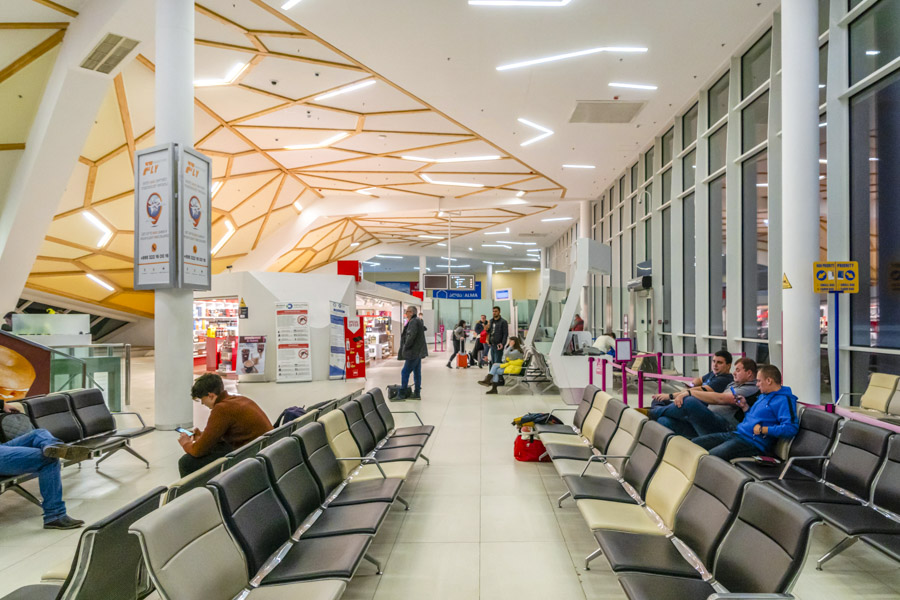
Travellers reach Kutaisi by road, rail or through Kutaisi International Airport. From Tbilisi, the drive takes around 3 hours and 30 minutes in good road conditions; from Batumi, approximately 2 hours and 15 minutes.
By Road
The main east-west highway connects Kutaisi with Tbilisi, passing Gori, Khashuri and Zestafoni before reaching Imereti. A private transfer or hire car gives greater flexibility for stops along the route. The road from Batumi passes through Guria.
By Minibus and Bus
Minibuses for Kutaisi leave Didube Bus Station in Tbilisi throughout the day. Didube serves most routes to western Georgia and stands directly beside the metro station.
Services generally arrive at Kutaisi’s main intercity station at 67 Chavchavadze Avenue. Regular minibuses connect Kutaisi with Batumi, Zugdidi and other western Georgian destinations. Timetables can change, so confirm the next departure at the station.
By Train
Rail travel is possible from both eastern and western Georgia. From Tbilisi, several westbound trains stop at Rioni Station, around 10 kilometres (6.2 miles) south of central Kutaisi. From there, travellers can continue by city bus or taxi. Georgian Railway coordinates some Rioni Station connections with long-distance services.
Direct passenger trains currently connect Kutaisi 1 Station with Batumi, with daily services in both directions. Check Georgian Railway before travelling, as schedules can change seasonally.
Express trains between Tbilisi and Batumi stop at Kutaisi International Airport railway station rather than Rioni. From there, travellers can continue to central Kutaisi by shuttle bus or taxi.
By Plane
Kutaisi International Airport (KUT) lies around 23 kilometres (14.3 miles) west of the city, and serves numerous international routes.
Kutaisi Airport to City
An official shuttle links the arrivals terminal with the Kutaisi Tourism Centre. The journey takes around 40 minutes and currently costs 5 GEL, with card payment available. Taxis are available outside the terminal and usually reach central Kutaisi in around 30 minutes.
Languages Spoken in Kutaisi
Georgian is the language you will hear most across Kutaisi, written in the country’s distinctive Mkhedruli alphabet. English is increasingly common among younger residents and staff working in hotels, restaurants, banks and tourism. Russian remains widely understood among older generations because of Georgia’s Soviet past.
Kutaisi has a recognisable way of speaking Georgian, shaped by generations of urban life. Some grammatical endings, pronunciation and vocabulary differ from standard literary Georgian. This local dialect is closely linked to the city’s social character. Visitors do not need to understand the dialect, but hearing it is part of experiencing Kutaisi beyond its monuments.
Security in Kutaisi
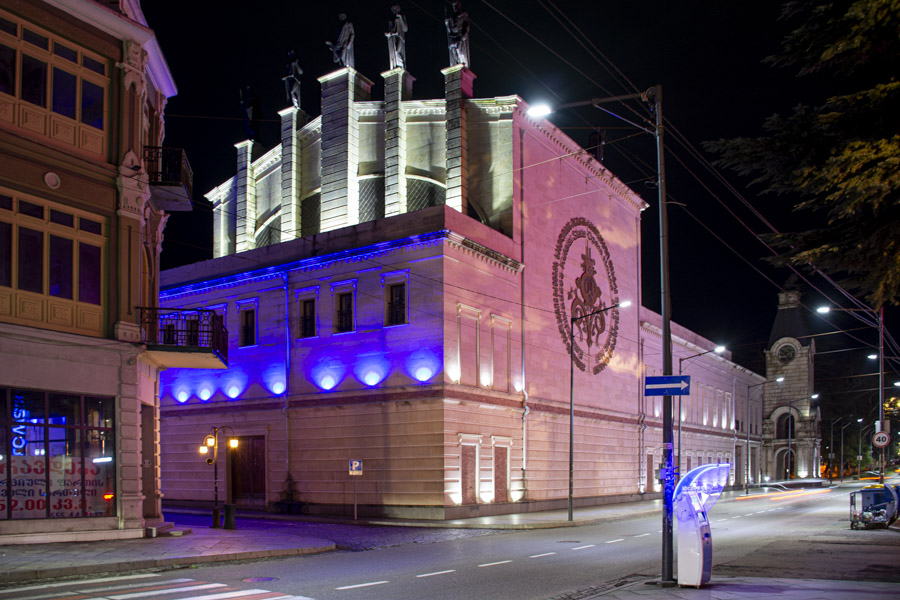
Just like in the rest of Georgia, the people of Kutaisi are generally warm, welcoming, and kind, and they readily share their culture over a glass of wine. The atmosphere in the city is relaxing and conducive to exploration.
Kutaisi is easy to navigate for visitors, particularly around the heart of the city and main tourist areas. As in any city, secure your valuables in busy markets, use registered taxis or ride-hailing apps, and cross larger roads carefully.
Travellers heading to caves, canyons or mountain areas around Kutaisi should follow marked routes and check weather conditions. Access to some natural attractions may change after heavy rain or during winter.