
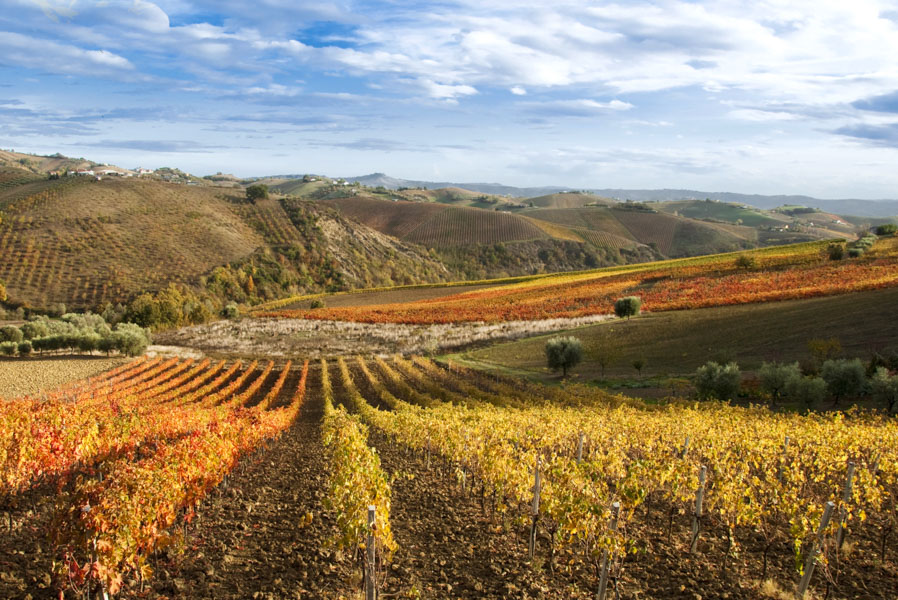
Tuscany is a region of central Italy shaped by Renaissance cities, mediaeval hill towns, vineyards, farmland and the Tyrrhenian coast. Its best-known landscapes lie in the Val d’Orcia and the wine country south of Florence, where cypress-lined roads pass stone farmhouses and towns cluster around bell towers on distant ridges. Yet Tuscany has much more to offer than its familiar rural views.
In Florence, marble churches, frescoed chapels and the muted grey of pietra serena form part of the everyday cityscape. Pisa recalls the centuries when it was a powerful maritime republic, while Lucca’s Renaissance walls now form a tree-lined promenade around the historic centre. Siena rises through steep brick lanes, and farther north, the marble quarries of the Apuan Alps carve pale terraces into the mountains above Carrara. The Arno flows through Florence and Pisa, while the Apennines form the wooded horizons of the region’s north and east.
Many works of art remain in the churches, palaces and public spaces for which they were created. Beyond the cities, vineyards, olive groves and cultivated valleys surround towns with distinct food traditions and local identities. A well-planned journey combines one or two major cities with time in the countryside or smaller towns.
Tuscany Tours
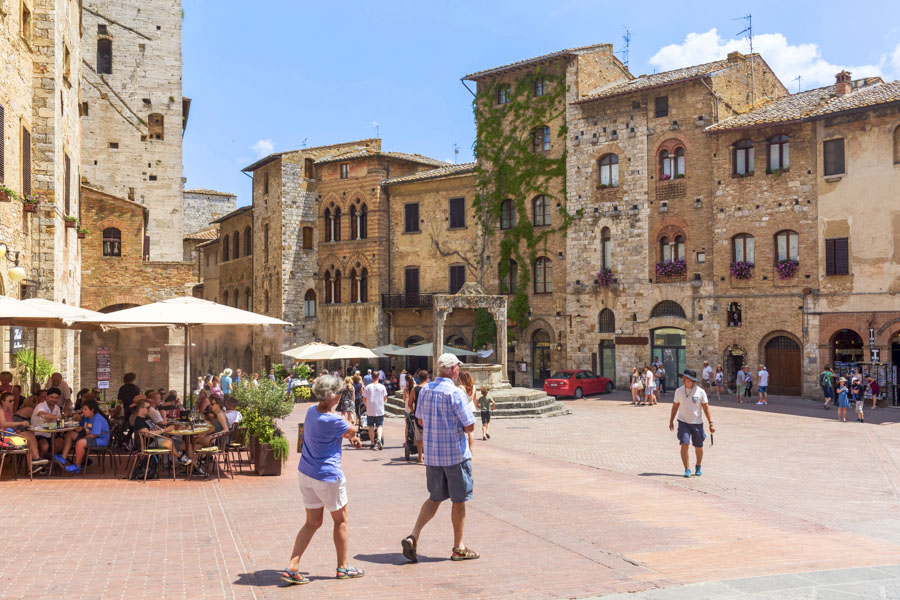
Rural Tuscany is easier to explore with someone familiar with its roads, estates and local producers. Many tours include pre-arranged winery visits, realistic travel times and a driver, allowing everyone to take part in the tastings. A guide can add context along the way, explaining how the wine regions differ, how farming has shaped the landscape and what may otherwise go unnoticed in a village church or historic town.
From Florence, a day trip might take you through Chianti with visits to two wineries, combine Siena with San Gimignano, or continue south through the Val d’Orcia to Pienza and Montepulciano. Other tours focus on food, beginning at a market or farm before moving into the kitchen. Cycling itineraries follow paved lanes and gravel roads through vineyards, olive groves and woodland.
Tuscany at a Glance
Florence is the regional capital and Tuscany’s main transport hub, but it is not necessarily a convenient base for every part of the region. Staying in one place may look simpler, especially if you are considering a countryside farmhouse, but it can mean spending several hours on the road each day. The table below gives a clearer idea of where to stay, for how long and whether a car is necessary.
| Area | Best for | Suggested stay | Transport |
| Florence | Renaissance art, museums and a first visit to Tuscany
|
2 to 4 nights | Excellent rail links; no car needed. |
| Siena | Mediaeval streets and exploring the south of the region | 1 to 3 nights | Bus, train or car: the railway station is outside the centre. |
| Pisa and Lucca | A compact two-city combination | 1 to 2 nights | Easy to visit by regional train. |
| Chianti | Wine, villages and countryside accommodation | 2 to 4 nights | A car, private driver or organised tour is recommended. |
| Val d’Orcia | Scenic roads, hill towns and thermal springs | 2 to 3 nights | Best explored by car. |
| Arezzo and eastern Tuscany | Art, antiques and a quieter urban base | 1 to 2 nights | Good rail connections. |
| Maremma and the coast | Beaches, nature and Etruscan sites | 2 to 5 nights | A car is useful beyond the main coastal towns. |
Best Time to Visit Tuscany
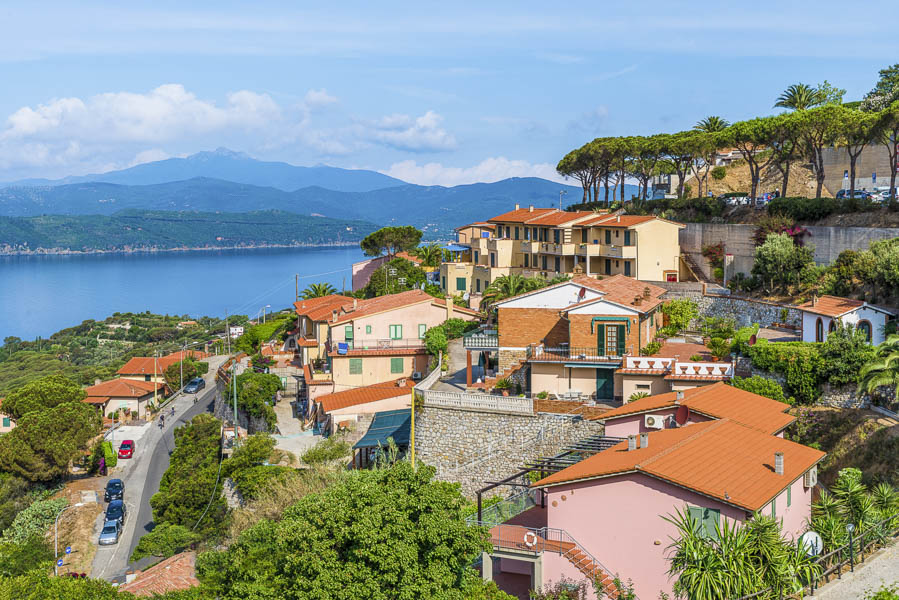
The best time to visit Tuscany is from April to June and from September to early October. These periods generally bring comfortable temperatures for exploring both cities and the countryside. July and August are better suited to coastal stays and evening events, while winter is ideal for museums, thermal baths and quieter city breaks.
April to June. April and May bring mild days for exploring Florence, Lucca and Siena on foot. Gardens are in flower, and much of the countryside is still green. By June, the weather is warmer and the programme of outdoor events is expanding, although daytime temperatures and visitor numbers are already rising.
July and August. These are generally the hottest months, and major sights in Florence, Pisa, Siena and San Gimignano remain busy. Summer also brings outdoor concerts, village festivals and Siena’s two annual Palio races, traditionally held on 2 July and 16 August. The coast is at its liveliest, while inland sightseeing is more comfortable in the morning or towards evening.
Ferragosto, on 15 August, is one of Italy’s main summer holidays. Beaches and resorts are particularly busy around this date, while opening hours may change and some family-run businesses close for a summer break.
September and October. Early autumn is particularly appealing in the wine regions. The grape harvest varies by area, grape variety and weather but usually brings visible activity to vineyards and estates. This is a busy working period for producers, so winery visits should be arranged in advance. Temperatures are often comfortable for walking, and restaurant menus begin to feature mushrooms, game and other seasonal ingredients. Chestnut festivals take place in several upland areas, particularly in October, while the olive harvest may begin towards the end of this period.
November. Olive harvesting continues in many parts of the region, and San Miniato holds its main white truffle festival over several weekends. Autumn colour may still be visible at lower elevations, although the timing varies according to altitude and weather. Rain is more frequent than in early autumn, so a rural stay is best combined with museums, historic towns or thermal baths within easy reach.
December to March. Winter days are short, and some rural accommodation and restaurants close until spring, particularly away from larger towns. Florence, Pisa, Lucca and Arezzo remain good choices for museums, churches and historic centres. The thermal areas of southern Tuscany are also appealing in colder weather. Christmas programmes vary by town and year, while the Viareggio Carnival generally takes place sometime between late January and early March. Exact dates should be checked before travelling.
History of Tuscany
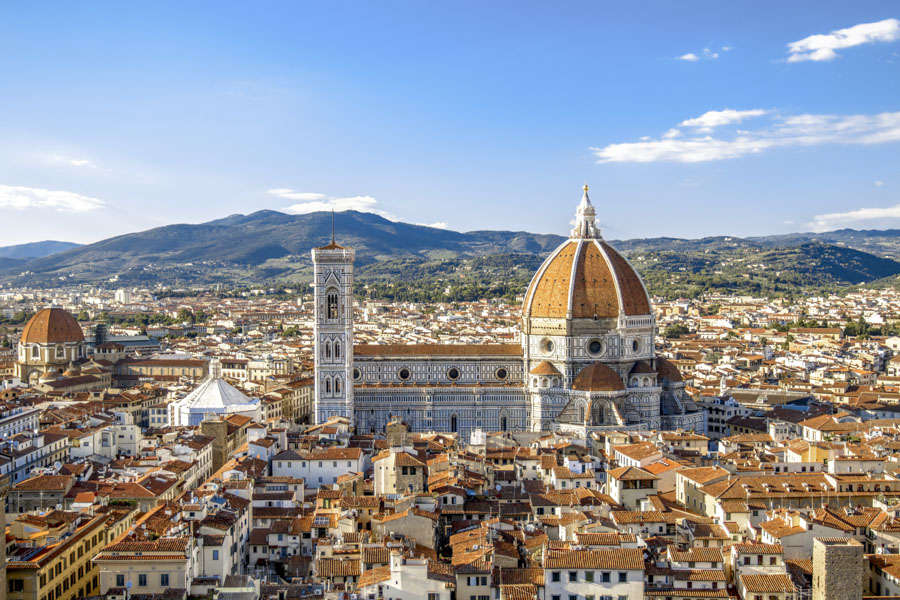
Tuscany takes its name from the Etruscans, known to the Romans as the Tusci. Their cities flourished across central Italy before they were gradually conquered and incorporated into the Roman state during the fourth and third centuries BC. Etruscan civilisation is often easier to trace beyond Florence: in the necropolises of Sovana and Populonia, the archaeological collections of Volterra and Cortona, and the vie cave, ancient routes cut deep into the volcanic tuff of southern Tuscany.
Roman settlement left another lasting imprint. Lucca still preserves the orthogonal street plan of the colony founded there in 180 BC. Pisa’s access to the Arno and the sea supported its development as a port and trading centre, a history illustrated by the Roman vessels and associated finds displayed at the Museum of Ancient Ships in Pisa.
After the fall of the Western Roman Empire, the region came under Ostrogothic, Byzantine, Lombard and then Frankish control. By the Middle Ages, Florence, Siena, Pisa and Lucca had developed into wealthy, competing communes, each with its own economic and political interests. Pisa looked towards the Mediterranean, while Lucca prospered through the silk trade and its position on the Via Francigena. Siena’s banking and commercial wealth helped finance the civic architecture around Piazza del Campo. Florence drew power from textiles, banking and territorial expansion, eventually becoming the dominant state in the region. The walls, towers and fortified villages that survive from this period were built for defence and control as well as civic or family prestige.
Under the Medici, Florence became the leading Tuscan power and one of the principal centres of the Renaissance. The artists, architects, writers and scholars who worked there exerted an influence far beyond the city. The prestige of Tuscan literature also helped establish the basis of standard Italian: the first dictionary produced by the Accademia della Crusca drew particularly on the fourteenth-century Florentine of Dante, Boccaccio and Petrarch.
In 1569, Medici territory became the Grand Duchy of Tuscany, which eventually encompassed most of the modern region. It was annexed to the Kingdom of Sardinia in 1860 and became part of the newly proclaimed Kingdom of Italy the following year. This sequence is easiest to follow on the ground, where Roman street plans, communal squares, Medici fortresses and later civic buildings often stand within the same city.
Places to Visit and Where to Stay in Tuscany
Florence and Central Tuscany
In Florence many of its principal sights are within an easy walking distance of one another. From the Duomo, Via dei Calzaiuoli leads to Piazza della Signoria, where sculptures stand in the open square and beneath the arches of the Loggia dei Lanzi. Palazzo Vecchio rises on one side, while the Uffizi extends towards the Arno. North of the cathedral, the Accademia can be booked in advance to see Michelangelo’s David.
Across the river, Oltrarno has retained a strong association with Florentine craftsmanship. Workshops can be found around Santo Spirito, San Frediano and San Niccolò, alongside small museums, antique shops and neighbourhood squares. Palazzo Pitti stands at the foot of the Boboli hill, with the gardens rising behind it through avenues, fountains, grottoes and terraces.
A separate walk through San Niccolò leads uphill to the Basilica of San Miniato al Monte. Its white-and-green marble façade is one of the clearest examples of Tuscan Romanesque architecture, while the interior preserves an inlaid mediaeval floor, an apse mosaic, a raised presbytery and an eleventh-century crypt. The churchyard looks across the whole city, with the cathedral dome, towers and terracotta roofs gathered below.
Where to stay: The historic centre places the main museums and monuments close at hand. Accommodation around Santa Maria Novella station works particularly well for day trips, as direct railway lines run to Pisa, Lucca, Siena and Arezzo. Oltrarno is a good base for Palazzo Pitti, the Boboli Gardens and the streets around Santo Spirito.
Pisa, Lucca and North-Western Tuscany
In Pisa, the Leaning Tower forms part of a much larger architectural ensemble. The cathedral, baptistery, tower and Camposanto stand together in the Piazza dei Miracoli, their marble arcades and alternating bands of pale stone creating a remarkably unified scene. Inside the cathedral, the long nave and Giovanni Pisano’s carved pulpit give a clearer sense of the scale and ambition behind the complex. Admission to the Leaning Tower is arranged for a fixed time, so the other monuments can be planned around the booked slot. Afterwards, the streets towards the Arno lead into a different side of Pisa, shaped by university buildings, arcaded lanes and riverside palaces.
Lucca is particularly rewarding on foot or by bicycle. Its 4.2-kilometre walls form an elevated, tree-lined circuit above the historic centre, with ramps leading down towards churches, gardens and narrow shopping streets. Piazza dell’Anfiteatro preserves the elliptical outline of the Roman amphitheatre beneath its curved façades. For a view across the red-tiled roofs, Torre Guinigi rises above the centre, crowned by a distinctive cluster of holm oaks.
Where to stay: In Pisa, the historic centre is convenient for exploring both Piazza dei Miracoli and the streets around the Arno. Accommodation near Pisa Centrale simplifies onwards rail travel and airport transfers via the PisaMover shuttle. In Lucca, staying within the walls places the main squares, museums and evening streets close at hand, while the area near the railway station is practical for regional journeys. Travellers prioritising airport and rail connections may prefer Pisa, while those planning an unhurried overnight stay may find Lucca more suitable.
Chianti
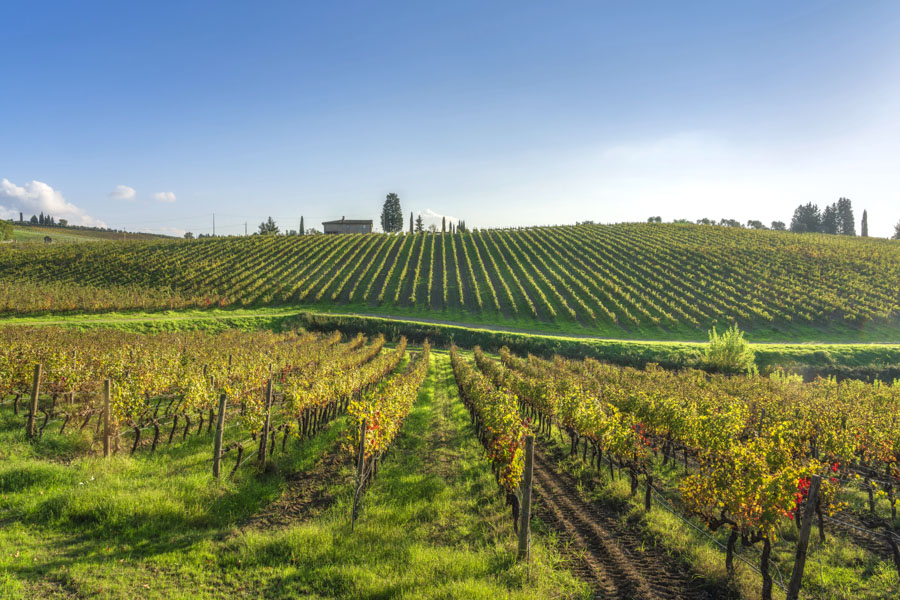
Chianti has no single centre. It extends across the hills between Florence and Siena, encompassing vineyards, olive groves, oak and chestnut woods, castles and villages built along high ridges. The SR222, better known as the Chiantigiana road, runs south from Florence through Greve and Panzano towards Castellina, providing the clearest geographical route through the area.
The best-known central part is the historic Chianti Classico territory, whose wines carry the black rooster emblem. The name refers to a broad rural district rather than a single town, and its principal settlements differ noticeably in layout, surroundings and access to the countryside.
Greve is the first substantial town reached from Florence. Its triangular Piazza Matteotti is framed by stone arcades sheltering food shops, restaurants and wine bars. Above Greve, a narrow road climbs to Montefioralle, a small fortified village of stone houses gathered around the former castle.
Farther south, Castellina has a fortress, an archaeological museum and the covered Via delle Volte, which follows the line of its old defences. Radda lies to the east on a rocky ridge, with a compact centre overlooking vineyards and wooded hills. Around Gaiole, the points of interest are more widely dispersed through the countryside and include the castles of Brolio and Meleto.
Where to stay: Greve is the easiest base for a short visit from Florence. Radda and Castellina are better positioned for a stay focused on the central hills. Base yourself around Gaiole if castles and wine estates are the priority. Staying in a village may place restaurants within walking distance; an agriturismo – a working farm offering guest accommodation – provides a more rural setting but usually requires a car.
Siena and San Gimignano
Siena and San Gimignano make a natural pairing, but they reward different lengths of stay. Siena is a substantial city of museums, churches and historic neighbourhoods, while San Gimignano is compact enough to explore in half a day, although a full day allows more time to look beyond its principal sights.
In Siena, streets descend towards Piazza del Campo, the sloping, shell-shaped square at the heart of the historic centre. The Palazzo Pubblico stands along its lower edge. Inside, Ambrogio Lorenzetti’s Good and Bad Government frescoes contrast a prosperous city and well-tended countryside with the disorder caused by tyranny.
Above the Campo, Siena Cathedral brings together striped marble, sculpture, painted chapels and an elaborate inlaid floor. Much of the cathedral floor is uncovered only during designated periods, so dates should be checked for the year of travel. The climb up Torre del Mangia opens onto views of Siena’s brick rooftops and the hills beyond.
Piazza del Campo changes completely during the two annual Palio periods, when flags, drums and processions fill the surrounding streets. The event is rooted in Siena’s seventeen contrade – historic districts whose traditions and rivalries continue throughout the year. This is an exhilarating time to visit, although accommodation should be reserved well in advance.
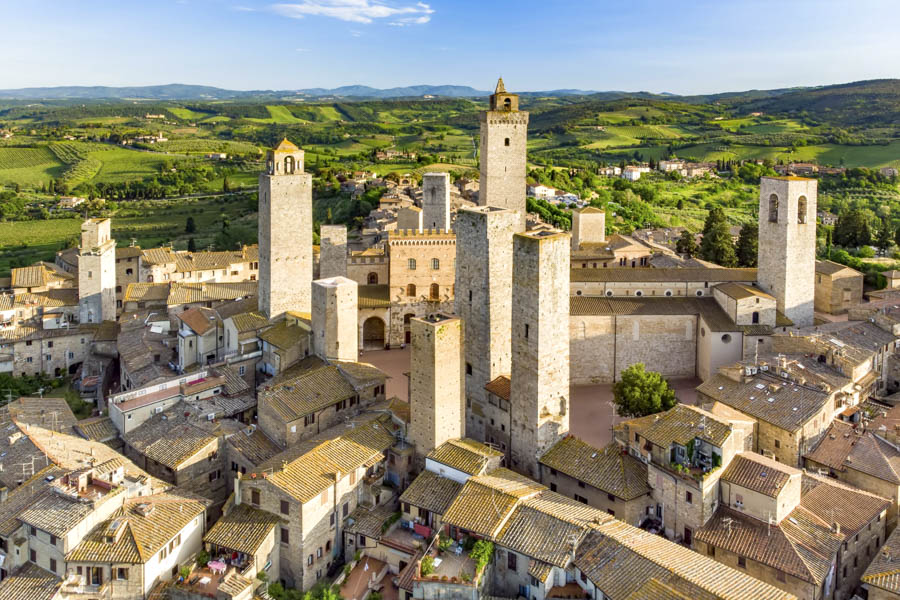
San Gimignano rises above the Val d’Elsa with thirteen surviving mediaeval towers, creating the distinctive skyline that has earned it the nickname “Mediaeval Manhattan”. Piazza della Cisterna and Piazza del Duomo form the centre of the visit. The Collegiata preserves extensive fresco cycles, while the Torre Grossa can be climbed for views across the clustered rooftops, vineyards and surrounding farmland.
Where to stay: Siena warrants a multi-night stay, with museums, restaurants and evening walks within its historic centre. San Gimignano offers a smaller-town setting and more time to enjoy its streets after the busiest visiting hours. It has no railway station; buses connect it with Siena and Poggibonsi, where travellers can change to regional trains.
Val d’Orcia and Southern Tuscany
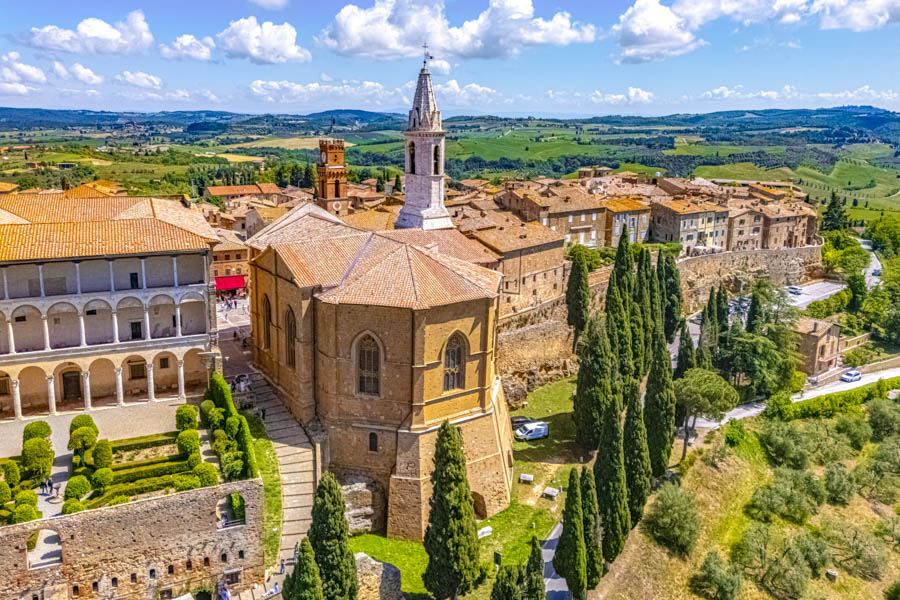
The Val d’Orcia is shaped by long ridges, pale clay hills and cultivated fields, with isolated farmhouses and rows of cypresses lending rhythm to the open landscape. Centuries of farming and settlement have created its distinctive appearance, which is recognised by the valley’s UNESCO World Heritage status. From the lanes behind Pienza Cathedral, the land falls away towards Monte Amiata. The town itself was redesigned under Pope Pius II as an early expression of Renaissance urban planning.
East of the valley, Montepulciano occupies a ridge between the Val d’Orcia and the Valdichiana. Its streets climb towards Piazza Grande, while historic wine cellars extend beneath the Renaissance buildings in the centre. Montalcino stands on the western side of the Val d’Orcia, with a fourteenth-century fortress above the town and vineyards producing Brunello across the surrounding countryside. Bagno Vignoni has an entirely different kind of centre: a large pool of thermal water occupies the main square.
By car, Pienza and Bagno Vignoni combine easily in one day. Montepulciano or Montalcino can then form the focus of a second day, together with the countryside around them. Farther south, Saturnia lies in the Maremma and fits more naturally into a separate route towards the coast or the southern Tuscan hill towns.
Where to stay: Pienza places you within the Val d’Orcia itself, in a small historic town overlooking the valley. Montepulciano is the logical base when the itinerary also extends into Valdichiana; the town stands on the ridge between the two areas. Choose Montalcino for the western side of the Val d’Orcia and the surrounding Brunello-producing countryside. Agriturismo is best suited to travellers with a car, as accommodation, restaurants and wine estates may be spread along rural roads.
Arezzo and Eastern Tuscany
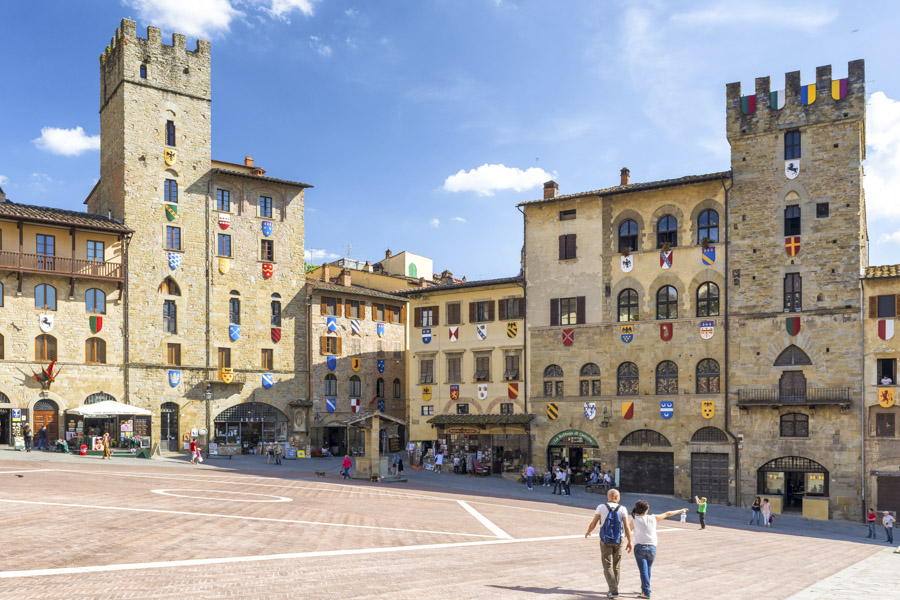
Piero della Francesca’s Legend of the True Cross is the artistic centrepiece of a visit to Arezzo. The fresco cycle fills the Bacci Chapel in the Basilica of San Francesco, where visits take place in timed groups and advance booking is required. From the church, the historic centre rises towards Piazza Grande, the Romanesque church of Santa Maria della Pieve and the cathedral. At Casa Vasari, rooms painted by Giorgio Vasari survive alongside a collection of sixteenth-century art.
Goldworking remains part of the city’s identity. The Orodautore Museum presents more than 300 contemporary jewels designed by artists and designers and made with the expertise of local craftspeople. On the first Sunday of each month and the preceding Saturday, the Arezzo Antiques Fair fills Piazza Grande and the surrounding streets with antiques, vintage pieces and local crafts. The September edition is held in the Prato area.
Where to stay: For a first visit, stay in the historic centre around Piazza San Francesco, Corso Italia and Piazza Grande, with the main churches and museums within walking distance. Accommodation near Piazza Guido Monaco or the lower end of Corso Italia is convenient for travellers arriving by train, as Arezzo railway station is nearby. Rail services connect the city with Florence and destinations to the south, while the local Arezzo–Stia line runs into the Casentino Valley.
Travellers arriving by car may prefer accommodation just outside the city walls, with parking nearby and pedestrian access to the centre. From the Pietri car park, escalators lead up to Piazza della Libertà in the historic centre. A countryside stay makes sense on a longer journey through Casentino or Valdichiana and generally requires a car.
Maremma, the Tuscan Coast and Elba
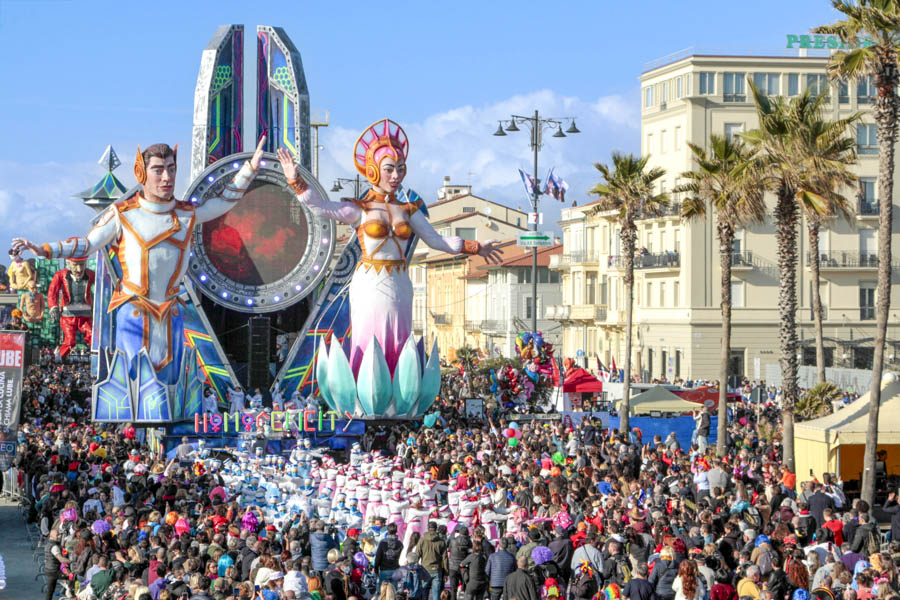
Western Tuscany faces the Tyrrhenian Sea, where sandy beaches, umbrella pines, lagoons and low wooded hills shape the landscape. In Viareggio, the seafront is lined with Liberty-style buildings – the Italian form of Art Nouveau – and offers long views across the water. The promenade becomes especially lively during the annual Viareggio Carnival, when enormous papier-mâché floats parade between the beach and the town’s façades.
The coast becomes quieter and wilder in the Maremma. Around the mouth of the Ombrone River, Maremma Regional Park protects wetlands, grazing land, pine forest and stretches of coastline. Farther north, Populonia overlooks the blue-green curve of the Gulf of Baratti, where Etruscan tombs and traces of ancient ironworking lie close to the sea. Pitigliano and Sorano rise from ridges of volcanic tuff, while nearby Sovana completes Tuscany’s historic Tufa Area.
Across the water, Elba, where Napoleon Bonaparte was exiled in 1814, is the largest island in the Tuscan Archipelago. Its coastline alternates between small coves, beaches and rocky headlands, while wooded slopes rise towards Monte Capanne in the west. Ferries connect from Piombino to Portoferraio, Cavo and Rio Marina.
Where to stay: Viareggio is a convenient seaside base for combining the coast with visits to Pisa or Lucca. Castiglione della Pescaia suits travellers focusing on beaches and the northern Maremma coast, while Orbetello is better placed for exploring its lagoon and Monte Argentario. Pitigliano makes an atmospheric inland base for visiting the Tufa Area. On Elba, Portoferraio has the most frequent ferry connections.
Things to Do in Tuscany
Travel in Tuscany is shaped by what happens between the major sights: stepping through a church doorway to see a fresco cycle, following a country road towards a hill town or tasting wine at the estate where it was made. The experiences below suggest different ways to engage with the region and may help you decide to spend more time.
See Renaissance Art in Its Original Setting
In Tuscany, an unassuming church doorway can lead into an entire painted world. The Bacci Chapel in Arezzo holds Piero della Francesca’s Legend of the True Cross, where poised figures move through pale landscapes and precisely ordered architecture. The mood changes completely inside Siena’s Piccolomini Library, where processions, distant landscapes, elaborate costumes and luminous colours sweep around the room. San Gimignano offers a quieter encounter: in the Chapel of Santa Fina, Ghirlandaio depicts the life of the town’s young saint.
Here, architecture determines the scale of the paintings and the way they are experienced. Florence’s great collections bring together works from different places and periods, while these chapels preserve the relationship between the artwork, its architectural setting and its original purpose. Seeing both is one of the pleasures of an art-focused journey through Tuscany.
Walk a Stage of the Via Francigena
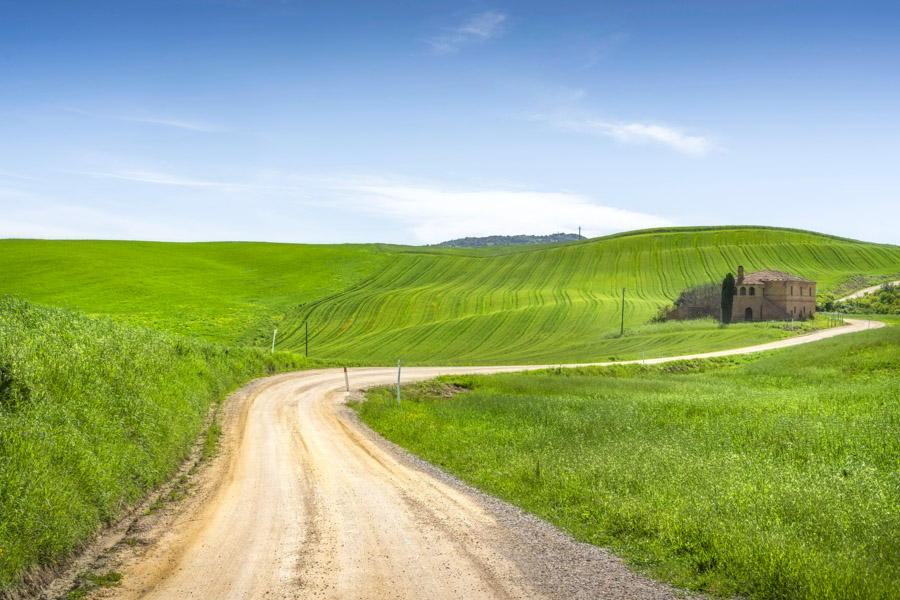
The Via Francigena can be experienced without committing to a multi-day pilgrimage. A well-defined day stage begins inside the walls of Monteriggioni and ends in Siena. The first descent provides a final view back towards the compact ring of walls and towers before the path enters the woods. Gravel roads continue between olive groves, fields of reddish Sienese clay and stretches of chestnut and poplar woodland. In autumn, fallen leaves cover parts of the forest floor.
Along the way, the circular tower of Chiocciola appears beyond the fields, while a short diversion leads to the grey stone Hermitage of San Leonardo al Lago and its fourteenth-century frescoes. Siena remains out of sight for most of the walk. Near the end, a short, steep climb changes the scene: from the top, the city opens out ahead, with the cathedral rising above the distant rooftops. The path then leads through Porta Camollia and along the mediaeval Via Camollia. After hours of woodland, fields and gravel roads, the narrow city streets finally open into the great shell of Piazza del Campo.
The official stage covers 20.6 kilometres and takes approximately four and a half hours, excluding stops. It is graded as moderate, although water and refreshment points are scarce. Carry enough food and water, and download the official route track before leaving.
Taste Tuscan Wine at the Estate
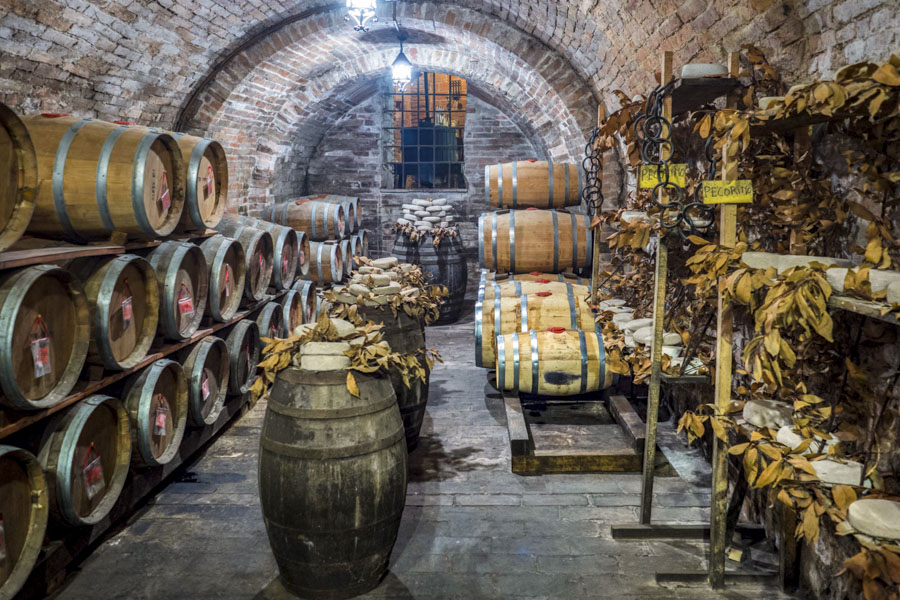
Look for a visit that begins among the vines, continues through the working cellar and ends with several wines poured side by side. Outdoors, the producer can explain the slope, soil and the vineyard’s orientation towards the sun. Inside the barrel room, the temperature drops and the smell of wine and oak replaces the warm air of the fields. By the time the bottles are opened, the landscape on the label has become a place you have walked through.
Tasting several wines together is particularly revealing. In Chianti Classico, for example, an estate may serve its standard wine alongside a riserva – a category that must mature for at least 24 months. The younger wine may show brighter fruit, while the longer-aged wine often develops deeper aromas and a firmer structure.
Bathe in Tuscany’s Thermal Waters
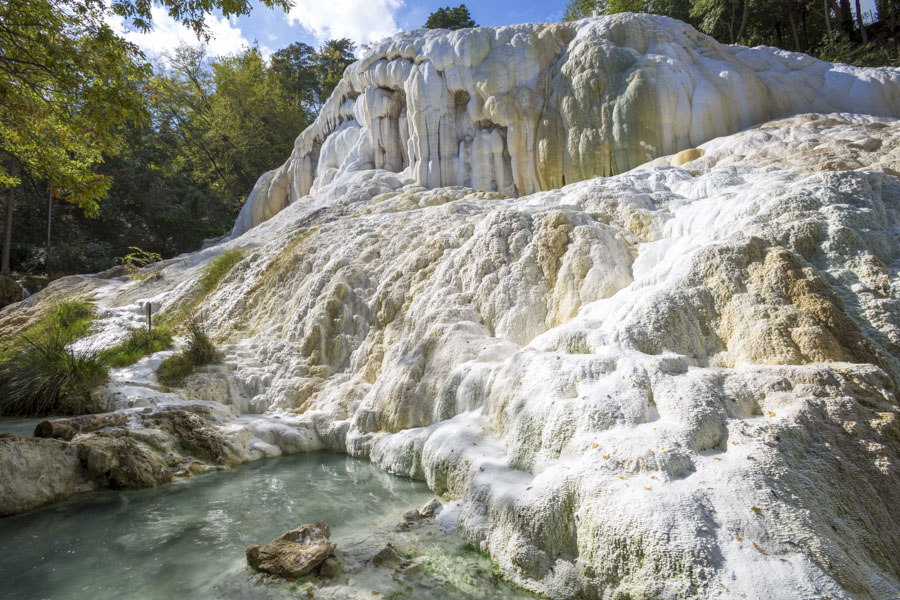
Bagni San Filippo has free outdoor thermal pools where visitors can bathe. A woodland path leads to the pools, small cascades and an immense white mineral formation known as the Balena Bianca, or White Whale. The spring emerges at around 48°C (118°F), although the water becomes cooler as it travels downstream and mixes with rainwater. The contrast between the pale mineral deposits and the surrounding forest makes this one of Tuscany’s most distinctive natural bathing places. The Balena Bianca is extremely fragile: visitors must not touch or climb it, and bathing is permitted only in the pools away from the formation.
Saturnia’s Cascate del Mulino has a broader, more open setting. Water at approximately 37.5°C (99.5°F) pours over rock terraces and collects in a succession of natural pools beside an old mill. The cascades are free to enter throughout the year, with the warm water particularly appealing in the cooler months.
Bagni San Filippo is easily included in a stay in the Val d’Orcia or near Monte Amiata. Saturnia lies considerably farther south and works better as part of a Maremma itinerary, perhaps combined with Pitigliano, Sorano or Sovana.
Visit a Tuscan Artisan Workshop
The streets of Florence’s Oltrarno still contain workshops devoted to leather, gold, glass, silk, ceramics and marbled paper. Near Piazza Tasso, Il Conventino occupies a former convent and brings together around 20 traditional workshops and artists’ studios. Depending on the craft, a visit may reveal sheets of leather being cut, metal shaped at a workbench or colour spread across paper to create a marbled pattern.
Beyond Florence, particular towns remain associated with materials drawn from their own surroundings. Montelupo Fiorentino has produced majolica – brightly decorated, glazed earthenware – since the Middle Ages, and ceramics are still made in local workshops today. In Volterra, the defining material is alabaster, a pale, translucent stone that is soft enough to carve but easily broken. When alabaster workshops were more numerous, fine white dust settled on the artisans’ shoes and followed them into the streets, leaving pale footprints across the town. Fewer workshops survive today, but inside them the stone is still carved, ornamented and turned by hand.
Join a Festival or Local Event
Tuscany’s festivals offer quite different experiences. Viareggio is centred on visual spectacle and satire, Arezzo on historical pageantry, while Siena’s Palio draws visitors into several days of neighbourhood ceremony and competition.
Choose the Viareggio Carnival for its scale and creative energy. Papier-mâché floats more than 20 metres high move along the seafront amid music and costumed performers. Made from newspaper and flour-and-water glue, their painted figures often satirise politics and current events. The festival showcases a living local craft rather than simply presenting a traditional parade. Events are held on several dates, generally between late January and early March, and require an admission ticket.
Arezzo’s Giostra del Saracino, or Saracen Joust, combines a costumed procession with a genuine contest between the city’s four districts. Riders charge at a rotating target with wooden lances in Piazza Grande, while residents support their own district. The event offers a direct view of how historical pageantry and local rivalry still occupy the centre of city life. It takes place at night on the penultimate Saturday in June and during the day on the first Sunday in September.
Siena’s Palio rewards travellers who arrive before race day. Each horse represents one of the city’s historic neighbourhoods, whose preparations include trials, processions and ceremonies. These begin three days before the races on 2 July and 16 August, allowing visitors to experience the anticipation surrounding the Palio rather than seeing only its brief conclusion.
Suggested Tuscany Itineraries
These itineraries are organised around both the length of the trip and the transport required.
A Short First Visit – Four Days
Spend three days in Florence, dividing the principal churches and galleries between separate mornings. Use the fourth day for Siena, allowing time for Piazza del Campo, the cathedral and the streets around the centre. This itinerary suits a first visit focused on Tuscany’s two principal artistic cities.
One Week Without a Car
Stay for four nights in Florence, using three days to explore the city and one for a day trip to Lucca. On the fifth day, arrange a transfer to Siena with stops in San Gimignano and at one Chianti winery.
Spend the final two nights in Siena. This leaves a full day for the city and an evening in the centre after many day visitors have departed. If you prefer to travel directly to Siena, a guided day trip from Florence can replace the private transfer.
One Week by Car or Private Driver
Begin with two days in Florence, then travel through Chianti, stopping in Greve, Montefioralle and at a winery. Stay overnight near Radda or Castellina.
Continue to Siena the following day, then spend the final three days in the Val d’Orcia, using Pienza or Montepulciano as a base. Pair Pienza with Bagno Vignoni, set aside a separate day for Montalcino and a winery visit, and use the remaining time to explore Montepulciano and the surrounding countryside. With two or three additional days, continue towards the Maremma coast.
Food, Wine and Local Traditions
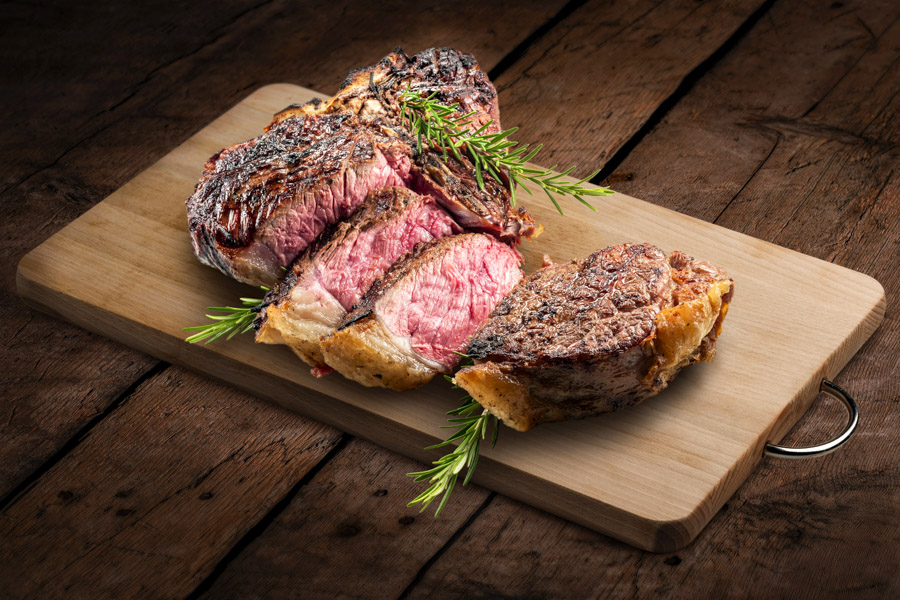
Menus change noticeably as you travel through Tuscany. Each part of the region has its own dishes, while the season determines which ingredients appear alongside them. One constant is the region’s unsalted bread, served with peppery olive oil, cured meats or the juices of a stew. Bread left from the previous day thickens ribollita, a substantial vegetable and bean soup, and forms the base of pappa al pomodoro, a thick tomato soup flavoured with garlic and basil.
In Florence, the best-known speciality is bistecca alla fiorentina, a thick steak grilled over a high heat and served rare. For a quicker meal, try lampredotto: slow-cooked tripe tucked into a roll, traditionally dipped in the cooking broth and finished with green sauce. The queues at Florence’s tripe stalls are part of the experience, particularly at lunchtime, when regular customers gather alongside visitors trying it for the first time.
South of Siena, pici are made by rolling flour-and-water dough into thick, uneven strands. Their dense texture suits aglione, a tomato sauce made with the large, mild garlic grown in the Val di Chiana, or a simple dressing of toasted breadcrumbs. Siena’s sweets include panforte, a compact, spiced cake made with honey and dried or candied fruit, and ricciarelli, soft almond biscuits with a light sugar coating.
On the coast, local cooking turns towards fish and seafood. Livorno’s cacciucco is a deeply flavoured fish and seafood soup ladled over garlic-rubbed toast. In Lucca, bakeries sell buccellato, a soft, lightly sweet bread containing raisins and anise seeds. It is traditionally associated with Sunday meals in the city, although it can now be found throughout the week.
Autumn brings porcini mushrooms, chestnuts, truffles and newly pressed olive oil to markets and village kitchens. The same harvest supplies seasonal sagras – temporary outdoor restaurants or local festivals centred on a particular food or agricultural product. Some are small village events; others continue over several weekends. Farmers’ markets offer a quieter encounter with the season, with growers and producers selling directly to local shoppers. Dates and market days vary, so check them before travelling.
Wine provides another way to follow Tuscany’s geography. Chianti Classico comes from the historic production area between Florence and Siena. Brunello belongs to Montalcino and Vino Nobile to Montepulciano, while Vernaccia di San Gimignano is a white wine produced around San Gimignano. On the coast, Bolgheri is known particularly for its red wines, including Sassicaia.
In rural areas, check restaurant opening days before setting out. Reaching a restaurant can be difficult from a remote place without a car if you book a room in a farm offering agrotourism accommodation. A substantial lunch is often more convenient on a day of winery visits, followed by dinner in the town where you are staying. Popular restaurants require advance reservations during the high season.
Getting Around Tuscany
By Train
Regional trains connect Florence with Pisa, Lucca and Arezzo, making these cities suitable for independent day trips. Siena also has a railway station, although it is located below and outside the old city. Local buses and a series of escalators connect the station with the centre.
By Bus
The direct 131R bus from Florence stops in central Siena and can be more convenient than the train for a day visit. San Gimignano has no railway station; the usual route is to travel to Poggibonsi and continue by local bus.
Services to smaller towns may be less frequent on Sundays and public holidays. Current connections are listed by Autolinee Toscane and the regional Muoversi in Toscana journey planner.
By Car
A car is useful for exploring Chianti, the Val d’Orcia, the Maremma and smaller villages with limited public transport. If your trip begins with several days in Florence, collect the vehicle when you leave the city.
Many historic city centres have a zona a traffico limitato (ZTL), or restricted traffic zone, monitored by cameras. Entering without authorisation may result in a fine. Staying at accommodation within a ZTL does not automatically give you permission to drive there. Contact the hotel in advance and ask whether it can register your plate number. Public car parks outside the restricted area are usually the easiest option.
Country roads can be narrow and winding, so allow more time than the distance alone might suggest. If wine tasting is part of your plans, arrange a tour or private driver, stay overnight at the estate or avoid driving afterwards.
By Bicycle
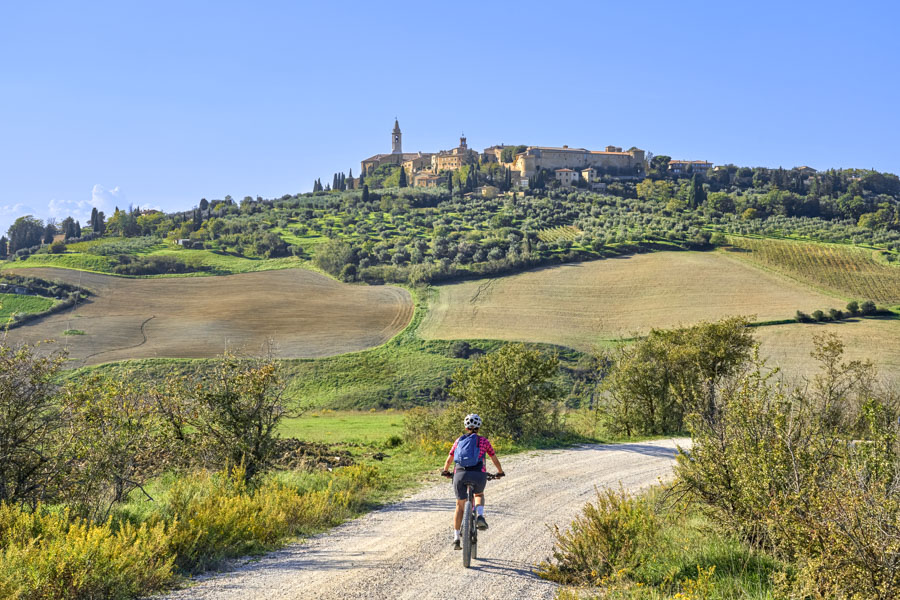
Tuscany has an extensive network of paved and gravel cycling routes. The Strade Bianche – white gravel roads – through Chianti, the Crete Senesi and the Val d’Orcia are among the best known. Options range from short local rides to demanding multi-day journeys. Before setting out, consider the surface, distance and total elevation gain. In July and August, plan longer rides for the cooler morning hours.
How to Get to Tuscany
By Air
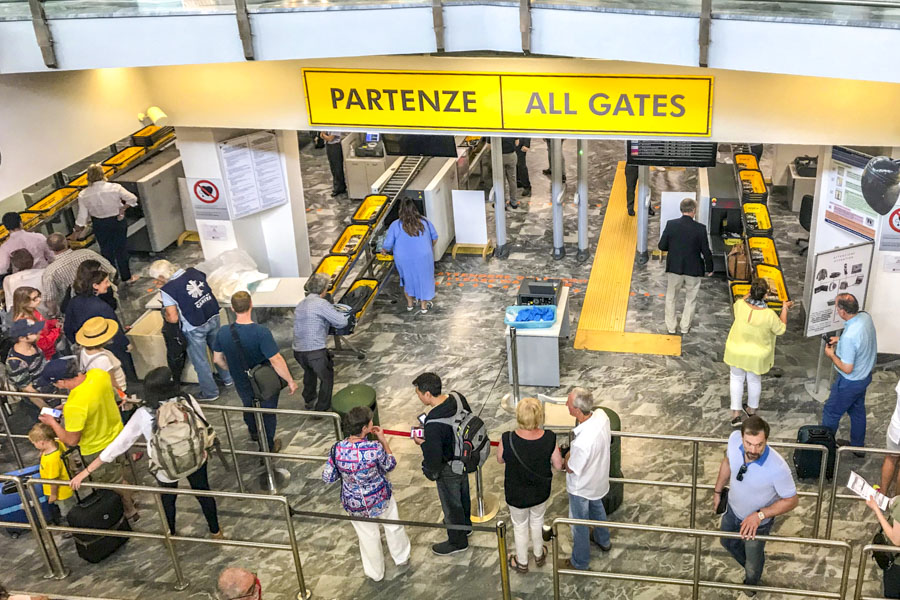
Tuscany’s two main airports are Amerigo Vespucci Airport in Florence and Galileo Galilei Airport in Pisa. Florence Airport is connected to the city centre by tram line T2, with the journey taking around 20 minutes.
From Pisa Airport, the automated PisaMover shuttle runs to Pisa Centrale railway station. Trains from there continue to Florence and other parts of Tuscany. Travellers with a wider choice of international flights can also arrive via Rome, Milan or Bologna and continue to Florence by high-speed train.
By Train
Florence Santa Maria Novella is Tuscany’s principal station for high-speed services. Direct trains connect the city with Rome, Bologna, Milan, Venice and Naples. making Florence the main rail gateway for travellers arriving from elsewhere in Italy. Regional trains continue to cities including Pisa, Lucca and Arezzo.
Pisa also lies on the main coastal railway line, with long-distance connections towards Genoa and Rome. This can be useful when Tuscany forms part of a longer journey along Italy’s western coast.
By Car
The A1 motorway crosses central and eastern Tuscany, connecting the region with Bologna to the north and Rome to the south. The A11 links Florence with Lucca and the Pisa area, while the A12 follows the coast through northern Tuscany towards Livorno. The FI-PI-LI Motorway provides a direct road connection between Florence, Pisa and Livorno.
Driving and parking within historic centres are covered in the Getting Around Tuscany section.
Practical Tips for Visiting Tuscany
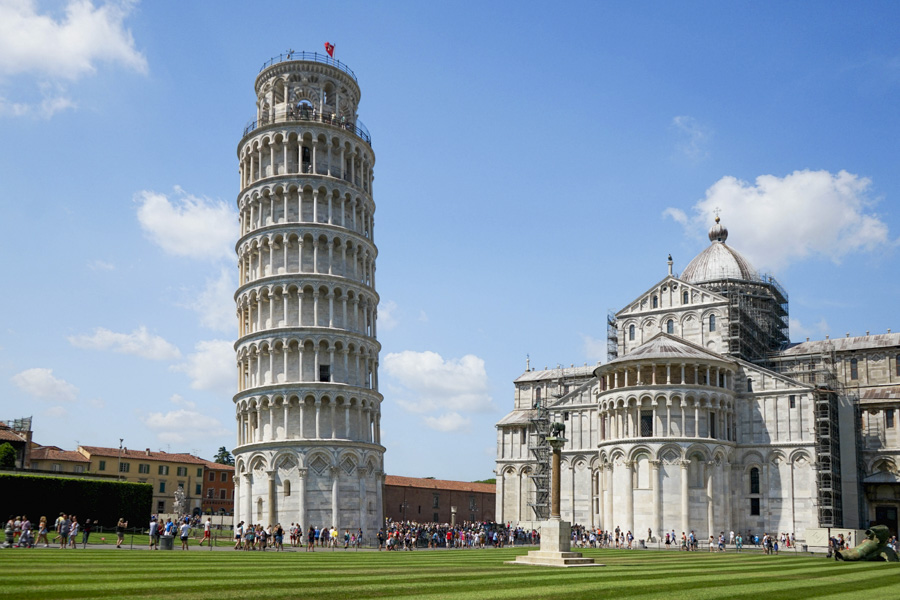
Check ticket conditions before paying. Admission systems vary even among major attractions. The Leaning Tower of Pisa and Piero della Francesca’s frescoes in Arezzo require a reserved time, while cathedral passes may cover several monuments with different admission rules. Some tickets are issued in the visitor’s name, so enter personal details exactly as they appear on the traveller’s ID.
Understand how digital regional train tickets work. Trenitalia’s digital Regionale ticket is validated automatically at the scheduled departure time. You can change the selected train before that time if your plans change. The ticket is personal, and passengers may be asked to show identification.
Prepare for church and tower visits. Dress requirements apply at many religious sites. Florence Cathedral does not admit visitors with bare shoulders, legs uncovered above the knee or flip-flops. Bags must be left at the designated luggage storage facility before entering its monuments. Tower and dome visits may involve long, narrow staircases, so check access conditions before booking.
Do not leave luggage in a parked car. Bags remain vulnerable even when hidden in the boot. When moving between hotels, leave them at your accommodation or at a staffed luggage facility before stopping for sightseeing.
Allow for the local tourist tax. Accommodation prices do not always include the municipal tax, which may be collected separately at check-out. The amount and payment method vary by municipality and property, so confirm the details before arrival.