

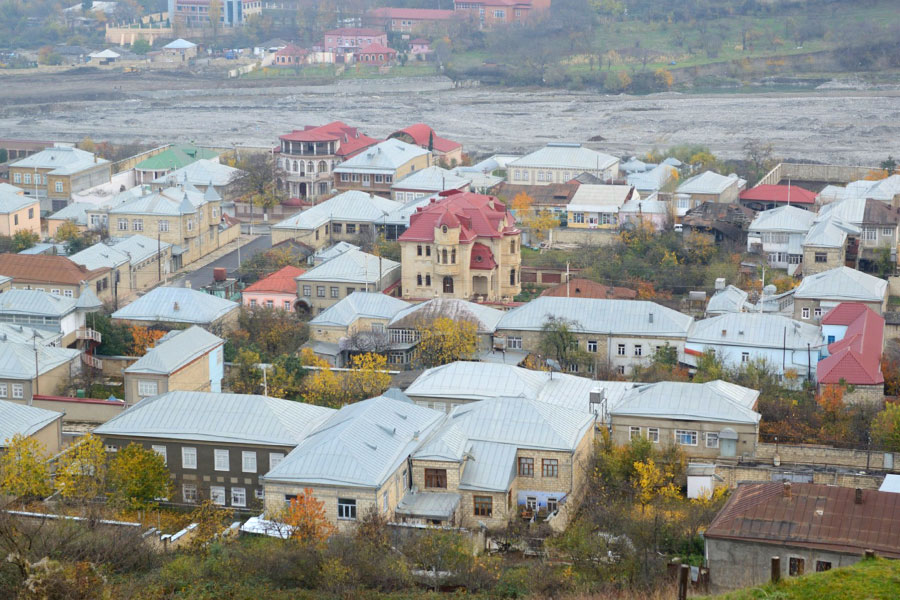
Set beside the Gugyal River (Gudyalchay, Qudyalçay) in the country’s northern part, Quba, Azerbaijan (pronounced “goo-bah”), combines a compact historic centre with easy access to the foothills and high valleys of the Greater Caucasus. Situated approximately 175 kilometres (108.7 miles) by road from Baku and at an elevation of around 600 metres above sea level, it serves as the administrative centre of Quba District.
The settlement rose to prominence as a major hub for trade on the Silk Road and remains closely associated with carpet weaving, saddle making and wood carving. Later apple orchards added to Azerbaijan’s cultural diversity.
Historic mosques, former bathhouses and 19th-century buildings shape the older parts of the city. At the same time, an arched bridge crosses the river towards Qırmızı Qəsəbə (Red Village), home to a long-established Mountain Jewish community.
Quba can be explored as a destination in its own right or used as a base for journeys deeper into the region. For travellers deciding what to prioritise, the top attractions in Quba extend from the historic centre and Qırmızı Qəsəbə to the landscapes beyond the city, giving plenty of reasons to visit Quba for more than a quick stop.
Quba Tours
Quba lends itself well to active travel. Depending on the season, a visit can combine cultural sightseeing with 4x4 drives, short hikes, horse riding or adventure activities farther north in the Shahdag (Şahdağ) area.
Advantour’s one-day Khinalug tour is the most direct option for travellers based in Baku. The private itinerary runs through Quba and Qırmızı Qəsəbə before continuing to Khinalug (Khinalig), with transport and guiding included. For a slower route, the UNESCO World Heritage Tour of Azerbaijan includes an overnight stay in Quba before visiting Khinalug the following day. Advantour further covers the region in its longer Nature of Azerbaijan Tour, which links Quba and Khinalug with Griz (Qrız), Laza and Shahdag.
Best Time to Visit Quba
Spring through autumn offers the widest choice of activities, although the best time to visit Quba depends on whether you prioritise sightseeing, hiking, or winter activities. Quba weather is generally cooler than in Baku, but conditions change quickly with elevation, so city forecasts should not guide mountain plans.
| Season | Months | Lowest average Temperatures | Highest average temperature |
| Spring | March to May | 0°C (32°F) | 20°C (68°F) |
| Summer | June to August | 13°C (55°F) | 28°C (82°F) |
| Autumn | September to November | 2°C (36°F) | 23°C (73°F) |
| Winter | December to February | −4°C (25°F) | 6°C (43°F) |
Note: Figures show approximate average daytime highs for Quba city; mountain temperatures can be considerably lower.
By spring, Quba begins to lose its winter feel as the foothills turn green and the orchards come into bloom. Conditions are generally pleasant for exploration, although rain becomes common later in the season, and higher routes may still hold snow.
Summer brings warmer days in Quba, but the elevation difference grows noticeable once you head higher. Such areas stay cooler, and this turns into a comfortable period for longer excursions. The strong sun at altitude is worth keeping in mind, even when temperatures feel mild.
The landscape changes again in autumn, when the apple harvest becomes part of the region’s seasonal character and cooler weather returns gradually. September can still work well for mountain travel.
In winter, Quba remains accessible, but travel into its vicinity may require more logistical planning.
History of Quba
Quba developed along the routes linking the Caspian lowlands with the eastern Caucasus. In antiquity, the wider region belonged to Caucasian Albania, an ancient South Caucasian kingdom, from approximately the 2nd century BCE until the 8th century CE, and later defensive works reflected the corridor’s strategic value.
During the Sasanian period, both Zoroastrianism and Christianity took root in the region. This religious landscape began to change following the Arab-Muslim conquest of Azerbaijan between 639 and 643 AD, during the caliphate of Umar. Although Islam was introduced during this period, it became established gradually over the centuries that followed.
From the 9th to the 16th centuries, Quba was largely governed by the Shirvanshah dynasty, which controlled the region’s trade routes and strengthened its defences. The town emerged as a modest settlement around the 11th century, while agriculture, Sunni Islam and trade developed across the surrounding valleys. Successive Turkic migrations, particularly during the Seljuk period, further shaped Quba’s cultural and linguistic character, alongside the presence of long-established Jewish and other local communities.
From the early 16th century, Quba formed part of the Safavid Empire and served as a frontier region contested by Safavid and Ottoman forces. Following a period of political instability, the Quba Khanate was established in 1747, with Quba becoming its capital. Under Fatali Khan, who ruled from 1758 to 1789, the khanate expanded across parts of present-day northern Azerbaijan and Dagestan through conquest and shifting alliances.
In the 18th century, Huseyn Ali Khan, ruler of the Quba Khanate (Quba xanlığı), made Quba his political centre. Under his son, Fatali Khan, Quba’s expansionist 18th-century ruler, the Quba Khanate, a regional Muslim principality, extended its influence across much of north-eastern Azerbaijan and the western Caspian coast.
This period shaped Quba’s multicultural character as well. Mountain Jewish families settled across the Gudyal River under the protection of the khans, forming the community later known as Qırmızı Qəsəbə.
Russian forces took control of the khanate in the early 19th century, and the territory was formally incorporated into the Russian Empire, the tsarist Eurasian state, in 1813. Roads, bridges and public buildings gradually reshaped Quba. At the same time, agriculture, trade and carpet weaving remained important to the local economy.
Urban development continued during the Soviet period. Azerbaijan restored its independence in 1991. Since then, improvements to infrastructure and the growth of tourism have strengthened its role as a gateway to the Greater Caucasus, while fruit growing, particularly apple cultivation, has remained central to the local economy. Today Quba remains the district’s administrative and commercial centre.
Things to Do in Quba
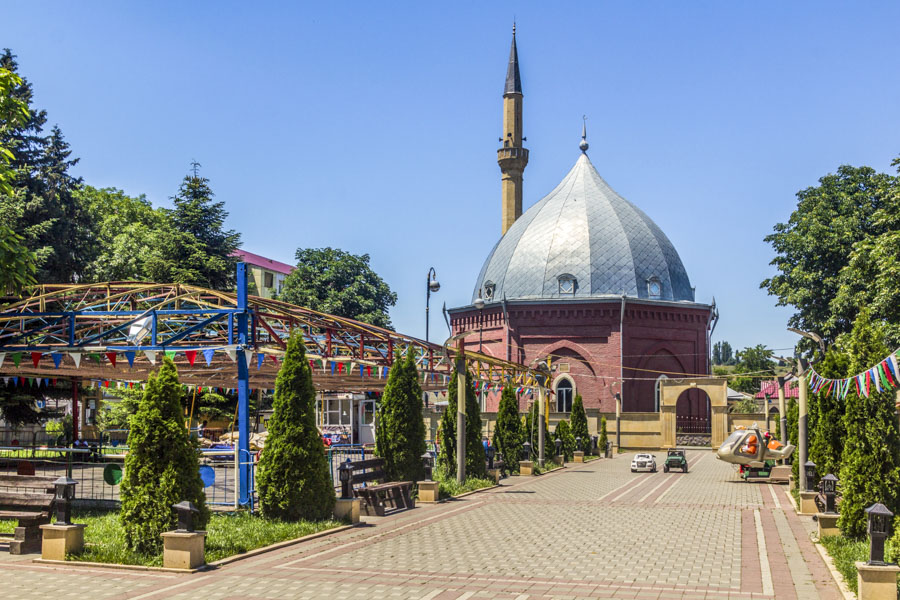
Many of the best things to do in Quba begin in and around the historic centre, but a short drive soon brings forests, waterfalls and mountain settlements into the itinerary. This way, Quba attractions gradually shift from urban heritage to the surrounding countryside.
Places to Visit in Quba
Wander through Quba’s historic street to discover its rich heritage. Quba’s historic streets connect the main landmarks within a relatively compact area.
Tour Quba’s Mosques and Hammam
Visiting Quba’s mosques offers more than an opportunity to admire their architecture. It also provides insight into Quba’s religious heritage and the role these buildings continue to play in local life.
The Juma Mosque (Cümə məscidi) stands out for its red-brick exterior and distinctive polygonal form, while the nearby Sakina-Khanum Mosque (Səkinə xanım məscidi) features a polychrome decoration that belongs to the 19th-century architectural heritage.
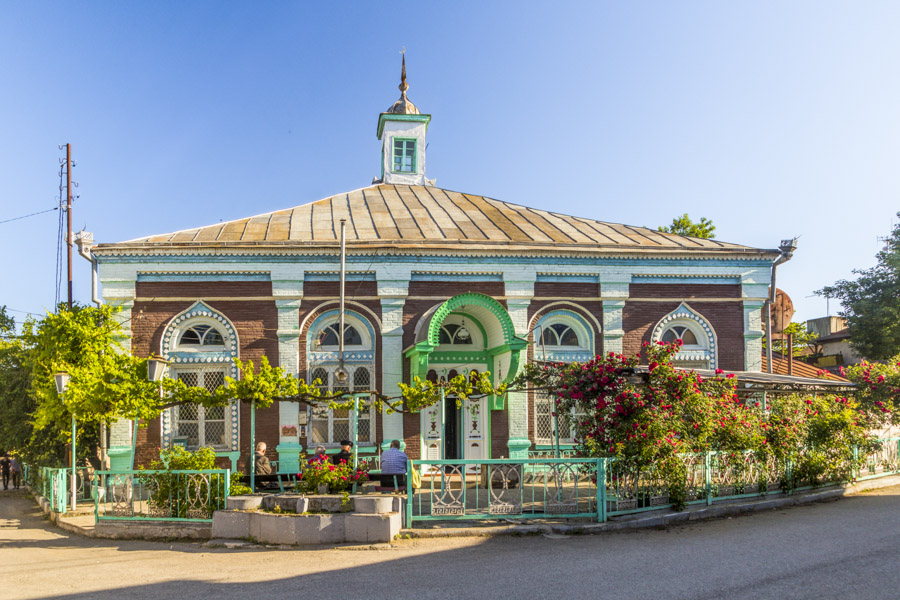
Located at 113 Fatali Khan Street, the Ardabil Mosque was built in the mid-19th century by residents of Ardabil (Iranian Azerbaijan); this colourful brick mosque has a distinctive appearance reminiscent of a pseudo-Russian style church. Still in use, it stands next to a representative office for the Muslims of the Caucasus.
The Haji Jeffer (Jafar) Mosque, the largest in Quba, is located at 62 Ardabil Street; this colourful brick building was constructed in the early 19th century by Haji Jeffer. It is situated two blocks west of the central square.
A different side of urban life survives in Chukhur Hamam (Çuxur Hamam), whose domed structure, built in the 18th or 19th century, recalls the public bathhouses once woven into daily routines. Hammam visits traditionally combined washing, steaming and resting in warm rooms, making the bathhouse as much a social space as a place for personal care.
From there, the route gradually opens towards the Gudyal River. The late-19th-century arched bridge spanning the river provides one of the clearest visual links between Quba and the neighbouring Qırmızı Qəsəbə.
Places to Visit in Quba’s Surroundings
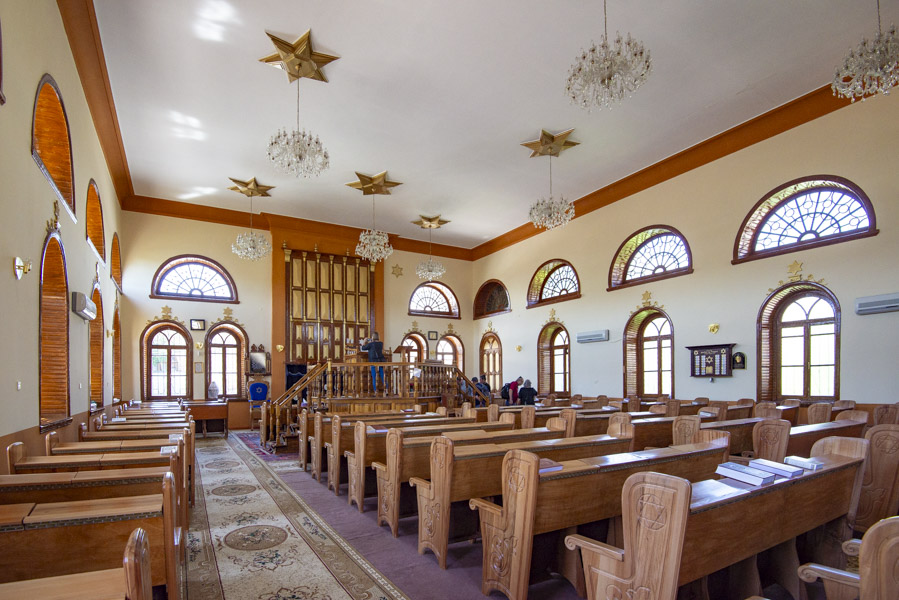
Cross the River to Qırmızı Qəsəbə
Just 1.5 kilometres (0.9 miles) from Quba city centre, on the opposite bank, Qırmızı Qəsəbə – historically known as Krasnaya Sloboda or Red Village, but also as the Jerusalem of the Caucasus – introduces a different side of Quba. Established in the 18th century, it became one of the most important centres of Jewish life in the Caucasus.
Synagogues and community buildings remain woven into its residential streets. Juhuri, also known as Judeo-Tat, the traditional language of Mountain Jews, remains part of a cultural heritage passed down through generations. Rather than functioning as an open-air monument, Qırmızı Qəsəbə is still a living neighbourhood. This is what makes the experience so distinctive.
Follow the Forest Road Through Qechresh
The scenery changes much sooner at Qechresh (Qəçrəş), only 16 kilometres (10 miles) from Quba. The road passes beneath dense woodland, where the canopy forms a natural arch overhead, with picnic areas and restaurants appearing sporadically among the trees.
Local families often come here for meals and outdoor time, particularly in pleasant weather. There is no single landmark to seek out; the attraction is the forest itself and the sudden sense of leaving the urban environment behind.
Seek Out Afurja Waterfall
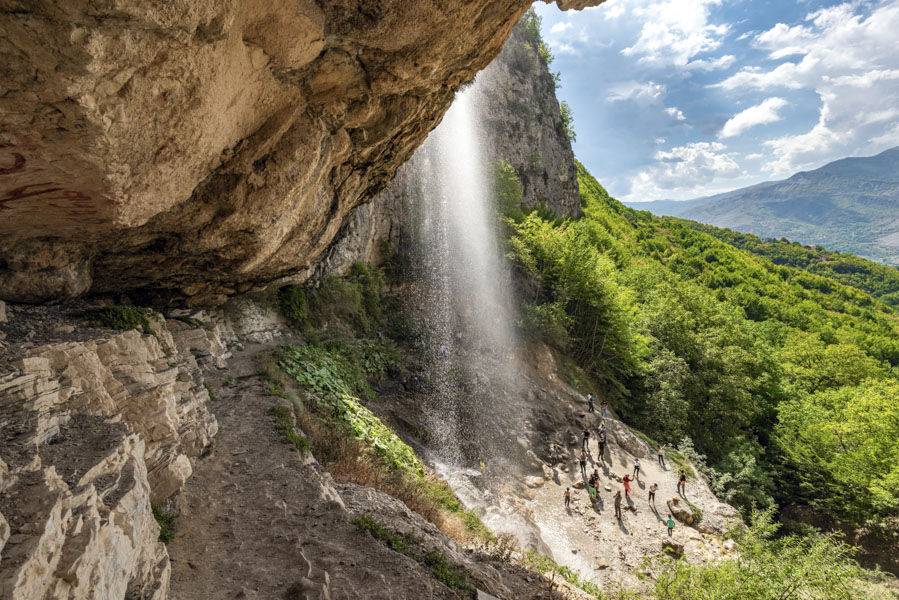
Further into the district, approximately 35 kilometres (21.75 miles) from Quba, Afurja Waterfall (Afurca şəlaləsi) drops from a rocky escarpment surrounded by the trees. Situated in the Velvelechay River basin, near Tengin Gorge and the village of Afurja, its appearance varies with rainfall and water levels, giving the site a seasonal character.
The route may involve uneven or wet ground, so suitable footwear is essential. The waterfall’s height is about 70 metres (230 feet), and its mountain setting alone makes it one of the region’s better-known natural stops.
Climb into the Greater Caucasus to Khinalug
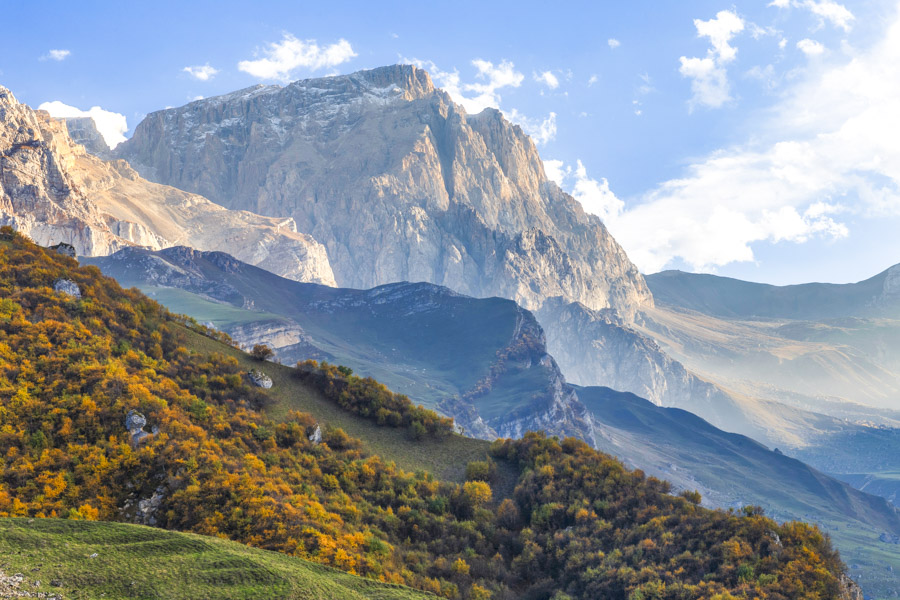
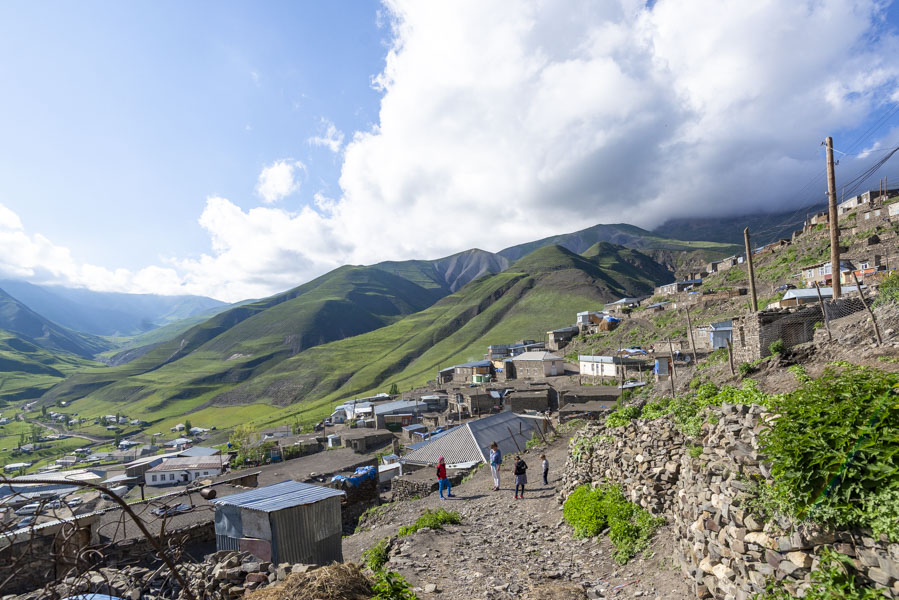
Leaving Quba for Khinalug, approximately 57 kilometres (35 miles) away, changes both the scenery and the journey’s scale. Forested hillsides gradually give way to exposed valleys before the village appears at around 2,350 metres (7,710 feet) above sea level. Its stone houses cluster the surroundings tightly.
The lives of semi-nomadic Khinalug people have long been shaped by altitude, pastoralism, and seasonal movement between grazing grounds. Khinalug has its own language and distinctive settlement traditions, setting it apart from the towns and villages lower in the valley.
This relationship between community and landscape gained international recognition in 2023, when UNESCO inscribed the Cultural Landscape of Khinalug People and the “Köç Yolu” Transhumance Route on the World Heritage List. The protected area encompasses the village, agricultural terraces, seasonal pastures, and the migration route traditionally used by herders.
The Quba to Khinalug road is part of the sightseeing journey.
Trace the Old Defences at Gilgilchay and Chirag-Kala
Older layers of regional history survive around Chirag-Kala (Çıraqqala qalası), about 67 kilometres (42 miles) away from Quba, and Gilgilchay (Gilgilçay səddi), located about 130 kilometres (81 miles) away, where fortifications once helped control movement through the narrow corridor between the Caucasus Mountains and the Caspian lowlands on the Great Silk Road.
Chirag-Kala used its vantage point for observation and defence, and the surviving sections of the Gilgilchay system hint at the much larger network that once crossed the area.
Their distance from the city makes them better suited to a separate excursion than an add-on to a short Quba itinerary. Still, they add useful historical depth for travellers exploring northern Azerbaijan by road.
Museums in Quba
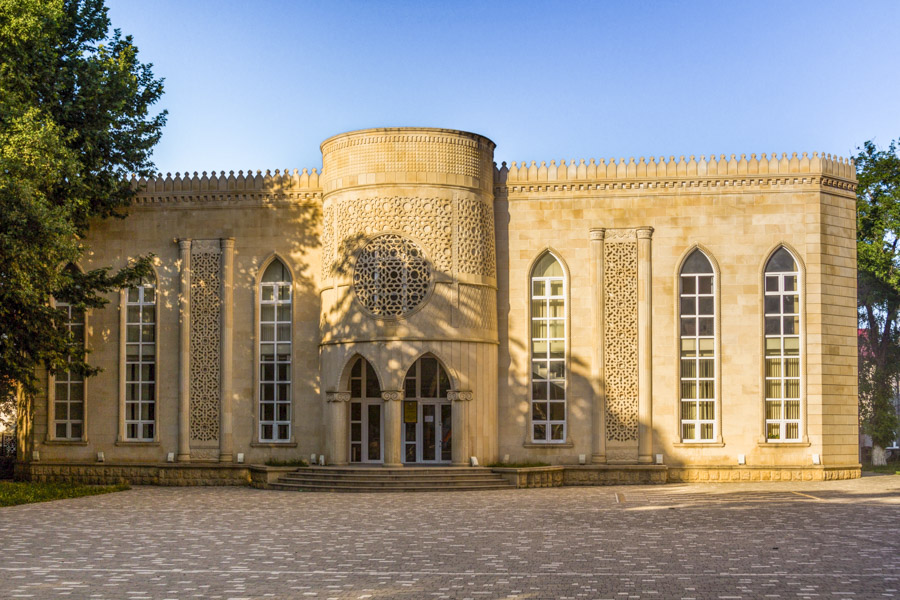
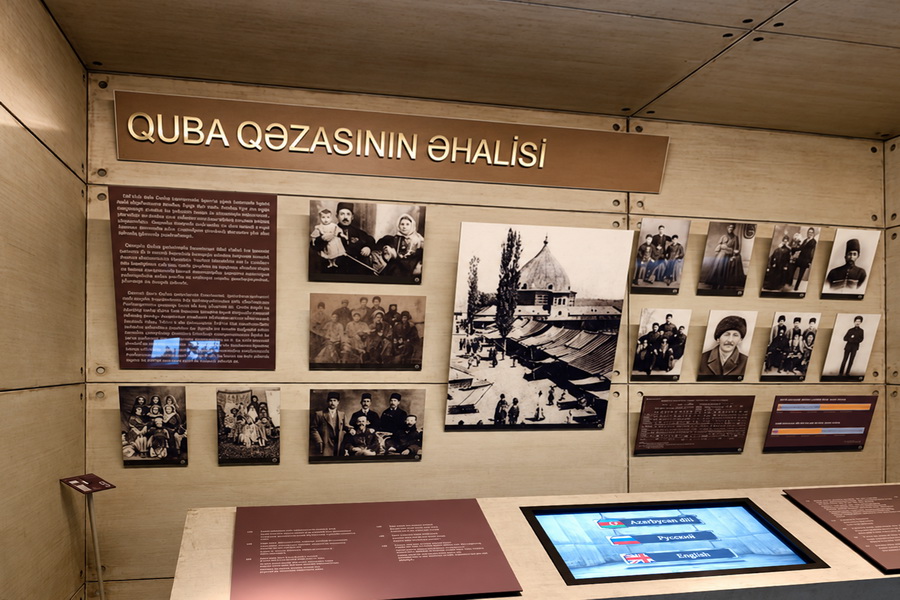
The Quba Museum of History and Local Lore (A.A. Bakıxanov adına Tarix-Diyarşünaslıq Muzeyi) provides the broadest overview, with collections devoted to local archaeology, ethnography, crafts and everyday life.
The Abbasgulu Bakikhanov House Museum (Abbasqulu Ağa Bakıxanovun Memorial Ev Muzeyi) focuses on the Azerbaijani historian, writer and scholar, son of the third Khan of Baku, and closely associated with the region. At the same time, the Quba Genocide Memorial Complex (Quba Soyqırımı Memorial Kompleksi) presents a rather sombre chapter through exhibitions, archival material and a memorial site dedicated to the acts of violence of 1918.
Across the river, the Museum of Mountain Jews (Dağ Yəhudiləri Muzeyi), located in the 19th-century Karchog synagogue, traces the religious, domestic and cultural history of the Mountain Jewish community through documents, photographs and household objects.
Theatres in Quba
Quba’s performance calendar depends primarily on cultural centres and seasonal venues rather than a permanent repertory theatre. The Green Theatre (Yaşıl Teatr) and local cultural centres host concerts, public events and occasional visiting productions.
The open-air Green Theatre, located in Heydar Aliyev Park (Heydər Əliyev parkı), was built for large-scale cultural events and seats around 1,000 spectators. Programmes are event-based rather than arranged around a regular tourist season, so check local listings if you’re interested in a performance during your stay.
Entertainment, Parks and Shopping in Quba
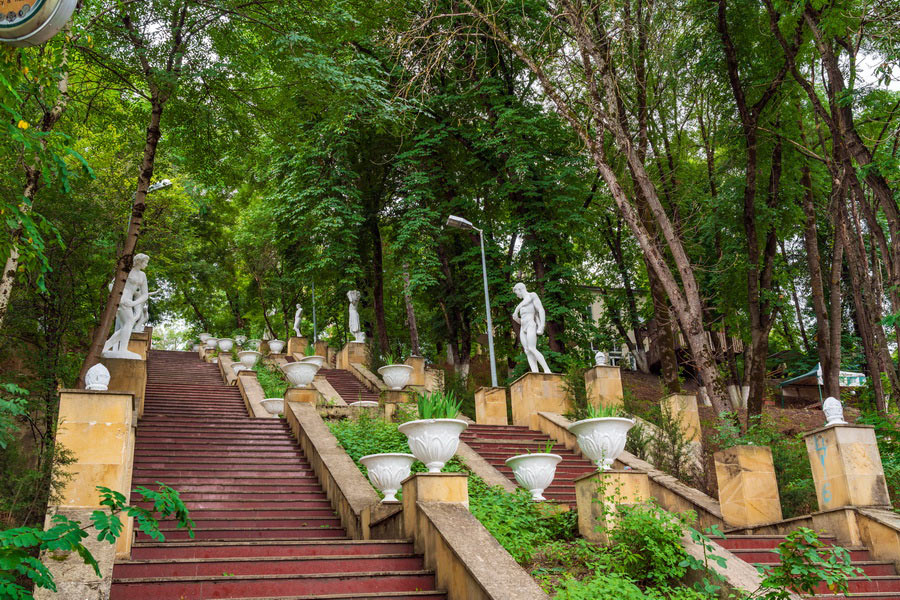
Entertainment in Quba
Evenings tend to unfold around restaurants in Quba, cafés and hotel lounges rather than a concentrated nightlife scene. Some larger Quba hotels on the outskirts add spa facilities, pools and family-orientated recreation, though the centre is quite serene after dark.
Parks and Nature in Quba
In the centre, Nizami Ganjavi Park (Nizami Gəncəvi adına park), named in honour of the poet, offers a shaded pause between the historic streets and the Gudyal River, with paths, monuments and views towards the river.
Other public green spaces and landscaped areas provide room for walks and socialising, particularly in warmer weather.
Shopping in Quba
Quba carpets are among the region’s well-known craft traditions. Designs vary across surrounding villages, with geometric and floral compositions, medallions and buta motifs among the patterns traditionally linked with the Quba school.
Carpet workshops and specialist centres are the best places to look for locally made pieces and learn additional details about the craft. At the Handmade Carpet Factory in Quba, you will be able to purchase an original piece at the showroom and also to see how the entire process happens and learn more about it.
Older carpets, antiques, and objects classed as cultural property may require export documentation, so check current regulations before buying valuable or historic pieces.
Handmade saddles are another distinctive purchase, often combining practical craftsmanship with decorative leatherwork. As a gift, one offers a memorable connection to Quba’s rural traditions and makes an unusual piece of local décor.
Smaller purchases include honey, preserves, sweets and other regional food products.
The Quba bazaar is another useful stop for natural seasonal produce and everyday goods. Apples are strongly associated with the district. Stalls also sell vegetables, dairy products, honey and products brought in from surrounding villages.
Food in Quba
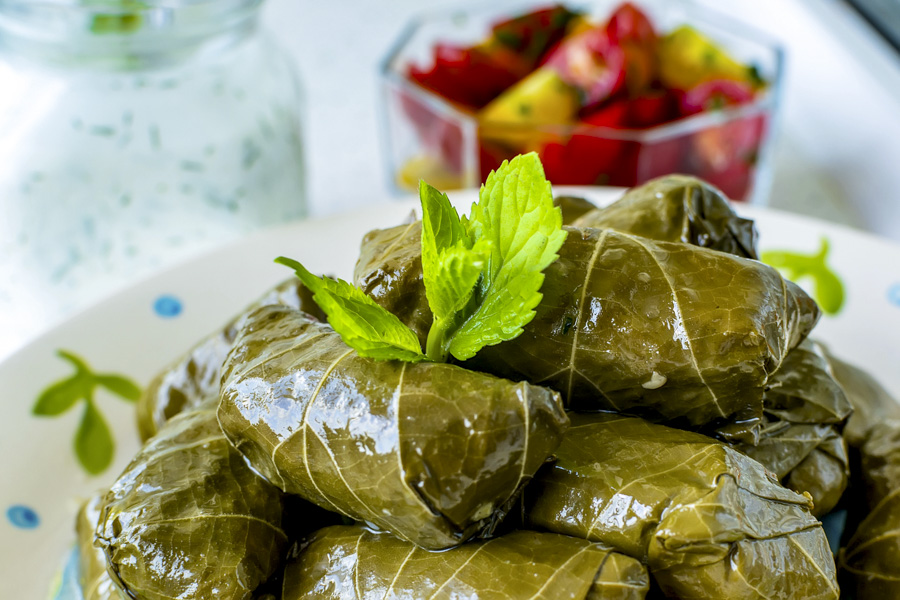
Food in Quba is closely tied to the surrounding region. Quba restaurants reflect two culinary traditions worth seeking out in their own right: the city’s distinctive pastries and the Jewish cooking of neighbouring Qırmızı Qəsəbə.
Azerbaijani Cuisine
In a substantial meal, expect the familiar foundations of Azerbaijani cooking – plov, kebabs, grilled meat and fish, dolma, soups, freshly baked bread and seasonal vegetables – but the setting often matters as much as the menu.
Palma Restaurant is well-reviewed. The chef prepares delicious kebabs, and the restaurant is nestled in a beautifully landscaped garden.
Mountain Jewish Cuisine
Across the Gudyal River from Quba, Qırmızı Qəsəbə has preserved a culinary tradition shaped by Jewish dietary custom, adhering to kosher laws, and centuries of exchange with neighbouring Caucasian communities.
Distinctive dishes include shomokufta yerpegi and gaylo, or khayle, an egg dish prepared with fresh herbs. Khoyegushd combines eggs and meat and is often served with rice, while duqovo is a yoghurt-based soup made with rice and fresh herbs. These specialities rarely appear on standard tourist menus, as much of this cooking remains connected to family kitchens and community occasions.
When available, a hosted meal or cooking class can offer a richer introduction than simply ordering an unfamiliar dish without context.
Vegetarian and Vegan Food
Quba’s cuisine is centred on meat, but visitors may find meat-free options such as fresh bread, rice dishes and seasonal vegetable-based sides. Dairy products are easy to find. Bakeries and markets broaden the choice beyond restaurant menus.
Vegans should also check how a dish is cooked. Rice, soups and cooked vegetables may contain butter or meat stock, even when the menu description does not make this clear. In practice, simple vegetable dishes, bread, fresh produce and explicitly prepared sides are often easier to navigate than heavily composed recipes.
Coffee Houses, Bakeries and Patisseries
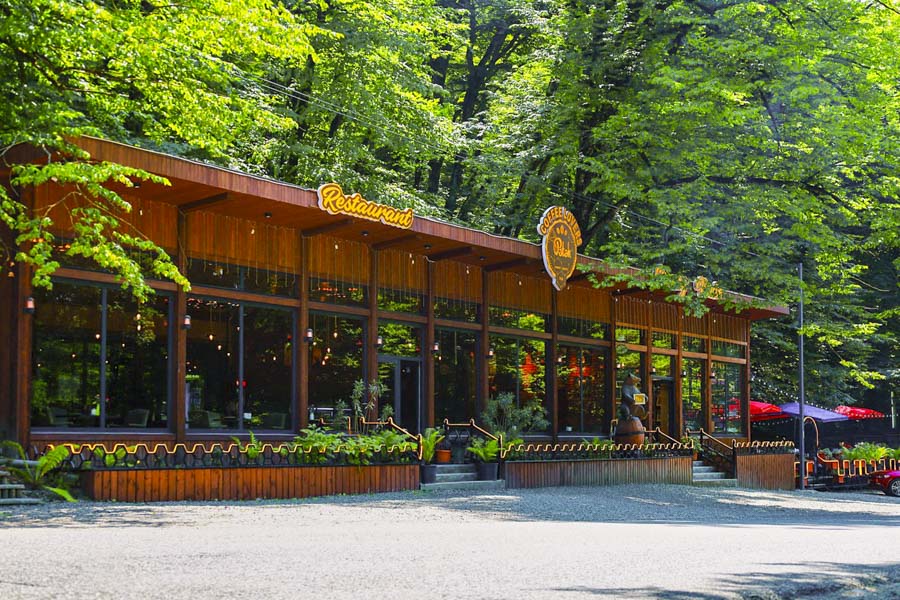
Photo source: www.tripadvisor.com
Traditional çayxanas are a huge part of the local social landscape and are typically located around parks, central streets, and the riverside. Sweets or a small treat usually accompany a pot of black tea. These places are primarily about lingering over conversation with friends and neighbours than ordering a quick drink.
Modern coffee is easier to find than it used to be. Petek Honey Tea & Coffee is a well-reviewed option for tea and coffee. Həsir Bakery & Coffee combines espresso-based drinks, pastries, baked goods, and a warm welcome on Fətəli Khan Avenue.
Sweets are where Quba becomes distinctly region-specific. Quba pakhlava is made from fine pastry strands layered with walnuts and sweetened with syrup or honey. Bukme uses similar ingredients too, along with the key elements that set it apart: walnuts, hazelnuts, raisins, and sometimes dried fruit, and its form differs. Both are available in the city and are easier to find in specialist pastry shops than on restaurant dessert menus.
For something unmistakably local, pastry shops are more interesting than generic dessert cafés. QUBA PAXLAVASI on Memar Acemi Street specialises in the city’s signature sweet, and small bakeries around Quba also prepare bukme and other pastries. This is one part of the food scene where looking for a specialist shop rather than a full restaurant usually makes sense.
You can look for contemporary tea-and-coffee venues as well. The format varies from simple tea houses to café restaurants, so atmosphere and menus can differ considerably from one place to another.
City Transport in Quba
Quba city centre is compact, and walking is the easiest way to discover the city at your own pace.
Public Transport
Local buses and minibuses serve Quba and nearby settlements, but they’re better for routine local travel than for building a sightseeing itinerary. The main Quba Bus Station (Quba Avtovağzalı), in Timiryazev village on the edge of the city, handles regional and intercity services.
For visitors staying only a day or two, public transport is most practical for straightforward point-to-point journeys; further attractions are usually easier to combine by taxi or private car.
Taxis
Taxis are widely used for getting around Quba and for short trips beyond the centre. Bolt currently lists Quba among its operating cities in Azerbaijan, giving travellers an app-based alternative to hailing a car on the street.
For longer journeys without an app fare, agree on the price beforehand and clarify whether waiting time and the return trip are included. This is especially important for half-day excursions, when the driver may need to stay with you.
Car Rental and Private Drivers
A rental car offers the most independence for exploring the district, especially when you need to combine several countryside stops in one day. A private driver can be a better fit for mountain routes, where familiarity with local roads is often more valuable than simply having a vehicle.
You can also arrange four-wheel-drive transport for rougher tracks or off-road excursions. For remote routes, confirm the vehicle type, planned stops, and return arrangements in advance rather than treating the journey like a standard city transfer.
How to Get to Quba
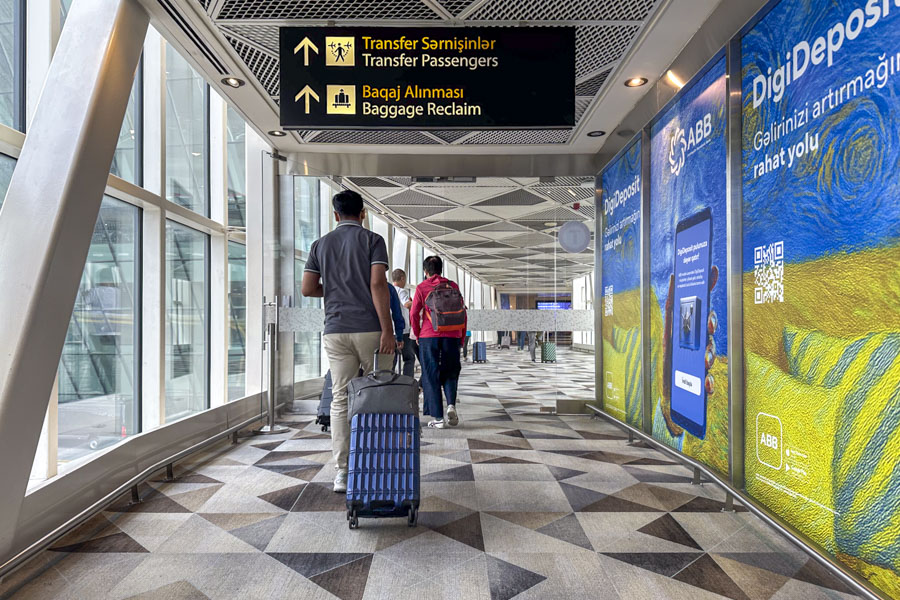
By Air
Heydar Aliyev International Airport (GYD) in Baku is the closest international airport to Quba. From the airport, continue to Quba by road.
By Bus
Buses and minibuses run between Baku and Quba, generally departing from Baku International Bus Terminal and arriving at Quba Bus Station. AYNA (Azerbaijan Land Transport Agency) lists routes linking Quba with Baku and other cities, and district services connect outlying settlements with the centre. Timetables can change, so check current departure information before travel, but it usually takes 3 to 4 hours to get there.
By Car
Private transfers or rental cars are convenient for travellers continuing to Khinalug, Qusar, or Shahdag, especially when you need to combine several stops in one day.
The drive from Baku to Quba usually takes about 2 to 3 hours, depending on traffic and stops.
There are no direct passenger rail connections serving the centre of Quba, so road transport therefore remains the primary way to get there.
Languages Spoken in Quba
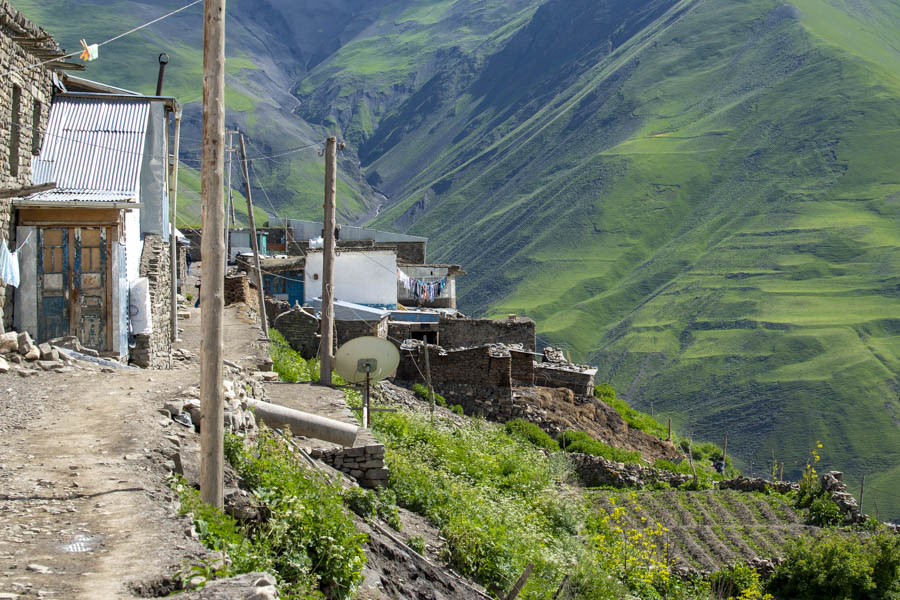
Azerbaijani is the main language in Quba. Some residents also understand Russian. English is more likely to be spoken in hotels and tourism businesses than in smaller shops or rural areas.
The wider district is linguistically diverse. Juhuri is associated with Qırmızı Qəsəbə, and Khinalug has its own distinct language alongside Azerbaijani.
A translation app is useful for independent travel outside the main tourist establishments.
Security in Quba
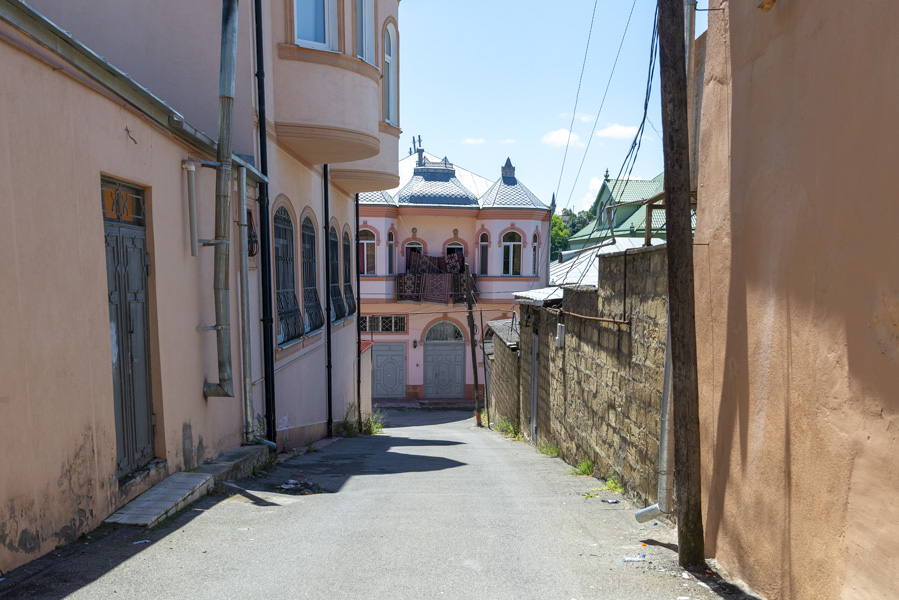
Quba is generally safe to explore with normal travel precautions. Keep valuables secure in busy areas, use recognised transport where possible and confirm fares before longer taxi journeys if no fixed price is available.
Snow, ice, fog, rain, and occasional road disruption can affect access to high-altitude areas. Check conditions before departure, leave extra travel time and carry suitable footwear and warm layers.
In villages, places of worship, and residential areas such as Qırmızı Qəsəbə and Quba’s mosques, dress respectfully and ask before photographing people up close.