

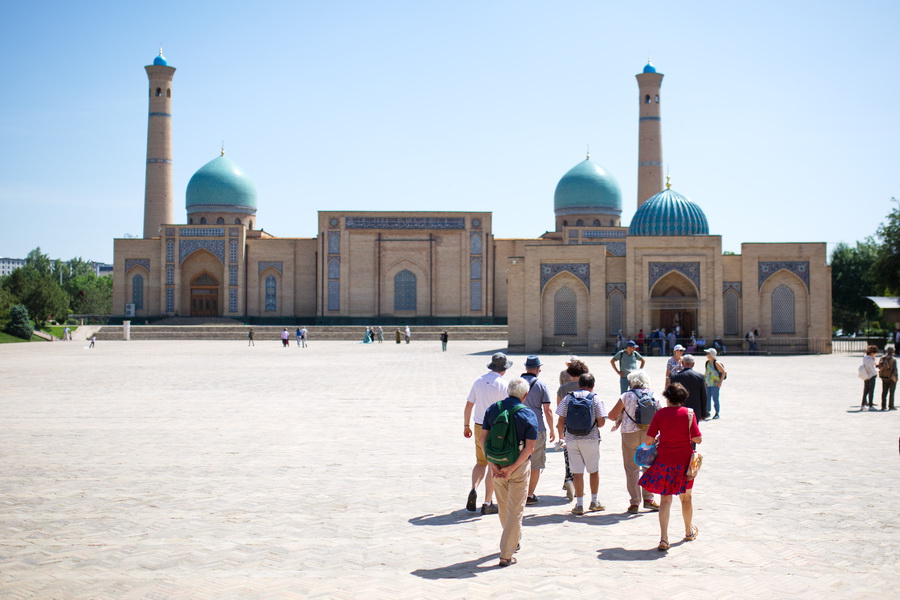
The best months to visit Uzbekistan, in many people's view, are April and May, or September and October.
As spring arrives with Navruz (also Navroʻz and Nowruz) on 21 March, the weeks that follow bring flowering orchards, lively bazaars, and the kind of soft warmth that can make a full day of sightseeing easy and genuinely pleasurable. Autumn is equally rewarding: the late harvest is in, and the light that falls across ancient domes and tall minarets has a quality that painters and photographers immediately notice and want to capture.
That said, Uzbekistan can be visited at any time of year, as summer suits those heading into the mountains, and winter has its own appeal, ranging from the quieter ancient cities to the ski slopes not far away from Tashkent.
The sections below cover each season and should help you decide when to visit Uzbekistan.
Best Time to Visit Uzbekistan by Season
Uzbekistan has four distinct seasons, and the right time to visit depends largely on what you are hoping to experience. Let's look at each season more closely.
Visiting Uzbekistan in Spring
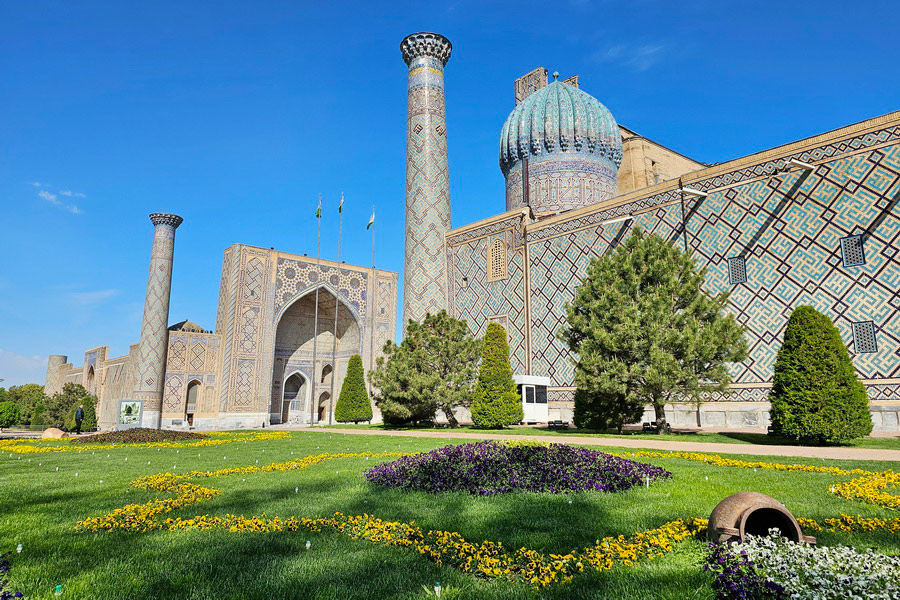
For many travellers, spring is the best time to visit Uzbekistan: days are warm without becoming uncomfortable, the air is often clear enough to see the snowy mountain peaks from Tashkent, and the whole country is covered in fresh young leaves. In the desert regions, wildflowers appear for a few short weeks, transforming landscapes that spend most of the year in shades of ochre.
March still feels transitional: temperatures can vary considerably and nourishing rain may fall frequently, but the communal preparation of sumalak, a sweet ritual dish marking the new year across Central Asia, casts a warmer light over the month. April is more settled and considerably more popular, while many travellers consider May the finest month of them all: warm, stable, and bright, with long daylight hours that energise visitors to see as much as possible.
Spring suits almost anyone, which is precisely why it is the busiest time of year. The Silk and Spices Festival in beautiful Bukhara, usually held at the end of May or beginning of June, is one of the finest ways to experience the season at its most alive.
Visiting Uzbekistan in Summer
By the end of May, the first noticeable heat begins to build across the plains. In summer, temperatures climb steeply through June and peak in July and August. In the southern and desert regions, the heat can exceed 40°C (104°F), the air shimmers over courtyards, and the shade of a teahouse becomes something to plan around. Those visiting Uzbekistan in summer structure their days accordingly: monuments and madrasas (schools) in the early morning or late afternoon and the middle hours given over to shade and relaxation.
The heat is worth adapting to, not simply avoiding. Humidity is generally low, which makes the warmth more bearable than the numbers alone suggest. Evenings cool noticeably, and June, the most hospitable of the three months, still feels lively and welcoming. July and August are more demanding on the plains, and experienced travellers either time their sightseeing with care or head east.
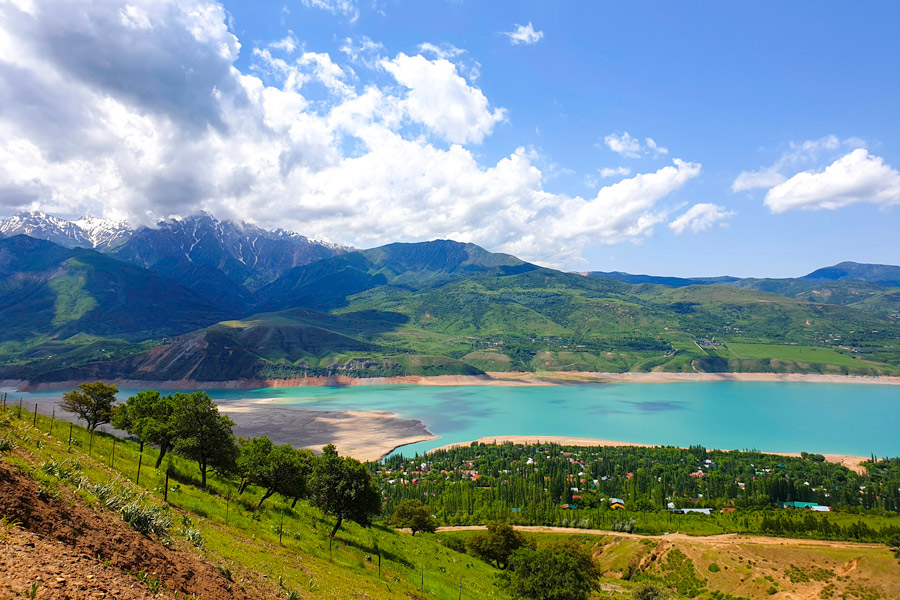
The mountains some 80 kilometres from Tashkent sit comfortably between 20°C and 30°C (68–86°F) through the summer months. Trails are fully open, the long days reward unhurried hiking, and Charvak Reservoir nearby adds a lakeside dimension that surprises many visitors. For those whose idea of a good trip involves fresh mountain air, summer in Uzbekistan is not a compromise; it is simply the right time to come.
Visiting Uzbekistan in Autumn
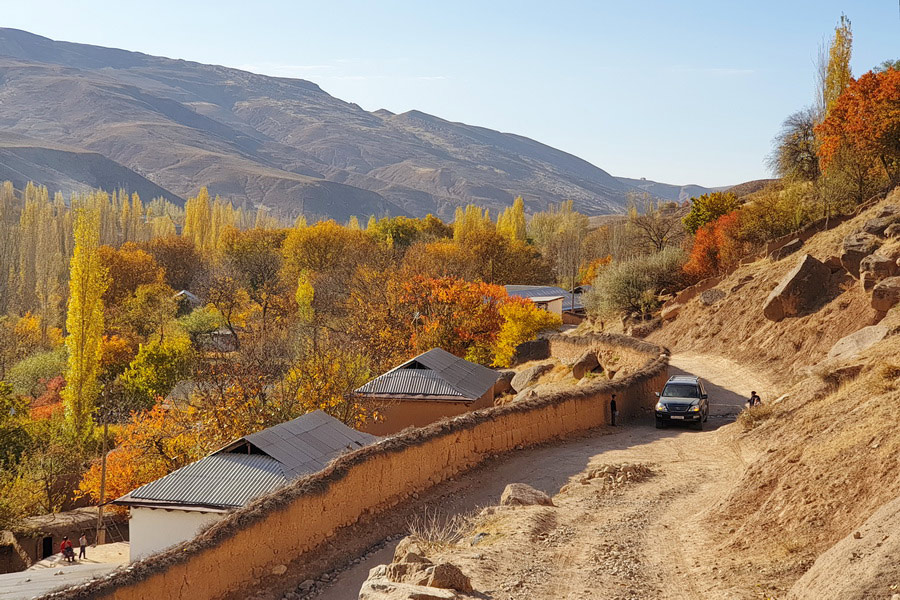
For many travellers, autumn is the best time of year to visit Uzbekistan. September and October bring warm days, clear weather, and markets at their most abundant, with grapes from the vineyards of the Samarkand and Fergana regions arriving at their best. Uzbekistan's winemaking tradition is well-established, and autumn is the season when it is most naturally encountered, in small family cellars and at guesthouse tables that take pride in what the land produces.
October is often considered the most settled month of the season: the intense heat has fully passed, and the historic cities take on a calmer rhythm.
For travellers wondering whether November is a good time to visit Uzbekistan, the answer depends largely on what they value most. Early November still carries much of autumn's appeal, and those who arrive with realistic expectations and a warm coat often find it one of the more memorable ways to experience the ancient cities: quieter, more reflective, and entirely removed from the crowds that define the peak seasons.
Visiting Uzbekistan in Winter
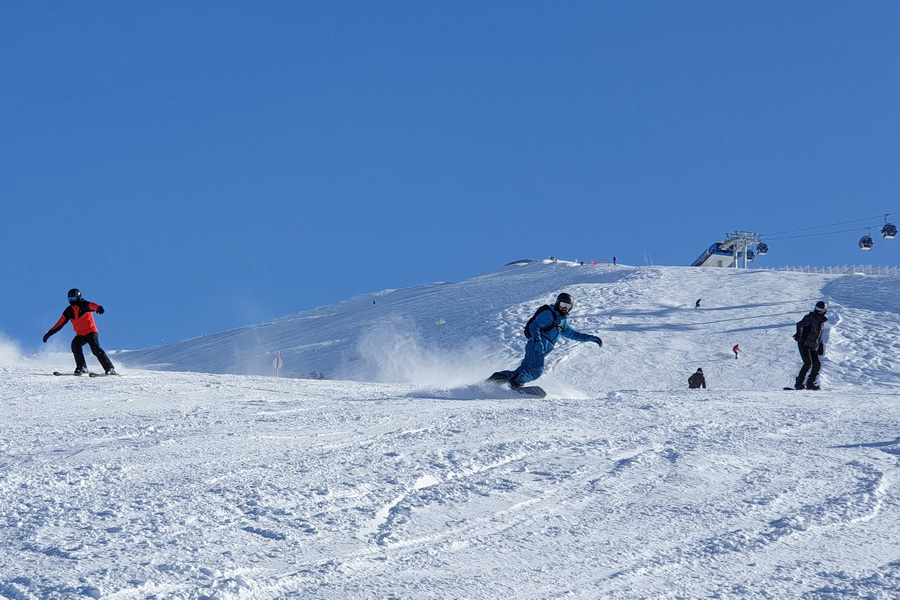
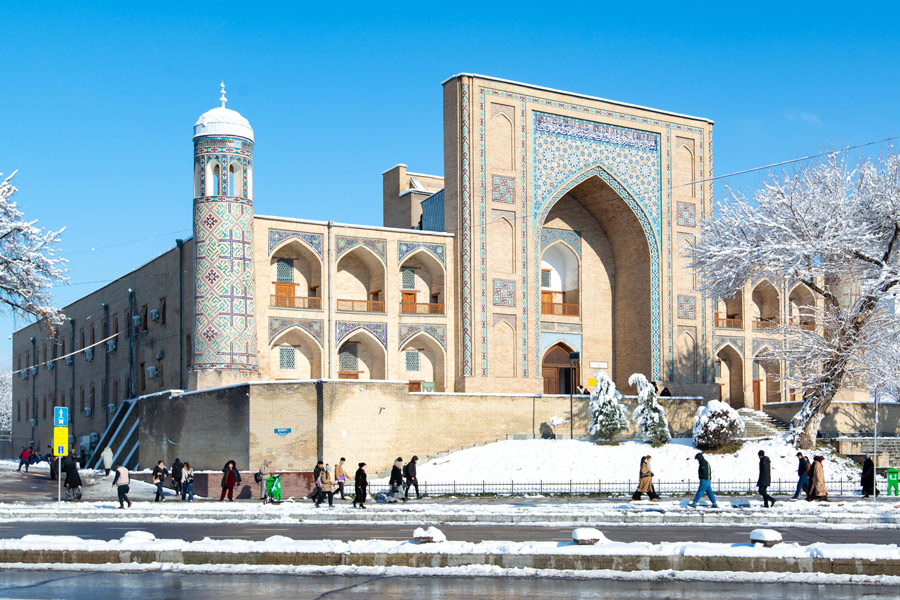
Winter is the season most travellers tend to overlook, and that is precisely what makes it interesting. The ancient cities of Samarkand, Bukhara, and Khiva lose their crowds almost entirely and gain something in return: a stillness that allows the architecture to speak without competition, interiors that feel warmly inviting against the cold outside, and a slower pace of life that belongs more to residents than guests visiting. Snow does fall in cities such as Samarkand and Tashkent, though not frequently, and when it does, it makes the news.
For those visiting Uzbekistan in December, the city streets carry a festive warmth as New Year approaches, and the ski season at the Chimgan and Amirsoy ski resorts is well under way. January and February are the coldest months, and the plains are dry and still. Those who find this appealing are rewarded with an Uzbekistan that few international travellers see.
Uzbekistan: Best Time to Visit Month-by-Month
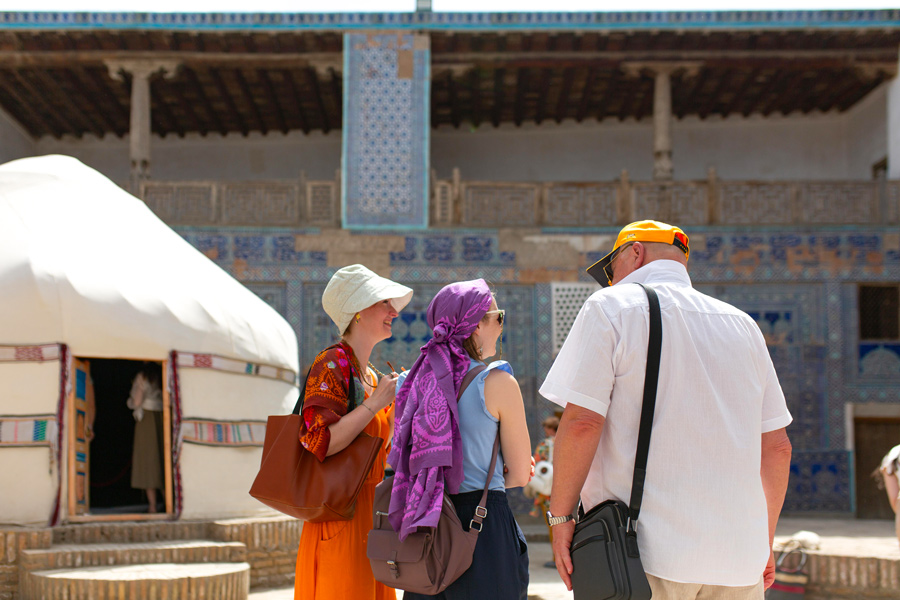
This month-by-month guide is a practical reference to help you compare weather, travel conditions, general atmosphere, and things to do at a glance.
| Month | Weather Conditions | Travel Notes |
| January | Cold, dry winter | Ski and winter sports season active near Tashkent. Quiet cities. |
| February | Cold, still winter conditions | Ski and winter sports season. Low traveller numbers; winter tours. |
| March | Weather variable, transition from winter to spring | Communal celebrations. |
| April | Mild and stable spring weather | One of the most comfortable months overall (hiking, desert and city tours). |
| May | Warm and settled | Peak season begins; long sightseeing days (desert and city tours). |
| June | Heating up in lowlands | Peak season begins; long sightseeing days (desert and city tours). |
| June | Heating up in lowlands | Mountain areas are more comfortable (hiking and desert tours). |
| July | Hot in plains, dry | City sightseeing are more demanding; mountain focus (hiking). |
| August | Peak summer heat | Quieter cities; best avoided for lowland touring (hiking). |
| September | Cooling down, stable | Start of autumn travel season (hiking, desert tours). |
| October | Warm, balanced conditions | One of the best months overall (desert tours). |
| November | Cooling quickly | Fewer crowds; lower prices. |
| December | Cold winter returns | Ski and winter sports season begins. Festive cities. |
Best Time to Visit Uzbekistan by Travel Goal

What draws travellers to Uzbekistan varies considerably: some come for the great Silk Road cities, others for mountain trails, desert landscapes, ancient crafts, or the festival calendar. The timing for each is different, and the sections below set out when each experience is at its best.
Craft Workshops and Master Classes
Uzbekistan is one of the best places in Central Asia to experience traditional crafts at close range. In Tashkent, places such as Human House host workshops, exhibitions, concerts, and master classes centred on Uzbek textiles, ceramics, embroidery, and contemporary design. In Samarkand, the Konigil paper workshops demonstrate the centuries-old process of making silk paper from mulberry bark by hand.
Best time: Workshops are available year-round, but April-May and September-October offer the most comfortable conditions for combining them with wider travel.
Desert Travel and Yurt Camps
Spring and autumn are the ideal seasons for travelling through the Kyzylkum Desert, staying in yurt camps, and exploring the remote western landscapes around the Aral Sea region. Daytime temperatures remain manageable, desert skies are at their clearest, and long overland journeys feel far less demanding than in midsummer. Nevertheless, desert tours are available all year round.
Best time: April-May and September-October.
Festivals, Music, Film, and Fashion
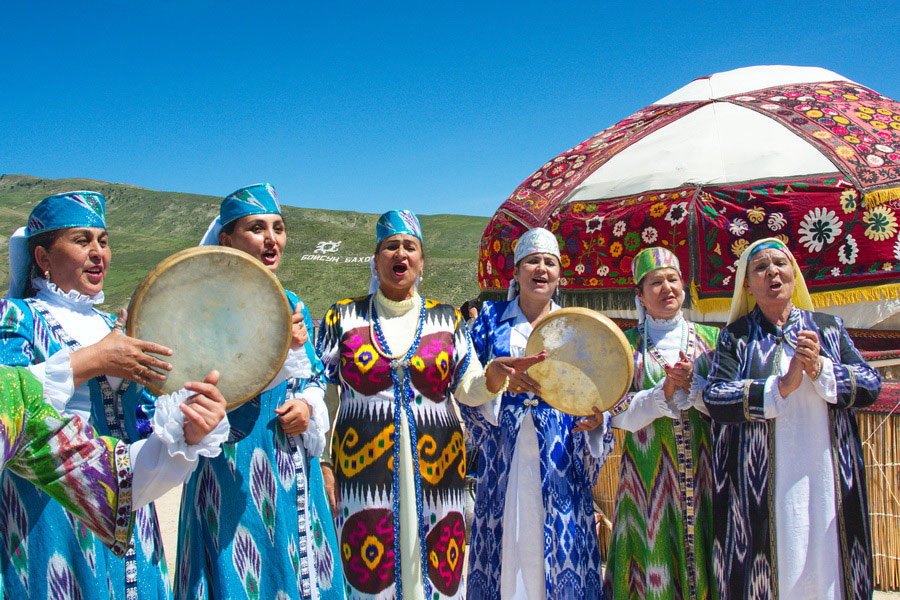
Uzbekistan's cultural calendar is far richer than many first-time visitors expect. Spring and autumn are the liveliest periods for cultural travel, when film screenings, craft fairs, fashion events, seasonal food festivals, and international performances begin to fill the public squares, theatres, courtyards, and parks of the larger cities. These are the months when public life shifts naturally outdoors and the country feels especially open to visitors.
Best time: Navruz celebrations (21 March), Silk and Spices Festival in Bukhara (late May or early June), Sharq Taronalari music festival in Samarkand (August), Stihia electronic music festival in Muynak (typically in August), Tashkent International Jazz Festival (late April to mid-May), Visa Fashion Week in Tashkent (October).
Food and Bazaar Culture

For many travellers, Uzbek food becomes one of the strongest memories of the trip, and the season genuinely shapes what is on offer. Spring brings the first fresh herbs, young vegetables, apricots, and cherries to the markets, alongside bread fresh from clay ovens and the lamb dishes that mark Navruz. Summer brings many varieties and pears. Autumn is richer and more abundant: melons, figs, pomegranates, grapes, walnuts, and persimmons fill the stalls, and the harvest season lends the bazaars a particular generosity of atmosphere. Both seasons reward unhurried time in the markets; winter, by contrast, shifts the focus to warming dishes, dried fruits, and the quieter pleasures of a good teahouse.
Best time: spring for fresh produce and the Navruz table; autumn for the harvest; and all year round for the quality of the products.
Hiking and Mountain Travel
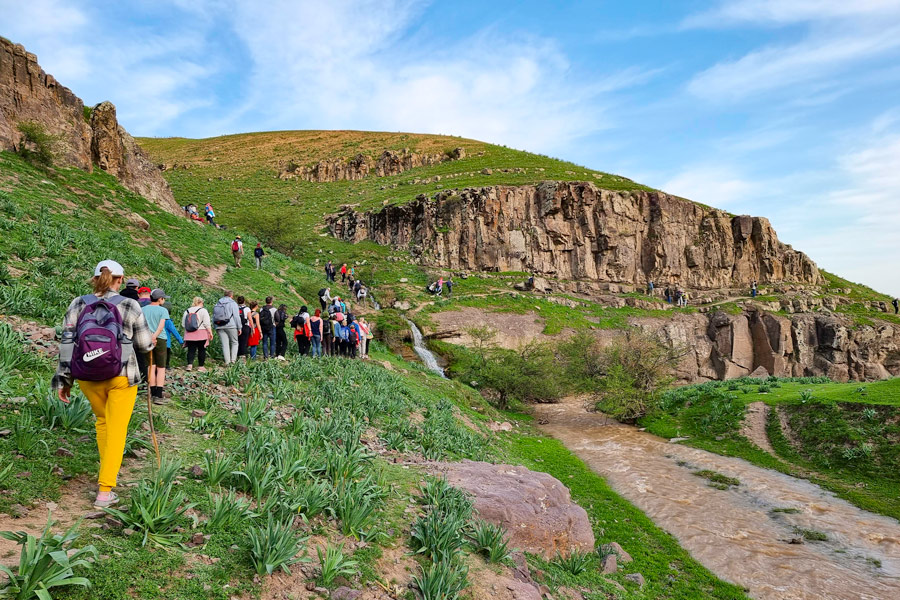
Summer is often the best time for hiking in Uzbekistan. While the plains become intensely hot, the mountains stay noticeably cooler, with open trails, long daylight hours, and conditions well suited to walking, horse riding, and lakeside stays.
Best time: June through September.
Skiing and Winter Sports
For travellers interested in winter sports, the mountains near Tashkent offer a surprisingly accessible ski escape, with modern lifts, reliable snow through the coldest months, and mountain scenery.
Best time: January and February for the most reliable snow conditions.
FAQs about Visiting Uzbekistan
What are the best months to visit Uzbekistan to avoid crowds and get good hotel deals?
Late November, December, January, and February are usually the quietest months, with the best room availability and lower prices. Early March can also be relatively calm before spring travel builds.
What are the ideal months for pleasant weather when visiting Uzbekistan?
April, May, September, and October are the most comfortable months for most travellers. Days are warm, sightseeing is easier, and the weather is generally at its most agreeable.
How to visit Uzbekistan?
Most travellers fly into the capital, Tashkent, and then continue by domestic flight, train, or private transfer. A good route usually combines the great Silk Road cities with either a mountain stay, a desert tour, or both.
Is Uzbekistan worth visiting?
Yes, absolutely. Uzbekistan tourism combines some of Central Asia’s most striking architecture, strong food culture, welcoming cities, and enough seasonal variety to make it rewarding at any time of year.