

Information
Organisers: Tourism Committee of the Republic of Uzbekistan, Bukhara Regional Administration (Khokimiyat), Association of Craftsmen "Hunarmand"
Location: Historic Centre of Bukhara
When: Late May to early June, once every two years. Exact dates are usually announced shortly before the festival.
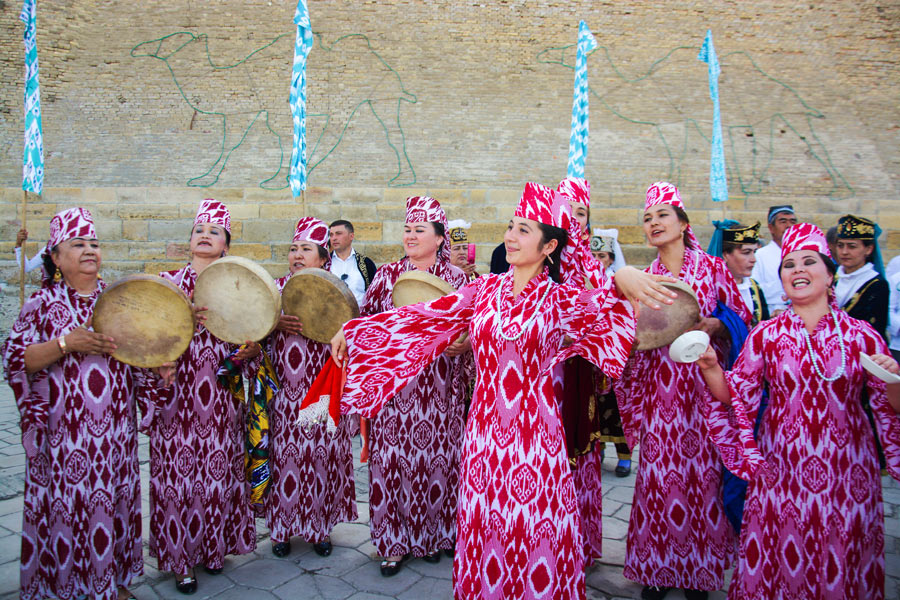
Every odd-numbered year, for several days in late May or early June, Bukhara's historic centre comes alive with the sights, sounds and atmosphere of the ancient Silk Road. Traditional music fills the streets, festive processions wind through centuries-old neighbourhoods, street performers entertain the crowds, and lively markets once again spread beneath the city's historic trading domes.
This is the Silk and Spices Festival in Bukhara – an international celebration of Uzbekistan's craftsmanship, traditions and cultural heritage. It brings together artisans, performers and visitors from Uzbekistan and abroad while helping keep centuries-old craft traditions alive.
Planning Your Trip
- Hotels fill up quickly during the Silk and Spices Festival in Bukhara, especially those in the historic centre within walking distance of the main festival venues. If you'd like to stay nearby, it's best to book your accommodation well in advance.
- Bukhara lies about 570 km (354 miles) southwest of Tashkent. The easiest way to get there is by the high-speed Afrosiyob train, which takes around four hours. Bukhara's railway station is located in the neighbouring town of Kagan, about 12 km (7.5 miles) from the city's main festival venues. From there, you can reach the old city by taxi, public transport, or a pre-arranged transfer.
Regular flights to Bukhara are also available, and the airport is conveniently located just 5–6 km (3–4 miles) from the city's main attractions.
If you're travelling from Samarkand, around 270 km (168 miles) away, the journey takes about 1.5 hours by train or 3–4 hours by car. - Many travellers combine the Silk and Spices Festival with visits to Uzbekistan's other historic cities, making it part of a broader trip around the country or a longer journey along the Silk Road.
What to Expect at the Silk and Spices Festival in Bukhara
Opening Procession
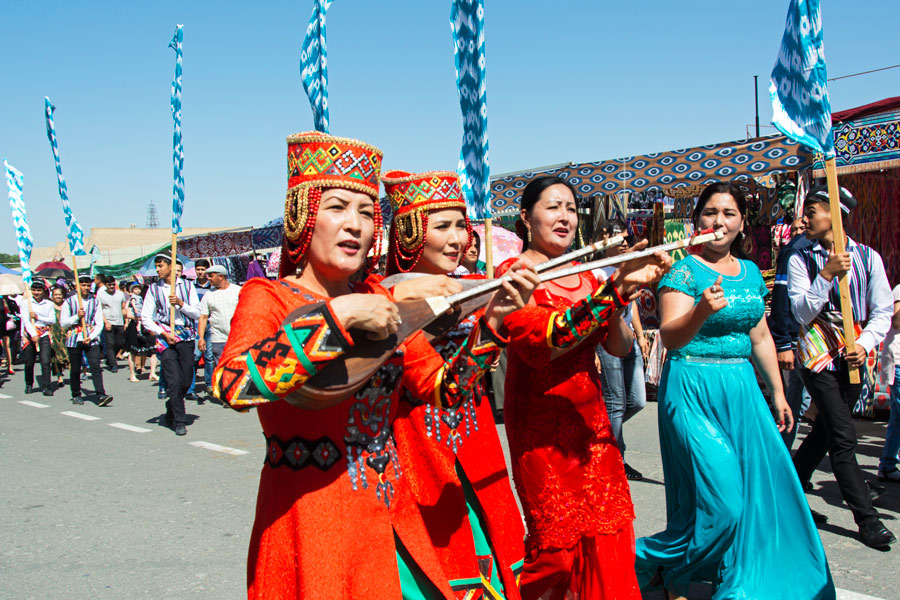
The festival traditionally opens with a colourful procession. The route covers roughly one kilometre, running from the Ark Fortress to the Lyabi-Hauz ensemble through streets that were once lined with caravanserais, workshops and bustling bazaars.
The procession moves to the sound of karnays and surnays, traditional Uzbek wind instruments that have accompanied celebrations for centuries. Musicians, dancers, tightrope walkers, horse riders, artisans and other performers parade through the old city wearing richly decorated Uzbek clothes. Some participants wear gold-embroidered chapans reminiscent of the robes once worn by the emirs of Bukhara, while others appear in regional dress or historic costumes inspired by medieval warriors. Horses are a familiar sight throughout the procession, and camels occasionally join the parade, adding to the impression of a Silk Road caravan making its way through the city.
Craft Fair
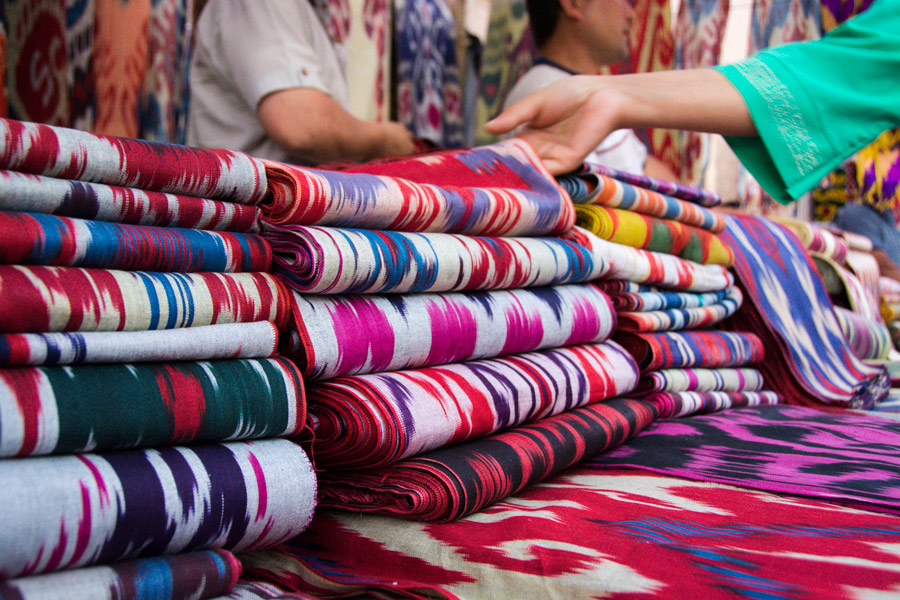
At the centre of the celebrations is the craft fair. Hundreds of artisans from across Uzbekistan are joined by makers from neighbouring Central Asian countries and beyond, transforming the historic centre into one vast open-air marketplace.
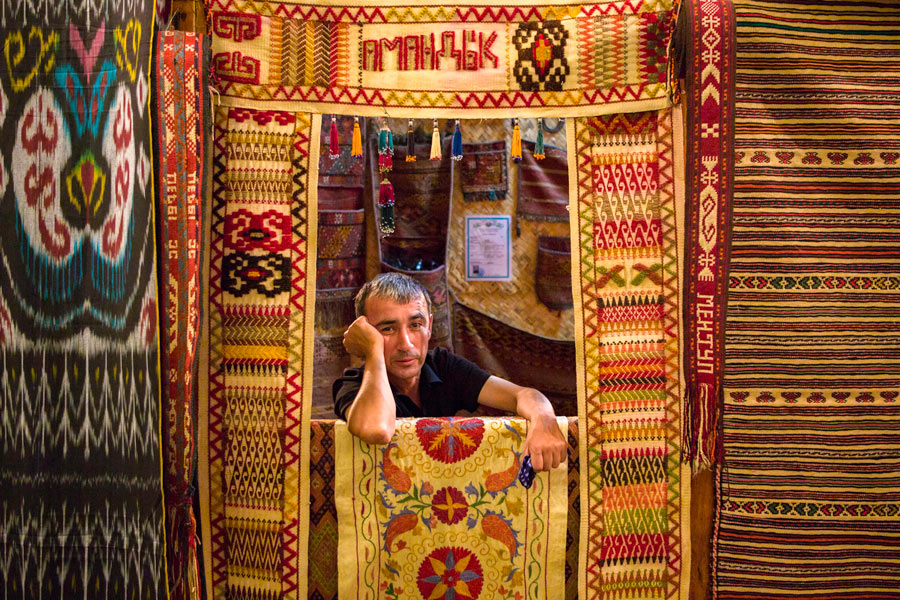
The stalls are filled with many of Uzbekistan's best-known crafts, including Margilan silk, Rishtan ceramics, Bukhara gold embroidery, handwoven carpets, jewellery and musical instruments.
One of the greatest pleasures of the fair is meeting the artisans themselves. Many of them work at their stalls throughout the day, giving visitors the chance to watch techniques that have changed little over generations, ask questions about regional styles, and see how individual pieces are created.
Some craftspeople are also happy to personalise their work, whether by embroidering initials onto a scarf or adding a small engraving to a piece of jewellery while you wait.
Throughout the Silk and Spices Festival in Bukhara, workshops are held in madrasah courtyards and open squares across the old city. Visitors can try throwing clay on a potter's wheel, learn about traditional handwoven carpet weaving, and discover the techniques behind Uzbek woodcarving and copper embossing.
The Plov Festival
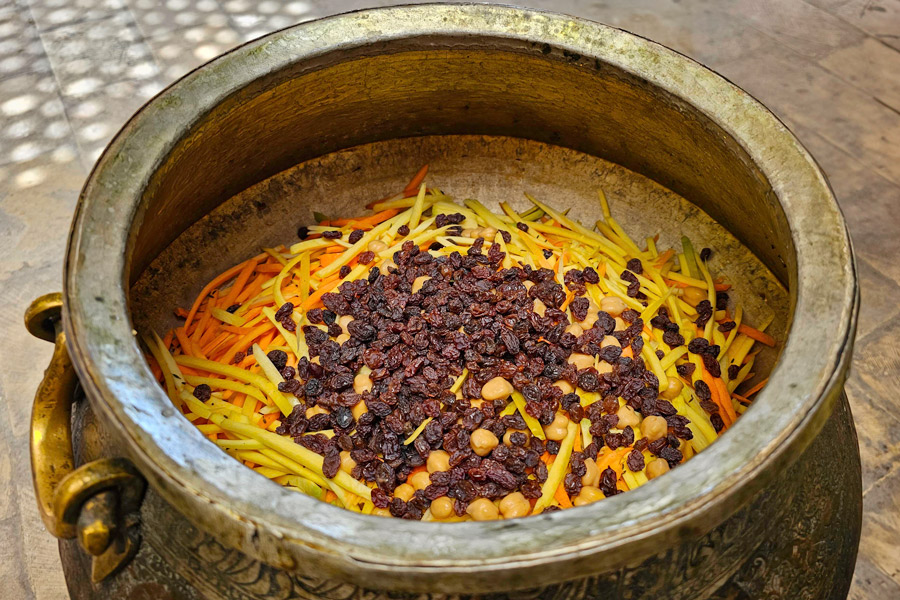
For many visitors, the Plov Festival, or Palov Sayli, is one of the festival's biggest attractions. Chefs from every region of Uzbekistan gather to cook the country's signature dish plov (pilaf) in enormous cast-iron cauldrons known as kazans. The event is usually organised as a friendly competition, with prizes awarded to the most skilled oshpaz, or traditional pilaf master.
Watching the cooking is all part of the experience. Once it's ready, visitors can taste regional recipes that vary from one part of Uzbekistan to another. Among the best known are Tashkent wedding plov, Samarkand's “zig’ir osh”, made with linseed oil, and Bukhara's “oshi sofi”.
As the festival's name suggests, spices are just as important as silk. Their aroma drifts through the old city, while stalls throughout the fair overflow with herbs, seasonings and dried ingredients.
One of the essential ingredients in Uzbek plov is zira (Central Asian cumin), while turmeric is often added for its warm golden colour and subtle flavour. Visitors will also find dozens of other spices and medicinal herbs that have long been used in both Uzbek cooking and traditional folk medicine.
Traditional Performances and National Sports
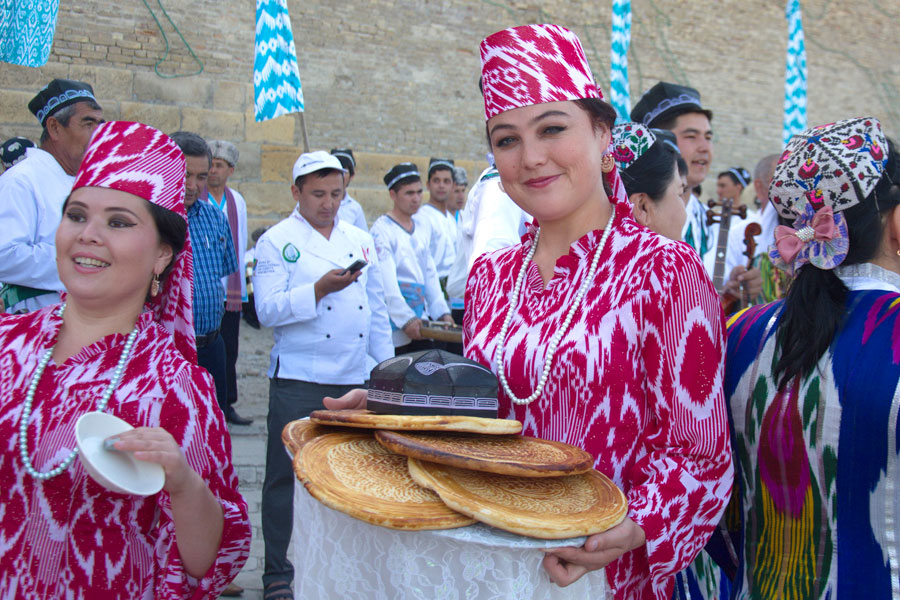
Traditional performances are an essential part of the festival programme. Throughout the celebrations, dorboz (tightrope walkers) perform acrobatic routines on ropes suspended up to 12 metres above the ground, while kurash, Uzbekistan's national style of wrestling, features many of the country's leading polvons, or traditional wrestling champions.
Concerts featuring traditional Uzbek music and dance take place across the city throughout the festival. Before long, visitors often find themselves singing and dancing alongside local residents, especially during performances of Lazgi, the energetic traditional dance of the Khorezm region.
The festival concludes with a gala concert in the square beside the Poi-Kalyan ensemble, bringing several days of music, dance and traditional performances to a memorable close.
Silk and Spices Fashion Day
Fashion has become one of the festival's defining events. During Silk and Spices Fashion Day, both established designers and emerging talents present collections made from atlas, adras, silk and other traditional Uzbek textiles.
Some collections reinterpret historic Uzbek costume through a contemporary lens, while others take a distinctly modern approach without losing their connection to local craftsmanship. Ikat fabrics, embroidery and other traditional decorative techniques remain central to many designs, regardless of their silhouette.
Guest designers from abroad also take part, bringing fresh perspectives and creating an engaging dialogue between Uzbekistan's textile traditions and contemporary international fashion.
History of the Festival
The Silk and Spices Festival in Bukhara was launched in the early 21st century, when the city was once again in the international spotlight. In 1997, Bukhara, already recognised as a UNESCO World Heritage Site, celebrated its 2,500th anniversary. Five years later, in 2002, the city hosted a session of the UN World Tourism Organization (UNWTO) dedicated to developing tourism along the Silk Road.
It was during this period that the Silk and Spices Festival was established. From the beginning, its main purpose has been to preserve and promote the craft traditions of the Silk Road. Over the years, it has grown into one of Uzbekistan's leading international festivals, showcasing the country's traditional crafts and cultural heritage.
Today, the festival brings together hundreds of artisans, artists and musicians from Central Asia, Russia and Europe. Past editions have also welcomed participants from India, Kazakhstan, Kyrgyzstan, Tajikistan, Turkmenistan and many other countries. Every edition attracts tens of thousands of visitors from around the world.
Bukhara Silk and Spices Festival Timeline
2002–2019 – The festival was held annually.
2020 – Cancelled because of the COVID-19 pandemic.
2021 – The 19th Silk and Spices Festival took place.
2022 – The inaugural Gold Embroidery and Jewellery Festival was introduced as a companion event, intended to alternate with the Silk and Spices Festival every two years. It has since returned in 2024 and 2026.
2023 – The 20th Silk and Spices Festival took place.
2025 – The 21st Silk and Spices Festival took place.
2027 – The 22nd Silk and Spices Festival is expected to take place.
Things to Do at the Silk and Spices Festival in Bukhara
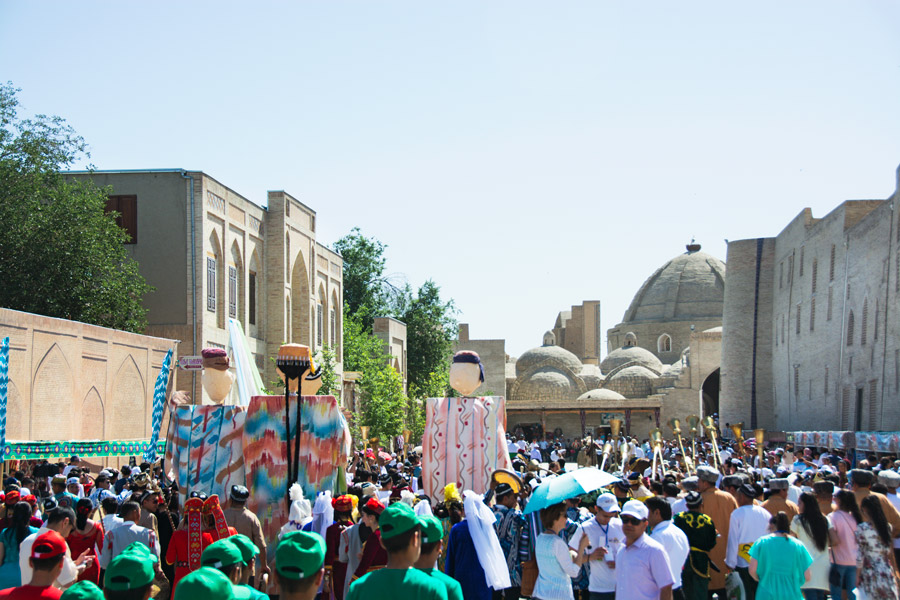
- Join the opening procession as it winds through the streets of Bukhara's historic centre.
- Watch artisans at work, take part in a hands-on workshop, and buy a handcrafted souvenir directly from the artisan who made it.
- Sample regional varieties of Uzbek plov and discover how recipes differ from one part of the country to another.
- Explore the old city after sunset, when Bukhara's monuments are illuminated and the festival atmosphere continues into the evening.
- Leave time to explore some of Bukhara's best-known landmarks, including Lyabi-Hauz, the Ark Fortress, the Poi-Kalyan ensemble, the Bahauddin Naqshband Memorial Complex, and Sitorai Mokhi-Khosa Palace.