

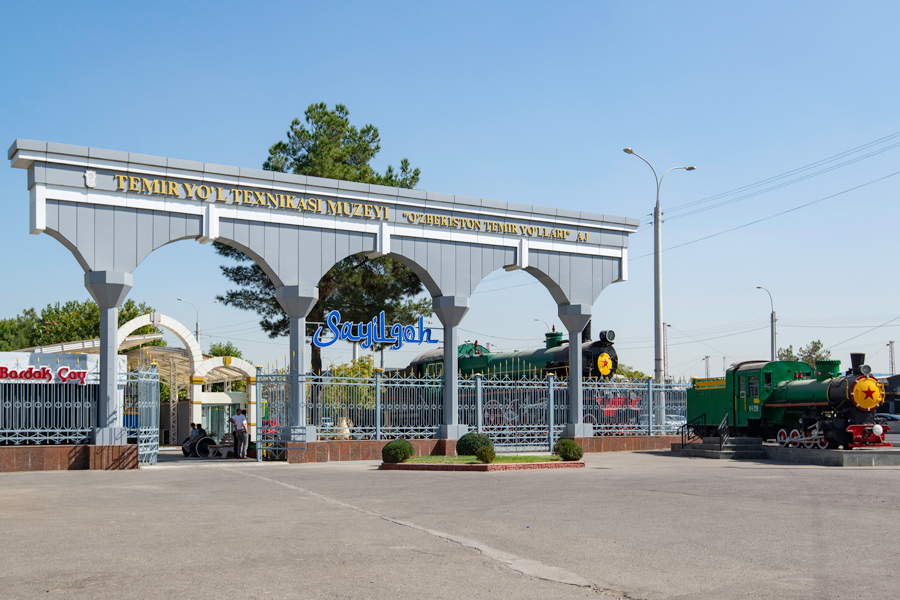
Address: 6 Turkiston Street, Tashkent
Opening hours: daily, 09:00–18:00; in the warmer months – 09:00–19:00.
Phone: (+998 88) 412-77-66
Tashkent Railway Museum brings together more than 40 full-size locomotives, coaches and pieces of railway equipment from different periods of the 20th century. Set beside Tashkent Central Railway Station, the open-air collection traces the transition from steam traction to diesel and electric locomotives on the railways of Central Asia.
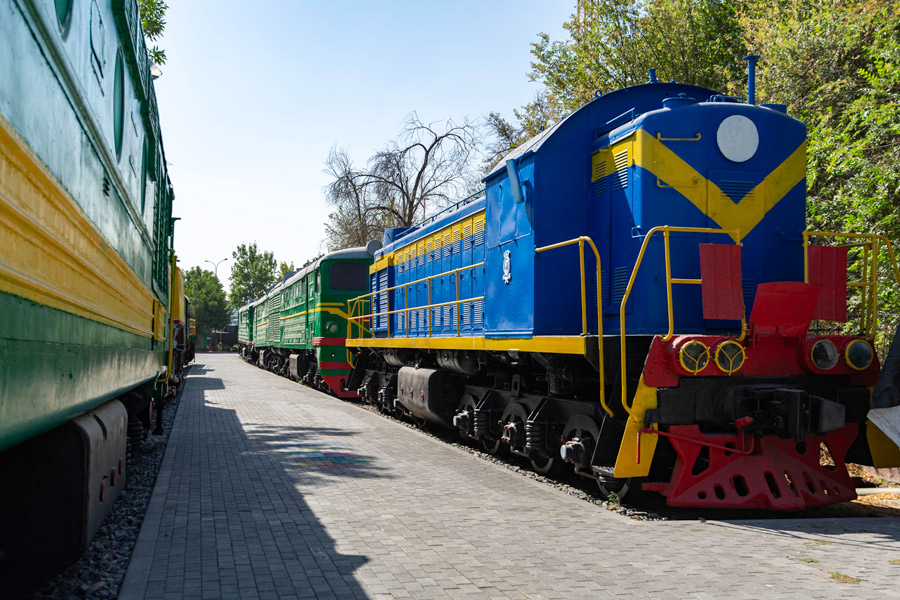
Dozens of engines stand along the museum tracks, including examples built in the Soviet Union, the United States, Germany and Czechoslovakia. Many can be viewed from inside: visitors can climb into the driver's cabs, compare their controls and interiors, and see how railway technology changed over several decades.
Some exhibits have been extensively restored, while others retain older fittings and interiors. This contrast is part of the museum's appeal, particularly on the less restored side of the grounds, where the rows of locomotives still have the feel of an old railway depot.
Practical Information
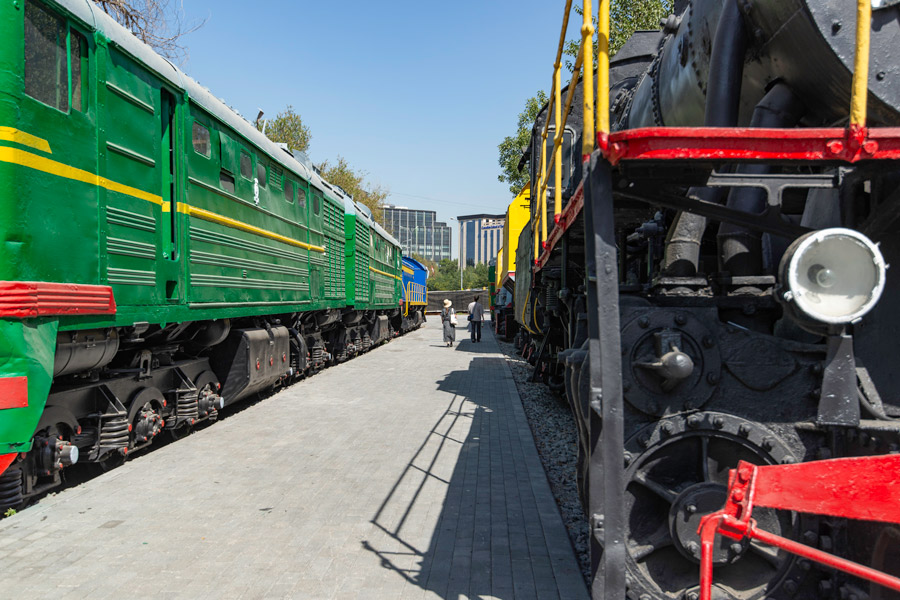
Tickets and photography. Admission for foreign visitors costs UZS 50,000 (about $4,30). Professional photography and filming are charged separately, while ordinary mobile-phone photography is included in the admission price.
How much time to allow. Allow 1–2 hours for the museum. The entire exhibition is outdoors, and the grounds stretch along the railway tracks, so expect a fair amount of walking. In hot weather, visit in the morning or towards the evening and wear a hat. As visitors can climb aboard many of the locomotives, comfortable shoes and clothes that allow easy movement are useful.
Location and how to get there. The museum is in central Tashkent on Turkiston Street, next to Tashkent Central Railway Station. The nearest metro station is Tashkent, just a few minutes' walk away.
There are plenty of hotels and cafés nearby, as well as several places of interest. One of the closest is Ming Urik, one of Tashkent's oldest archaeological sites, about 500 metres away or around a 10-minute walk. The site preserves remains of an ancient city, including traces of a structure dating back around 2,200 years. Its proximity to the museum makes it easy to visit both places on the same day.
Collection and Highlights
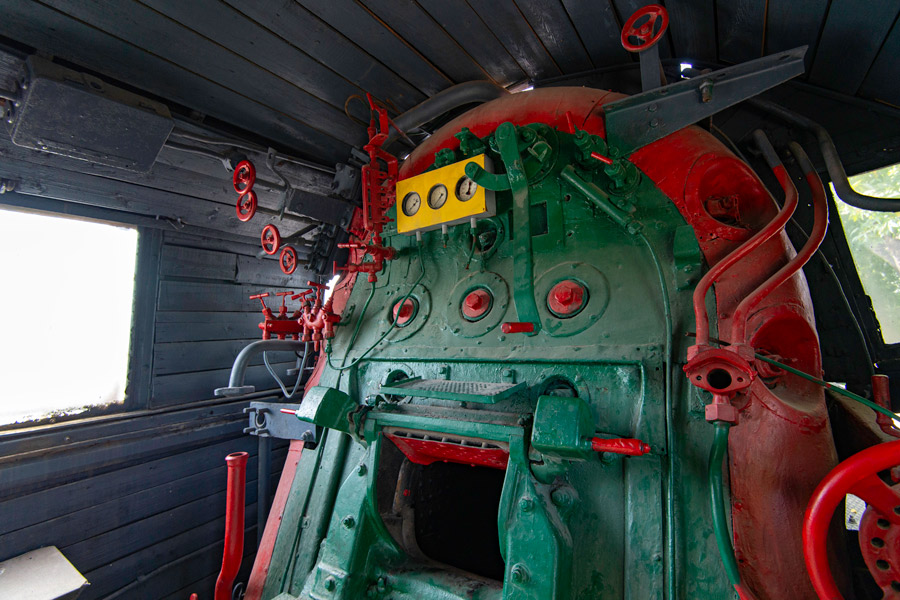
The museum has more than 40 full-size exhibits, including locomotives from different periods, passenger and freight coaches, and railway maintenance equipment. Together, they illustrate much of the development of 20th-century railway technology, from steam locomotives to the diesel and electric models that followed.
Soviet Railway Equipment
The core of the collection is railway equipment built in the Soviet Union. Steam locomotives dominated the earlier part of the period represented here and were gradually replaced by diesel traction. On the Central Asian Railway, the two types remained in service side by side for several decades, with steam traction finally phased out in 1974. Electric locomotives appeared in Tashkent later, as electrification of the railway junction began in 1971.
Several exhibits are particularly noteworthy:
Su250-94 – a large passenger steam locomotive standing just inside the entrance on the right. Built in 1948, it belongs to the Su class, one of the main types of passenger steam locomotive used on Soviet railways in the mid-20th century.
SAZ-4000 – a passenger coach built in Leningrad in 1965. Its upper section has a raised observation lounge with large windows, allowing passengers to watch the scenery during the journey. It is a rare surviving coach of its type and has now been converted into a restaurant.
P36-0250 – a steam locomotive built by the Kolomna Locomotive Works in 1956. It belongs to the final generation of Soviet passenger steam locomotives and was the penultimate locomotive built in the P36 series.
TEP70-0008 – a passenger diesel locomotive built by the Kolomna Locomotive Works in 1978. The first seven TEP70 locomotives belonged to the original experimental series, while No. 0008 was the first example of the redesigned second version. It entered service at the Tashkent depot in 1979 and was transferred to the museum in 1989.
Foreign-Built Railway Equipment
The collection also features railway equipment built outside the Soviet Union. Some notable examples are:
Ea-2371 – a steam locomotive built in the United States in 1944. It belongs to the E series, which was produced in the United States for the Soviet Union during the Second World War. It first worked in the Southern Urals, later in Kazakhstan, and eventually entered the museum collection in Tashkent.
TE-5200 – a wartime freight steam locomotive built in occupied Poland in 1943 for the German Deutsche Reichsbahn. Originally a DRB Class 52 locomotive, it later entered Soviet service and eventually became part of the Tashkent museum collection.
Er772-89 – a steam locomotive built by ČKD in Prague in 1951. Soon after it was built, the locomotive entered service on the Tashkent Railway and was transferred to the museum in 1989.
Things to Do at the Museum
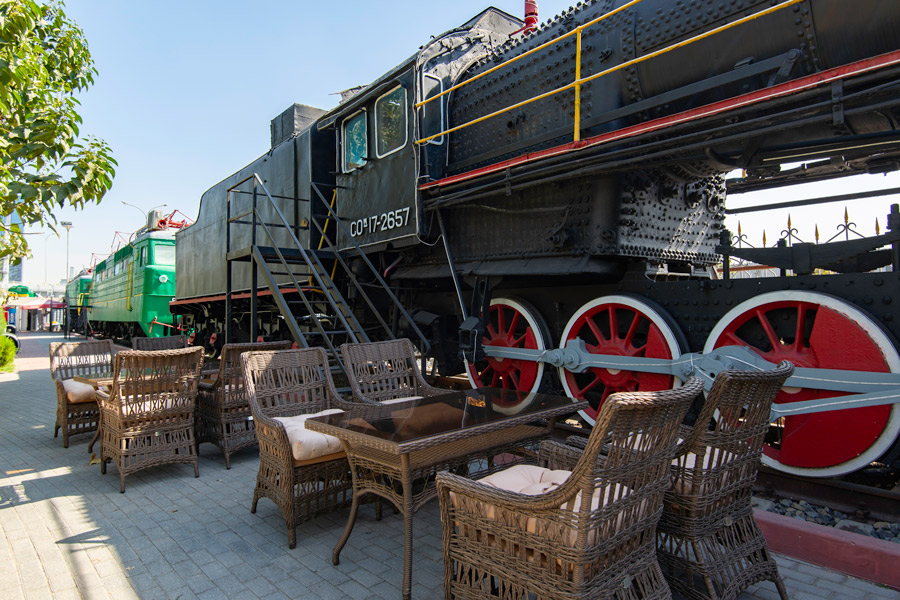
See inside the old locomotives. Visitors can climb aboard many of them and enter the driver's cab. In the steam locomotives, you can see the firebox door, gauges, valves and numerous levers. The cabs of later diesel and electric locomotives look quite different, with control panels, buttons, switches and large handles that resemble steering wheels.
The exhibits are arranged in two rows along the walking area, making it easy to follow a loop around the museum. Many of the exhibits on the right-hand side after the entrance have been restored more extensively. On the left-hand side, some locomotives and coaches still retain their old interiors and original steps, which can be more difficult to climb. This part of the museum feels a little like an abandoned railway depot, and for a moment it is easy to forget that you are in central Tashkent.
Ride the museum train. A small excursion train runs along the museum grounds. For groups of 10 or more, the ride costs UZS 15,000 per person (about $1,30). Smaller groups can pay for the whole trip, which costs UZS 150,000.
Plan a photo shoot. The museum is also used for retro-style and wedding photo shoots. The locomotives and old railway coaches are not the only backdrops: the grounds also have decorated walkways, green areas and a traditional Uzbek-style tapchan, raised seating platform.
Stop at one of the museum cafés. There are also several places to eat and drink on the grounds, including a coffee shop, restaurant and fast-food café.
Activities for children. Families can visit a small corner with parrots. In the warmer months, several small children's rides also operate on the museum grounds.
History of the Museum
The museum dates back to 1988, when the Central Asian Railway celebrated its centenary. To mark the anniversary, an exhibition of locomotives that had previously operated on the region's railways was organised at Tashkent Central Railway Station. The exhibition proved popular, and a permanent museum opened on 4 August 1989.
The collection has grown over time and today includes more than 40 full-size exhibits, among them rare models and examples that survive in very small numbers. Some locomotives from the museum's earlier collection have since been transferred elsewhere. One of them is Ov-1534, regarded as one of the collection's most unusual exhibits. In 2020, it was moved to Tashkent's Victory Park.
Because the locomotives and coaches are displayed outdoors, repainting and other maintenance work is carried out regularly. Visitors may therefore notice differences in colour schemes between older photographs and the exhibits on site today.
The museum has undergone a series of improvements to its grounds and visitor areas. A small historical exhibition was once housed in one of the railway coaches; these exhibits are now available to visitors by prior arrangement.