

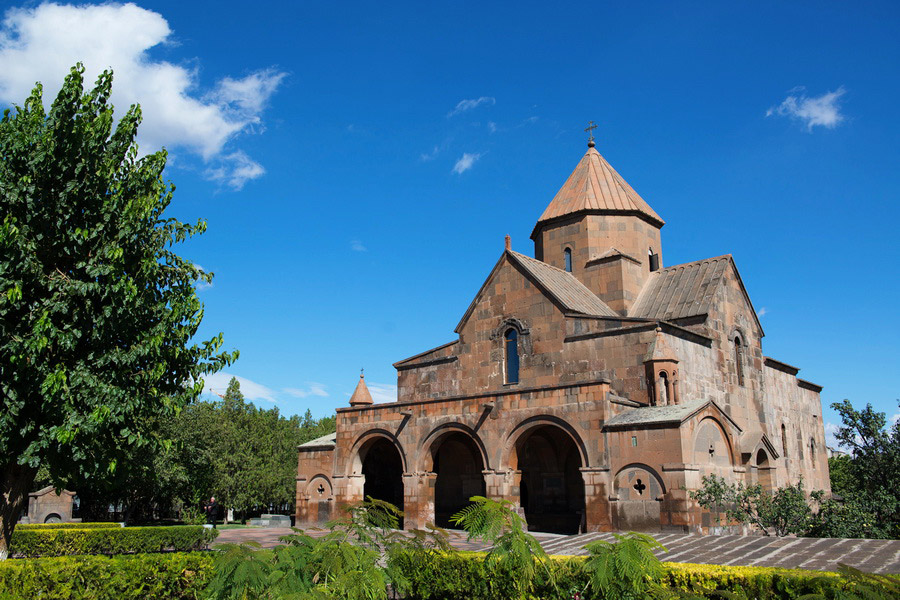
The Mother See of Holy Etchmiadzin is the spiritual and administrative headquarters of the Armenian Apostolic Church and the seat of the Catholicos of All Armenians. Located in Vagharshapat, around 20 kilometres west of Yerevan, it is a large working complex of churches, museums, residences, educational institutions, libraries, gardens and memorials.
The names Etchmiadzin Cathedral and Mother See of Holy Etchmiadzin are sometimes used interchangeably, but they do not refer to the same thing. The cathedral is the central church, while the Mother See is the wider institution and the entire ecclesiastical complex surrounding it.
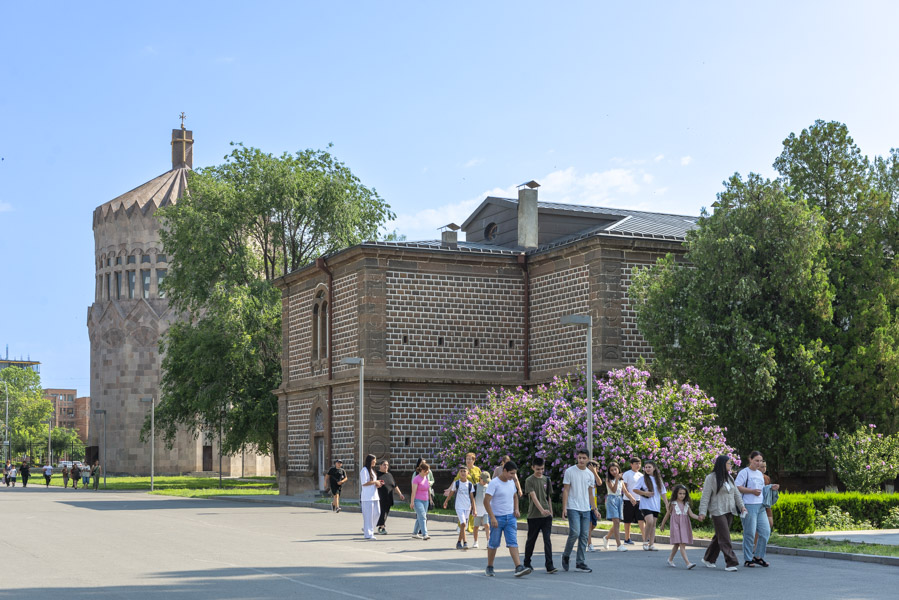
For visitors, this distinction helps explain why there is much more to see than the cathedral alone. The grounds include the Pontifical Residence, the Gevorkian Theological Seminary, several museums, historic monastic buildings, modern churches and chapels, khachkars and monuments connected with the Armenian Church.
History and Role of the Mother See
The Mother See serves as the centre of Armenian Church administration in Armenia and across the diaspora. It is from here that the Catholicos of All Armenians leads the Church, receives clergy and official delegations, and presides over major religious ceremonies.
The catholicosate returned to Etchmiadzin in 1441 after spending centuries in other locations. Since then, the complex has developed in response to the changing needs of the Church. Residences, schools, libraries, museums, administrative offices and accommodation for clergy and pilgrims gradually appeared around the Mother Cathedral.
During the Soviet period, parts of the Mother See’s property were confiscated and several of its institutions were closed. The complex continued to function on a limited scale, while the Gevorkian Theological Seminary reopened in 1945 and the Pontifical Residence was returned to the Church in 1957.
Today, the Mother See runs religious, educational, cultural and social programmes in Armenia and Armenian communities abroad. It is therefore both a historic site and an active institution whose work extends well beyond the boundaries of the complex.
The significance of Holy Etchmiadzin extends beyond the Armenian Church. As the spiritual centre of the first country to adopt Christianity as a state religion, it has welcomed senior representatives of other Christian traditions. Pope John Paul II visited in 2001 during celebrations marking 1,700 years of Christianity in Armenia, while Pope Francis came to the Mother See in 2016. Both visits included meetings and joint ceremonies with the Catholicos of All Armenians, reflecting the close relationship between the Armenian Apostolic and Roman Catholic Churches.
What to See in the Etchmiadzin Complex
The grounds contain buildings from different periods, ranging from historic monastic structures to modern administrative and educational centres. Not all are open to visitors, but walking through the complex gives a sense of the scale and continuing role of the Mother See.
The Mother Cathedral stands at its heart, with museums, residences, gardens and religious buildings arranged around it. Some areas are intended for worship and pilgrimage, while others are used by clergy, students, church officials and visiting delegations.
Mother Cathedral of Holy Etchmiadzin
At the heart of the complex stands Etchmiadzin Cathedral, traditionally founded in AD 301–303 and commonly regarded as the world’s oldest cathedral. Part of a UNESCO World Heritage Site, it reopened after major restoration in September 2024 and is once again used for regular services, feast days and pilgrimages.
Pontifical Residence
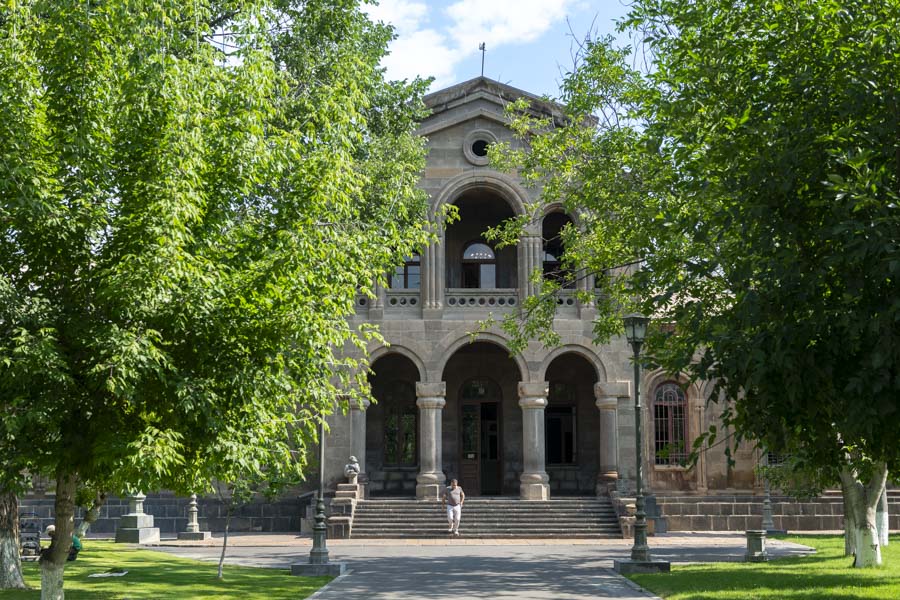
The Pontifical Residence is the official residence of the Catholicos of All Armenians. Construction began in 1910 with funding from Armenian philanthropist Alexander Mantashyan, and the main building work was completed in 1914, although the residence was not fully finished before the outbreak of the First World War.
During the war, the building served as a military hospital and provided shelter for refugees and orphans. It was converted into military barracks during the First Republic of Armenia and confiscated by the Soviet authorities in 1920. The building was returned to the Mother See in 1957, then reconstructed and renovated between 1958 and 1962. It became the official pontifical residence in September 1962.
The residence now contains reception rooms, offices, libraries, meeting rooms and spaces used by the Supreme Spiritual Council. It is an active administrative and ceremonial building rather than a standard visitor attraction, so public access is normally restricted.
Gevorkian Theological Seminary
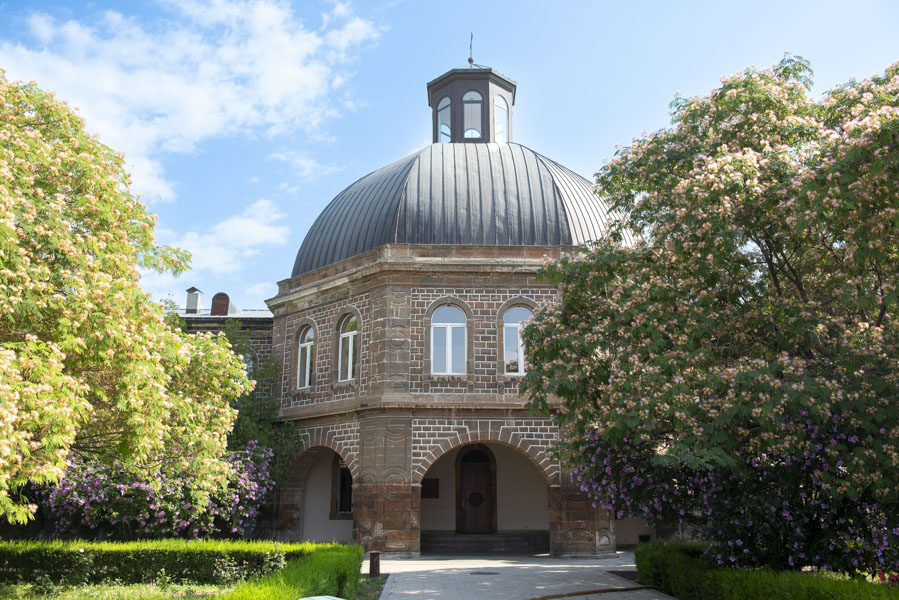
The Gevorkian Theological Seminary is one of the principal educational institutions of the Armenian Apostolic Church. Founded in the nineteenth century, it prepares clergy and provides instruction in theology, church history, philosophy, languages and related subjects.
The seminary was closed following the political changes of the early Soviet period but reopened in 1945. Its historic buildings have since been restored and supplemented with new classrooms, residential accommodation and other facilities.
The nearby Holy Archangels Church, consecrated in 2011, serves the seminary community. As the seminary remains a working educational institution, access to its buildings may be limited.
Historic Monastic Buildings
The complex contains numerous structures that have served the daily needs of the Church at different times. These include former monastic residences, guest houses, administrative offices, libraries and buildings used by visiting clergy.
The Yeremyan Building, constructed in 1892–1893, originally served as a monastic residence. After being nationalised during the Soviet period, it was eventually returned to the Mother See and restored. Today, it accommodates church departments as well as visiting guests and faculty.
The historic printing house reflects Etchmiadzin’s contribution to Armenian publishing and education. The first printing house at the Mother See was established in the eighteenth century, while the present building dates from the late nineteenth century. Printing, publishing and the preservation of religious literature became an important part of the Mother See’s cultural work.
Open Altar, Gates and Memorials
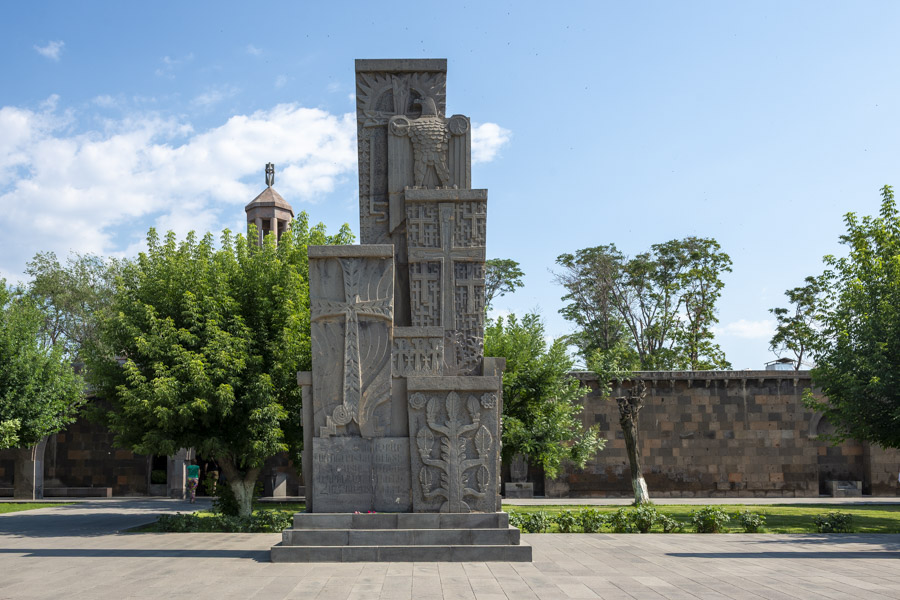
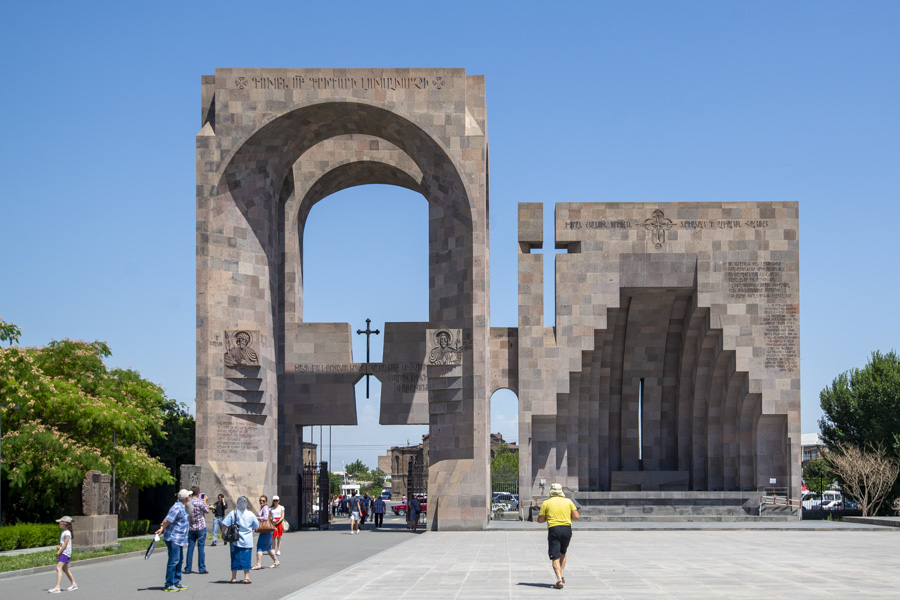
The St Trdat Open Altar was created in 2001 for large outdoor services that could not be accommodated inside the cathedral. Its form resembles an open book and recalls the importance of Christianity and the written tradition in Armenian culture. Pope John Paul II and Catholicos Karekin II celebrated a service here during the 1700th anniversary of Armenia’s adoption of Christianity.
Several ceremonial gates mark the entrances and divisions within the complex. Among them is the Gate of King Trdat, associated by tradition with the former royal palace near which the first cathedral was built.
The grounds also contain historic and modern khachkars, statues, fountains, graves and memorials. Some commemorate catholicoi, benefactors and members of the clergy, while others honour victims of persecution and important figures in Armenian religious and cultural history.
Museums and Sacred Treasures
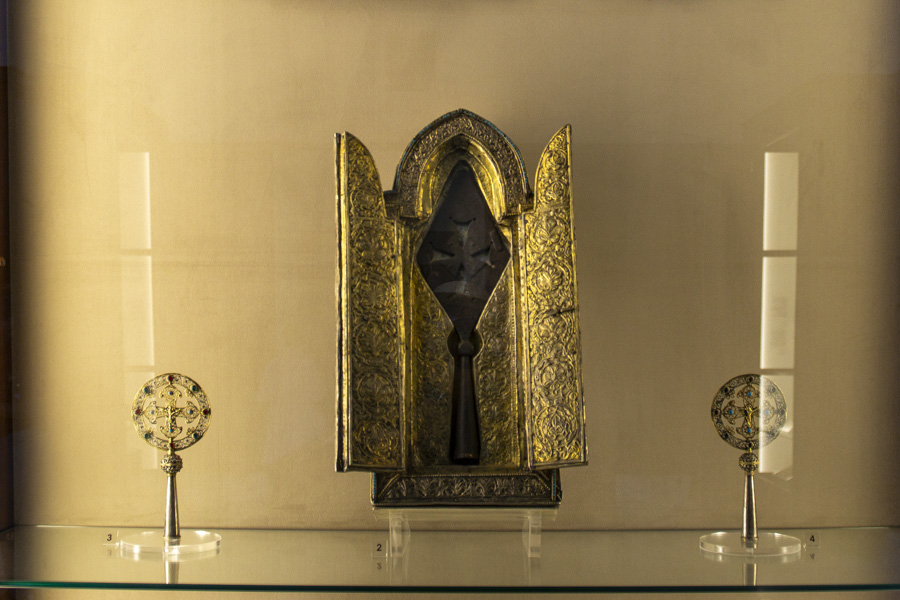
The museums of the Mother See preserve sacred relics, manuscripts, liturgical objects, paintings, textiles and gifts presented to the Armenian Church over many centuries. The museum network includes the Cathedral Depository-Museum, located inside Etchmiadzin Cathedral, as well as museums devoted to Armenian religious art, literature and church history.
Because the complex remains an active religious centre, some relics may be temporarily moved for services, pilgrimages or feast days. Museum displays and access arrangements can therefore change.
Alex and Marie Manoogian Treasury Museum
Opened in 1982, the Alex and Marie Manoogian Treasury Museum contains a wider collection of Armenian religious and applied art. Its exhibits include manuscripts, paintings, church vessels, altar curtains, crosses, vestments, embroidered textiles, carpets, ceramics and wood carvings.
Many objects were brought to Etchmiadzin from Armenian communities across a wide geographical area. A separate part of the collection presents gifts given to the Armenian Church by believers, visitors and benefactors from different countries.
The museum is named after Armenian-American philanthropists Alex and Marie Manoogian, whose donation funded its construction.
Ruben Sevak and Khrimian Museums
The Ruben Sevak Museum and Khrimian Museum form part of the wider museum network of the Mother See. Their collections add literary, historical and artistic context to the sacred objects preserved in the cathedral and Treasury Museum.
Opening arrangements may vary, and not every museum or historic building is necessarily accessible during every visit. If a particular collection is important to you, confirm its availability in advance.
Other UNESCO Churches in Vagharshapat
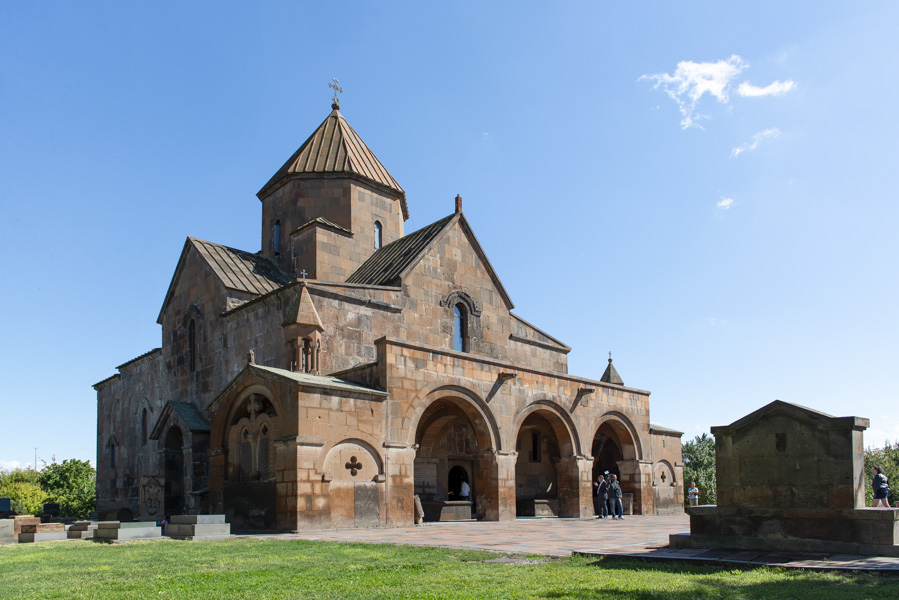
The World Heritage listing extends beyond the Mother Cathedral. St Hripsime Church, built in AD 618, is one of the finest surviving examples of Armenia’s four-apse church type. St Gayane Church dates from AD 630 and combines a basilican interior with a central dome. Shoghakat Church, the youngest of the group, was built in 1694 on a site associated with the martyrdom of the Hripsimean virgins.
The archaeological site of Zvartnots lies between Vagharshapat and Yerevan. Its seventh-century cathedral survives only in ruins, but the carved fragments and reconstructed lower level reveal the ambition of one of medieval Armenia’s most unusual churches. Combining these sites gives a much clearer picture of how Armenian church architecture developed than visiting Etchmiadzin Cathedral alone.
Religious Ceremonies and Daily Life
The Mother See is busiest during major feast days, pilgrimages and ceremonies presided over by the Catholicos. On these occasions, processions pass through the grounds, sacred relics may be brought into the cathedral for veneration, and outdoor services may take place at the Open Altar.
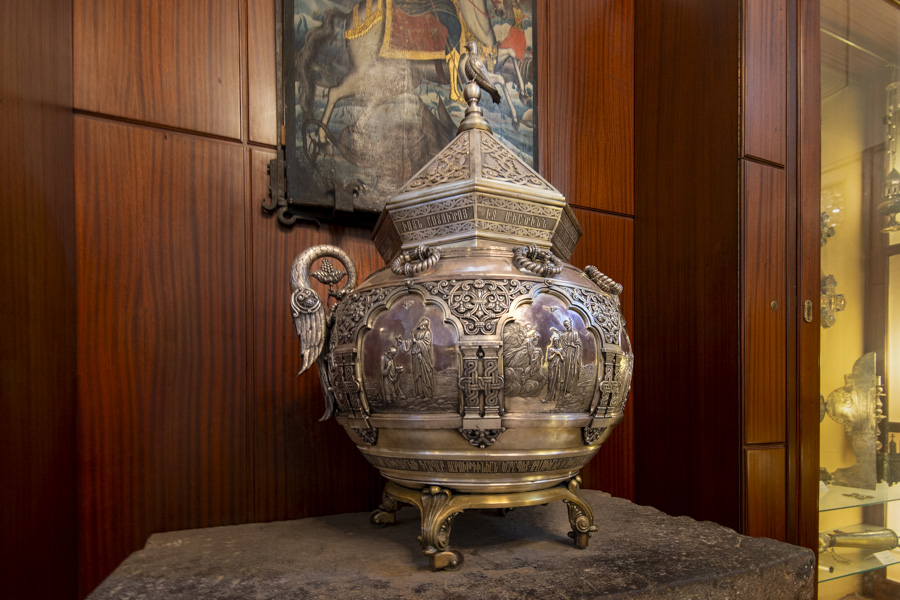
One of the most important ceremonies held here is the blessing of the Holy Muron, the sacred chrism used in rites including baptism and ordination, as well as in the consecration of churches. Its preparation begins with olive oil, balsam, floral extracts, aromatic plants and other traditional ingredients. A portion of the previously blessed Muron is added to each new preparation, symbolically linking it with the chrism blessed by St Gregory the Illuminator and maintaining spiritual continuity between generations.
Holy Muron is blessed at intervals of several years by the Catholicos of All Armenians. After the ceremony, representatives of Armenian patriarchates, hierarchical sees and dioceses receive vessels of the new Muron and take them to Armenian churches in Armenia and throughout the diaspora.
Daily life within the complex is quieter. Clergy and students move between the cathedral, seminary, residences and administrative buildings, while pilgrims attend services or visit the museums. This combination of worship, education and administration distinguishes the Mother See from a conventional historic monument.
The complex also welcomes pilgrims, church delegations and participants in cultural and educational programmes from Armenian communities abroad. Its role as a meeting point between Armenia and the diaspora remains an important part of its identity.
Visitor Information
Location and Time Needed
The Mother See is located in Vagharshapat, Armavir Province, around 20 kilometres west of central Yerevan.
Allow approximately two hours to visit the cathedral, walk through the grounds and see one museum. More time is needed if several museums are open or if you plan to attend part of a service.
Museum Hours and Tickets
The Mother See currently lists the Alex and Marie Manoogian Treasury Museum and Ruben Sevak Museum as open Tuesday–Sunday from 10:30 to 17:30.
Foreign visitors currently pay 2,000 AMD to enter the Treasury Museum. Preschool children and ICOM members are admitted free of charge. These details were checked in July 2026 but may change, particularly during feast days and special events.
Access to the Cathedral Depository-Museum may follow the cathedral’s schedule rather than the regular timetable of the other museums. Check locally if seeing the sacred treasures is a priority.
Getting There and Access
A taxi, private car or organised excursion provides the simplest way to reach the Mother See from Yerevan. Public transport also runs between Yerevan and Vagharshapat, but routes and departure points can change.
Most visitors enter through one of the main gates and explore the central grounds on foot. Some buildings are closed to the public because they serve residential, educational or administrative functions. Respect barriers and follow instructions given by church staff.
Etiquette and Photography
The Mother See is an active religious and administrative centre. Remain quiet around services and processions, respect barriers around working buildings and follow any instructions given by church or museum staff.