

Photo source: www.facebook.com
Vardavar (Վարդավառ) is an Armenian church feast celebrated with public water fights across the country. It falls on the fourteenth Sunday after Easter and commemorates the Transfiguration of Jesus Christ, although the custom of splashing water has roots in Armenia’s pre-Christian past.
Among the many festivals in Armenia, Vardavar is perhaps the one most likely to take an unprepared visitor by surprise. If your Armenia tour falls between late June and early August, do not be surprised if a child suddenly sprays you with a water pistol or someone empties a bucket over your head. On almost any other day, this would seem extraordinary. On Vardavar, it is simply part of the celebration.
A day or two beforehand, shops and temporary street stalls begin filling with brightly coloured buckets and water pistols. They may look like children’s toys, but adults buy them with just as much enthusiasm. Among the more unusual things to do in Armenia, joining the Vardavar water fights allows travellers to take part in a living tradition. After the morning church services, the celebrations spread through squares, courtyards and village streets.
What Is Vardavar?
Vardavar is one of the five principal feast days of the Armenian Apostolic Church.
According to the Gospels, Jesus took Peter, James and John to a mountain, where his appearance was transformed before them and his divine nature was revealed. Moses and Elijah appeared beside him.
Churches across Armenia mark the feast with Divine Liturgies attended by worshippers and pilgrims. Once the services end, people spill into streets, parks and village squares carrying buckets, bottles, hoses and water pistols.
History and Origins of Vardavar
Vardavar’s roots lie in Armenia’s pre-Christian past. The festival is commonly associated with Astghik, the Armenian goddess of love, beauty and water. According to tradition, she travelled across the land scattering roses and sprinkling water, bringing love, fertility and prosperity. Water represented renewal during the hottest part of the year, while roses became closely linked with the occasion.
As happened with several pre-Christian observances, Vardavar was given a new religious meaning after Armenia adopted Christianity in 301. It became associated with the Feast of the Transfiguration, while the custom of splashing water remained.
The name Vardavar is often linked to the Armenian word vard, meaning “rose”, although several explanations have been proposed. The medieval theologian Gregory of Tatev gave the name a Christian interpretation, comparing Christ’s divine light before the Transfiguration to a rose hidden within a bud and then revealed in full.
Why Do People Splash Each Other with Water?
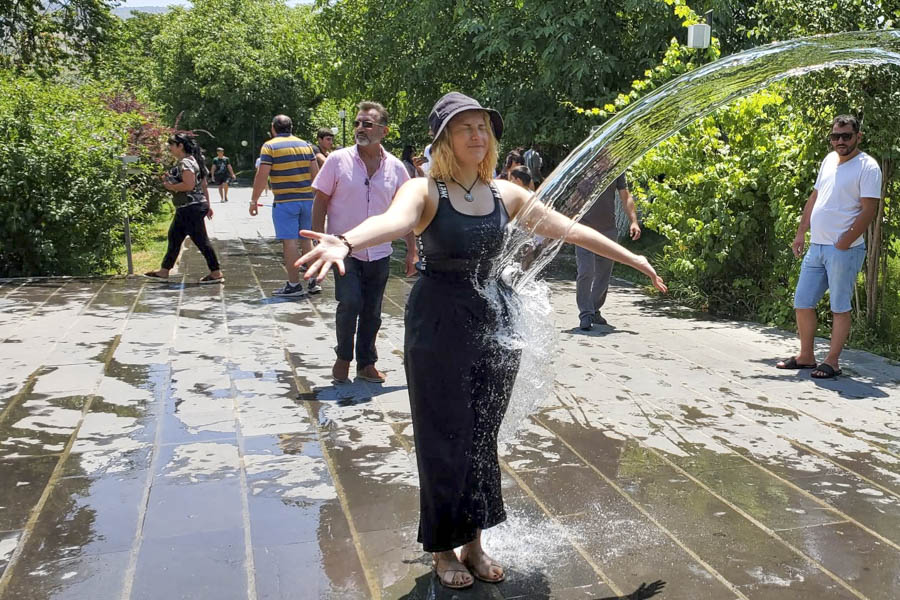
Water is more than a way to cool down in the summer heat. Traditionally, it is associated with cleansing and renewal, and pouring it over someone carries a wish for happiness, health and good fortune in the year ahead.
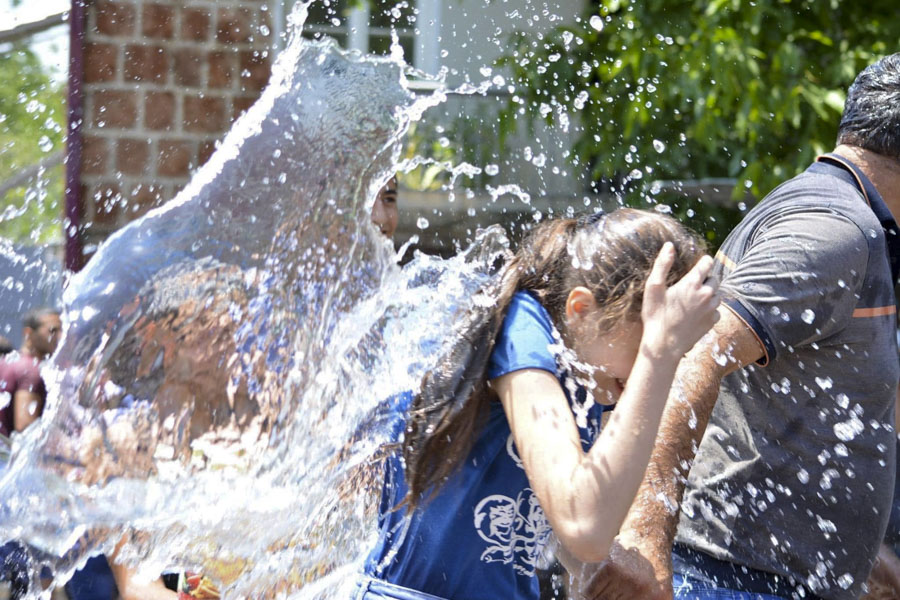
Folk belief goes further: the wetter a person becomes, the more luck they may receive. A polite splash is therefore rarely the end of the matter. Buckets come down from balconies, water pistols appear from behind parked cars, and strangers soak one another from head to toe.
Cars become part of the action too. Passengers spray people through open windows, while children beside the road target slow-moving vehicles and passing pedestrians.
An unexpected soaking is not normally meant as an insult. Most people laugh, splash back or simply carry on walking.
Where to Experience Vardavar
Yerevan
Yerevan hosts Armenia’s largest public festivities. Republic Square and the Swan Lake are common gathering points, although the principal venue and programme may change from year to year.
At the main event, the water fight may be accompanied by a stage, live music or DJs, dancing and organised entertainment. Fire engines sometimes join in, spraying powerful jets of water over the crowd. Some people cheer and move closer rather than stepping away.
The action also spreads along Northern Avenue, around the Cascade and into residential neighbourhoods. Courtyards become improvised arenas, balconies provide good positions for an ambush, and fountains serve as refill stations.
Children may wait quietly at the roadside before spraying an approaching passer-by. Adults are no less involved, chasing friends with buckets or spraying one another from car windows.
Garni Temple
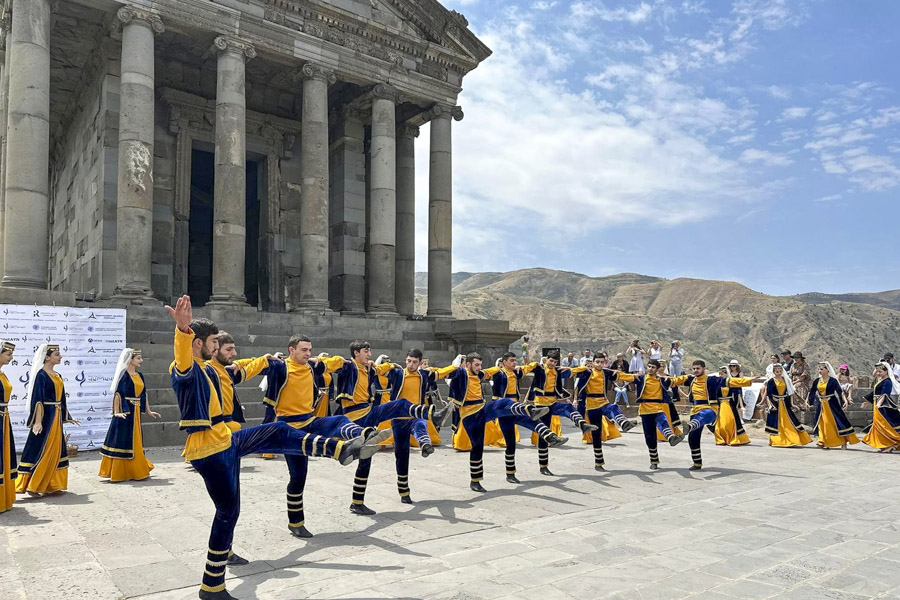
Garni is a popular destination during Vardavar. The village’s Greco-Roman temple gives the celebrations a visible connection with Armenia’s pre-Christian heritage.
Programmes vary from year to year and may include folk performances, music and other public events. Anyone travelling for a particular event should check the latest schedule in advance.
Holy Etchmiadzin
At Holy Etchmiadzin, the religious meaning of Vardavar comes to the foreground. Worshippers gather at the spiritual centre of the Armenian Apostolic Church for the festive Divine Liturgy.
The atmosphere is quieter than in central Yerevan, with the focus on the church feast rather than the public water fights.
Monasteries and Religious Sites
Vardavar also reaches places normally associated with a much quieter atmosphere. At Khor Virap, local children may wait near the entrance with brightly coloured water pistols, ready to greet arriving visitors and tour groups.
At Noravank, families sometimes continue the water games outside after the service. On occasion, even a priest may join in with a water pistol.
There are no fixed programmes at these sites. Much depends on who happens to be there that day.
Villages Across Armenia
In villages, Vardavar feels more like a community holiday than a large public event. Families gather after church, neighbours meet in courtyards, and children move between houses carrying buckets and water pistols.
The celebrations are informal and may continue throughout the day around homes, fountains and village centres. Travellers passing through or stopping for lunch can easily be drawn in.
Tips for Visitors
A little preparation helps.
Expect to get wet. If you spend time outdoors, particularly in a town or near a popular attraction, assume that you will be splashed sooner or later.
Protect your phone and valuables. A waterproof pouch is one of the most useful things you can bring. Protect your phone, passport, wallet and electronic car keys before leaving your hotel.
Dress comfortably. Choose lightweight clothing and shoes that dry quickly. In the summer heat, you will usually be dry again before long.
Buy a water pistol. There is no need to bring one with you. Water pistols and plastic buckets are widely sold in Yerevan and other towns before and during the festival.
Respect church services. Do not splash people during services or where worship is taking place. Give space to those entering or leaving church.
Drive with extra care. Keep your windows closed when passing through busy streets or villages. Children with water pistols may appear close to the road, while pedestrians often gather nearby to watch or take part.
Take it in good humour. An unexpected soaking is usually meant in a friendly spirit. Most people laugh it off or splash back, though care is still expected around young children and anyone carrying vulnerable equipment.
Frequently Asked Questions About Vardavar
When is Vardavar celebrated?
Vardavar falls on the fourteenth Sunday after Easter, so its date changes each year.
Can tourists take part?
Yes. No registration or ticket is required to join the public water fights.
Is it acceptable to splash strangers?
Yes. Splashing strangers is a normal part of Vardavar, although courtesy still matters. Avoid people attending church services or carrying cameras and other sensitive equipment.
Can I avoid getting wet?
If you happen to be in Armenia during Vardavar but do not wish to take part, it is best to plan an indoor day. In central Yerevan and other busy areas, assume that you may be splashed whenever you are outdoors.
Is Vardavar suitable for children?
Yes. Children take part throughout Armenia, although younger ones should be supervised in large crowds and kept hydrated in the summer heat.
Where are the largest celebrations?
The largest crowds are usually found in central Yerevan. Garni is another popular destination, while towns and villages across Armenia hold smaller, more informal celebrations.