

Things to Do and Sightseeing Tours in Yerevan
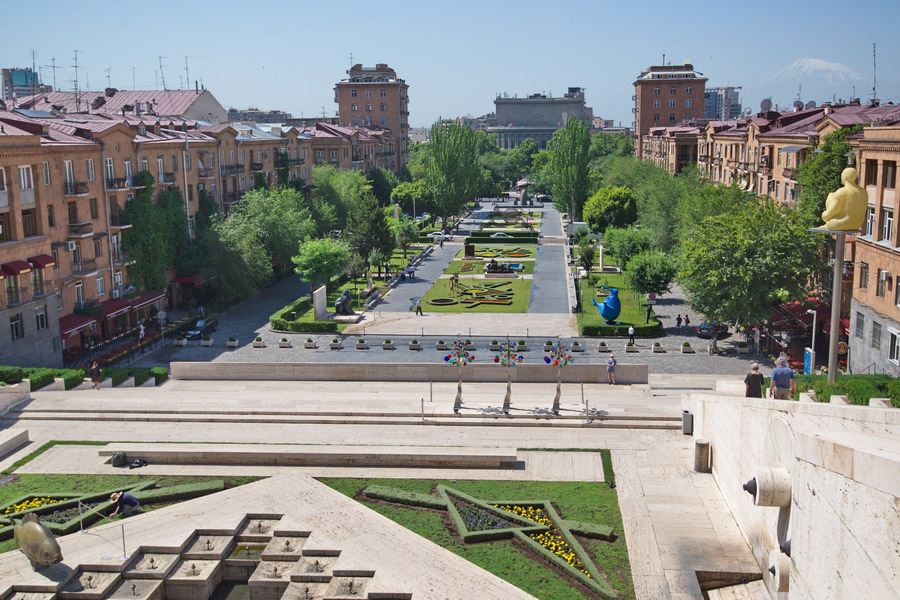
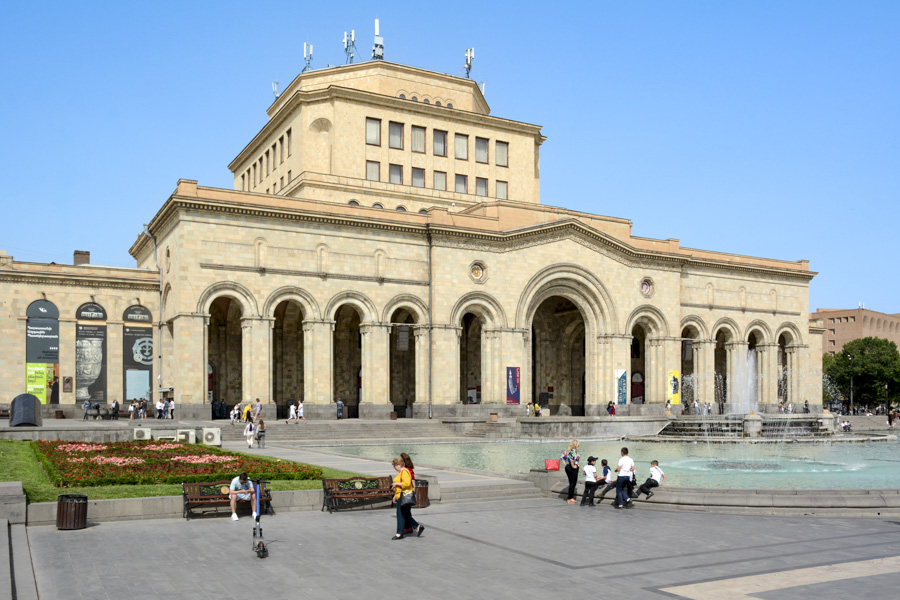
Built from pink and honey-coloured tuff stone, the capital of Armenia, Yerevan, wears the colour of its own sunsets. Here, broad avenues, stairways and public squares face the distant outline of Mount Ararat. Older than Rome by 29 years, Yerevan was founded in 782 BC as the fortress of Erebuni. Tuff buildings range from rose- to apricot-toned around Republic Square, where arches and colonnades stand tremendously.
Although Yerevan’s roots are ancient, much of central Yerevan dates to the 20th century under architect Alexander Tamanian. He reshaped the capital with circular streets, monumental buildings and volcanic stone, producing a city with a concentric layout. Ancient foundations, Soviet geometry and contemporary construction now sit within the same packed range of the cityscape.
Most Yerevan cultural attractions are concentrated in Kentron, where museums, markets and performance venues sit within a walkable centre. Beyond it, Erebuni Fortress and Tsitsernakaberd broaden the city’s historical scope. Our Yerevan travel guide connects these places with practical advice for planning your visit.
Yerevan Tours
Combining Soviet neoclassical and modernist architecture, Urartian Stone Age history and Mount Ararat’s breathtaking views, Yerevan tours sit within a walkable distance.
Walking routes focus on Kentron, while guided drives reach museums, memorials, brandy factories and districts beyond the centre. Yerevan sightseeing tours may also include carpet weaving, wine tasting or lavash baking, depending on the programme.
Our one-day Yerevan city tour introduces the capital through its modern avenues, ancient foundations and historical sites. It includes the Armenian Genocide Memorial and the History Museum of Armenia, giving a clear historical framework. This route suits travellers who want an organised introduction before continuing independently.
The Yerevan with Vicinities in 3 Days Tour covers the capital, Garni, Geghard and Etchmiadzin. Four- and five-day Yerevan travel packages continue to Khor Virap monastery, Areni, Noravank, Tatev and Karahunj.
Travellers arriving from Georgia can join five-day Armenia tours from Tbilisi, with Yerevan included as the central stop. Private departures run throughout the year, while selected group tours operate during spring, summer and autumn.
Day Trips from Yerevan
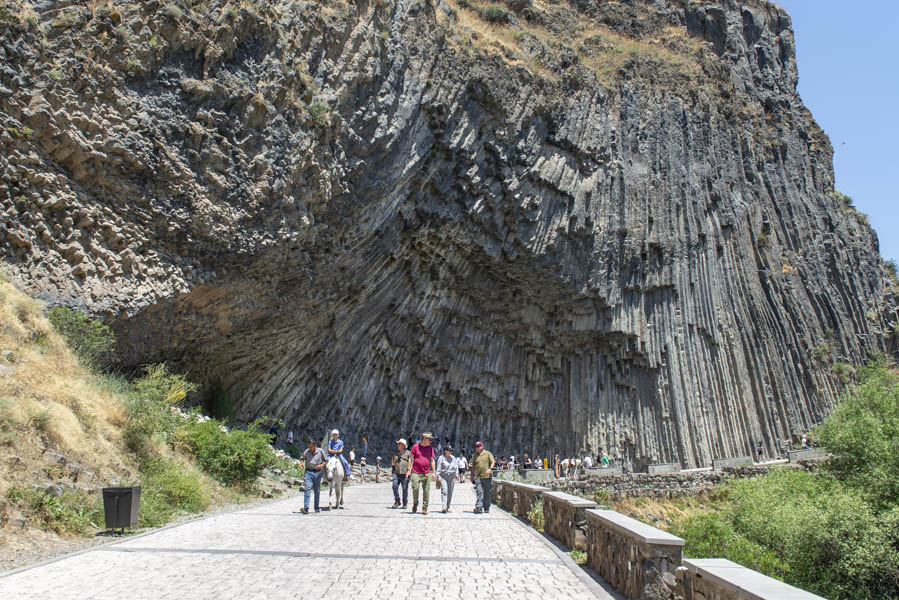
Day trips from Yerevan connect the capital with Armenia’s monasteries, archaeological sites, vineyards and mountain landscapes. Garni and Geghard form the most accessible route, combining a pagan temple with a mediaeval monastery carved into rock. The Symphony of Stones adds a natural landmark within the same area.
West of the city, Etchmiadzin remains the spiritual centre of the Armenian Apostolic Church. Nearby, the Zvartnots temple preserves the ruins of a seventh-century cathedral. Sardarapat examines Armenia’s decisive 1918 battle and first republic.
South of Yerevan, Khor Virap stands beneath Mount Ararat and leads naturally towards Armenia’s wine region. Areni is known for local vineyards and the Areni-1 cave, where ancient winemaking equipment was discovered. The route continues through a red-rock gorge to Noravank Monastery. Farther south, Wings of Tatev crosses the Vorotan Gorge on the world’s longest reversible aerial tramway to Tatev Monastery.
Travellers seeking cooler scenery can travel north towards Lake Sevan and Dilijan. Sevanavank overlooks the high-altitude lake, while Dilijan provides forested routes towards Haghartsin Monastery. These Yerevan tourism places can be combined in one long excursion with private transport.
Best Time to Visit Yerevan
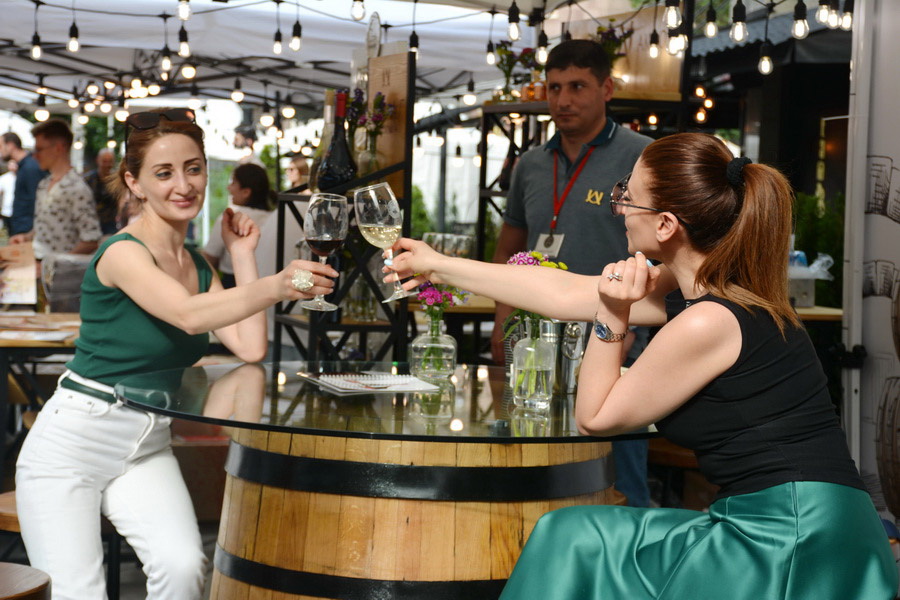
The best times to visit Yerevan are late April to June and September to early October. Days are warm, evenings are cooler, and walking through the centre remains comfortable. These months also suit day trips from Yerevan, since mountain roads are usually accessible. Spring brings flowering trees, reopened terraces and Yerevan Wine Days, usually held in early June.
| Season | Months | Average Day Temperatures | Average Night Temperatures |
| Spring | March to May | 10 to 24°C (50.0 to 75.2°F) | -1 to 10°C (30.2 to 50.0°F) |
| Summer | June to August | 31 to 34°C (87.8 to 93.2°F) | 14 to 18°C (57.2 to 64.4°F) |
| Autumn | September to November | 10 to 28°C (50.0 to 82.4°F) | 1 to 13°C (33.8 to 55.4°F) |
| Winter | December to February | -2 to 3°C (28.4 to 37.4°F) | -9 to -3°C (15.8 to 26.6°F) |
Summer is hot, dry and intensely sunny, particularly during July and August. Plan outdoor sightseeing for mornings, then use museums and shaded cafés during the hottest hours. After sunset, public squares, parks and pavement terraces remain active well into the evening. Vardavar brings citywide water celebrations, so visitors should expect to get wet.
Autumn is particularly suitable for travellers interested in food, wine and public events. September brings seasonal produce and warm evenings, while October adds cooler weather and changing leaves. Independence Day falls on 21 September, followed by the Erebuni-Yerevan celebrations in October. This period also supports a longer Yerevan travel itinerary with the best time to visit Armenia.
Winter tours in Armenia get quieter and colder, with shorter days, occasional snow and fewer visitors. New Year’s and Christmas lights and decorations appear across central Yerevan during December. Museums, brandy tastings, ice skating and Armenian winter dishes keep a city break practical. Nearby Tsaghkadzor also makes skiing possible during a day trip from the capital.
History of Yerevan
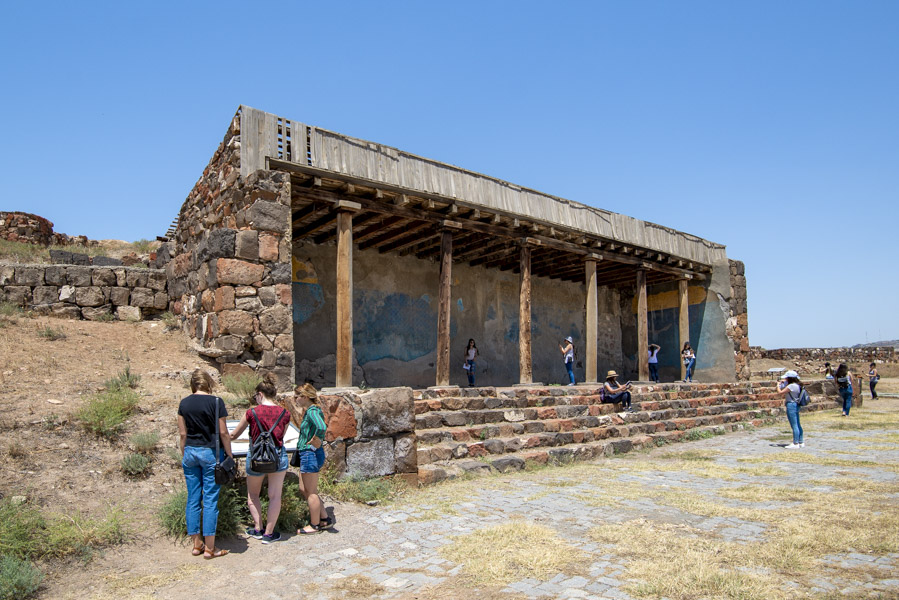
Yerevan has more than 2,800 years of documented history, yet its past appears in sharply different urban layers. Urartian ruins, Persian buildings and Soviet avenues remain part of the modern capital. Scholars trace Yerevan directly to Erebuni, the fortress from which the city developed. Archaeologists and researchers have long debated a possible location of the Biblical Noah’s Ark near Yerevan, on Mount Ararat, which currently lies in Turkey.
King Argishti I of Urartu founded Erebuni in 782 BC on the hill now called Arin Berd. A surviving cuneiform inscription records its construction and names the king who commissioned it. Around 6,600 captives from Hatti and Supani were brought to the fortress, which became a military and administrative centre. Many of Yerevan’s and wider Armenia’s history tours begin here before continuing into the present city.
Erebuni survived the collapse of Urartu and remained occupied during the Achaemenid period. Mediaeval records first mention Yerevan in 607 AD, when it was already a recognised Christian settlement. Its position near the Ararat Plain connected it with Dvin, Lake Sevan and regional caravan routes. By the 13th century, it had developed into a trading and craft centre.
Amir Timur’s invasion damaged Yerevan in 1387 and interrupted its growth. From the 16th century, Ottoman and Safavid armies repeatedly fought for control of the city. Shah Abbas I of Persia ordered mass deportations from Eastern Armenia in 1604, greatly reducing the local population. Yerevan later recovered as a commercial stop between Persia, Eastern Anatolia and the Southern Caucasus.
The city became the centre of the Erivan Khanate during the 18th century. Persian Yerevan contained mosques, churches, markets, caravanserais and neighbourhoods divided along occupational and communal lines. Russia captured the fortress in 1827, following two unsuccessful earlier sieges. The 1828 Treaty of Turkmenchay formally transferred Yerevan and Eastern Armenia to Russian control.
Yerevan became the capital of the First Republic of Armenia on 28 May 1918. After the Soviet Red Army entered the city in 1920, it remained the capital of the Armenian Soviet Socialist Republic. Alexander Tamanian’s 1924 master plan replaced much of the old city with circular streets and monumental public buildings.
Following the Soviet Union’s collapse, Yerevan became the capital of independent Armenia on 21 September 1991. Ancient Erebuni, surviving Persian monuments and Soviet planning still shape how Yerevan is understood today.
Things to Do in Yerevan
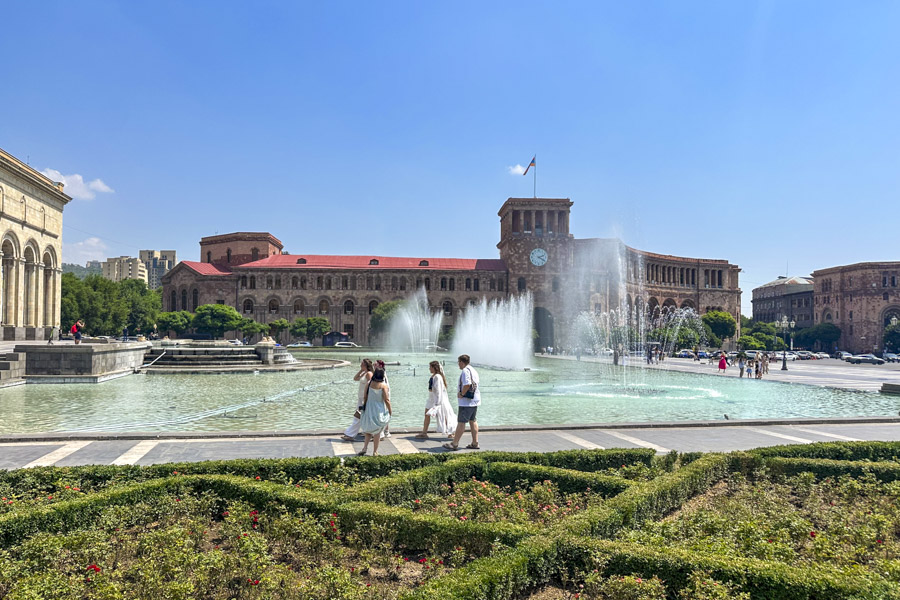
The best things to do in Yerevan follow Soviet-planned boulevards, hillside neighbourhoods, riverside gorges and everyday rituals. These ultimate Yerevan experiences reveal the city beyond its landmarks through walks, open-air cafés and the evening culture.
Climb the Cascade for Mount Ararat
Go early on a clear morning, when Mount Ararat is usually more visible above the skyline. Walk the Cascade’s outdoor stairs past fountains and stone reliefs, or use the internal escalators. Continue beyond the upper terraces towards the October Revolution Memorial for a higher view. Sunset also works during clearer spring and winter weather.
Walk through Kond and Enter Hrazdan Gorge
Begin in Kond, Yerevan’s oldest surviving residential quarter, reached by steep stairs from the centre. Its lanes pass low houses, patched walls, courtyards and small cafés serving Armenian coffee. Descend through the 500-metre Kond pedestrian tunnel, then emerge besides the Hrazdan River and Soviet Children’s Railway. Allow two hours and wear sturdy shoes because several lanes are uneven.
Ride the Metro through Soviet Yerevan
Yerevan’s metro opened in 1981 and remains one of the quickest ways beyond Kentron. Compare the sculptural entrances, stone platforms and wall reliefs at Republic Square, Yeritasardakan Station and Barekamutyun Station. Continue towards Garegin Nzhdeh Square or the Sasuntsi David monument to see the city beyond its planned centre. This makes the transport itself part of a Yerevan travel itinerary.
Evening with Armenian Wine and Opera
Start with local Areni wine on Saryan Street, where bars specialise in Armenian bottles and tasting flights. Then walk to the Opera Theatre for ballet, opera or a symphonic programme. When Anoush appears on the schedule, it gives the evening a specifically Armenian repertoire. Reserve performance tickets during festivals and summer weekends.
Places to Visit in Yerevan
The best places to visit in Yerevan reveal a capital rebuilt through Urartian, Persian, Soviet and independent Armenian periods. These Yerevan cultural attractions help travellers read the city beyond its broad avenues and pink-tuff façades.
Ancient Foundations and Christian Landmarks
Erebuni Fortress marks Yerevan’s documented beginning on Arin Berd Hill. King Argishti I founded the Urartian stronghold in 782 BC and recorded its construction in cuneiform. Katoghike Church, dated 1264, preserves one of central Yerevan’s few surviving mediaeval structures.
Persian Yerevan and the Old City
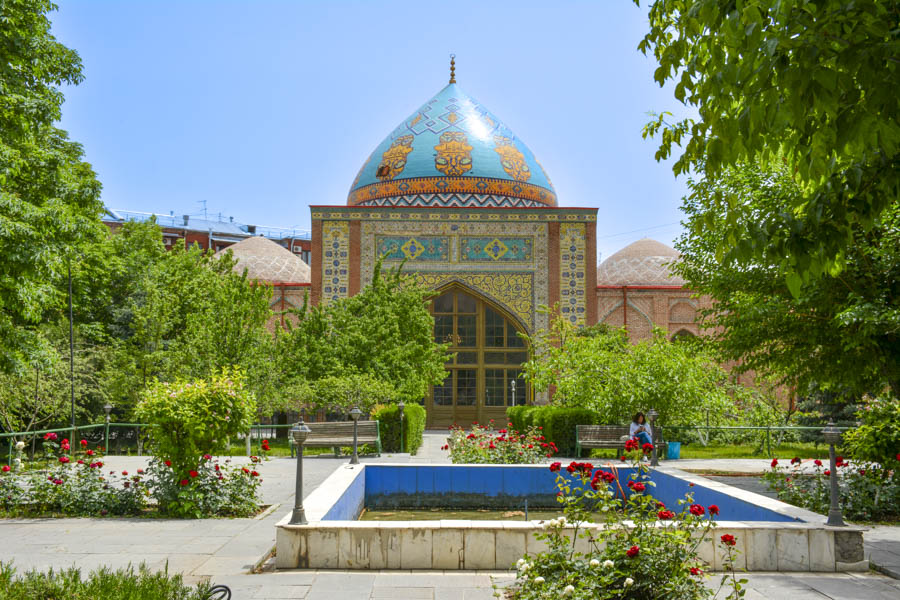
The Blue Mosque was finished being built in 1766 as the principal Friday mosque of the Erivan Khanate. Visitors descend from Mashtots Avenue into a courtyard framed by arcades, gardens and blue tilework. Kond preserves narrow lanes and low houses from pre-Soviet Yerevan, although redevelopment has altered parts of the quarter.
Soviet Planning and Monumental Architecture
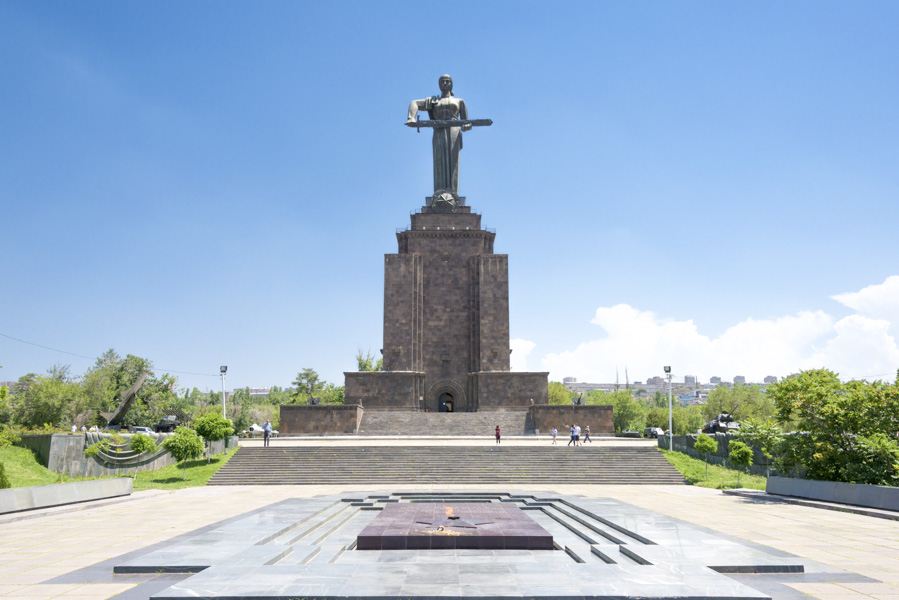
Republic Square expresses Alexander Tamanian’s 1924 master plan through curved façades, arcades and locally quarried tuff. The Cascade extends this north-south axis through terraces, fountains, exhibition halls and internal escalators. Above it, the Mother Armenia giant statue occupies the pedestal once used for a Stalin monument.
Museums in Yerevan
The top museums in Yerevan cover Armenian history, art, music, architecture and national memory. Together, they explain the city and the country beyond standard sightseeing routes.
The History Museum of Armenia traces Armenian civilisation from prehistoric settlements to the modern republic. Yerevan History Museum focuses on the capital’s urban growth, daily life and archaeological record. The Erebuni Museum documents the Urartian fortress founded by King Argishti I in 782 BC. The Armenian Genocide Museum preserves documents, photographs and testimonies concerning the destruction of Armenian communities of the Ottoman Empire.
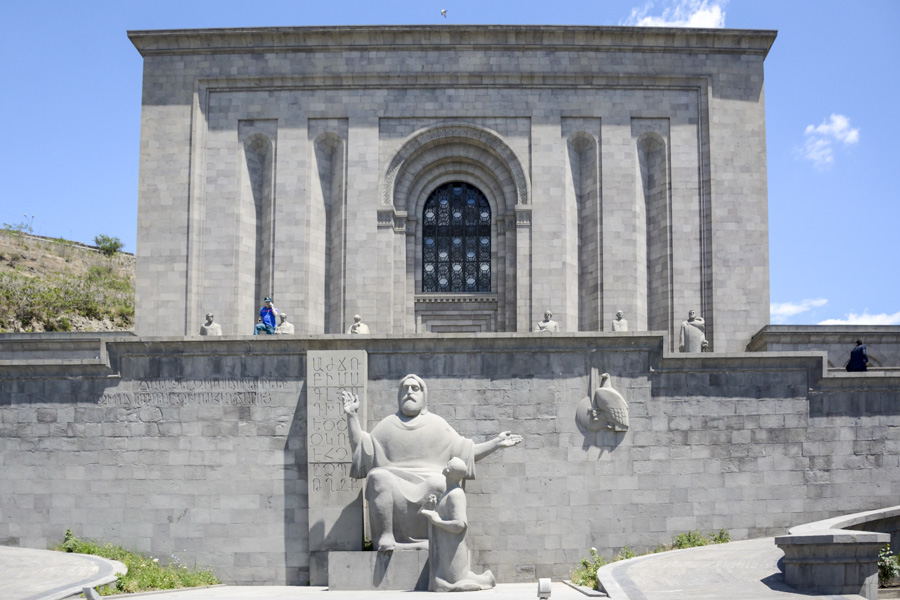
Matenadaran (Mesrop Mashtots Institute of Ancient Manuscripts) protects thousands of Armenian manuscripts, illuminated books and archival documents. The National Gallery of Armenia holds the country’s largest collection of Armenian fine art. The Modern Art Museum presents progressive Armenian painting and sculpture from the 1960s onwards. Martiros Saryan House Museum follows the painter’s career through landscapes, portraits, personal objects and his preserved studio.
The Sergey Parajanov Museum presents the filmmaker’s collages, drawings, installations and production sketches. The Aram Khachaturian House-Museum preserves the composer’s manuscripts, scores, instruments and personal belongings. Komitas Museum-Institute examines the composer’s work in collecting, preserving and arranging Armenian folk music.
The Alexander Tamanian Museum explains the 1924 master plan that shaped central Yerevan. The Megerian Carpet Museum combines historic rugs with demonstrations of Armenian weaving and natural dyeing. Armenian Railways Museum records the development of railway transport through locomotives, photographs, documents and carriage models.
Yerevan Theatres
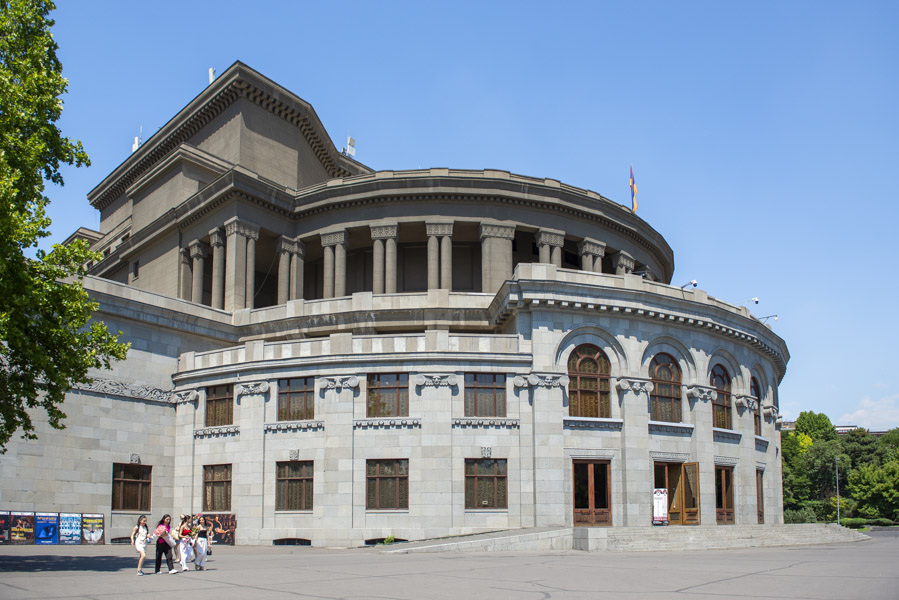
The theatre of Armenia developed from ancient religious rituals, travelling performers and public stages established before the Christian era. Today, Yerevan has more than twenty state and private theatres presenting drama, opera, ballet, puppetry and experimental performance.
The Alexander Spendiaryan Opera and Ballet Theatre stages Armenian and international opera, ballet and orchestral concerts. Its repertoire includes Anoush, Almast, Gayane and major European classics. The Aram Khachaturian Concert Hall houses one half of Alexander Tamanian’s design, with the Yerevan Opera Theatre occupying the other half.
The Gabriel Sundukyan National Academic Theatre is Armenia’s oldest modern theatre, founded in 1922. It presents Armenian drama alongside works by Chekhov, Brecht, Camus and other international playwrights. Hrachya Ghaplanyan Drama Theatre combines classical plays with contemporary productions addressing war, migration and national identity.
Hakob Paronyan Musical Comedy Theatre specialises in operetta, satire and musical productions. The Stanislavski Russian Drama Theatre performs mainly in Russian, using Russian literature and selected Armenian classics. Both theatres maintain family and children’s performances within their regular programmes.
The Hovhannes Tumanyan Puppet Theatre stages productions for children and adults and houses Armenia’s only puppet museum. Yerevan State Marionette Theatre combines actors with string puppets, drawing on Armenian stories and international tales. Yerevan State Pantomime Theatre develops wordless performance through movement, mime and visual storytelling.
Entertainment, Parks and Shopping
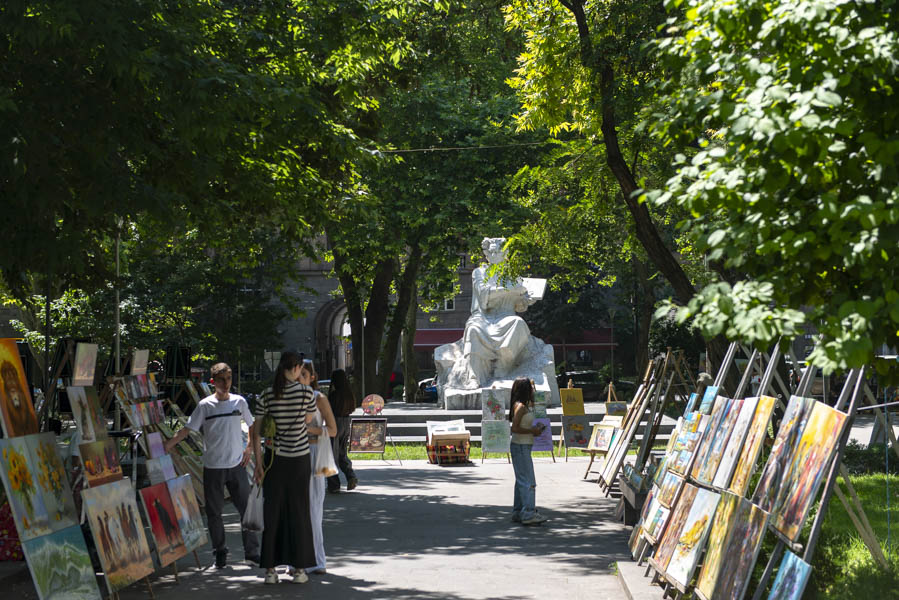
Entertainment in Yerevan ranges from traditional music and public dancing to film festivals, club concerts and large arena productions. The programme changes by season, but evenings remain the city’s main social period.
Entertainment in Yerevan
Yerevan has a long-established jazz scene, with small clubs presenting resident musicians and improvised sets. Chamber concerts, folk ensembles and contemporary bands provide quieter alternatives across the city. Major Armenian and international performers appear at the Karen Demirchyan Sports and Concerts Complex. Summer also brings free outdoor concerts to squares and temporary stages.
Public celebrations often combine duduk music, folk singing and kochari, an Armenian group dance. Spectators frequently join the linked dance line rather than watch from outside. Yerevan Music Night spreads different musical genres across central streets. Erebuni-Yerevan Day ends with concerts and large public performances.
Cinema also forms an important part of modern Yerevan entertainment. Golden Apricot Yerevan International Film Festival screens international features, documentaries, short films and Armenian productions, often accompanied by filmmaker discussions. The ReA International Animation Film & Comics Art Festival adds animation screenings and industry events to the annual calendar. Event dates and venues may change, so check the current programme before planning a Yerevan travel itinerary.
Yerevan Parks
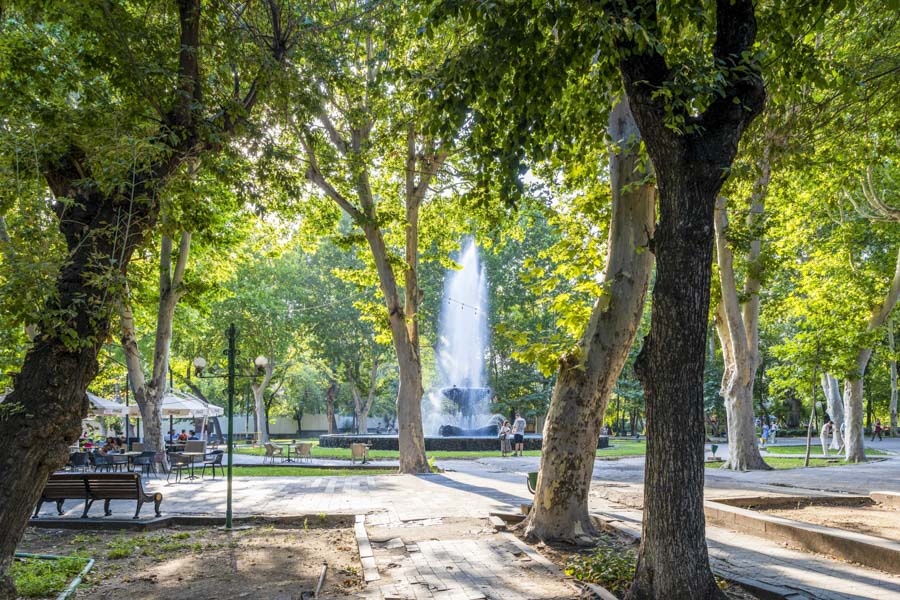
Yerevan’s parks range from formal central gardens to Soviet recreation grounds and wooded spaces along the Hrazdan Gorge. Many combine fountains, sculpture, playgrounds and public events within the city’s planned districts.
Lovers’ Park is a landscaped garden near the National Assembly, redesigned in 2008 by Pierre Rambach. English Park, founded in 1850, is Yerevan’s oldest public park and borders the Sundukyan Theatre. Nearby, Yerevan 2800th Anniversary Park contains 2,800 fountain jets and granite paving based on Armenian carpet patterns. The statue of Alexander Tamanian is located on the square that leads towards the Cascade through gardens and international sculpture.
Victory Park combines city views, amusement rides and the Mother Armenia monument above central Yerevan. Tumanyan Park occupies a quieter section of the Hrazdan Gorge, with lawns, playgrounds and outdoor exercise equipment. Children’s Railway Park preserves a Soviet miniature railway, a 1930s station and seasonal train rides through the gorge.
The Yerevan Botanical Garden covers 80 hectares between the Avan and Kanaker districts, supporting rare, medicinal and native Armenian plants. Circular Park forms a long chain of gardens, fountains and monuments around the eastern centre. Fridtjof Nansen Garden in the Nor Nork District includes a museum, church and memorials dedicated to Armenian history and international figures.
Families can also visit Yerevan Zoo, which houses species from Armenia, the Caucasus and other regions. One useful Yerevan travel tip is to check seasonal opening hours before visiting gardens, railways or amusement areas.
Shopping in Yerevan
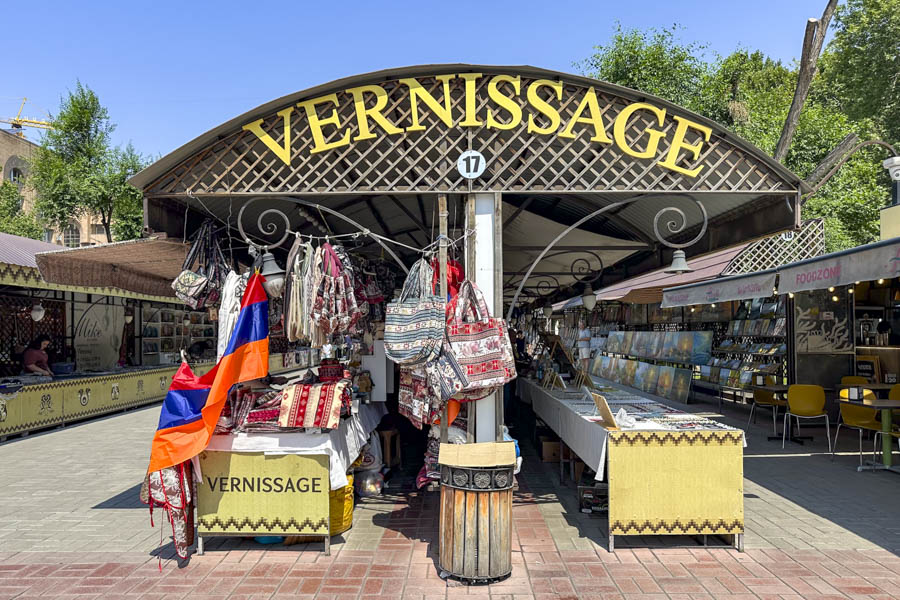
Shopping in Yerevan ranges from open-air craft markets to Armenian fashion studios and modern shopping centres. Travellers can buy carpets, ceramics, silver jewellery, dried fruit, herbal products, wine and locally designed clothing.
Crafts, Antiques and Souvenirs
Vernissage Market is Yerevan’s main place for Armenian crafts, paintings, carpets, Soviet objects and second-hand finds. The market is busiest at weekends, when more artisans and antique dealers open their stalls. Nearby, Saryan Park features original paintings, portraits and landscapes by local artists.
For verified Armenian-made products, the Homeland Development Initiative Foundation (HDIF) works with regional craftspeople and fair-trade producers. Dalan Art Gallery combines ceramics, jewellery, leather goods, textiles and small artworks as gifts inside a historic Abovyan Street building. Serious carpet buyers can visit Megerian Carpet or Tufenkian Artisan Carpets for hand-knotted rugs and specialist advice.
Food Gifts and Local Products
GUM Market is the main stop for dried apricots, sujukh, nuts, spices, tea and packaged Armenian sweets. Komitas Market provides a less tourist-orientated bazaar experience with produce, dairy products and household food shopping. Wine, brandy and herbal products are easier to transport when purchased from established specialist shops.
Armenian Fashion and Design
5concept brings several independent Armenian fashion and accessories labels into one shared shop. Ardēan produces scarves, prints and homeware using Armenian lettering, manuscript patterns and architectural ornament. TUMO Studios sells jewellery, textiles and objects created through its craft education programme.
Yerevan Shopping Centres
Dalma Garden Mall and Yerevan Mall combine international brands, Armenian retailers, cinemas and indoor dining areas. Tashir Street, beneath Northern Avenue, provides central shopping for clothes, jewellery, books and everyday goods.
Yerevan Food
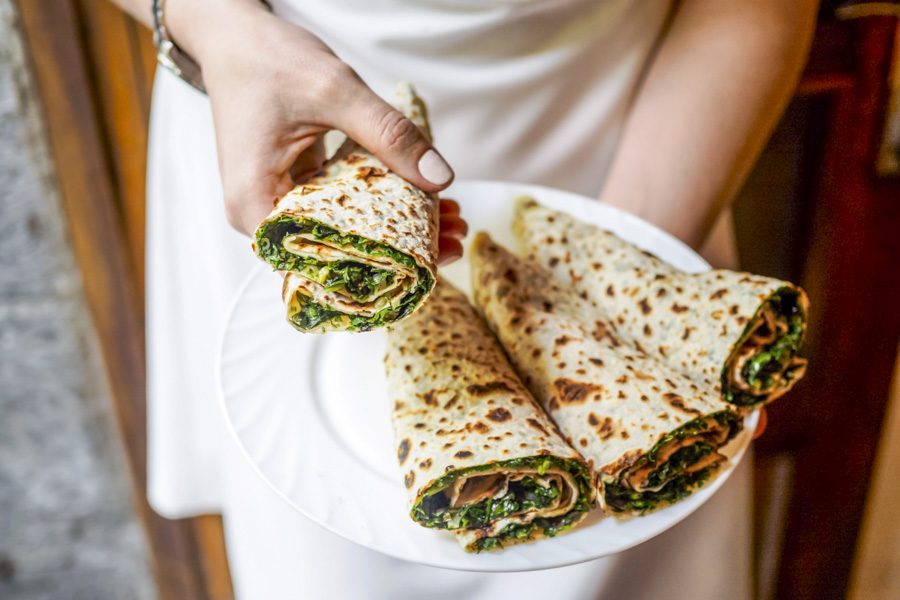
Yerevan brings Armenia’s regional dishes, Western Armenian recipes and Middle Eastern influences into one compact dining scene. Yerevan’s local cuisine centres on grilled meat, herbs, vegetables, lavash, fermented dairy products and seasonal fruit.
Travellers deciding where to eat in Yerevan will find traditional restaurants throughout Kentron. Saryan Street suits wine-focused dinners, while Tumanyan and Abovyan Streets have restaurants, bakeries and late-opening cafés.
Armenian Cuisine
Armenian cuisine begins with lavash, traditionally baked against the walls of a clay tonir (tandoor oven). Khorovats consist of pork, lamb or chicken grilled over coals and served with onions, herbs and bread. Dolma uses grape leaves or vegetables filled with meat and rice, while pasuts tolma replaces meat with pulses.
Other dishes include Echmiadzin kyufta, sizzling liver called tjvjik and pumpkin stuffed with rice, fruit and nuts. Zhingyalov hats are a thin, flatbread packed with chopped herbs. Lahmajoon combines thin dough with minced meat, tomato and spices.
Tavern Yerevan serves traditional dishes through several central branches, including dolma, khorovats and aubergine rolls. Lavash Restaurant combines Armenian recipes with visible bread-making and serves dolma, zhingyalov hats and khurjin. Ararat Tavern focuses on Armenian and regional dishes within a traditional interior.
Kamancha Restaurant pairs Caucasian food with traditional bread-making and live music. Ktoor Restaurant is known for large grilled dishes, Armenian wine and mountain-herb tea. Chaman Restaurant provides a smaller setting for kebab, dolma and meat with potatoes.
Sherep Restaurant has an open kitchen, a tonir (tandoor oven) and a broader Armenian and international menu. Mayrig Restaurant specialises in Western Armenian and Middle Eastern cooking, including tava kyufta and lamb khashlama. Hayrik Restaurant presents Armenian ingredients through a more formal and contemporary dining style.
Vegetarian Restaurants and Vegan Options
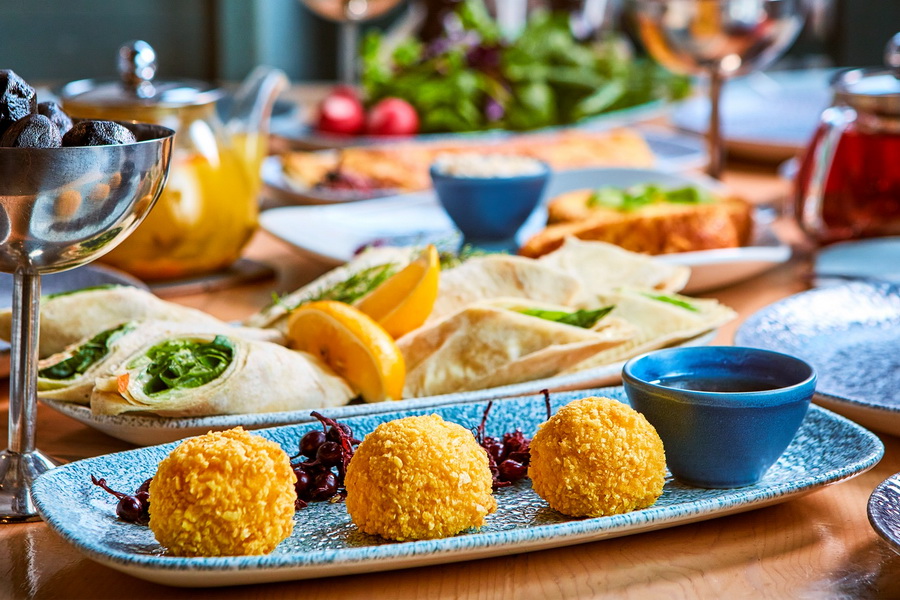
Photo source: www.facebook.com
Armenian cuisine is meat-heavy, but fasting traditions provide strong plant-based foundations. Zhingyalov hats, pasuts tolma, aveluk soup, lentil kofta, grilled vegetables, beans and aubergine appear widely in Yerevan.
Jengyalov Hac specialises in herb-filled flatbread from Artsakh and Syunik. MamaJan serves local and Middle Eastern vegetarian dishes. Mealo Healthy Food focuses entirely on vegan soups, salads and Armenian favourites. Garun Food & More adds vegan salads, light meals and desserts.
Mainstream restaurants also provide useful choices. Lavash Restaurant serves ghapama, pasuts tolma and seasonal aveluk soup. Anteb has hummus, muhammara, vegetable lahmajun and spiced potatoes. Vegan travellers should confirm whether dairy, eggs or meat stock is used.
Coffee Houses, Bakeries, and Patisseries
Armenian coffee is boiled in a small jazzve and served unfiltered, usually with sugar or something sweet. Contemporary coffee houses add espresso, filter coffee and cold drinks to this traditional preparation.
Gata is a round or layered pastry filled with butter, flour and sugar. Ponchik is fried dough filled with custard or jam, while pakhlava combines pastry, nuts and syrup. Many bakeries also sell fresh lavash, bread, lahmajoon and savoury pastries.
Gata Tavern lets visitors watch Armenia’s best-known sweet pastry being prepared. Set Café, PAUL Armenia, Aperitivo and Prepa Café cover breakfast, coffee and European-style pastries. Small bakeries around Komitas, Abovyan Street and central markets provide simpler local alternatives for a Yerevan travel itinerary.
City Transport in Yerevan
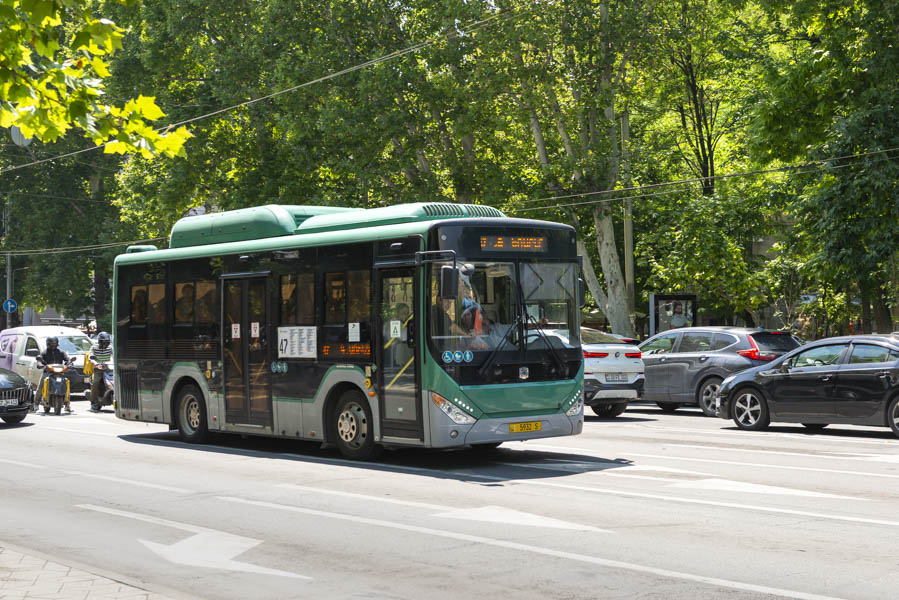
City transport in Yerevan is inexpensive and increasingly straightforward. The network includes buses, trolleybuses, minibuses, app taxis and a compact metro. Central Kentron is walkable, but public transport helps with hillier neighbourhoods and outer districts.
Public Transport
A single bus, trolleybus or metro journey costs 150 AMD under Yerevan’s unified ticketing system. Pay using a transport card, a Telcell Wallet QR ticket or a supported Armenian bank card. Cash payments and the former metro tokens are no longer accepted aboard public transport.
Transport cards are available at metro stations, Telcell service points and tourist information centres. Foreign bank cards may not work directly, making a transport card or Telcell Wallet more dependable.
Buses and Trolleybuses
Yerevan buses reach districts beyond the metro, including Nor Nork, Davtashen, Arabkir, Erebuni and Malatia-Sebastia. The municipal network has 64 bus routes, alongside smaller minibus services and five trolleybus routes.
Modern buses and minibuses use numbered routes and stop at marked stations. Validate the ticket after boarding, even when using a timed or unlimited package. Unlike older marshrutkas, current municipal minibuses follow formal routes and designated stops.
Yandex Go’s Transport section shows routes, connections and live positions for many buses. Enter the destination rather than searching individual route numbers, since transfers may provide the quickest journey.
Metro
The Yerevan Metro has ten stations along a 12.1-kilometre network. Only one line runs between Barekamutyun and Garegin Nzhdeh Square, with a short branch to Charbakh.
The metro operates daily from 07:00 until midnight. Trains arrive approximately every five minutes during weekday peaks, with longer intervals during evenings and weekends.
Republic Square, Yeritasardakan and Marshal Baghramyan serve central Yerevan. Sasuntsi David connects directly with the main railway station.
Other Transport Options
Taxis
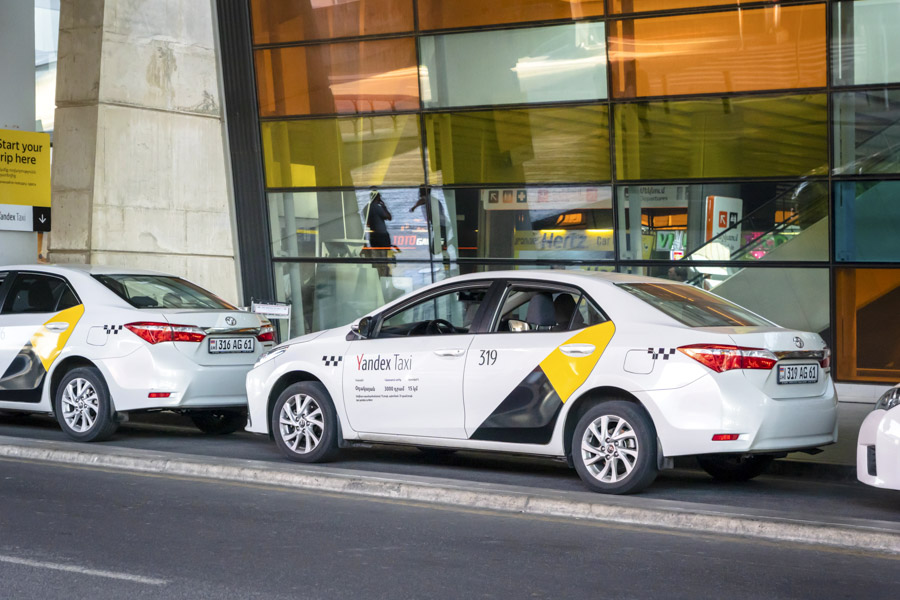
GG and Yandex Go are the main taxi apps in Yerevan. Both display the estimated fare before booking and accept destinations entered in English. App taxis are practical after midnight, with luggage or for neighbourhoods beyond the metro. While street taxis are available, applications allow you to confirm the fare upfront and facilitate communication.
Car Rental
Car rental is unnecessary for travellers staying within Yerevan. Weekday congestion, frequent traffic lights and paid central parking often make public transport or taxis much more convenient.
A rental car becomes useful for day trips from Yerevan, especially when combining rural sites not served by direct transport connections.
Bicycles and Electric Scooters
YerevanRide, JET and BusyFly provide shared bicycles or electric scooters. They work best across flatter central streets rather than steep neighbourhoods or heavily trafficked avenues.
How to Get to Yerevan
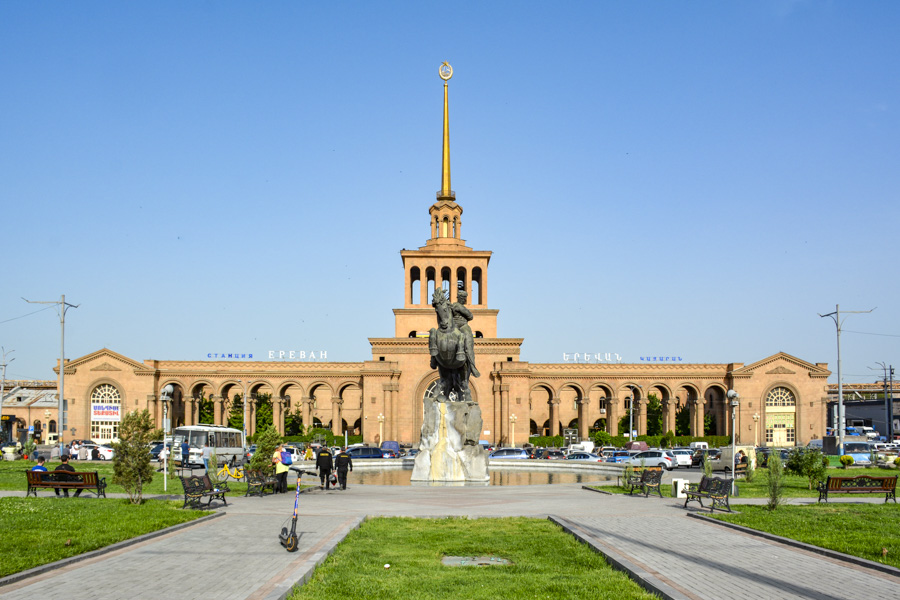
Most international travel to Yerevan begins by air, while Georgia remains the main overland corridor. Southern arrivals can also enter Armenia from Iran through Meghri. Active passenger checkpoints include Bagratashen, Bavra and Gogavan with Georgia, plus Meghri with Iran.
By Air
Zvartnots International Airport (EVN) is Armenia’s principal air gateway, west of central Yerevan. Direct flights connect the capital with major European, Middle Eastern, Central Asian, Russian and regional cities.
Routes change seasonally, so the airport’s live board is more reliable than static destination lists.
Bus 100 links the terminal with central Yerevan throughout the day and night. It departs every 30 minutes until 22:00, then hourly, and costs 500 AMD. Payment works by Visa, Mastercard or a Telcell QR ticket.
Express Bus 201 runs every 30 minutes from 07:00 to 22:00 and costs 300 AMD cash. App taxis or pre-booked transfers are easier with children, heavy luggage or accommodation beyond Kentron.
By Train
Yerevan Railway Station stands besides Sasuntsi David Metro Station, south of the centre. The international timetable follows two distinct seasons.
From 14 June to 1 October 2026, the Yerevan–Batumi sleeper runs every other day and serves Tbilisi. From 2 October, the overnight Yerevan–Tbilisi service resumes on alternating dates.
Domestic trains connect Yerevan with Gyumri, Araks and Yeraskh, with seasonal services towards Lake Sevan and Shorja. Tickets and current timetables are available through South Caucasus Railway.
By Bus
Yerevan does not have one universal arrival point for international coaches. Some Tbilisi services terminate at Kilikia Central Bus Station, while others use private offices on Arshakunyats Avenue.
Journeys usually take five to six hours, although border queues and road conditions can extend them. Check the ticket’s exact arrival address before booking accommodation or arranging collection.
By Road
Private transfers are the simplest road arrival from Tbilisi, especially for groups or travellers carrying substantial luggage. Drivers may cross at Bagratashen, Bavra or Gogavan, depending on the chosen route and current conditions.
The Iranian road enters through Meghri, then crosses mountainous Syunik before reaching Yerevan. Armenia’s land border with Turkey remains closed to ordinary passenger travel, despite direct flights from Istanbul.
Languages Spoken in Yerevan
Armenian is Yerevan’s main language and Armenia’s official state language. It forms an independent Indo-European branch and uses an alphabet introduced by Mesrop Mashtots around 405.
Modern Yerevan speaks Eastern Armenian, developed largely from the historic Araratian dialect. Classical Armenian, or Grabar, remains important in church texts, manuscripts and older literature.
For travellers, central Yerevan is manageable without Armenian. English is common among younger residents and staff in hotels, restaurants, museums and tourism businesses. Russian remains widely understood, especially among older residents. Many restaurant menus and visitor services use Armenian, Russian and English.
Outside Kentron, a translation app helps in markets, taxis and smaller family businesses. Useful phrases include “barev dzez” for hello and “shnorhakalutyun” for thank you. The shorter “merci” is also commonly understood. Basic Armenian is usually appreciated, even when the conversation continues in another language.
Security in Yerevan
Yerevan is generally safe for visitors, and official advice describes crime levels as low. Normal city precautions are usually sufficient. Use app-based taxis after dark, secure valuables in crowded transport and check bills before paying.
As in any capital, demonstrations and protests can occur in central Yerevan and are usually peaceful, but visitors should avoid large gatherings. Be alert when crossing roads, as driving behaviour can be unpredictable. Armenia’s emergency number is 911.