

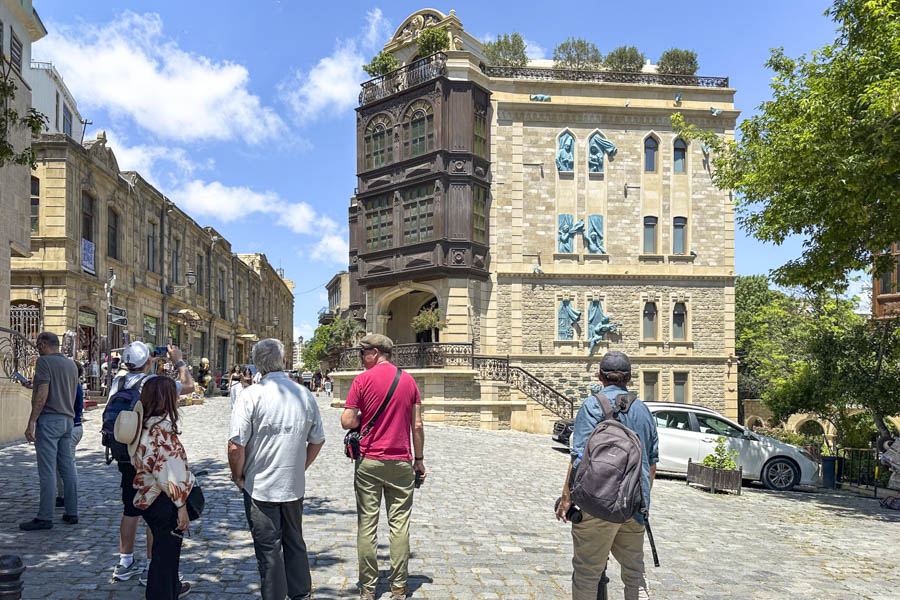
When it comes to things to do in Baku, the capital of Azerbaijan, most visitors climb the Maiden Tower, visit the Palace of the Shirvanshahs, photograph the Flame Towers and head to the Carpet Museum and Zaha Hadid’s Heydar Aliyev Centre, and then stroll along the seafront. But just a street or two from the major sights, another Baku comes into view: the city that residents walk through every day. Here stone cats watch over a house, a palace recalls the fortune made from a single gusher of oil, and a five-storey Stalin-era building tells a different kind of story. A hillside funicular has been carrying passengers since 1960.
This guide explores these unique things to do in Baku. It follows the city as it grew, from the mediaeval lanes through two oil booms and the Soviet decades in between, before turning to evenings, food and traditional crafts workshops. If this is your first visit and you would like the classics first, start with our Baku Travel Guide and the Top 15 Things to Do in Azerbaijan. Then come back to discover the city beyond them.
- 1. Wander Kichik Qala Street’s back lanes
- 2. Hunt for the Old City’s curious houses
- 3. Follow the dervishes’ trail
- 4. Take the scrub-and-steam ritual in an old hammam
- 5. Step into the Time Pavilion
- 6. Walk the millionaires’ mile on Istiglaliyyat Street
- 7. Circle Khagani Garden and explore Passage 1901
- 8. Admire the House of Hajinski
- 9. Explore the courtyards of Sovetsky
- 10. Spot Stalin-era Baku
- 11. Ride the funicular up the hill
- 12. Spend a half-day on the Bayil waterfront
- 13. Walk Baku White City
- 14. Sip a cocktail in a revolving rooftop bar
- 15. Catch a jazz night
- 16. See Mini Venice and the Baku Eye after dark
- 17. Spend a night at the opera or ballet
- 18. Dine on the Boulevard as the lights come on
- 19. Sample Azerbaijani wines and beer
- 20. Meet the Old City’s artists and craftspeople
Things to Do in Baku’s Old Town
The Old Town, Icheri Sheher is full of intriguing details. Behind the ancient fortress walls hide a good many historic buildings, and most come with a story attached.
1. Wander Kichik Qala Street’s back lanes
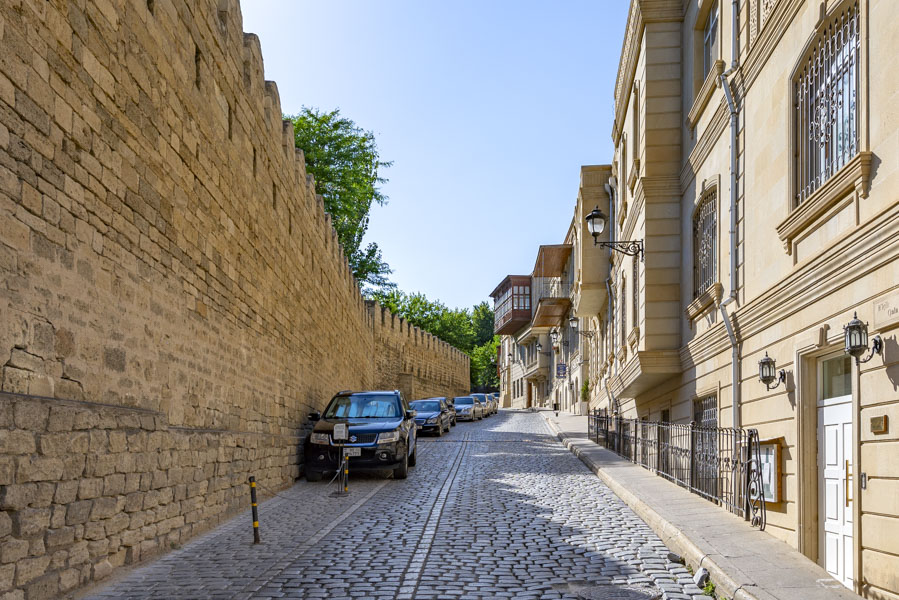
Lanes of low, two-storey houses are slowly disappearing, but a few still survive. To discover them, stroll along Kichik Qala (Kiçik Qala) Street (Qala is also often spelt Gala), which follows the inner side of the northern and western parts of the fortress wall. Here Old City retains its character: cobbled lanes, houses with elegant balconies and handsome wooden doors, and brightly painted gift shops waiting patiently for their next visitor.
2. Hunt for the Old City’s curious houses
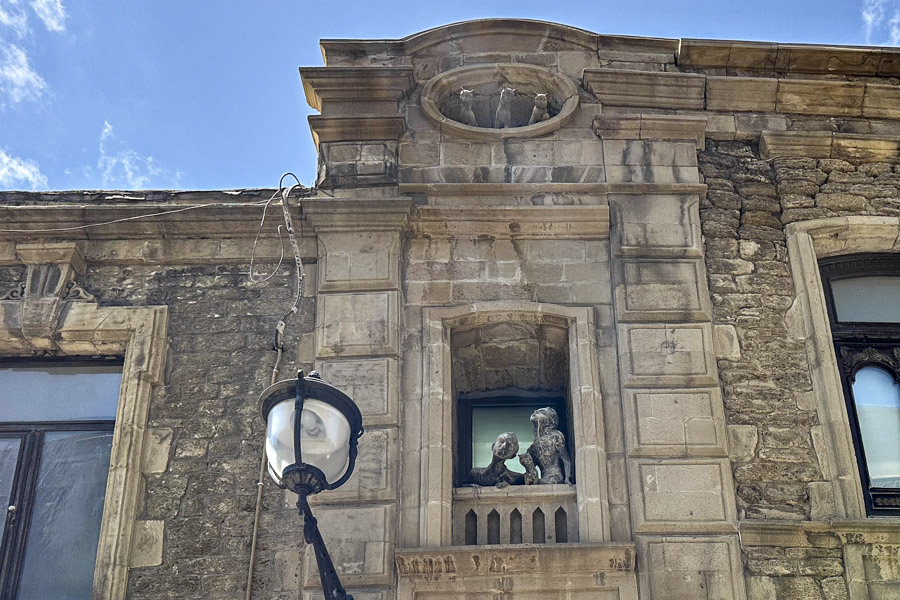
Walk the lanes of Kichik Qala and Boyuk Qala Streets, and you will soon notice that Old Baku has no shortage of sculpted façades. But the one everyone looks for is the House with Cats at 15 Qüllə Street. A pair of children with a kitten looking up from a faux window, while three cats keep watch from the ledge of another faux window above them. This artwork was created by Tarverdi Guliyev in 1994. The figures are tied to a sad legend, though one with a lesson in it. Ask your guide to tell it on the spot.
A little further up the same street, at No. 20, is the House of Captain Abdul-Manaf Alekperov, also known as the Sailor’s House. Built in 1903 and remarkably well preserved, this three-storey mansion really does resemble the deck of a ship. Abdul-Manaf Alekperov was a well-known maritime pilot and sea captain, and the house has its own legend. The captain, they say, ran his household like a ship’s crew. Discipline was strict, and when he came home, the family had to salute him beneath a raised naval flag. The house still belongs to the Alekperov family today.
A few steps away, the Museum of Archaeology and Ethnography occupies the site of the Chained House (Zəncirli Ev). Built in the early 20th century, it was named for the decorative chains on its roof. Before moving on, linger in the surrounding Gosha Qala Square, one of the most atmospheric corners of the Old City.
3. Follow the dervishes’ trail
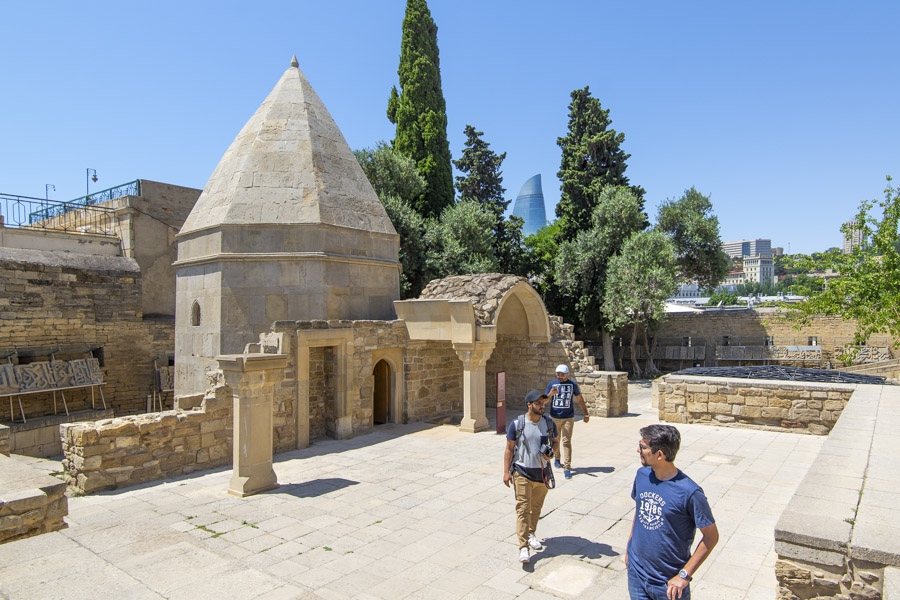
Baku drew a very different kind of traveller long before the oil barons arrived. The Great Silk Road ran across the Absheron Peninsula, and merchants from East and West brought their languages, goods and beliefs to the city. Wandering dervishes, the ascetics of the Sufi orders, travelled the caravan roads with pilgrims, and the Old City still bears traces of their journeys.
There is a small 15th-century mausoleum inside the complex of the Palace of the Shirvanshahs that locals still call the Dervish Tomb. It is the tomb of Yahya al-Shirvani al-Bakuvi, a scholar and court astrologer who led the Khalwati Sufi order. For centuries, pilgrims came here in search of spiritual renewal.
Finally, end the walk at a caravanserai. Merchants from Central Asia and India once unloaded their goods at the Bukhara caravanserai and the Multani caravanserai, and holy men on the road sometimes shared their shelter. Order lunch beneath the old arches and picture the travellers who once rested there.
4. Take the scrub-and-steam ritual in an old hammam
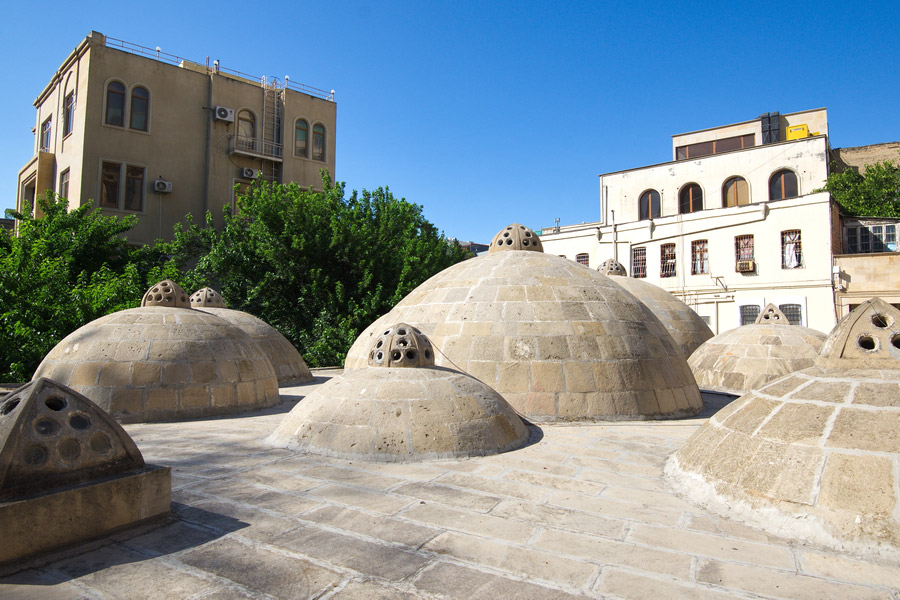
In mediaeval Baku a visit to a hammam was far more than bathing. Many local families kept a weekly bathing routine, with fathers and sons attending on men’s days and mothers with their daughters on women’s day. The youngest boys accompanied their mothers. In keeping with local customs of modesty, men and women used the hammam on separate days. On women’s days, a sign was reportedly displayed to let men know the bathhouse was reserved for women. Each quarter, or mahalla, had its own bathhouse, and residents traditionally used the one in their own quarter. The hammam was also an important social space where people could catch up on news, talk and relax.
Several historic bathhouses survive in Baku’s Old City, though not all are still in use. The 15th-century Haji Gayib bathhouse and the Shirvanshahs’ palace baths can be seen as historic monuments. For a working hammam experience, visit the 18th-century Agha Mikayil Bath. Expect a warm room first, then a hot one, followed by a scrub with a coarse kisa mitt. Then wrap yourself in a towel and settle down with a glass of tea, as Bakuvians have done for centuries. Check the men’s and women’s days before you go.
5. Step into the Time Pavilion
What did Baku look like before the cars and the glass towers? The Time Pavilion has an answer. Opened on 19 October 2026 inside Baku Khan’s Palace in the Icheri Sheher reserve, this small immersive museum offers a 40-minute “Journey Through Time” that takes visitors back to the Baku of 1919. This was the city in the final years of the first oil boom, which you will meet again on the streets beyond the walls. Guides are on hand throughout, and the visit begins at reception. It’s a memorable indoor experience and a vivid way to see how Baku has changed over time.
Walk Through Baku’s First Oil Boom
From 1846, oil turned Baku into one of the richest cities in the Russian Empire. The boom lasted until 1920, and it produced a new class of local magnates, the oil barons, who spent their fortunes as lavishly as they made them. Mansions, theatres and palaces rose in European styles, many designed by architects brought in from abroad. Most of these buildings still stand just outside the Old City walls, close enough to see in a single morning’s stroll. So, where do you start?
6. Walk the millionaires’ mile on Istiglaliyyat Street
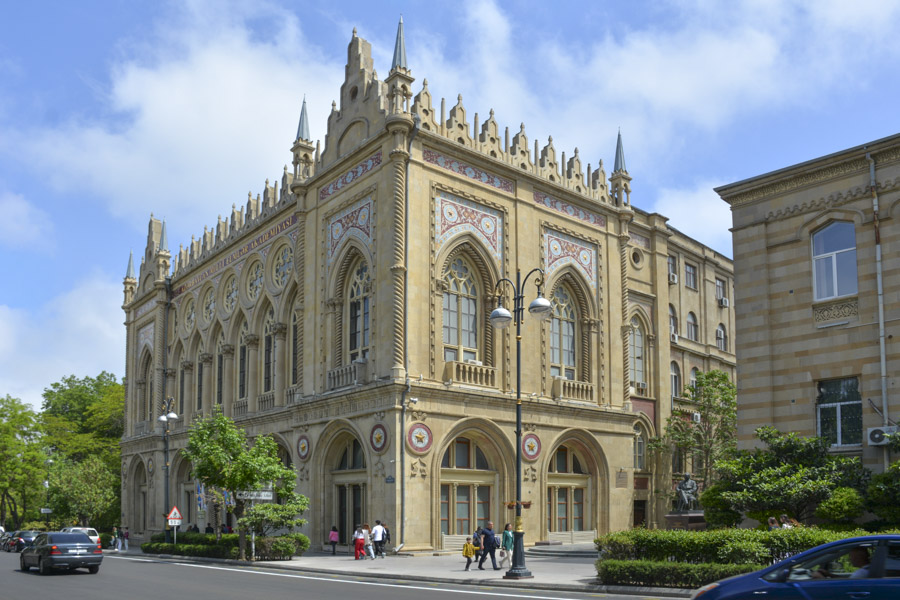
If one street tells the story of the first oil boom, it is Istiglaliyyat. Originally laid out as Nikolayevskaya Street, it was the first street to grow fully outside the Old City walls. The oil barons lined it with edifices meant to impress, and they still do. An easy walk of an hour or so with stops is best done from east to west.
Start at the Nizami Museum of Azerbaijani Literature. Before it became a museum in 1939, the building was the Metropol, one of the grand hotels of boom-time Baku. A short stroll further on is the Venetian Gothic-style Ismailiyya Palace, designed by Polish architect Józef Płoszko at the expense of oil magnate Musa Naghiyev for a Charity Society. Today it houses the Praesidium of the Academy of Sciences. Next door is the Institute of Manuscripts, funded by the famous oil baron and philanthropist Hajji Zeynalabdin Taghiyev. It opened in 1901 as a school for Muslim girls, then served as the parliament of the short-lived Azerbaijan Democratic Republic (1918–1920). In Soviet times, it housed the Supreme Soviet of Azerbaijan.
Further along, City Hall, completed in 1904 to designs by Józef Gosławski, boasts the most imposing façade on the street. It is especially striking when illuminated in the evening. The former St Nina’s School for Girls stands opposite. Nino, the fictional heroine of Ali and Nino, written by Kurban Said, is said to have studied here, although the novel calls it the Lyceum of the Holy Queen Tamar. Today, it is home to two secondary schools, No. 132 and No. 134.
Finish at the Azerbaijan State Academic Philharmonic Hall, completed in 1912 and still famed for its acoustics. Then look out for the pink House of the Sadykhov Brothers nearby. It was one of the first buildings in Baku with an electric lift, which crept up at 70 centimetres per second. The shady Philharmonic Garden opposite is the perfect place to rest your feet.
7. Circle Khagani Garden and explore Passage 1901
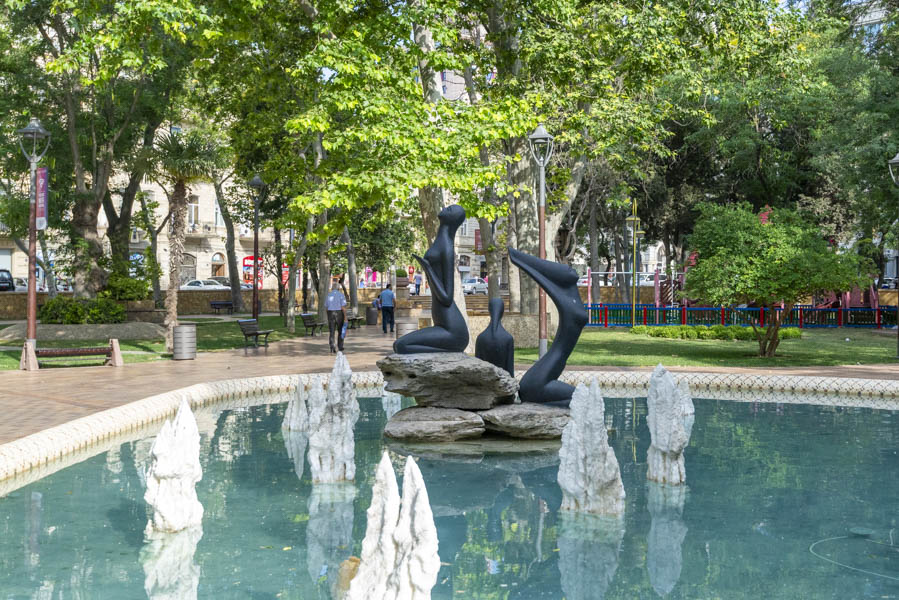
Officially, this little park is Khagani Garden, but many Bakuvians still call it by its old name, the Molokan Garden. In the 19th century, this was the Molokan quarter, home to a religious group that separated from the Russian Orthodox Church who settled in the Caucasus. The tiny garden features the Fountain of the Three Graces. Take your time on the way round, because the streets that frame the garden are lined with beautiful buildings from the first oil boom.
A short walk towards the Old City brings you to Passage 1901, once one of Baku’s best-known covered markets. It has been restored with real care. The original wooden doors, columns and staircases have survived, and the building feels light and airy. One reminder of another era remains on the walls: Soviet mosaics celebrating the triumphs of the national economy. Today, the arcade houses cafés, small offices and local designer boutiques. You need not buy anything, though. Wander in, look up and enjoy the building, perhaps over a cup of coffee.
Afterwards, stroll five minutes to Fountain Square. Older Bakuvians still call it “Parapet”, and if you ask a taxi driver for “Parapet”, you will end up in the right place.
8. Admire the House of Hajinski
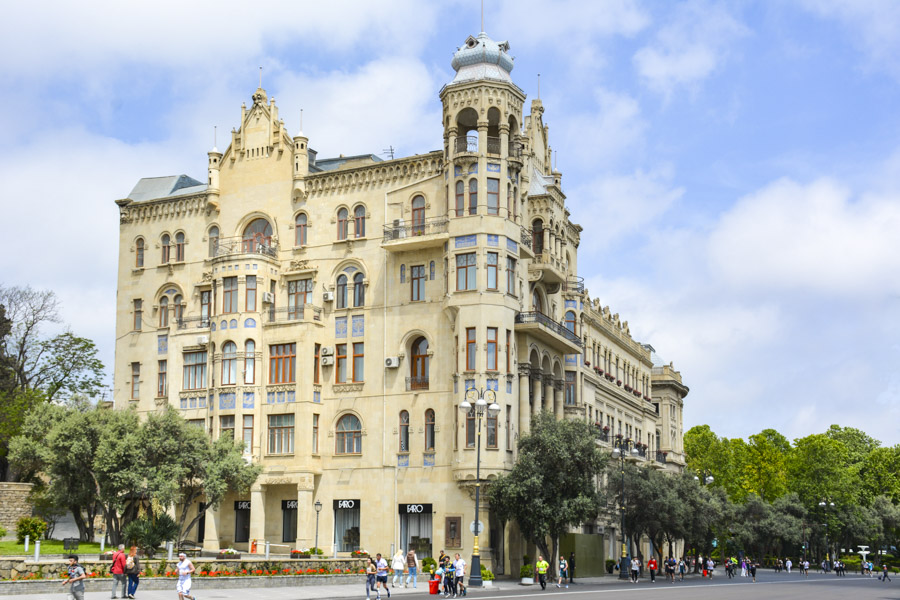
Back towards the sea, near the Maiden Tower, stands one of the boom’s most flamboyant buildings. The House of Isa Bey Hajinski was completed around 1912 for Isa Bey Hajinski, a landowner who eventually became one of Baku’s leading public figures. Its ornate façade is best admired from across the road. The house is also associated with a famous guest. In 1944, General Charles de Gaulle stayed here on his way to Moscow to meet Joseph Stalin.
Trace Baku’s Soviet Past
In 1920, the Red Army arrived, and Azerbaijan’s oil industry was nationalised and directed towards the Soviet Union’s needs. For the next seventy years, Baku was a Soviet city. Its planners raised grand avenues and monumental public buildings, but ordinary Bakuvians went about their lives in the old courtyards and markets. Both sides of that story are still easy to find.
9. Explore the courtyards of Sovetsky
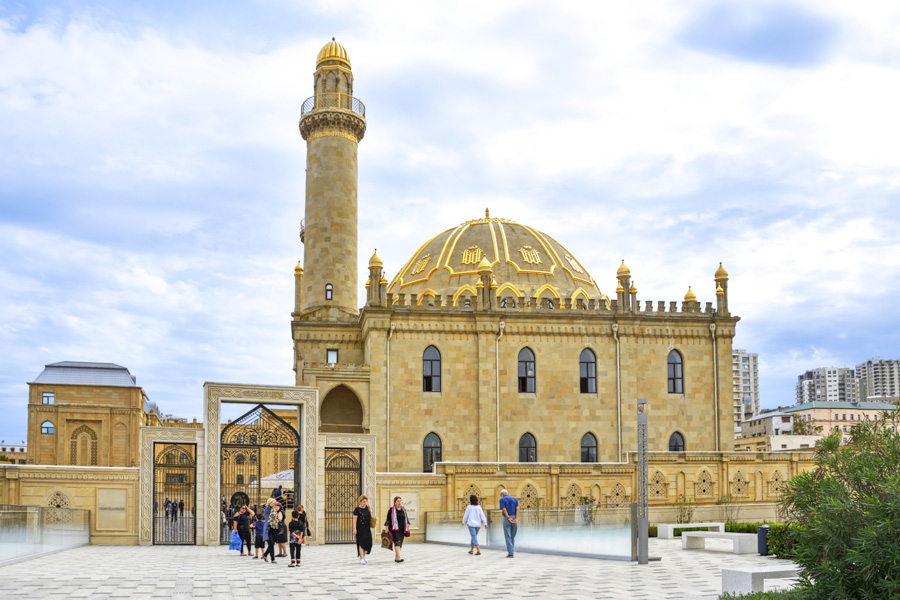
Old Bakuvians still call this district Sovetsky, after the street that once ran through its heart. It is only about ten minutes on foot from the Old City if you reach it from Nizami Ganjavi Street. Wander along the streets of Zargarpalan, Mirza Agha Aliyev, Suleyman Tagizade, Suleyman Rahimov and Abdulla Shaig, and the lanes that cross them. They are lined with two-storey houses a century old or more, many with carved wooden balconies. Much of the quarter is due to be demolished, and the new towers already rising in the background show where the city is heading.
The courtyards and archways may lead to private homes, so it is essential to respect residents’ privacy. Some of these houses were once home to well-known writers, artists and scholars. Next, seek out to discover three protected landmarks that have been preserved: the Union of Architects building, with its beautifully painted entrance hall; the Russian Orthodox Church of the Archangel Michael; and the Taza Pir Mosque. They show how many faiths have long shared this city.
10. Spot Stalin-era Baku
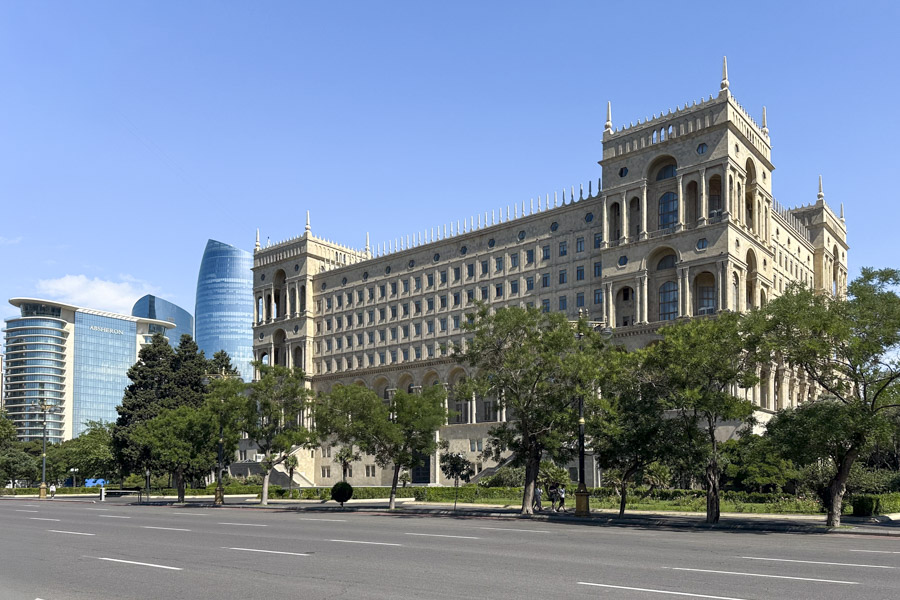
After the oil barons came the Soviet planners, who built on a scale designed to overawe. Begin on the seafront, at the Government House. Completed in 1952 to designs by Lev Rudnev and Vladimir Munts, this vast administrative palace faces the Boulevard and is one of the city’s best examples of Stalinist monumental architecture. From there, head up to Istiglaliyyat Street.
Just along the street, the Monolith stands at one corner of Nizami Square. It is named after the solid rock engineers struck while surveying the site, and it was one of Baku’s largest pre-war buildings. The composer Uzeyir Hajibeyov lived there, and memorial plaques on the walls recall several others.
Next, walk on to Fuzuli Street and the building every Bakuvian knows as Beşmərtəbə, which translates as “five storeys”. Completed in 1929 as the Metallist apartment block, it was considered the city’s first multi-storey residential building, and the nickname stuck. Even today, say “Beşmərtəbə” to a taxi driver, and he won’t ask any further questions.
Finish at the corner of Samad Vurgun and Nizami Streets, opposite Nasimi Square, with the Buzovnaneft building. It was built in 1945 as housing for an oil trust and designed by Sadig Dadashov and Mikayil Huseynov, the partnership behind many of Baku’s best-loved Soviet buildings. Look up at its twin towers crowned with openwork belvederes, its bay windows and its pointed arcade of shops.
If you have time, take the metro to Elmlar Akademiyasi station to see the Azerbaijan National Academy of Sciences (ANAS) complex nearby. ANAS was founded in 1945, and its complex was built in stages between 1951 and 1966 to designs by Mikayil Huseynov. It blends monumental symmetry of the period with traditional Azerbaijani pointed arches and fine stonework, a combination you will soon notice all over Baku.
11. Ride the funicular up to Highland Park
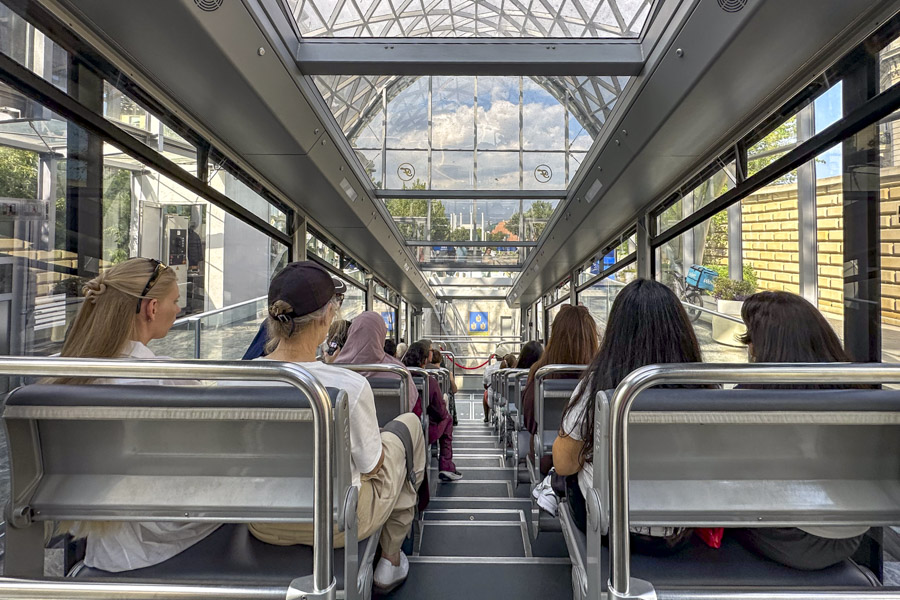
Baku rises steeply above the sea, but there is no need to tackle the climb on foot. Since 1960, a small funicular has carried passengers up to Highland Park. The ride lasts only three or four minutes. The two cars pass each other halfway, and the bay opens up behind you as you climb. At the top, the city lies at your feet: the Old City walls below, the long curve of the bay and the Flame Towers just behind. The funicular operates daily, except on Mondays, from 10:00 to 20:00, with a break between 13:00 and 14:00. Come in the late afternoon, if you can, to watch the sunset.
Discover Today’s Baku: The Second Oil Boom
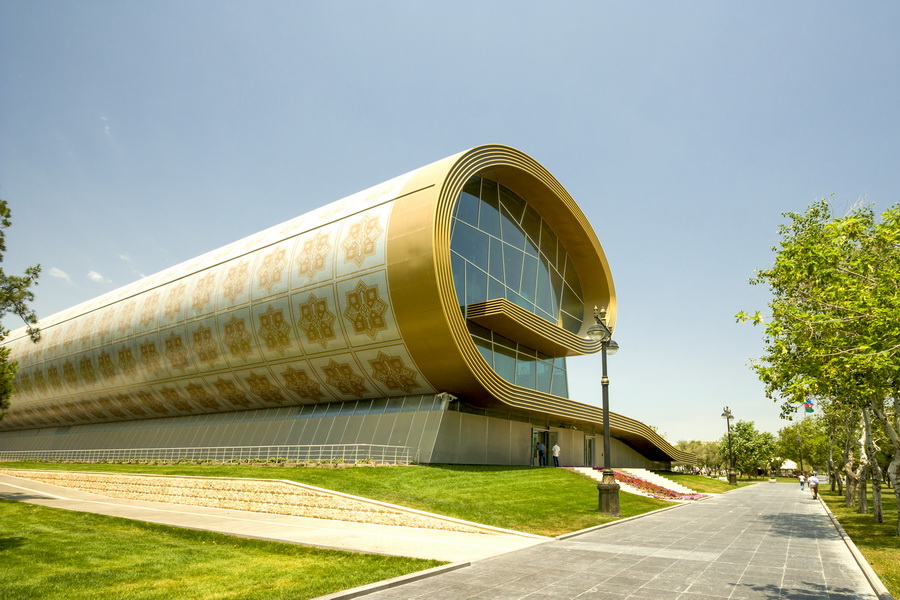
In 1994 Azerbaijan signed what Bakuvians still call the “Contract of the Century”, a deal with Western oil companies to develop the Caspian fields. Within a decade, oil money had reshaped Baku for the second time, in ways the old barons could hardly have imagined. Glass towers rose above the bay, and whole districts were rebuilt. The three best-known landmarks of this era are the Flame Towers, the Heydar Aliyev Centre and the Carpet Museum. Here are two corners of modern Baku that most visitors miss.
12. Spend a half-day on the Bayil waterfront
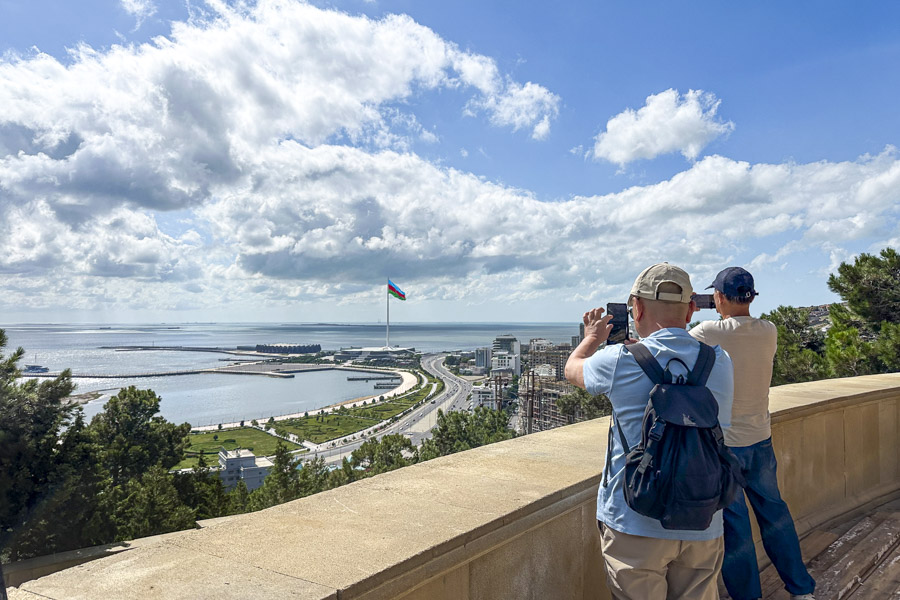
South-west of the centre, where the Boulevard curves round the bay, the Bayil waterfront highlights three sights. It is a fair walk from the centre, so most visitors take a taxi. Begin at State Flag Square, where Azerbaijan’s flag flies at a 201.191-metre (660.08-feet) flagpole. It was raised again in November 2024, when the square reopened after a lengthy reconstruction, and in 2025 the flag was recognised by Guinness World Record as the largest flag flown in the world. The enormous flag is an impressive sight on a breezy day. Beside it stands the Baku Crystal Hall, built in 2012 to host the Eurovision Song Contest.
A short walk along the shore, a former Soviet naval maintenance building now houses the YARAT Contemporary Art Centre. Its exhibitions rotate regularly and feature artists from Azerbaijan and other countries, so there is always something new to see.
13. Walk across Baku White City
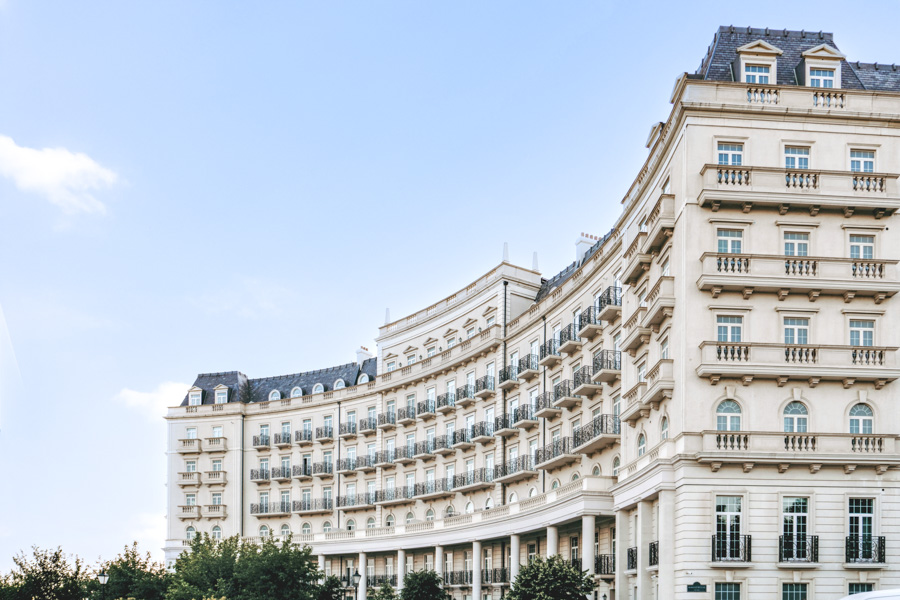
Baku’s most ambitious new district is situated east of the centre. During the first oil boom, this was the Black City, a sprawl of refineries whose smoke blackened everything around it. Today, the old industrial land has been rebuilt as the Baku White City, masterplanned by the British firms Foster + Partners and Atkins. Their guiding idea was a residential neighbourhood made for walking. Cafés, shops, parks and sculptures all lie within a few minutes of one another. There is a youthful energy here, especially in the evenings, when the café terraces fill up.
Getting there is easy. In 2015 the Seaside Boulevard was extended two kilometres into the district, so on a fine day you can stroll along the water instead. Alternatively, begin at 249 Nizami Street, at the edge of Nizami Park. Wander through the greenery first, or set off straight away to explore the pale stone façades and wide, tree-lined streets.
Not everything here is new, though. A handful of buildings survive from the oil-boom years; among them is an elegant Water Pavilion (1894). Then there is Villa Petrolea, where the Nobel brothers once lived and ran their oil company.
What to Do in Baku in the Evening
A walk through Baku after dark is very entertaining. Many of the buildings, parks and fountains of both old and new Baku are floodlit at night. Highland Park is a popular evening spot, but there are a few other places to enjoy the city by night.
14. Enjoy the views from a revolving rooftop bar
On the 25th floor of the Hilton Baku, the 360 Bar slowly rotates on its axis, completing a full circle every hour. Enjoy a drink or dine while Baku and the Caspian Sea drift past the windows below. It is one of the best places in town to photograph the city under the blazing lights.
15. Catch a jazz night
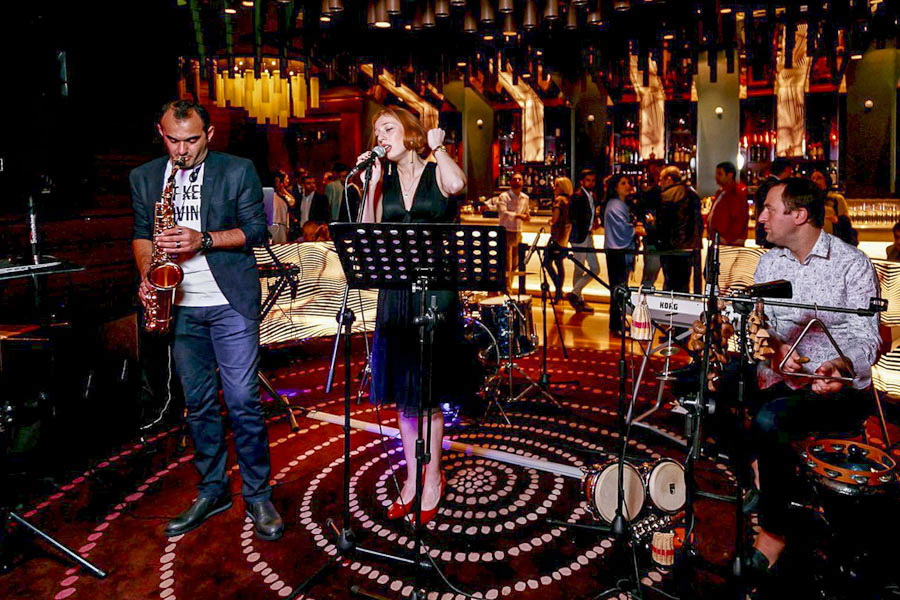
Photo source: www.tripadvisor.com
Baku has loved jazz for decades, and at least two venues offer a stylish night out with live music and good food. In the heart of the Old City, JazzBaku at 35 Boyuk Qala serves Azerbaijani and international dishes in the backdrop of classic jazz. The acoustics are excellent, and the staff are as warm as the music. For something a little grander, the Jazz Club of the Fairmont Baku in the Flame Towers pairs live performances with fine cocktails and views across the city. For mugham-jazz, check the current programmes at Baku’s jazz venues, such as Baku Jazz Center and Moon Jazz Club.
16. See Mini Venice and the Baku Eye after dark
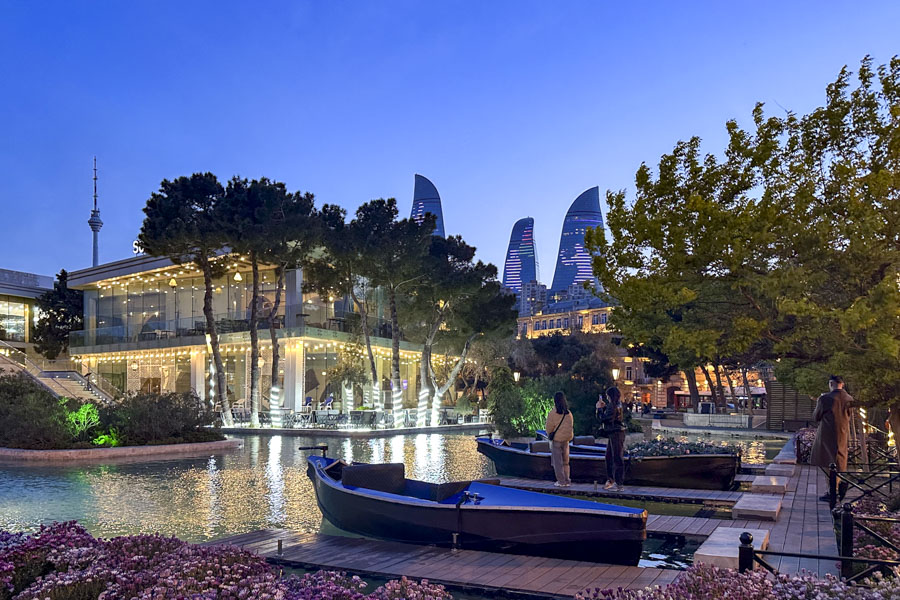
Mini Venice was built on the seafront boulevard in the 1960s, modelled, as the name suggests, on the real Italian city. Its little canals are crossed by bridges and plied by gondolas, and its “banks” are lined with cafés and restaurants. By day it is pleasant enough. After dark, however, when the canals are lit up, it becomes one of the prettiest corners of the city.
From there, it is a short stroll along the boulevard to the Baku Eye, the city’s big Ferris wheel. The view over the bay is lovely, and the cabins are modern, spotlessly clean and air-conditioned, which is a real comfort on a warm summer night.
17. Spend a night at the opera or ballet
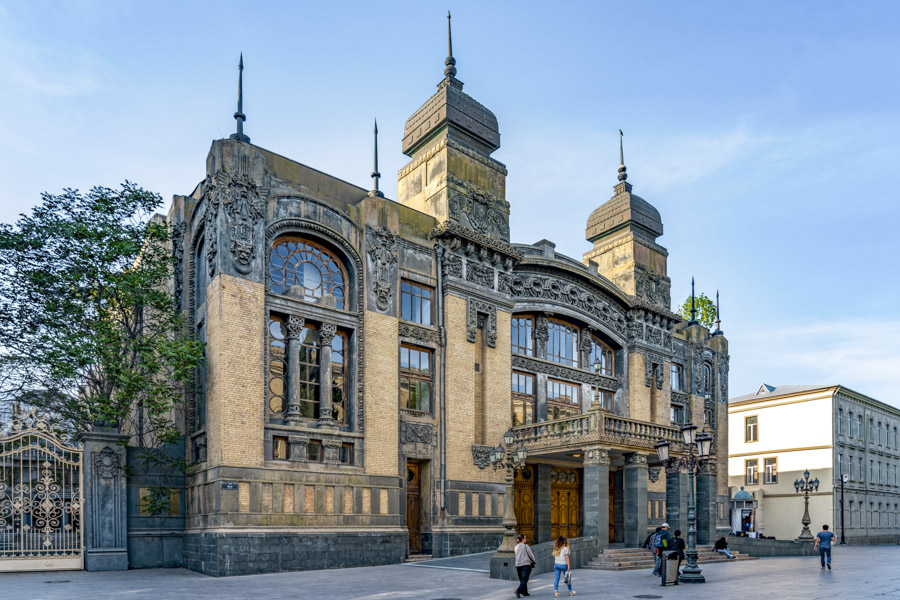
The Azerbaijan State Academic Opera and Ballet Theatre stages the great opera and ballet classics, and its season usually runs from October to June or early July. If you can, choose an opera by an Azerbaijani composer. The best-known is Uzeyir Hajibeyov’s Leyli and Majnun. Unlike a conventional European opera, it weaves in classical mugham singing, which is why it is known as a mugham opera. You can book tickets on iticket.az.
Baku Food Experiences
Where should you eat in Baku, and what should you order? The good news is that almost every corner in the main visitor areas (the Old City, Nizami Street, and the Boulevard) has restaurants and cafés serving traditional Azerbaijani dishes. And as befits a modern capital, Baku also boasts a generous choice of international cuisine.
18. Dine on the boulevard as the lights come on
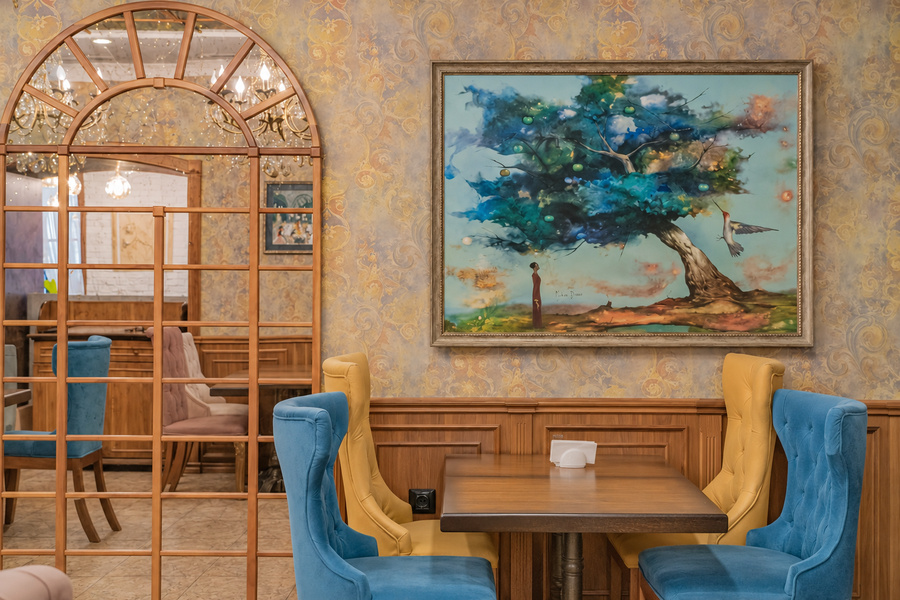
Photo source: www.mercibaku.az
Every good day in Baku ends at the water’s edge, and the finest way to end yours is dinner at Chayki. This Azerbaijani restaurant sits on the boulevard. Ask for a table on the terrace or by the window. The bay transforms as the sun goes down, and soon the great wheel of the Baku Eye begins to glow in front of you. Bakuvians rarely rush dinner, and on a warm evening the Boulevard stays lively until late, so a gentle stroll always follows.
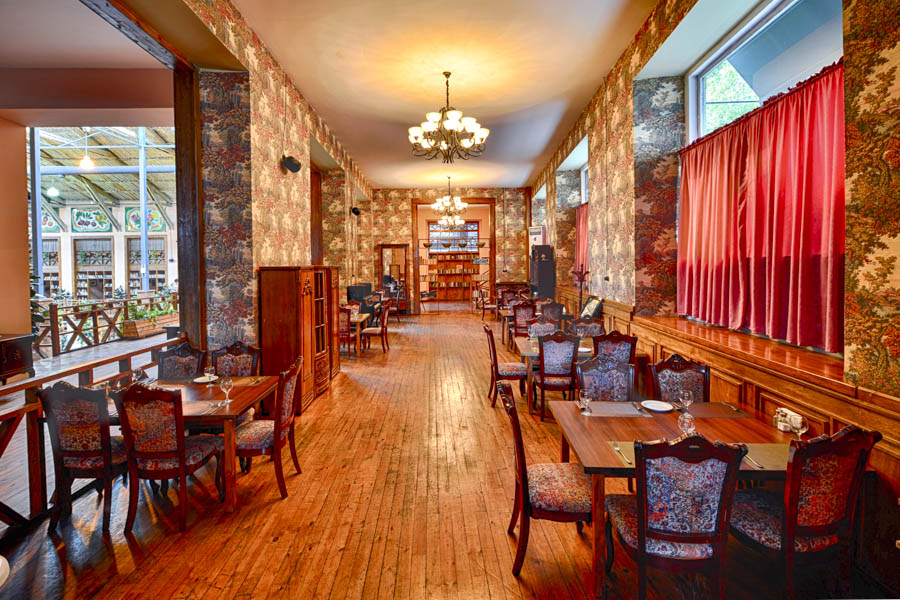
Earlier in the day, there is more to try. Start with breakfast at Merci Baku, beside the Four Seasons, where the vine-leaf dolma is as popular as the French pastries. For lunch in the Old City, Galateya serves kebabs and smoky aubergine salads with a Turkish accent. The restaurant Nərgiz, near the Nizami Museum of Azerbaijani Literature, is admired for its interior and food. And if you fancy a change of cuisine, the streets around Khagani Garden offer Georgian cooking at Megobari and Italian at Luciano.
19. Sample Azerbaijani wines and beer
When you have lunch or dinner in an Azerbaijani restaurant, do not pass over the wine list. Azerbaijan has produced wine for thousands of years, and Baku’s restaurants are an easy introduction. Start with a red from Chabiant, a winery in the Ismayilli hills. Then try something you are unlikely to find at home: quince, cherry or pomegranate wines. A glass of fruit wine with dessert may be a fine finish to any Baku dinner.
Beer lovers, meanwhile, should order a Xırdalan, the local beer, on almost every menu in town. It is very refreshing, and it goes perfectly with a plate of kebabs on a warm evening.
Authentic Baku’s Experiences
Baku lived by its crafts way ahead of the oil boom: carpets, copper, silk and carved wood all passed through its bazaars. That tradition has not vanished. Baku still has its craftsmen, and they are rarely too busy for a visitor. For many travellers, the unplanned moments in a workshop become the most authentic Baku experiences of the whole trip.
20. Meet the Old City’s artists and craftspeople
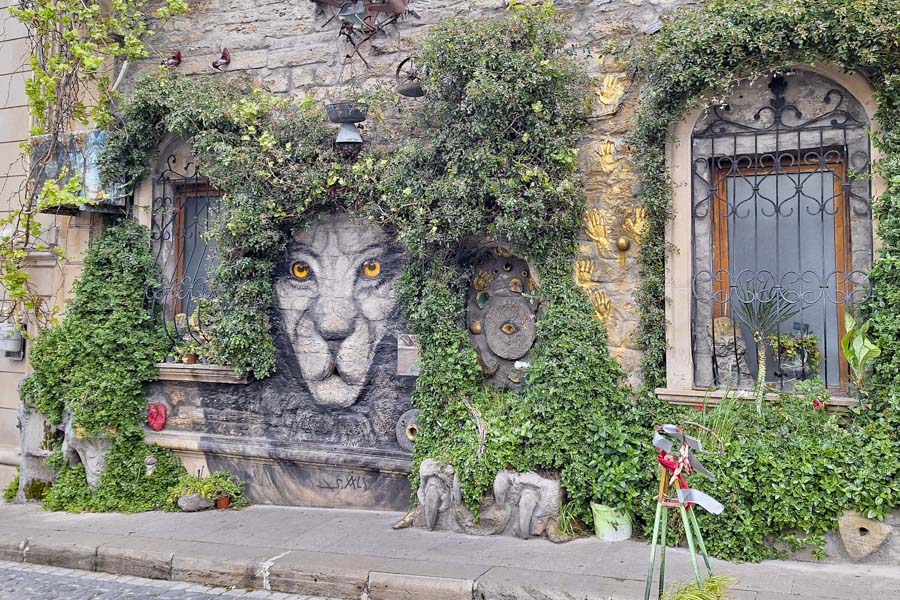
The Old City remains in memory thanks to its workshops, where the people behind the work are as much of an attraction as the work itself. On Kichik Qala Street, look out for the Studio of Ali Shamsi, known locally as the barefoot artist. Inside, the walls are crowded with warm, vivid paintings of every kind, and very often the artist himself is there to greet you.
A few lanes away, on Asaf Zeynalli Street, the ABAD Centre brings together craftspeople from across Azerbaijan under one roof. This government-backed social project helps regional artisans keep traditional skills alive, among them glass painting and woodcarving. You can watch them at work, ask questions, and, if something catches your eye, take it home. It is the most rewarding place in the Old City to buy a gift, because you will know exactly who made it.
Frequently Asked Questions
What are some unique things to do in Baku?
Some of the most unique things to do in Baku are found among its famous sights and historic neighbourhoods. Explore the Old City’s winding lanes and landmarks, keeping an eye out for small details such as the stone cats on a window ledge, a captain’s house shaped like a ship, and the tomb of a 15th-century Sufi scholar. Beyond the walls, admire the oil barons’ mansions along Istiglaliyyat Street, and ride the funicular up to Highland Park, or visit the White City, a new district built on the site of the former refineries.
What can you do in Baku in one day?
Start with a relaxed morning exploring the Old City’s historic back lanes of Kichik Qala. Then step outside the walls for coffee at Passage 1901 and a slow walk along Istiglaliyyat Street. After lunch, take the funicular up to Highland Park for views over the city, ideally arriving near sunset. Finish with dinner on the Boulevard. It’s a full day, but the route leaves time to explore at an easy pace.
What can you do in Baku on a rainy day?
The city has plenty to do indoors on a rainy day. Spend a slow hour in the Agha Mikayil hammam, or take the 40-minute journey back to old Baku at the Time Pavilion. Later, a taxi will get you to YARAT on the Bayil waterfront for contemporary art, or to the Carpet Museum. And if it is still raining by evening, you have the perfect excuse for a night at the opera.
Is Baku easy to explore on foot?
Yes, for the most part. The Old City, Fountain Square and Istiglaliyyat Street are all close together, and you can walk between them comfortably. Wear shoes with a good grip, though, because the Old City’s cobbles are uneven and some lanes slope. The funicular spares you the steepest climb in town. Bear in mind, too, that many of the big roads are crossed by underpasses, which means steps. For places such as the Bayil waterfront or White City, a taxi booked through an app is cheap and easy.