

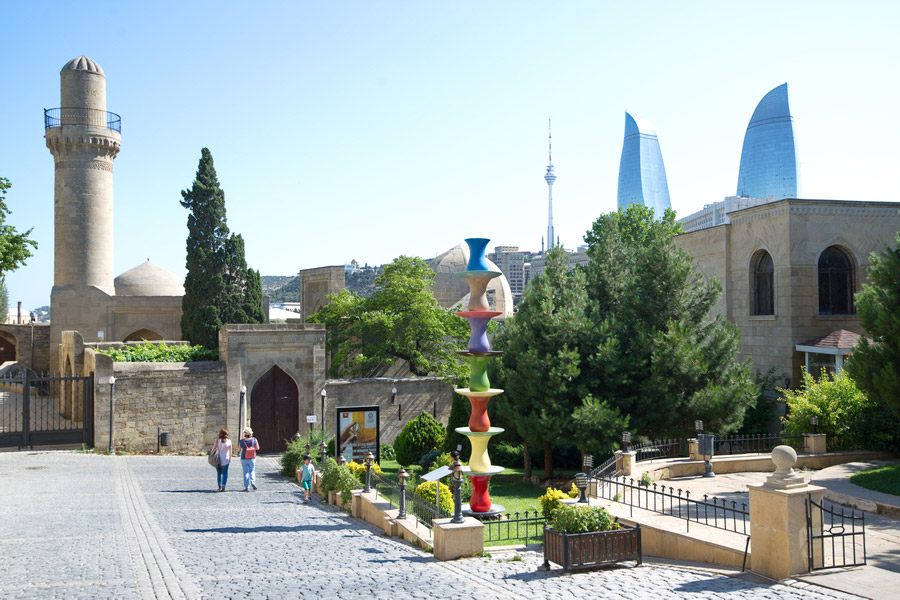
Things to Do and Sightseeing Tours in Baku
Baku (Bakı), the capital and largest city of Azerbaijan (Azərbaycan) with a population of over 2 million people, stretches along the western shore of the Caspian Sea (Xəzər dənizi). At its heart is Icherisheher (İçərişəhər), the fortified Old City, surrounded by neighbourhoods shaped by the late-19th-century oil boom and, beyond them, a skyline increasingly defined by ambitious contemporary architecture.
Known as the City of Winds, Baku owes much of its character to the Caspian and to the successive periods of growth that have reshaped the city. Many Baku attractions are concentrated within a relatively compact area. Travellers can move easily between the Old City, Fountain Square (Fəvvarələr Meydanı), the historic city centre and Baku Boulevard, then use the metro or taxis to reach museums, viewpoints and more distant landmarks.
Beyond central Baku, day trips add another layer to a stay, from ancient rock art and mud volcanoes to fire temples and the landscapes of the Absheron Peninsula.
Baku Tours
One full day is enough for an introduction to the main sights, but Baku tours lasting two or three days allow a more relaxed pace and time for independent exploration.
A typical Baku city tour begins in Icherisheher before continuing into the 19th- and early-20th-century city centre. Panoramic viewpoints and modern landmarks can then be added without trying to fit every museum or cultural attraction into a single day.
With two days, travellers can spend one exploring Baku and the other discovering its surroundings. Advantour’s 2-day Baku tour combines sightseeing in the capital with Gobustan, the mud volcanoes, Ateshgah and Yanar Dag. A longer itinerary, such as the Baku and Beyond tour, spreads these excursions over more time and leaves greater flexibility for markets and less-visited parts of the city.
Day Trips from Baku
Southwest of the capital, Gobustan Rock Art Cultural Landscape (Qobustan Qaya Sənəti Mədəni Landşaftı) contains over 6,000 rock engravings representing around 40,000 years of rock art. This UNESCO World Heritage Site also preserves traces of inhabited caves, settlements and burials within its semi-desert landscape.
A visit to Gobustan is often paired with Azerbaijan’s nearby mud volcanoes. Some lie beyond paved roads, and access can depend on weather and ground conditions, making organised transport helpful if you have limited time. Advantour’s Gobustan and Old Baku tour combines the rock-art landscape with sightseeing in the historic core.
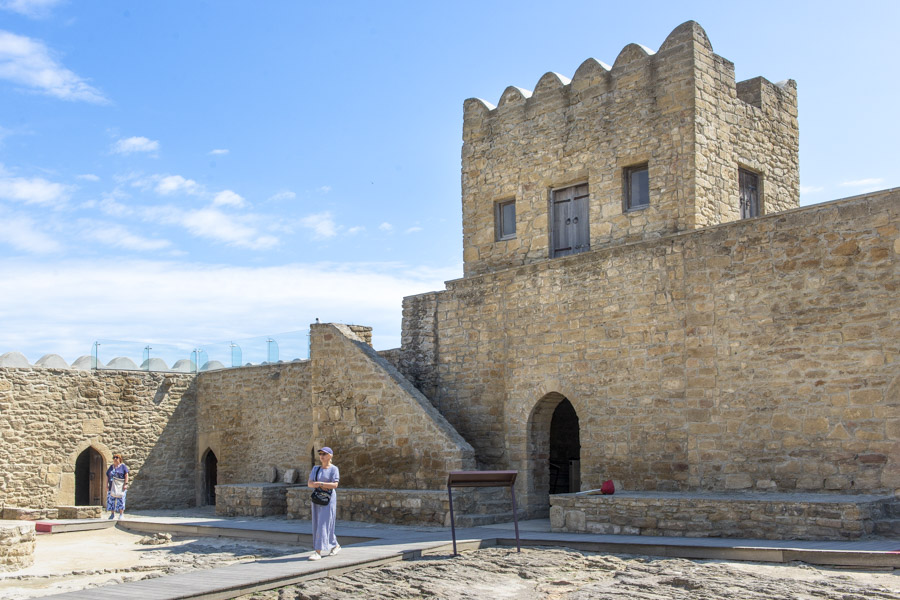
The Absheron Peninsula makes another easy day trip, with several major sights around Baku concentrated within the same area. Ateshgah (Atəşgah), a fortified religious complex, developed around the region’s natural gas fires and is associated with Hindu and Sikh merchants and pilgrims who travelled through the area. Yanar Dag (Yanardağ), meanwhile, is a hillside where escaping natural gas feeds flames that burn continuously above the ground.
Routes can include other stops depending on time and interest. Bibi-Heybat Mosque (Bibiheybət məscidi), south of central Baku, fits naturally into journeys towards Gobustan, while the Caspian coast and beaches of Absheron offer alternatives during the warmer months.
Best Time to Visit Baku
For most travellers, the best time to visit Baku is spring or autumn, when temperatures are generally well suited to walking and outdoor sightseeing.
| Season | Months | Typical Daytime Temperature Range |
| Spring | Mar-May | 9–22°C (48–72°F) |
| Summer | Jun-Aug | 27–29°C (81–85°F) |
| Autumn | Sep-Nov | 13–26°C (55–79°F) |
| Winter | Dec-Feb | 6–9°C (43–48°F) |
Spring brings steadily warmer weather and longer days, with parks and outdoor cafés becoming livelier across the central area. Wind can make otherwise mild days feel refreshing, so a light outer layer is useful.
Summer is hot, dry and sunny. It is the main season for visiting the beaches of the Absheron Peninsula. Early morning and evening are better for longer walks, while museums, galleries and cafés provide a cooler midday alternative.
Autumn is another favourable period. September and early October often retain much of summer warmth without its strongest heat, before temperatures drop later in the season.
Winter is comparatively mild, although wind and Caspian humidity can make it feel colder than the temperature suggests. Museums, theatres and other indoor attractions provide plenty to do on less comfortable days.
Baku’s reputation as the City of Winds is well founded. The city is exposed to strong local winds, including the cool northerly Khazri (Xəzri) and warmer southerly Gilavar.
History of Baku
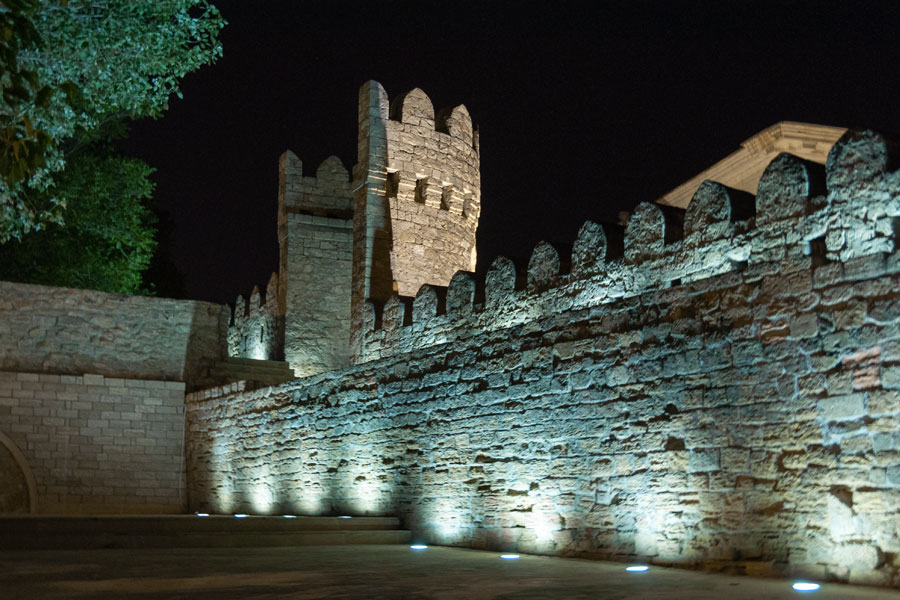
The history of Baku reaches back far beyond the monuments visible today. Archaeological evidence extends to the Palaeolithic era, while the Old City reflects successive Zoroastrian, Sasanian, Arabic, Persian, Shirvani, Ottoman and Russian influences. Much of Icherisheher’s surviving defensive character dates from the Middle Ages. So, how old is Baku? There is no single founding date: human occupation in the area predates the surviving mediaeval city by millennia.
Baku rose in importance under the Shirvanshahs, who ruled Shirvan for centuries. Their palace complex, developed between the 12th and 15th centuries, occupies one of the highest points within Icherisheher and remains a major work of Azerbaijani architecture.
Control of Baku later passed between Safavid Persia, the Ottoman Empire and Persian rulers before it became part of the Russian Empire in the early 19th century. Its most dramatic transformation, however, came with the expansion of industrial oil production later that century.
From the 1870s onwards, investment in wells, refineries, pipelines, shipping and railways turned Baku into one of the world’s leading oil capitals. By 1901, Azerbaijan was producing more than half of the world’s oil. The wealth generated during this period financed rapid expansion into newly developed districts.
Oil magnates commissioned mansions, apartment blocks, theatres and civic buildings, while local and European architects drew on Gothic, Baroque, Neoclassical, Renaissance and Art Nouveau influences. Much of this architecture survives in the streets west and north of Icherisheher.
After the collapse of the Russian Empire, Baku became the capital of the Azerbaijan Democratic Republic in 1918. Soviet forces entered the city in 1920, and Azerbaijan later became part of the Soviet Union. Baku’s oil retained enormous strategic importance, particularly during the Second World War.
Independence in 1991 brought another phase of rapid change. New cultural institutions, business districts and large-scale architectural projects reshaped the skyline during the construction boom of the early 21st century.
Things to Do in Baku
Explore Icherisheher
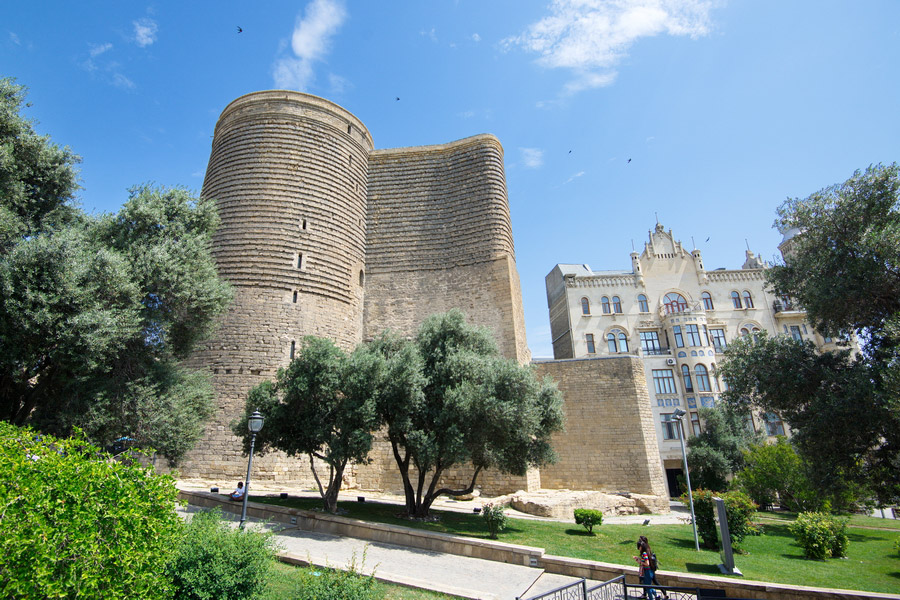
Icherisheher is the oldest surviving part of Baku and is best explored on foot. Houses, mosques, bathhouses and former caravanserais line narrow streets enclosed by walls that preserve much of their mediaeval form.
The Maiden Tower (Qız qalası) is a signature landmark. The present structure is generally associated with the 12th century, although archaeological evidence points to considerably earlier construction beneath it, and its original purpose remains uncertain.
A short distance away, the Palace of the Shirvanshahs (Şirvanşahlar Sarayı) brings together royal, religious and funerary buildings created over several centuries. Smaller mosques, workshops, galleries and residential courtyards reward slower exploration of the surrounding lanes.
The Walled City of Baku with the Shirvanshah’s Palace and Maiden Tower was inscribed on the UNESCO World Heritage List in 2000.
Discover Oil-Boom Baku
Beyond the Old City walls, wider streets and more elaborate façades signal a different phase of Baku’s development.
A walk along Istiglaliyyat Street (İstiqlaliyyət küçəsi), Nizami Street and the surrounding roads passes some of the mansions and public buildings commissioned during the first oil boom. Look above the modern shopfronts to see the carved limestone façades, elaborate balconies, towers and decorative details that distinguish this part of the capital.
One of the strongest examples is the Palace of Happiness (Səadət Sarayı), originally the Mukhtarov Palace. Oil magnate Murtuza Mukhtarov commissioned Polish architect Józef Płoszko to design the building in the early 20th century, combining Gothic-inspired forms with elaborate decorative elements.
The nearby Ismailiyya Palace (İsmailiyyə Sarayı) adds another prominent example from the same period. Literature also offers an unusual way to explore this era through Ali and Nino, a novel set in early-20th-century Baku. Places associated with the story trace a route between the traditional Old City and the Europeanised neighbourhoods that developed beyond its walls.
Walk along Baku Boulevard
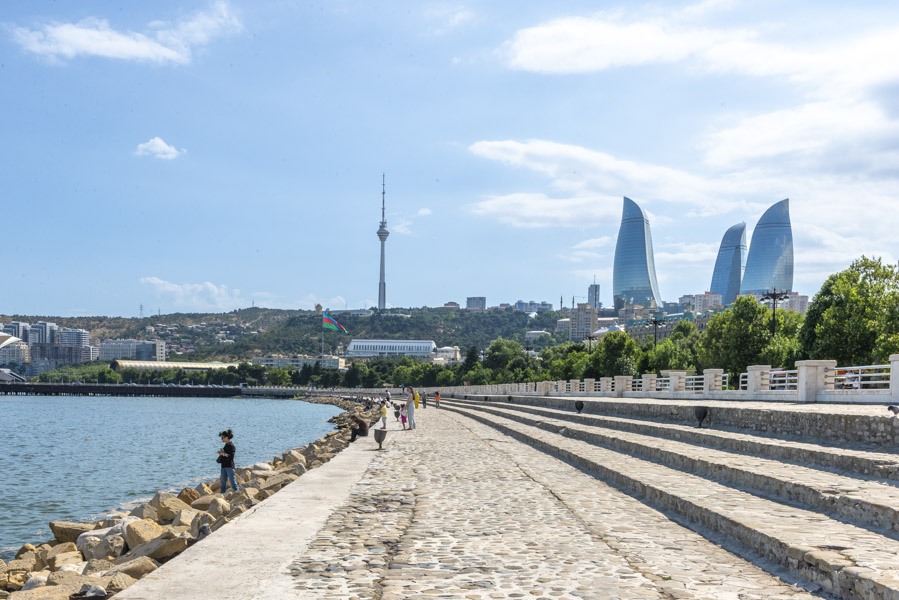
Baku Boulevard (Bakı Bulvarı) follows the Caspian waterfront, replacing the confined lanes of Icherisheher with broad promenades and open views across the bay.
Landscaped gardens, cafés and cultural attractions line the route, while the waterfront becomes especially lively in the evening, when people gather by the sea and summer temperatures begin to ease.
See the City from Highland Park
For a sweeping panorama over Baku Bay (Bakı buxtası), head to Highland Park (Dağüstü Park). From this elevation, the relationship between the old and the new becomes much clearer. Much of Baku lies around 28 metres below sea level, an unusual setting for a capital city.
The approach passes Martyrs’ Lane (Şəhidlər Xiyabanı), a national memorial honouring those killed during the Black January events of January 1990. It is an important commemorative site and should be treated accordingly.
Nearby, the curved glass façades of the Flame Towers (Alov Qüllələri) rise above the hillside and have become a defining feature of modern Baku’s skyline.
Visit the Heydar Aliyev Center
Designed by Zaha Hadid, the Heydar Aliyev Center (Heydər Əliyev Mərkəzi) belongs to a completely different chapter in Baku’s architectural history. Its smooth white surfaces and flowing form contrast sharply with both the Soviet cityscape and Baku’s ornate oil-boom buildings.
The venue hosts changing exhibitions on art, design and Azerbaijani culture. Even without a lengthy museum visit, the landscaped grounds are worth exploring for views of the building from different angles.
Baku Museums
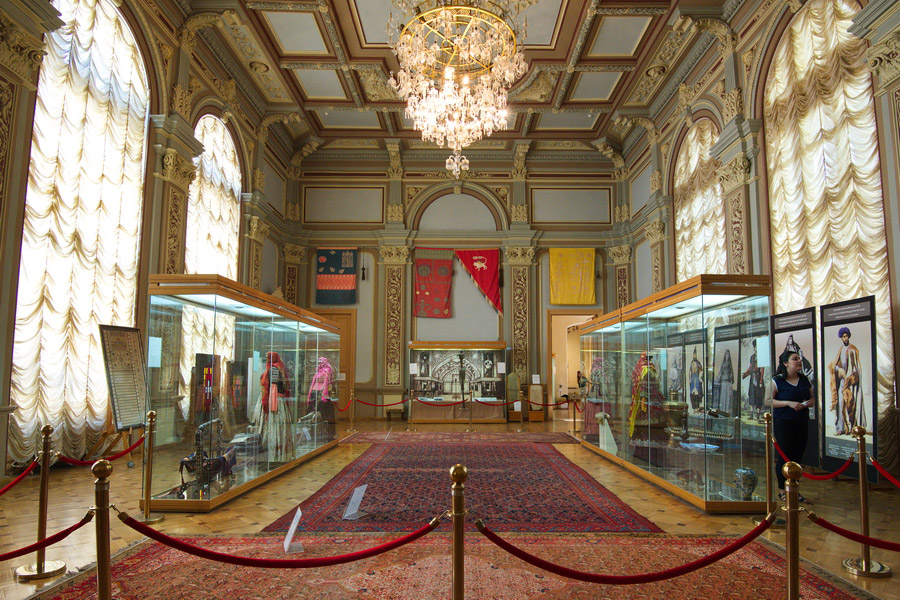
Baku has enough museums that it makes more sense to choose according to your interests than to try to see them all. The Azerbaijan National Carpet Museum (Azərbaycan Milli Xalça Muzeyi) is a strong choice for travellers interested in traditional crafts. Displays range from regional carpet-weaving traditions to textiles, jewellery, ceramics and decorative arts.
For a broader introduction to the country’s past, visit the National Museum of History of Azerbaijan (Milli Azərbaycan Tarixi Muzeyi), housed in the former residence of Haji Zeynalabdin Taghiyev, Baku’s famous oil magnate and philanthropist. Restored interiors also reveal how one of Baku’s wealthy oil families lived.
The National Art Museum of Azerbaijan (Azərbaycan Milli İncəsənət Muzeyi) brings together Azerbaijani art with works from Türkiye, Iran, Russia, Western Europe and parts of Asia. The museum occupies two 19th-century buildings recognised for their architectural value.
Villa Petrolea focuses on Baku’s industrial past and the Nobel family’s role in it. Built in the 1880s, the house contains exhibits on the Nobels’ years in Baku and the oil industry in which their company operated.
The Museum of Modern Art (Müasir İncəsənət Muzeyi) focuses primarily on Azerbaijani avant-garde painting and sculpture from the second half of the 20th century onwards.
Lastly, inside Icherisheher, the Museum of Miniature Books (Miniatür Kitab Muzeyi) offers a compact collection of miniature publications from numerous countries and languages.
Baku Theatres
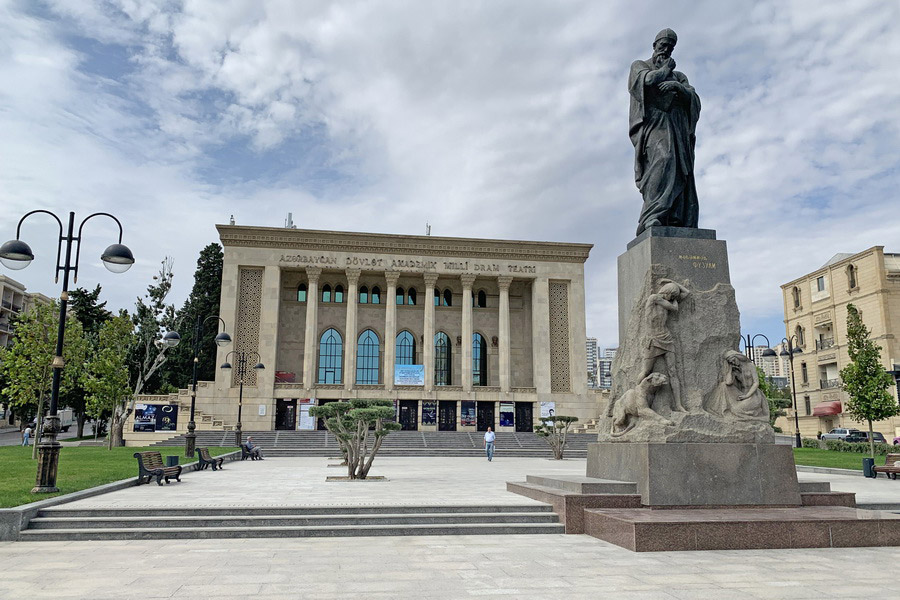
Baku’s theatres and concert halls reflect the cultural expansion that accompanied the city’s growth in the late 19th and early 20th centuries.
The Azerbaijan State Academic Opera and Ballet Theatre (Azərbaycan Dövlət Akademik Opera və Balet Teatrı) stages opera and ballet in a prominent historic performance venue in central Baku. Close to the Old City, the Azerbaijan State Philharmonic Hall (Azərbaycan Dövlət Akademik Filarmoniyası) hosts classical concerts as well as programmes devoted to Azerbaijani music.
Drama is performed in Azerbaijani and Russian at several other venues around the capital. Schedules vary throughout the year, so those hoping to attend a performance should check current programmes during their stay.
Entertainment, Parks and Shopping in Baku
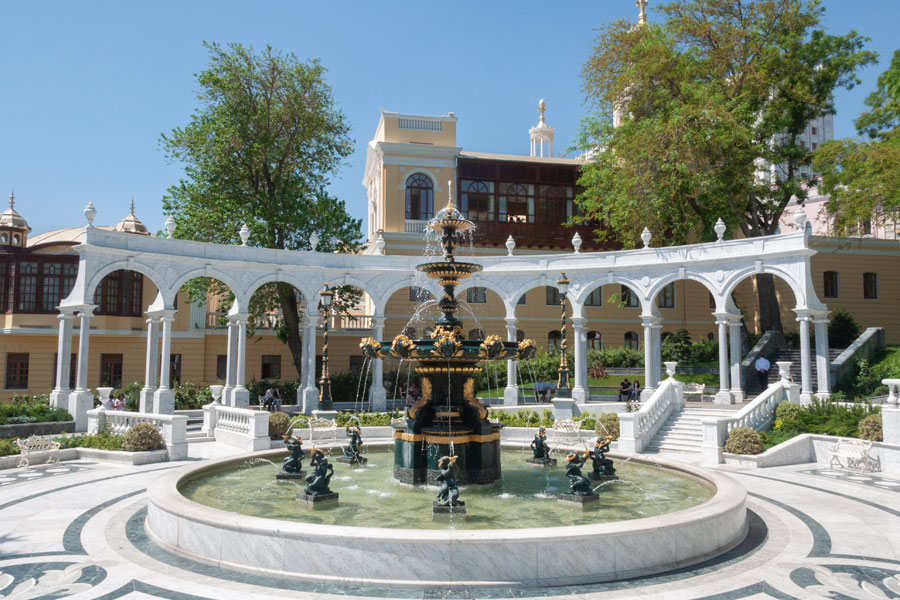
Entertainment in Baku
Public events and nightlife add another dimension after the museums and performance venues close. Contemporary galleries and smaller exhibition spaces showcase work by present-day Azerbaijani artists.
Fountain Square remains one of the busiest meeting places after dark, with restaurants, cafés and pedestrian streets extending towards Nizami Street.
Major events can temporarily transform the atmosphere of the centre. The Azerbaijan Formula 1 Grand Prix, for example, takes place on a street circuit running through central Baku and along the waterfront.
Parks of Baku
Beside the State Philharmonic Hall, Philharmonia Garden (Filarmoniya bağı) offers a shaded pause close to Icherisheher.
The Central Botanical Garden (Mərkəzi Nəbatat Bağı), founded in 1936, provides a larger green space away from the dense main streets. Following extensive redevelopment, it reopened in 2024 with restored greenhouses, walking paths and landscaped areas.
In the Khatai district (Xətai rayonu), Nizami Ganjavi Park (Nizami Gəncəvi Parkı) occupies land historically linked with Villa Petrolea and the Nobel oil company. Its grounds include landscaped areas, fountains, an artificial lake, an amphitheatre and an open-air cinema.
Baku Boulevard is better understood as a waterfront promenade than as a conventional park.
Shopping in Baku
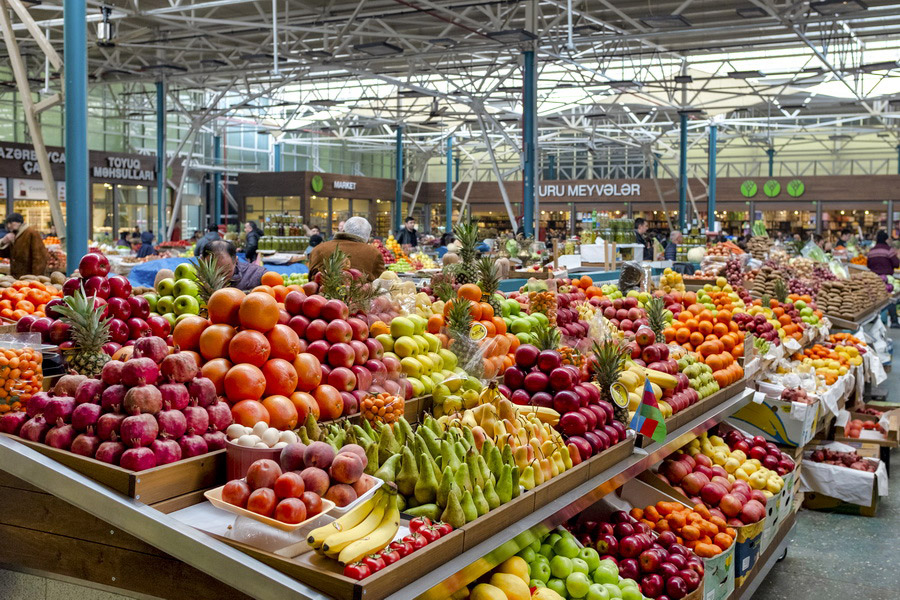
Shopping in Baku ranges from Azerbaijani handicrafts and regional produce to specialised boutiques and international retailers.
Within Icherisheher, small shops sell carpets, ceramics, textiles and souvenirs. Older carpets, antiques and objects that may qualify as cultural property can be subject to export regulations, so documentation should be checked before buying valuable or historic-looking items.
Nizami Street is the city’s main shopping corridor, while malls including Port Baku Mall, Ganjlik Mall and 28 Mall concentrate larger brands.
Yashil Bazaar (Yaşıl Bazar) is Baku’s main produce market. Stalls are piled with fruit, vegetables, fresh herbs, nuts, spices, dried fruit, preserves, cheeses and other produce brought to Baku from across Azerbaijan.
Food in Baku
Azerbaijani Cuisine
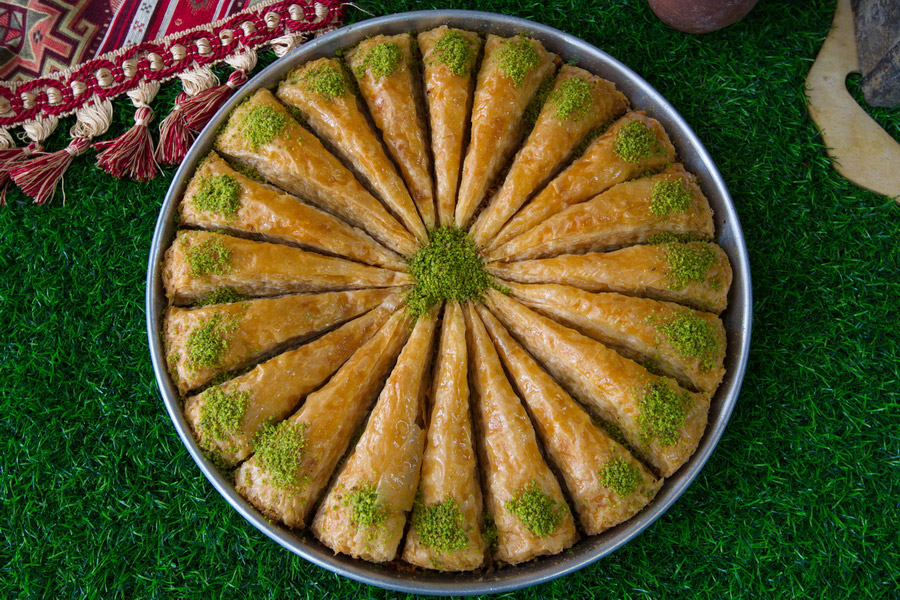
Baku is a good introduction to food tourism in Azerbaijan, bringing together dishes from across the country alongside specialities associated with the capital and the Absheron Peninsula. Qutab is widely available: thin dough is filled with meat, herbs, pumpkin or other ingredients and cooked on a saj. Plov appears in numerous variations, usually with separately prepared rice accompanied by meat, dried fruit, chestnuts or other additions.
Menus commonly include dolma, kebabs, soups and slow-cooked dishes, with fresh herbs and seasonal vegetables often served generously alongside a meal. Caspian fish also has a long place in local cuisine and may be grilled, fried or baked depending on the species and season.
Advantour’s guide to restaurants in Baku lists further options across the city. Shah Restaurant & Gallery specialises in Azerbaijani cuisine and serves traditional meals such as saj, qutab and shah plov. Art Club offers a similar selection, while SAHiL Bar & Restaurant includes Caspian fish alongside other local food.
The Absheron Peninsula has a long tradition of saffron cultivation, and the spice appears in rice dishes and sweets. Baku pakhlava, made from layered dough, nuts and fragrant spices, is among the capital’s recognised regional pastries.
Vegetarian and Vegan Options
Azerbaijani cooking includes several naturally meat-free dishes.
Herb or pumpkin qutab, fresh salads, rice and seasonal vegetable dishes provide plenty of choice, while Baku’s international restaurants broaden the selection considerably. Dedicated vegetarian and vegan venues are easiest to find in central neighbourhoods.
Strict vegetarians and vegans should still ask about preparation where necessary. Butter, yoghurt or meat-based stock may be used even when the main ingredients appear plant-based.
Tea Houses, Coffee Shops and Bakeries
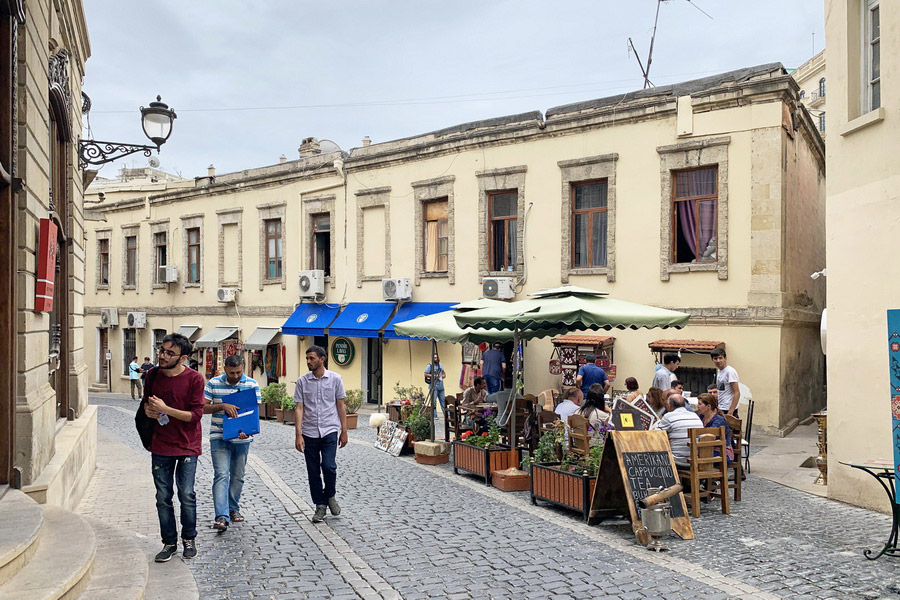
Traditional tea houses remain part of everyday social life in Baku.
Tea is commonly served with sugar, jam, nuts, dried fruit or sweets and is often enjoyed separately from a full meal. Bakeries and confectioneries sell pakhlava, shekerbura and other pastries, with especially elaborate selections appearing around major holidays.
Modern Baku also has a busy café culture, with speciality coffee shops and contemporary bakeries now common in the city. For something more traditional, order a pot of tea and take your time over the accompaniments.
City Transport in Baku
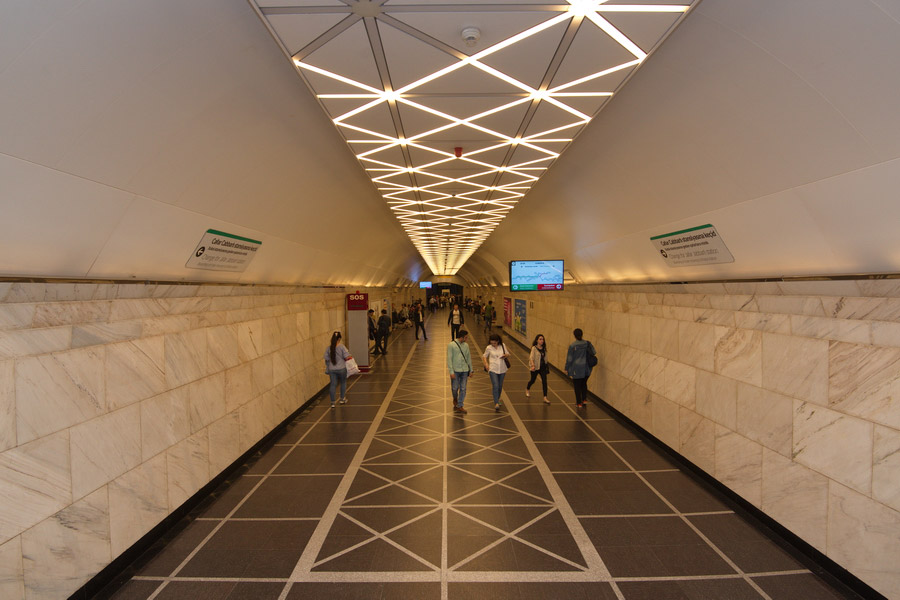
Much of Baku can be explored on foot. Icherisheher, Fountain Square, the principal oil-boom streets and parts of the waterfront are close enough to combine within the same walk.
Beyond the walkable districts, the metro, buses and taxis are practical for reaching the Heydar Aliyev Center, the Botanical Garden and outlying neighbourhoods.
Public Transport
Metro
The Baku Metro (Bakı Metropoliteni) is an inexpensive way to cover longer distances across the capital. A standard journey currently costs 0.60 AZN, with BakıKart and supported digital-payment methods available.
Buses
Buses serve areas beyond the metro network and increasingly use cashless payment. A rechargeable BakıKart works across participating public transport and is convenient for travellers making several journeys.
Those staying mainly in the centre may use the network less often than expected. Walking combined with occasional metro or taxi trips is usually sufficient for the principal sights.
Other Modes of Transport
Taxis
App-based ride-hailing is widely used in Baku and is often the simplest choice because the destination and fare estimate are recorded in advance.
Traffic can become heavy during peak periods, so allow additional time for airport transfers or journeys across the city. If using a street taxi rather than an app, agree on the fare before setting off.
Car Rental
A rental car is rarely necessary for sightseeing in Baku. Traffic and parking generally make walking, taxis and public transport more convenient.
A car is more practical for independent trips around the Absheron Peninsula or longer journeys elsewhere in Azerbaijan. International guests should confirm licence, insurance and rental-company requirements before collecting a vehicle.
How to Get to Baku
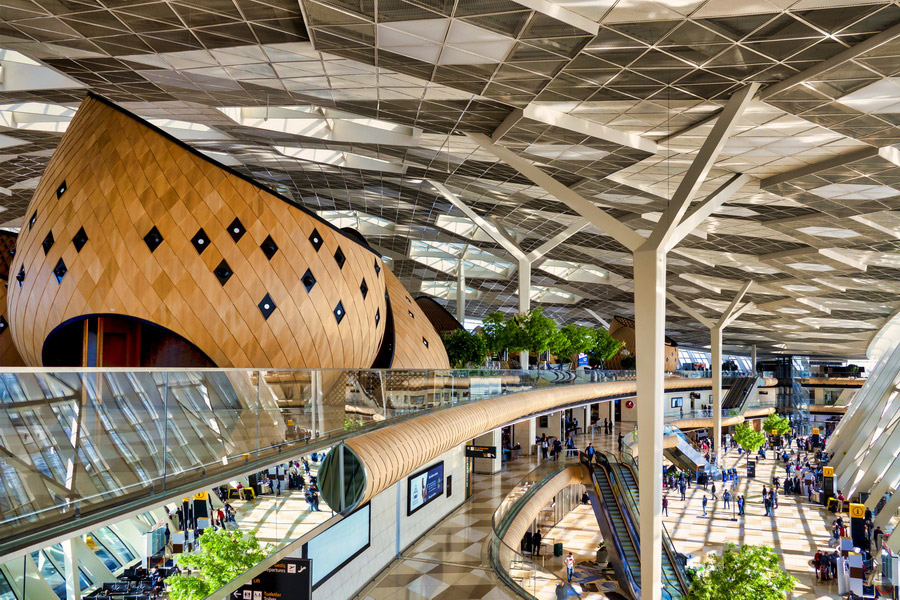
Most tourists arrive in Baku by air. Heydar Aliyev International Airport (Heydər Əliyev Beynəlxalq Aeroportu), east of the centre, is Azerbaijan’s principal airport.
The AeroExpress bus connects Terminals 1 and 2 with Baku Railway Station (Bakı Dəmir Yolu Vağzalı) and the 28 May metro area, with stops at Koroğlu and Surakhani Bridge along the route. Taxis, ride-hailing services provide door-to-door transport, which is helpful with luggage or accommodation in the suburbs.
Overland travel requires closer attention to current border regulations. Azerbaijan’s land crossings do not necessarily operate under the same conditions as before the restrictions introduced in 2020.
A specific exception has applied to the Baku–Tbilisi–Baku railway since 25 May 2026. Azerbaijani citizens and foreign nationals entitled to enter Azerbaijan without a visa may cross between Azerbaijan and Georgia by rail under the revised rules. Foreign nationals are also permitted to leave Azerbaijan through land borders without special permission.
Entry rules can change, and eligibility differs according to nationality and mode of travel. Anyone planning to arrive by train, road or private vehicle should therefore check the latest Azerbaijan travel information before departure.
Languages Spoken in Baku
Azerbaijani is the official language and the one most commonly heard in everyday life. It belongs to the Turkic language family and uses a Latin-based alphabet.
Russian is still understood by many residents, especially older generations, although its everyday use varies.
English is increasingly used in hotels, major attractions and tourism-oriented restaurants, but visitors should not expect it to be spoken everywhere. A translation app and an address saved on your phone can be helpful in markets, taxis and smaller establishments.
Security in Baku
Crime levels in Baku are generally low, although the usual precautions remain sensible.
Pedestrians should take particular care with road traffic, especially on wide avenues and busy junctions. Marked crossings are the safest option. Military bases, equipment and installations are considered sensitive, and travellers should avoid photographing them. Mosques and commemorative sites such as Martyrs’ Lane should also be approached respectfully.