

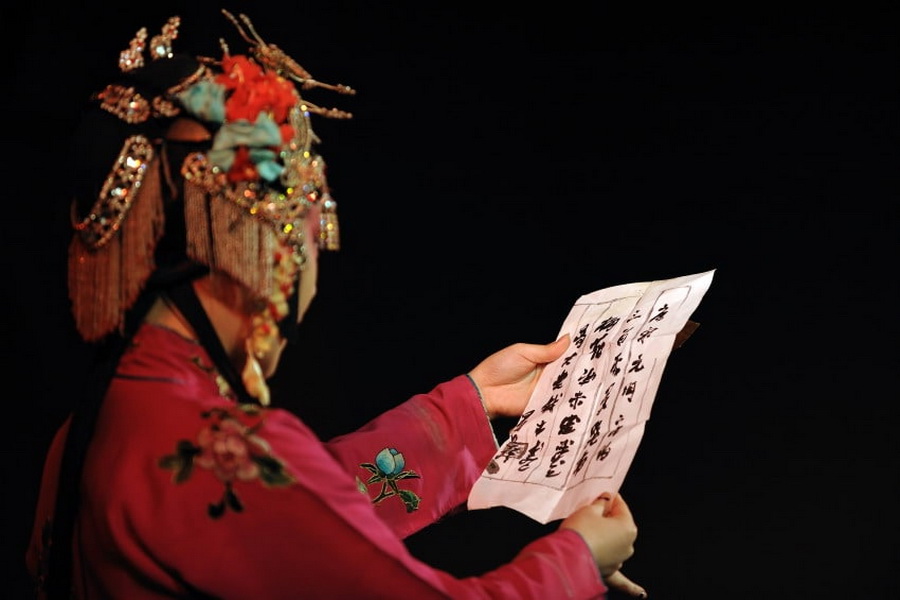
Chinese writing is one of the oldest systems of communication in the world, built on unique symbols commonly known internationally as Chinese characters. These characters go far beyond simple pictograms; they form a complex system in which each graphic sign conveys both meaning and sound. It is worth noting that there are not just one but multiple Chinese languages (Mandarin, Cantonese, etc.) that share the same writing characters and expand beyond China.
For thousands of years, writing has been central to Chinese culture. It has served to record laws and philosophical texts, guide rituals, and create works of art. Every inscription reflects the era in which it was created, and every stroke captures the worldview of its time. Step into the world of Chinese writing – both restrained and elegant – where each character links past and present, image and meaning, and tradition and the living word.
Historical Development of Chinese Writing

The origins of Chinese writing can be traced back over three millennia, to the late Shang dynasty around 1200 BCE. The earliest inscriptions – etched onto turtle shells and ox bones – formed part of ritual divination ceremonies, where royal diviners sought answers from the spirit world. This ancient script, known as Jiǎgǔwén (甲骨文), or Oracle Bone Script, represents the earliest confirmed stage of the Chinese writing system. Despite its antiquity, many characters remain recognisable today, revealing the remarkable continuity of Chinese civilisation through its written language.
The influence of Confucian and Taoist philosophy gradually shaped the purpose and themes of Chinese writing, especially in its moral and ethical dimensions. Between 1000 and 700 BCE, a new style of inscription emerged known as Jīnwén (金文), typically cast or engraved on bronze vessels and ceremonial bells during the Zhou Dynasty (1046–256 BCE). These inscriptions, later classified under the broader term Dàzhuàn (大篆), or Greater Seal Script, featured more fluid and refined forms than the earlier Oracle Bone Script (甲骨文). One of the most notable early examples of monumental stone inscriptions is the Stone Drums of Qin (秦石鼓), housed today in the Palace Museum in Beijing. These large boulders are engraved with rhymed poems describing royal hunting expeditions and are valued for both their linguistic and historical significance.

The next major phase in the development of Chinese writing is linked to the reforms of Qin Shi Huangdi, the first emperor of unified China, around 221 BC. As part of his efforts to standardise all aspects of governance, he introduced a unified writing system: Xiǎozhuàn (小篆), or Small Seal Script. This system merged the many regional variants into a simplified, standardised form. It became especially common on stone stelae during the Qin (221 to 206 BC) and Han (206 BC–220 AD) dynasties and laid the foundation for Chinese calligraphy and brush painting. The most famous surviving monument from this era is the Stele of Mount Yi (Yì Shān Kè Shí / 峄山刻石), a replica of which is housed in the Museum of Stone Steles in Xi’an. Small Seal Script is still used in arts, notably in calligraphy and traditional seal carving.
The evolution of writing styles also saw the emergence of clerical script lishū (隶书), also known as official script, which played a crucial role in administrative documentation.
During the Han dynasty (206 BC–220 AD), the widespread use of paper and the refinement of writing tools allowed writing to become more fluid and expressive. Two major styles developed in this period: xíngshū (行书), or running script – a sophisticated art form boasting a deep history and intricate aesthetic criteria – and cǎoshū (草书), or cursive script – regarded as the height of calligraphic artistry, a realm where the artist's character, emotions, and spirit (气韵 qìyùn) are openly revealed. These styles gave writers greater freedom of movement, reduced the rigidity of earlier forms, and increased the speed of writing – making calligraphy a personal and expressive medium. The role of scholars and poets during this time greatly elevated the cultural significance of writing in Chinese society.
Chinese writing was spread along the Silk Road, significantly influencing cultural exchange and communication between various regions. This exchange began during the Han dynasty and continued into the Tang dynasty, facilitating interactions between China and Central Asia, the Middle East, and beyond.
By the Sui Dynasty (581–618 AD) and especially during the Tang dynasty (618–690 and 705–907), which is considered its golden age, kǎishū (楷书), or standard script, had emerged as the model for correct writing. This style formalised the proportions and structure of characters, setting the standard for classical and modern Chinese writing. In addition, it is frequently viewed as a means of meditation and personal development.
In the centuries that followed, calligraphy evolved into a respected art form in its own right, where writing became a reflection of the artist’s personality and inner world. The artistic aspects of calligraphy were also deeply intertwined with Zen Buddhism, emphasising writing as a form of meditation.The classical styles continue to hold significance today – they are studied in schools, used in formal contexts, and remain a source of inspiration for contemporary artists and calligraphers. Chinese calligraphy, was inscribed on the UNESCO Representative List of the Intangible Cultural Heritage of Humanity in 2009.
Furthermore, the simplification of characters in the mid-20th century stands as a significant development that affects the contemporary landscape of Chinese writing.
Finally, the influence of Chinese characters has extended beyond China, impacting neighbouring cultures like Japan, Korea, and Vietnam. In the digital era, the adaptation to Pinyin and character encoding systems has further transformed Chinese writing to meet modern communication needs.
Structure of Chinese Writing

The modern Chinese writing system is built on standardised character sets. In China, a core list known as the Chángyòng Hànzì Biǎo (常用汉字表), or “List of Commonly Used Chinese Characters,” contains around 3,500 characters essential for functional literacy out of about 100,000 characters. This reflects the highly structured nature of the system and shows that, despite the vast total number of characters, basic proficiency can be achieved with a relatively limited set.
Types of Chinese Characters
Chinese characters are logograms – symbols that convey meaning. They are traditionally classified into six types, based on their structure and historical development. Some characters are composed of multiple components, while others are indivisible. A small portion originated as pictorial representations of objects, but the majority are phono-semantic compounds, combining both meaning and sound.
There are six traditional categories of Chinese characters, known as Liùshū (六书):
- Pictographic characters (象形字, xiàngxíngzì) – Stylised depictions of physical objects or phenomena, such as 木 (mù, tree), 日 (rì, sun), and 人 (rén, person). They originated as drawings and gradually evolved into abstract symbols.
- Ideographic characters (指事字, zhǐshìzì) – Characters expressing abstract concepts through visual cues, such as 上 (up) and 下 (down), representing spatial relations.
- Phono-semantic compound characters (形声字, xíngshēngzì) – The largest category, combining a semantic component (radical) that suggests meaning with a phonetic component indicating pronunciation. For example, 指 (zhǐ, to point) joins 扌 (hand) with 知 (zhī, sound).
- Compound ideograms (会意字, huìyìzì) – Formed by combining two or more characters to produce a new meaning. For instance, 休 (xiū, rest) joins 亻 (person) and 木 (tree), evoking someone leaning against a tree.
- Mutually explanatory characters (转注字, zhuǎnzhùzì) – Characters sharing similar origins or related meanings that later diverged. Their precise definition remains debated, but they illustrate the semantic relationships among early words.
- Phonetic loan characters (假借字, jiǎjièzì) – Characters borrowed for their sound to represent unrelated meanings, such as 来 (lái, originally “wheat,” later “to come”). Many early grammatical words belong to this type.
Strokes and Stroke Order in Chinese Writing
Chinese characters are composed of individual strokes, each written in a specific, standardised sequence. Every character is built from a limited set of basic components. Traditionally, eight fundamental strokes are identified, all exemplified in the character 永 (yǒng, meaning “eternity”), which serves as a model for beginners. These strokes form the foundation of all characters, regardless of complexity.
Correct stroke order is essential for both writing and memorising characters. There are 8 basic strokes in Chinese characters:
| horizontal stroke | 一 | 横 héng |
| vertical stroke | 丨 | 竖 shù |
| left-slanting downward stroke | 丿 | 撇 piě |
| dot stroke | 丶 | 点 diǎn |
| right-slanting downward stroke | ㇏ | 捺 nà |
| upward lifting stroke | ㇀ | 提 tí |
| folding stroke | 折 zhé | |
| vertical hook to the left stroke | 亅 | 钩 gōu |
The basic rules of Chinese stroke order (笔顺规则, bǐshùn guīzé) are as follows:
- Top to bottom (从上到下): Begin writing from the top of the character and move downward.
- Left to right (从左到右): Write each component and stroke from left to right.
- Horizontal before vertical (先横后竖): Complete horizontal strokes before vertical ones.
- Diagonal order: In some cases, right-to-left diagonals precede left-to-right diagonals (e.g. 八).
- Central before sides: For vertically symmetrical characters, write the central component first.
- Outer before inner, close frames last (先外后内,后封口): Write the outer strokes first, then the inner elements, closing the frame last.
- Spanning strokes last: Strokes that pass through or connect other parts of a character are written last.
- Dots and small strokes first: Write upper or left-side dots first, inner or right-side dots last.
Equally important is visual balance. All characters are written within an imaginary square, regardless of the number of strokes. This ensures visual harmony and gives written text a uniform and orderly appearance. Traditional calligraphy instruction uses special grid paper to help maintain proper proportions and alignment.
Types of Chinese Writing Systems
Chinese writing has evolved over thousands of years and today includes several distinct systems, each reflecting a specific historical and cultural context. Some preserve traditional forms, others were developed to simplify learning and daily use, and phonetic systems help learners master pronunciation and begin speaking with ease.
Traditional Chinese Characters (繁體字, fántǐzì) retain their original complexity and contain more strokes than later forms. Closely related to ancient scripts, they are often used in classical literature, calligraphy, religious texts, and philosophical works. Traditional characters remain the standard in Hong Kong, Taiwan, and Macao and are widely used in overseas Chinese communities.
Simplified Chinese Characters (简体字, jiǎntǐzì) were introduced in mainland China in the mid-20th century to promote literacy and make writing more accessible. Many characters were altered by reducing stroke counts or replacing complex components. Simplified characters are officially used in mainland China, Singapore, and Malaysia.
Pinyin (汉语拼音, Hànyǔ Pīnyīn) is the official romanisation system for Standard Mandarin. Developed in the 1950s and adopted in 1958, it uses the Latin alphabet with tone marks to represent pronunciation. Pinyin is widely used in language education, digital input methods, and as a tool to make Chinese more accessible to learners.
Bopomofo (注音符號, Zhùyīn Fúhào), also known as Zhuyin, is a phonetic script developed between 1912 and 1913 to represent the sounds of Northern Chinese (Guānhuà), which became the basis for Standard Mandarin (Pǔtōnghuà). The system includes 37 phonetic symbols and 4 tone markers. Still widely used in Taiwan, Bopomofo appears in textbooks, dictionaries, and as a teaching tool for pronunciation.
Comparison Table of Writing Systems
| English | Traditional Chinese | Simplified Chinese | Pinyin | Bopomofo |
| China | 中國 | 中国 | Zhōngguó | ㄓㄨㄥ ㄍㄨㄛˊ |
| language | 語言 | 语言 | yǔyán | ㄩˇ ㄧㄢˊ |
| travel | 旅行 | 旅行 | lǚxíng | ㄌㄩˇ ㄒㄧㄥˊ |
| pleasure | 樂趣 | 乐趣 | lèqù | ㄌㄜˋ ㄑㄩˋ |
Chinese Characters Explained: Structure, Meaning, and Origins

In Chinese writing, each character represents a morpheme – a unit of meaning that typically corresponds to a single syllable. There are thousands of such morphemes in the language, each with its own unique character. This gives the Chinese writing system an extraordinary richness in terms of character variety.
Characters that sound similar but differ in tone are represented by entirely different symbols. Unlike alphabetic systems, where such words often share similar spellings, Chinese uses distinct characters even for closely related sounds. For example, mǎ (马, “horse”) and mà (骂, “to scold”) have similar pronunciations but are written with completely different characters and convey unrelated meanings.
Chinese characters are built from simpler components, which are themselves composed of basic strokes – much like assembling parts of a structure. For instance, 明 (míng, “bright”) is composed of 日 (rì, “sun”) and 月 (yuè, “moon”), while 好 (hǎo, “good”) combines 女 (nǚ, “woman”) and 子 (zǐ, “child”). Some characters are indivisible, such as 山 (shān, “mountain”), 水 (shuǐ, “water”), and 口 (kǒu, “mouth”).
Historically, many characters began as pictograms – stylised drawings of objects or natural phenomena. The character 田 (“field”), for example, visually resembles a plot of land. Over time, these pictorial forms became more abstract and complex, with meanings evolving and structures becoming stylised beyond their original visual representations.
Examples of Pictographic Characters
| Character | Pinyin | Meaning | Visual Origin / Explanation |
| 火 | huǒ | fire | Depicts rising flames |
| 口 | kǒu | mouth | A square outline representing an open mouth |
| 人 | rén | person | A simplified figure of a standing human |
| 目 | mù | eye | Outline of an eye with a marked pupil |
| 手 | shǒu | hand | A stylised palm with extended fingers |
Cultural Significance of Chinese Writing

Chinese writing functions not only as a means of communication but also as a cornerstone of literature and philosophy. In classical works such as Wen fu (文赋) by the poet and statesman Lu Ji (陸機) (261–303 AD), reflection on literature and the act of writing become inseparable. Words convey not only meaning but also rhythm, imagery, and the writer’s state of mind.
Calligraphy is regarded as the highest of the visual arts. It reflects the artist’s character and inner spirit, with each stroke expressing qi (气) – the flow of energy. More than a tool for writing, the calligraphy brush captures movement, breath, and emotion on the page.
Certain characters are deeply symbolic. The character 寿 (shòu, “longevity”) recognised as one of the Five Blessings (wǔfú五福 – longevity, wealth, health, love of virtue, a peaceful death) frequently appears on decorations, gifts, and banners as a wish for health, a long life, and good fortune. Similarly, 和 (hé, “harmony”) holds a central place in Confucian and Taoist thought, symbolising ideals of balance in personal conduct and social relations.
In this way, Chinese writing unites language, aesthetics, and philosophy. Each character carries not just semantic meaning but cultural weight – offering insight into individual emotion and the values of a society through both text and brushwork.
Learning Chinese Characters: Tools and Techniques

Photo by: www.chineasy.com
Mastering Chinese characters requires a structured approach that combines stroke order, character recognition, and regular writing practice.
To support memorisation, visual associations and mnemonic techniques are highly effective. The Chineasy method, for example, links character shapes with illustrative images, making them easier to recall.
A wide range of digital tools can assist in writing practice. The Skritter app teaches over 2,000 characters, displaying correct stroke order and allowing users to trace each character by hand. Another popular resource is HelloChinese, an app designed around everyday vocabulary, which uses Pinyin, audio pronunciation checks, and interactive exercises to help learners reinforce their skills.
Online platforms such as Arch Chinese also offer valuable writing practice, including animated stroke-order diagrams and printable worksheets for handwriting drills.
Tips to Learn Chinese Characters
At first, Chinese writing may seem complex, often giving the impression that it requires memorising tens of thousands of characters. In reality, the system is far more approachable: learning just a few hundred characters allows you to recognise everyday signs and basic texts, while around 1,500 characters are enough to read newspapers and short stories. Progress comes naturally once you understand radicals and recurring character patterns.
A structured learning approach helps make the process enjoyable. One of the most common challenges is visual similarity – many characters differ by only a single stroke or its placement. For instance, 我 (wǒ, “I”) and 找 (zhǎo, “to find”) can easily be confused. Mastering stroke order supports handwriting, muscle memory, and speed, while familiarity with various fonts and calligraphic styles helps you recognise the same character across different forms.
Homophones offer another learning opportunity: characters that share pronunciation but have unrelated meanings – such as 会 (huì, “can”) and 绘 (huì, “to paint”) – encourage attention to context and tone.
Chinese writing is more than a communication tool; it reflects the country’s long history, philosophy, and aesthetics. Each character carries meaning and artistic value, linking ancient tradition with modern expression. While writing is just one dimension of language learning, combining it with spoken Mandarin enhances understanding and appreciation of Chinese culture. This balance between speaking and writing transforms language study into an engaging, insightful journey through one of the world’s oldest civilisations.